June 11, 1969, Ba Ria city, Vung Tau province, Vietnam. A newbie tunnel rat arrived at the base to a scene of utter destruction. Just days earlier a platoon was hit by a M16 mine, aka, the “Jumping jack.
” It got that name for the way it jumped in the air when stepped on. It killed three men and injured 24 others. Not long after the hidden enemy laid an anti-personnel mine.
A personnel carrier hit that mine. It was the first time that the unseasoned tunnel rat saw a dead body. It was chaos, each and every day.
He had to learn fast. The number one tunnel rat, nickname Yogi, was hit twice by mines. Bits were hanging off him as he told the newbie what he had to do next.
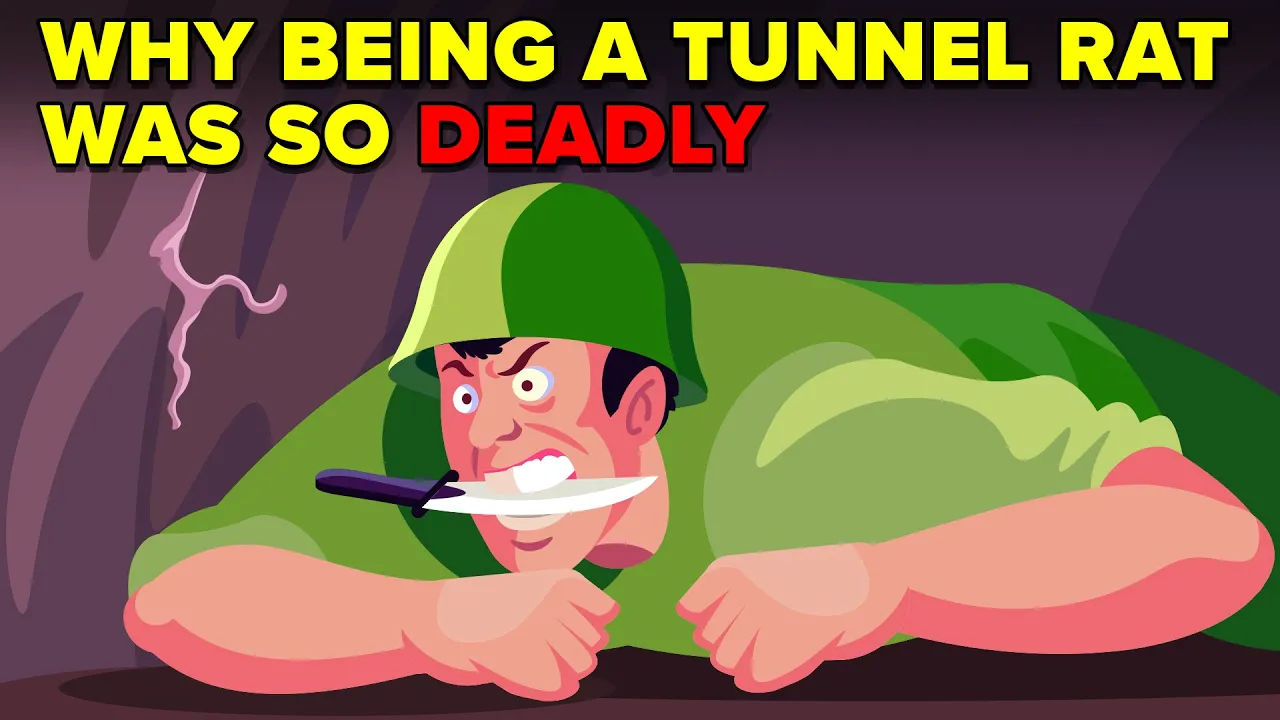
This was not a job for the faint of heart, but someone had to do it. That story is true. It happened to a combat engineer in the Australian army.
He took on one of the hardest and scariest roles in the war, that of a tunnel rat. We’ll get back to his story, but first let’s talk about the job. Prior to the Americans going to war with the Viet Cong, the French fought the Viet Minh from 1946 to 1954.
During that time, the Viet Minh learned a thing or two about fighting a superpower. To beat someone far more powerful than yourself, you had to resort to guerilla tactics. One of those tactics was keeping below ground, and so the Viet Minh got to work building a massive complex of tunnels.
When the Americans arrived in 1955 the tunnels were already vast, but it was the Viet Cong that really made them a feat of engineering. During the Vietnam War, or the American War to the Vietnamese, the Viet Cong used those tunnels for all kinds of things. While the opening to the tunnels was small they might lead to a complex system of tunnels that would lead to large underground spaces.
It was within these spaces that the Viet Cong would hide, eat, sleep and machinate attacks on their enemy. The tunnels served as headquarters, hospitals, barracks, and storage facilities. Since they had ventilation systems it was possible to stay down there for a prolonged period of time.
So, we are not so much talking about men burrowing like rabbits, but men living in a subterranean world. These worlds provided safety from the hostiles. Like snakes, men would come out of them in the night, lay traps for the enemy, and sneak back in the tunnel.
That’s how so many American and Australian soldiers lost their lives, to mine laying soldiers that were rarely seen above ground. It was actually an Australian combat engineering unit, the 3 Field Force, that were the first tunnel rats. The Americans later joined them, but we don’t imagine guys were queuing up for this job.
Just imagine it. They find the entrance but have no idea where the tunnel will lead or who they will encounter down there. There wasn’t only the threat of humans to worry about, too.
Vietnam is in the tropics and the tropics are home to all kinds of dangerous creatures. Have you ever seen a Vietnamese Giant Centipede? Those fast-moving prehistoric-looking creatures deliver one of the most painful insect bites known to man…and guess what…they too like to hide in tunnels.
Then there were the snakes, the highly venomous and deadly Banded Krait, the Malayan Pit Viper, the King Cobra, and a whole host of other badass snakes that can spoil a person’s day. Then soldiers had to deal with ants’ nests, annoying bats, rats carrying the bubonic plague as well as spiders that weren’t generally a threat to life but could make life painful. So, you can imagine that going into one of those tunnels was about as frightening as getting into Ted Bundy’s Volkswagen Beetle.
But they had to do it, lest more men get blown to bits by those damned jumping Jack mines. If the men could infiltrate the tunnels they might not only kill a few of the enemy, but they would usually come across a stash of mines, grenades, and guns. There was another problem concerning arms.
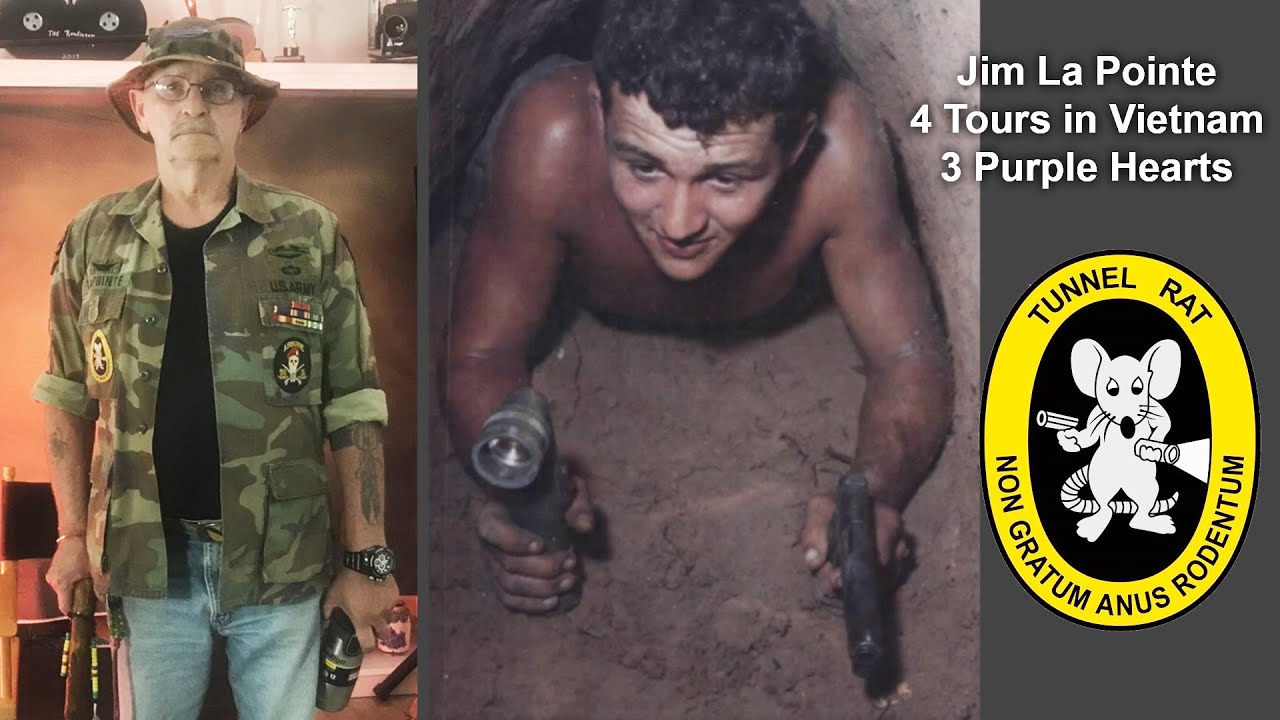
The tunnels were small, and so that meant that the tunnel rats couldn’t take larger guns down them. They were usually only equipped with a M1911 pistol or a M1917 revolver. They’d also have a flashlight, a knife, and usually some explosives so they could blow up whatever they found down there.
You can just picture it. A man crawling through the darkness, his flashlight in one hand and his pistol in the other. He crawls and crawls, and then he sees the enemy.
He shoots, and then all he can hear is a ringing in his ears. He’s blinded by the flash and deafened by the noise. Then the earth above his head starts to fall.
He needs to get out, fast. What he doesn’t know is that the Viet Cong have something special for him. Poisonous gas, and this tunnel rat didn’t choose the gas mask option because the last time he wore one he could barely see.
If the gas doesn’t get him, the flood will. The Viet Cong designed this particular tunnel with a flooding feature if it should ever be infiltrated. Other times the tunnel might just collapse, which wasn’t a design feature but a case of poor construction.
You’d have to be crazy to do this job. You also had to be short. Imagine a hulk of a man with quite the belly trying to navigate a tunnel.
Soldiers that were picked for the job were usually not taller than 165 cm (5 feet 5 inches). It was the same years later when the U. S.
Marine Corps and British Royal Marines fought in the Afghanistan War. Yep, tunnel rats weren’t only a thing in Vietnam. But let’s stay with Vietnam for now and go back to the Australian soldier.
He was trained at the Australian Army’s School of Military Engineering. He actually thought that this line of study would mean he’d be facing less combat and doing more engineering. He was wrong.
He was being trained to become a tunnel rat. That meant learning about things such as mine detection, disarming booby traps, safely blowing stuff up and learning how to get through tunnels. When he arrived in Vietnam he walked into chaos.
As we said, one of the first things he saw was the aftermath of a soldier stepping on a jumping Jack mine. Three bodies were outfitted with body bags after that and two dozen men were wounded. He said those M16 mines were everywhere and it was part of his job to find them.
What the Viet Cong did was store them in the tunnels and then lay them at night. So, each day was a new day, and there was always the possibility of new mines lying around. That’s why the tunnel rat had such an important job.
Find where the mines were stored and blow up the tunnel and then no more mines. When he started the job, he worked as tunnel rat number two. He worked in a pair with tunnel rat number one, and when six months was up, he became number one and he was joined by a newbie.
He hadn’t been a number two for long when he heard that a number one tunnel rat named Yogi had stood on a mine. Yogi was alive, but as you can imagine, he wasn’t looking too well. In fact, only three Australians that stood on mines made it back home with their legs and lives intact.
Yogi was one of them. He was lucky. The fatality rate in his unit was 33 percent.
That’s one reason why going into tunnels was not a prospect most soldiers liked. The Americans wanted to destroy the tunnels not from the inside but from the outside. If you dropped enough bombs on suspected tunnels, then they would cave in and anyone inside would suffocate.
If you sprayed poisonous gasses into them then the Viet Cong would die. You could also try and flood the area where the tunnels were and by doing that drown the enemy. The problem was that these efforts didn’t always result in success.
The reason for that was the fact that the Viet Cong made more impressive tunnels. They made them blast proof, flood proof and provided extra ventilation so the gases weren’t effective. They also made them in a zig-zag shape to mitigate the effect of an explosion.
This is why the tunnel rat was indispensable. Those guys were the only thing that really worked. Believe it not, most American soldiers were not chosen to do this job but actually volunteered.
Most soldiers thought you’d have to be out of your mind to do the work, the centipedes and snakes were one thing, but suffocation in a collapsed tunnel was something from a nightmare. So, why did they volunteer? One soldier back then said it was sometimes a macho thing.
Soldiers did it to show others just how tough they were. He said that many tunnel rats had had problematic lives back home in the US and so they wanted to show that they could be useful. And useful they were, as well as brave.
One tunnel rat named CW Bowman said that his fellow soldiers thought he was a maniac doing the job. He said they took bets each time he went into a tunnel and some men betted that he would die. Some men almost did, and this would become a weakness for the US military.
We’ll get around to that soon. Let’s first take you through a mission. You shoot first and ask questions later.
This was the mantra of the tunnel rat. Anything they came across they shot at. They would usually fire only three bullets and then reload.
The reason for this was the enemy wouldn’t know how many bullets they had in the chamber. Let’s say the mission was successful, that the tunnel rat took out the enemy and discovered what was hidden down there. What would they find?
On one mission the tunnel was around 120 feet (36. 5 meters). At the end of the tunnel the rat found places where men cooked and slept.
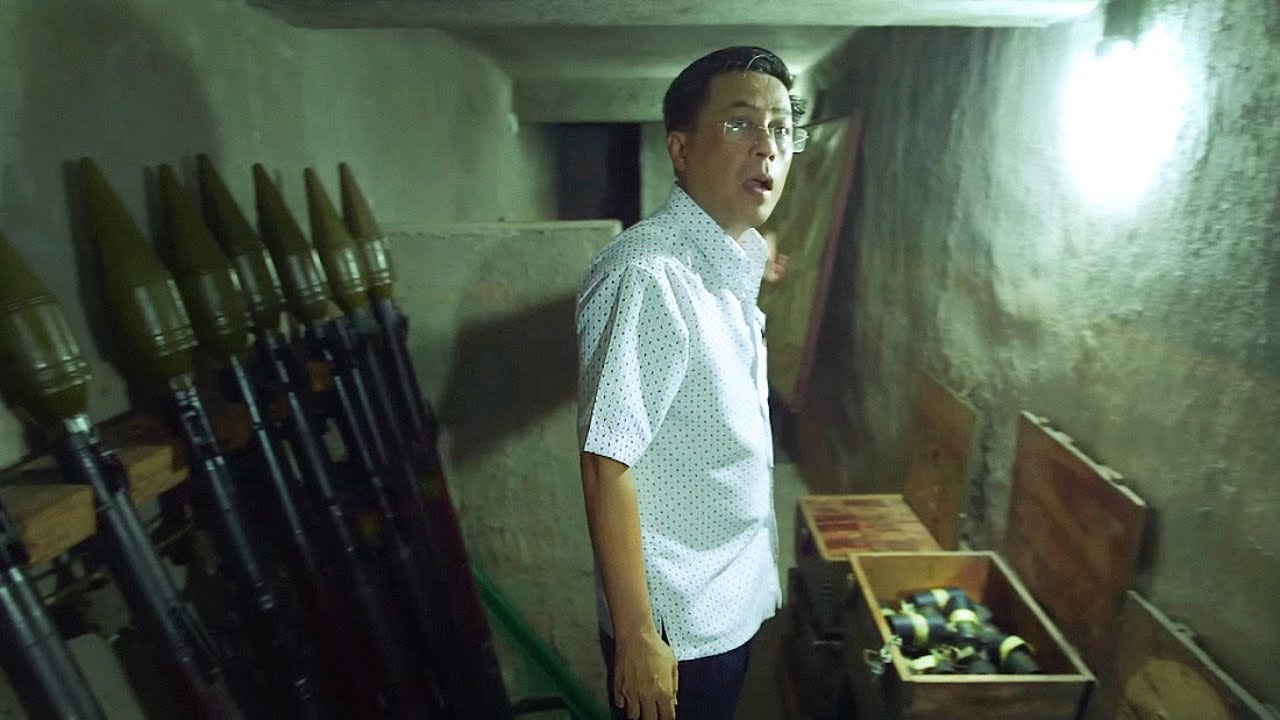
As for items, he discovered 8 rifle grenades, 40 pounds of salt, and 6000 pounds of rice, all of which was destroyed. On another mission the tunnel rat found cameras, films and printing presses, as well as weapons and ammunition. There was still a problem, though, and that was the fact that even if the tunnel rats were successful, the Americans still had problems winning the war.
You can take out one tunnel, but there will always be more. This is a quote from Ho Chi Minh, the president of North Vietnam, “You can kill ten of our men for every one we kill of yours. But even at those odds, you will lose, and we will win.
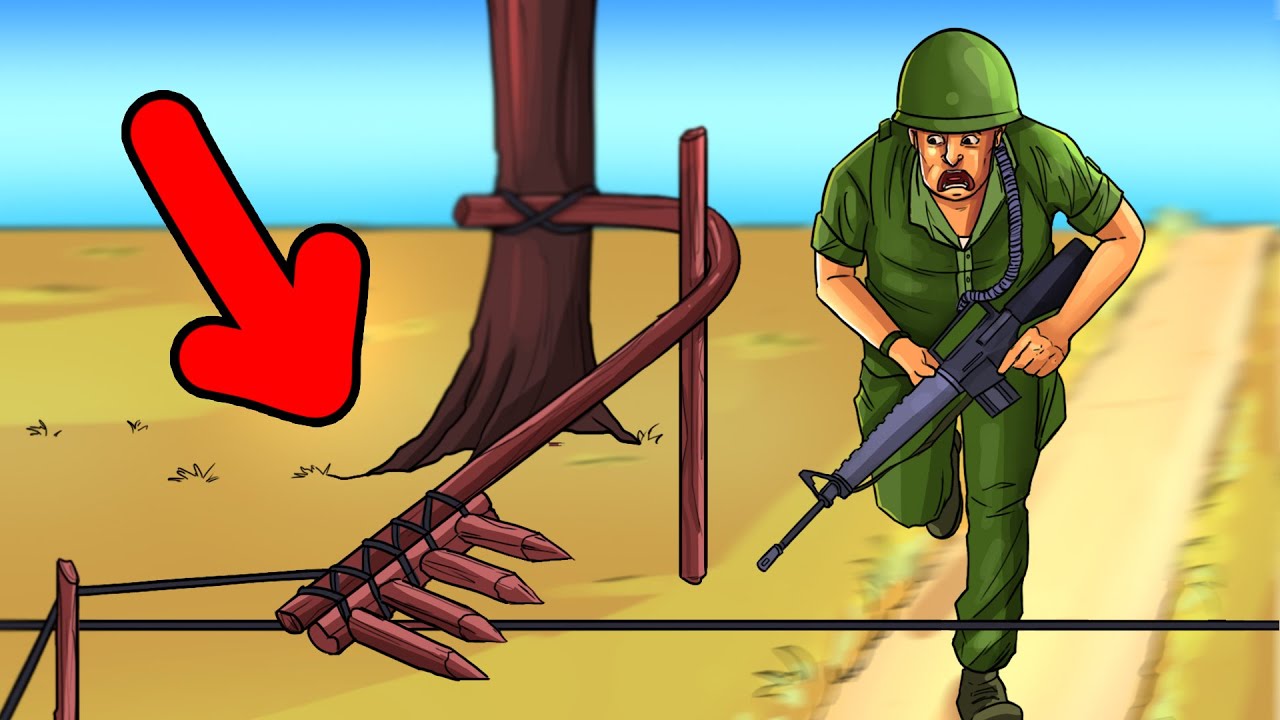
” Take for instance the use of booby traps, horrific things that killed around eleven percent of American soldiers during the war. Sometimes the Viet Cong would put a Punji stake trap in a larger part of the tunnel. These were holes filled with sharpened bamboo that would be covered with branches and leaves.
When a soldier stood on the trap the spikes would impale him, and worse, the spikes might have been daubed with poison or feces. The soldier would then scream out but he wouldn’t die. This was the point, because the Viet Cong wanted more men to go down into the tunnel.
Not only were there often more traps down there, but even if there weren’t, pulling an injured man off sharp sticks and dragging him out through the tunnel was very time consuming. The Viet Cong would later say that the Americans spent so much time and energy rescuing their injured comrades that they had lots of time to regroup and plan what they were going to do next. The sheer horror of those traps were also very bad for morale.
This is what Ho Chi Minh was referring to when he said the Americans would not be victorious. He was right, too. There were other kinds of traps.
A tunnel rat might have hit a trip wire while crawling and then the tunnel would have collapsed on him. There’s a story of a tunnel rat that popped his head out of one entrance and that triggered a spear that went through his neck. At other times the Viet Cong made traps like something you might have seen in an Indiana Jones movie.
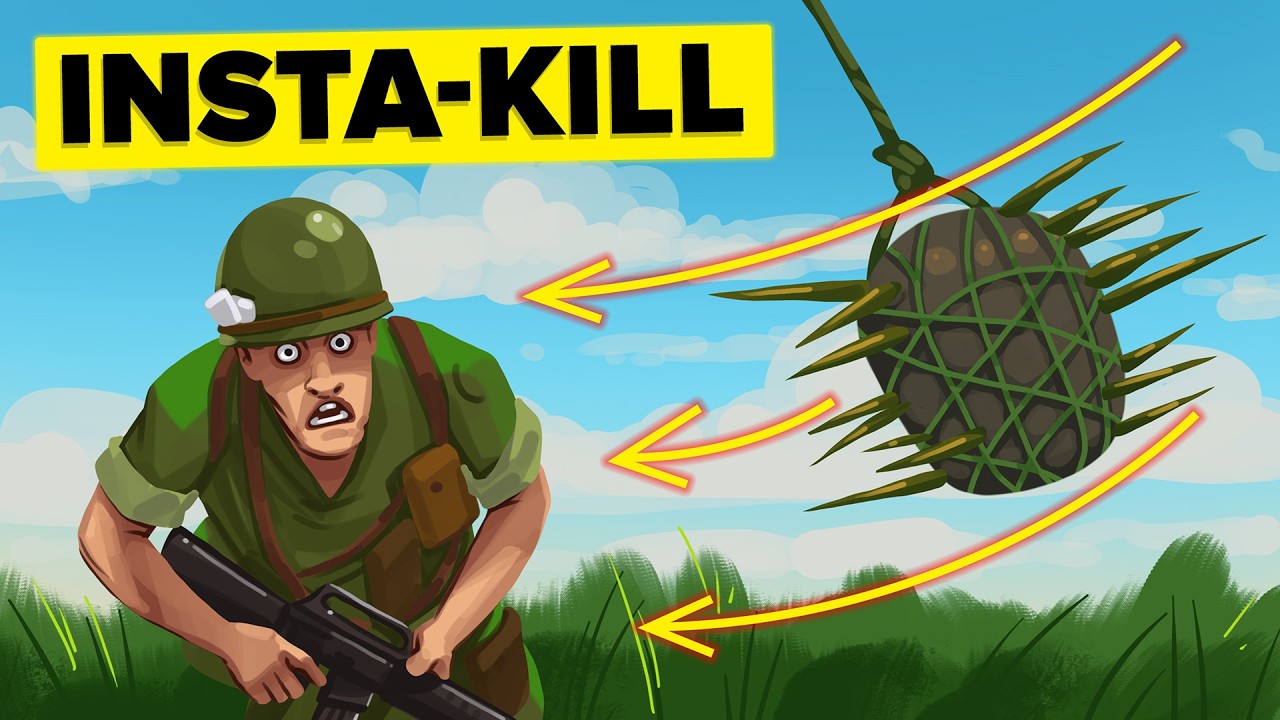
A man could hit a tripwire in a tunnel and then a concrete ball studded with spikes would come flying at him. A lieutenant named Jack Flowers said that he experienced a totally different kind of trap. His comrade went into a tunnel and that man triggered a tripwire.
After that a box full of scorpions rained down on him. Snakes were also used. Sometimes the Viet Cong would place them in bamboo and tie them to the roof of the tunnel.
When the soldier hit the bamboo, the snake would pop out and bite the man in his face. They scared the hell out of soldiers, some of whom called them “three-step snakes”, because after you were bitten you only had three steps before you died. That might be a bit of an exaggeration, but can you imagine being stuck in a dark tunnel with scorpions and snakes.
Flowers went into over 100 tunnels. He later said this about those expeditions, “In the tunnels, your adrenalin was pumping like a river. I swear I could hear my heart beating.
You`d feel your way along for booby traps. It got so you could sense them. The same for VC.
You could smell another human being in the tunnel. You knew he was waiting for you in the dark. ” All these horrors that the Viet Cong created instilled so much fear in the men that volunteering to be a tunnel rat wasn’t exactly on every soldier’s mind.
But someone had to do it, they had to do it for the team so to speak. This is what one American said about men hiding in tunnels, “We often wondered how things happened in the night and we never saw what was going on, guys getting their throat cut. Nobody ever knew where these guys were coming from.
” They had to go down every tunnel they could find, otherwise strange things happened during the night. It created tremendous psychological stress not knowing where the enemy was, so sending down tunnel rats was some peace of mind. There were successful tunnel campaigns such as Operation Crimp and Operation Cedar Falls, but in the end the Viet Cong proved to be more resilient.
While American soldiers were literally having nervous breakdowns going into those tunnels, the Vietnamese soldiers were at home in them. If the tunnels were destroyed, they just built more of them. The Americans had the task of Sisyphus, pushing that giant rock up a slope for eternity.
As for the fate of the tunnel rats, there isn’t any data on how many of them died, but it’s thought most of them succumbed during those horrific explorations of the Vietnamese subterrane. Out of the 100 or so tunnel rats in the American army, only 12 of them lived to tell the tale of those tunnels back on American soil. One of those men was Jack Flowers.
He later said, “Why did we do it? I wasn't a tough guy. Nobody who knows me would ever suspect I could do what the Tunnel Rats did.
I`d never want a son of mine to have to do it. ” Thank God, he said, that these days men don’t have to do what he did. Now you should watch this video, “The Insanely Crazy Story of a Tiny Soldier.
Or have a look at this, “Mad Jack - A Real Life World War 2 Mad Man.