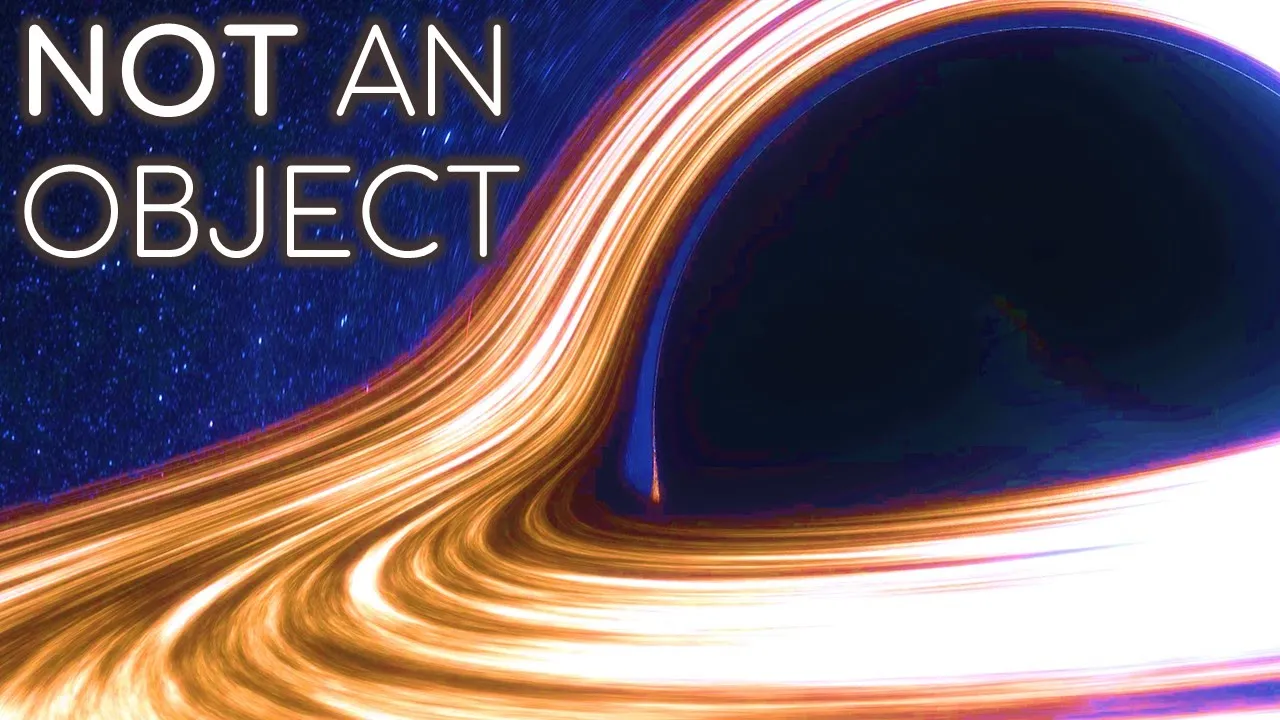
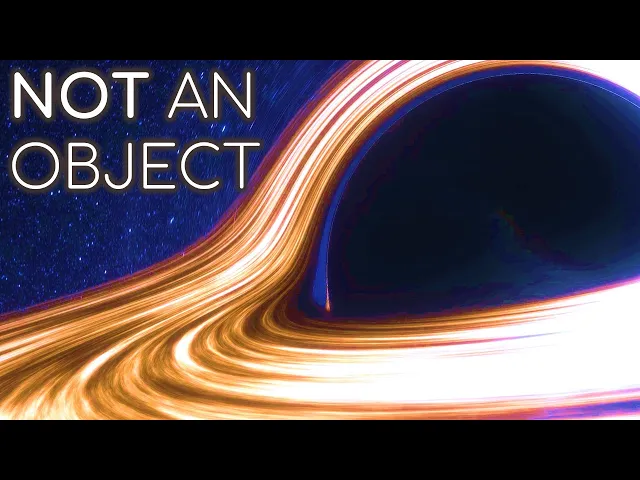
Thanks to Geologie for sponsoring today’s video. Black holes are one of the most mind-boggling aspects of space. For a start, they aren’t actually objects, they are the result of the extreme warping of space-time.
And because of this warping, some really weird stuff starts to go on around them that will change your perspective of the way the universe operates around you. Some of it is so strange that perhaps you wouldn’t believe it was true, were it not for the solid math that backs up their existence and properties, and the increasing evidence that the math is correct through observations in our own universe. I’m Alex McColgan, and you’re watching Astrum, and in this series we will be exploring the unexplorable.
Join me on this journey as we attempt to understand the weird science of how a black hole forms, what goes on around it, and in the next episode, explore what might actually allow for an escape from the most inescapable prisons in existence. I hope by the end of this video to have earned your like and subscription. Black holes come in a variety of sizes.
The smallest observed black hole is around 3. 8 solar masses. On the other side of the scale, we find black holes that have been in existence since almost the start of the universe, black holes weighing billions of solar masses.
These behemoths are not only massive, but also huge, they would easily fit in the entire solar system within the diameter of their event horizon. Black holes being created today are the final stage in the life cycles of particularly massive stars. When such a star is born, it is essentially balancing under the weight of two forces.
The first is gravity, pushing its mass towards its centre. Down in the depths of the star, hydrogen atoms are crushed against other hydrogen atoms with such force that they combine to form a denser element – Helium. This new atomic structure actually needs less energy than it did when it was two individual, separate Hydrogen atoms, so the extra energy left over gets released.
This released energy is the second force. It radiates back out from the centre of the star as heat and light, counteracting the force of gravity pushing in. In this state, the star will remain relatively stable until such time as the reaction begins to stop as it runs out of its hydrogen fuel.
If the star is massive enough, once the hydrogen begins to run low, the star will combine the newly formed helium into even denser materials – like Carbon, Neon, and eventually Oxygen and Silicon. But then it begins fusing Iron. The issue with Iron is that it doesn’t save any energy in its new form, so has no spare energy to release.
It just sits in the core of the star, growing larger. With no energy pushing back against gravity, very quickly, the scale tips. The energy of this collapse is astounding but the force is dependent on the original mass of the star.
Like a hammer striking on an anvil, the mass of the star rushes down to meet the core with such force that the rebound of that blow is what we call a Supernova. Matter and energy are blasted out across the universe from the crack back, in one of the largest explosions possible, which produces elements even heavier than iron, all the way up to uranium. And what is left of the star?
Well, it depends. If the mass of the star and thus the force of the blow was too low, what remains is a neutron star – a small ball of matter at most around 25 kilometres in diameter, and yet so densely packed with mass that it equals a million Earths. But if the mass and thus force was big enough?
Physics as we know it breaks down, and we are left with a black hole. When you see an image of a black hole, the black sphere you are looking at is not actually the black hole itself. Scientists theorise a black hole’s true form is probably even smaller and denser than a neutron star.
In fact, it is likely infinitely small and infinitely dense – a Singularity emitting forces that warp time and space itself. However, we don’t know. And the reason we don’t know is because of something called the event horizon.
All objects with mass exert gravity. We’ve known this since the days of Newton. However, when Einstein came along in 1915 with his theory of general relativity, a contemporary of his called Karl Schwarzschild reasoned from it that there could exist objects that were so massive, they could create enough gravity that light itself could not escape.
And if even massless light photons couldn’t get out, nothing could. When you look at a picture of a black hole, you are not seeing the black hole itself. You are seeing the event horizon around it – the demarcation line where gravity has become so powerful that light can no longer leave.
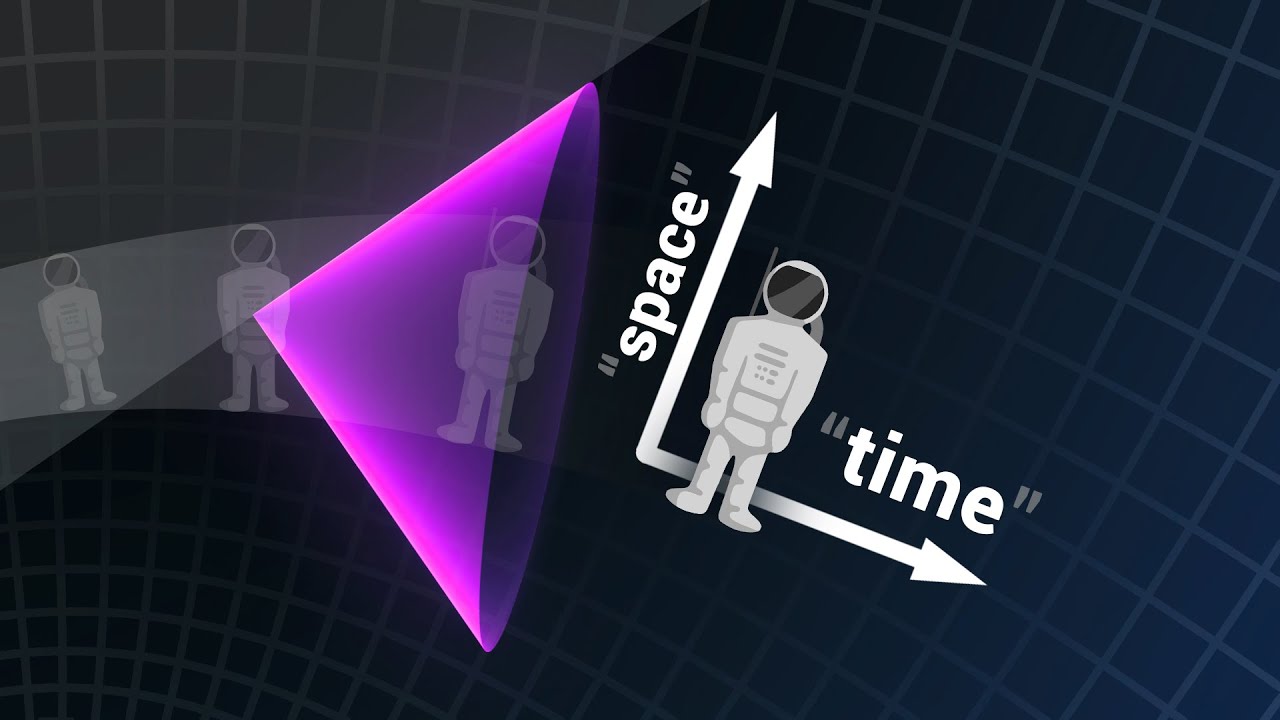
There is nothing but darkness. Now, its effect on space is one thing, but black holes also impact another aspect of the universe, time itself. You see, according to Einstein, space and time are inseparably connected, and mass warps spacetime.
With the singularity’s infinite point of mass, it stretches space-time so much that the event horizon also marks the point where time stops. Within the event horizon, space and time basically cease to exist, a place where there is no ‘where’ or ‘when’. This produces an interesting phenomenon to an outside observer watching matter fall into a black hole.
From their perspective, as the matter approaches the black hole, it will slow down until just before the event horizon, where it will stop altogether. You won’t ever see it cross the event horizon, there will be no satisfying absorption. Instead, the matter will gradually dim until you can’t see it anymore.
When first theorised, astronomers and physicists were uncertain if black holes were actually real. It was only 40 years later that the first evidence of a black hole was recorded. In 1964, using newly developed x-ray satellites, scientists noticed an object in the constellation Cygnus that seemed to be emitting a large amount of x-rays.
Strangely enough, though, scientists could not see the object itself. It surprised them because if it was a star, it ought to emit visible light as well as x-ray radiation. Scientists called this object Cygnus X-1.
In 1970, as telescopes advanced, they noticed that whatever Cygnus X-1 was, it had formed a binary orbit with a star in its system, and this helped scientists calculate its mass. They discovered that this invisible object was 15 times more massive than the Sun. As the densest neutron star had an upper limit of 3 times the mass of the sun, scientists realised that this was most likely the first ever discovered black hole.
Since then, we have discovered many black holes. Supermassive ones seem to exist at the centre of galaxies, and we’ve even managed to take photos of some, dark blots against a swirling ring of matter that surround and fall into them – their accretion disk. This is how black holes can still be detected through x-rays.
While black holes can’t emit visible electromagnetic radiation themselves, the x-rays that come from them actually originate from their accretion disks, where infalling matter gets heated to millions of degrees Celsius through intense friction. Black holes with no infalling matter are basically invisible, with no bright accretion disk to spot. Exploring black holes is still a developing field in physics, and there is still much to learn.
From just what we’ve learned so far, you may wonder if a black hole could ever stop being a black hole, or will it grow forever until there is no matter or radiation left in the universe? It would seem so. However, in 1974 in his paper entitled “Black Hole Explosions?
”, physicist Stephen Hawking postulated that there actually was a way that energy, and thus mass, could leave a black hole. But to understand why, we have to get into some extremely weird theory. We need to examine some principles of quantum mechanics.
But first, let me ask you a difficult question: what is “nothing”? Imagine for a second a patch of space with nothing inside of it. It has no atoms of space dust, not even radiation passing through it.
As near as can be seen, nothing exists within it. And yet, is there really truly nothing here? Well, no.
Something fundamental exists here, and we can tell that this is the case when a beam of light travels through it. If you are familiar with the properties of light you will know that light is actually waves of electrical and magnetic charge that are constantly propagating each other forwards in a straight line. However, let’s take a look at that word “wave”.
A wave in the sea is the propagation of energy moving through the water. If you were to look at an individual particle of water, it’s not really going anywhere except in a circle, and yet because it passes energy to the atoms next to it, energy travels towards the shore in a constant motion that goes all the way to the beach. Similarly, a sound wave moves by passing energy between air particles, with each particle only moving a tiny bit, becoming energised and then passing that energy to the next particle in line.
But in our vacuum of space, where there is nothing in it, where our photon of light is travelling in waves, have you ever stopped to wonder what exactly is “waving”? This hints at a fundamental something that exists even in nothing, a fabric that makes up all of reality itself. Quantum physicists call this “something” a quantum field.
Quantum fields are tough to wrap your head around, but they are inescapably important when it comes to understanding the end fate of a black hole. And this is something I hope you’ll join me in the next episode for, where I will explore this in depth and hopefully in a way that doesn’t require a major in astrophysics. But for now, let’s look at science a little closer to home.
Picking the right skincare product might seem as foreign as quantum mechanics, but it doesn’t have to be that way. With Geologie, skincare is not a gamble, because they use scientifically trusted ingredients, like salicylic acid and retinol, which are proven to help against wrinkles, acne, oiliness and dark or puffy undereyes. And yes, everyone’s skin is different, which is what makes their purchasing process so great.
Through their questionnaire about your skin, they can tailor the formula of the product just for your skin type. Knowing that gave me a lot more confidence to use their product myself. They have great reviews, and have a really great deal on right now, as by using my link below, you can get 50% off a 30-day trial set so you can see for yourself if it works for you, and beyond that you will have get a permanent 22% discount for life on their products going forward.
Their subscription is flexible and you aren’t locked in, so I highly recommend giving this a go! Thanks for watching! Want to know more about the most active black holes in existence?
Check out my video about them here. Thanks as always to my patrons and members for supporting the channel, if you found value in this video and want to support too, check the links in the description below. All the best, and see you next time.




![The Largest Black Holes [4K]](https://img.youtube.com/vi/gIvGSW1Mlm8/maxresdefault.jpg)

![The Other Side of a Black Hole [4K]](https://img.youtube.com/vi/ZVPsNDonA84/maxresdefault.jpg)