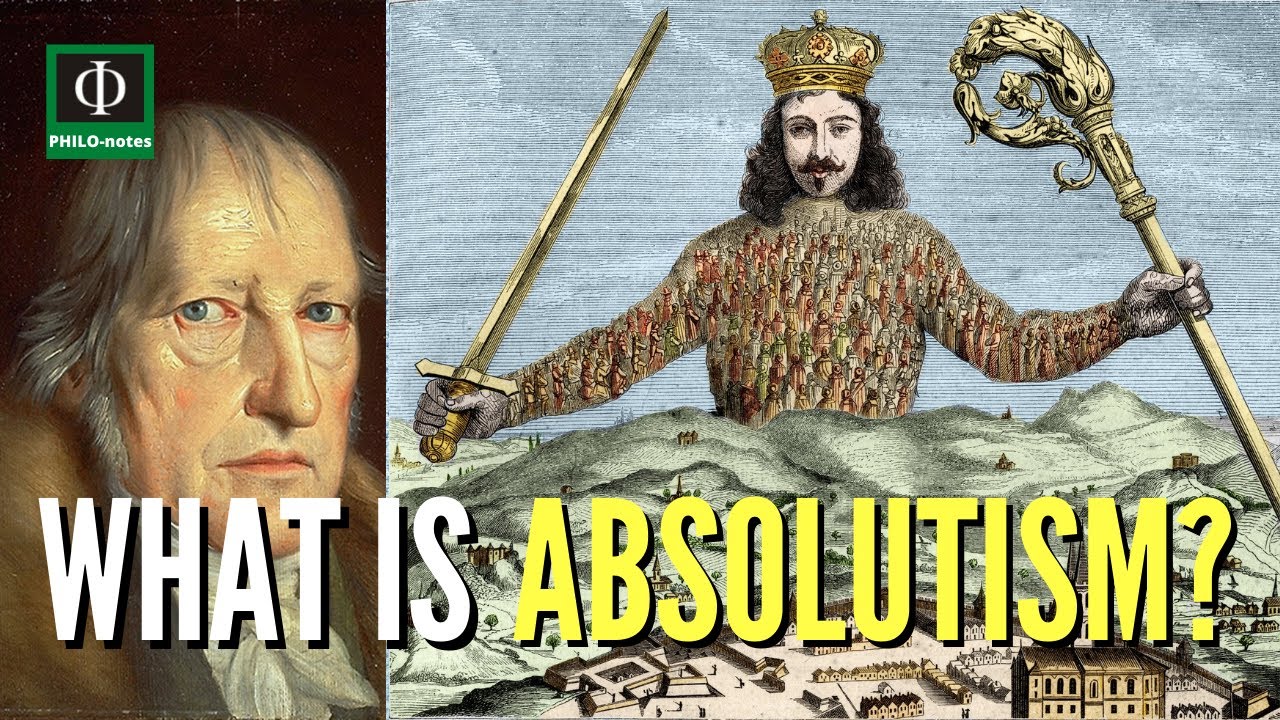
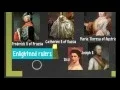
In the eighteenth century, the absolute Monarchy was the most common kind of government in Europe. In France, Prussia and Russia, for example, kings ruled directly and their power was unlimited. Some kings, however, were attracted by the new ideas suggested by the Enlightenment movement, so that kings began to govern following the principles of Reason and using their power to improve people’s lives and to re-organize the “state” through a series of reforms.
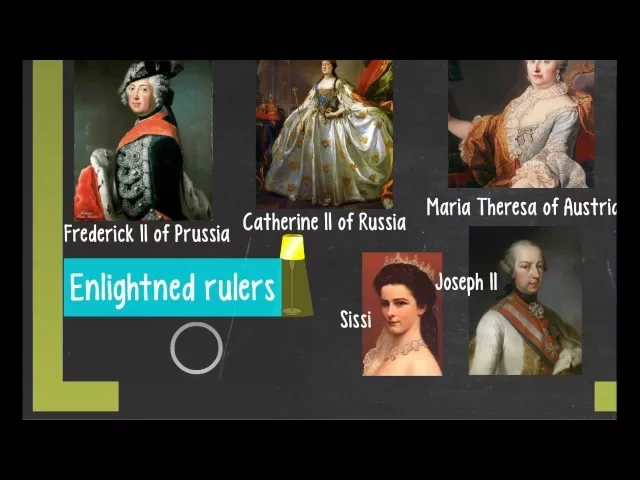
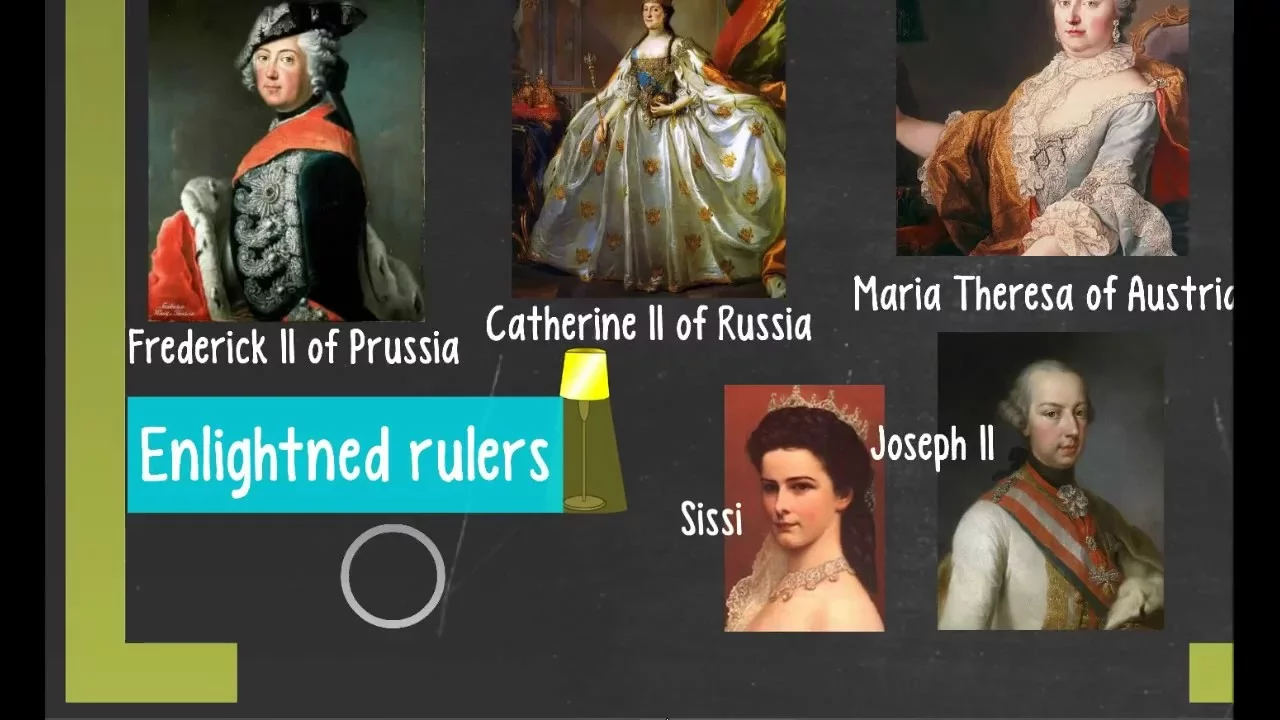
This form of monarchy was called enlightened absolutism. Some of these enlightened rulers were Frederick II of Prussia, Catherine II of Russia, the Empress Maria Theresa of Austria and her son Joseph II, the famous Princess Sissi’s husband. All of them tried to modernize the state, to fight the power of the feudal nobility, to make it more equitable justice and to limit the expansion of Church property that restrained the national economy development.
Many of them also allowed religious freedom and promoted the equality of all citizens before the law, avoiding privileges for the nobility. For example, Maria Theresa of Austria introduced the Land Registry, which is a register indicating the ownership of all lands and buildings which served both for legal purposes, mainly to ensure the possession of the goods themselves and establishing the taxes to be paid on those properties. The government of her son Joseph II was not too strict, but efficient.
Frederick II of Prussia improved the administration of justice. He abolished torture and strongly reduced the death penalty. He also made compulsory primary education up to 13 years for boys of all social classes, and he opened schools in small villages to help farmers’ children.
Catherine II of Russia confiscated many properties belonging to the Church and tried to promote many reforms inspired by the ideas of the Enlightenment, but without much success because Russia was a very conservative country. In the eighteenth century, reforms took place in Italy, too. Especially in Lombardy, which was part of the empire of Austria.
Milan became the European Capital of Culture, with the presence of famous Enlightenment thinkers as Cesare Beccaria, Pietro Verri, Alessandro Verri, the scientist Alessandro Volta and the poet Giuseppe Parini. Some reforms were introduced also in the kingdom of Naples. The Grand Duke Peter Leopold of Tuscany was one of the most enlightened rulers in Italy, in fact he designed a constitutional monarchy similar to the English one.
He promoted free trade, confiscated many properties of the Church, re-organized the public administration and justice, abolishing torture and the death penalty. Reforms were also established in the Duchy of Savoy, which at that time acquired new territories. These reforms include the improvement of the education system, the establishment of non-religious schools, and the imposition of taxes also to the nobility and the church.
For all these reasons the Duchy of Savoy can be considered the strongest state of that time in Italy. Reforms didn’t involved England in the eighteenth century because they had already happened in the seventeenth century. In France, the homeland of Enlightenment, there were unfortunately no reforms, despite the strong discontent of middle and working classes that will lead, at the end of the century, to the outbreak of the French Revolution.
In America, however, something was happening that would have changed the world: the American Revolution and the birth of the United States of America.