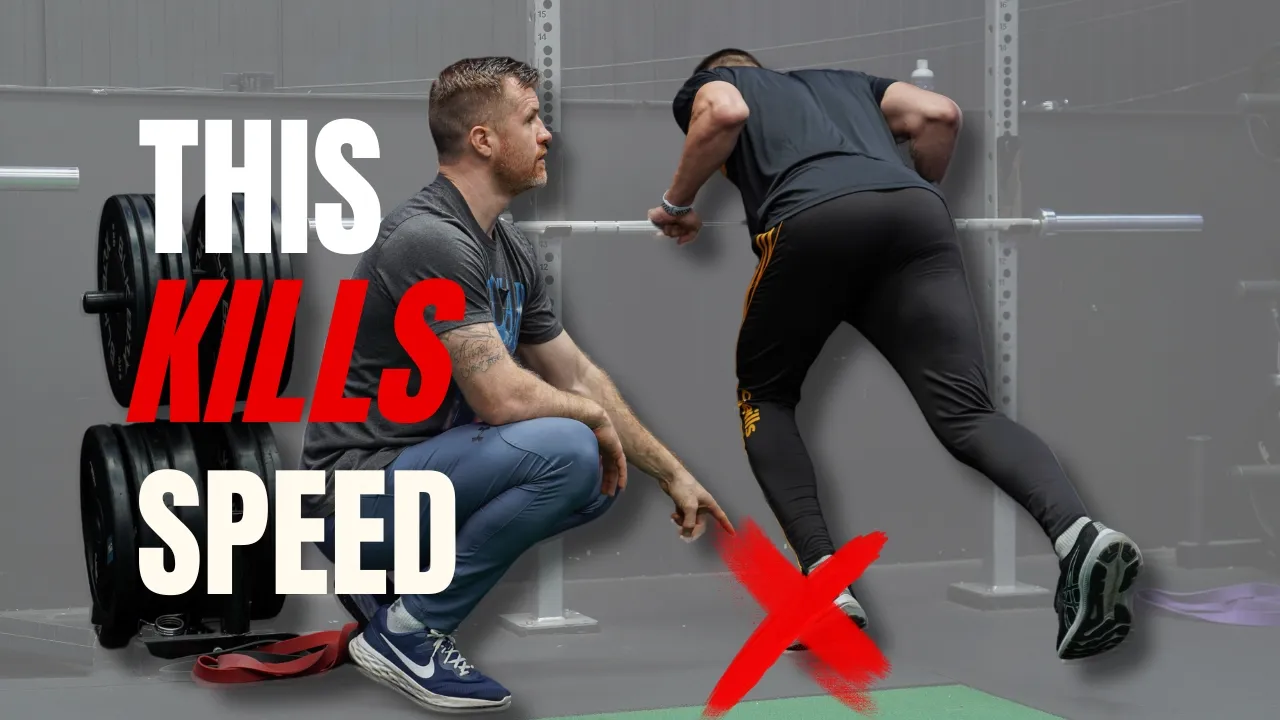
Ever wonder why your speed workouts aren't translating into better sprint times? Well, the biggest problem athletes face isn't the training itself. It's using outdated techniques that stopped working years ago.
So, in this video, I'm going to show you a completely new, safe, and proven approach that makes getting faster easier, and more predictable. Ever wonder why despite training hard, your speed isn't improving? You might have all the right sessions, speed, gym, conditioning, but if they're scheduled poorly, you're sabotaging your progress.
Think of it like baking a cake. You have all the correct ingredients, but if you mix them up in the wrong order, you end up with something entirely different. Maybe a pie or a loaf of bread instead of a delicious Victoria sponge.
Your training week works exactly the same way. Let's look at an example. Maybe your current week looks like this.
A speed session here, a gym workout there, and conditioning scattered around. On the surface, it seems logical, right? But here's the problem.
Different training sessions create different levels of fatigue. Just because you completed a session doesn't mean you're fully recovered the next day or even after one full day's rest. So, here's how to fix it.
Monday, speed session, fresh from the weekend and fully rested. Wednesday, gym session, strength work that supports the speed. Friday, conditioning session, lower intensity and endurance focused.
Why this order? Your body needs maximum freshness to run fast. Placing your most important demanding speed session at the start of the week ensures you perform at the best.
Then gym and conditioning sessions later in the week support your speed workout, negatively impacting recovery. Think about it. By Friday, you're already tired from a long week.
Why would you try and run your fastest when you've had the least rest? Just like baking, your training needs the right ingredients in the right order. Did you know that the order of exercises in your session can make or break your speed?
Just like a poorly structured week, a badly structured training session will limit your ability to improve. When I first started coaching speed, I made a common mistake. I structured sessions like gym workouts, doing big lifts first, followed by smaller assistance exercises.
I thought sprinting would work the same way. So, after a quick warm-up and a few drills, we jumped straight into fast sprints. The athletes ran fast, sure, but their technique wasn't improving.
they weren't actually getting better at sprinting. Does that sound familiar? Once I realized this mistake, I knew something had to change.
Instead of immediately sprinting, we needed to prepare the athletes bodies and technique first. Here's the session structure that transformed our results. We started with an extended warm-up to prime muscles and joints.
Then skill-based speed drills to build technique and muscle activation. Sprinting and sprint variations were performed when athletes were fully prepared. This simple shift was a gamecher.
Within just weeks, athletes who had struggled to improve for months shaved nearly 3/10en off their 10 m sprint times. If you want to see dramatic improvements in your own speed, try restructuring your sessions this way. You'll be amazed at the difference it makes.
So now let me show you what exercises I implemented with my athletes that made these drastic changes possible. The best exercises to use to improve your speed doesn't have to be complicated. In fact, I've spent my career simplifying speed training for athletes just like you.
Think about how you learned your sport. You started slowly, mastered the basics without pressure, then gradually increased complexity. Learning how to accelerate quickly follows exactly the same approach.
We've already covered why structuring your week and your training sessions correctly is so important. Now, let's put this simplicity into action. We'll start with acceleration.
One of the easiest areas to quickly see improvement. Acceleration can be broken down into two straightforward ideas. Lean and balance to comfortably position your body weight forward and stay stable.
Two, rapid ground contact. Quickly and powerfully strike the ground, alternating your legs. To master these two ideas, I use simple exercises stacked step by step.
Just like building a house brick by brick. These core skill building exercises form the foundation of our sessions, making it easy to use the strength you already have, but in the right way. Here are three simple exercises I start with immediately to help athletes accelerate faster.
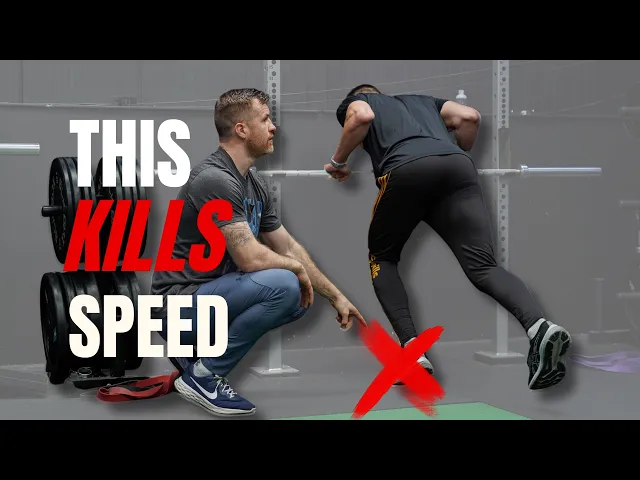
The bilateral wall squat. Lean forward, placing your weight into your hands against the wall. Move freely up and down in a squat motion.
This teaches forward balance and helps you become aggressive off the mark. Number two, a single leg wall hold. Take the same forward leaning position, but on one leg.
Hold static positions and add dynamic movement and resistance. This builds strength, stability, and balance exactly where you need it. Number three, single leg wall exchange.
From the single leg position, quickly and powerfully switch legs. Push your hips forward aggressively and as you alternate, this develops the explosive leg action essential for acceleration. By using these three simple exercises at the start of your session, you'll quickly build the skills and strength needed for powerful acceleration without confusion or complexity.
The thing is, even though you now know how to structure your week, your workouts, and some exercises, there's one more thing that you need to master. Because if you don't, it doesn't matter if you can put your leg in the right place on the wall. You need to do it all in motion.
So, watch the next video where I will show you how to take these drills and get them to rocket your acceleration when combined with a special framework I created myself. Thanks for watching.