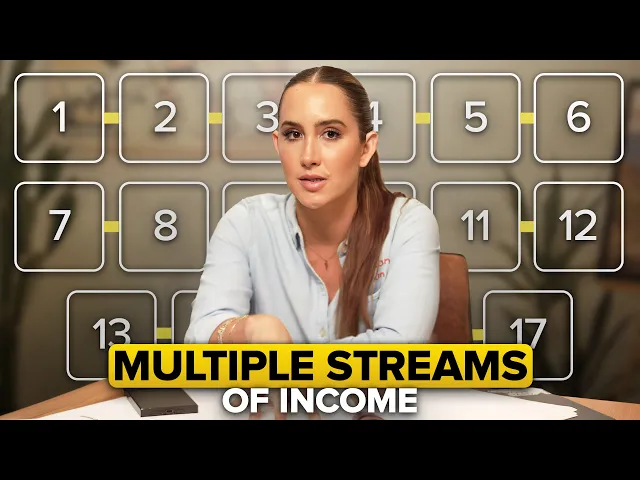
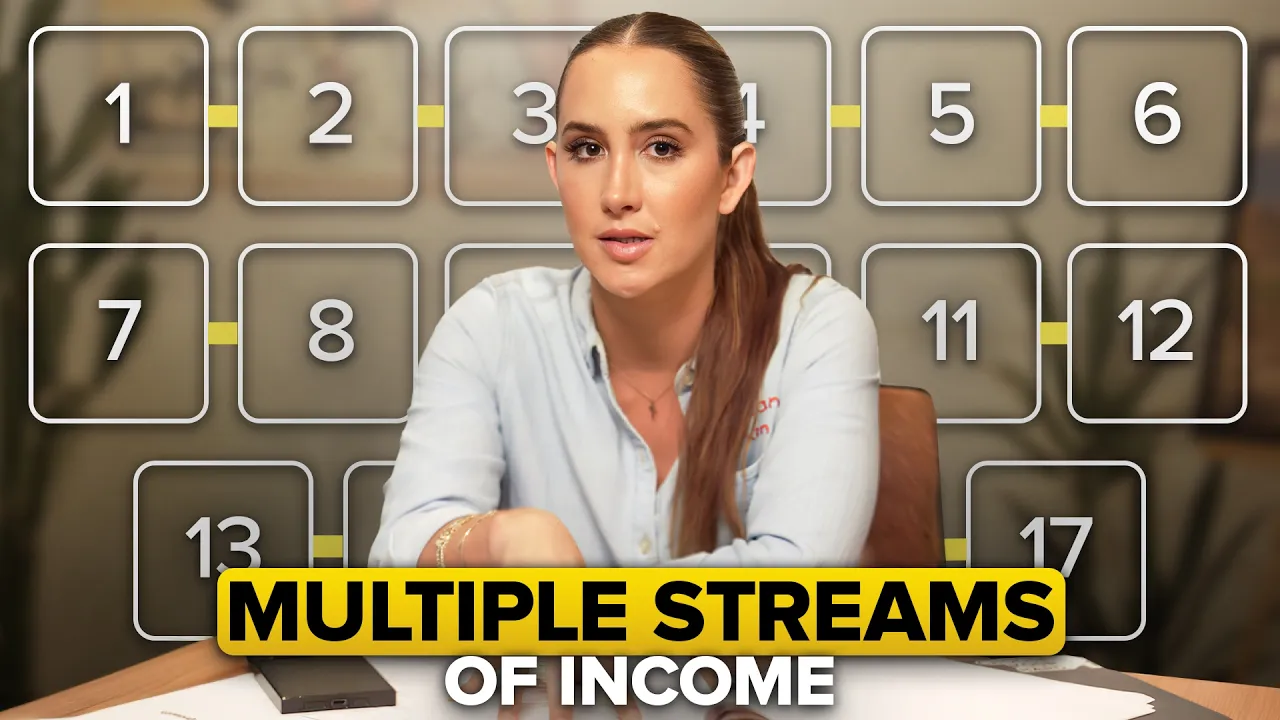
I have 17 different income streams right now. Some are weird, some are obvious, and a couple might surprise you. If you've ever wondered how entrepreneurs really make money, I'll show you across all 17 different income streams I've built.
Because at the end of the day, that's what building multiple income streams is all about. A chance to play at the highest level of the game. There's five levels to this game.
Level one, time for money. This is where you're trading your hours directly for dollars. The problem, if you stop working, the money stops, too.
AdSense from YouTube. So, here's how it works. You do not need a million followers.
You don't need to go viral. You just need consistent, watchable content. When you hit 1,000 subscribers and 4,000 hours on YouTube, they unlock something called the YouTube partner program.
That means YouTube starts showing ads on your videos and gives you a cut of that money. But how much money are we actually talking? A basic rule of thumb is you earn about three bucks to 20 bucks per thousand views depending on your niche.
Views like mine, finance, business, real estate, higher CPM, which is a fancy way of saying cost per thousand views. Gaming and pranks lower. So, if one video gets 100,000 views, that could be anywhere from $500 to $2,000 in income just from one piece of content.
I thought I'd share my real numbers with you. So, in 2024, I made $360,000 on YouTube. Here's why I like AdSense, though.
It scales while you sleep. So, once you post a video, it can keep earning for months or even years. And honestly, YouTube is one of the few platforms that actually rewards long- form content.
This one, you can see here, we filmed in 2024 and it's still earning. How do you start? First, you pick your niche.
Second, create videos that solve problems or entertain. Third, don't overthink the gear. Your iPhone, natural light, fine at first.
Four, post at least once a week. Treat it like a business. Is it easy?
No. Is it fast? Definitely not.
But AdSense is one of those streams that feels great when it kicks in because now your ideas make you money. All right, the next one I want to talk about is ads and sponsorships. This is when brands pay you to talk about them.
And it's not just for big influencers. You don't need millions of followers. You need some trust and an audience that cares about what you say.
Here's the basic idea. you got a YouTube channel, a podcast, a newsletter, or even just a loyal Instagram following. A brand wants access to those people, they'll pay you to get in front of them.
It is high margin and you can scale it up fast. For example, you do a YouTube video and mention a sponsor in the first 60 seconds, that's typically a flat fee. You write a newsletter and include their product as a featured link, that's another check.
You post on Instagram with a product you already use, same deal. I don't actually like doing these unless it's with companies I really love. Here's a rough guide, though, if you want to do it.
Okay. A small creator with 5 to 10k followers could earn 250 bucks to 500 per post or newsletter. A midsize creator is about a,000 to 5,000 depending on the niche.
Brands actually love micro influencers. You're having a real moment right now if you're tiny on the internet. How do we start?
Know your audience. Who follows you? What do they care about?
Two, make a media kit. It can be a one pager in Canva like these with your reach, open rates, what topics you use. These are free.
Start with products you already use. Tag them, review them, build proof before pitching. Four, you reach out directly.
So, if you're not going to use a software, DM the brand or find the marketing person on LinkedIn. Keep it short and clear. The real unlock, though, don't take every deal.
Take the right ones. If your audience trusts you, I don't want to sell that out for 500 bucks. All right.
The TLDDR is in the beginning, this is enough to buy you a couple dinners a month. Probably not much more. Public speaking.
Before you skip thinking, I'm not a speaker. Hear me out. I didn't start out on big stages.
I didn't even like being on camera. But here's the truth. If you can clearly explain a topic you know to one person at a time, you could be a public speaker.
companies, conferences, universities, mastermind groups, they all pay good money to bring in people who can teach, inspire, or give their audience something tactical. You speak for 30 to 60 minutes. They cut you a check.
And if you've done anything interesting or are a storyteller, someone might be willing to pay you for it. I mean, look at all of these people. There are people getting paid on their 5K, 10K to speak, and I've never heard of them.
They look like they work jobs right now. Let's talk about affiliate. This is where you recommend a product or service.
Someone clicks and buys on your link and you get a cut of the sale. So, no inventory, no customer service, no shipping. That's sweet.
You don't have to really build a whole business. You basically are like a digital connector making introductions. You bring the buyer to the seller, they close the sale, you get paid.
You got to fulfill nothing, which is hot. What I love about affiliate income is you can make money off things you're already recommending anyway. You tell your friends to use this app or that software or this book, might as well get paid for it.
Like, say you recommend a software tool that does 100 bucks a month. In some companies, you get 30% every month they stay subscribed. Also, AI companies right now are paying like crazy.
I'm talking 2-year payouts. It's wild. I should know we did a deal with one.
So, let's say you help 100 people sign up. That's $3,000 a month for as long as those people stay. And it keeps coming.
Now, how do you get started? One, start with what you actually use. Think books, tools, apps, courses.
If you get paid for it and like it, someone else probably will, too. Two, sign up for affiliate programs. Amazon Associates, easiest one to start.
After that, look at like rewardful impact, share a sale, or you can go directly to the company's website and search affiliate. Third, drop your links where people already listen to you. Newsletters, blog posts, even email footers.
Four, be honest about it. Tell people it's an affiliate link. They won't care if it's real value.
Also, it's like super hyper illegal to not. Cody doesn't look good in orange, baby. Let's keep it legal.
Is this going to make you rich overnight? No. No.
No. No. No.
No. You need big distribution to do this. But if you stack enough of them over time, it can become real money.
Let's get to the second level. Level two is your own service business. Now you're using your skills or systems to run a business that serves clients directly, usually with high cash flow, but more hands-on.
Time to talk about consulting. Now, when people hear the word consulting, they picture some overpriced MBA in a suit telling you to like optimize synergies or something. That's not what we're doing.
Consulting is simply this. You get paid to solve problems you already know how to solve. Simple.
My first consulting client was actually when I was in finance. I was still working. There's a company called GLG.
It's a marketplace where they allow you to do consulting and people just reach out to you. I still get text messages from them even today. I I also like to mess with them and tell them ridiculous rates and see if anybody will pay it just for shits and gigs.
So, whatever you do for a living, marketing, business, accounting, social media, trades, just being young and having opinions, sometimes there are people that want consulting on that. And so, I made my first couple thousand bucks when I was still an employee doing this. Here's the thing about consulting.
It's one of the fastest income streams to start because it requires almost no overhead. No product, no inventory, no tech. Here's the basic play.
Pick your lane. What's your problem? Be specific.
Not I help businesses grow. More like I help home service businesses add 10K a month in recurring revenue. Clear offer.
Number two, one-time strategy calls, ongoing coaching, VIP meets. Charge based on the value, not the time. Three, you want to get some social proof.
Your first clients can be beta testers, discounted or even free. Ask for the testimonials. That's worth way more than raise your prices.
Four, content to drive leads. So, you're going to share many lessons online. Make your thinking visible.
People start commenting. Do you offer one-on- ones? You're doing it, baby.
Next, revenue from my home service companies. Now, as many of you may know, I make money from roofing, window cleaning, a garage upgrade company. They're unsexy to most people, but to me, it's a cash flow dream.
Let me explain. So, they're your classic small local businesses. Fix real problems.
Roofs leak. People can't fix their own toilets. They call you.
You show up, you get paid. But here's the best part. I don't run these businesses.
I own them. That's a key difference. They have operators, teams, systems.
I help with the strategy, marketing, or financing, and they do the day-to-day. This is really interesting. We have this one company called Brezi Brands that owns a bunch of these service businesses.
And we take a cut of all of the royalty revenue that our members make. So, for every franchisee that I have revenue driving and making money, well, I get paid a little piece of that. So, I'm incentivist at scale.
Most people overlook these businesses because they're not sexy, but that's why they work. Less competition, more demand, higher margin. Here's how you can get started.
You can buy an existing one. You go to sites like Biscout. Full disclosure, I own that company.
Um, you can look for service businesses. Use SBA loans. They can help you to buy 10% down.
Two, you can partner with an operator. You bring the strategy or the capital. They run the business.
You split the profits. Three, make it boring. systematize it, build a brand.
Let's be clear, not passive income, but it can be leveraged income because once the team and systems are in place, it runs whether I'm in town or not. So, if you're looking for wealth that's not relying on followers or tech, I like bluecollar businesses. Not as sexy, but it's recurring cash.
All right, next income stream, book royalties. You write a book once and every single copy that sells puts money in your pocket. But here's the truth.
Writing the book is only half the battle. The other half is selling it. And that's where Omniscent comes in.
When I started selling my book, I didn't just want people to buy it once. I wanted to build a system that kept sales coming in automatically. So, you can set up a Shopify store, plug it into Omnisend, and let it handle the heavy lifting, crafting subject lines that people actually open, sending welcome emails that sound like me, not a robot, reminding readers who left the book in their cart to come back and actually check out.
And here's the crazy stat. 87% of automated orders come from just three flows. welcome, cart abandonment, and browse abandonment.
Exactly the same ones that I look to set up for my book. So, once it's running, it works 24/7 without me touching it. That's real leverage because now your book keeps selling even when you're not working.
If you've got a book, a product, or an e-commerce store, you should try this. Try out Omnisense today at omnisend. com/cody Sanchez and use my code Cody Sanchez 30 for 30% off paid plans.
Level three, productized services. Here you're turning your knowledge or service into a repeatable product like a course, membership, or packaged offer that scales beyond your time. So these are some of the first things that I did when I made money on the internet.
Courses and communities. This one's a turning point because this is where you go from one to one to one to many. Instead of talking to them face to face, you create digital courses and online communities.
You can even have other people run them. And I run mine through contrarian thinking. In ours, we have a community for business buyers.
We have a community for business builders, probably six events a year. We have four different courses or curriculum that we teach people. And here's the idea.
You take what you know, what you've done, what you've built, what you figured out, you turn it into a structured format that helps other people get the same result. And here's how to get started. You pick one transformation.
So don't try to teach everything. Focus on one result. Like, how do I buy a small business in 90 days?
How do I go from zero to 5K a month in cash flow? Now, you got to actually be able to deliver on those. to pick one you can.
Two is you start with a beta version. I like selling it before you build it. Like offer the first round a discount live or over Zoom to test and improve it.
Even start with a focus group. Three, record the content. Doesn't have to be fancy.
Loom, Zoom, iPhone works. My first one, I recorded it on Zoom in my tiny bedroom in San Diego forever ago. Just make it clear and useful.
And then four, add community. This one's optional, but super powerful, also harder. So, Slack, Circle, Discord, pick a platform, give your people a place to connect.
The next one's venture capital fund management fees. I know it sounds a little fancy, but I'll break it down simply. When you run a VC fund, investors, called LPs, limited partners, give you capital to invest on their behalf.
In exchange, you charge a fee to manage that money. Usually 2% of the total amount raised. That's called a management fee.
That's before you even make your first investment. Now, this is not the fund's big money maker. The real upside is if the companies you invest in succeed and exit, they have what's called carry where you can actually become very wealthy by investing, right?
Carry is the percentage of the upside you make on the all of the companies that you invest in. My first fund was called contrarian thinking capital and I did this while I was running other businesses. It's what's called a solo fund.
So I literally raised money from people who follow me online. That fund we invested over the last couple years and it's killed it. This isn't the easiest income stream to break into.
You need experience, a track record, a network that trusts you and people to give you money. But if you're somebody who's already angel investing or advising startups, or you have a strong personal brand in a niche, you might be a lot closer than you think. So, here's how to think about getting started.
One, start small. Before launching a fund, do angel deals. Get a few wins.
Build credibility. Two, join a syndicate. Use platforms like Angelist where you can invest alongside other operators.
It's really easy to start and they do all the heavy lifting on the back end. Three, build your LP network early. That's your investor network.
Like, think these highv value net worth individuals, founders, and exits just like want to throw money at anybody. Of course not. You got to start getting them to trust you early.
Then you launch a micro fund. You don't need $100 million. Plenty of people are still running 1 to 5 million funds to give them early access to exciting companies, but you do need to know what you're doing.
If you're good and use leverage right, you get a recurring income stream and potentially generational wealth. Level four, selling product. Now, we're at the point of creating or owning something people can buy and selling it over and over.
The first one here for me is a SAS company, a software as a service company. Mine's called Biscout. In plain English, you build a tech tool that solves a problem.
Usually, that tech tool was previously a service. So, people pay to use the tool every month. It runs 24/7 whether you're online or not.
Biscout helps people find small businesses to buy. Historically, that could be a broker who helps find small businesses to buy. Now we replace that broker with technology.
This honestly used to be incredibly hard to do and I wouldn't really tell other people to do this income stream. But now like check out Replet and a bunch of these tools that allow you to do this with AI super easily. But let me be honest, SAS is still not easy mode.
You need a real problem, a clean solution, and customer support systems once people start using it. So how do you get started? You solve a pain point you already have.
Don't chase a trend. Build what you wish existed. That's how Biscout was born.
Two, you validate it before building. So, create a landing page, pre-ell it, talk to 20 potential users. Three, partner with a builder.
If you're not technical, find someone who is. Offer equity. Hire an agency.
Just don't DIY if it'll take you a year to figure it out. And then, really important, charge from day one. Free users.
Do not give real feedback. Real customers do. The part you have to remember is you need distribution.
You're going to need to get users. So, eyeballs are going to be the main game after you've created your product. Airbnb.
This is the OG side hustle turned real estate cash income stream. And no, you don't need to own a dozen beach houses to make this work. I own a couple properties located here, California, a few other states.
This income stream has high cash flow potential. You can earn 2 to 3x what you'd make renting the same place longterm. It's flexible.
You can block off days, adjust pricing, test markets, but I would say that it's harder these days. So, be really thoughtful on where you're buying Airbnb. I don't think this is like a one-stop easy way to make money like it might have been a couple years ago.
The key too that I don't think a lot of people realize is you don't have to own the property. There are three ways to run an Airbnb business. Own it.
So, you buy it, furnish it, list it. More capital upfront, but more control and upside. Two, rent it.
This is known as rental arbitrage. You lease a property, then sublet it on Airbnb with the owner's permissions. Lower barrier to entry.
Just know your local laws. I've never done this one. Three, you co-host it.
You manage someone else's listing and take a cut, usually 10 to 30%. But this is this is work, man. Cleaning, messaging guests, managing bookings.
You better have systems or you better have a team. Multif family investments. This is the big sibling to Airbnb.
Instead of renting one unit at a time, you buy a building with a bunch and get paid every single month by multiple tenants. Here's one of the reasons I liked multif family. It's a solid stream.
It's more stable. People need a place to live always. Possession or not, housing is essential.
You get multiple checks from just one property. So, that diversifies your income, reduces risk a little bit. that if one tenant moves out, you're still getting paid by the rest.
Now, this requires a lot more money or what's called capital intensive, like a lot. Not a $500 startup, but it's also not just for billionaires. There are three ways to get started really cheap.
House hack. So, buy a duplex, triplex, forplex, live in one unit, rent out the others. You know what's really interesting now?
There's all these software companies that allow you to actually rent out multiple rooms, too, which is kind of cool. So, you could buy a house with some buddies, you guys could rent out the rooms. with an FHA loan.
You can do this with as little as 3. 5% down. Two, partner up.
You can bring capital or strategy and your partner could bring operational experience or flip that around. Three, invest passively. You can join a real estate syndicate.
Someone else manages the property. You just wire funds, collect checks. Obviously, you got to have money to do that one.
The big problem with this one is there's lots of risk here. I mean, every business has risk, but if you're buying property, you really got to be an expert on the beginning. You can absolutely bankrupt yourself by putting in too much money into some of these deals.
it's going to be hard to bankrupt yourself, you know, doing a little consulting on the side. This is a different level of the game. That's also why at some point it requires a lot less work from you.
It's why it has also all these great tax deductions and long-term can be a huge way to make a lot of money. Finally, level five is building or buying assets that keep paying you automatically long after the initial work is done. Let's talk about this.
Stock portfolio dividends. I know this one is boring and also one of the most beautiful. Dividends are when companies share a portion of their profits with shareholders, aka you, the person who owns the stock.
If you own the stock, you get paid quarterly, sometimes monthly. That's it. You don't need to sell anything.
You don't need to manage anything. You just hold and collect. I've been investing in dividend stocks for all time.
I made a ton of money in 2008, 9, 10 when I was in finance. This is a solo income stream. Here's how to get started or how I did.
Use a simple brokerage. I did Vanguard. There's also Fidelity and Schwab.
easy to use, low fees, trusted that you buy dividend paying ETFs or individual stocks. ETFs I did were like VM or SCHD. They're more diversified.
Or you can go for blue chip companies. That means like highlevel more trusted companies like Johnson and Johnson, Pepsi, Proctor and Gamble, and then just set it to drip, which means you just keep dollar cost averaging, aka putting money in consistently over time. Four, be patient.
Don't day trade. It's a long-term wealth buildinging strategy that gets better the longer you stay in the game. For me, dividend stocks are my sleep well at night income.
When you've got 10 to 15 income streams, you want some that are boring because boring equals consistent and consistent is freedom. Bond portfolio dividends. This stream is underrated.
Here's the simplest way to explain it. When you invest in bonds, you're basically loaning your money to a company or the government. In return, they pay you interest over 3 months all the way up to 36 months.
Unlike stocks, bonds don't care as much if the market's throwing a tantrum. They're slow and steady. I use a company called Percent.
So, Percent allows me to invest in small companies in their debt, and they have a little bit higher interest rate. You've got to pick what's right for you, but I've been investing in bonds probably since 2008. Here's how you can start.
Brokerage account, same platforms we talked about before. Choose your flavor. There's treasury bonds.
Those are backed by the US government. There's municipal bonds or what's called munis. Those are taxfree income.
If you live in the state, there's corporate bonds, higher yield, slightly more risk, or you could just buy bond ETFs like BND or TLT and let them diversify for you. Then you got to decide short or long-term. Short-term, obviously, you can get in or get out.
Long-term, you can get a higher rate. Then you reinvest or withdraw. You can either what's called roll the dividends back in for compounding or take them as monthly cash.
Okay, let's get into the next one. Loyalties and franchises. Here's how this one works.
When you turn your business into a franchise, other people pay you to use your brand, your systems, and your playbook. They open and run the business in their own city, and every month they pay you a percentage of their revenue, which is called the royalty fee. You do the hard work once, build the business model, create the systems, get it profitable, and then instead of running a 100 locations yourself, you let a 100 operators do it for you, and you collect a slice from each.
Our company resibrands is a franchise and so we have something like 700 franchises people all around the country who own varying types of franchises of ours. Now how do you get started? You don't have to be McDonald's or us with resi brands.
You just need a business that's profitable. Other people have to see it works. Systematized so it's easy to replicate valuable to the customer because demand has to be consistent.
Your franchises are going to want you to drive revenue. The play is prove your model first. One successful profitable location is your template.
Protect your brand. So I work with franchise attorneys to make sure your legal documents are all good to go. That's called the FDD.
Then you find your first franchises. Sometimes it's your employee, someone who loves your service. Then you help them grow and collect royalties.
Typically somewhere between 3 and 10% of the revenue, plus upfront franchise fees to get started. Licensing content. This is basically where you make money by letting other people pay to use your content, IP or brand.
Think about it like this. You create something valuable, videos, frameworks, courses, even a viral clip, and instead of just posting it once and moving on, you let brands and platforms or other creators license it from you. That means they pay for the right to use it.
It's the same way Mr Beast makes money when his content gets translated and republished all around the world. One video turns into 20 versions, one income stream turns into many. Now, why is this powerful?
because it's infinite leverage. You do the creative work once, other people turn you into revenue streams. Here's how to get it started.
One, identify what's licenseworthy. You might not have anything now, but if you have like frameworks, evergreen content, media that would work in other markets or languages. Two, protect it.
You need trademark, copyright, or at least put a grievance in place. So, you still own the IP, the intellectual property. And then you partner with distributors.
This could be a media company, a brand, an international publisher. Then you structure deals. You can charge flat fees, like a one-time payment, or royalties, ongoing revenue share.
I like to push for royalties if you believe in the long-term demand. And speaking of this, book royalties. This one's simple but powerful.
You write a book once, and every single copy that sells puts money in your pocket. Here's how it actually works. When you publish a book, whether through a traditional publisher or self-publishing, you get paid a small percentage of the sale with a publisher, and obviously much more if it's yourself.
That once again is called a royalty. Traditional publishing usually pays you 10 to 15% of each book sold. Self-publishing can pay up to 70% through platforms like Amazon, Kindle Direct.
I did a publishing deal. I think I make 10 to 15% of every book I sell, which isn't very much. So, I'm making a couple bucks per book, but if you sell hundreds of thousands continuously over time, it's a nice little income stream.
Here's the thing, though. Writing a book is frontloaded work. It's months of writing, editing, and getting it out into the world.
But once it's out, it can earn for years. And it's not just the money. Books build credibility.
They open doors. They're business cards that never expire. So, how do you start?
You decide your path. Self-publish if you want speed, control, higher royalties. Traditional publishing if you want distribution, prestige, and advanced check upfront.
Pick your angle. What's the one big idea or story you can share. Don't try to cover everything.
Focus on something unique. Three, write with leverage in mind. A book can be content for your YouTube channel, a funnel for your courses, or a tool to get speaking gigs.
This is the important part. Market it like crazy. No matter how good it is, books do not sell themselves.
Venture and angel investments. All right. Number 17, the last one on the list.
This is where you put money into early stage companies. Startups that are just getting off the ground and if they take off, you share on the upside. It's high risk, high reward.
Some companies go to zero, like a lot. Others, they 10, 50, 100x. And that one win can pay for every loss and then some.
Um, if you're not writing multi-million dollar checks yet, you join a syndicate. Platforms like Angelist let you invest as little as 1,000 alongside experienced investors. Then you need to start with industries you understand.
If you know real estate, tech, media, look there first and you diversify. Don't put all your eggs in one basket because most of your companies won't survive and one might change your life. And then expect a really long timeline.
These investments aren't liquid. You can't cash out tomorrow. You're in it for 5 to 10 years.
So that's the ultimate example of stacking income streams. You start with steady, boring ones like jobs, consulting, real estate, and then you use that money to fund bets that can change your net worth forever.