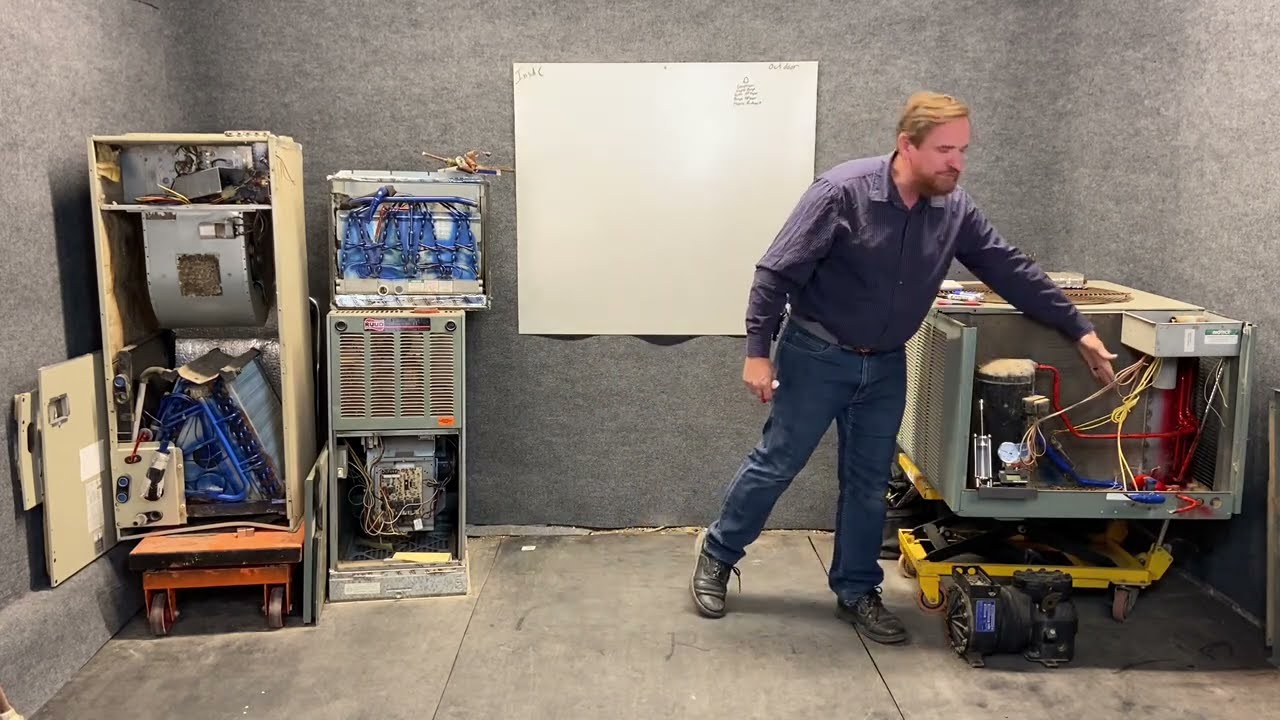
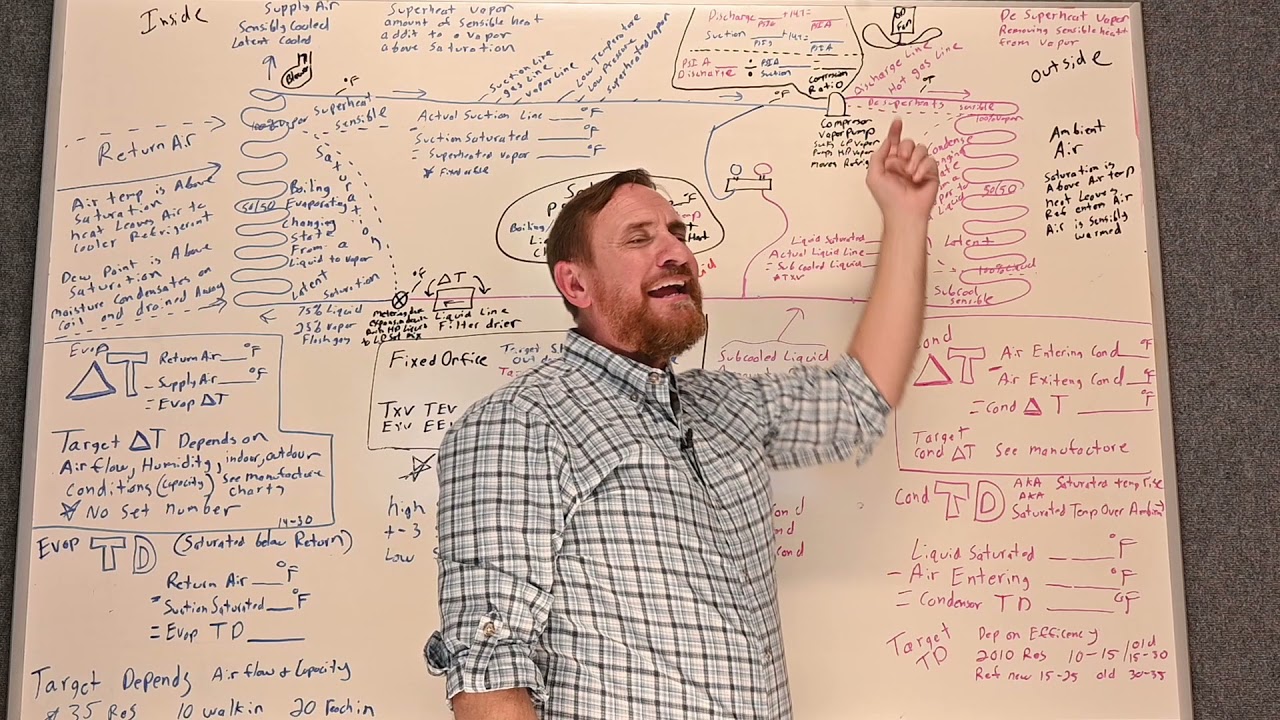
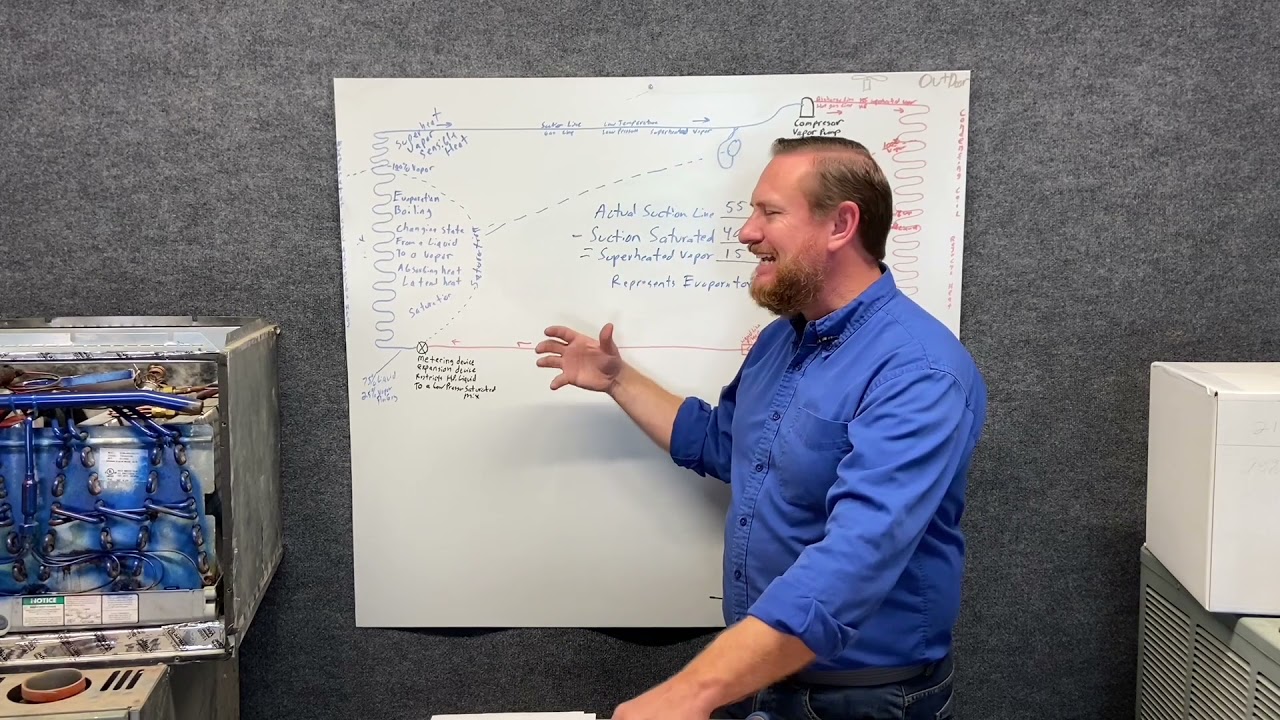
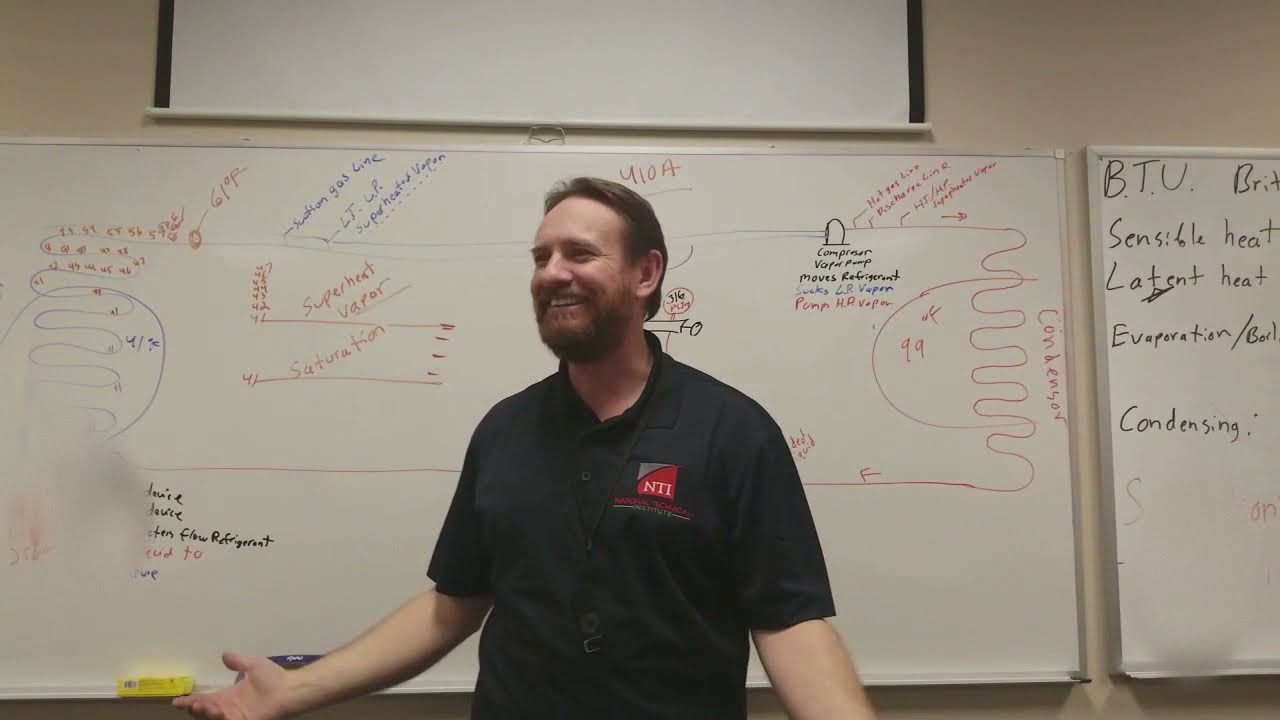
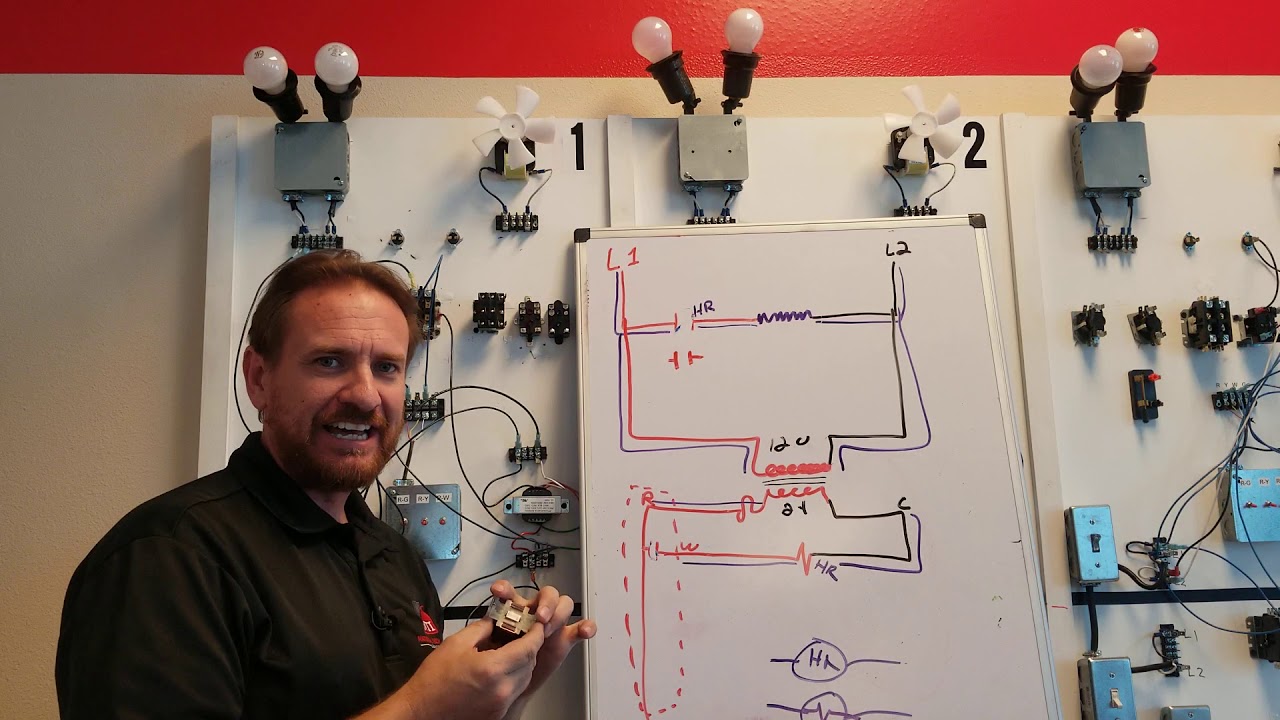
hvac starts right here with this one word called thermodynamics one word thermodynamics but it means two different things thermo means heat and dynamics means how something works so thermodynamics means essentially how heat works in hvac we specialize in moving heat that's essentially what we do now as we go through this there's going to be a lot of points tied into thermodynamics and i'll have some student at some point in time say do i have to understand this and no you don't have to understand this there's a lot of people that's made money changing out parts
and doing maintenance and even doing service work that don't understand thermodynamics but if you really want to take that professional step in your career if you really want to be that specialist we're going to take pride in what you do yes this is where it starts i love my friend joe kikinda who came up with the phrase thermodynamic energy specialist and this is really what we all should strive to be is thermodynamic energy specialist we know that specialists get paid more specialists take a lot of pride in what they do so a thermodynamic energy specialist
is somebody who takes pride in what they do we take pride in moving heat we take pride in our trade i love the fact we have this new term thermodynamic energy specialist joe started this as far as i'm aware back in 2017 and he's been promoting that and i'm right behind you joe i think that's fantastic and this all starts with thermodynamics so let's get started with what thermodynamics really means we have several laws we're going to talk about the first law here today and the first law says energy and now heat is energy so
let's get that together heat is energy there's electrical energy there's heat energy there's pressure energy we're going to talk about energy in relation to heat so this law goes heat or energy cannot be created nor destroyed only transformed from one form to another you may also know this as the law of conservation of energy saying that energy cannot be created or destroyed only transformed from one form to another thermodynamics we use the same word except also in energy we use heat as well so we're just transforming energy from one formula we're not creating energy we're
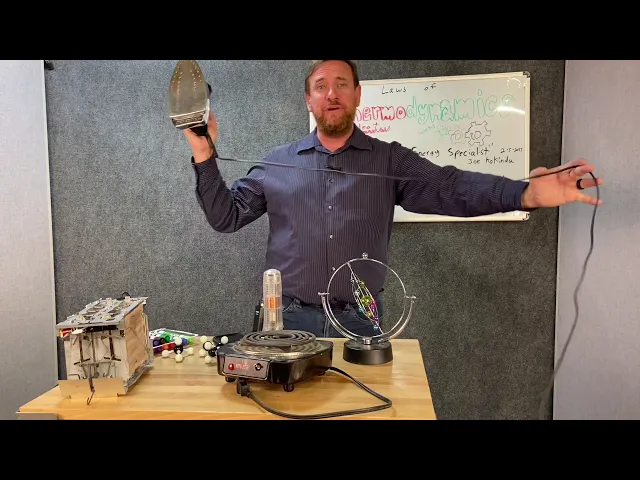
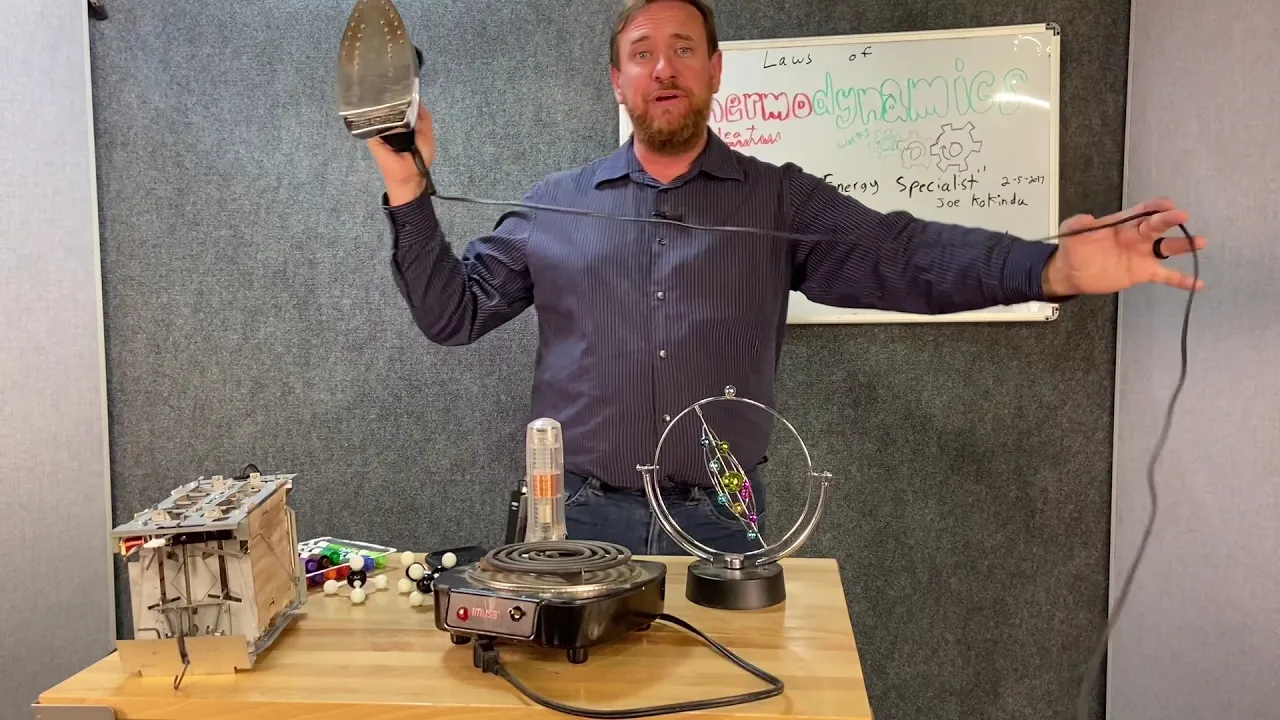
not destroying energy so let's take a little look at what that might mean here we have something you might be familiar with it's just simply an iron i put a 9 on mine so this is my 9 iron but this is simply an energy conversion device what it's doing is converting electrical energy once in the heat energy btus it's an energy conversion device i'm not creating heat i'm really converting it from electricity in the btus which is heat so another one you may be familiar with is this little hot plate here it is also an
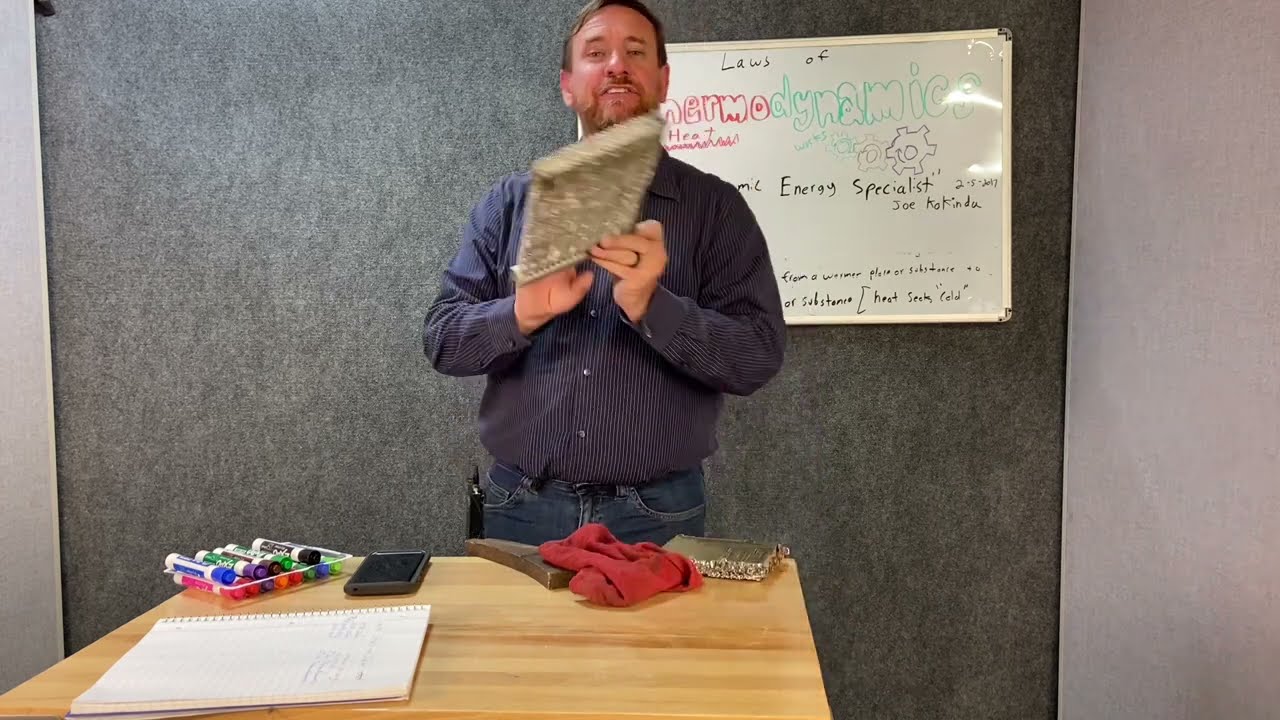
energy conversion device it is converting electrical energy watts and the heat energy b to use so we're just converting energy very simple little component as well as we have another one here which this is the guts of a toaster which lots of hvac parts we'll talk about later but this is converting electrical energy watts in the heat energy btus let's go a little bit further there's other things that we do as well we can convert electrical energy watts into horsepower and with that horsepower i can move it to a fan and move air or move
water or any other kind of substance so we're converting electrical energy into horsepower anything that spins its horsepower and we can move many things with it we can also convert energy into photons so here we get this light turn the light on it creates photons or light energy it's all different types of energy but that energy still has to come from some one familiar form of energy is a type of gas propane or natural gas here it's a potential energy and we light this up it becomes a kinetic energy but it's converting it from one
energy source to another heat energy it also puts out photons as well so it's energy source we're converting it from one source to another and we also have combination devices in this case i have a heater converting watts electrical energy and the heat energy btus as well as a fan which is horsepower so i can move the air across those heating elements and we can take wind energy convert it from wind and the horsepower the horsepower into electricity the electricity can go all across the country to another location we can turn it back to wind
again or to heat or many other sources you could also think about we have water at the big dams the water is potential energy as it flows through the turbines that's now horsepower the horsepower then it converts and turns against windings a magnet inside of windings which converts it to electrical energy and we can convert it into lights or multiple different things so it's just a conversion from one source or one form into another we're not losing that energy it's just being converted now we do have some losses such as that motor it's not just
simply creating horsepower it is also putting out a certain amount of heat in there many types of light energy or photons is actually converting into heat energy as well leds are better about producing photons with less heat we have a lot of the older light bulbs that put out a lot of heat that's a lot of heat energy as well as the photons so to really understand this we need to go another deeper level so let's go into that deeper level and we're going to start off with essentially this right here and this is something
you can't be trusted anybody have any friends named adam well you can never trust an atom because they make up everything so what that means is we have this as a representation of an atom so we're going to have a nucleus and it's going to have protons and neutrons in it and we're going to have electrons flowing on the outside and this will be in motion all the time and everything is made up of atoms it makes up the air it makes up me and you it makes up the table makes up this background everything
is made up of atoms now those different atoms fit together to make different types of molecules but everything is essentially from these atoms and what's cool about these atoms is they're always in motion it looks like this table is solid but really all these molecules are in motion as i add heat energy these molecules move faster and faster and faster as i remove heat energy molecules move slower and slower i can add so much heat energy to metal i can make the metal melts so that's a lot of heat energy those molecules are moving so
fast they're getting to be fluid i can also remove heat energy from those molecules and that steel will turn to a solid i can remove heat energy from many different things such as think about oxygen we think about oxygen being in a vapor form we can take so much heat energy out of oxygen we can make oxygen turn into a liquid we can take even more heat energy out of oxygen and make it turn into a solid yeah you can have oxygen as a solid same thing with dry eye co2 could be a solid a
liquid or a vapor can be any of those different forms that's heat energy so let's think about how low can you go how low can that heat energy go ludicrous asked how low can you go and there is an answer to that and that answer is absolute zero that's how low you can go you can't go lower than absolute zero absolute zero is zero degrees kelvin and zero degrees ranking depending on what scale you're using but that is the absolute lowest number but that same low point that same absolute zero has other numbers and fahrenheit
it also means minus 460 degrees fahrenheit now i'm rounding i know there's going to be some science people and math people that want that specific decimal i'm more concerned about the gist of this minus 460 degrees fahrenheit that is incredible i mean that is super super low that is what we call true cold and if you're in the rest of the world other than the us it's minus 273 degrees celsius incredible lack of heat at that temperature that is what we call true cold so a lot of people use the word cold and cold means
definition an absence of heat so true cold is minus 460 degrees fahrenheit minus 273 degrees celsius zero degrees kelvin and zero degrees rankine that is absolute zero all those numbers mean the same thing all of this motion stops all life form at that point stops but here's the other thing it's also unobtainable now scientists have gotten within a fraction of degree and there's arguments if they've actually achieved it or not but we've really come within a fraction of a degree of obtaining that but we can't actually tame obtain it so in reality cold does not
exist there's either going to be more heat or less heat if you walk outside and it's minus 20 degrees fahrenheit or minus 20 degrees celsius same exact number you're actually going to have tons of heat still left in the air to you and your feelings it's cold but in reality cold does not exist it's less heated to you you're losing a lot you don't like it but it's not really cold because cold is zero degrees kelvin zero degrees rankine and absolute zero all molecular motion stops at that point so that's very important because i want
you thinking about it this way and this rests course as i talk i'm gonna not be using the term cold unless i use it in quotations because when you're thinking that coal does not exist it's simply an absence of or a reduced amount of heat more heat or less heat this is important especially when you get to heat pumps heat pumps going pulling heat from outside and bringing heat inside the house so it can be say zero degrees fahrenheit outside and there's still 460 degrees of heat still available outside so even though it may be
cold to you and your feelings it's less heated still tons and tons of heat available we have a walk-in cooler you go to walk-in cooler walk-in freezer i'm sorry let's talk about a walk-in freezer you walk in there zero degrees fahrenheit zero degrees fahrenheit there's still 460 degrees of heat to remove you go to some blast freezers they'll be at minus 20 minus 40 degrees fahrenheit they're removing a ton of heat but guess what there's even more heat still in there we get into cryogenics where we get down to even lower temperatures than that so
i need you thinking about heat is energy when we get to the zero kelvin zero rankine point that's where we have no more of that heat energy left it's all been removed it's all been transformed to some other form anything above that is heat at 100 degrees fahrenheit there's really 460 degrees of heat at zero degrees fahrenheit there's still 460 degrees of heat and at minus 100 degrees fahrenheit there is 260 degrees of heat still in the air so anything more heat less heat so nothing is actually going to be cold because true cold does
not exist so that's what we're going to be using now when you're talking to normal people cold doesn't exist you probably want to stay away from that but if you're thinking about the course think of something warmer than or cooler than now let's think about what's happening in a room if you go to your room and you're touching things you're going to be touching different material and different things are going to fill a different temperature but that's going to be heat movement everything in a room is typically going to be about the same temperature we're
going to talk about that in the next video when we get into the second law of thermodynamics let's just do a quick recap thermodynamics is heat how heat works we really want to strive to be thermodynamic energy specialist thanks to joe coquinda and we also want to think first law thermodynamics energy cannot be created or destroyed only transformed from one form to another coal does not exist if you're going through any hvac classes they talk about absolute zero conversions in math i don't teach the convergence anymore because now we have this so there is math
if you go to the books there's math steps for converting celsius to fahrenheit to rank in the kelvin but reality i just use my phone now it's a quick little conversion for it you can do the long math for it but it's a very simple conversion zero degrees kelvin zero degrees ranking minus 460 degrees fahrenheit and minus 273 degrees celsius is all the exact same number anything above that is heat and that is your lowest point that's where no heat exists so that is the first law of thermodynamics stay tuned for the second law