[Music] even if you're short on time you can still grow muscle here's [Music] how welcome back Dr my the wolf with you today with strong by signs and we're breaking down how to make your training more time efficient so that you can still grow muscle even if you only have an hour or two of training time per week that could be 2 half an hour sessions a couple of 1H hour sessions or even just 4 30 minute sessions no matter if you're constrained on time here's what to do first up a couple of considerations one
if you are limited on time and only have an hour or two to train a week there's a good chance you won't be maximizing your possible progress however you can still make really robust gains and secondly if you're constrained on time that means that fatigue and Recovery overall become much less of a bottleneck to how you should train and how much you can train ultimately you'll just be limited more so by how much time you can spend in the gym in your home gym or what have you training than by how much you can recover
between sessions and so we'll be shifting our emphasis in terms of training strategies from whatever is most effective in terms of minimizing fatigue and how much growth we get more so to maximizing how much growth we can get in a limited amount of time without further Ado here's tip number one with even as few as around five sets a week per muscle you can still see muscle growth for instance a met analysis from 2017 by shenfeld and colleagues found that even doing one to five sets led to some muscle growth importantly this metanalysis did include
both untrained and trained participants so to be on the safe side if you've been training for while doing at least five sets per week per muscle is a good ballp P to aim for to add on to that a metanalysis by basalin colleagues still found appreciable hypertrophy even when doing lower volumes of below 12 sets per week per muscle and keep in mind volume is counted both directly and indirectly so a set of bench press would count towards both the chest the triceps and the front belts and so reaching say between 5 to 12 sets
per week per muscle is really not that difficult my second tip if you don't have much time to train is to train to failure or potentially even Beyond failure a met aggression by Robinson and colleagues found that as a set was taken closer and closer to failure all the way to True failure we see more hypertrophy occurring and so if you're only in the gym for say an hour to a week you can likely afford to take each one of those sets to True failure and make that set count while there is going to be
more fatigue from going closer to failure if you're only training an hour or two a week you probably don't need to worry about this and importantly there is very preliminary evidence of going past failure potentially being beneficial for hypertrophy first we have evidence by Coleman and colleagues that doing Drop sets is similarly effective at inducing hypertrophy than doing traditional streight sets in a drop set When You Reach failure your dropping the load as a means to train past failure conceptually and so at the very least it seems to be reasonably effective and secondly the first
study on training past failure that I'm aware of I was just involved in this hasn't been published yet so take it with a grain of salt but here's what we found we compared just doing full reps on the calf Rays to doing full reps and then extending the set past failure doing partial reps when you could no longer get a full range of motion rep and you had reached quote unquote failure and using a within participant design where one leg was being trained with just a full range of motion ending the set at four range
of motion failure versus the other leg being trained as it is described the leg that trained past failure saw 50% more hopy of the gastrus so there is some preliminary evidence that going past failure might be worth a try if aing to maximize your time in the gym tip number three is to use multi-joint or compound movements as the big foundation of your training at least one metth analysis on single versus multi-joint training has found similar hypertrophy from the two and so since multi-joint exercises train multiple muscle groups at once most of your training if
you're pressed for time should be multi-joint movements that train a lot of muscles at once for example if you opt the train with a full body approach a couple of times a week including a hip hinge a squat pattern some sort of pressing exercise and some sort of pulling exercise with in your workout is going to take you a long way towards growing your whole body my fourth tip is to use a minimalist warmup routine ultimately only relatively hard sets close to failure really grow the most muscle possible and so if you're spending 20 minutes
of a 1hour session just warming up there's a good chance you could be growing more muscle by cutting down on your warm up T keep your warm up quite specific and minimize the amount of warming up done per exercise to just 0er to three sets of the actual exercise unless you've been prescribed some sort of static stretching by a physiotherapist for an ongoing injury generally I would also avoid static stretching a quick dynamic warm up like doing the movement itself for a few sets or just doing some arm swings or what have you is going
to be the most time efficient approach as it will accomplish most of the goals of a good warmup without taking too much time tip number five is to consider special techniques like antagonistic paired suers sets myups or drop sets specifically we have a few acute studies looking at the idea of su setting two antagonistic movements like a bench press in a row or a tricep push down and a curl generally finding that super setting these two exercises with no muscular overlap in terms of what's being trained doesn't impair performance and so you can effectively get
twice the amount of Vin in the same amount of time importantly this General concept can work with any two movements that don't tie you out too much overall something like a squat wouldn't be ideal and that don't really have any major muscular overlap for example while a dumbbell side raise and a calf raise aren't antagonistic movement patterns they are sufficiently distinct that you can probably superet them to good effect similarly when it comes to drop sets we have a met analysis by Coleman and colleagues finding similar hypertrophy from a drop set approach traditional set approaches
but cutting down on training Time by about 50 to 70% tip number six is to consider your use of the exercises carefully certain exercises are more time efficient than others specifically dumbbell exercises and stack loaded machines are generally more time efficient than barbell based exercises or plate loaded machines and often times these exercises will have less setup required always consider setup of the exercise as a factor contributing to how long it takes to perform it and finally prioritize bilateral movement ments over unilateral movements this is a minor Factor but for most people doing movements that
train both sides of your body at the same time will save a little bit of time tip number seven based on my experience try to manage fatigue throughout the session a good way to do this in my experience is to intersperse exercises that are quite fatiguing overall that get you out of breath like squats with less fatiguing exercises like isolation movements if you do a squat and then a deadlift and an RDL and then a leg press back to back you might find you need to rest for a little bit longer between sets because you
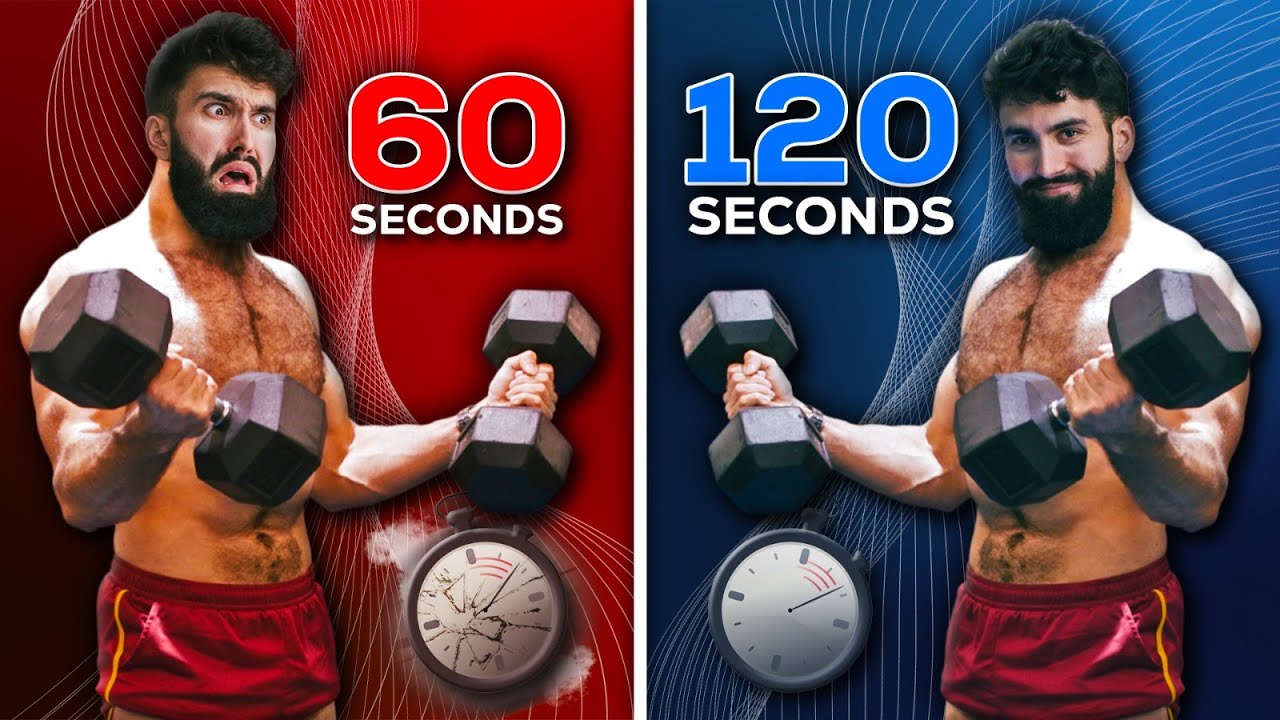
have so much f built up from previous exercises whereas if you spread these fatiguing exercises out a little bit more I found it can cut down session duration tip number eight minimize rest times specifically for hypertrophy you probably want rest times of about 1 to 2 minutes a pre-printed metanalysis that I was recently involved on found that while resting for less than 1 minute between sets did reduce hypertrophy the best muscle growth was actually seen with 1 to 2 minutes of rest between sets so as a generalistic resting for 1 to 2 minutes between sets
is a good approach or on the higher end of that range if you're training lower body with more compound movements and for higher reps and the lower end of that range if you're training your upper body with lower reps and with more single joint movements you can still see great gains even with resting for less than 1 minute but you may need to do more additional sets to make up for a loss in stimulus tip number nine opting for low repetition sets of say 5 to eight reps will generally one take less long to perform
on a pret basis you're just doing a few reps and two cause less fatigue to recover from between sets most people can do a set of five on squats and be ready to go again with in a few minutes whereas doing a setad of 20 on squats for example will take you longer to recover from however this is a bit of a double-edged sword as working up to this heavier weight that is needed to make a set of five effective will take longer than working up to a weight that you can use for 20 reps
so play around and find whether one approach works better for you tip number 10 right before you leave the gym do another set for example what I do when I'm really busy is to get all of my stuff ready to leave the gym as I'm resting during my last few sets and then right before I need to leave the gym because need to be somewhere at work or what have you in the studio recording a video for you I do my last set and this doesn't seem like much but doing one last step before we
leave the gym done over and over again can be beneficial and in fact you can take this up another notch by doing something quite tiresome but also stimulating at the very end of your session when fatigue isn't really a concern anymore since you won't be training again for another 24 48 72 hours so for example doing a drop set right as you're about to leave the gym having all your stuff ready can allow you to cram in a bit more stimulus into your already constrained time and that wraps it up psych that is what you
thought but as traa by science we're committed to providing you with even more value for your buck in fact for just $3,000 instead of $350,000 as per usual you can get a bonus tip right about now on a serious note bonus tip especially in busy gyms be flexible about exercise order if you're training at rush hour around 5:00 p.m. for example you might find that the equipment needed to do your first exercise isn't always available immediately and if you only have half an hour or an hour to train and you spend 15 minutes waiting for
that fast exercise there's a good chance you're not going to be able to complete your session within your alloted time and for hypertrophy specifically exercise order doesn't really seem to matter all that much and meas by Nunes and colleagues found no effect of exercise order on hypertrophy and so if you need to do some machine chest press first before squatting even though you wanted to start with squats it is not the end of the world and it may allow you to get more work into your sessions when the gym is busy that is the video
absolute master class on How to Train when you're busy and still make games I've been using these tips myself within the gymm and it's been super helpful if you enjoyed this video please comment like subscribe let us know what other topics you want to see us cover from a scientific perspective if you'd like more information like this consider checking out the newsletter below and getting some free programs as part of that deal conversely if you'd like an expert to coach you consider checking out strong science.com coaching for someone to handle your training your nutrition or
even just to have a consultation with make sure you hit the Bell below so you get notified whenever we release a new video and finally had a fantastic day from the whole team at strong science peace [Music]