i'm going to review all the differences between plaque and tartar how to remove plaque at home and why tartar build up can be so damaging to your teeth so what is plaque plaque is a soft sticky colorless film of bacteria that gets stuck on your teeth and underneath your gums and it develops when the bacteria in your mouth mix with the sugary and starchy foods that you eat this bacteria in combination with acids and carbohydrates creates the sticky film we call plaque this is very common and you may have experienced this before if you went
to sleep without brushing your teeth you wake up you run your tongue on your teeth and you have this fuzzy feeling that's plaque so why do we need to remove this plaque bacteria produced in plaque produces acids that can attack your teeth and cause cavities and if this tooth decay gets large enough it can lead to an infection of the nerve which can cause a lot of pain or even worse it can undermine your healthy tooth structure which can cause your tooth to break and eventually need an extraction dental plaque also causes inflammation and irritation
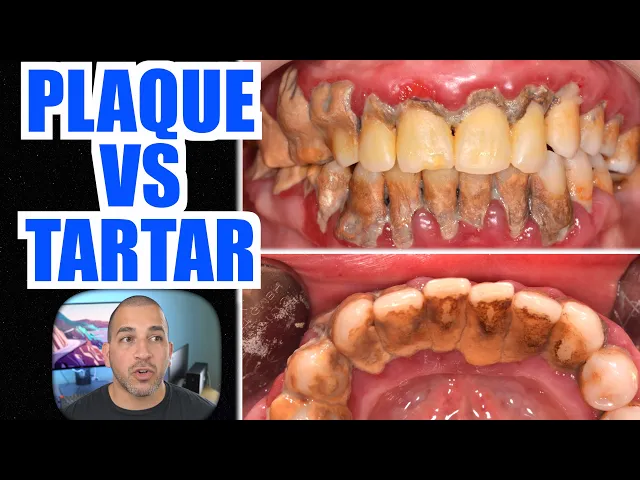
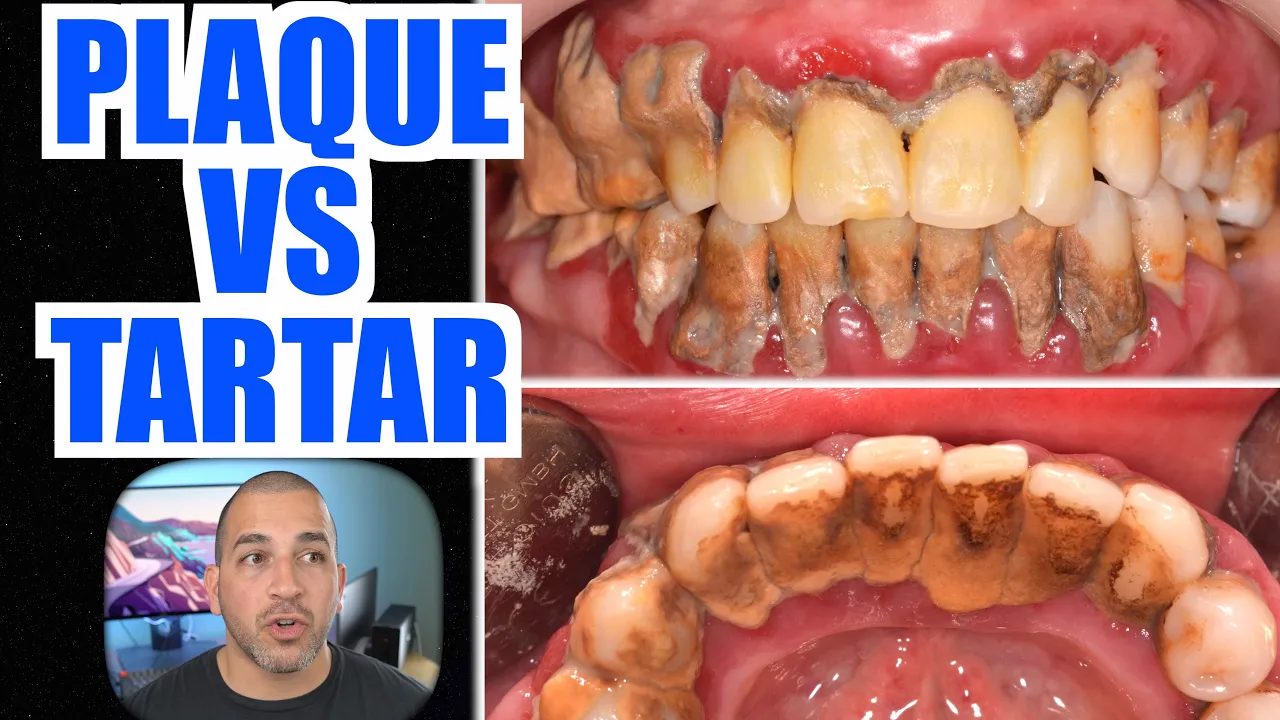
of the gums which is also known as gingivitis this can be detrimental to the bone surrounding your teeth which can lead to gum recession to sensitivity and bone loss so the other question i get is what's the difference between tartar and plaque if plaque is left on the teeth for too long it can mineralize into hard tartar also known as calculus tartar is a yellow or brown in color and if you have it it's pretty easily recognizable on your front teeth and tartar develops really quickly because the minerals in your saliva interact with that plaque
and then it develops those mineralized deposits usually found on your back teeth and throughout the mouth it's rough you can feel it you can see it and the worst part about it is that your toothbrush and flossing is not going to be effective at removing these hard deposits from your teeth this is why we typically recommend to see your dentist or hygienist for those cleaning appointments typically at a minimum every six months so that they can use the ultrasonic scalers or metal hand scalers to scrape off all that buildup from your teeth now if the
buildup gets bad i'm talking about buildup under the gums this can lead to periodontal disease which is a problem because it can lead to bone loss your teeth can get mobile where they're wiggly or moving around and eventually you might have to lose some teeth or you might have some severe pain so how does a visit to your dentist help like i said before when you go to the dentist they're going to remove all that build up from on top of your teeth as well as under the gums and when we remove that build up
or those thorns that get stuck under your gums we're helping the inflammatory process we're making sure that your gums get healthier and we're stopping the progression of bone loss which is a great thing now if you haven't been to the dentist a long time and you're wondering whether you need a deeper cleaning or a regular cleaning they're going to diagnose your condition by doing a variety of tests they're going to look at your pocket depths they're going to look at your x-rays they're going to look at the redness around the gums and using a variety
of measurements to identify whether you need a deeper cleaning or a regular cleaning and you should also know that there are limitations to what the general dentist can do and if the gum disease is really bad and you want to keep your teeth for the rest of your life then they might refer you to a gum specialist someone called a periodontist and they're going to do some extra measures to make sure that your gums are healthy things like a pocket reduction surgery or a gum graft or things like that so as promised i want to
give you guys some tips on how to keep your teeth relatively plaque free number one is rinsing after meals this is a very simple easy act that everyone can do that after you're eating lunch or dinner take a cup of water put in your mouth swish around a little bit and that simple act of swishing with water is gonna help remove a lot of debris from your teeth which will keep your teeth relatively plaque free and it will also help eliminate a lot of the staining that we get when we're drinking dark colored beverages or
we're eating foods that have a lot of pigments in them number two eat less sugary and starchy foods this also includes drinking sugary beverages energy drinks are the worst offenders and i can't tell you how many patients i've seen younger patients that drink energy drinks throughout the day when they're playing video games and they forget to brush their teeth and the acid in those drinks can really be damaging to your teeth also starchy foods can lead to the development of plaque so we want to keep that to a minimum so just remember to eat a
little bit healthier and avoid these type of items number three brushing and flossing twice a day it's super obvious guys but i need to really emphasize this that if you're not willing to change your diet if you're not willing to drink a lot of water throughout the day then brushing and flossing is an amazing measure that will help keep your teeth clean using a soft bristle toothbrush because we don't want a hard bristle toothbrush because that can be damaging to your teeth taking your time to get every single area of your teeth angle the toothbrush
at a 45 degree angle between the gum and the tooth make sure to get the back side of your teeth make sure to cover all those areas and take your time when you're brushing don't just rush through it if you do this measure and you do it carefully you're gonna be saving tens of thousands of dollars of dental work so i can't emphasize that enough remember to brush and floss your teeth and number four another obvious one maybe not a home remedy but i have to say it is getting those regularly scheduled cleanings i've seen
a lot of patients who had amazing dental care not a lot of cavities and then because of the whole coveted thing all of a sudden they come back after a couple years and they have cavities they have bad gum health allow us to help you educate you and keep your teeth as clean as we can thank you guys so much for watching this video my friend and i are working on a website where you can find um really amazing talented dentists that have great reviews that are privately owned so i encourage you guys to check
out the link below in the description box leave a comment share this with someone who wants to be educated on dental hygiene i appreciate the support thank you and i'll see you for the next one bye i'm going to review all the differences between plaque and tartar how to remove plaque at home and why tartar build up can be so damaging to your teeth so what is plaque plaque is a soft sticky colorless film of bacteria that gets stuck on your teeth and underneath your gums and it develops when the bacteria in your mouth mix
with the sugary and starchy foods that you eat this bacteria in combination with acids and carbohydrates creates the sticky film we call plaque this is very common and you may have experienced this before if you went to sleep without brushing your teeth you wake up you run your tongue on your teeth and you have this fuzzy feeling that's plaque so why do we need to remove this plaque bacteria produced in plaque produces acids that can attack your teeth and cause cavities and if this tooth decay gets large enough it can lead to an infection of
the nerve which can cause a lot of pain or even worse it can undermine your healthy tooth structure which can cause your tooth to break and eventually need an extraction dental plaque also causes inflammation and irritation of the gums which is also known as gingivitis this can be detrimental to the bone surrounding your teeth which can lead to gum recession to sensitivity and bone loss so the other question i get is what's the difference between tartar and plaque if plaque is left on the teeth for too long it can mineralize into hard tartar also known
as calculus tartar is a yellow or brown in color and if you have it it's pretty easily recognizable on your front teeth and tartar develops really quickly because the minerals in your saliva interact with that plaque and then it develops those mineralized deposits usually found on your back teeth and throughout the mouth it's rough you can feel it you can see it and the worst part about it is that your toothbrush and flossing is not going to be effective at removing these hard deposits from your teeth this is why we typically recommend to see your
dentist or hygienist for those cleaning appointments typically at a minimum every six months so that they can use the ultrasonic scalers or metal hand scalers to scrape off all that buildup from your teeth now if the buildup gets bad i'm talking about buildup under the gums this can lead to periodontal disease which is a problem because it can lead to bone loss your teeth can get mobile where they're wiggly or moving around and eventually you might have to lose some teeth or you might have some severe pain so how does a visit to your dentist
help like i said before when you go to the dentist they're going to remove all that build up from on top of your teeth as well as under the gums and when we remove that build up or those thorns that get stuck under your gums we're helping the inflammatory process we're making sure that your gums get healthier and we're stopping the progression of bone loss which is a great thing now if you haven't been to the dentist a long time and you're wondering whether you need a deeper cleaning or a regular cleaning they're going to
diagnose your condition by doing a variety of tests they're going to look at your pocket depths they're going to look at your x-rays they're going to look at the redness around the gums and using a variety of measurements to identify whether you need a deeper cleaning or a regular cleaning and you should also know that there are limitations to what the general dentist can do and if the gum disease is really bad and you want to keep your teeth for the rest of your life then they might refer you to a gum specialist someone called
a periodontist and they're going to do some extra measures to make sure that your gums are healthy things like a pocket reduction surgery or a gum graft or things like that so as promised i want to give you guys some tips on how to keep your teeth relatively plaque free number one is rinsing after meals this is a very simple easy act that everyone can do that after you're eating lunch or dinner take a cup of water put in your mouth swish around a little bit and that simple act of swishing with water is gonna
help remove a lot of debris from your teeth which will keep your teeth relatively plaque free and it will also help eliminate a lot of the staining that we get when we're drinking dark colored beverages or we're eating foods that have a lot of pigments in them number two eat less sugary and starchy foods this also includes drinking sugary beverages energy drinks are the worst offenders and i can't tell you how many patients i've seen younger patients that drink energy drinks throughout the day when they're playing video games and they forget to brush their teeth
and the acid in those drinks can really be damaging to your teeth also starchy foods can lead to the development of plaque so we want to keep that to a minimum so just remember to eat a little bit healthier and avoid these type of items number three brushing and flossing twice a day it's super obvious guys but i need to really emphasize this that if you're not willing to change your diet if you're not willing to drink a lot of water throughout the day then brushing and flossing is an amazing measure that will help keep
your teeth clean using a soft bristle toothbrush because we don't want a hard bristle toothbrush because that can be damaging to your teeth taking your time to get every single area of your teeth angle the toothbrush at a 45 degree angle between the gum and the tooth make sure to get the back side of your teeth make sure to cover all those areas and take your time when you're brushing don't just rush through it if you do this measure and you do it carefully you're gonna be saving tens of thousands of dollars of dental work
so i can't emphasize that enough remember to brush and floss your teeth and number four another obvious one maybe not a home remedy but i have to say it is getting those regularly scheduled cleanings i've seen a lot of patients who had amazing dental care not a lot of cavities and then because of the whole coveted thing all of a sudden they come back after a couple years and they have cavities they have bad gum health allow us to help you educate you and keep your teeth as clean as we can thank you guys so
much for watching this video my friend and i are working on a website where you can find um really amazing talented dentists that have great reviews that are privately owned so i encourage you guys to check out the link below in the description box leave a comment share this with someone who wants to be educated on dental hygiene i appreciate the support thank you and i'll see you for the next one bye