every year around 100 billion packs of instant noodles are consumed worldwide that's nearly 13 packs for every person on the planet but have you ever stopped while enjoying that comforting bowl of instant noodles to wonder how they got there in reality that humble block of noodles is the result of a fascinating production process in instant noodle factories a perfect choreography of Cutting Edge machinery and artisanal skill unfolds to create the quick and delicious food you enjoy this fast and Convenient Food transforms from a dry block into a comforting soup in a matter of minutes it
was recognized as the greatest Japanese invention of the 20th century and it's not surprising given that it has saved many students and busy individuals from Hunger when time is scarce the inventor of instant noodles Moma fuku Ando was inspired to create this food after seeing people lining up for a bowl of ramen noodles during the post-war era in Japan his idea was to provide a nutritious easy to prepare and accessible food for all that could help alleviate hunger in tough times out of this desire instant noodles were born it all starts with the raw material
wheat flour this is loaded into large industrial mixers that continuously process tons of flour per day the flour is mixed with water and salt creating an elastic and sturdy paste essential for the future noodles this is a carefully calibrated process the right balance of moisture is crucial for the noodles to maintain their shape and texture after kneading the dough is allowed to rest for a set period this resting time allows the gluten to relax making the dough more flexible this helps make the following rolling and cutting process easier once the perfect dough is obtained it
goes through a series of rollers that flatten it to the desired thickness the dough initially thicker than your arm is is transformed into a thin sheet thinner than rice paper this process not only determines the final thickness of the noodles but also contributes to their unique texture passing through the rollers helps develop the gluten in the flour giving the noodles their characteristic elasticity as the dough is repeatedly passed through the rollers it is stretched and thinned until it reaches the right thickness for instant noodles once transformed into a thin sheet the dough is directed to
cutting machines where it is cut into noodles this process although it may seem simple is a turning point in the production of instant noodles this is where the length and width of the noodles are defined each cutter is equipped with an array of blades that can be adjusted to produce noodles of various shapes and sizes from the thin threads of ramen soup to The Wider flat noodles of pasta depending on the type of instant noodle being produced the cutting machine can have different blade configurations to create specific shapes after cutting the noodles are not yet
ready for the soup the noodles are separated and collected on trays or conveyors at this stage a starch coating is applied to the noodles to prevent them from sticking together the noodles are initially too moist and tender for long-term Pantry storage to overcome this the noodles undergo a steam cooking process during which they are exposed to high temperatures this step contributes to the development of their ultimate flavor and texture next they undergo a quick frying process that removes moisture and makes them crispy facilitating long-term storage this rapid cooking process aims to stabilize the structure of
the noodles and remove excess surface starch after pre-cooking the noodles are rinsed with cold water to stop the cooking process and reduce their temperature this helps to maintain the right texture of the noodles and prevents them from becoming soggy once the noodles are rinsed and cooled they are drained to remove excess water the noodles are subjected to a drying process to remove the remaining moisture this process can be carried out through air drying or using controlled hot air in the case of air drying the noodles are placed in areas with good air circulation to allow
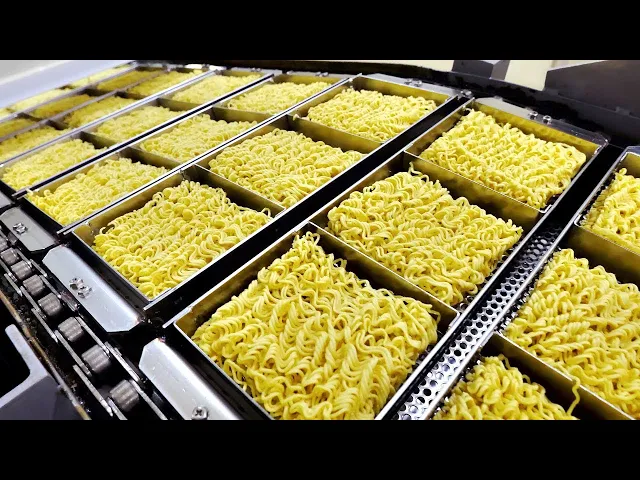
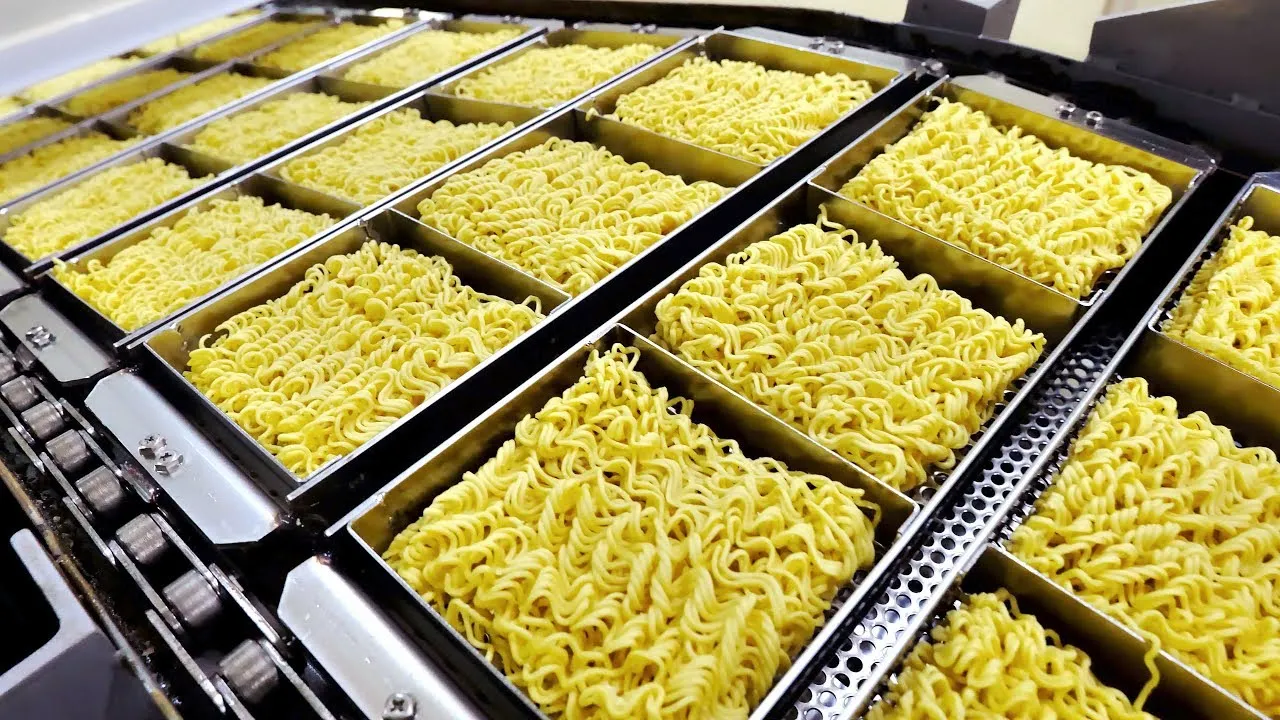
moisture to evaporate gradually during the drying process temperature and time are carefully controlled to avoid overheating or inadequate drying of the noodles the result is that amiliar block of dry and compact noodles ready to be revived with some hot water the interesting part of the process is the formation of the noodle blocks after steaming and frying the noodles are placed in molds that give them their characteristic square or circular shape typical of the instant noodles we know these steps make up only half of the journey that noodles go through before reaching your bowl each step
is meticulously designed to ensure that every package of noodles provides a consistent and delightful experience but what happens after the noodles are dry and ready to be packaged the answer lies in the toppings and seasonings that give each bowl of instant noodles its unique flavor and personality while the noodle block remains essentially the same in each brand it's the broth and seasonings that make each package different instant noodle broths can be very diverse ranging from classic chicken broth to Rich and spicy options each broth is prepared separately in enormous kettles that can hold up to
thousands of liters of soup at a time spices aromatic ingredients and proteins are slow cooked together resulting in a rich and concentrated liquid that is later dehydrated and turned into powder these dry seasonings not only add flavor but also texture and color to the final soup making each Bowl A Feast for the senses once the broths and seasonings are ready it's time to package them along with the noodles the noodle blocks powdered broth and dry seasonings are placed together in individual packages this not only keeps all the components together but also ensures the freshness of
the ingredients once packaged the noodles are ready to be sent to stores around the world waiting for the moment when someone adds hot water to bring them back to life the design of instant noodle packaging is not only aesthetically pleasing but also functional the inner aluminum foil keeps the noodles fresh and protected from light moisture and microorganisms some packages are designed to serve as a temporary Bowl allowing the preparation and consumption of noodles in the same packaging to ensure that each package of instant noodles reaches you in perfect condition companies Implement rigorous quality controls and
products undergo tests of strength visual inspections and most importantly taste tests a team of expert tasters test each batch of noodles and broths to ensure they Meet The Taste expectations however despite their convenience and popularity it's also true that instant noodles have been criticized for their sodium levels and trans fat content in this regard the industry has worked to reduce salt content and eliminate trans fats from their products some brands have launched lines of noodles with lower sodium content more fiber and gluten-free versions thus instant noodles evolve to adapt to the changing needs and demands
of consumers without giving up their essence of being a quick and easyto prepare meal if you want to know how tequila is made watch the video on your screen and please like the video If you enjoyed it and share it with someone who might be interested also subscribe to this channel by activating the notifications to continue learning thanks for [Music] watching