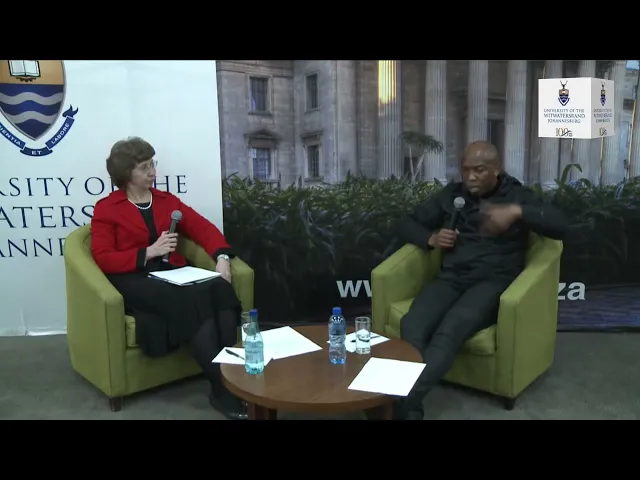
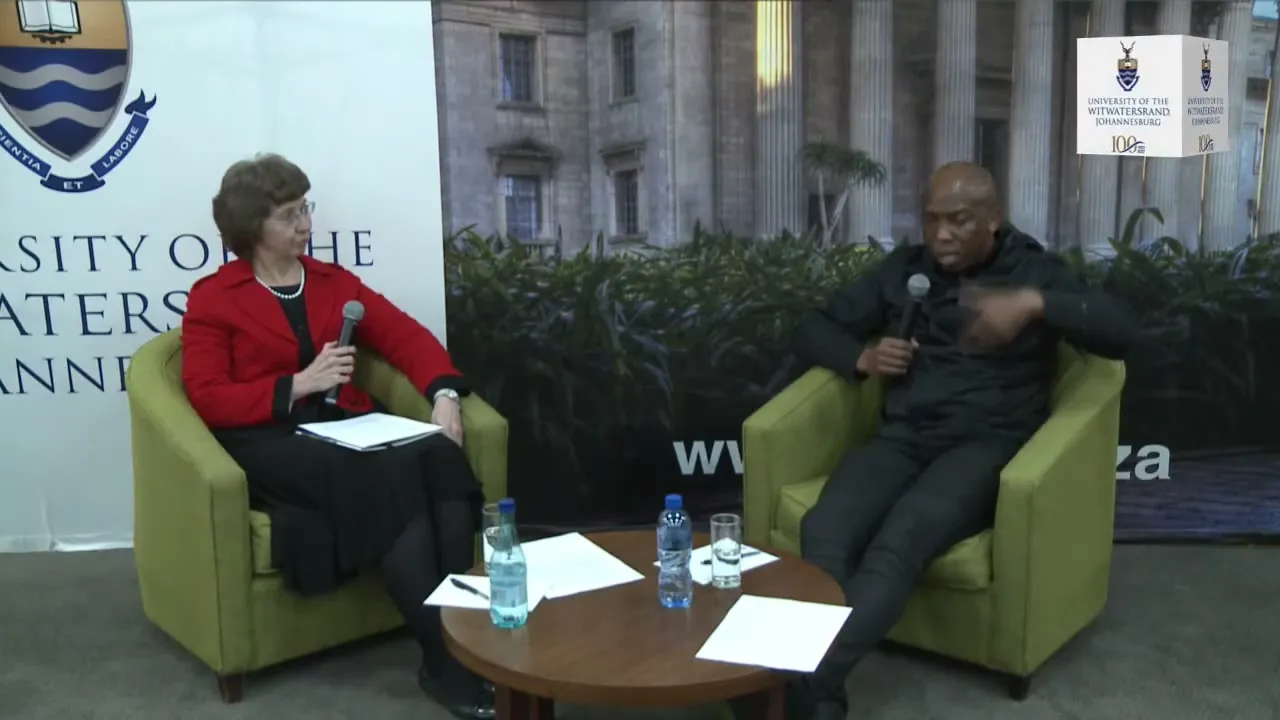
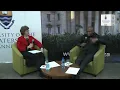
Okay good evening everyone um it's really nice to see everyone here tonight um I want to say good evening to the Friends of the law school to my colleagues to our students obviously to the guest um and we'll get to him a little bit later more my name is Professor angala Schlemmer I am the head of the school and it is really my great great pleasure to welcome you all here tonight um the fireside chat tonight Kicks off our centinary celebrations and it is the start of a plan that we are developing to host more
of these events regularly in the school and we will be sharing more details of all our plans with you in the next coming weeks but in the meantime please diarize the weekend of 2 to 4 September which is vit's homecoming weekend that is when we will have week a weekend long Festival all that celebrates the 100 Years of the University so we're really Looking forward to that but before we start tonight's event I would like to thank a couple of people and acknowledge them who worked so hard behind the scenes to make all of this
happen firstly nulu zandi Andi Asma uni and tulana POI they've put in long long hours to make all of this happen and a big thank you to all of them for the hard work I also want to extend a word of thanks to the students that have ushered you in and that have assisted us Um in the foyer given that this is the start of our centinary celebrations and our Outreach campaign it is fitting that we have a very high-profile guest here tonight otel matlo is a law school graduate of whom we are very proud
he got his LLB in 2000 his H dip tax um H dip in H dip tax yeah H dip tax that's what they called it back then um H dip tax in 2003 And his postgraduate certificate in advanced company law 1 and two in 2011 during his time at vits he was on the SRC and active in student politics otel is a former advocate of the high court of South Africa who then moved into private practice at a law firm and he is now the Chief Operating Officer for ens Africa he's an experienced mining lawyer
um who advises in all aspects of mining law from exploration Mining and beneficiation to downscaling And closure his experience ranges from startup exploration projects to wellestablished mining projects he acts for a wide range of mining companies in all mineral commodity sectors including the base and precious metals coal Rare Earth sand and Diamond sectors so it gives me really a great pleasure to welcome him here our format for this evening's fire side chat is very relaxed as you can see we're all sitting down instead of standing up um I Will ask otelia a number of questions
and then I'm going to open up to the floor and also to our online guests to put questions to him um we plan to be finished by around about 7:30 um but you are all invited to join us afterwards for some snacks and photographs in the foyer those of you are on social media not the old people like me um please use the hashtag Vitz law fireside chat and tag vit School of Law um and tag us and twe tweet about us we would like to be Out there with that let me open this event
um welcoming you once again everyone in the room and I'm really pleased to see so many of you here as well as in um all our online guests and especially our first guest to the law school fireside chat Ile [Applause] matlo o it's been quite some time since you've been a student here at Vitz how did you land up adverts why did you choose to study Law uh thank you very much and good evening to everyone um how did I end up at vets I took a train from so to vet so that's what happened
but in all in all seriousness um I I finished my metric just as the apartate era was ending and I was determined to go to university so I applied to three universities vs and two others I I was fortunate to be accepted by all Three and the two universities required me to travel quite some distance away from home and my mom didn't have money for that so I came to vet that's the truth uh about why I ended up at vets the other reason certainly when I was a law student if you didn't do your
law degre re adverts and you did it elsewhere well uh you you may be forgiven for ending up at an okay law Fame but if you really Wanted to to be in the top of your game you needed to be at vet so that's why I ended up at vet and so obviously you had your vision set for where you wanted to be but before we get to what you did later in your life can you tell us about your student activism days here at Vitz yo that's a long time ago so I I arrived
to register as a as an Arts student so I did my arts degree at vs as well before I did my LLB and before I went to the Arts faculty to register I looked for a sasco desk and I went to register as a member of sasco and I was told you can't you must first register as a student of the university and so I was a member of sasco from day one and those were interesting days that's the transition from tea to nesas um we did a long paper on why we needed to transition
away from tea and its faults to nespas and we send a Delegation of uh student leaders to go and meet the minister of Education um on this campus we did many many things some of which I'm very proud of some of which let's just say I would rather they are not repeated and the challenges that's today's students face um how do you see that so so I suppose I was a student when we were trying to figure out whether to have constitutional Liberties in South Africa Or not uh and so when I when I started
as a student we we had something funny things called constitutional principles uh we didn't have a Bill of Rights that we have today um and so I don't think we had too many Liberties back then I think students today have a lot of uh rights but I also think they have many more challenges than we had ER for status the flow of information was quite manageable when I was a student it was a lot harder to research but it was Also a lot easier to manage the volume information I think today there's just too much
information flowing so to sift through all of it and to get to where you need to get to and to use what you need is quite a challenge today the other thing is when I was a student we didn't have the English word stress it did not exist we were just working hard but no one ever said they're stressed my younger brother was a in the student movement here at vets Uh during the fees Must Fall campaign and he often came home to tell me that he's stressed uh when I was a student here I
I never had stress so I think the the challenges that law students face today are are multifold firstly they they have many more Liberties and they have much more of a personality than we had we were just a compliant Bunch when things were okay and we were an extremely unruly Bunch when we thought things were Not okay but I think today people have an ability to stand for something H and and and have Independence in what they do with that comes challenges and responsibilities um university education is increasingly becoming expensive University accommodation is becoming increasingly
challenging the university has grown I mean the intake of L students today doesn't compare to when I was a student so so I think there's a whole host of uh of challenges But I I think to conclude uh we had very few choices if you wanted to study law you studied law and you ended up in practice or you ended up inh house I know many law students today who want to own startup tech companies and so there's a whole host of choices and with Choice comes the difficult of a young mind having to exercise
maturity beyond your years to determine what you need and also things Change too quickly so I'm glad I was a lost student when I was and not today I think a couple of very true words have been spoken now tell us a little bit about the name Willie that's a that's a that's cute so so so so let me first say my full names and then I'll explain all of them so my full names are muda William so is half of my first name and the reason I call myself is most people if I say
mud they can't remember what I've Just said so UIL is much more manageable my middle name is William and I grew up at a funny time in South Africa where people had so-called Christian names and so I went to school to start primary school and the teachers were not interested in mud just not interested said you are William so I was registered as William and so when I meet people and they call me I can categorize them in my life Where they come from and where they belong where they say William I also can categorize
them H in my life and word of advice to all of you want to be in my good books just stick with I think that is something that all of us should learn which name defines us isn't it so absolutely yeah indeed but tell me what does the COO of the biggest law firm in the continent do for fun so I must start by saying I saw in The uh ads about tonight that uh ens is was called the biggest law I I don't like those words I prefer larest La there a slight Nuance but
it's quite an important one um we I mean I'm mean I'm privileged to serve as one of three people who really run our film um very busy we've got a partnership of over 200 Partners and each of them think that they the most amazing uh person and they are very competent people very difficult bunch to manage but uh I love it one of them is sitting here uh the head of our natural resource and environment Practice Group is sitting here also a v graduate um they are a very difficult bunch and they ask her to
come here to listen to what I'm say so she can go and report back um but but what do we do at uh at ens we we Try and practice law on the African continent we are not a South African Law Firm we used to be but on South African Law Firm what an African law firm with a presence in South Africa and it's important to say that because our view is uh the legal Market on the continent uh is so massive and it's divided into three segments one that is serviced predominantly by European and
American firms typically large Capital Infrastructure projects then the middle tier which is National Regional and even International Investments financing and m& that is f that is serviced by large South African firms and an array of international law firms and and local work that is serviced by in country lawyers we decided many years ago ATS that we wanted to be a law firm that practices on the continent so we've got offices in the three regions of subsaharan Africa and and our practic is Continental one of the things I do personally is I have to manage all
of those offices outside of South Africa so I travel quite a lot so I I go through a magi passport very quickly I didn't go through it quickly during the last two years thank God but before that uh quite regularly so so so that's what I do during the day I try and uh serve the partners and run the F on their behalf uh I have to put those words in On their behalf and in the evenings I Moonlight as a mining lawyer um and on weekends I Moonlight as an oil and gas lawyer so
that's what I do so I do three things I serve of the partners uh they think I run the firm I serve them I practice mining law and I practice o and G La no time for fun oh lots of fun fast cars um on the highways no I drive fast cars on the highways I Just don't drive them fast ah yeah okay so that's it how do you keep your mind from stressing I wake up on New Year's Day every year at at my house and I run home to soet which is about 42
km uh to go and have breakfast with them and then my dad asks me have you run out of petrol money I said no so so I try and run a little bit I cycle a lot Road cycling I'm not good with mountain biking uh that's what I do okay it seems Like you're properly balanced person then which is more than I think many of us can say um do we have any questions from the online platform at this point Kim not at this point from the audience is there any questions that you would like
to ask I still have quite a few but if there are specific things that you would like to ask at this point or you may think a little bit more whether there are certain things that you would like to ask then I'm going to Continue ah I do see two hands here to my right hand side sir and then you come second um thank you very much good afternoon good evening actually so my name ISO um I'm I'm currently studying a master of finance and investment at the V business school I also hold the LLB
from this school so my focus of my master is basically the funding of coal mines so you stated in your introduction that you um you're you're you're a mining practitioner practice mining law So my question to you is um given what I'm researching about as I stated that I'm researching about the funding of cold so now there is a global shift from from renewable energy to um not from renewable from Cal to renewable enage so my question is given that that is actually going to be prejudicial and and and and not look good for um
emerging economies my question what is your view on that um for example as South Africa depend too much on cold what is your View on that we should move away from cold to renewable energy thank you very much uh no thank you very much I'm a little worried that you are studying financing of uh coal projects I'm hoping you are finding material that relates to that but uh because in my view view it's very difficult to fund certainly through third party Financial Services funders it's very difficult to fund cold projects um but the the gist
of your Question talks about just transition really that's what the question is about is um how do we uh transition sustainably from a carbon based economy to a cleaner more sustain aable economy that's fundamentally what your question is about uh and my view is that our people need power we are desperate for it at least in the last couple of days it looks like it's been steady um so we need power and in South Africa currently our um Energy Mix is carbon biased and it's old and it's uh something that we need to move away
from over time um I don't think moving to Renewables prejudices uh emerging economies at all we have uh at least 270 days of free sun in South Africa every year we should be utilizing that um but you can't do something of that nature just philosophically you've got a transition we've got many old Cal Powered uh cold fired power stations that are our base load and so you've got to transition smoothly but I think we need to transition as a society the the the the the only thing that worries me about this transition this just transition
is a move away from V8 engine to electric cars I can't deal with it that's only thing that worries me uh but from a re point of view I do think it makes far more sense I mean the the northern Cape is sparely populated And it's hot it should have a plethora of uh solar Farms there that are generating capacity for the country uh and hopefully we'll get that some point I hope we have another microphone for the gentleman up there I wish I wish I had a a very difficult question for you but um
I just wanted to know what is the difference between big and large or Biggest and largest if you could just enlighten me a bit thank you Mr maaku so so Mr maaku is a an old colleague of mine and he promised me me last week I bummed into him at home Affairs and he promised to come here and ask me a difficult question the good news Mr M is there is something called online Oxford English Dictionary that's the good news and if You go there and you look it up you will find a difference you
may even be misled by online dictionaries that say these things are interchangeable and they are synonyms but they're not certainly not in our view h a big Law Firm is is really one that has size huge that's big a large Law Firm is one that has rich and that's the difference okay thank you for that I don't see any other hands at this point so I'm going to to ask Ile you left vits as a student long time ago and you what did you do after that before you joined the attorney's profession when I was
a la student there was a war for talent by the S called top fams they were interviewing everyone on campus and uh wanting to take the very best uh and I missed all of their career days because I was busy fighting with the vice Chancellor on beh of students So I actually missed all of that they I missed their interviews I I missed everything and we got to the end of the year and I thought hell I haven't applied for articles I need to do something and then I thought no articles is something that's done
by people of inferior quality I'm going to go to the bar and so I tried to the Johannesburg Society of Advocates and I was told come for an interview I went there it was not an interview we had uh two uh freshly Baked scon and tea and I was signed up so I did pupilage um I finished my pupilage and then I discovered that um I need to have money to set up Chambers and I thought but come on guys where is a boy so where to go to find money to pay someone for rental
I don't have this money but I had to make a plan so the group where I did pupil AG said to me well there's a small chamber that you can occupy whilst you are figuring what to do with yourself so I thought okay fine so I became an advocate uh that didn't last too long I'm very happy to explain why if you want but I I do want to know so two things happened the one was that um Justice Cameron uh was still in the JC court at the time and he was also the chairman
of the council here at the University and I should know that he was Chairman of the council because when I was on the SRC I sat in the university councel and I gave him a lot of grief a lot of it so he invited me as one of two young Advocates to sit as assessors in a criminal matter that he was doing so we sat in that matter and during that uh trial we were listening to evidence it was lovely we finished we retired to his chamber to consider evidence and To formulate a judgment the
then Vice Chancellor of this University Professor Colin Bundy then phoned him and they were talking about whatever University business and Colin Bundy said to him you know I'm looking for that young man uh Mr Macho and he said what what you what do you want from him and he said I actually want him to come and work for me and he said he won't believe he's sitting in my chamber and said well tell him to phone me so Justice ceran Told me and I said to him but that guy is my enemy he's my sworn
enemy he doesn't like me I don't like him so why would he want me anyway to cut the long story short I came to the university spoke to a few people then I joined the university as an employee so that's the one reason I left the bar the other was that while sitting in my very humble chamber looking for work one of the senior uh advocates in the Group uh came looking for a junior to help him in a criminal matter and I agreed to help him and so I got a bunch of files delivered
and I took them home I still lived with my mom at the time and over the weekend I was reading myself into these files and there was a lot of uh autopsy reports and pictures of dead people and that matter involved uh representing a serial killer a very famous one who uh was subsequently convicted by judge geraldin Bas and so I was reading myself into these things at some point I took a break to go to the shops and my mom went into my room to go and clean it quickly cuz I'd been reading since
the morning and she saw these Dead uh bodies pictures of dead bodies in my room and she found me and said you come back home I got back said what what exactly do you do at work and I said well I practice law no no what do you do so I didn't answer I didn't know what she was asking She then said I didn't send you to law school to come and look at pictures of dead people she then said to me here's what you must do on Monday I want you to return all of
these files to whoever you got them from and if you don't do it I will come personally to do it and my mom was quite feisty she would have done it and so on Monday I went dinner and I said listen you have to take your files back that woman is going to kill me and around lunchtime my mom arrived to Say have you now done it I don't want you to do in this thing you cannot represent criminals you cannot look at pictures of dead people you must find something better to do with your
life so those are the two reasons that made me to leave the bar and to come and work at the University I I see that there is a question but before I ask give you the um opportunity to ask the question I think these are kind of very intense Moments that you went through when you decided to leave the bar apart from all the other issues um but we don't need to go into the other issues that young Advocates at this stage are experiencing as well so so so unless you want to no no no
I I'm not going to do that yeah but I I do want to say I really wanted to be an advocate I thought I was going to be a famous silk uh but that didn't happen but I'm glad that my friend who's sitting there uh whom I studied with at University is actually now a silk at the bar so tabis who sitting there is living my dream is a silk at the bar because he was stubborn enough to stay at the bar I left um but uh yeah I I guess when I look back on
my life I'm glad I took the decisions that I took and one of the reasons I say that is I didn't know at the time but I wasn't going to have my mom for a long time and I really wanted to buy her house and so I came and I worked at the University and I could afford to buy her house and I did buy her a house she didn't live in it for too many years and then she passed on and so I was very happy that at least when my mom passed on she
was living in her own decent house that I had bought yeah that's wonderful oil we've got some questions from online so Noy has asked two questions the first one is can you talk about your transition from being in full-time Practice to being a COO and the second question is can you share with us what you think some of the qualities of good leadership are so uh nosy promised me at lunch she will ask the question I see she's a followed through um so I'm not sure that I've made a successful transition um from being in
full-time practice to becoming a chief operating officer because I remain in practice so So so so I'm not so sure that I can say I've made the transition but I can say it is far better to deal with clients far far better to manage the most difficult line relationships than to manage lawyers they really are an amazing bunch of people um I I I love my colleagues dearly but they're a handful and so the things that I would say is when when when you manage lawyers the first thing you going to try and do With
them is to get them not to lawyer every point when they talk to you not to litigate with you because running a firm involves making difficult choices within very short periods of time and to consult 220 opinions of uh clever people before you take any decision is hard um what do I think some of the qualities of good leadership I I guess the starting point is a famous saying if uh service is Beneath You Leadership is beyond you I don't believe you can lead if you don't serve so my my view is that leaders are
servants um and so as a starting point leaders must have an interest in other people and in EMB bettering others away from themselves elves and secondly it must never be done for personal gain the moment you do it for personal gain you may be in a leadership role but you're not leading because leadership is Fundamentally about service and sacrifice and so I would say that those who are um required to serve and all of us are required to serve at some point when we serve uh we do so to make an impact to make things
better for those that come after us and lastly I would say the greatest reward of leadership is not recognition it's not personal Aggrandisement but it is the extent to which you impact lives positively so that's my view about leadership uh if if I haven't answered nosy well I apologize but I've tried thank you any other questions other questions from online or in the yeah you do okay so a question has come through let me just see um uh from nataniel what challenges if any did you have when faced with cases that involve student Activists so
when you were on the management side at vits and then Iran has asked what did you make of the announcement from the president last night in particular the inclusion of the private sector into the current Energy Mix so um Nathaniel is a an old vety that um I studied with and I also worked with when I was the hall coordinator for West Campus Village he was a hall coordinator on the East Campus Uh and so just for context when I joined the university in uh September of the year 2000 uh many of my friends were
still on campus and I left at the end of 99 as a student activist and I returned in September of 2 wearing a suit and a tie um was my third time the first two times was on my graduation when I graduated with my aunt's degree and when I graduated with my law degree the third time was when I came uh to work in the Legal office and after a few months of trying different things I was told one of the things you must do is student discipline I lost uh a few years I mean
I aged a few years just by being told that and it was a tough time because my friends were still on campus tabis was finishing his law degree so he was still on campus many of my friends who I was in the leadership of uh of of sasco with were still on campus and some of them misbehaved and I was quite tough and St In disciplining them and some of them have remained friends of mine to this day and I I I specifically remember two that I disciplined one who held the of students hostage I
didn't like that because I thought that even when we were in student leadership we didn't do that to women and because he'd done it I disciplined him I remain friends with him to this day and he reminds me every time he sees me that I disciplined him But I did discipline him but I also said in the legal office at the time that student discipline is not about getting rid of University student and end in their careers and their dreams it's about correcting their behavior and making sure that we can save uh them as law
students uh and there's a couple of ones that uh had done some borderline things and we disciplined them but we save their carriers some of them we Sav them here at vets some we Couldn't but at least they they were they were able to pursue their University educ elsewhere they they were not I can't remember the language used but there was a a funny certificate of misconduct get a fot in proper letter or certificate of Good Conduct yes there was one that was universally applicable to all students which if you heard from one University you
couldn't you couldn't register at another University yeah Certificate of good yeah in my years in the legal office we didn't run to that uh punishment very quickly uh I think it was only given to one guy who shot a university professor at the Vets theater in the middle of a production so that was the one what was the other question the um introduction of private energy providers to the what did you make of the president's um announcement last night especially the Inclusion of the private sector into the current Energy Mix so two weeks ago at
the vet Business School uh the minister of public Enterprises was requested politely to to leave I don't want to be asked to leave so please guys can we just deal with legal stuff please please I ask my car is parked too far away to delve into these political things please guys uh I welcome every suggestion and every decision uh the effect of which will Resolve our power crisis my difficulty with our government and when I say our government I'm not even speaking in the narrow sense of the current guys in government I think our democratic
government in the last uh maybe 15 maybe 20 I don't know my difficulty is there's very little follow through and implementation on good ideas when I read the stuff that we produce when I see the policies we put in place I I ask myself why are we not 10 Paces Ahead of where we are and it all comes down to poor execution so it's lovely what the president said yesterday but uh I don't eat a lot of pudding but there's an English thing about uh uh puddings and the eating you know that one yes I
don't know it well enough to repeat it we should not be eating pudding tonight um but let's go back to um the legal things you are practicing mining law what brought you to mining law an Accident of History so when I was working at the University I was determined to be a text practitioner so I studied a higher diploma in text studied it for two years finished it absolutely loved it then I thought no I now have a text qualification I I need much more complicated things than being a legal adviser at the University so
I went to do articles when I was doing Articles um The Firm where I was working we rotated every 6 months and in my second year of Articles it was around early may I was standing in the lift lobby waiting for a lift to go up the lift door opened out walked Professor Michael Dale who was the head of the mining practice who also taught mining law here at vet and he said to me I've been looking for you I said okay I'd never spoken to him before he said I've been looking for you I
said okay he said to me can you come and see me in my office I said okay I'll come I was a little worried cuz this man had never said a word to me and I had nothing to do with his Department I never even walked near his office so I went and I sat down and he said to me I want you to come and work for me I looked at him I said to do what and he said to me what do you mean to do what I said to do what he said
no I want you to join my team I Said what did you do he said mining low I said what is that he said no come try it I said I'm not so sure he said please TR I said okay he said can I go and tell HR that you've said yes I said yeah so he went and told them couple of weeks later we were rotating it was half year so I was told to go to mining I went I didn't know what was going to happen it was the single most significant moment in
my career Because I absolutely loved mining I loved working with him and I never looked back so so I didn't go into mining because I had a carefully crafted strategy of ending up in mining Michael Dale asked me to join him I joined him it became an unbelievable journey is there a lesson to be learned from your experience absolutely an opportunity of a lifetime must must be taken in the lifetime of the Opportunity I could have said to him no I don't want to do it leave me alone I want to be an m& lawyer
I could have said I've got a tax qualification what are you talking about mining I could have done that but I went so the lesson I want to leave certainly the students amongst us is these opportunities don't announce themselves when they come but when they do come they can be massive and lifechanging and when they come you must Take them so that's the lesson for me I see also that um the fact that you had a qualification in tax doesn't mean that you're going to go into that direction even if you think it because these
other opportunities came along so this is a very important lesson I think for all of us to grab the moment you have to grab the moment but also at that time I didn't realize it was a black people didn't know how to do tax at the time we were there was a there was a Common knowledge oh no blacks got do tax forget it go and try employment TX is a little bit more nuanced the reality is there's a lot of text practitioners very very leading text practitioners who are black um but I studied text
because I loved it I had ramantic Notions about ending up in text the truth is where you end up and what you specialize in if you are in practice is not always in fact in the majority of cases it's not up to you It's up to a combination of the people you end up working with and the clients whether you are at the bar or whether you are at the Side Bar because if you at the bar you can say I want to be a corporate lawyer and you can only ever get divorce instructions uh
I want to see you saying I don't want to do them and starving because you're waiting for a corporate matter it's not going to happen you're going to take those divorce matters and You're going to do them and you you may end up being very good at it and end up being a leading divorce lawyer so so practice throws what it throws at us and we must grab the opportunities what do you think are there certain things that we need to think about regarding the extractives industry in South Africa and the role in building our
economy yes so let me first say the mining clients Pay my fees so I've been working with mining clients for many years they pay my fees we work very nicely together I don't want to see someone on Twitter saying oh that man says mining clients are shocking please guys let's not do that well we can skip the question also no I'm very happy to answer it I I happen to have grown up in so too and growing up in so I used to play on what I regarded as a heill And I discovered only when
I was working with Michael Dale that this thing has a technical uh name called a tailing stem and it was basically a hip of gold that had been piled over many many years and that's why I used to play and then I discovered that some of these tailings are uraniferous which means they contain uranium in them H and I was a little upset when I discovered that where I used to play is potentially dangerous so so so so so I think we can we can do Extractives better we can keep tailings away from the public
certainly from children they shouldn't be running up and down on tailings and do what I used to do how we didn't contract city cois is a thing of Wonder as we used to inhale that dust all the time so so so I think we can we can as an industry keep the extractive stuff away from uh the public and from H secondly um in this country we talk About uh transformation of everything transformation transformation including of the extractive space uh and when I speak to mining houses I often say to them you know during the
height of our apart date there was no legislation that said you must build hostels for black employees it was not in legislation but they did it there was no legislation that said you must pay black people poorly but they Did and so part of the new way of doing extractives I think is for mining houses to uh play their part in correcting the wrongs of the past and some of the major mining houses are doing relatively well in doing that uh I'm not so sure that all of them can hold their head high and say
they're doing everything they can uh but I think that mining is such an important part of our economy this room we're sitting in I'm looking at it I see so many products Of mining I'm holding one of them in my hand uh that camera is full of so many many mining things all of us this morning uh at least this morning I hope some of us have done it more than once we brushed our teeth the toothpaste you use as mineral so so mining is really important to the economy um but I think we can
we can mine responsibly and there are many good examples in South Africa of responsible mining they are also horrific examples I'm going to ask the um audience whether there are any questions at this point from them leading from some of the questions or something just that you would like to ask there's someone at the back yeah um I want to ask in terms because you spoke a lot about Mining and I want to know your view on the issue of uh land redistribution uh considering the fact that South Africa has so much um contribution in
the mining uh sector and uh do you think that uh in terms of The land redistribution uh considering the inequalities that exist in the country would you think that would uh benefit um those inequalities in the country like putting uh that balance that is missing so when I was doing Juris prudence in this University uh the our lecturer was an american guy I don't know how we ended up with an american guy on Juris Prudence in South Africa but uh we ended up with an american guy Who absolutely loved John rolls and so we were
asked to do assignments and I picked an assignment using a theory of justice that rolls wrote and and I applied it to The 19133 Land Act and I thought let's see how one can test this and I produced what I thought was a respectable uh piece of scholarship I submitted it I got 50% I did not take it L I did not even bother speaking to the lecturer I went straight to the dean uh Back then the School of Law had H it was a faculty on its own this is before the rationalization so the
dean was the late andry skin and I went to him and I said look at this thing how can this american guy give me 50% after this brilliant piece of scholarship and he said no leave it with me I'll read it he read it and he said well I actually don't agree with you and I agree with him I said University is not about agreement it's about Scholarship you must not test whether you age or not test whether this is a Scholastic piece he said well I've also tested that and I thought it was rather
[Music] mediocre it was the last time the de ever used the word medoc with me uh a few things happened it's a one of the few things when I say there some things we did as student leaders that uh I'm not so proud of one of them was that um but the point is is that uh land Redistribution in South Africa is an important topic and I don't want to get into political trouble and I see you desperately dragging me there but it's okay um my view is the Way South Africa has chosen to deal
with it the architecture of land redistribution in South Africa I don't think is right uh I'm very happy to share with you my thoughts on that but for that I charge per hour there are some opinions That are out there that we've issued on this topic so it it would be unfair that others have paid for that view and you getting it for free but you can get this from me for free is that I think we could have done uh the the architecture of a new South Africa especially as regards land I think we
could have done it better uh I did not agree with the first limitation of a date by which people to submit claims did not understand what Drove it didn't make sense to me it still doesn't conceptually make sense to me I don't understand the politicization of U redistribution of land I don't understand why uh in the last couple of years people have gone back to that topic as a populist call to try and uh I suppose uh confuse the electorate I think it's a fairly important topic uh which has to do with uh the people
of South Africa all of us black and white uh and and it's an important topic that Requires sober minds but I don't think we've dealt with it properly uh I've made my views known Andi will tell you that she and I were summoned by government to go and share our thoughts on some transformation topics and I shared my thoughts almost got into trouble uh so I'm very happy to advance the discussion with you afterwards if you if you don't mind there's another question down here is there one up there as well okay so I'm going
to give give you a chance and then the lady down here um good evening I'm saying that name very deliberately you are in my good books that's what um were my intentions um I'm happy that um firstly you mentioned the word stress alongside the head of law school I hope she was listening um my question basically is um and I hope it's not about politics but I'll try to phrase it very Legally um does South Africa own the mindes um and if we do and or if we do not what's the law around that since
like you practice around mining because we tend to hear these stories that although they in our land but still we don't own um the mines okay and then secondly my question would be um especially for those want to do maybe inhouse and and and would you advise someone to do um Masters or to F their studies before They go to practice like doing articles and and and thank you no thank you let's start with the second one cuz we can dispense with it quickly um my view is that if you want to get the best
out of a master's degree it's better to do it when you've seen practice a little bit and when you can study in a field of your choice um so that you can get the benefit of it um if you do it straight after your law Degree uh and if you've done a straight LLB that's fine people who do a straight LLB I encourage them to immediately do a masters and the reason for that is we want you to be on campus us for one more year to grow a little bit it's quite challenging to have
a 21 yearold in a meeting when we're advising clients on important questions but it's better to have a 22y old so so so we encourage that but if you want the value out of a master's degree my view is practice for A few years know what you want and then you can do a very nice Masters in something that will be of benefit to you on the first question um do we own the mines as South Africa what is the lower round mines um firstly let's talk about what a mine is a mine is nothing
more than a factory it's it's really just a factory like if you have a clothing Factory or if you have a plant where you build cars a mine is just aect and so it is owned by the people Who constructed and build it and who financ it so it's it's not owned by the state at all then let's talk about the minerals themselves now in the world there are two broad broadly speaking there are two systems that are operated uh countries that recognize private ownership of minerals and countries that don't so if you go to
the us you will see that in all of the mining States cuz Not every state in America has minerals in all of the the mining States uh they have private ownership of minerals so individuals can own minerals and then you look at some countries um on our continent and in South America and elsewhere where there's a public ownership of minerals so those are the two systems they're either owned by the state or they're owned by individuals and corporates those are the two broad Systems South Africa wouldn't be South Africa it if it fell in one
or the other we don't fall in one or the other so in South Africa we're somewhere in between because our our law says mineral resources are a common Heritage of the people of South Africa and they belong to the nation that's what the law says in in in its Preamble now if you are a law student that knows anything about the law of Property you will know that common Heritage of the people of South Africa does not confer ownership you would also know that belonging to the nation doesn't un Fair ownership and that the nation
is also not a legal entity capable of taking ownership but that's what our law says but it was designed like that very deliberately so in South Africa the question that arises is who owns minerals in the Ground when they're in the ground who owns them the state not a chance because our law says the state is the custodian so our state is a custodian of mineral resources on behalf of the people so the state does not own them so who owns them the people they belong to the people certainly but the people don't own it
they just belong to them it it it gets you back as a as a Good uh legal theorist to a simple question uh who can bring a vindicat action when the Zama zamas have gone into a farm to steal minerals who can bring an action uh Raven Deo to get them back the landowner why because in my view when minerals are init in the ground they belong to the landowner but that right of ownership That the land owner has has been stripped of most of its content by Statute and they remain with a bare dominium
so although they have that theoretical right of ownership they can't commercialize it and the law says if you're a mining company and you apply for a mining right and you get it and then you go and mine relying on that title as soon as you server the minerals from the ground you own them the moment they are released From the ground they are no longer in their natural state they are movable you who mins them owns them that's what our law says and why the law says belonging to the people and all of this nebulous
language is because our mining act came after the Constitution and Parliament wanted to bypass the section 25 problems and uh the right of prop the right to property and there's a judgment that the conal Court has now agre say that the conal court has now laid down what the law is and they've done exactly that so those parliamentarians at least did some something clever for once thank you okay the lady here in front thank you good evening everyone and D I have two questions for you but firstly I want to say thank you for this
session being a COO I'm sure you're very busy um the first one relates to Junior miners do you think the country has done Enough to realize the plight of Junior miners as far as funding and investment is concerned and my second question is in light of the recent um legal sector code how have you found it to navigate uh spaces which are previously excluded black people and became successful in in that space thank you okay I'm going to I'm going to need you to clarify the second question when we get to it but let's deal
first with the junior miners um so so so in in in in every Established mining sector in a particular country you can segment the industry into three players broadly speaking you've got the Majors or the senior mining players then you've got Junior Miners and then you have artisinal and small scale miners these last two sometimes are confused and used interchangeably but in South Africa the industry is geared in favor of the Seniors because it's a mature mining industry so our law when you read it it was drafted for the big mining houses everything about our
regulatory framework is set up for the senior guyses and it works perfectly for them in my view we have done very little for the junior sect we certainly have done absolutely nothing for the artisanal Miners and the small scale miners those you can't even talk about them uh in South Africa there's only one section in In in in the act that has 107 section there's only one section section 27 that talks about uh uh those small scale guys the rest of the law is really meant for the senior guys um and and and and even
the industry bodies that are successful are all because their membership is of senior mining houses the industry bodies that represent small scale Miners and Junior miners uh relatively weak and underdeveloped because we simply haven't done enough about that and that's part Of our problem and that's why people talk about our industry as a sunset industry because they're looking at these big miners who have run operations for many years and are tapering off uh because they're looking at opportunities elsewhere and people think that South Africa as a mining destination is on the way down but if
you look at the geology of the country it tells you that the there's significant deposits that are yet to be mined which means South Africa Should be a sunrise mining industry but because of an underdeveloped Junior sector we have a problem sorry you wanted me to elaborate on the second question just clarify just to make sure that I understand yes so in light of this um code you you would think that in 2022 there would be we wouldn't have the issues that the court is trying to address basically the inequalities uh between black and white
in the legal uh Sector during your time I can imagine there wasn't such a piece of legislation or you would have thought that that code would have come just after we got our democracy but it's 2022 and we have this draft code that will come into place hopefully soon so I just wanted to understand that as a young black person when you came into the space how did you navigate it how did you find it and manage to be successful so so So the the the first thing I want to say and and forgive me
for being personal for two seconds um I was telling Angela earlier that uh other than my M the one person who has had significant impact in in my life is Michael Dale he happens to be a white mid I cannot tell you what that man did for me he took me under his wing as a as an article Clark I took a liking to me and he showed me things that many have Never seen and will not see and took his time to really get the best out of me and the mining lawyer I became
and everything I've ever done in my career uh is owes a heck of a lot to him so so so that's the starting point at a personal level and it's important to make this point because whether you're a black lawyer or you are a white Lawyer when you come into the profession you know nothing about it and you need those are who are ahead of you to train you and to show you the ropes and so to my mind sector codes and legislation and these instruments that are transformative are important we need them the reason
we need them is because unfortunately we have some members of our society who will not do it without being being Cohered but fundamental social change doesn't happen because of legislation it happens because of a change in attitudes it happens because we see one another as human beings it happens because we understand that investment in the younger people whether they're white or black whether they are male or female uh investment in young people is investment in the future of our country the fact of the matter in this country is you have many more black people than
you have White people and therefore it stands to reason that the success of the country requires black people to be successful it's not a something that's a regulatory issue and so yes the legal profession uh the law that we use to govern the profession the LPA came late in the day yes the transformation instruments that are being bended about are late in the day but to my mind where we need to hold one another accountable is not the it's It's it's it's not the pace with which we've put those into place but the extent to
which we have changed people's lives and and and and and I see daily in our FM and I see in other FMS I see at the bar uh lives being changed do I think we've done enough I don't think so I actually think we are significantly behind but I'm happy that despite a code we've achieved some of the victories that we have I mean the FM that I work At and I'm very proud to to to work at ESS um that fair has got a majority of our partners to this day are white and made
the majority of our partners to this day but in our fam we have taken such bold steps and we continue to take them and we're not perfect our management team does not have a single white male our chief executive is a black gu Die and it is because of him that uh I walk around as a CO all I ever wanted to do with my life was to practice law this thing of managing lawyers he he imposed it on me so so so we we've got women in significant positions of leadership at oura uh and
so I think that yes these regulatory instruments are important and maybe when we did the equality act uh the employment Equity act when we did the basic conditions of employment act like In the early days of transformation maybe that's when we should have done all of them but the fact of the matter is we did not um uh but transformation is not something that requires us to wait until there's a piece of legislation um there's a lot in the code or the proposed code that I don't like uh there's a significant amount of things that
are in there that I regard as conceptual vicissitudes because I Don't think there's Clarity of thought around what we need to achieve uh but I understand the broad thinking is correct but I'm not happy with some of the stuff thank you I see that we have questions from online thanks so perhaps the last two questions from online um there's a question here from K what is your take on the level of unemployment particularly among black LLB graduates and then the last question is A question around Cyber Law in South Africa and just your feeling around
are we dealing with it properly and can you maybe talk a little bit about what ens Africa is doing to ensure its Effectiveness in the Cyber Law area so so firstly I I I I'm not a statistician so forgive me for not knowing the the numbers of uh unemployed low graduates and all of that um I I am aware that uh the law firms certainly the big Firms which is the space that I occupy were inundated with applications for for article and in a good year we will take 50 maybe in our firm spread throughout
our different offices in South Africa um vets probably has I don't know 600 law students I don't know I don't know what the numbers are but if you have 15 law schools and they each produce College 300 law Graduates and we take 50 we drop in an ocean and the other big FMS that take different numbers I I suspect we take the most but uh so there are a lot of people who are going to struggle to get uh articles in the big FMS and then below that there's a whole host of firms that absorb
significant chunks but after all of the firms have absorbed law graduates uh after every single position of a candidate attorney has been filled or candidate legal practitioner need to Speak today's language after all of those have been filled and after the different uh societies of Advocates have taken pupils and all of the sports have been taken there is significant amounts of law graduates who are not placed after all of that some end up being graduate uh programs at Banks but they take a few some end up in also of inhouse roles and stuff but it
is worrying that there are significant numbers of young people who go to University and who then don't have an opportunity for placement so so there's a problem that I think as a society and as an economy we need to address but I also have a message for young lawyers law students in particular this thing of passing your LLB with 55 doesn't work guys I'm sorry it doesn't work the quality of your low degree if so so if if if you are here at vets and You get and your LLB with 55 we're not going to
invite you for an interview we just want not that we want nerds that have 95% in everything we actually want well-rounded candidates but you do have to show evidence of academic ability in order to practice law so can you guys spend a little bit more time study just Notch up your marks a little bit please at least make sure that the Vets graduate don't end up in the Statistics of uh uh LLB students that that don't have placement but it is a problem I think I think we have a problem I also think that there
are too many low graduates that this country is producing per I think they just way too many I think I think I think we in the city of Johannesburg we are running short of Engineers who can sort out the municipal systems the sewage system that's collapsing on us the road infrastructure uh but we're producing Lawyers I think we I think we can dial down on the lawyers not extinguish them but dial down and I think we can focus elsewhere cber Cyber Law so firstly we've got uh some clev lawyers at our firm who who know
everything about Cyber Law who practice in the space I happen to not be one of them but what I know about this space is the following maybe it's true for all legal Development the law is slow to catch up there are very few areas where you've got a perfect legal regime before you need it in most things people do all sort of stuff and when they do it Parliament thinks hell we better regulate this we don't like it and so the law is always slow so so so so Cyber Law in my view came a
little bit too late to the party but I don't blame the evolution of the regulatory framework because things have Happened in technology in particular so quickly that none of us can be prepared for what's coming so as we moved everything away from physical engagement to online engagement including Financial transactions and those sort of things all that's happened is our friends who are in alternative employment uh the criminals uh they've also moved online and the stuff that they do is always Ahead of Regulation so the law catches up after a while um the way we engage
uh when I was a university student uh when we had problems with one another especially boys we used to go to men's R and have a feast fight to resolve things today people don't bother doing that because you have cyber bullying you can have a barrage of things on you happening online that can destroy people and can lead to suicide and all sorts of social ills and the law Is late to react you can have a US president who literally starts an Insurrection online no problem and then pretend as if he doesn't know and M
zabek and his friends will have a meeting and say okay maybe we must put him offline for a few weeks and all of that so the the reality is our Behavior will always precede the regulation so that's an important thing having said all of that I think we've Seen huge lips and Bounds in uh the regulation of the cyber space um there's some significant regulatory Frameworks across the world uh in South Africa we are okay but we're not uh as good for example as Kenya the Kenyans have moved ahead of us and one of the
things that particularly in the financial aspect of cyber is that uh countries with poor infrastructure have an advantage over countries with established Infrastructure because the guys with poor infrastructure don't have to go through the 10 steps that you've gone through with your infrastructure they can lip frog to the front and do stuff that's current today stuff that's working today so 10 years ago in in Kenya to move money around was a problem today they do 1.3 billion transactions a month using their phones and they send money all over the world so it's easy stuff okay
so so so Whereas we who still have uh ATM machines and branches of Banks and all of these things you've got to deal with the this this stuff protection of information has become an issue and it started as a combat of some cyber issues that were happening it's now a standalone discipline uh processing of personal information has become a big issue because all of us now no longer have actual friends we have virtual friends Millions of them across the world and we we share everything with them uh I was taking some pictures with trepidation earlier
because I I I'm pretty sure that I now have a a few hundred online friends uh because of it and so those things as they happen and as people become more open and share more they open us up to online profilers who do stuff and they can harm you and so the law needs to come in and try and protect all of us but it's always late I Mean our personal uh protection of personal information legislation is 2 years old like 2 years old how old is Facebook I don't know but it's very old now
but years old so very slow do you think the universities are doing enough in teaching Cyber Law and Cyber Law related things what do you think should we be doing to what extent I think universities should be teaching Technology law schools should be teaching every law student when I was doing law there was a thing called compulsory courses and elective courses uh and things like text that I really loved um was an elective back then I said and um at a bang my friend was sitting at the back there I did text with him uh
we used to talk about it and we used to say it's actually criminal for someone to qualify As a lawyer in this country and not noted it is at the heart of just about everything we do so why is it not compulsory today my view is technology needs to be at the heart of what we teach at law schools both the regulatory stuff in Tech but Tech itself um and Cyber Law becomes therefore a subset of that I don't think students should choose to do it I think they must all go through it when we
did Intro to a law you know first year before you were L wandering around with the law of persons and other things you did intro TOA law I think technology and Cyber Law should be treated in the same way today simply because of where we find ourselves uh most sophisticated law firms have document automation systems the lawyers no longer have to sit and crafted clever Force meor CLA they do an interview question on an online thing few click throughs you click click click Click boom sale of shares agreement with a perfect first measured loss that's
what the world has gone to so lawyers need to learn different types of skills they still need to learn the old good skills too because those help the mind to be sharp but I think technology should be taught at law school and if you are given the opportunity now to give some tips to the law students of today what do you think are the most important things that one Should focus on um to become as successful as you have become the first thing is that technical skills are not enough at law school we are taught
the law in all of its manifestations when when we join law firms or when we go to the bar what do we do there the law we do it for a few years and suddenly you are expected to have a huge Following a huge Cil you are supposed to know how to manage and run a practice and effectively you supposed to have business skills but no one has ever taught you so my first counsel to law students is develop those other skills early on and what are those other skills the first one is interpersonal skills
the most important skill you can develop far more important than your Legal knowledge is an ability to connect with people if you do not develop that ability I don't care how clever you are I don't care what legal knowledge you have if you don't develop an ability to connect with people your legal schools can never Propel you to the top of the profession every single of the leading lawyers in the profession across Generations share one tradeit and one tradeit Only they connect well with people so that's the first one the second one certainly today you
have to have you have to be Tech s it's important to be Tech s um when I was a young partner working with Michael Dale him and I went to Copenhagen uh to the University of Copenhagen and there was a something happening there when we were there we were briefed by one of the diamond Producers on an extremely important question of Law and we needed to give them advice on an agent basis and Michael Dale had taken his analog dictaphone with a small cassette you talk into it when you finish you take the cassette out
you hand it to the secretary she puts it into a machine presses play listens and types whatever you've said that's how he operate except the secretary was in JC And we were in Copenhagen and the opinion was urgent but I had taken my laptop and I had also taken my digital dictaphone so I said to him don't worry let's do this thing so we did it we did did a bit of research quickly he did the outline of the opinion said to me here's what I think we need to do go and do it so
I sat with my dictor and I dictated the opinion put it on my docking station it Sent an email to the secretary she typed it mailed it back to me went to the business center printed a copy for him cuz he needed a physical copy and I read it online and did my edits and when we're flying back he said to me this small experience has taught me that despite my legal skills I'm actually under threat of irrelevance if I was here alone I would never have been able to deliver this piece of work and
this client would have had to go to another Law firm in Johannesburg cuz they needed an answer in two days and we were there for 4 days and so the point I want to make about technology and even what I've just described in my books it's such old technology this is like mid 2000s it's such old technology today we don't do that I don't have a digital dictaphone guys I don't use it anymore there are slightly better ways of doing the same thing so technology is the second one The third thing you still have a
chance to go to another school within the university you really have a chance but if you stay in law please develop thick skin please guys if you don't want to develop thick skin you can go elsewhere you are going to need thick skin why because you are going to have your counterparts in a matter who are only Interested in showing both your client and their client how poor you are so you will be subjected to abuse by counterparts number two your clients are going to put you under tremendous pressure because what they're going to do
is the following they know there's an audit committee meeting coming up of the board they don't brief you but they've been asked in the audit committee to obtain an opinion on an important Governance question they don't brief you in time and then when the audit committee meeting is the following day they brief you you now do an opinion on the following questions can we have it at 9:00 tomorrow morning if you are a work life balance person who wants to meditate and drink green tea it's not going to work so please guys and the last
one the last one there are three things That you must remember if you forget everything else that I've said a good lawyer must have three things and they all start with a ability availability affability those are the three things your clients must enjoy working with you they must like you we're not dentists they must enjoy the experience thank you so much I think I'm going to stop our discussion at this Very positive time um with the wonderful advice I think that oil has given us and I think some of us that has been in the
game for quite some time can has also learned some something from him tonight I thank you so much for being here tonight for sharing your journey with us for sharing your thoughts your wisdom it's really been a pleasure thank you very much thank [Music] you I want to invite all of you now Outside we have some refreshments where you can perhaps take another picture with him just don't um use technology too badly and to have a chat getting to know one another and I hope to see you at some of the future events that we
will have here at the school thank you so much for your attention [Applause] [Music] w [Music]