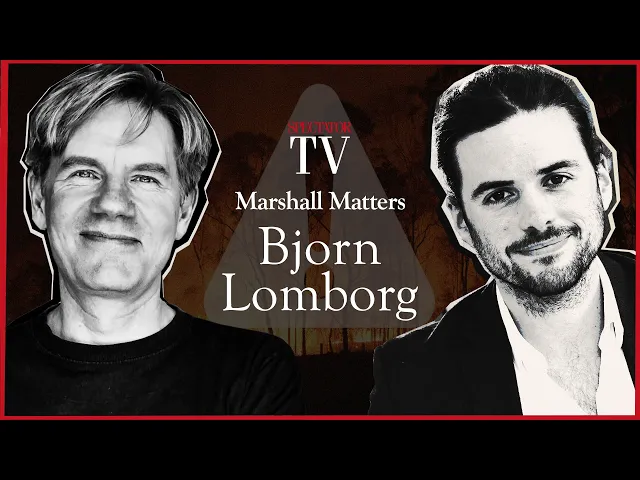
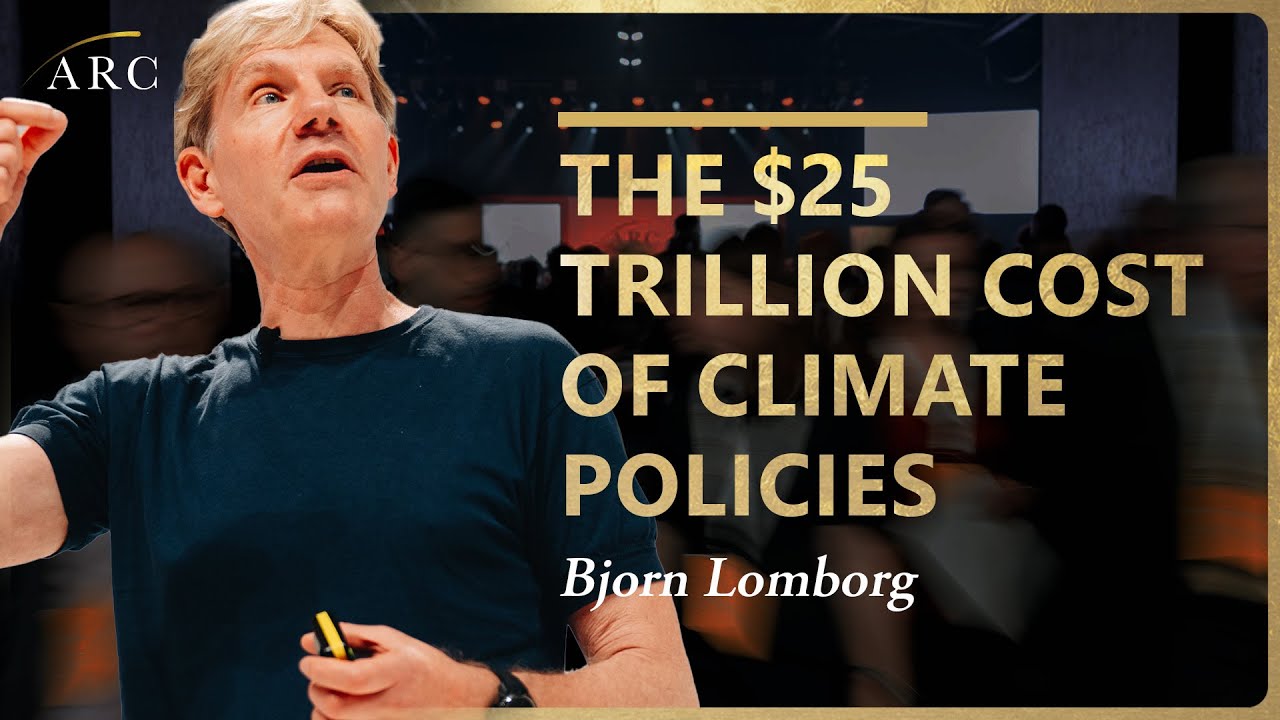
It's unconscionable right now that we're basically telling the poor world look we got rich on fossil fuels it was great for us but you know I'm sorry there's not space for you so you just got to stay poor and get used to it hello and welcome to Marshall matters with me Winston Marshall at The Spectator on this show I speak to heterodox thinkers on taboo topics and today taboo topic is climate change the Apocalypse apparently is n flooding heat waves fire Mother Nature is striking with vengeance doomsdays tell us constantly that we're reaching the point
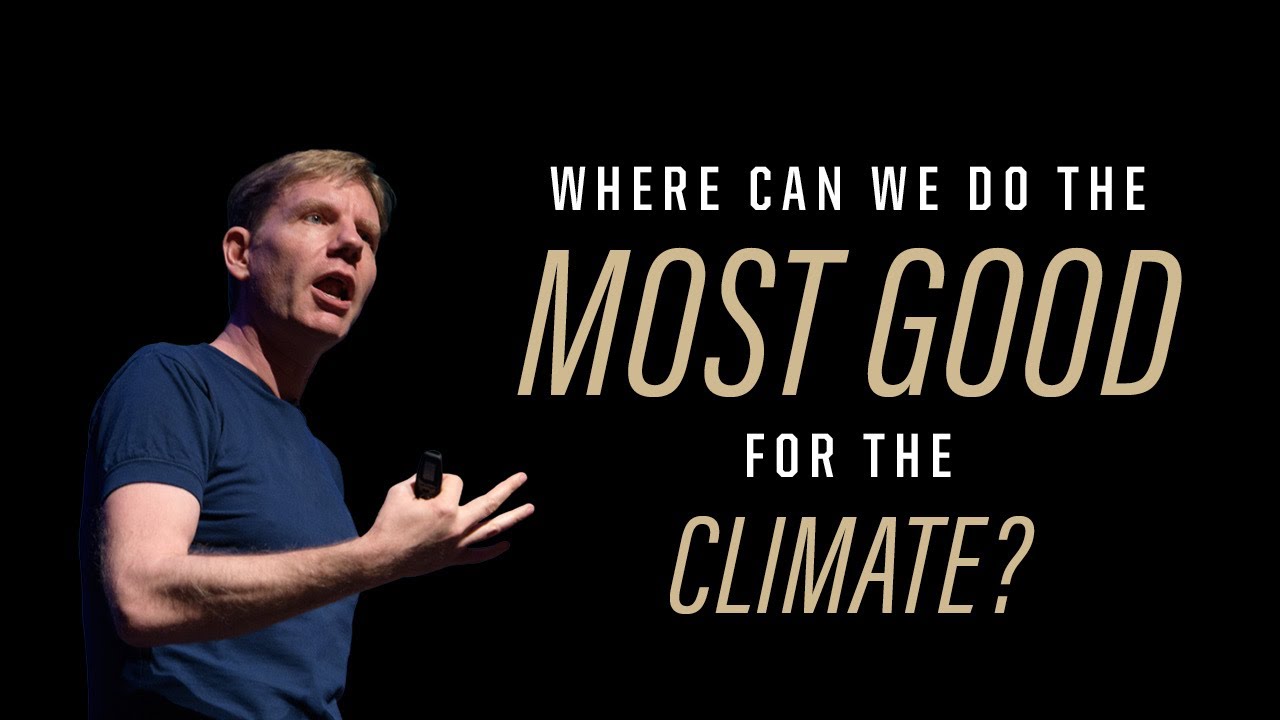
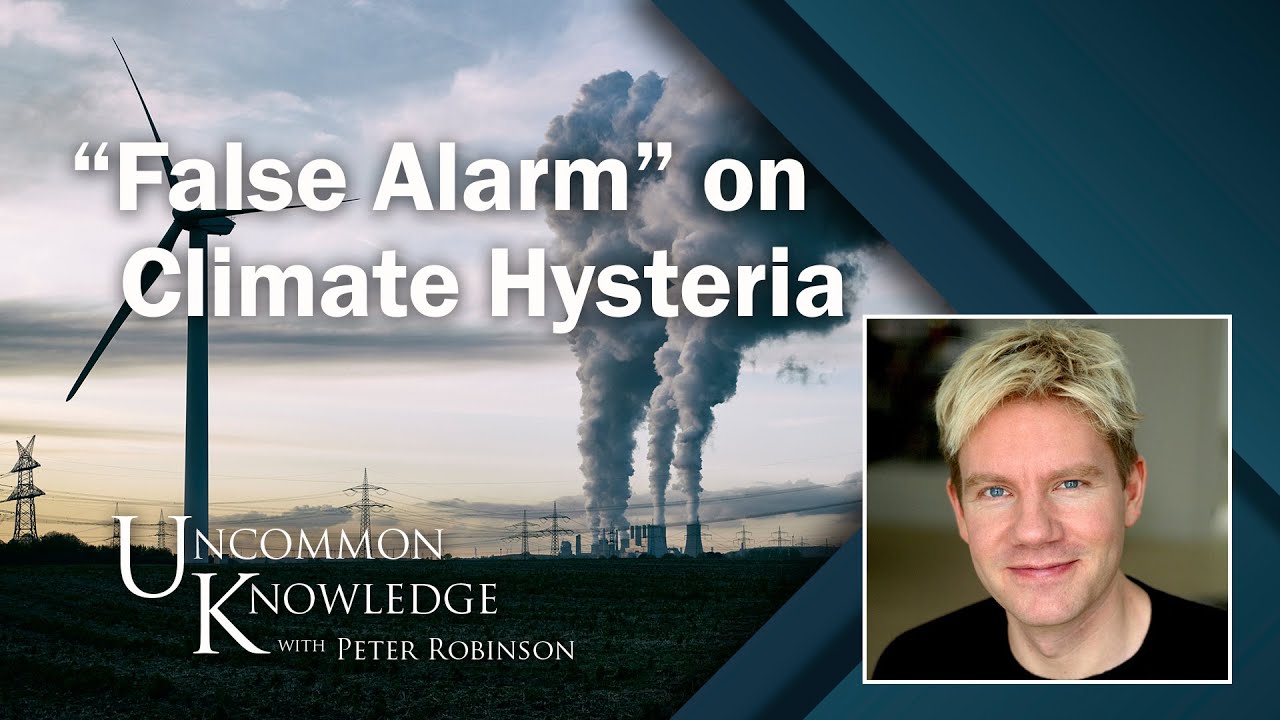
of no return the unhcr claims there are 20 million displaced people a year owing to climate change and extreme weather and uh Cloud Schwab found of the world economic Forum uh who are meeting this month in Davos in his book The Great narrative tries to build a whole moral and values framework on the shared Belief that climate disaster is upon us today I am joined by environmentalist uh I should note skeptical environmentalist uh bjor lomborg uh founder of the think tank Copenhagen consensus and author of the book false alarm how climate change Panic costs us
trillions hurts the poor and fails to fix the planet bjor thank you so much for taking the time to be you so uh in your book you argue green Pathways proferred by environmentalists such as the ipcc will Cause 3 million more deaths a year than the fossil fuel pathway it will see 26 million more extreme poor every year and will cost a staggering $509 trillion a year that by quote insisting on cutting carbon through climate policies that push up food prices instead of taking a broader view of how to best help people and the planet
we will have consigned 54 million more people people to starvation you're certainly a heterodox thinker um and I'm Keen to get into all of that but I was wondering if we could just start with some really basic stuff um so uh I've gone into the ipcc reports and and I it strikes me and I think you make this fairly clear in your book false alarm that you do agree uh with the ipcc which is the intergovernmental panel on climate change the UN body you do agree with their assessment that since the end of the pre-industrial
period i 1880 the climate temperature has risen by a mean of 085 degrees Celsius and that it's hom Uh anthropogenic I manmade yes yes so fundamentally I think it's actually 1.1 degree so even more but yeah fundamentally yes Global wearing is real it is mostly man-made possibly all man-made as you just pointed out and it is something that we should consider how to fix so it's not a conversation about is this m handmade is this a just a conspiracy or anything but it's much more a conversation on on like any other conversation we have in
politics how Much is this going to be of a problem and how much are our purported Solutions going to cost to fix how much of the issue and the real Point here I think is to recognize that when you're inundated sometimes literally with all of this information that tells you the end is nigh it sort of makes you believe well we should spend whatever on it and remember that's true if this was a meteor as one reent movie made it into if this was a Meteor hurtling towards Earth we should have no other issue you
know focusing on if this is going to kill everyone on Earth obviously this is our biggest and only real thing that we should be concerned about it is not and that's not what the UN climate panel tells us it's not what the best economic model tells us they tell us this is going to be a problem not the end of the world now if it's a problem and the way you could compare it is perhaps a little bit like A chronic disease like you know diabetes it's certainly something you'd prefer not to have but it
is also something that you can live with and that you should live with you should take some precautions you should take your medications you should change your diet but you should also recognize this is absolutely livable with so that changes very much the kind of way that you think about climate so it's a problem not the end of the world and we should make Smart policies but not as we're doing right now an enormous amount of policies that are very costly and actually do very little good well I'm Keen to get into those specific policies
and your alternative policies but one thing that's uh just if we can stick on basics for one more moment and it the the the doomsdayers that we've both cited uh you and them are sort of both drawing from the APC ipcc report and uh and the it seems to me that You're choosing different and rcps which are these models for how we project uh the environment crisis or change rather to unfold and you're both drawing from the same information but coming with very different attitudes so what am I not understanding and what is the representative
concentration Pathways what so that's basically a question of how much emissions are we going to have over the 21st century and so the very high numbers the 8.5 is a is sort of a World run a muck just totally powered by Coal fire power plants sort of five times as much coal as what we're using now very unlikely scenario the um uh 2.6 is a very low scenario where we will basically become all environmentalists in a very short while also fairly unrealistic uh and so the most realistic outcome is is the 4.5 and as you
can just hear most of our listeners probably I almost glaze over my eyes right because it's a very unhelpful way of of It's a very you know sort of a a technocratic way of of defining it but it matters in the sense that if we're actually going to emit lots and lots of uh CO2 that will make the problem bigger if we're going to emit almost no CO2 of course there's not going to be much of a problem the honest aners will probably emit somewhere in between and that's a problem again not the end of
the world but so I don't think it's I mean I agree that you sort of glaze over and when You're reading it it's kind of tricky but if you see it as one extreme on one side one extreme in the other in the middle but what I what I don't quite get is that let's say the UN all all these people meeting in Davos they very much believe in the extreme and and they're preaching the extreme uh but you're but you're not and why have you chosen with okay the specific RCP that that is different
from them so I'm I'm not sure I really choose all that much and I'll Get back to that in just a second uh but almost all the evidence now shows that the very high so the 8.5 RC uh RCP is just not plausible it's possibly not even doable so it it is just a scare scenario now there's a lot of reasons why a lot of uh modelers use it uh you know if if you're going to find out whether something gives you cancer you'll typically give it to rats and then you give it in huge
doses because the idea is if we give it a few little Doses like most humans have you almost can't see it so you need like a 100,000 rats to see if there's a slightly more cancer whereas if you just stuff them with the stuff you know they it'll show up in just 10 or 100 rats and it's a little bit the same kind of thing that you do with the environmental system so you pump it with the 8.5 then you more easily see the impacts that makes perfect scientific sense but what then happens is then
and you know it's sort Of very obvious that then you come out and say oh this is going to rise sea levels enormously and then the newspapers of course come out and say all right so there's a study there that says you know sea levels are going to rise a little bit and there's a study there that says it's going to rise a huge bit what are we going to pick we're obviously going to highlight the the one that's most alarmist because it just makes for the best headlines it doesn't Mean it's a good description
of what's going to happen so that's one part of it but but but but be quite Frank that's not the main point that I really try to push so that was my other argument I'm not really all that in engaged in in is it RCP uh 4.5 or 8.5 it's much more the fact that most of these predictions that you hear almost everywhere in the Press do not take into account the humans change the behavior so they fundamentally look at climate change Which is absolutely true in this is because of climate uh this because of
Human Action but they don't take into account that humans change according to that so take for instance sea level rise when sea levels if we take a fairly high level estimate so that would be almost 8.5 that's certainly some of the things I quote uh of about a meter of sea level rise over this Century which would be a significant impact the simple way of looking at that is to say all right if Nothing else happens what will happen with a 1 meter sea level rise oh London is going to be underwater lots of other
places are going to be water much of Netherlands are going to be underwater because they didn't update their dkes that is going to be phenomenally costly so you can basically make a model that says if nobody changes their attitude this is going to flood large parts of the world and so you know one study that got headlined in New York Times and Washington Post many other places tell you that you will see 187 million people flooded so they'll have to move or you know Rolling Stones even said they'll drown which of course doesn't happen over
100 years that you'll you'll actually get out of the water uh but also it'll have huge costs so uh somewhere between 55 And1 trillion per year in cost M now this is all true if we were stupid enough to not do anything for the next 80 years of course we're Not that kind of people we actually see all right sea levels rise we build higher dkes we make more infrastructure not vulnerable to uh to to sea level rise we know how to do that and Holland again of course is a great example of how to
do that if you assume that people act as they done before and it's important to say this was actually in the models that said the 187 million that got the headlines New York Post and Washington Post they say this is an Implausible argument to assume that people won't act if they act we estimate instead of seeing 180 uh uh 87,000 more people uh being flooded we see many many fewer people being flooded actually we'll go right now it's about 3.4 million people being flooded every year instead of going up it'll go down to about 15,000
people being flooded why because we're richer and hence much much more resilient this is you know this blows the minds of most climate you know Campaigners because that obviously you think if sea levels are going to rise then clearly we're going to be in more trouble and that's true we will be in more trouble than if the sea levels hadn't risen but as we also get much richer we actually know how to deal with that so we will reduce our level of vulnerability by the end of the century we will because of sea level rise
have about 15,000 people being flooded this is one very very quoted model if we had Had no climate impact it would only have been 10,000 so you know climate really still does play an impact it actually you know increases the number of people flooded by 50% but it's a trivial number compared to what it is today and of course it's an absolutely trivial number compared to what scare stories tell us so if you only tell one part of the story if you only tell sea levels rise nobody else does anything the world is screwed that
that makes sense but that's Not the correct story that's not a politically informative story because that's not the world we live in we live in a world where because we're richer we'll actually deal with many of these issues and yes we'll still have a residual problem of 15,000 people being flooded every year that's still a problem it's a much better world than one where 3.4 million people flood every year and certainly much much better than what we you know read in New York times In Washington post about 187 million people being flooded but I understand
why New York Times in Washington Post made that story because it's much more fun to read and it SS gets clickbait but so this is quite helpful because through your book you keep saying climate change is bad you insist that climate change is bad yes and and you've made this example here like climate change human cause climate change will increase sea levels uh but I came away from the book almost Feeling like climate change isn't so bad because it's so hopeful of of of these Innovations human ability to adapt and and and you insist on
adaptation as an important thing for us to concentrate our energy on but I I wondered if we could just identify a couple of the the bad things I've also noticed in your in your uh interviews you tend to there's a lot of sort of explaining why the alarmism is is wrong but but given that you insist that climate change is bad What are the what are the other problems of climate change so so and and this is what's so hard when you try to think of the world from an economist point of view so fundamentally
what you see and uh you know look at if we just take a look at temperature as temperatures rise you're going to get more heat waves you're going to get more problems with heat and you're going get fewer problems with cold if you look at two cities like Helsinki and Athens they're both very Well adapted to what they're temperature is used to be if we increase the temperature for both of them which is what climate change does or indeed if it had gone down if you know sort of global cooling kind of thing was happening
both of those things would be bad for both of those cities because they've invested an enormous amount of money and resources into buildings in Helsinki that are really warm in Winter and in Athens you know that are really cool in summer if You change the temperature it will change the optimization of that of both those cities so you know both Helsinki and Athens will have to invest more in air conditioning and less in heating that's going to cost them money that's going to be Troublesome this is the basic problem of climate change this is why
all economists will tell you when you have an equilibrium of very very large Investments typically of stock so you know uh buildings and uh industry And that kind of thing when when the circumstances change that will have a cost it is not this huge cost that our climate campaigners would like us to believe but it's a cost nonetheless so the economist will tend to tell you that by the end of the century so this is the work of nous William nous the only uh climate Economist to ever win the Nobel Prize in climate economics in
2018 from Yale University and what he tells us is that if we do nothing about climate by The end of the century it will mean that we will be about 4% less well off than we otherwise would now remember a lot of the impacts on climate change are not actually going to be economic impacts it's going to be the fact that you know some of Wetlands will suffer you'll have uh you know you'll have to have more air conditioning in in in summer heat waves that kind of thing but it will feel like and that's
how economists do it it'll feel like you're 4% less well off now at the same time the UN estimate the the average person on the planet because we have seen sustained economic growth over the last 200 years by the end of the century the average person on the planet will be 450% as rich as what he or she is today so we'll be much richer the 4% reduction means that essentially by the end of the century if we do nothing about climate instead of being 450% as Rich we will only be 434 per as rich
and this Explains I think your your sort of conundrum because what it means is it's obviously a less good world where we're only 434 per as Rich compared to a world where we're 450% and and just remember these all model estimates I mean they're they're not true numbers but they're order of magnitude numbers so it's obviously a less good world but it's still a pretty damn good world where we're 434 per as rich and that goes to show you that climate change is a real Problem and that's mostly because it affects all of our stock
decisions so everything we've already built will be slightly out of optimum and that will have cost but it's cost of you know the order of 4% in total compared to the fact that by the end of the century will be uh you know 450% or 434 per as rich as we are now that is why you come away with the sense of but it's not that big of a problem exactly it is one of the many problems we need to fix but it's Not the end of all and that's of course why this is not
the medor hurdling towards Earth this is one of the many you know naging issues that we'll have to fix in the 21st century so climate policy is a a tradeoff then in in how much climate change will affect GDP compared to how much it otherwise a policy can can can uh this is this is essentially what Nord house got the Nobel Prize for he said and you know to any Economist is sort of obvious but but It's not to a lot of other people fundamentally climate has costs and that's what you hear constantly and that's
T typically vastly exaggerated right so you hear about the sea level rise you don't hear that it cost about 30 billion which is probably the right answer but you hear that it cost 555 trillion so you you get you know sort of what three orders of magnitude wrong it's more than a thousand times bigger that's why it makes big headlines so you Get the sense that this is the end of the world kind of thing but you also have to remember that climate policy has cost so when you make climate policy you you by Design
make for instance energy more expensive because you have to switch to energy that you wouldn't otherwise have done uh which is typically either more costly or a combination of less uh uh reliable or less uh available so fundamentally we're saying you have a cost then you try to Make a climate policy which also has a cost given that we have to pay both of these costs we should make sure that we minimize the sum of these two to an economist that's an obvious way of saying we want to make the system such that everybody are
best off in 2100 MH but to many people there's a sense of the costs are incredibly exaggerated and there's virtually no cost to the policies actually they'll make us better off that's what a lot of people will Tell you while at the same time of course they also tell you yeah this is going to be incredibly hard and very very costly so we need to subsidize everyone in all these kinds of complicated ways and it's going to be really hard to get most of the developing countries along with this and all these other things which
sort of gives away yes this is going to be fantastically costly just to give you one ballpark figure uh the uh McKinsey Estimate on on Net Zero estimate that this is going to cost to to get to Net Zero in the the smart way will cost the world in the order of uh uh $6 trillion per year for the next 30 Years uh and you know of course that's $6 trillion that's more than the entire education system of the entire world it's it's a very very large number of money do you think so let's look
at the policies then let's start with Net Zero since you've brought that up is okay Aside from how expensive it is would uh is there any value in in is it a policy that you completely throw out or or is there anything about it which you you value of course I value I mean look CO2 is a problem if you come up with a policy that says we're going to get rid of all CO2 emissions that's a good MH so you know Net Zero is a policy that tries to do some good MH in the
UK given that UK is about what 1% of global emissions you're basically saying we're going to Try to cut Global emissions by 1% by 2050 that's it's a good thing that's you know it's better that it's 99% than it's 100% but the point is it is going to have a minuscule impact I I can pretty well assure you that you know if you if you draw this with a pencil the temperature line with without the UK's policy and with the UK's policy you can't tell the difference you need to sharpen your pencil a lot before
you can tell the difference between those two Lines so fundamentally you're making a policy that will have virtually no impact on the global scale now if cost it will cost cheap then maybe we should do it you know so the point is it does do some good but if it's going to be fantastically costly not and I think this is important to to point out not only will it mean that it's a really bad policy to do you know that you're basically saying let's spend lots and lots of resources to achieve a little Tiny bit
of good that's a very bad deal but also if you try to do that it is inevitable that you will get a revolution sooner or later right you will get people voting for Donald Trump or bolsonaro or some people like that who say why the hell I don't know if we can say these words on on your podcast I just did sorry so you'll have to believe it but anyway why are we paying all this money instead of just taking for ourselves you we saw this in France of The yeah yeah so you'll basically get
people to stop way before you're there so uh one nature study showed uh so a reason in in in the nature Journal uh indicated that the cost of almost reaching Joe Biden's policy by 2050 is equivalent to costing each American every year by 2050 uh more than $1,000 per person per year this is just you know remember they'll be rich it's not the end of the world it's about you know what 11% of their income so that's A lot of money but it's not the end of the world these Americans will still be okay off
but I I I defy you to believe that most people are still going to be voting for to someone who says you know what I'm going to make you bleed $111,000 every year they're just not going to do that and of course this is Rich World policies imagine asking and that's one of the things I thought was amazing about the McKenzie study uh they actually showed that for India for Instance you'd have to spend about 10% of their GDP on Net Zero policy that that's just implausible to imagine the you know up and cominging fairly
poor you know still lower income uh uh uh Low Middle inome country that they are going to be willing to spend 10% of their GDP actually spending on GDP on on on Net Zero globally would cost somewhere between half and 2/3 of the entire Global Tax intake that we have from all nations in the world every year that's Just not imp that's implausible so you can say you want to do it it's a bad idea but it's also a bad idea in the sense that we know once you start implementing people are just going to
vote you out of all M mhm can I ask then about the Paris agreement because that's also of the standard now that everyone refers to and and but you RI against it and and you're very CR I hope I'm not riling because that sound make me sound unreasonable I'm just saying it's Reasonable ring reasonable ring yeah um you're very critical of of the the Paris agreement in that I think you say it will cost us a a trillion dollars a year by 2030 to to implement with little gain yes yes so actually because we we
just talked about a much much Dumber policy which is net zero uh so in that context Paris agreement is only a semi dumb uh policy that's that's why I probably also uh you know it's the one that we've actually decided to do so yes it's still Dumb and we shouldn't do it uh I estimate that whereas the benefit cost ratio for Net Zero is probably you know about one pence back on the on the pound or one cent back in the dollar um Paris agreement might make us 10 cents back back on the dollar which
is you know it's 10 times better but it's still like you could have you could just have given that dollar away and done the world 10 times more good so it's still a dumb policy but it's a less dumb policy and Again we need to have this conversation not because we are so focused on saying this is the end of the world because if it is the end of the world again then it doesn't make sense you know AOC was famously quoted um back in 2018 where where she said we only have 12 years late
left for the world which makes sense if you read some of the documents and especially how they were put out but what she what she said and I think that makes perfect sense I totally understand Her she said the world is ending and you're asking how much will it cost to fix it that makes perfect sense if it is the end of the world we should just spend everything how how when you say it makes sense by what she read yes what what do you mean what what did she read that made sense so she
read the the 12 years is uh so in 2018 actually a couple years before that uh we asked the so all world's politicians asked the UN climate panel the ipcc uh to do a report on what Would it take to get to 1.5° Centigrade so limit Global temperature rise to 1.5° right this is going to be incredibly hard I think most people sort of privately would accept this is just not possible so the what the report came out and said all right you've asked us what will it take to do something that's almost impossible and
our answer is it'll be almost impossible it'll basically take that we have to change the entire world fundamentally before 2030 and that was the 12 years that's where that 12 years come from so basically they say if you ask us to do almost impossible stuff you have to do almost impossible stuff to achieve it which is technically true but you know that doesn't mean the world is ending in 12 years but I think she gets and I think a lot of people get when you read the media and if this is not you know most
people have other things to do than read the UN climate panel report and They actually have kids to pick up from school that kind of thing if you need to do that your only reasonable estimate is that yeah this sounds like a terrible deal this really sounds like the meteor hurdling towards Earth and then sure you know spend all my money on on avoiding that that's not where we're on that's why this this is an important conversation and that's based on the 1.5° Celsius which you say is an in your book is an arbitrary number
oh it's it's An arbitrary number I mean you can tell from the fact that it doesn't have any more digits it's just you know and and and even two degree Target which was a much more prevalent uh uh uh uh Target is also just an arbitary Target it's something that you know people came up with there's there's one set of stories it's ve very very hard to sort of tell the the the starting point actually there's some some legitimacy to the fact that it that it started from one of Nord House papers the guy who
won the Nobel Prize in climate economics uh that it started back uh in the 1980s where he estimated uh what was the maximum temperature that some uh weeds could survive on a on a rivered uh and it and and that research said that they could probably not handle more than about 0.2 degree temperature rise per decade which turns into the two degree Target but it's that kind of level of thing yeah it's just it's a It's a it's a thing you you stick your finger in the air and say you know that sounds like a
reasonable number and of course that's not how we should set uh policy targets for one of the most costly and potentially most impactful policies but you know surely we should actually ask what are the cost what are the benefits right okay I see and and so can we go back then seeing as on on policy that how you've come let's say to the rather uh potentially climate Alarmist alarmist statement that uh that the the uh 3 million more deaths a year will happen if we take the green pathway rather than the fossil fuel pathway so
this is this is more sort of it's not something I'm going to go out on limb to defend because that was not my main point in the book it was it was more a point of saying so the UN has made some a number of different uh scenarios for what the world looks like which is necessary because we actually have to Talk about how much CO2 do different civilizations emit in all the years out to 2100 in order to be able to run the models so one of the models is the standard model that was
the one I was referring to the ssp2 uh the middleof the road model if you will uh which is the one that give 450% richer by the end of the century then there are uh two pretty bad scenarios I'm not going to go into those and then there are two good scenarios if you will one of them is the Green scenario which you would imagine that sounds like a really nice scenario we actually get richer than in the uh middle of the road scenario uh we live longer lives we're better educated crucially of course coming
to the green we emit a lot less CO2 it's a nicer more beautiful world in all kinds of ways that sounds like the one we would like right but there's another one that's called the fossil fuel intensive way which is basically we just go crazy on On putting out lots and lots of fossil fuels we just power the entire world with lots of power everybody gets lots of power that doesn't sound very nice and I think most people would sort of intuitively say oh we shouldn't be doing that however it turns out that we would
be twice as Rich by the end of the century we would have lifted many more people out of poverty that was one of the points that you made we would have so many more resources that even though The climate change would obviously be a worse outcome because we'd be pumping out more CO2 in the atmosphere we would be way better off so we would actually leave our descendants much much better off by focusing on that fossil fuel path now I'm not saying we should take that I think that this is too much it's too much
of a scenario conversation but I think it should get us to think about the fact that we constantly think in our in our way sort of you know for for for How we have a policy conversation we think about green as just being a good thing but if there's a huge tradeoff on pretty much everything else you also want education uh Liberty of women uh getting people out of poverty having the opportunity to do pretty much everything you will being much more resilient those kinds of things maybe we should at least think about the fact
that green is not the only thing we want that's the trade off I wanted out with that quote and so Would the the 26 million more extreme poor sort of be in that same category of of the extreme and and look we we we're in advanced civilization we can walk in two g at the same time we can actually both be somewhat green and very rich and I think that's what everyone would want to do that's why I'm I'm not I'm loathed to just say you know the UN mapped out five ways for the future
you can only choose one of those five that's that's a little silly uh way of thinking about The world I just wanted to make sure that you understand and that it's not just such that the green World sounds like really good because the dirty world if you will is actually much much better in their scenario but what we obviously should be aiming for is one where we're both incredibly Rich where we really focus on lifting people out of poverty and making sure we have lots of productivity and become green and it's curious if you actually
look at the Evidence where are pollution problems they're not mostly in the rich world they're in the poor World India Gandhi one of the first Prime Ministers of India she said you know the real po uh the real source of pollution is poverty you know if you're poor you cut down rainforest you'll do anything to make your kids Survivor but if you're rich you actually care about the environment because you can afford to because you no longer have to worry about where your Next meal come from so you're focusing if if we lift the poor
out of poverty that is the the the correct way to to D it's one of the ways look there there's many different objectives in the world I'm sorry I I can't just I I I can see in your face you would like me to just say yes or no but but you know fundamentally uh it's one of the many things that we need to do we should lift people out of poverty I think it's in uncontable right now That we're basically telling the poor world look we got rich on fossil fuels it was great for
us but you know I'm sorry there's not space for you so you just got to stay poor and get used to it that just doesn't work and of course they're not going to accept that either but I think that's you know unconscionable in any kind of way uh but likewise we obviously also need to fix a lot of Environmental problems you there's lots of air pollution around the World India go to India you they clearly need to clean up a lot of that will come as they get richer but we can also help with more
technology and of course we also need to fix climate change but one of the truths that we forget when we're so worried about climate because we hear all these scary messages is what solves most problems is not making people scared and it's not selling people you have to do without because that never works what works is you have Technological innovation let me just tell you a story that sounds like it's totally irrelevant but back in 1860s uh the world caught almost all the whales it gets it Hands-On and you know we were basically getting close
to being able to wipe out the whales why because they produce this oil that burns incredibly cleanly and very brightly so basically lit up most of Western Europe and North America everybody loved it now if you were sort of a standard climate Person trying to get people to stop killing all the whales you'd be saying stop doing that you got to go back to that dirty old you know less luminous but much more polluting uh uh uh fuel to light your houses and people would say ha not going to do that what actually did work
was we discovered oil and oil happens to be a lot easier to get out of ground than actually going out on the ocean surface to kill a whale and just get a little bit of blubber so it was a Much better much more effective way and suddenly everybody just switched to oil and we basically save the whales it's not the only thing and there's a lot of other you know nuances to the story but the fundamental Point here is if you have Innovation you can get good stuff without having to tell people you have to
do with less and I think that's what we're struggling with right now with climate conversation it's become about this you've got to you know eat less you Got to travel less you got to you know be a little colder a little poorer it's going to be a little more uncomfortable but at least we'll save the planet most people are just not going to say yes to that and certainly not in Africa and India now elsewhere what we will solve the climate crisis with or I'm not going to say climate crisis the climate problem is by
focusing on Innovation imagine if we could innovate say fourth generation nuclear to be cheaper than Fossil fuels yeah everyone would switch you wouldn't have to have all these Grand meetings in Paris and everywhere else you just simply see Nations across the world switch so on that and that's a question of levelized energy cost and in innovation combined but so I'd have thought so if you taking it the the issue as if you just focus on energy where we get our energy from and and correct me if I get any of this wrong because uh new
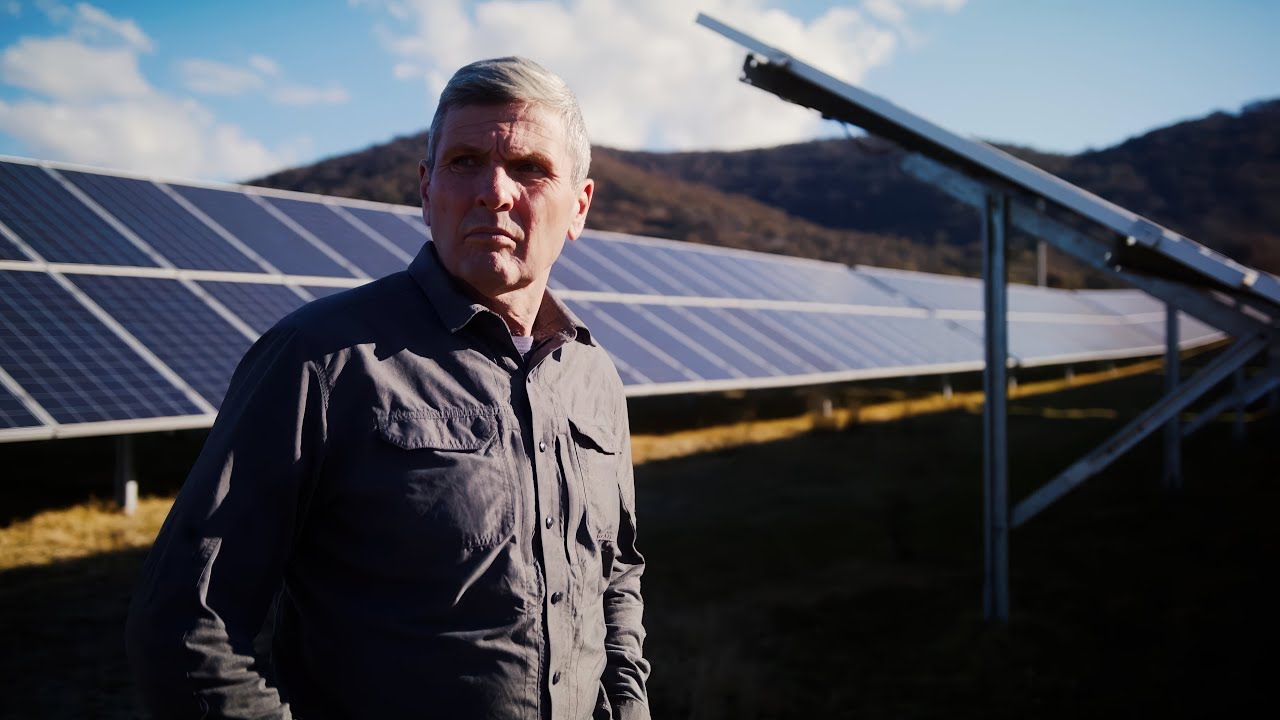
to relatively new to this But uh that's where the source of uh greenhouse gases is coming from uh then I'd have thought that innovation in wind and solar would be a a a sensible Way Forward now I understand that the problem we've got is storage so we can't store it but we need innovation in storage but in your book and this would by the way this ties in with your example of of the whales like uh we we found a better fuel and so we moved off naturally now if wind and solar is way Cheaper
and it's infinitely better for the environment than the other the other um energy uh options we have and yet you write in your book rolling out Sol solar panels and wind turbines have Insidious effects they push up energy costs hurt the poor cut emissions inefficient ineffectively and put unsustainable Pathways where taxpayers are eventually likely to revolt so why are you against solar and wind isn't that the new version of of moving from the whale to It could definitely be so I'm I'm not against that solar and wind could be a solution in the long run
but right now they're only a tiny bit of solution so there's actually some you know let me just start with a positive if you look for instance in California where the Peak El El use is in the daytime it makes a lot of sense to have solar panels because that can actually cut the peak level you know solar panels not surprisingly Peak at the middle of the Day and typically they Peak because of air conditioning use so they'll only Peak when you need it when the sun is out so it actually fits perfectly you should
have solar panels for that but the point is that most people seem to believe that we should somehow blanket the world with solar power or wind turbines and that will provide us energy and there the problem is no that's going to be fantastically costly and you need almost the entire stock of fossil fuel Options as back up because right now we don't have batteries and we have no sense of how we could have enough batteries to actually have storage enough uh uh so right now the world has battery storage for about 1 minute and 15
seconds uh so when we you know when the sun shuts down and the wind uh stops blowing you have enough battery power to keep the world running for 1 minute and 15 seconds and after that you're back to fossil fuels by 2030 it'll be up to 11 Minutes that's still way less than what you need so in Germany every year uh they have so so little sun and no wind for at least 5 days or the equivalent of about 7,000 minutes so we're far far away so my point is but that's battery right so what
about uh hydrogen or water storage are those not better options so water storage is a good idea and we've we actually have a lot of it but it's really hard to imagine that you can have it many more places than you already Have because it's very very uh uh feature dependent so basically it requires you to live in a place where close by you have lots and lots of mountains where you can pump up water that can stay there so it has to be a reservoir some places you can do it that's a really cheap
way of storing and you should definitely do it we've done most of that uh the hydrogen turns out to be very inefficient pretty dangerous it could be a solution so again I'm Arguing and if if you've seen in the book I definitely say spend more money on getting better uh uh wind turbines spend more more money on on Innovation on getting better solar panels absolutely spending a lot of different ways to get better storage but it doesn't seem like at the current rate that this is what's going to save most of the issue so it's
it's at best one of those things where we should also be focusing and we'll solve a little bit of The problem through that but in in the current conversation on climate it's has become the you know the savior of everything you know we should just have much more solar much more wind and people routinely talk talk about the fact that yeah then we'll have you know like six times as much wind and three times as more as as much solar and then we will do hydrogens as backup and stuff like that that's all fine but
then of course you can't claim that the one time Is efficient because the the next five times are incredibly ineffective right so you need to do the math again and we don't we just you know we just sort of proceed on on a prayer and a a hope and wasting a lot of money and and yes so in amongst your solutions for uh climate change uh some of which we've already discussed like Innovation adaptation but carbon tax you believe in carbon tax but wouldn't carbon tax like the other Policies we've discussed being problematic policies wouldn't
that also hurt the poor wouldn't it be the poor who end up paying paying more for energy they're already paying a high percentage of of their income on energy carbon tax is just going to mean that that goes up how can you support carbon tax would be against these other so uh so it's it's important to say when you talk to an economist you'll typically just hear about efficiency so uh Equity so the Distribution is a different issue uh now clearly if you actually do a carbon tax so the point I make with a carbon
tax is as as I think all climate economists and pretty much all economists would argue is to say that's the right way to fix the problem now there's two main issues with it one is it's very hard to convince politicians it's a good idea because they they'll likely get bumped out of of office by trying to do this and secondly if you do a carbon tax you Also have to scrap all the subsidies that you have for everything else right you can't both have a tax and all these subsidies that's incredibly ineffective way but that's
unfortunately very often how you end up now if you do the carbon tax rate you get a lot of extra Revenue that's sort of in line with how we think generally about you need some Revenue to run a state and there's ineffective ways of doing that that's for instance income tax vat lots of other ways that are Fairly destructive or distortive in the economy and it turns out that a a carbon tax is one of the least distortive taxes so you could fund more of the state with a carbon tax and that means you could
give back either by uh uh uh lowering the income taxx or perhaps just give money back directly to poor people you know that's the uh uh the the check idea that a lot of people have that you actually send out to poor people so there's a lot of ways you can address This I think it is also important to say that a lot of people who are skeptical about attack and I I get that point is that have we ever actually seen politicians say you know what we got too much tax in we're going to
lower some of the other taxes so there's a real worry that it's just going to lead to higher taxes which of course just means more Distortion instead of less so so you it's a it's a in theory correct solution I think we should Definitely consider it but we also need to know all the things that it entails so I want to ask a question that I I I hear a lot from uh the the people reporting that this the end of the world is is coming and it's it's this sort of anti-natalist attitude that the
world cannot hold more as many people as we currently hold and we certainly can't can't grow do you do you agree with this or do you think we have the ability to um uh does the globe have the Earth have A higher capacity for human population than we're currently at so it's a it's a it's a very very large question I don't think I'm going to give you a satisfying answer to this so the short point is of course more people means more CO2 emissions so they have a point in saying that maybe if we
were fewer people that would be better better for the planet in the sense that we would have less carbon emissions um but it's a very very specific and very narrow way of looking At the issue because obviously if we have more people in the planet we also have more Geniuses we'll have more people that'll you know discover the cure for cancer and we'll have more mozarts and all this other stuff so fundamentally We are failing to capture all the benefits of having people now uh most people uh make very clear choices where they choose to
live most people don't actually live where there are few people you know there's lots of Countryside where you can go out uh and and and live pretty well most people actually pay exorbitant rents to be able to live in you know downtown New York uh where you have a crappy little apartment at a huge cost but because it's so much fun to live together with other people and so in some sense it seems like we're actually voting when you ask people with our feet to mostly live where every else lives so we actually like to
congregate I think these are much much grander Conversations than we can reasonably have it's also important to say that it sort of touches some of the basic human freedoms you know to many people having a child or having more children is one of the most important things they more most meaningful things they can do with their lives and I think it's a terrible idea to go and and say you shouldn't do that on the other hand we should also recognize that you know if you have lots and lots of kids and you don't have much
Productive capacity Maybe maybe it leaves you in a bad in a in a worse place uh so I'm much more agnostic to this kind of conversation I think you need to make sure that people have the opportunity to have contraception for instance we know a lot of women that actually get more kids than they want especially in the developing world and and and uh get getting kid especially women more education also and more business opportunities also means that They're going to decide to have many fewer kids because they're going to say I would like to
actually make my own career and I'd like to have my own job and do my own impact on on the world in many other ways and that probably is a good thing overall now uh so so the short answer is just to look at this as a climate solution is a terrible way to look at it because basically you end up telling people you know what you would probably get the most meaning out of Having a kid but no yeah and that's just terrible look what we should do is innovation to make sure that we
fix climate change and then the question how many people should we be is a separate problem there's also always that thing when you talk to people who are advocating we're too many people it's often you know too many of you but just enough of me and that obviously comes across as a little hypocritical I you know there's a lot of these people who Will tell you there's too many people in the planet but they certainly don't have problem with their own kids I I think we're on really sketchy uh sort of moral territory yeah and
it's tied and it potentially too big a topic for now but I mentioned this in the introduction is that the unhcr say there are 20 million displaced people a year because of climate and extreme weather and it is it's a it's a fact or a statement that is often cited by um environmental Alarmists and what's your take on that do you think so is a reasonable uh the problem was with yeah the problem with uh environmental refugees and climate refugees is that it's almost all rubber band you know you can you can choose to Define
any of these in any kind of ways so what they cleverly do is say it's climate and weather related uh uh uh uh refugees and of course you know weather does uh you know push a lot of people away from where they usually would live Um if we look at the recent floods in Pakistan that a lot of people have been sort of blaming on climate that has some reasonability there is some truth to the fact that we would expect in a warmer climate that you would have more precipitation and therefore also have more risk
of of of flooding but of course the real point is that Pakistan for what 20 30 40 years have ignored to make their infrastructure better for water get more uh uh uh uh water Features that you actually Safeguard your uh your main uh uh economic centers that you make sure people don't build and especially live on places that will get flooded you know these are basic things and so in our effort to focus on a climate solution which just remember even if we actually did all of what we promis with Net Zero would mean that
Pakistan would be slightly less more inundated by the end of the century that's a terribly low bar to try to help Pakistan with instead of saying what why don't we actually try to focus on getting them politically better able to deal with these issues so they need to invest more in their uh water infrastructure they need to have more uh uh boundaries where people can't settle uh and of course we need to get them out of poverty because if you're not in poverty you actually fix most of these problems as Holland has shown you so
the point here is to say in some ways I get That many of these environmental activists are you know they come from a good place they want to help the world but they're unfortunately advocating possibly the least effective way to help so they're saying let's do the thing that'll cost the more money that'll make most people unhappy and unlikely to happen but even if it did it'll actually help terribly terribly little instead of and that's what my Think Tank then does a lot of different things there's a lot Of simple things where we could actually
have huge impact at very low cost why don't we do those first uhuh uhuh um so uh last thing I want to ask you about is something you've been writing about recently and I believe you're working on this with your Think Tank which is uh the un's sdg sustainable development goals and uh you have uh identified various problems with the the program and the goals and I wonder if you could explain what an sdg is exactly and and What's wrong and what's going wrong with the with the so it's it's sort of a a a
neat follow on from our whole conversation on climate because what my think tank does and I think what we all should be doing in all kinds of walks of life is simply to say everything you choose has a cost and a benefit why don't we do the things that cost little and have huge benefits first you know so it's not rocket science we do this in our own lives all the time why don't we Do this in our political lives as well why don't we do this as Nations well a lot of it is because
there's a lot of campaigning going on for some things so you know we worry a lot about Plastics in the ocean which I think is is a nice thing to worry about but you know come on shouldn't we worry more about the fact that diesel cars pollute the atmosphere for my kids to die right now I mean it seems like that would be slightly bigger issue but it's not Because you know the plastic in the ocean feels like a much big so what we try to do is basically say where can you get the most
value for your money what is the smartest policies to do the SG sustainable development goals is the UN so it's really all countries the UK the US everybody has signed up to this except for Syria and one other country I can't remember so you know fundamentally everyone in the world has signed up to this it's a promise to do a lot of good Things by 2030 so we promised fundamentally to do all good things so we promis to eradicate War eradicate disease eradicate hunger uh get rid of uh global warming uh get everybody educated well
and all the other things you can think of down to get more Recycling and have more parks for handicapp people in bigger cities and the whole ship bang right so we basically promise everything we already said back then you know when we promised It you can't just promise everything if you promise everything it's like having no priorities and you're not going to make any of it we're not at half time for this process and we're nowhere near halfway our promises which is not surprising so what we're saying is look if you can't do it all
shouldn't we do the smartest things first so we try to identify just like in climate what are the smartest policies so climate the smartest policy by far is to invest in Innovation if you can come up with great new innovations that will make clean available green energy cheaper than fossil fuels everyone will switch so that's the solution for climate that's a pretty good investment it's not fantastic investment but it's pretty good good investment but if you look at some of the things you could do for the world and let me just give you a few
tastes so we have like 12 amazing policies the world should be focused on Tuberculosis so uh we worried a lot about Co these last two years but in 2022 tuberculosis would back again as the world's leading infectious disease killer wow and it's you know over the last 200 years it's killed a billion people on the planet you know most people you remember from the 1800s died from tuberculosis this has been a huge killer of mankind for you know centuries and we cared a lot about it in the 1800s because it killed us then we figured
out How to fix it for us and now we don't care it kills 1.4 1.5 million people every year we know how to fix it we could do so very cheaply so we find that for about $5 billion a year so a trivial part of what it would cost to do Net Zero or anything else that we were talking about in climate you could actually save a million lives every year right now why aren't we doing that so our point is simply to say if you did that for every pound spent you would do The
equivalent of 48 pounds of social good for the world that's a tremendous bang for your buck as the Americans would say or uh you know value back in your pound so the idea here is simply to say there are some fantastic things that we can do right now that would have huge impact so take for instance nutrition uh there's way too many people who are still starving most of it is not because uh we don't have enough food but it's because a lot of people are still poor But one way we could make sure that
more people would have access to food is to get better food productivity that's what the Green Revolution did back in the 1960s and70s back then we worried a lot about you know the whole sort of uh developing world we worried a lot about India you know just being a basket case and would never you know too many people and too little food kind of thing and then Along Came Norman bolar whom is criminally un unknown he got the Nobel Peace Prize in 1970 he basically worked with a lot of researchers to make uh yields higher
they did so by making dwarf varieties of rice and wheat and so so they use less energy on on the stem they just get smaller but then they can support more of the grain it's a simple thing but that basically saved he's credited with saving a billion people's lives I mean imagine having that on your CV that's good right we should do that again yeah and that's fairly cheap so Let's invest about again $5 billion a year in more research and development into uh uh into uh yield enhancements so that would be both on wheat
and Ma and rice but also of course on all these varieties that are that are big in developing countries if we could do that and get that in the hands of developing country Farmers they would be much more productive prices would fall so everyone would gain and we would be better fed again if you spend a dollar there you do $35 worth of good we're simply saying this is a fantastic return for the world so we're coming out with these 12 I'm not going to bore you more with them but you know 12 simple policies
that could make the world an amazingly much better place yes it's not going to you know suddenly solve everything and it's not also going to solve climate change but the point is this would actually be something we know works and for very little money could make an amazing Achievement so that's what I'm trying to push to is is we the Copenhagen consensus thing tank yes but with lots of researchers so we work with more than 100 of the world's uh top economists and several Nobel laits and lot of organizations obviously on board on this uh
so we have some great advisers and we're really trying to take this into a global setting so this is period research getting everybody to know about it and then again telling everyone you Know all the finance ministers all the prime ministers to say if you focus for instance in tuberculosis or more in agricultural R&D you could have tremendous do pay back you could make your country so much better for very little money wouldn't that be a good idea and that you know is my my theory of change is when we give policy makers these you
know 12 great ideas they're not going to do all of them but they're going to pay oh I like this one and then They're going to do something that's really great for Humanity are you already in conversation with policy makers oh God yes yes so for instance on sorry you made me say one more thing so for uh for Education uh it's you know one of the big problems in the world we don't have good education especially in the developing world uh so about 80% of all uh uh that go to developing country schools don't
learn what is even considered minimal information right so If you ask him a question like this VJ has a red hat a blue shirt and yellow socks what color is the Hat 80% of these kids can't answer that question and you're sort of like oh my God right that's that's this is really terrible the problem is that when you put a lot of 12-year olds in the same grade some of these 12 year olds have no clue what's going on and some of them are far bored because they're way way ahead of the teacher how
are you going to teach a Class like that the point here is and there's lots of research that show us if you teach each individual according to his or her own level you can teach them much much more now that's really hard to do in a physical sort of way because then you need to put six-year-olds and 12y olds together because they're at the same level you can do in some place and then you you do do that but that's that's hard but you can also do it with a tablet so if you put this
kid 1 hour a Day in front of a tablet with you know uh uh this teaching program in their own language they will actually this tablet will know from previous days what level are you at and teach you at your exact level and what's amazing about this is so it'll cost about $25 per kid per year extra because you need to buy the tablets we're not giving it to them they're sharing with many others right but you need to have a a place you lock it in you need to have a solar panel to Charge
them all that stuff $25 but you will teach them so much that after one year of school they will they will have learned as much as what they would normally have learned of three years of school you're simply making them much better educated and we're actually working with Malawi government to extend this to all their primary schools now uh so you know a couple million kids so again there's a lot of great ideas out there and my point is simply to say why Are we so obsessed with the not very effective ideas when there's so
many incredibly effective ideas out there now again this is not going to solve everything for everyone of course you know it's good that there are people who are worried about plastic in the oceans and all these other things but we need as a civilization to keep asking that question look all of this you're proposing is going to cost money where can I spend the extra pound or the extra Dollar the extra Shilling and do the most good and I would love for us to do a little more of that great well on that note you
lomor thank you so much for taking the time to speak to me and and I'm sure people have found that fascinating and if uh they want they I recommend they read your book false alarm thank you thank you it was great [Music]