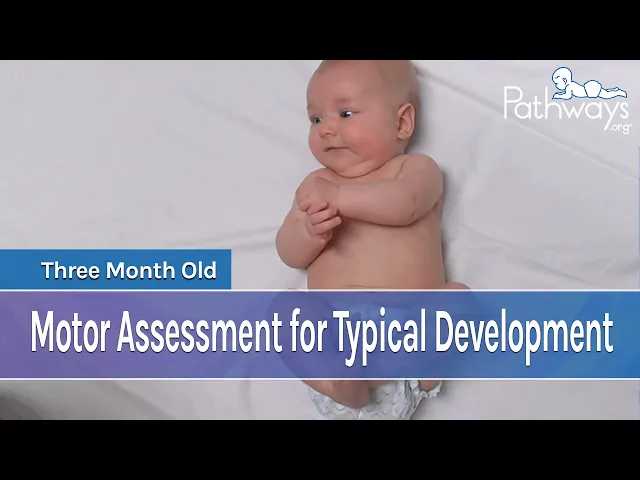
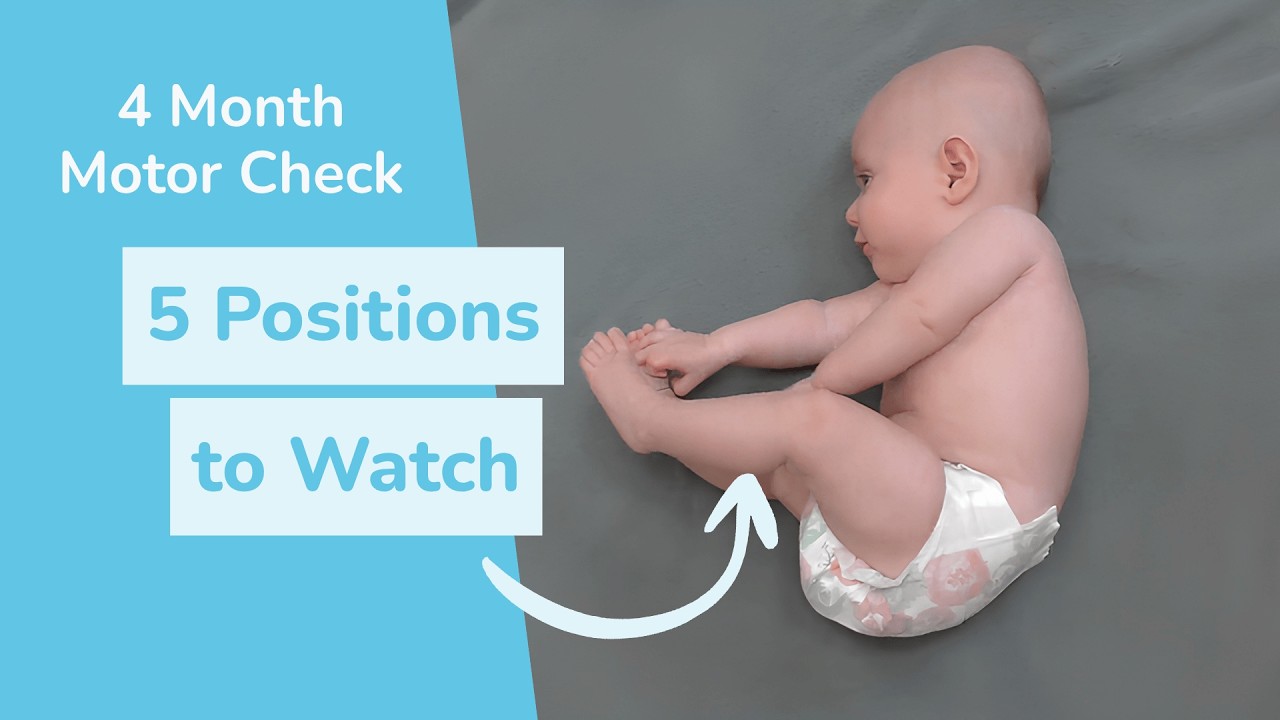
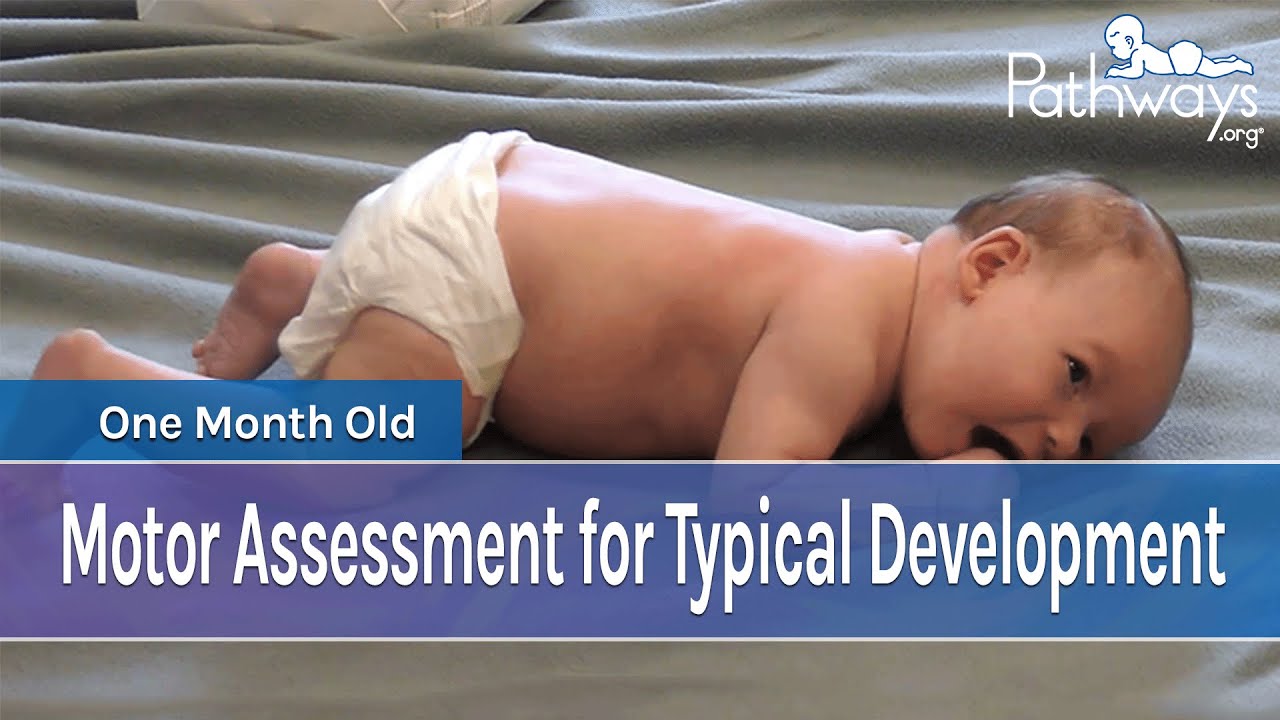
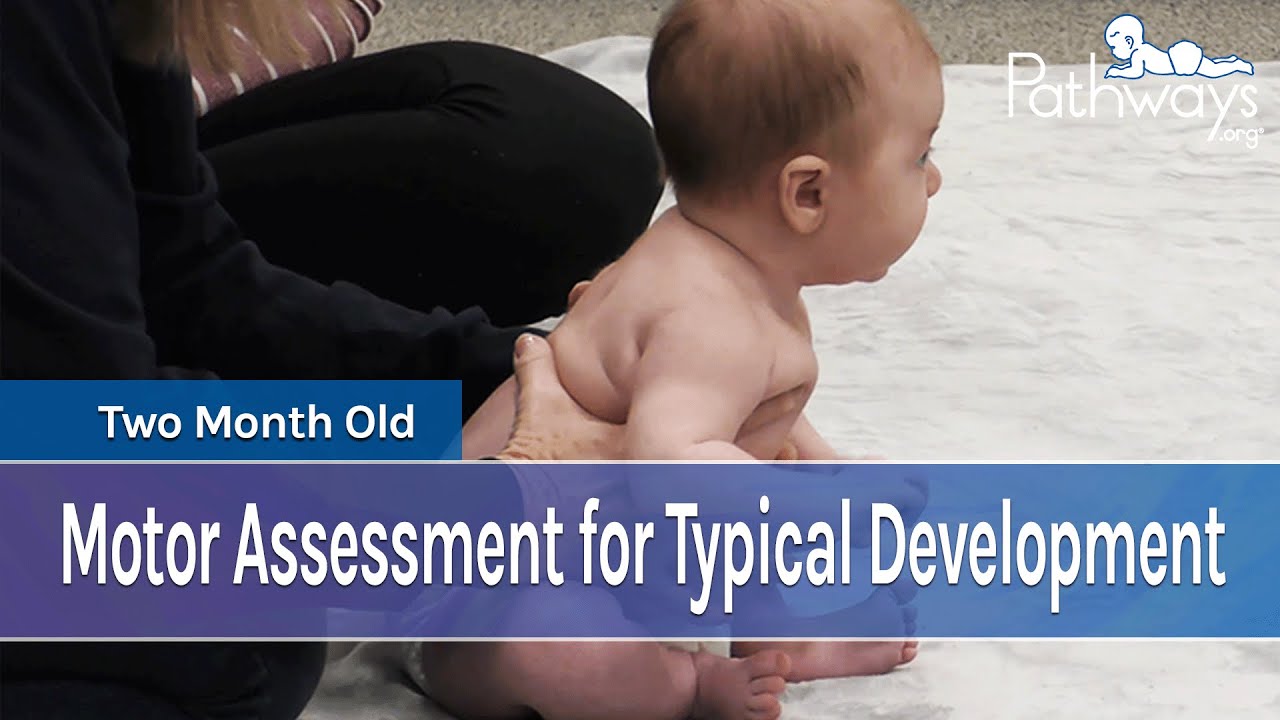
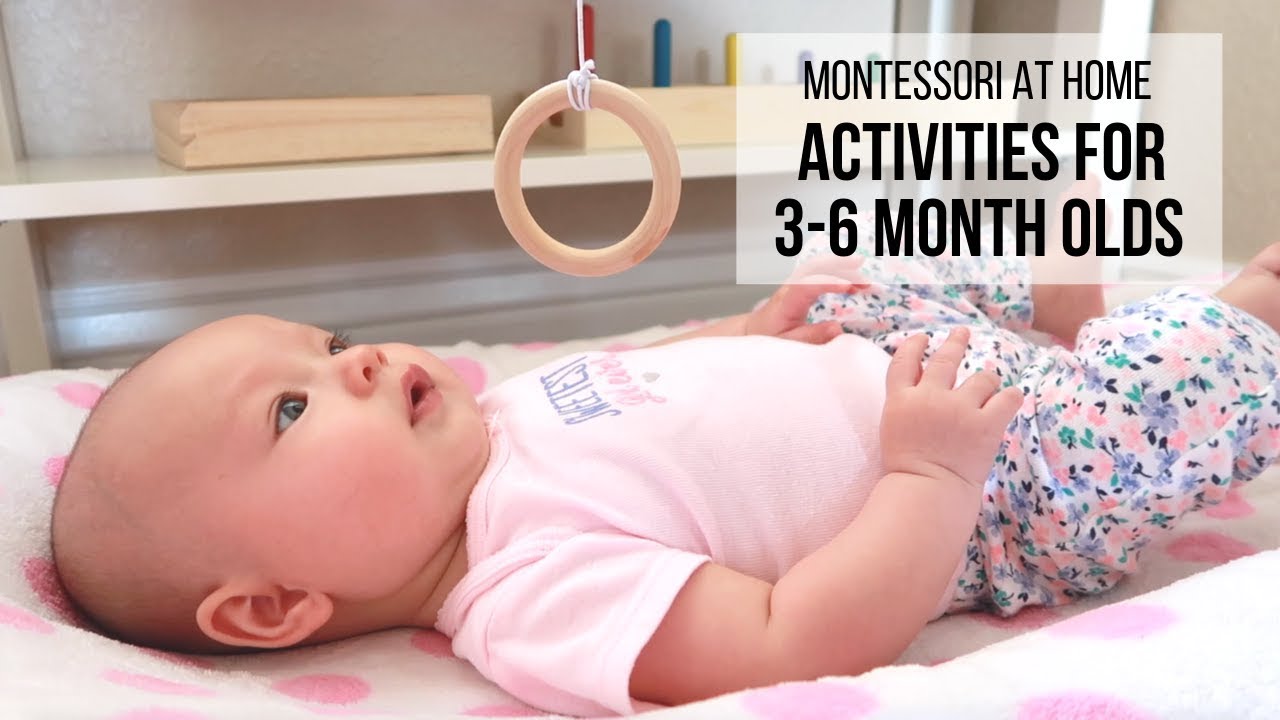
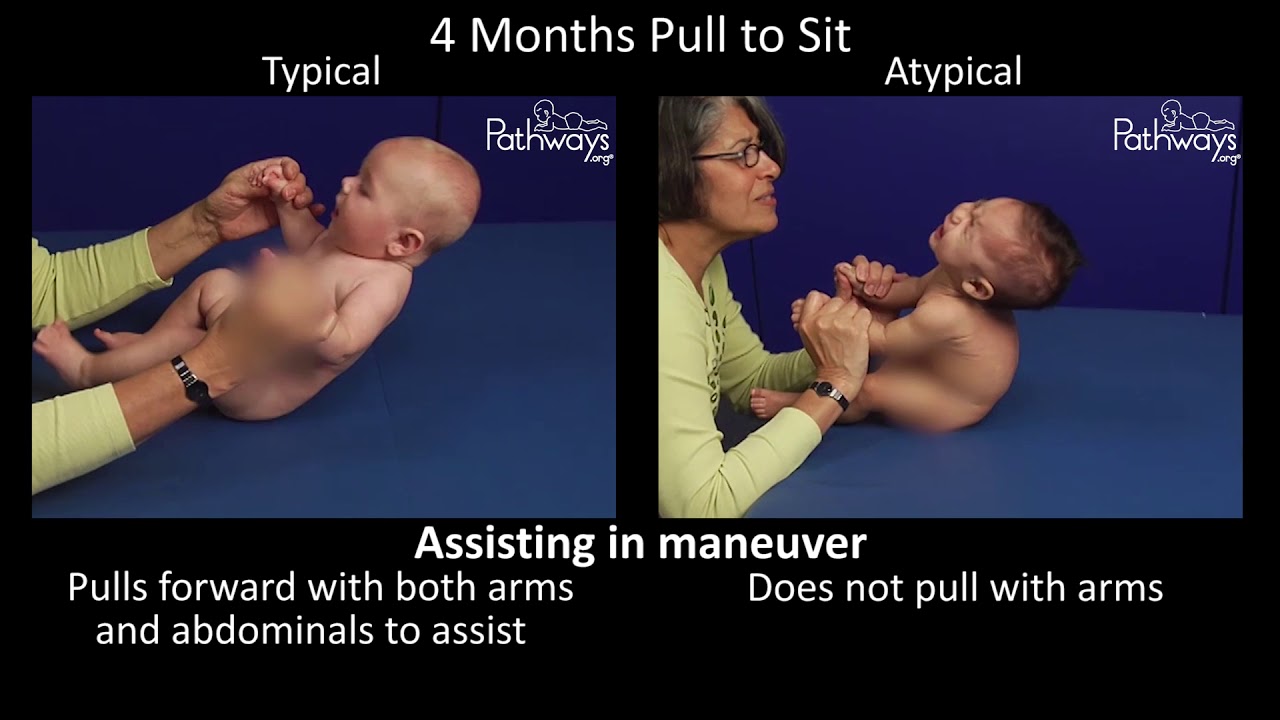
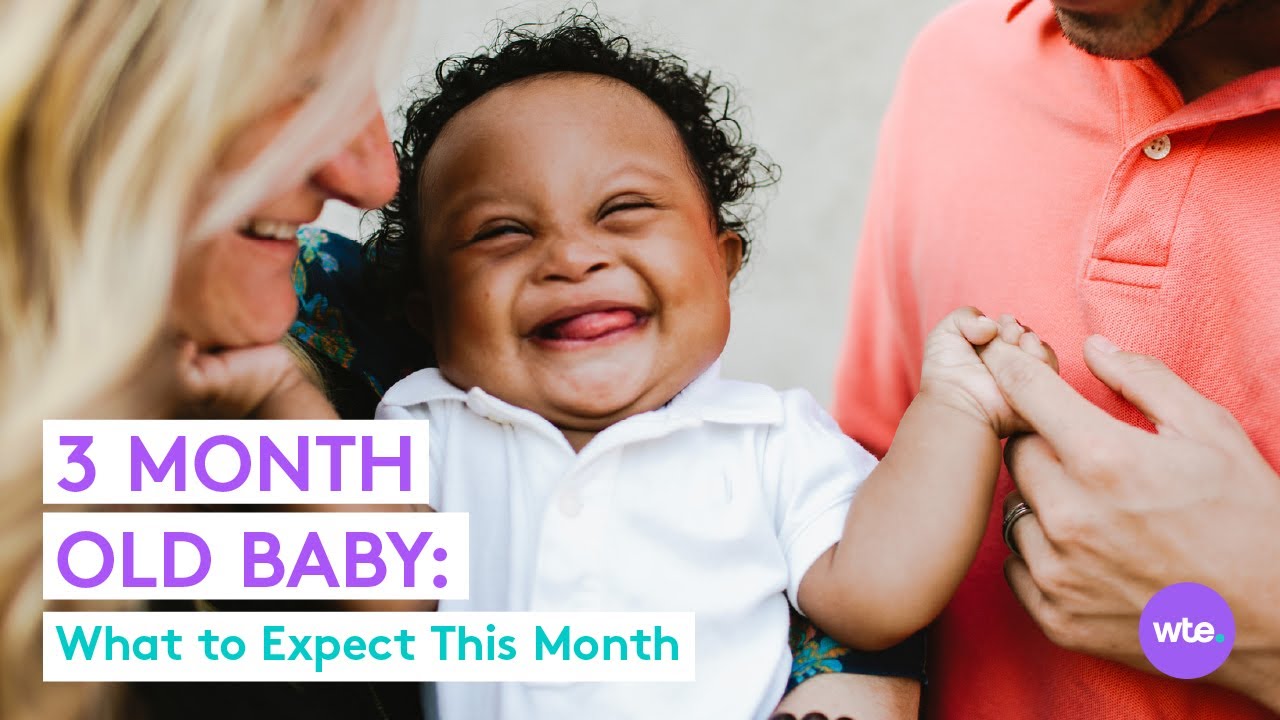
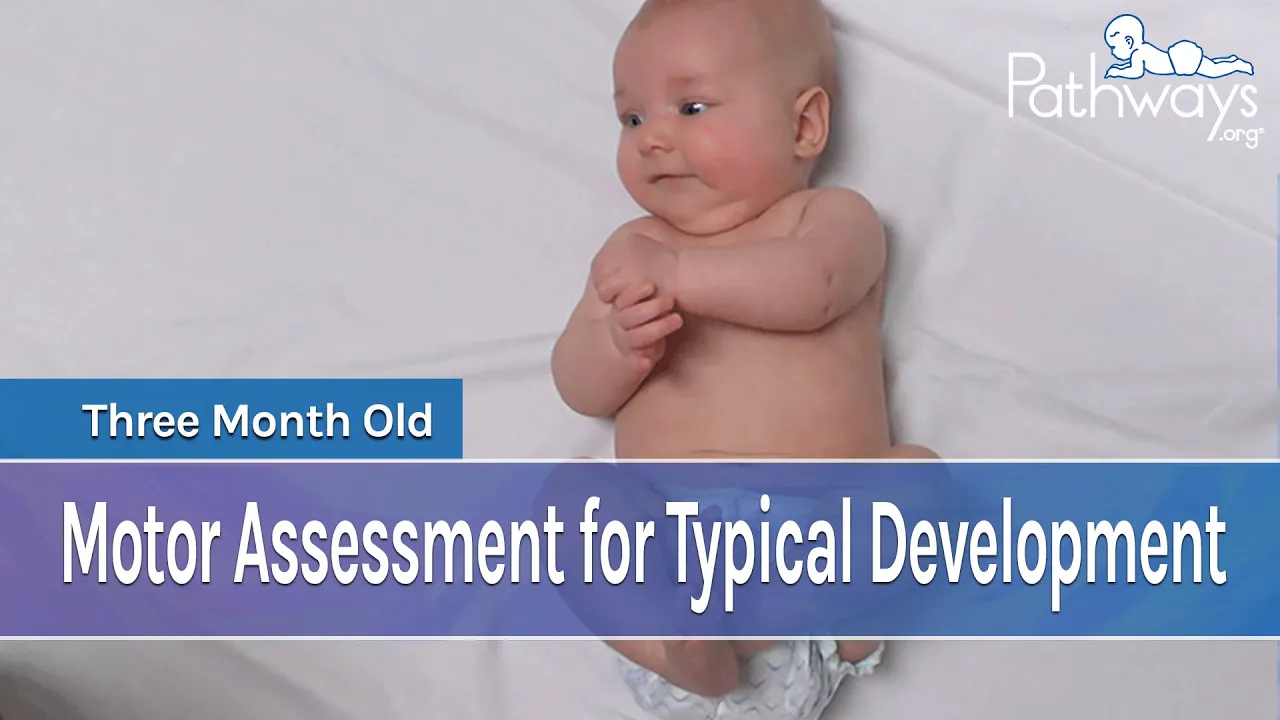
here we will watch the typical assessment of baby in five different positions at three months of age we'll review the head trunk upper extremities and lower extremities in each position additionally make note of how alignment core control strength and range of motion I'll give insights into baby's development let's get started supine at three months baby holes head in midline and will sustain it baby is now able to visually follow a face or object horizontally and vertically resulting in more varied head movements side to side turning the head to one side continues to cause a weight
shift to the face side here we see the trunk shift to the baby's right following the baby's head turning to that same side we can see abdominal muscles of the trunk are active contributing to the development of baby's core control this allows for more stability movement of arms and legs towards midline and mobility of trunk on Surface we expect to see the trunk remain mostly in a symmetrical position due to developing core control allowing freedom to move the arms and legs the lower abdominal muscles are more active and the hips can tilt upwards as seen
here these are critical components indicating typical development of core control at three months improving core control allows baby to bring arms and hands together in midline and hands to mouth providing tactile input and increasing baby's body awareness notice babies elbows are more flexed and positioned closer to the body we expect to see more upper extremity and hand movements with this increased hand movement baby begins to explore their hands and other objects the grasp reflex can still be elicited but is more integrated meaning most babies are able to open and close Hands spontaneously and more often
in this clip we are able to see all the movements the lower extremities should be making there's active leg kicking up and down on the surface increasing sensory input to the legs feet and trunk the legs remain flexed and rotated out to the sides and baby brings the feet together developing body awareness prone at three months baby increases their ability to lift the head to 45 to 90 degrees in midline and turn it freely side to side you can also see subtle side to side weight shifting occurs through shoulders and trunk when turning head to
side Vision continues to drive increased head control these clips illustrate developing head and neck components of core control you should see activation of the trunk extensors as pointed out by the therapist in this clip activation of the abdominals is seen which assists with trunk stabilization this more stable trunk will help with head and eye movement as well as provide more freedom of movement the trunk needs to be stable for baby to engage baby will shift side to side and may accidentally roll over these clips illustrate developing trunk components of core control shoulders flex and arms
are out and away from trunk there should be space between the humerus and the trunk notice here the elbows are flexed and in line with the shoulders there is freedom of movement to bring the arms away from or into the body while propping on arms active propping through the shoulders is an important indicator in the developing core control in this position there will be variability of movement as baby becomes more active baby's hands can also be open with fingers Loosely flexed hips rotate out and feet touch each other as baby moves their legs you can
see the legs are more extended at hips and knees here is another example of lower extremities and prone at this age side lying at three months head is in line with trunk and hips at three months the head remains a midline as seen by the chin centered on the chest as baby weight shifts the ability to lift the head increases this is not a sustained headlift but the head lifts and then sets back down on the surface baby may also roll to sideline from stomach or back these clips all indicate components of developing core strength
and control the trunk is typically in line with the head and hips baby can now maintain sideline position with minimal support in this clip we see the therapist only provides support as needed as baby is now demonstrating adequate core strength to maintain this position baby begins to swipe at toys and exhibit early reaching skills especially engaging with toys that provide sensory input through vision hearing and touch here we see baby with minimal support using the top hand to respond to a tactile cue by opening and closing the hand onto an object these clips illustrate developing
components of core control baby will begin to lift the top leg off the surface before the leg was in contact with the surface or the bottom leg but here we see baby lifts the top leg far off the surface and bottom leg baby may also start kicking with both legs providing baby with touch and movement feedback these clips illustrate developing components of core control sitting at three months baby has increased strength and should be able to hold their head up for four to five seconds at a time to look at their environment again babies should
not only be looking to one side the ability to turn to look at something should occur to both sides looking around shouldn't disturb baby's balance baby's ability to hold their head over their body when you shift them front to back or side to side has also improved showing baby has increased head control this is reflective of improved core strength as compared to one and two months notice the position of the examiner's support baby is still unable to sit on their own and needs the support of your hands to assist with an upright position weight bearing
should continue to be on the sit bones instead of their lower trunk when baby's trunk is inclined forward 0 to 45 degrees baby has sufficient core strength to lift upright with a head and upper trunk aligned now we see baby's arms moving Against Gravity and away from the body this occurs when baby is supported by the examiner who is providing needed core stability with their hands high on the rib cage so baby can focus more on arm movement rather than keeping their trunk upright the thumbs are most often out of the Palm legs continue to
be flexed at hips and knees and are rotated outward but less than what was seen at two months the upper thighs are also off the surface as they are not yet contributing to sitting stability we see that feet can be apart or come together you will begin to see more variety and movement of the lower extremities standing at three months the head is now actively held aligned over the trunk due to improved core control baby now turns heads side to side baby strong continues to be inclined forward and hips are flexed but are moving into
more extension as in previous months the buttocks remain behind the shoulders and feet remain in front of the buttocks baby is more active bringing shoulder blades together and stabilizing arms against trunk it may be difficult for baby to functionally use arms for reaching knees are still flexed but are moving into more extension there is variability in baby's leg position legs can either be a part or close together regardless feet should be flat on Surface in supported stance toe curling frequently occurs and may be the result of sensory input or used as a means to increase
stability the creation of this course would not have been possible without the expertise from therapists at pathways.org and in Robert H Lurie Children's Hospital of Chicago and Easter Seals DuPage and Fox Valley thanks for watching be sure to like And subscribe to our Channel and check out our other social media accounts in the description below it's never too early or too late to get baby on the right pathway