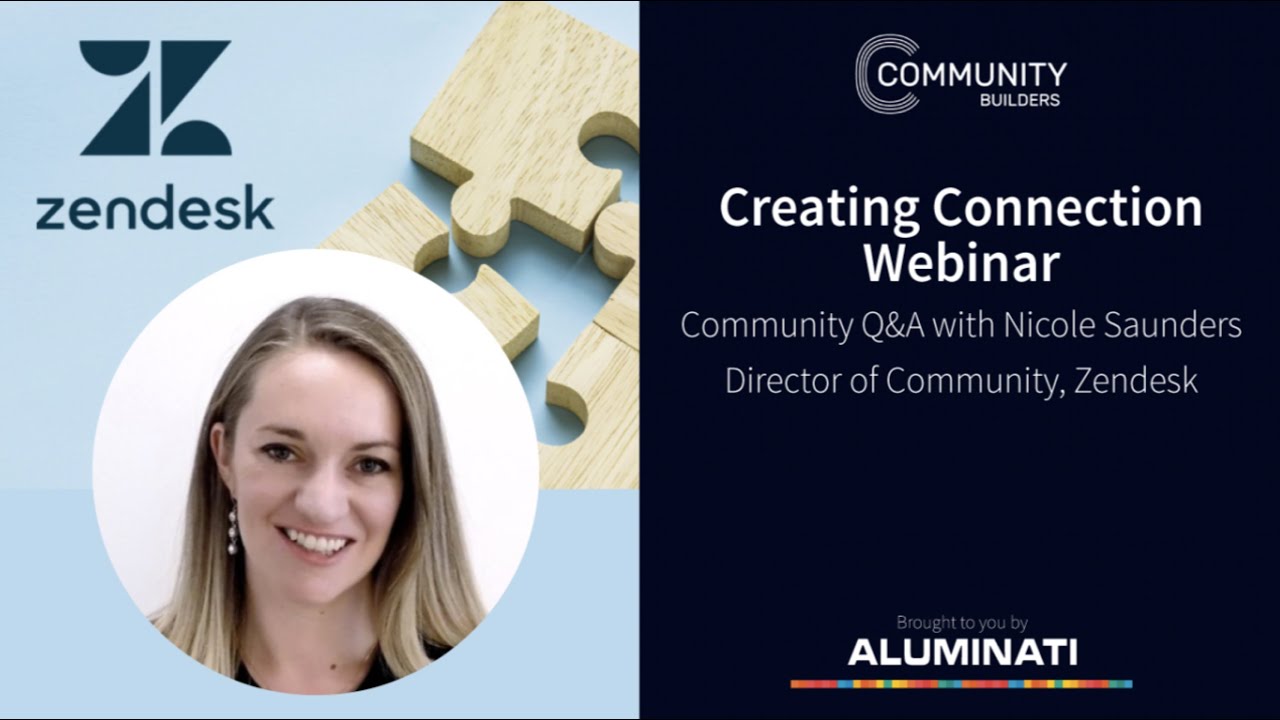
[Music] hello everyone good afternoon from the uk good morning joining us from the it's my pleasure to invite you sorry to welcome you to creating connections 12 where we'll be talking about harnessing the power of meaningful alumni experiences my name is daniel watts and i am managing director and founder of illuminati and this event is one of a series of events called creating connections uh which is our monthly event series uh that we present to members of the community builders network our community of people who work within communities both in the education enterprise and memberships
everyone here is warmly welcome to join the community builders network uh you'll receive details after the event uh doing so will obviously make sure that you get invitations to future events as well as our monthly newsletter called the illumination which the latest news events and thought leadership around creating connections and building community so just to let you know a bit about illuminati it's a company that works with various institutions around the world providing community technologies primarily through the provision of a community platform um it is called illuminate uh we're learning to builder and we have
a short video that just gives a little bit of an introduction particularly those who are seeing us for the first time [Music] so [Music] [Music] [Music] okay uh so yes if you'd like to know see more about that platform uh please join us at the table after the uh the q a um but right now i'd like to invite uh lisa our speaker to the stage and also becky who will be introducing lisa before she starts so becky over to you hello everyone welcome uh we have an excellent webinar lined up for you all today
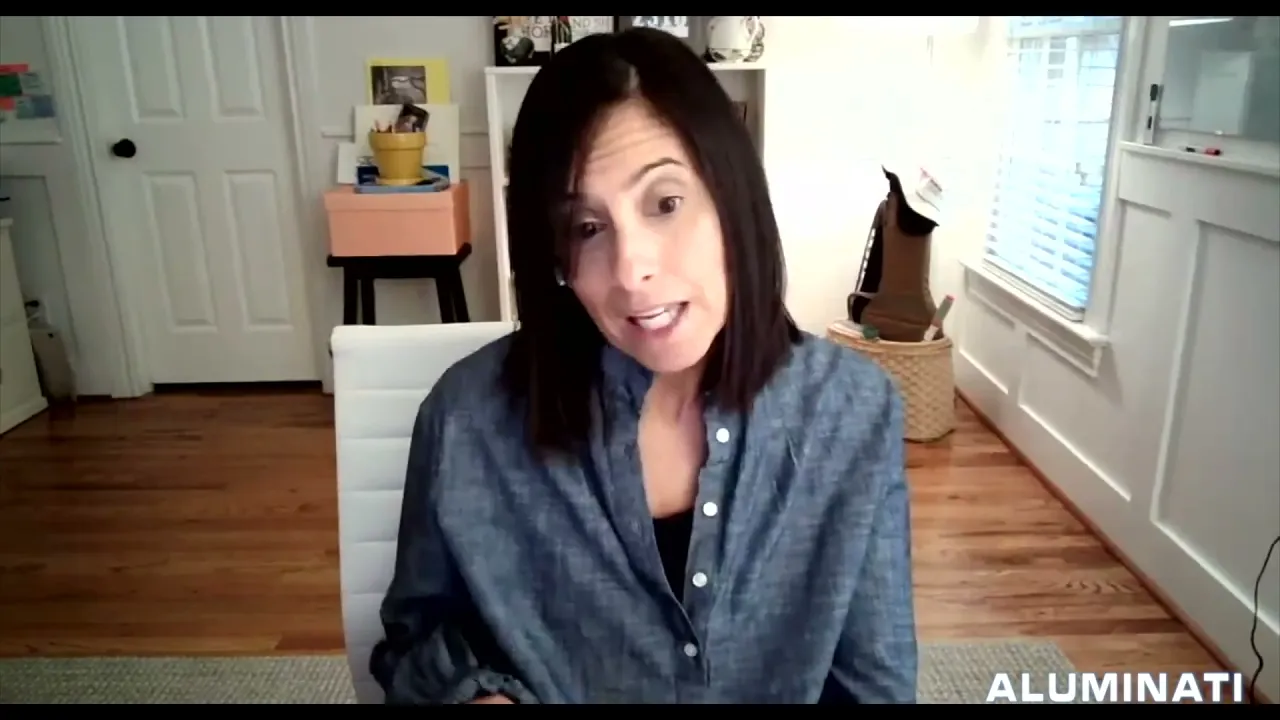
our speaker is lisa morris the founder of explore an experienced design and innovation firm based here in the states in charlotte north carolina lisa is an organizational anthropologist experienced designer and strategist steeped in human-centered design principles and perspectives with a passion for designing experiences for people in the world of work i'm thrilled to have her here today lisa was critical in the team he during my time at coca-cola and in the development of our future alumni community and the experience strategy lisa was instrumental in the research phase by exploring and interviewing our alumni retirees and
employees she helped us analyze the information to better understand the needs of our community and our business challenges and from there she helped us guide the experience design for an alumni community that was founded in insight and understanding of the alumni and the retirees uh and again i'm thrilled to have her in this session lisa will share the key to engaging people through winning their hearts and in turn business through creating meaningful experiences doing successfully necessitates more than adding a human layer to what we already are doing and have plans to do it requires reframing
the who why what and how and trusting in the power of a human-centered experience design approach to lead you to the best solutions for the people and the business i'm excited for lisa to share her experience with you all today lisa thank you again so much and i'll now hand it over to you uh becky thank you so much for inviting me and for giving me the opportunity to speak to your community um becky's done such a great job of introducing myself i need to say nothing more except that i probably need to shorten some
of my profile with that being said what i want to do is really just invite you to relax and enjoy i promise i don't plan or try to plan to convert you to a researcher or designer my objective is to purely offer you how a human-centered approach can be beneficial i assume many of you out there are community leaders and so one of your goals if not the foremost goal that you have is to actually grow your community and engage your members over time so that's what we're going to jump into today and we're going
to jump in real quickly with an exercise so i invite you to close your eyes for a moment and what i want you to do is envision one of your healthiest relationships today and let's for today's purposes assume that's with another human um and let's define healthy as an expression that you feel your needs are being satisfied in this relationship and the other person feels equally satisfied with the relationship whatever that looks like again both parties kind of come to a relationship with maybe some different needs that they hope to be satisfied in this relationship
so more importantly it's really that the feeling is is equally satisfying and so what we're envisioning here is a healthy balanced exchange felt through the experiences of each other in this relationship so with your eyes closed for a moment just think about this relationship think about how it makes you feel as you interact and to experience this other individual think about the things that you think about um identify the needs maybe that are being that are not being satisfied maybe intentionally or not great you can open your eyes now so what why did i do
that well what i'm trying to help you understand if you zoom out of your details in the role that as a community leader i like to suggest that ultimately what you're really trying to do or essentially what you're trying to do is to create the essence of this healthy relationship with your community members and equally important is the experience they have as part of this community because it's the experience that validates for them whether or not this relationship this exchange is healthy and from there it influences their decision making about whether they engage whether they
stay engaged in their relationship whether they even may be engaged deep more deeply or whether they unfortunately disengage i am going to share for you now my slide so just bear with me for a moment what i believe uh the organizations are well intended i and i think that they aspire to create a very uh balanced fuel mutual value exchange i believe the challenge lies in their approach to getting there and for that matter i think it therefore compromises some of the results they receive when working with my clients like a good expert i always
start with an innocent question on my part at least the question is something like who is this for and why do you want to do this and what i often hear is a couple of different things uh typical is like hmm that's a great question i still i think we're still working on that or i hear well the organization needs the business wants dot dot dot the institution hopes for etc etc at least what comes to their minds first and foremost is is in fact organization business institution they usually start from work from the needs
of only one side of that relationship again the business the organization the institution and sometimes try to frame it as the value proposition to the members and that's really not that surprising and i'm not trying to be critical it's just many of us have been trained to make decisions based on what we think is best for the business and the organization first and in this business-centric view we engage in what i call inside-out thinking and inside-out thinking not only do we used to know what's best for the business first we also assume we know what's
best for the members and if we take that a bit further the results we strive for then unfortunately are also very internally based and internal thinking using our intuition if you will to guide us at the end of the day really in many of these cases the members their needs the experiences they want don't really play a leading role in our approach and therefore their needs aren't truly in my opinion considered but we do a really great job if you will of kind of reverse engineering into those needs and it is this type of thinking
and when it's prominent that i tend to see more of a transactional relationship between the community community members and the community so what i'd like to suggest is a more balanced view in today's world where people have tons of choice and as we all know make very intentional decisions about who spend our time with where we spend our time what we spend our time doing and we have relatively a lot more agency and finally we live in an economy essentially where we as humans and there's tons of research on this already to value our experiences
more than the things that we possess so with that being said i'd like to offer that taking a more balanced view a more human centered a more outside in thinking approach is really beneficial in this case and then this outside in thinking we don't assume we engage our targeted members we listen to them to learn about who they are and what they're really telling us they want sometimes they don't tell us exactly gotta interpret that as best as we can and we are able to do that because we have spent time learning about them and
with this information we are better able to make more informed decisions on what's best for our members as part of this community and i think in a balanced view this enables a stronger foundation for what i call this mutual value exchange and that is in fact what people do want these days in their relationships with community organizations with businesses and i think by taking this view we really have a wonderful opportunity to transform what can tend to be a very transactional relationship to one that is much more transformational with you if you will one that
is about the give and the get and an even basis and in fact these experiences that come from this value exchange tend to be much more meaningful for these members and to me that's the power of a human-centric approach as you might have guessed um having said this as well empathy is really core to a human centered approach um and i know there has been lots of conversation about empathy renee brown is one of those experts and and i probably don't have to remind you but i'm going to remind you about this because it is
empathy but it's empathy in a new context so in the context of a human-centered approach empathy is not assumptive nor is it judgmental it's really again like all other empathy definitions it's the ability to understand and to share the feelings of another it requires that we walk in their shoes and in their world and see through their eyes not our eyes and we do this by putting aside our preconceived ideas adopting some humility and just choosing to understand the opinions the thoughts and the needs of others instead and in doing so we open ourselves up
to what is called creative possibilities so where we might have assumed something and solved it in a certain way by saying by having empathy but understanding somebody else's world we can actually come up with some other cr other alternatives that create a more meaningful connection with them so i want to show you a quick video um to kind of bring this importance to life and i'm going to forewarn you it might feel a little sad but i i promise you that it's it's well intended and chosen specifically for this purpose so if i could ask
for those to play the video that would be great [Music] alrighty you might be asking yourself why in fact did i play that video well i in fact played the video because i want to demonstrate to you that if don't ask we really don't know imagine if the captions in the video were not visible most of us if not all of us would make up a story about the person it's it's what our brains do it's how we kind of survive we would start to make the story up about why are they there i wonder
what they're going through what might they need in the moment i wonder who's supporting them so you can only imagine the story that uh that comes comes to mind however with the insight provided the captions what we're able to do is empathize with the individual we're able to step into their shoes and begin to see the world from their perspective not ours it's this insight that i believe is so beneficial to reframe if you will this relationship and this reframe is really center to a human-centered approach by doing the empathy work if you will on
the in the listening work and the understanding work we create a stronger foundation for a mutual value exchange when taking a human-centered approach as you can see we have the opportunity now to reframe the relationship that involves reframing the who the why and the what and with this approach unlike other approaches the who informs the why and the who and the why inform the what in other approaches it actually is the why and then the who and the what or sometimes the what the why and the who so again in this approach it's the who
forms the why and the who and the why that inform the what so let's dig a little bit deeper into each of these reframes if we start with the who this as i mentioned is really about constantly engaging in empathy and reefing the who for maybe the business as as an example to the individuals asking the right questions and kind of always being curious and some of the things that are involved when we apply a human interdesign approach in the who is we begin to think about all the possible ranges of members as individuals with
different goals and needs so this is not about a one-size-fits-all it's really about engaging with these individuals and speaking to them to understand diverse needs and wants and being able to see them as they are and by understanding that information and gathering that information we can empathize with them and begin to think about living in their world and seeing in the community their eyes that's what reframing the who really involves if we think about the next stage which is reframing the y this is where we know the who and we start tackle what i refer
to as a two-sided why so what's in it for the members that's where we start and then moving from what's in it for the members to what are the business benefits or the organization or the institutional benefits that can be achieved through this relationship and again some of the activities that are involved in reframing the why is by understanding that continuum of member needs and understanding the business benefits those let's just assume that you have you know if you will five different groups of archetypes of members sons a very sort of transformational kind of exchange
some really want maybe a technical exchange and there's nothing wrong with either of those it just helps you understand that on the opposite side of that value exchange from a tactical versus a transformational perspective what business benefits can be realized all of which are equally important so once we have all of that i think we're in a much better place to begin to articulate a community vision that really resonates with not only the members but the institution the business the organization we're able to craft a more meaningful purpose and then the value proposition we see
is really one that promises something we can truly deliver because we know in fact what the needs are of the community members and more importantly as you get to the stage you begin to think about how do you tell that story through your brand and that's really important because the brand in fact is really critical to the personality of the message so making sure that that is all aligned comes equally important as you get to this stage and you bring it to life and so many ways of bringing it to life involved creating the vision
board or telling a vision story and the the kind of the power of doing that is that when you go to share this to test it feedback people can actually envision what that experience feels like as they sit kind of in this new reality using that feedback as you engage with some of the targeted community members you can refine if you will your messaging or you can refine the sense for the business along with the brand and kind of the final stage of reframing is the what and you know i'd like to just throw out
there that sometimes as i mentioned we kind of start with the what and so in many cases when that when we're down the line or in the future and we have to make important decisions because either affordability comes into play or capabilities are scarce we don't have a really you know sound database if you will to be able to make these students about what and sometimes that makes us feel you know uninformed about what's going to what's going to change the community how is it going to be impacted so as we start as we said
starting with the who moving to the y gives us even stronger decisioning power and then we move into what and as we do in every any relationship we want to co-create the what with some targeted members who play a role in kind of this co-creation process as well as business leaders and we invite these individuals to bring forward their ideas about not only what they need but how can they see these needs being fulfilled what kind of experiences what do those experiences look like through them and through this very co-collaborative or collaborative excuse me approach
come to sort through a bunch of different ideas and now we can start to converge if you will on what effect can we offer as an experience and what in fact is feasible and viable for our business to be able to deliver over time with that we have such insight then to begin to develop our future roadmap of how we design and build each of these offerings starting from the desired experience we would like to create and moving back versus starting from the offering and asking ourselves about what kind of experience do we want around
it's really the best way in this case to start with an experience first and then take it from there and then that gives you the opportunity to test and iterate as you release these smaller pieces if you will of your overall end-to-end offering and then there it's really about choreographing or staging if you will the end-to-end member experience with you know thinking about their journey as they join think about their journey as they continue to engage and participate in different offerings and think about how they may in fact leave and maybe rejoin at a time
where they have that opportunity so this is all about how you bring the who the why and the what together in a reframed perspective and i honestly believe although obviously i'm probably a little bit biased this human-centered approach is really really important when you're trying to engage and really grow if you will your community uh even more so um i know that was really high level it was intended to be but really what i hope that you've been able to take away this is how a human centered approach might involve a different sequence it might
involve you asking different questions or seeing through somebody else's eyes and that it's piqued your interest enough to maybe think about it as you either are creating your community or evolving it i want to just let you know i really only touched on some of the human design or human-centered design concepts but and there's a whole lot more that you can explore in that but again you know human-centered design is really rooted in those actual needs of the people as i've mentioned and they're developing solutions to problems that involve the human all along the way
so as you can see in understanding the who we engaged uh targeted members and understanding the why we engaged both targeted members and representatives from the organization and the business so we can get to that two-sided one a two-sided why and then we engage them in the what when you engage people that are actually going to be part of your community and what you're going to deliver they almost solve the problem if you will for you they come up with the most creative ideas in which they can actually have a role in and that's how
you get true true engagement so final question might be so how do you have proof that this approach actually works or is even better all i really would tell you is that organizations such like barbie parker and fab and airbnb and pinterest they're all design driven they've actually proven that being human-centered or taking a human-centered design approach as they think about their consumers or their customers or even their employees is really what drives overall growth for them so thanks for listening uh it's just kind of interesting because i can't see your faces and all i
hope this was informative for you and i look forward to uh your questions hi lisa thank you so much for that i found that fascinating and uh yeah you can't see their faces but hopefully soon you will be able to meet a few of them at the speaker's table um i've really enjoyed the themes that you you've brought to life there and the start with why and understand the why obviously you know the made made probably most famous by that ted talk by simon sinek and the bond circle um really getting to the crux of
of the meaning and we've actually been going through this process with the illuminati as well um i i think the championing of the human uh versus the organization is something which is constantly necessary tension that needs to be resolved see both of them matter but i think perhaps we forget the humans sometimes in their conversations uh and then i shared a comment a question um for you if i might jump with the queue as it were which is about those um deeper conversations that you have with the members and um i found that people are
saying towards the survey you know let's just ask everyone and get them to fill in the long form and that way we'll have a nice little big sample size and we can be confident about what people want but that actually misses out those deeper conversations where actually you're really having a conversation as opposed to getting people to do a multiple choice question how do you think it's best to convince and convey the value of actually i mean not just not necessarily ditching the survey but actually spending some time even if it's only a sample size
of 10 or 20 people um but those are actually really worthwhile data points to inform the strategy yeah i think what i see in my work is um you know the quantitative side of this is important at times um but i think um the qualitative is equally as important because you can't read a motion so to speak in a survey you can't read you can't read the body language if you will in a survey and when you engage people in a conversation they actually don't feel like you're just trying to get data after them they
really think oh okay this is actually you you want to hear my point of view not just be a server you've actually taken the time to sit me to listen to me and i know sit with me is not acceptable these days because we're living in this crazy virtual world but the point is is that when i can connect with you eye to eye and get close to you if you will and sit with you in your emotion so to speak i can actually see things that you can't show me in a survey and so
those those human aspects of our of our personality when we have a thought emotion is the physiology response to us so we get to see both of that when we do these qualitative kind of dirt conversations and i think for me that's the joy of it and it starts to actually open up some of the ideation like you can start to understand somebody a little bit more and say so how would you actually think that would work how would that work whereas in a survey you know you always press time people getting frustrated with the
number of questions you're going to ask them and then you having to interpret something that you can actually see the other side of so hopefully that brings that to life daniel and the benefits of doing uh that approach yeah i think actually saying a survey is not a conversation and it's a very different conversation as it goes both ways nicely nicely and succinctly said thank you very much but i think also it's also a lot more rapid because the survey takes plan you've got to get it out you've got to let people respond and actually
the conversations you can have you can pick up the phone and speak to members you know every day in fact you could have it as a as a habit you know two or three calls a week um and that lets you come and see the last one which is iteration which is you know you you launch and you're just starting you've got to listen you know ask listen have these conversations and then iterate and improve um there's a couple more questions that come through i think my team actually got a couple for you as well
which is um how do you find a balance when community members want different things so you're talking to all these people and actually maybe they're actually contradicting someone says i really like this page and someone says i really hate it like what do you do well the beauty of it is the balance frankly i think what you have to do is like if you're thinking about tactical things like maybe like a page i think you have to think about options so somebody wants a page somewhere there's got to be some optional settings of which how
they can have the page that way so it's really about that you use your experience where it actually is attending to more than one need by letting user choose the way that they want to see it in many ways if it's more about maybe i think physical if you will offering so to speak again as a community leader um you know you have to be able to to talk to a bunch of people to see the thematical things looking for and to be able to produce those over time so as i mentioned in my presentation
the one size fits all doesn't really work and i know that's how we used to try to solve things because we were really focused on efficiency and optimization but i think our world was really about if that's the way it works it's going to be commoditized quite often and so we need to think about the specialness of that so it's always going to be that balance but i think a lot of it is how do you provide the user with the options built into choosing what they want to see or want to interact with or
not interact with or see kind of things so that's how i would respond to that so everybody basically boils down to understanding your users and that they're humans and they have very very tasty preferences and trying to meet those preferences through and yeah and what they what they like one day find out like tomorrow and what they need today they may not need tomorrow so we are complex human beings and therefore our our solutions these days need to be taking that into consideration i think yeah absolutely i agree uh one coming from elizabeth from uh
cambridge university uh do you ever find that what members think they like or want and how they behave doesn't play out in the data and how do you resolve that so um yeah answer yes um that's the whole lovely human custody thing um i i generally think it's really about sometimes we read it literally and i think it's about sitting with it and putting ourselves in their shoes where we begin to understand beyond that what the data is telling what is the intuition now telling us so we don't start with intuition we read data we
sit with it we empathize with the individual then it's intuition intuition that we allow them to use from that from that basis so you know and by the way the great idea here is that you iterate so you must release something that doesn't actually hit as well as you thought it's going to be and then you take you you know you work on it and refine it further and get that feedback so that's how i like to balance it i don't think you're ever it's never about perfect because we that's never going to happen no
one's not 100 of the people are 100 of everything we do right and so i think a little bit is trying to find that balance but getting evidence if you will that shows you whether there's really a disconnect or is it an intuitive disconnect it reminds me a bit of um of science where where the observations and the data when they don't match that's actually the most fascinating part of science and actually trying to try to work out like if everyone's saying that they want xyz but no one's actually actually using xyz there's something really
interesting going on there yeah we're really we're really good as humans to say that we want something in the moment to actually choose something else so the other way to deal with that is to is to get as close as you can to understanding what they want and how they want it and then watch what they do when they actually engage and then from there use that site to refine what it is next that you you can make even better for your community so um watching it watching it observing it yeah and then have the
conversation saying oh i noticed that you said you'd like this but when we offered it you didn't was there a reason for uh for why you didn't take it on this occasion yeah was it not was it presented properly did it not have something you were looking for or did you really just tell us you thought that you wanted it but in fact in reality it wasn't what you needed so well they didn't or they didn't see it because you're talking to them on their own channel and actually they missed out and they regret that
so you know yeah yeah absolutely so many possibilities so many possibilities okay i think time for one last question which is actually from another one of our consultants um who is asking what are some ways that organizations and institutions could have a more human-centric approach are there any quick wins uh speak are there any examples that you could share of yeah i mean i think the the the quickest win is to always ask why and by who and for what i mean sometimes i think we kind of get into autopilot we just go do do
do and sometimes we're doing process we're like wait a second i don't what do i use now to validate whether what i'm doing is right so i think some of the quick wins is really to step back and to be grounded if you will in in in again the who the why and the what all the way through um if you know example i have worked with some big organizations and i'm i'm not speaking of coca-cola so i just want to be clear because i know that becky brought that out but in some of my
interactions with other people you know they say we've got a community and we're trying to do we're trying to expand it and i say well why do you what is you know what's driving some of that and they're like well you know we're just kind of looking for you know the ability to have more talent you know boomerang and that kind of thing and i said okay that's interesting so why would i want why why if i think of as a community why want to be a boomerang into your organization and they say well what
do you mean i'm like it's like it's our organization it's great and i'm kind of like sorry no i got five other organizations competing for my attention right now because i've been through five organizations now so a little bit is just again asking those questions to yourself and staying grounded those and when people approach you and they'll get used to this when you start asking them the same questions i think it's that kind of like it's a it's kind of the network where you just get and then they start asking and then somebody else starts
asking it and then you become a little bit more informed about why you're doing what you're doing and for who you're doing it for and i think it's that kind of i say thinking process if you will that i think really starts the innovation and the human centeredness if you will of analyzation so that's what i'll leave you with maybe it wasn't as tactical as an example but i think it's a technique you can use i think to to bring bring that forward yeah the question i've often heard in them in previous conversations is just
asking it what's in it for me put it put yourself in their shoes and say what's in it for me uh and i think that the mind shift that particularly for those of us those are the audience who are coming from enterprise is that when you're a big organization and you're working with say staff communities you can do a lot of stuff based on the effects of the compulsion that it's your job you've got to do it but one once they leave or you're dealing with the wider communities and even in universities i guess have
a certain sense of like well i'm i'm beholden to this institution to get my degree therefore i should probably comply with the things they want me to do um once they've gone off to the world in dealing with these bigger communities they are as i said compete they're actually being competed for with you know a thousand other companies looking for and they are completely in control of what they do and don't do and and that necessary and as an alum which is what we're kind of really focused on here they don't owe you anything anymore
like they're not captive to your policies and your processes and their paycheck or anything like that so now they're free they're like uh you know they're they're somebody you really have to compete with and i and i think getting that insight from them as to why they'd want to in fact engage after they left is really what holds that relationship together further i just want to say lisa thank you once again for joining us and being our spotlight speaker this webinar it's been really fascinating if you found this video useful please remember to like share
and subscribe to our channel