Hi everybody. Welcome to this free civil procedure MBE webinar. Um I'm so excited to have you here. I want to show you how to do a really deep dive into these really tricky multiple choice problems. Um so we're going to we're going to get into it in just a second. So, first of all, let me introduce myself. My name is Moren. I am the founder and creator of BarMD. We're a full-ervice bar prep company. So, anything you need for bar Prep for just about any jurisdiction, we can help you. I think in every jurisdiction, we
can help you in at least some way. Um, a lot of you may know me for the performance test. I know my videos on YouTube are, you know, distributed pretty widely. People see them on, you know, they're posted all over Reddit, etc. But something a lot of people maybe don't know is that I also really know the multiple choice. I know the MBE. Um this is because I've been I Personally have gone through every released um MDE question that we are able to license. So all of those ones that you guys practice and can struggle
with sometimes. I know all of those. I know the correct answers, why they're right, and all of the incorrect answers too. There's a big I focused a lot on the incorrect answers and why they are incorrect and identifying patterns and why students miss those. Um, for example, I had a student yesterday um Who I work with, I tutor one-on-one. Most of the tutoring that I do is actually in the multiple choice because I can identify patterns in why a student is missing something and identify what they don't see and the similarities and what they're missing
and why they're missing them. So, for example, I had a student that I'm working with one-on-one yesterday who had sent me three contracts problems that she missed. And she said, "I don't understand these. You Know, what's going on here? Why um you know, all three of these the answer explanations didn't make sense to her. You know, she could understand what they said, but didn't understand still why she continued to, you know, why she was missing them." Um, really good student, super hard worker, etc. So I looked at the problems and none of them they were
classified in her bar um her MBE platform. I think she's using adaptive bar UWorld they were classified as you Know just contract problems in various different categories but I saw the relationship between the three was that they all had different issues with conditions. So based on that I was able to say all right well these are all actually condition problems even though they're not pointing that out in the answer explanations. So, that's one of the things that that I can really jump in and help with. And one of the things that with this new course,
I'm going to Be taking all of this knowledge I've gained over the years and really breaking it down, um, breaking it down and showing you really how to improve your MBE score, showing you things that you're not going to see in the answer explanations with these, identifying trends and patterns in what people are missing and why, and just really going deeply into each multiple choice. and I'll talk more about the new class at the end of this session, but today I Want to really focus in on civil procedure. So, let's get right into it. So,
first, if you haven't done the, um, the two sets of questions that I sent out, um, and I didn't send them out, I sent links to them, you should pause this video right now, um, and make sure that you go and do those, um, questions. There's 14 questions that we're going to review. So, it was in the email where I invited you to this free webinar. So, you can um and for those of you that are Watching this on YouTube later, we're going to go ahead and put the links um in the description of this
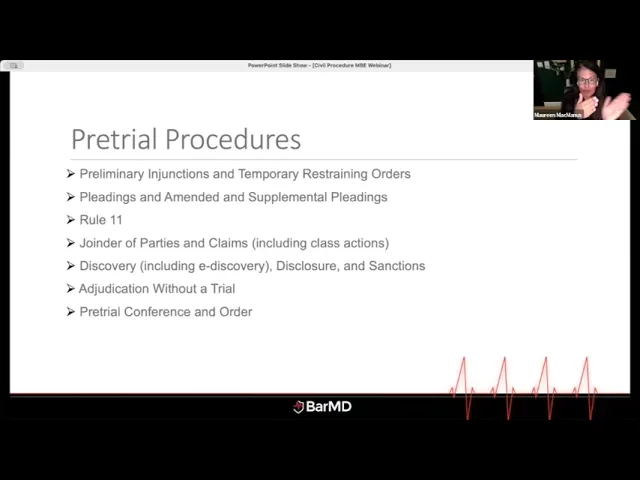
video as well. So, um make sure that you pause, go do those 14 questions, and then come back and All right. So, let's let's get into this. All right. So, this is what we're going to do today. We're going to talk about the topics that are tested within civil procedure and we're going to go through 14 civil procedure questions in depth And we're going to categorize them a little bit. I'm going to review certain topics together. So, these are all of the civil procedure topics that are tested and I have the top three there in
bold because twothirds of the civil procedure questions are going to be in those three topics. So, these are what I refer to as heavy hitters. These are the topics where you need to really make sure that you're very strong. Um, and I always Start with those. So, like I said, in this new class that I'm teaching, we are going to start with these three topics and do we have a class on each. So, um, jurisdiction and venue, pre-trial procedures, and motions. You want to really make sure you're proficient in all three of those. And then,
um, also, but you know, a little less important, we have law applied by federal courts, jury trials, verdicts and judgments, and appeals. And I'm going to talk about Each of these in a little bit more depth right now. So first within jurisdiction and menu. This is a big topic. Um and it's probably it's one of the areas where they use a lot of these facts for these types of problems and um use a lot of the types of facts that would be for SMJ as distractor facts which I'll talk about in a minute. So um
but within SMJ you have you know obviously subject matter jurisdiction. So federal question diversity, but you also have removal Remand and you have supplemental jurisdiction. And supplemental jurisdiction is an area where people get really tripped up. So we want to make sure that you are um highly proficient there. Um and you really take note of all of the little twists and turns within supplemental jurisdiction. And pause right here. I want to just say another really good idea as you are um prepping and what one thing I'm going to suggest when you're in my full course
is You get these 5x7 flashcards and you make a flash card for each of these smaller topics and you might even have to make some additional ones too. So like just subject matter jurisdiction, one for federal question, one for diversity, one for removal and remand and one for supplemental jurisdiction. So you might I would suggest doing this in small increments just to make it manageable. So SMJ then PJ. Um you have also service of process and notice. So Notice of the suit and also venue form non-convenience and transfer. So you want to make sure that
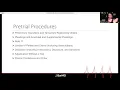
you have all um you want to know this law obviously really thoroughly and we're going to do a lot of practice in these questions. Next, pre-trial procedures. So with pre-trial procedures, this is a huge topic and it's really varied. There's with jurisdiction and venue, there's a bit of rhyme and reason to it. It's all sort of related. But with Pre-trial procedures, it's a big mix. And there's a few things that people miss a lot of in here and some tips I'm going to give you just now. So, first you have preliminary injunctions and TTRO's. That's
okay. Um, don't see a ton of issues there. We have pleadings. We also have amended and supplemental pleadings within that. So, pleadings, that's your complaint, your answer, um, etc. replies, all any type of pleading Document. Um, and then also what happens if you file an amended pleading, an amended answer that can have a significant impact. Um, and it can have a significant impact on defenses even like rule 12 defenses, supplemental pleadings. You might um, file rule 11. So, right, so certifying your pleadings and in here and it's in the next uh, bullet as well or
two down. Um, with rule 11, you want to be really familiar with all the technicalities of rule 11. It's signing your pleading, um, you know, stating that it's not a frivolous claim, etc. And then also, what are the sanctions if you violate rule 11 and how do you go about filing um, um, motion for violation of rule 11, a motion for sanctions? And that just brings me to sanctions where this is an area where people do miss quite a lot um, or and it's a really easy fix. So there's really four rules that deal with
sanctions and they're all for different Topics. So as long as you are familiar with the four different rules, you know what each one is for, you can, you know, prevent yourself from getting tripped up. There's rule 11, um, rule 16, rule 26, and rule 37. So all four of those have to deal with some sanctions in some variety or they permit sanctions. So know your rule 11 that's called out here, but also know the differences between the different sanction sections because they'll be tested against each Other in the same question. That's part of what makes
civil procedure and a lot of topics, but civil procedure in particular so tough is that um with civil procedure, we say that they're multistream questions. There's a lot being tested and thrown at you at once. So in a single question, you're going to have to know all four sanction sections possibly and have to and be able to distinguish between them and know what type of fact triggers which s which um Sanction provision. Another big topic where people get really tripped up within free trial procedures is joiner of parties and claims. And something that I suggest
people do is make, you know, a list or just a outline or a flash card or a table of all the various different types of joiner of party and joiner of claims. So knowing, you know, including class actions. So I have a list that I often give my tutoring students of all of the Different types and have them sort through that information. And this is something we're going to do as an activity in my new MBE course as well. So with the joiner of parties um and claims you have all of the different types. So
obviously class actions which is joiner of both parties and claims um really joiner of parties um in large part they all have the same kind of claim. So there's two types of joiner joiner of parties and joiner of claims. And you've got to know each of these and you really have to be able to distinguish between the different types of joiner. So, you know, impleader, interpleer, intervention, there's just permissive joiner. What do you have to do if it's, you know, compulsory joinder, class actions, um, relation back doctrine. There's so many different types of joiner that
you need to know. So, know the different joiners of parties and joiner of claims because You're going to see these different things tested against each other. Discovery, um, disclosures and sanctions. So, discovery is another big topic. What are all the different types of discovery and the little minutia on the rules? Um, this is one that gets a little bit hairy. Um, there's probably going to be one question on discovery truly in on the MBE. So, this pre-trial procedures, remember, you're gonna have four to five Questions on this topic and there are all of these little
like subtopics within it. So, there's a lot in here, but you know, um, you want to identify when you're doing questions, are you missing a lot within pre-trial procedures? Okay, within pre-trial procedures, what is it that you're missing? And I'm telling you guys, the reason I have people make a sanctions table is because people miss the sanction stuff all the time and get them Confused. So, a really good thing to do is to get ahead of that. Make yourself a little table. So, discovery, again, like make a list of all the various tools of discovery.
There's also adjudication without a trial. There's different motions that you can file an MSJ, which that's technically tested emotions, but it's kind of here also, but it could be like a default judgment, stuff like that. And pre-trial conference and order and and amending those. So, a lot Pre-trial procedure is just like a big hodgepodge of stuff. And then motions. So, three categories here. So, we have pre-trial motions. So, including motions to address the face of the pleading, such as a motion to strike, uh motions to dismiss, a lot of your rule 12 motions and MSJs.
There's also motions for judgment as a matter of law, including so that's JMOL or JMOL. And then we have post-trial motions. So, motion for relief from judgment, motion for a new trial. And those are often tested against each other. Again, an MSJ is thrown in there, too. that you have to really just know all the timing of it. So, it's good to like I say have like all of these motions have a little timeline. Like in my book, I created an arrow that's just like showing you, okay, at this at this stage of litigation, you
can file these things. At this stage, you can do these things. So, you have to really just know where you are. And that will come up a lot within the multiple choice questions. So, it's if you see your missing motions questions, which ones are you missing? So, dig deeper. Okay. And then we're going to get into these are the um not non-heavy hititterter topics. So law applied by federal court. So state law and federal court and federal common law. So this is A lot of your eerie doctrine clax and doctrine. All right. So these questions
are really tricky. A lot of people really mix up these. We're going to see one of them this evening. Jury trials. And this comes up too. And like a lot of times the way that I progress when I'm working one-on-one and this is the way that the new class will proceed is we start by going over all of the heavy hitter topics. So we start by going over like We're going to cover and I'm going to spend a whole class just talking about motions and like the tips and like tips that come up, tricks that
occur, things to watch out for, you know, the pre-trial procedures. Here's the thing um that that happens here. Here's the problems that people run into, etc. So, we're going to really walk through all of this stuff. And my goal, so in the beginning, we're going to cover the heavy hitter topics. We're going to Cover the um you know, pre-trial procedures, motions, and jurisdiction and venue and correct that stuff because it's more important. You're going to see more questions there. And then we work we work into this stuff. And in jury trials, I'll see these closer
to the end. In jury trials, a lot of the things that people miss is it's really within the right to a jury trial. Like, are you entitled to a jury trial? you know, we'll we'll hone in on that. But you Need to know like don't just say I'm bad at CIF Pro. Say I'm like, okay, within CIF Pro, it's within jury trials. Okay, that's not a heavy hitter topic. So, I'm not going to spend days on it, but I'm going to make sure I know it. Um, I'm going to make sure that I know it.
So, uh, yeah, it's just it helps you sort of like gauge your practice and say like, you know, instead of thinking it's this whole big giant thing, it's like all that you're just not as good a civil Procedure. It's like, no, you have a few areas of weakness and you get more questions in practice and you'll see on the bar, so it looks worse than maybe, you know, obviously we need to fix it, but it really helps to diagnose where the problem is. Verdicts and judgments. So, default, you know, default judgments, de dismissals. It's funny
there's some crossover with stuff here too because this is sort of mentioned in pre-trial Um jury verdicts. So the challenging a jury verdict um the different types of jury verdicts uh judicial findings and conclusions which is really like res judicata or no I'm sorry um judicial findings and conclusions. So we don't see that much. This is honestly some of these terms I'm like what do you really mean by that? They're a bit vague. What most people miss is effect claim and issue preclusion. There's a tricky that's probably the Hardest question that was given. I think
it's the one that pretty much everybody missed. So, verdicts and judgment is another one. And finally, appeals. So, appealability and review. So, availability of interlocutory review. Um final judgment rule and scope of review for judge and jury. So, all right, that being said, let's dig uh we're going to start to get into it. We're going to start practicing. All right, let's get these questions Here up on the screen. All right, there they are. So, um, in this session, I'm not going to walk through the overall approach and like deconstruction just generally of multiple choice problems.
I've done that in other free webinars you can watch on our YouTube channel. Um, but and I will do that in the course of course and the full paid course. Um, but I just want to really get into showing you some tips and stuff within civil procedure and Show you a bit on the level of depth um that we can get into in looking at each of these problems. And I am going to go a little bit out of order. I think I mentioned this earlier versus I'm not just going to do them in order.
I'm going to review them in groups. But we're going to start with question number one because this is coming from one of those heavy hitter categories which is jurisdiction and venue. So here we start with the call of the question And it says was the action properly removed and a couple of notes here. One, it says it's talking about removal. So I know that I'm dealing within the SMJ realm. So that immediately brings me into SMJ. Um and then when I look at this again, one thing that I have noticed because I've been deconstructing these
problems, all of the MBEs is here when they say what's the action properly removed? they're not Really saying I mean you do need to know that there is SMJ but you also always need to know um whether it met all of the technical requirements. So within SMJ this is why people miss these questions so much there are a lot of little technical requirements. So obviously you need either federal question or diversity beyond that and when it's diversity you need complete diversity and you need to meet the amount in controversy but there's a few Other rules.
One plaintiff can't remove only the defendant can remove. two, you have to do it within a certain period of time. It's generally 30 days after receipt of the paper that made the action removable. So, usually the complaint, but there could be some other document that's, you know, filed that rendered it removable, perhaps adding a party, something like that or adding an additional claim where you add a federal question. Um, also there is a rule which Is the defendant home state um removal. So if the claim is brought under diversity jurisdiction, the defendant cannot remove the
action if they are a resident of the forum state. So let's get into the facts here. So a woman from state A. So I take notes when you do civil procedure problems with civil procedure property and contracts. You have to take notes. It just will make your life a lot easier. The woman um from state A Filed an action against a retailer. We don't know where they are, where they're doiciled yet. Uh in a retailer in a state court in state B. So we have state court and it's in state B. The complaint alleged that
the retailer had not delivered $100,000 worth of goods for which the woman had paid. So we do have the amount in controversy. So AIC check 20 days after being served. So, um, they're talking about 20 days. I always want to make note of that. So, it Looks like this. If we're talking about this is when they filed the removal, then it's timely. So, 20 days after being served, the retailer, which is incorporated in state C and has its principal place of business in state B, filed a notice of removal in a federal district court in
state B. This also gets reminds me of another little technical rule is when you're filing to remove, where do you file? you file it in the federal court where you are Removing it to. So this was filed in the proper court. So all these technicalities um here that you want to know because you want to know why are they giving you these facts because you could and the reason I say all of this is what issue this fact triggers or could trigger is because you're going to see these come up in other questions maybe not
here today but in other questions you see in your practice and I want you to know why they are putting Them there. So there's there's so much that's being um even though it's not directly at issue, there's a lot that is here that you can learn from that are distractor facts. So the key here though is and one thing I like to do is I like to circle I like to, you know, really focus on the party that's doing the removing the defendant. And here I see that it's based on diversity and the defendant is
from the forum state which is state B. So the defendant can't Remove. So this is how by doing these problems and going through them this way. I pretty much never get stuck between two answers. I mean I I really don't. I've looked at all the questions. I've done them all. But this is how you know people always tell me they get stuck between two answers. And why is that? And it's really important when you identify those questions because and like this is something I'm going to be Looking at because you're going to be doing the
work in my course coming up and I'm going to have people you're going to submit your homework the problems that were assigned for that class and I'm going to look at where people where there's really two um answers and I'm going to really talk about a lot that if you were stuck on this one this is why that's wrong because that's hugely hugely important and often the answer explanations won't Tell you exactly why that is incorrect. They'll focus on what the correct rule is, but I like to tell and focus on, well, why did these
people get this wrong? If you picked this incorrect answer, it's because you missed this fact or you missed this distractor. So, know what that fact is there for and when to pick it and when not to. And you've got to know all of that information. So, you can get so much from a single problem here. So, was it Properly removed? A, no, because a notice of removal was not timely filed. This is incorrect because it was timely. It was within 20 days. So, this um mischaracterizes the facts. No, because the retailer is a citizen of
state B. That looks good. That's what I thought and what I had picked up on. This is also why diagramming is so important. If you don't diagram or I call this diagram, taking these notes That are up there. If you don't diagram, you're going to miss stuff like that pretty easily because you're going to forget. And notice in the fact pattern how they put they didn't put the retailer's doicile um up at the at the front where they you know right next to where it says they filed in state B. They put it down here
in order because they know often by the time you get to the second paragraph you're going to have forgotten something. You're going To have you know forgotten about that. So they separated intentionally. So just some a little bit to keep in mind. So B looks good but I'm going to go through the rest. Yes. because the parties are citizens of different states and more than $75,000 is in controversy. So, this is true, but it's the wrong result because it forgets about the technicalities. So, that's incorrect. And we do this every time. Yes. because the retailer
is A citizen of both state B and state C. That's incorrect because it doesn't matter. This is irrelevant. Irrelevant. If you're a citizen of one of the states, if citizen of forum state, then it's based on diversity, no removal. If it's federal question, you can remove, but if it's diversity, you can't. All right? So, we get so much out of that one question. All right, going on to our next Question. Testing us on jurisdiction and venue. So, it's really helpful to look at the questions, and I'm going to do this in the course that are
tested together. So, all of your jurisdiction and venue questions we want to look at together because you're going to pick up a lot more that way. All of your pre-trial procedure questions together, all of your motions questions together, etc. So that's why it's so important that I'm doing a class on each of these And you will have reviewed the law on that topic broadly before doing the questions. So let's dig into this one. So here should the court grant the entrepreneurs's motion. Okay. So the entrepreneur filed the motion whenever they say this in the call
the question I want to look at what is this what is the call of the question or what is the type of motion that was filed. Usually if you look directly above the call of the question it'll tell you. So, right here It says they move to dismiss for lack of subject matter jurisdiction. Okay. So, they fought a motion to dismiss for lack of SMJ. Um, all right. So, we need to know is there SMJ? And I'm going to, you know, I know my rules. There's federal question or there's diversity. So, here an entrepreneur from
state A, and again, we're going to take those notes. entrepreneur from A uh decided to sell hot sauce to the Public, labeling it best hot sauce. A company incorporated in state B and headquartered in state C sued the entrepreneur in federal court in state C. So we have company who's from B and C. They sued the entrepreneur in federal court in state C. Okay. The complaint sought $50,000 in damages. So there is diversity, but there's only 50k in controversy. So there's no amount In controversy. So I'm going to put an X there because that's not
met. So we don't have SMJ based on diversity. And so the complaint saw $50,000 in damages and alleged that the entrepreneurs's use of the name Best Hot Sauce infringed the company's federal trademark. So, when you were doing these, did you pick up on the fact that there is a federal question? I would say that this Um because they say infringed the federal trademark, it makes this question a bit easier. They could just say trademark. Um they could do something like that or they could give you an allegation that was um that you know is exclusively
in federal court. So, maybe it's bankruptcy or something else that's exclusively federal. Um, in those instances, you're going to need to know what is exclusively federal. So, here it says, keep going. The Entrepreneur filed an answer denying the allegations and the parties began discovery. Six months later, um, six months later, the entrepreneur moved to dismiss for lack of SMJ. So, a couple of things here in these last two sentences. The fact that it says the entrepreneur filed an answer denying the allegations, I'm like, did you need to file a rule 12 motion? Did you wave
something? We know that SMJ is not waveable. You can bring it for the first time on appeal at the US Supreme Court. Hopefully, it doesn't ever get that far without recognizing that there's a lack of SMJ, but you know, who knows? All right. So, should the court grant the entrepreneurs motion? And they shouldn't here because there's a federal trademark. We have a federal question. All right. So, should the court grant it? No, because a company's claim arises under federal law. So this is this looks good. Um and that you know sometimes People look at this
and then they catch themselves that they've made an error that they didn't identify in the fact pattern that there was a federal question here. Um so this is helpful because the correct answer is the first one. So you know identify if this was you. This happens to a lot of people where they read this first one and they're like oh wait is there a federal question? And they go back. So it's not 50k but here I've noted that there's a Federal question. So okay we're good. But I know at least a few people a few
of you watching this will have done that and that's that is a reading comprehension issue where maybe you just read it too quickly or you didn't understand why they put federal trademark in there. Um and then it could be that it's not laid out for you like that as I mentioned earlier. So you got to be really cautious. And I would say about in our experience about 20% of the Questions people miss is because of a reading comp issue like that. It's not that they don't understand what these words are, right? I don't mean reading
comprehension that way. I just mean reading it too quickly. Um, you know, knowing exactly what the writers meant when they wrote something. So, B, no, because the entrepreneur waved the right to challenge SNJ by not raising the issue initially by motion or in the answer. So, this is, you know, not true. So, this misstates the law because SMJ is not waveable. Okay. So, that mistakes the law. Sorry, it's a little tough to write on the iPad sometimes, but I'm I'm trying to do it cleanly. All right. So, yeah, we know that that mistakes the law.
And for those of you that have um I get a lot of people that have taken the exam multiple times and they just know these questions by heart. And I people ask me, well, if that's me, how do I identify what my problem is? And what you need to do is you need to see can you write a little explanation like I just wrote. Can you say well this is wrong because and if you can't do that if you look at it and you're like well I just I know it's wrong. Right? That happens a
lot. But if you can't further explain it without looking somewhere else that means you got to do some deeper diving. There's something You don't understand. There's a rule that you don't know perhaps etc. So catch yourself with that. That's how we get the most out of every MBE question. That's how we avoid doing 5,000 questions and we do 2,000 to 2500 questions and really dig into them deeply. So, see, yes, because although the claim arises under federal law, the amount of controversy is not satisfied. Well, that's wrong. This also misstates the law Because there's no
amount in controversy required for federal questions. And D, yes, because although there is diversity, the amount of controversy is not satisfied. So this is something you got to watch out for. This is true, but it's irrelevant because we have a federal question. Okay. And now that's that question. Now we're going to look at one more um we're going to look at one more question in this Category. So start with the call the question. So is this is the court likely to miss the action for improper service of process? So improper service. So we're not in
SMJ now we're in service. This is tested a little bit less frequently than some of the SMJ problems that you're going to see as you practice, but still falls under this umbrella. So, let's have a look. There's a lot we can get from this question. An investor from state A And you know, I know this is dealing with service of process. Um, I still like to take my notes and diagram out the problems as I do it just because it's a really good practice to keep it in case you need to refer to it. And
I like to do investor and then I put the doicile in parenthesis. You could also do it like this. Do it as like a little sub. I forgot what they call that. It's been a long time since I took math. So, we have You could do it like that. An Investor from state A filed an action against his stock broker who's from state B in federal court in state A. The summon and complaint were served at the stock broker's office in state B where the process server handed the documents to the stock broker's administrative assistant.
All right. So, that's improper. That is absolutely improper service right there. Um uh All right. So, the stock broker has Answered the complaint asserting the defense of improper service of process. Assume that both states requirements for service of process are identical to the requirements of the federal rules of civil procedure. All right. So, let's take a second and uh let's go through these answer options. A no because service was made on a person of suitable age found at the stock workers's place of employment. So this if anybody picked this answer, this is again just like
Reading it a little bit too quickly um and not knowing the rule precisely precisely. So this is a really good way to see an incorrect answer, a misstatement of the law and reinforce what the correct rule is. So the language looks good here, but it's not. The rule isn't that you can make service on a person of suitable age found at the stockworker's place of employment. It has to be the stock broker's place of abode or their home. So this is incorrect because it misstates the law. A lot of people pick this answer, so don't
feel bad if that was you. Um B. No, because a stock worker waved her claim for improper service of process by asserting it in her answer. Um, that's not this also mistakes the law. That's also not true. You can raise the defense of improper service of process by asserting it in your first responsive pleading, which may be um or in a motion. So, it could Be in a motion to dismiss for improper service of process or one of the rule 12 motions or asserting it in your answer. One thing I want to mention too here
is there's an issue that I've seen come up in other questions. Um, which is and this is why I like this class is a single question can help me teach you something totally totally separate that's not even in this problem. But let's say that the the stock broker here answered the complaint and failed to Include the defense of improper service of process. But then let's say they amend their pleading, they amend their response timely. I think you can you have um an amendment as a right and then you can get permission from the court if
um if you've already used your amendment as of right. So you can file an amended answer once within 21 days and if you do that and you can add defenses etc. If you do that and add the defense of improper service or process you didn't Then wave the defense it's now timely. So if you were amending as of right then um then you are doing it still timely. So not in this problem here but just a helpful little thing I'd like to point out that's how because there isn't another question that's real I believe that's
testing you on that particular um concept. C yes because an individual defendant may not be served by delivering process to a third party found at the Defendant's place of employment. That looks good because you can't do that. or D. Yes, because the process of state A courts is not effective in state B. This again misstates the law because the facts here tell us that the requirements for service are identical to the requirements of the federal rules of civil procedure. Well, if we know that, then we also know that under rule 4K, if um if the
process is permitted in the state where Service is done, it's permitted under the federal rules. So um so we do know that that is incorrect. So C is our correct answer. All right. So now I want to go and move on to the um the next big topic which is our motions which I'm going to go back up here and we're going to go to um question 15. All right. Now, this is actually a bit of a crossover question. This is um a crossover between tors and civil procedure. And this is also why I start
with civil procedure at the outset because you're going to see it in other topics. You're going to see it within contracts. You're going to see it. You could see it in property. You could see it in um tors like we do here. So, how should the court rule on these motions? So, look directly above because it again It says how should the court rule on these motions? I want to know what the motions are. So, we look above and it's a motion for JMOL. Both party move for JOL. All right. So, you want you want
to be thinking about what is the standard for that. And the standard for a JOL is that um uh that no reasonable jury could find for the non-moving party. That's what we want to look for is does the evidence support that. So here it says, "A man Entered a tavern in an obviously intoxicated condition." So notice here I'm not seeing all like I usually see the classic like SMJ. He's from state A, they're from state B, etc. I'm not seeing that here. So I'm like, well maybe it's not totally SIF pro. That's a hint. So
he was refused service and was ordered to leave and escorted out. Just after leaving the tavern, the man staggered across the road toward a Liquor store. As he was crossing the road, the man was struck by a car and severely injured. The man sued the tavern for his personal injury. At trial, the evidence established the facts as set out above. At the close of evidence, both parties moved for JML. So, is there sufficient evidence here to show that the tavern is liable? Um, and there's not. There's there's not here. I think that you could, if
this was an essay, I would absolutely argue both Ways here. I would say, well, you know, maybe the tavern they knew he was drunk, but they didn't serve him. They didn't serve him. They just he entered, they kicked him out because he can't be served. Uh, but was sending him outside? Um, was that alone negligent? Probably not here. All right. So, how should the court rule? So deny both motions and submit the case to the jury because reasonable jurors could conclude that the accident Was foreseeable. So to me this is a really attractive answer because
um I you know re could reasonable jurors conclude that the accident was foreseeable. It is foreseeable. That's true. But but you know that gets to causation that gets to some other stuff but did they have a duty to this man? And they didn't. So that's why a is incorrect. So, this is really getting at tors, but I also know in civ pro I really don't like to grant um jol. So, I Have a little bit of a hard time picking that one, but sometimes it's appropriate. I have a I have a hard time um saying
deny it, deny the motions and let it go um on a JO. So, B, deny both motions and submit the case to the jury because a tavern is a place of public accommodation. So again, like I don't like to say to grant a J Mo, but it is appropriate in some circumstances. But here, does the fact that the tavern is a place of public accommodation have Anything to do with this? And it doesn't. So um this is incorrect. Um incorrect because and I'm going to put a little question mark here because this is one I
think this is probably the tricky well one of the trickiest questions in this set. So this is incorrect because place of public accommodation is irrelevant. And what they might be hinting at, what my mind went to when I saw this was thinking about inkeepers and common carriers. And You know in those instances in tors um inkeepers and common carriers have a duty of the utmost standard of care. So it's not strict liability, but it's a really really high duty, the utmost standard of care. But this is not that. This is a tavern. This is a
bar. So incorrect because um no duty um to the man because it's a tavern. C grant the tavern's motion because There is no evidence that the tavern breached a duty to the man. This is this is our this looks pretty good. There isn't evidence here that the tavern breached a duty to the man. Okay. And then let's look at D. Grant the man's motion because it is undisputed that by being ejected from the tavern, the man was put at risk. Again, he is put at risk. But and this goes to a tors thing where in
negligence when you have is a duty owed, what's a standard of Care? Was it breached? Is there causation? Was there damages? And there's no defenses. The higher up in those in that chain um the better the answer generally. So it may be true that it was foreseeable that there was causation etc. But if they didn't owe him a duty they didn't breach. So here there's just that it was no duty. So we can't grant the man's motion. So C is our correct answer here. Um this is true. So it's true. And also this is a
scenario where maybe you guys remember this from the LSAT and studying but there's these logical links or there's these logical flaws. So like here, you know, it would be if there was negligence here, it would be required that the man was put at risk, but he must have also owed a duty. So it's necessary, but on its own, it's not sufficient to meet the requirement for negligence. They haven't proven it. So They should grant the taverns JML. All right, let's look at number 16, the next one here. Start with a call the question. So, what
is the protester's best option for challenging the judgment? So, here I look above. Um, doesn't there's not a motion mentioned in the call. The question I look above, there's not. So, we're going to just go to the top here. A protester brought an action In federal court against a police officer. So, we have protester v. Police officer alleging that the officer's use of force in arresting the protester violated the protesters's federal civil light civil rights. So, here we have a federal question. So, I'm going to make a note of that. I don't have to worry
about all of the diversity stuff. During the jury trial, eyewitnesses gave conflicting testimony on the arrest. At the close of Evidence, the protester moved for JOL, which the court denied. I do always when there is motions being filed. I will put like, okay, protester file a JMO. It's denied. Um, and that was at the close of evidence. So that was timely because you have to file you file it before it's given to the verdict or given to the jury. So close of evidence it's denied and it was timely. The court instructed the jury that the
Protesters burden of proof was clear and convincing evidence rather than the correct burden of preponderance of the evidence. So this is a huge problem because in a civil case the burden is preponderance of the evidence. The jury returned a verdict for the officer and the court entered judgment accordingly. So what is a protester's best option for challenging the judgment? So just something I want to mention here. What is the best option? There's a Couple of different ways to look at this. Whenever you see this in a question stem and they say what is the best
option, there's two scenarios that are going to happen that you're going to see. One, there's going to be two good options and you have to pick between the two. So you have to be able to discern why one is better than the other. And it's usually because it's more efficient, so it's going to be done faster. So that's we see that happen a Lot with motions questions in particular. Um, and a whole bunch of different things. It's the one that's like easier to prove. Two, the scenario could be that all the answers are bad, but
one of them has like a tiny tiny tiny chance of winning. Um, so and I always say to think of that like so you have to be cautious to just like strike. No, that's wrong. No, that's wrong. No, that's wrong. No, that's wrong. And that brings Me to one other point I want to make in a minute. But what is the protester's best option? And I always say this is like in Dumb and Dumber. So in Dumb and Dumber, if you guys have seen that movie, there's these two guys and one of them is asking
out this woman that they think is really beautiful and she would she is just very much out of their league, right? And you follow that. So, um, so he asks her out and her response is Not a snowballs chance in, you know, I'll just say h double hockey stick because I'm on film here. Um, so what is the best option? So, and that's her response, right? And he says back, so you're telling me there's a chance, right? And the chance is like a 0.1% chance maybe. and he does actually end up, spoiler alert, he she
does end up going out with him. But, um, it could be that where it's like this has a tiny Chance of winning, but it's just a really bad argument still. Like, I would never want to be in the position to make that argument. All right, but here, what is a protester's best option for challenging the judgment? So, a seek a new trial because a jury affected the protesters substantial rights. This looks really good and maybe you haven't seen this term before. Usually when something affects your substantial rights, we see that actually a lot in Criminal
procedure, but when and you want to have examples of this. So when the court gives the wrong standard um the wrong the wrong burden of proof, then that affects the plaintiff's substantial rights. And so the court should grant a new trial automatically in that instance. So a looks pretty good, but you do have to know that rule. What do they mean by substantial rights? That's essentially one of your constitutional rights. There's a right To a jury trial. Um, and part of the right to a jury trial is having the jury render a decision based on
the correct burden of proof. So, B, seek a new trial because a verdict was against the clear weight of the evidence. And the verdict we there's not enough information here to show that the verdict is not against the clear weight of the evidence because if we go to paragraph two here, it there's conflicting testimony on the arrest. So, this mischaracterizes the Facts. though this mischaracterizes the facts. Um, it's also just getting at the wrong issue. Okay, so B is incorrect. C, see judgment as a matter of law because a jury did not have legally sufficient
evidence to find for the officer. Again, this mischaracterizes the facts. And we see this a lot where the answers like incorrect are sort of just variations on each other. Um But and that's the right standard for a judgment as a matter of laws or there's um insufficient evidence to find for the non-moving um party. But that's not correct here. We can't um pick that option because it omits the issue of the fact that the wrong burden of proof was given again. And then so mischaracterizes facts. I would say it overstates the facts even. And then
D, seek judgment as a matter of Law because a jury's findings were clearly erroneous. The jury's findings were not clearly erroneous here. The burden of proof was clearly erroneous. Um, so this is the incorrect standard. All right. All right. And then we're going to go down to question eight in the next set. All right, moving on to continue on with our um motions questions. And just going back to the last question, just a thought I Wanted to mention is It made me think of it, but B, sometimes you'll have an a question where one answer
sort of an outlier. Like it'll say grant the motion and the other three say deny, deny, deny. Just because the one is the outlier doesn't mean it's incorrect. So just watch out for that. That can that trips a lot of people up. People don't want to pick that answer because it's they think it's got to be one of the other three and it's not Always. So maybe that was true like in other exam scenarios growing up. Um, but on the bar that's not necessarily true or it's not true. It can be that one outlier. Okay.
Should the court grant the motion? Again, because it says that, I'm going to look directly above. What's the motion? And here it's judgment as a matter of law. You see this come up quite a bit. So, um, JOL And whenever you have I think I said this already, but just in case whenever you have a motion, you want to say what is the standard for that motion? So, and what is um is it timely? All right. So, stand up for JMO is um no reasonable jury could find for the non-moving party. So, insufficient evidence. So,
we're looking for a sufficiency of the evidence issue. So, a man brought a federal diversity action against his insurance company alleging the company Had breached his duty under the policy by refusing to pay for his medical expenses resulting from a mountain biking accident. So this is man the insurance company and they tell you it's federal diversity. They're not giving you facts about that. So we just have to accept it as true. At the jury trial, the man presented evidence that he had paid all premiums on the insurance policy and that the policy covered personal injury
related medical expenses Arising from accidents. After he rested his case, the company presented evidence that a provision of the policy excluded payment for injury related expenses resulting from an insured's unduly risky behavior. They put that in quotes uh because it's important. It stands out. So, obviously, watch out. Whenever there's something in quotes and a problem, you're going to want to pay attention to that. Also, one thing that I want to mention is something that I'm Doing, something that I do a lot um is I'm reading these out loud and you probably pick up on the
intonation of my voice and how it changes. So, I place emphasis on adjectives, adverbs, numbers, stuff in quotes. I give effect to the punctuation and that's really important to help you pick up on some of the nuance within the way that the questions are written. So, as in the full course, I'm going to be doing that a lot with all of the Questions to show you how that stuff stands out so that when you start reading these problems on your own, you're going to pick up on that stuff a lot better. So, it t it's
a habit. It takes a lot of work to do that, but you'll get there. So, um there was this unduly risky provision. The company also presented a witness who testified that the accident had occurred in an area where posted signs warned bikers not to enter. So There's a warning sign and from that I'm like all right well it tells us not to enter. So does that automatically make it unduly risky and there's a big if there because what does it mean to be unduly risky? It's not that it's just risky. I think most people would
say that it's risky but we have to know more to determine whether this is unduly risky. So after resting its case the company moved for JOL. So should the court grant it? So let's go through the Answers. No, because a motion for JOL must first be made at the close of the plaintiff's case and chief. This misstates the law so it gets the timing wrong. It has to be made um you can make it at the close of the plaintiff's case and chief. There are different points because the company is moving after the other side
has presented their evidence. You can move for a jol. You just have to do it before it goes to the jury. So mates the law um Must so then state what the correct rule is must um move before uh goes to the jury. B no because whether the man's behavior was unduly risky is a question of fact for the jury to resolve. That looks pretty good and that focuses on the exact issue at hand here. So strike A, keep B. Yes, because a company's uncontradicted evidence of the man's Unduly risky behavior means that no reasonable
jury could find that the policy covers his injuries. Okay, so there's some good language in here. They're getting the right standard where it's no reasonable jury could find that the policy covers his injuries, but we don't know whether this behavior is actually unduly risky. The jury needs to determine that. So, I would say that this mis mischaracterizes the facts. because you can't make that Determination because there's conflicting testimony. Um, and something I'll say is one thing you've got to watch out for is you might have seen this and said, "Okay, well, he went in an
area that said um that warns bikers not to enter, but we don't know why it says that. We don't know what the conditions are. So you have to watch and make sure that you're not being hypervigilant here for the biker for Instance especially it's like it's an insurance company it's you know we don't people generally dislike insurance companies um because they're constantly trying to not pay claims which is what's going on here. So with that um you know you might assume that this is a dangerous area but it doesn't say that in the facts. they
might say that you can't go into the area because um you know maybe there's protected wildlife or there's protected flowers or something. I don't know. Um that happens you know I see that all the time if you go to like you know national parks and stuff it'll say like do not enter. Sometimes it'll say that there is a danger but other times they say don't enter you know warning do not enter and it's for some other non-dangerous reason. Okay. And then D. Yes. think that the man waved his right to rebut the company's evidence by
not addressing the unduly risky provision in his case and chief. Um, and that just misstates the law. He didn't um wave his right to rebut it um by not addressing his case and chief. He can do it when he cross-examines, etc. He can do it while the defense is putting on their case. So, B is our correct answer. All right. And it's, you know, you might be getting a little tired and that's okay. And if you want to stop and take a little break here, it's totally fine. Just pause, take a little break, and then
come back. Um, and we're going to go through pre-trial procedures, and then we're going to run through some of the lesser frequently tested topics. All right, let's do the pre-trial procedure questions. We're going to go back up to the top that those first few, we're going to look at question 10. So, is the nurses is the sorry and this should be I made a little typo here because I was putting this little note Sheet together because I can't distribute the questions to y'all. That's why I give it where they're posted publicly online through the NCBE,
etc. Um, because I can't actually distribute these. It's a licensing issue. So, is the court likely to grant the hospital's motion? So, a 50-year-old nurse who had been fired from his job at a hospital told his attorney, "I was fired because of my age, and I want to sue the hospital." All right, so he's Been fired. Based on this information, the attorney filed an age discrimination complaint against the hospital in federal court. Okay, so we have nurse v hospital. As it turned out, the hospital had hired a 52year-old man as a nurse's replacement. a fact
that rendered an age discrimination claim unavailable. We have to accept this as true, right? So, they're telling us that it's unavailable. Don't be hypervigilant for The nurse and say, "Well, what if it was something else or whatever." Um, what if they were hiring this 52-year-old in bad faith or, you know, just to fight this claim, whatever. Um, don't be hypervigilant. Make sure you just follow the facts as are given to you. So the hospital responded to the company's complaint or to the complaint by filing a motion for sanctions against the nurse's attorney. So they say,
"Okay, claim unavailable." Fine. So they Immediately file instead of doing anything else, they file a motion for sanctions. So this is where you have to know all of those sanctions provisions. This particular one is dealing with rule 11. So because it's dealing with filing a claim that doesn't have a proper factual or legal basis. and they tell us that in the fact pattern. So now you have to know okay could be subject to rule 11 sanctions here absolutely but you have to follow the technical Requirements. The big one is if you're going to before you
file a rule 11 motion with the court you have to first file you have to first serve the party that filed the offending paper with the motion for sanctions. Give them 21 days to retract or withdraw the offending paper. And if they don't, then you file it with the court. And there's no evidence that they follow that procedure here. So, um, yes, they probably can get sanctions, but they've got to follow the Process. So, are they likely to grant it? So, a no, because sanctions are not proper against the attorney of a um of a
represented party. All right? And that's just not true. It misstates the law. Sanctions may be proper against the attorney of a represented party. B. No, because the hospital failed to give the attorney the chance to withdraw the complaint in advance of filing a mo The motion with the court. That's getting at what I think looks pretty good. It's getting at that failure to follow the rule 11 process. So, that looks good, but I don't pick it and move on until I've looked at the other answers. See? Yes, because the nurse's attorney failed to conduct a
reasonable pre-filing inquiry. We don't actually know that to be true. They may have completed one. Sometimes the reasonable inquiry is just speaking with Your client and you should be able to trust your client. So, this um I would just say goes beyond the facts or mischaracterizes the facts. D. Yes, because the nurse's complaint contained legal contentions that were not warranted by existing law based on the facts in this case. So D actually gets better than C as a standard for rule 11 which is this is really stating when there's a violation is because there are
contentions that Are um not warranted by existing law based on the facts but it's the wrong result. So wrong result and I would say it's still um even even though it's factually true it's the wrong result. Oh yeah. Um, so B is our correct answer. All right, this is a good one. So I talked about joined or being a little bit tricky here and there's so much that We can get from this question. I love this question. So start with the call of the question. All right, which of the following arguments is most likely to
achieve the designer's goal of dismissal of the third party complaint? So first of all, do you know what a third party complaint is? Right. Where you're bringing somebody where the defendant's bringing another defendant in. What else do we call that? Um a third party complaint is also called impleader. And When do you bring in someone for impleader? You bring them in when there is indemnity or contribution. So either of those two scenarios. So if you're going to argue and this happens a lot um or we'll see this and it trips people up is if you're
saying it wasn't me, it was them. That's not indemnity or contribution. Um that is that is actually in that instance you have to just file an answer and defend yourself And say it was them. That's what you have to do. It sort of sucks but that's what you got to do. So let's go through this. Um so a consumer from state A filed a $100,000 product liability action in federal court against a manufacturer. And here I know it's you know impleer um and they're giving us all these SMJ facts. I still diagram it out but
you see how those are used a lot and you don't want to get sucked into saying That no the court should you know the the court can grant the third party complaint because of an SMJ issue necessarily. There could be theoretically but they're going to use these facts to try to trip you up. So you got to just know it carefully. But manufacturer um incorporated with its principal plates of business in state B. Okay. And it's in we don't know where federal court. We just say it's federal. We don't know which state. The consumer Claimed
that a flaw in the manufacturer's product had resulted in severe injuries to the consumer. In its answer, the manufacturer asserted a third party complaint against the product designer also incorporated and with his principal place of business in state B. All right. So they bring in a third party. Um so they're going to bring in uh the product designer who's also from the believing that the Consumer had sued the wrong defendant. The manufacturer claimed both that the designer was solely responsible for the flaw that had led to the consumer's injuries and that the manufacturer was not
at fault. So is this the proper third party complaint? No, it's because it's for it's not for indemnity, which is like I'm liable, but you have to pay for me. And it's not contribution, which is we're both liable and we're both responsible for the damages. So, it's neither of those. So, we should get it dismissed because it's not a proper third party complaint. So, let's go through these answers. This is how by going through the facts and knowing why they put them there and what's going on, you can really hone in on the issue. Also
starting with the all of the question identifying what the issue is. This is how you get to the scenario where you you're not stuck between two you go you can go basically right to the Um you can go right to the correct answer and and have some confidence. Um all right so what's which of the following is most likely to achieve the goal of dismissal of the third party complaint? So, A the court does not have SNJ over the third party complaint because both the manufacturer and the designer are citizens of state B. That doesn't
matter. What we h what we care about is here between the um plaintiff and the Defendant. And this is just if it was proper, it would be um a permissive claim. It's not necessary. So, we don't care about the SMJ issue there. The lack of diversity between the manufacturer and the product designer. So, I'm going to say incorrect. because diversity not necessary um with imple essentially. All right. B. The manufacturer failed to Obtain the court's leave to file the third party complaint. You don't have to obtain leave to file a third party complaint. If it's
proper, you can do it. So incorrect because it overstates the law. Because leave of court, which is asking for the court's permission, it's not required. The manufacturer's failure to follow the designer specification caused the flaw that resulted in the consumer's injury. Okay. So, this is basically trying to say, well, um it's basically trying to say it's the it's also their fault. Um but that's not how um the designer is going to get out of this. Um the designer is going to get out of this by showing that this is not a proper inleer. So, and
you don't do that with C by saying that there is liability. They haven't actually alleged that. So, this kind of just goes beyond the facts, mischaracterizes the facts. So, I'll say mischaracterizes. And D, the manufacturer's third party complaint failed to state a proper third party claim. All right. And that's our correct answer. That's what we were looking for. All right. Now, we are going to go ahead on some of the lesser frequently tested topics. So, we're going to look at law applied by federal courts, jury trials, appeals, and then verdicts and judgments last. So, you're
going to go down to the um let's see um this is question three. So, here says, "What law of negligence should the court apply?" So that is a big hint. You will get used to seeing this when you get used to seeing law applied by federal courts. Law applied by federal courts questions. So here we have a truck driver from state A and a bus driver from state B were Involved in a collision in state B that injured the truck driver. So truck driver V bus driver and then from B. Okay. and the collision occurred
in state B. And I see that I'm like, okay, because the collision occurred there, there's probably PJ because that would be minimum contacts, which none of the questions tested PJ, but if that were to come up, I would know that there's probably PJ. So, the truck driver filed A federal diversity action in state Based on negligence. So, state court in state B seeking $100,000 in damages from the bus driver. So this is a federal court sitting in diversity. So when a federal court is sitting in diversity then um you have to apply state substantive um
federal procedural but here a we don't know what the law of negligence is of these states. So um if there is a conflict of Law though um you look at the choice of law rule that the court in which the f the state in which the federal court sits would apply. So this is the Claxon doctrine after the Claxon case. So um let's look at these. So what law of negligence should the court apply? A federal common law of negligence. Nope. There is no federal common law of negligence. This so no federal. That's all state
law. B, the court Should apply the negligence law of state A, the truck driver state of citizenship. That's not just not how the rule works. Um, and you won't you don't just apply one person's state of citizenship. So B, ink bracket mistakes the law. So you apply the choice of law rule of the form state. That's how it works. So you have to know that that first and Then you can say okay well what law applies but we don't know um what the choice of law rule from state B would be. Um C. The court
should consider the negligence law of both state A and state B and apply the law the court believes most appropriately governs negligence in this action. That's a crazy answer. Courts just can't apply willy-nilly what they think is right. Maybe that sounds like it would be more equitable, but Courts need guiding principles that would lead to um so much unpredictability. And a huge policy in civil procedure is predictability. That's why we have procedure and rules. So that's just a bananas answer. Um D, the court to determine which state's negligence law a state court and state B
would apply and apply that law in this action. This is just a correct statement of the Claxon principle. So, this is our correct answer. These are Some of the trickier ones that people get tripped up on. A lot of people get tripped up on the choice of law issues. We're going to look at one more. Number nine. Um, this is getting at verdicts and judgments. There's a little bit of like a I think people um look at it with uh law applied by federal courts as well, but um this one we're looking at now is
verdicts and judgments. So, if the court grants the company's motion, what is the likely Explanation? So, here it says a motorcyclist was involved in a collision with a truck and actually let me just go back to the call because it says the motion. So, we want to look and see. So, the company moved to dismiss based on the state court judgment. So, okay. So, uh that's usually when we see that language we're dealing with issue or claim proclusion. So, I know I'm in that realm generally speaking. So, a motorcyclist was involved in a collision With
a truck. The motorcyclist sued the truck driver in state court for damage to the motorcycle. The jury returned a verdict for the truck driver. So, verdict, I kind of when I tell me that they're filing motions or that somebody won, I want to kind of take note of that. So, verdict for the truck driver and the court entered the judgment. The motorcyclist then sued the company that employed the driver and owned the truck In federal court for personal injury damages and the company moved to dismiss based on the state court um based on the state
court judgment. So if the court grants the company's motion, what is the likely explanation? So this is really tricky here. Um a lot of people get hung up between A and B, but we're going to go through these. So one thing to keep in mind is right, so there's case one and case two. So we have a verdict for the truck driver and then we have case Number two which is truck driver v um company. So the problem here is that the truck driver is the employee and he was presumably acting within the course of
employment. Um I would love for them to say to basically be more explicit about that in this back pattern, but there is privity here between the truck driver and the company. And if you're bringing a suit, you have to bring all people in That first suit. And because the truck driver and the company are in privity, the truck the company should have been brought in case number one. So the failure to bring them in is um means that a later claim against the company is barred by claim proclusion, not issue proclusion. So, a lot of
people see this and think because um it's not the same parties, that it's not um because it's not exactly the same parties, that it's not claim inclusion. But here, because it's privity, they really are one and the same, the truck driver and the company. And two, people think, well, you should be able to rely on the verdict in favor of the truck driver to also say that the company um is not negligent. And that's not necessarily true um because we don't know why there was a verdict for the truck driver. We don't have enough factual
information about that. So generally when they are testing issue Proclusion, they are going to be um when they're testing issue proclusion, they are generally going to be a lot um more detailed and give you more factual information. What did they find? had they found something about the truck driver, you know, or the that the um motorcyclist ran the red light. So, it's going to be something a bit more detailed versus claim proclusion as well. So, that's another way to distinguish between those. So, if the Court grants the motion, what is the likely explanation? And here
it's claim proclusion. B is issue. They're saying issue proclusion establishes the company's lack of negligence. That also is not true. That goes beyond the facts because we don't know that the company wasn't negligent. The company might have been negligent for hiring the truck driver. We just know that the truck driver didn't win, but we don't know it's Because he wasn't negligent. Maybe it was because the motorcyclist did something else. There was some other issue, but we don't necessarily know that the truck driver wasn't negligent. So, we can't pick that for a couple of reasons. C.
The motorcyclist violated the doctrine of election of remedies. This is just not what applies here. You have to know what is election of remedies. People often pick something that they're like, "Oh, I know that. It's familiar, but I don't know why." So, they think that I should know that, and this is something you should know, but it doesn't apply here. It's not you get to pick to sue this person or that person. It's more of it's more of a scenario that applies in a contracts back pattern where you can pick either. So, you have several
options for remedies available and you pick one or the other. Maybe you do expectation damages or restitution damages. So you Can and that's election of remedies, not this. So we can get more from this question of review of election of remedies. Totally unrelated, but it's here. So might as well review it. Um and then if you do get election of remedies, then you'll know it a little bit better now. D. The state court judgment is the law of the case. I have never seen this concept tested anywhere else in any other problem. Um but you
do need to know what the law of the case is which Is essentially if there is something that has been determined um you know if it's a decision that the appeals court entered and issued certain findings then that's the law of the case and that's what applies we can't then change that later on. So like a factual finding for example so C and D are out. All right so that's verdicts and judgments. Now we're going to look at jury trials. So, we're going to go back Up to question four. So, call it a question. What
should the lawyer do to secure the patent holders right to a jury trial? Okay, so this is right to a jury trial. What do you need to do? This is just a kind of a fairly easy technical requirement. All right, so let's look at the facts. A patent holder brought a patent infringement action in federal court. So, this would be exclusively federal law, federal question. So if you receive Patents, it's exclusively federal. Um, so don't get tripped up on an SMJ saying no diversity or no mountain controversy. Um, so patent holder holder vency. The patent
holder believed that a jury would be more sympathetic to his claims than a judge and asked his lawyer to obtain a jury trial. But what should the lawyer do to secure the patent holder's right to a jury trial? And so here you just have to, this is Really just knowing the rule and knowing the timing of it. When do you do it, how do you do it, etc. And generally speaking, you have to file it within um you have to demand a jury trial within 30 days of notice um or the paper that the filing
of the paper that makes that gives you the right to demand a jury trial. I think it's that. So a file and serve a complaint that includes jury trial demands. You can absolutely do that. But let's go through the rest. File and serve a jury trial demand at the close of discovery. This would probably be too late. File and serve a trial a jury trial demand within 30 days after the close of the pleading. So this maybe people's like that it said 30 days, but it's what follows is problematic. After the close of the pleadings,
that's probably too late. Make a jury trial demand at the initial pre-trial conference. This could also be Too late. So here, the first thing you're going to do is you're going to file a complaint that includes a jury trial demand. So do that because it's the first filing. And then let's look at question six. It's also uh dealing with jurors. different issue though we do see in my experience in looking at at problems we see more questions dealing with right to a jury trial versus um striking jurors but that being said there was in the
Last year and a half or two years I forget exactly when but there was a California bar question that tested on this on striking a juror and it just threw people off because they didn't know this rule I had so many people that just felt like this was totally out of left field all Okay. So, should the judge strike the potential juror for cause? So, a wholesaler brought a federal diversity action against a large pharmaceutical Company for breach of contract. You have wholesaler, the pharmaceutical company. Federal diversity is for breach of contract. All right. During
jury selection, one potential juror stated that five years earlier, he had been an employee of the company and still owned several hundred shares of its stock. That's going to create a presumption of bias. So still own several hundred shares of its stock. Don't make an assumption here that That's a lot, right? Maybe there's like I don't know millions of shares, right? If that's the case, this might not be a big amount. So don't make an assumption based on that because it totally leads you to doing that. And that they had been an an employee of
the company. It's five years earlier. It's been a while. But the fact that they own a stake in that company, no matter how big or small, I would say if it was one share, but if it's one share and there's not a Lot of shares out, that could be a big deal. Also, we don't know. We also don't know the value of these shares at all. And maybe they're worth close to nothing. Maybe it's penny stocks or something, and maybe they're worth a lot. So, all of that to say, don't let um don't be thrown
off by that. Don't add in detail yourself. Okay. In response to questioning from the judge, the potential juror stated that he could Fairly consider the evidence in the case. The wholesaler's attorney has asked the judge to strike the potential juror for cause should the judge strike the potential juror for cause. And one thing to keep in mind too is you have you can strike a juror for cause and you also have um prompter challenges. You're limited at how many prompter challenges you have. You can strike as many people for cause though. So you don't want
to force someone to use their appropriate Challenges unnecessarily. So no, because the potential juror said that he could fairly consider the evidence in the case. All right, that's a consideration the court takes. But when there's a presumption of bias, you're probably going to want to kick that person. Um so the judge probably should um strike the juror for cause. So here this is kind of you know persuasive but not this positive. Just because someone made that statement Doesn't mean we shouldn't keep them. Um B no because a wholesalers attorney could use a permpary challenge to
strike the potential juror. Again if you can do it for cause absolutely do that because you want to preserve those permpary challenges. So that's not a basis to decide whether you should strike or not. Same as well, it goes to a a little bit. Um, yes, because other potential jurors still remain available for the jury Panel. This is also kind of irrelevant. Just because there's other people available doesn't mean that that should go to whether you strike the potential juror for cause. If there is a cause to strike them, you strike them. and D. Yes,
because the potential juror is presumed to be biased because of his relationship to the company. And this is correct. So, there's a presumption of bias here. That's not going to be overcome by saying you can fairly Consider the evidence. In an essay, would I argue this? I would definitely talk about the fact that they made that statement in a counterargument, but at the end of the day, the court should grant it. Okay, now we're on to our last two questions. Finally, I know this is a long session um but I think there's so much you
can get out of this and I want you all to see how I can teach you also um a little bit um a bit more. But first before we get into the last two Questions, I just want to talk about this new course that I'm doing for just a minute. Um so it's called Mastering the MBE. I'm right now I'm filming this, it is October 2025. Um, so for this upcoming February 2026 bar, it starts Monday, November 17th, and they are 25 live classes. They're going to be 1 to two hours each. They're all recorded
um as well and uploaded to the course generally within about 48 Hours of it being of it of us finishing teaching and I'm teaching all the classes. So, a huge part of why I'm doing this class like this is one, I want to provide accountability. I want to keep people on task when it can become really difficult. And two, I want to break it up into bite-sized small pieces. So, you know, each class is going to focus just on a narrow topic. So, it's like just jurisdiction um jurisdiction and venue, just motions, Etc. That's also
going to allow us to I I'm going to be able to show you a lot more than I can even today. I'm going to be able to demonstrate patterns and how issues are tested against one another. Um, it includes my best MBE book and it's $7.99 including the digital book and you can add on a cart a hard copy for an extra 40 bucks. If you've previously bought um the MBE book, contact us and we can give you a discount code to apply. But it's a Really big um this class is I think going to
be really helpful in um in teaching and showing you guys all these strategies, keeping you accountable, helping you through this process, which is just such a trudge um of studying for the bar exam because I'm bringing back these live classes in the essays and in the performance test and now we're doing it with the MBE. And I really was in all the classes I was looking at um trying to make it a little bit more I guess I Think what people really love is um is structure and um and structure and accountability but going more
back to how it was you know perhaps in law school or just in a regular school environment because we're I think just so used to that. So um this is how this is how I would design a course um for that environment which I've done a bit of. So mastering the MVE um yeah so feel free um also I might regret saying this but um feel free to reach out to us. Um We may be able to give you a little discount code as well. Um so just throwing that out there. Um, but I'm super
excited. The discount code though will be valid for those who sign up early. So, um, yeah, just wanted to just wanted to mention this. Another thing that I'm doing, um, because I'm hoping that a large number of people will sign up for this class be and if you do the math, um, $7.99 for 25 live classes plus the book and and you're going to have Homework assignments you have to complete before class. Um, and before class, I'm going to take the data of what people are missing and identify patterns in what people are missing, which
is what I do one-on-one because, like I said, I've had so many people that are really smart and really hard workers and they still don't pass because they're just not studying the right thing. So, I had someone, for example, that took the Texas bar and They failed it once by two points and then again by one point. I think it was either I think it was that or it was three and two. Nonetheless, it's heartbreaking in both instances. And so, and the issue was in the multiple choice. And so, I had been tutoring this person
and then they they went and did their problems in their bar prep program and they sent me all their notes that they had written for all their questions and how much they had dug into the law And how much law they had memorized, etc. The problem is is that wasn't this person's issue, but that's how they were studying because that's how they knew how to study. They didn't know how to deconstruct the problems and say, "Oh, well, you missed this question because you didn't understand that this is what they meant by this word." And I
would say, and that's part of reading comp. And about 20% of problems that people miss is probably fall into that Category. Anecdotally, in my experience, that's what it is. Um, for a lot, and that is often the difference between passing and failing. So that's why I'm doing this class is and I'm having homework assignments you have to submit and I will be looking for the patterns and talking through that. Um yeah, I'm really excited for it. It's going to be an awesome awesome class. So feel free to sign up. I'm super excited. We are so
excited to have you in it. Um yeah. So Uh all right, let's get back and do these last two questions. All right. Now, we're going to do these two appeals questions. So, is the appellet court likely to uphold the trial court's ruling? So, all right. What did the trial court do? I don't know yet. We'll get into we'll find out. So, after being fired, a woman sued her former employer in federal court, alleging that her supervisor had discriminated against her on the basis Of her sex. The woman's complaint included a lengthy description of what the
supervisor had said and done over the years, quoting his telephone calls and emails to her and her own emails to the supervisor's manager asking for help. The employer moved for summary judgement. So, this is also a motion question truly. Um, but it's it's both alleging that the woman was a pathological liar who had filed the action and included fictitious documents In re in revenge for having been fired. So that's a problem here is he has said that she's a liar. This means that there was a credibility issue. So there is a factual dispute which if
you know your standard for an MSJ, the court will grant a motion for summary judgement when there is no genuine dispute of material fact such that uh the moving party is entitled to judgment of the matter of law. We can't do that here because they created a Factual dispute. And then they do something that they often do with MSJS. So because the woman's attorney was at a lengthy out of state trial when the S when the MSJ was filed, he failed to respond to it. You do not lose an MSJ just because you failed to
respond to it. The burden is on the moving party. So if they failed to make it, if they failed to prove the standard, if they fail to meet the standard, then you don't file a reply Because why waste your client's money when they've obviously created a factual dispute. little risky sure but MSJS filing emotions etc are really they can be really expensive. The court therefore granted the motion in a oneline order and entered final judgment. So this is hinting at another issue. In certain other instances the court has to give conclusions of facts and findings
of law but this is okay for a oneline order. The court entered the final judgment. The woman has appealed. So is the appellet court likely to uphold the trial court's ruling? You know, I put this in appeals just because a I wanted to be able to talk about appeals a little bit and it does get at motions also. So, but I would say it's probably it's more of an MSJ question, but that's okay. So, um a no because the complaint's allegations were detailed and specific. Just because a complaint's allegations were detailed and specific Doesn't mean
that you should prevail um against an MSJ because in an M generally to respond to file a motion in opposition to the MSJ um you generally don't want to rely on the allegations in the complaint you need to rely on admissible evidence. So the allegations being detailed and specific is not sufficient to overcome the MSJ. Um, okay. B, no, because the employer moved for summary judgment on the basis That the woman was not credible, creating a factual dispute. I like this answer because it also has part of the standard, which is that there is a
factual dispute. Right there, the standard is no genuine dispute of material fact. Here, there is a dispute. So, that looks good. C. Yes, because the woman's failure to respond to the summary judgement motion means that there was no sworn affidavit to support her allegations and Supporting documents. If there wasn't a factual dispute, she couldn't just rely on the complaint and she would pro she would lose here for failing to respond. But because the actual MSJ created a factual dispute, she didn't have to do anything. So this um kind of overstates the law. You don't have
to respond if it's unnecessary. So mistakes D. Yes, because a woman's failure to respond to the summary judgement motion Was a default giving sufficient basis to grant the motion. And again, this isn't true. So, mistakes the law because it's not necessary. Okay, one last question, which is a pretty straightforward one, I would say. This is just which standard of review applies to this argument. And this is just you got to know your standards on appeal. So there's some that are abusive discretion. It's usually like evidentiary rulings when the court has Discretion to do something or
not. Clearly erroneous, denovo and harmless error. So you got to find it and you should have a table of the standards and have examples. When does it what situation does it apply to and what are examples of when we apply abuse of discretion? When do we apply clearly erroneous? What's denovo? You know, that's for pure matters of law. What does that look like? Because often things are a Combination of legal and factual issues. And when do we apply harmless error? You do harmless error when it doesn't affect substantial rights. So make a table of that
and include your standards and include examples. It's really important. And you could do this on one of those 5 by7 cards. So here we have a student at a private university sued the university in federal court for negligence. So student v university after he fell from scaffolding in a University owned theater building at trial after briefing from both parties. The court permitted the jury to hear testimony that there had been several previous accidents in the same building. So this is their admitting certain evidence. The jury found for the student and the university appealed. One of
the university's argument is that the testimony about the previous accidents should have been excluded as irrelevant and highly prejuditial. But which Standard of review applies and this is admitting evidence abuse of discretion is what applies in this instance. So yeah so like I said with this one take it make a table of the various standards and as you do questions add examples of clearly erroneous denovo harmless error. All right that concludes this session. Um thank you so much for joining me and I hope you found this really helpful. I know it was a bit long
um but I wanted To give you all those hints and tips. etc. Um, I hope to see you join us for Mastering the MBE. It's going to be such a good and exciting session. Um, and I think will be just so so helpful to so many of you. Good luck studying. Let us know if you need anything ever. Thanks. Bye.