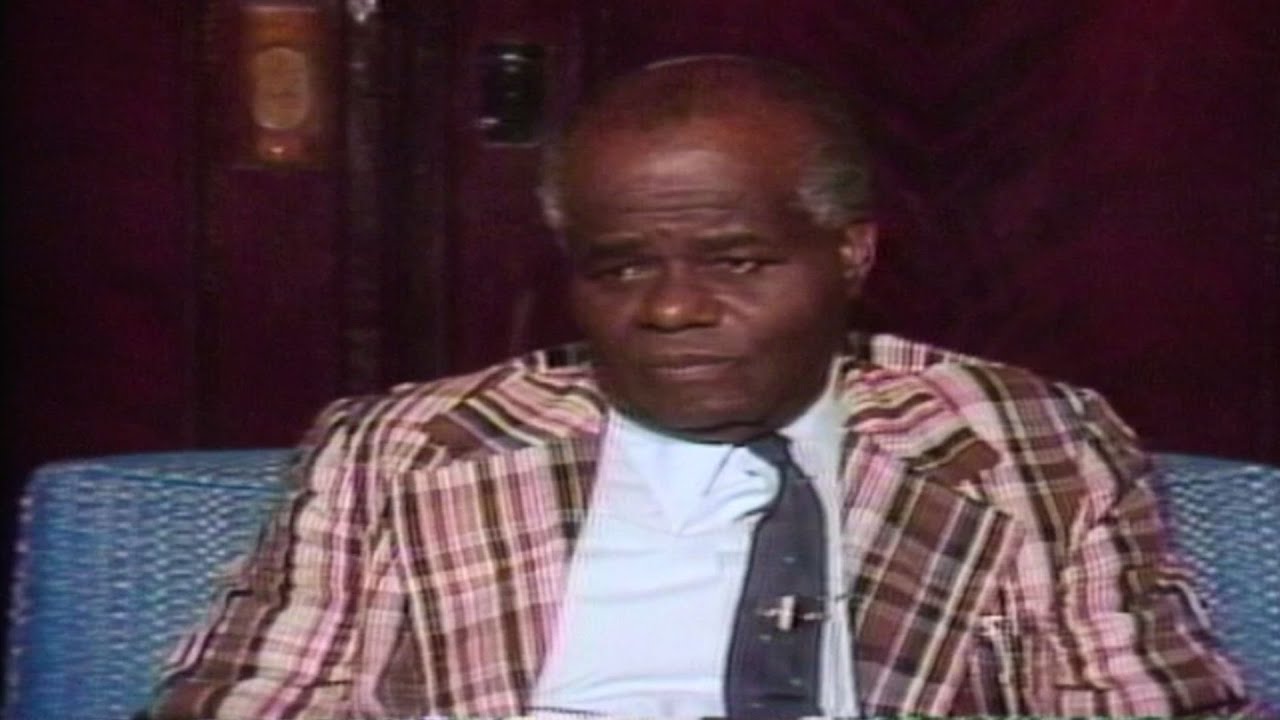
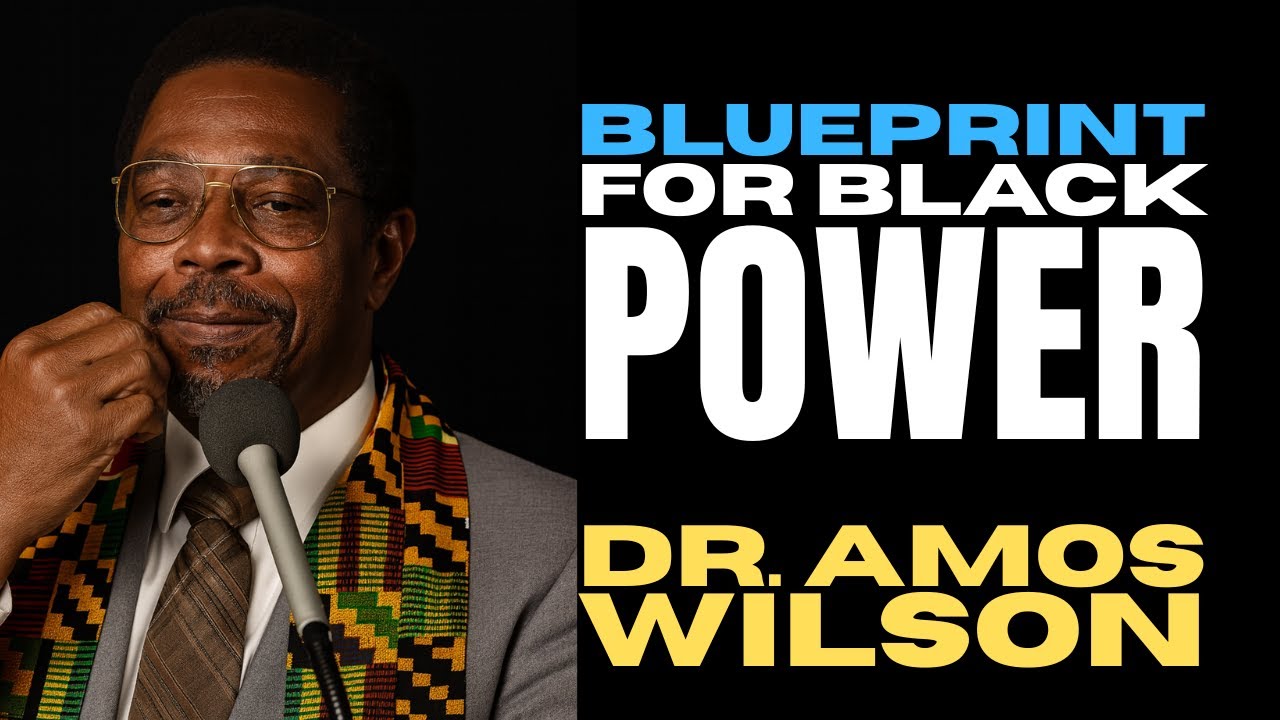
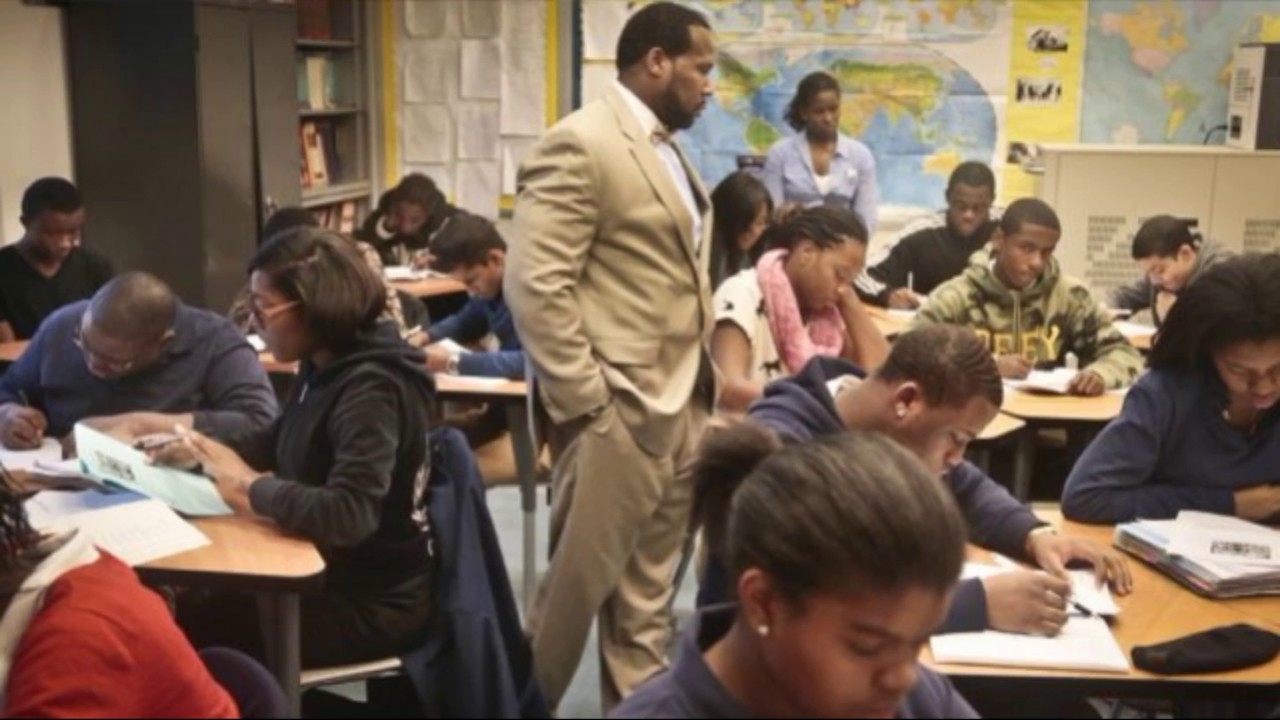
good evening and welcome to part three of our interview with Mr Amos Wilson author of The developmental psychology of the black child Mr Wilson in part two you were talking about the lessons to be learned from the Marva Collin story would you continue please yes the Marva Collin story in terms of a black teacher who founded her own school and who uh raised the so-called intellectual functioning of black children to a far beyond what we call average functioning uh we made a couple of statements in the previous program around the issue of caring that fact
that this is I think one of the major things that was operant in moving her students toward this high level of functioning that she cared she exhibit love and concern and high expectations set high standards you see one thing about the psychology that is prevalent about black children is that they are suffering from a learning deficit or that they are less motivated or these other kinds of issues that we hear it lowers the expectation of the teacher and the teacher gets exactly what she or he expects from the students the whole thrust of what I
have been referring to as eurocentric psychology is to lower the expectation uh concerning the intellectual functioning of black children and black people in general of course that was a result of history that said blacks can have culture and the whole business now the thing that you find functioning in her school of course is the removal of this kind of poisonous Philosophy from the minds and psyches of these children and uh and she does this through the process we just mentioned the other thing that I liked about it and I like about what she is doing
I should say is the fact that she is doing it without so-called federal funds and monies from uh the so-called federal government indicating that with a relatively meager amount of resources what can be done and that the teaching of children and the elevation of the minds of black children is not determined in any direct proportion by the amounts of money per student spent in a direct sense of course it has advantages definitely I wouldn't deny that but it's also it's not also based up on necessarily uh the so-call condition of the school uh the physical
material aspect of the school as much as it is embedded in human relations in other words equipment uh videotapes and all of this kind of stuff is no substitute for a teacher that cares that is concerned that is dedicated that expects and uh governmental funds will not by the mere issuing of them to uh black areas Elevate the intelligence of black children that has been one mythical liberal solution that has been thrown at black people that the way to solve a problem is to throw more money at it and therefore our leadership efforts has been
to if you got a problem give us more money you know this somehow is going to do it it never worked as a matter of fact you almost see a situation where the more money that's puts into a system sometimes the less you get out of it uh what I guess some Economist called diminishing uh returns so in that in in those instances the control of Education that I referred to in the previous thing that is where black people must control the education of their children which is illustrated by Marva the the removal of dependence
upon the federal government because you don't not only get money from federal government you get directions and it is these directions of bureaucracies that too has destroyed the potential of our children the concern and love for black children all of those things are positive I had I have uh one major reservation about the what she is accomplishing there and that is what I would call the europeanization process that I see operating there what do you mean the the what I would see is an overemphasis on Europe European scholars or european authors you know the Shakespeare
the shs to the relative neglect of people of African descent writers and Scholars and and people too who have done work that should be emulated by black people also not intentional I would think on her part but perhaps inadvertently the belief that one can achieve intellectual functioning only by the assimilation of European ideas and that the assimilation of European literature is the base for which one must build higher intellectual functioning uh when you I'm afraid that what you will have is what we have now in too many instances if you follow the logical progression of
what's Happening Here in the in that situation of students who will be functioning very on a very high intellectual level but who in a practical sense will be of little value to the black community because their their orientations their tastes and values will essentially be European and therefore the work that they do will essentially uh support the European structure and help to maintain European dominance to a great extent this is what you have going on in America today the M vast majority of the at least a large percentage of black children are kicked out of
the system because because they don't assimilate the European philosophy those few blacks that are let through are let through at the price of alienating themselves from Blackness and from Afrocentric uh ideas so you have a situation here where you get may get more Black mbas Masters of Business Administration okay more blacks who are economics majors and yet you see the black communities crumbling economically you get for for instance you get more black psychologist and yet you don't see any visible or any demon demonstrable effect of those blacks uh in a positive Sense on the black
community as such it appears then even though we are educating so-called more blacks its effects in a positive way on the black community has been negligible and I think this is in part due to the fact that blacks are europeanized and therefore not trained to think in terms of how their knowledge and information relates to let me let me ask you this the Advan of black people get down to Solutions um how what do you have to do to begin to get a black child to think from an Afrocentric perspective well certainly we would like
to have the parent him herself or both of them obviously to have what we call the Afrocentric View and that is a black parent who is familiar with African history and African culture and who uh has what we call the goal in mind of advancing the interests of like people in terms of themselves not just in terms of other uh people as such uh I think that is a prerequisite certainly the home environment Becomes of key importance here uh in developing this afro Centric View and of emerging the child in things African I'm not necessarily
one who Advocates the preaching of africanness at children because quite often it may reverse the very process that you want to bring about as such but a sort of subtle emergence of the child into the ways of uh African culture such as taking them to events that are African oriented and of course filling the house if possible with books that have the African uh orientation as such or sometimes uh critiquing the obvious control mechanisms that are parents are in TV when the child is sitting there looking at it and to a degree sometimes even CH
U shielding the child from programs such as the um Different Strokes programs and things of this nature so that they will not insidiously what do you think about that program I try not to to tell you the truth would you just for us today yes I think uh it's a bit uh it's a dangerous kind of program frankly to be honest with you Different Stroke because again it is a it's a program where the paternalism of whites is built in and almost the idea that white somehow can provide a much better paternal IC uh environment
than blacks that uh by implication there is the idea that uh blacks don't care enough about these kids to have adopted them themselves or to have taken care of them or the black family Network could not that those relatives let us say of those kids would not have taken those children into being but the main thing it internalizes this concept of the white man as a problem solver for black people as a man even in a benevolent way is going to take care the white shadow of yes the white shadow is another instance here again
is the great Problem Solver and to a great extent the problem of our people is the white shadow by that I mean we're quite often we as people are unable to see each other as real because we more less look at each other through the spectacles that the white shadow has placed on us and uh a lot of what we call the so-called lack of unity or struggle that goes on within the black community is built on false issues um that has been handed To Us by The Establishment as such through these kinds of programs
I think I think something that that probably needs to be to be to be cleared up is um and that is I would imagine that when some people listen to us listen to you talking about the need for afro-americans to get into Afric into the African um identity whatever that it is somehow um unnatural and somehow something that um that that should not be done and it it's it's offensive to other people um um what what about that I mean do people insist that a pear look like a like an apple or what how do
how do you explain that it's how do you explain that certainly getting into the to the an African perspective and by that I mean not necessarily going back to Africa this is sometimes people confuse that when you mention the African perspective I seen African perspective not only as something you go back to in terms of roots but as something to be developed as well uh by African people you see because certainly uh as wonderful as our historical past is we certainly have to adjust to the stresses and strains of the modern day world but that
must be developed not as a hand me- down philosophy but as one developed out of our own experience as a people and our own economic and social situation in the world and it's based in upon a cultural social political analysis of where we are now with a deliberate and conscious setting up a program for the kind of culture that we want to develop so that would be as African are Afrocentric as the past ones were Afrocentric say before the periods of colonialism that is going to offend people and uh but when the Italian speaks of
being Italian what what what is the difference it it seems to be some people say it seems to be okay but when the black man speaks about being black it's it's somehow certainly I I think uh the black man speaking of being black is is certainly more threatening than say the Italian speaking as Italian or or French is a Frenchman because in a sense he uh the Frenchman is still European in that sense and is talking about it within that structure as such uh but when you're talking about and of course whether it's Italian or
French or what have you are still part and partial of the benefits that the European culture as a whole gains from maintaining the subjugation of our people but when you talk about an African as an African uh there the implications are that they will no longer be able to exploit us as a people that's threatening of course because they eon IC and social order is based upon our exploitation and therefore in a very human sense certainly it should arouse anxiety and uh fear to a good extent when you hear of this kind of of uh
talk the black nationalist is frightening because in many ways he's he in another way is very much like the white man who is nationalistic and who's very much concerned about maintaining his group and he knows that that involves maintaining power as such and so where therefore when another people begin talking about maintaining their group and building up their group it means that that power has got to be redistributed it and as well as the economics and social benefits that go with it as long as a black though indicates that he wants to be American or
he wants to be integrated into American into America then the um that is less threatening because it indicates that he is basically going to support the system and uh he's therefore not a threat to the system as Serge uh as you look at um education in this country black and schools what do you think black parents should expect from these public schools and what they should not expect to flow from these P public schools I think they should um expect certainly of what we might call a very solid education particularly in what I would call
the skills you know the math the science and so forth they should not necessarily expect these schools to properly educate their children culturally I think we should take care of the cultural education of our children ourselves I think they should um not have to send the children there thinking that the uh that the only way they will love themselves is by getting their white counterparts to love them or seeing the love of their white counterparts as being important to their uh self-image as such so in that sense I think we should see them as more
or less the where we get the technical knowledge and information necessary for us of course to attain uh jobs and occupational levels that are desirable for us and to attain the skills that are necessary for us to develop our own resources and and so forth but the more spiritual cultural side we should U see to it that we ourselves independent black schools on the rise in this country oh yes I definitely so for sometimes for many is the same reason that independent white schools are on the rise as well because of um the fact that
we recognize the public school to a great extent has failed in his mission to properly educate our children also for the fact that the value system is so nebulous and sometime nonexistent until the character development of the children suffers to a great extent as well as the cultural sense of the cultural identification of the children suffer to in the public schools because it's gotten to the point now where uh there is no reigning kind of cultural eths in the schools what do mean uh where as as I we mentioned in the program back where there
is no agreed upon set of values that guide the teachers and students in those also because the authority level in the schools have been basically taken away from teachers and and as well as parents and uh so there is really hardly any place in the school for instance you can really point to that is the center of what is right what is wrong what is demanded and not demanded as such in the independent school you see you can build this kind of thing into the school it's built around a definite value system cultural orientation political
uh orientation and for black people it's built on a much higher expectation level it's not built on deficit psychology deficient psychology and it believes in its children and therefore you get a different kind of product plus the parent in those kind of schools can have much more of a say and are quite often a part of the school itself the public school for instance has become quite um alienated from the community to the extent where many parents feel as if their what they have to say cannot be heard they canot actually influence in any meaningful
way what is going on in those schools are there some specific things that you can point to if you can't I would understand that but if are there some specific things that you can point to that we as black parents do in our home that serve to um um work against us in so far as our children are concerned are there some specific things not I can't think of of any be and and if I were to I would have to be very cautious because I try to avoid it's not a listing process right and
also to avoid the blaming to the victim kind of of uh thing as well because pretty much what if the black parent quite often is is working against what we might call the interest and that's hard for me to perceive with black parents as a matter of fact doing of our black children it's principally due to the kind of propagandizing and brainwashing that has been laid upon the black parent in low the your expectations concerning our children one thing that is of Interest we have done some work and studied the shows for instance the knowledge
about one's children is what we call positively correlated with their intellectual functioning as as well as with their psychological functioning if there is maybe something that black parents may be doing that's working adversely against their children it may be do it may be the lack of real knowledge about the development of black children and being aware and being sensitive to those children's growth and how that growth is related to as we pointed out in our first uh segment the uh African experience as such so in that sense we can see it um the other instance
may be the the lack of of gaining what am I call very practical knowledge about how goals are to be accomplished for instance when you compare say motivation levels that is of black parents in terms of what they want their children to achieve and what kind of professions and things that they want their children to go into you find that the black parents motivation is higher than the white parents motivation in this instance so you're not suffering in the black family from what we call aspirational levels MH nor even when you even say look at
the aspirational level of black students you find that that aspirational level too is higher than white students you see so apparently what you're liking is not necessarily the psychology of the desire for the child to achieve but perhaps more of the Practical knowledge of how that achievement is to be brought about which means then that the parent possibly could gain could gain from learning in terms of what is re quired in terms of their own political action their own politics in terms of the school the PTA for getting what they want for their children and
I see it then more uh institutionally oriented okay than otherwise we're going to try to summarize a bit um um um you talked earlier about the need for for for young people young blacks to get into technology would you go over that again please yes uh we were making you're making reference to the sort of one-sided approach we sometimes in looking at civil rights as the very ultimate thing I think there has been a confusion in the black community of Liberation and civil rights for instance of thinking of achieving civil rights as being equivalent to
being free as such or is equivalent to being in a position to enjoy the so-called free fruits of our life but we must not forget that you can that uh prisoners have rights and they and uh you can demand your rights and therefore to merely have rights does not necessarily mean that one is free or one is in the position to achieve what one wants uh so what we have here we may have equal opportunity in a sense say the occupational field but if we do not prepare our children to master this technological system then
while we may have equal rights on the books and uh equal opportunity on the books we'll have a situation here of still being in a position economically subordinate to other ethnic groups the other thing that we have to look at though is the real impact on the world and the world of black people is not going to be in the area of rights as much as it going to be in the technological changes that are taking place and we must look at those technological changes in terms of where we're going with our children and education
of our children for instance we mentioned uh there's a situation that I was reading in one magazine high technology that speaks of a Japanese Factory that manufactures something like 1,300 cars a day and only has 67 employees in it and of of course things that are happening in Japan now where robots are manufacturing robots we as a people must begin to look at these kind of developments and their impact upon our children and Upon Us in a sense I think equally with equal emphasis as we look upon on civil rights because we may end up
with the Civil Rights and still end up unemployed you say racism will become less and less of a of a factor I apparent and obvious racism is going to become and is becoming less and less of a justification for maintaining blacks and supporting positions you have one author for instance out of Chicago who who has a book I think called the decline of uh race or something significance of race yeah the declining significance of race uh I think though that is a mythology that's developed because we have again not understood how whites use mythology to
control and maintain control we got two minutes yes okay as such and uh for instance race becomes an important mythology when you want to colonize the people when you want to enslave a people and sleep well at night so you use racism to justify the position that you're keeping them in by saying okay they deserve because they're inferior they had no culture in the whole business that we are so familiar with now and and and also to justify your own exploitation now when that exploitation is accomplished and you you have built a network that's based
on economics as as the Europeans have built and you have built a network that's based upon communication systems and you have reoriented your colonist colonized people where they value what you have to offer racism as a means of controlling them is no longer necessary as a matter of fact it reduces your costs it reduces uh the obvious conflict because now control is placed on the basis of other factors so now you can pass a Equal Housing law and say well you're you're you're welcome to get in any house you want to except the fact you
can't afford to buy it 10 5 Seconds why am I feeding and clothing this black child what's the goal the goal is is to make this black child ready to take over the world and take his rightful position in the world thank Master Mr Amos Wilson that's our program thanks for joining us e e