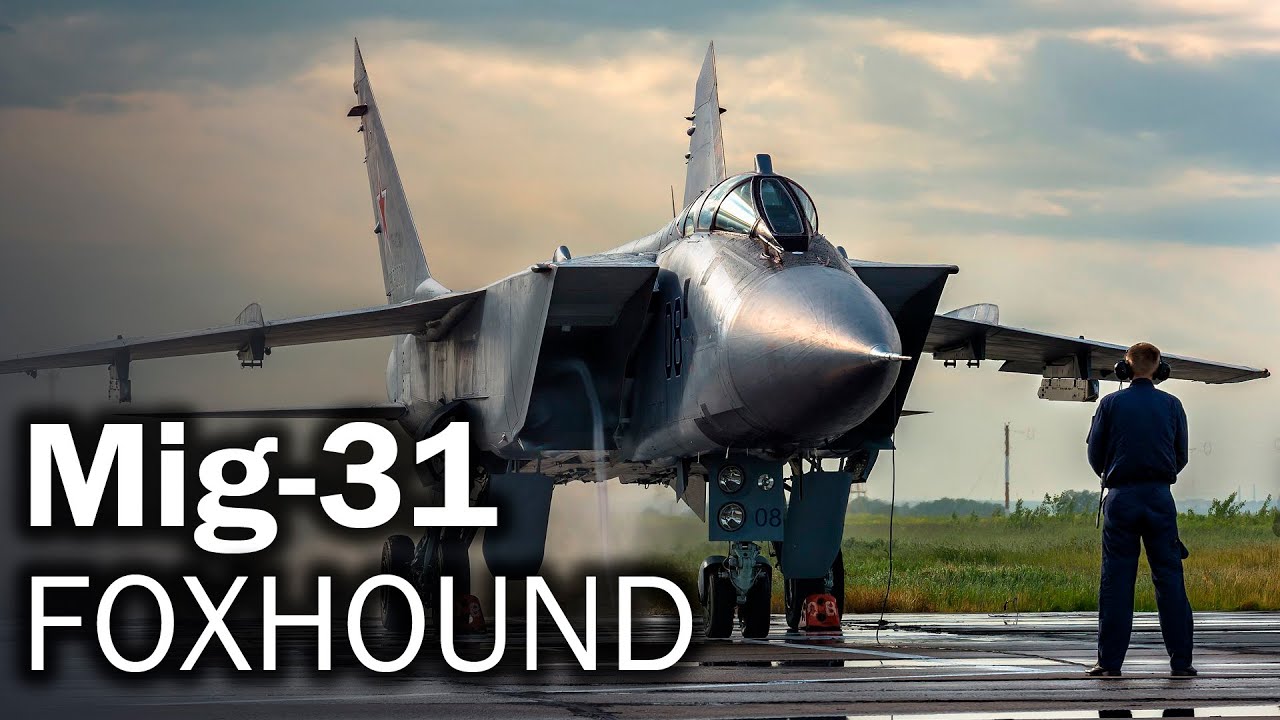
In the thick of 2022, as Russia’s invasion of Ukraine sent shockwaves across the globe, a faint glimmer of hope persisted. Many believed that Putin’s vaunted hypersonic weapons couldn’t be efficiently utilized, given that the MiG-31K, their usual carrier, had become a rare sight in the post-Soviet skies. But that fragile comfort was shattered in mid-March.
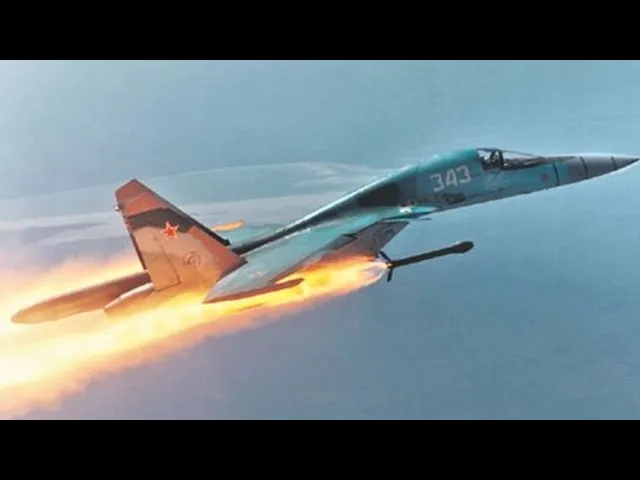
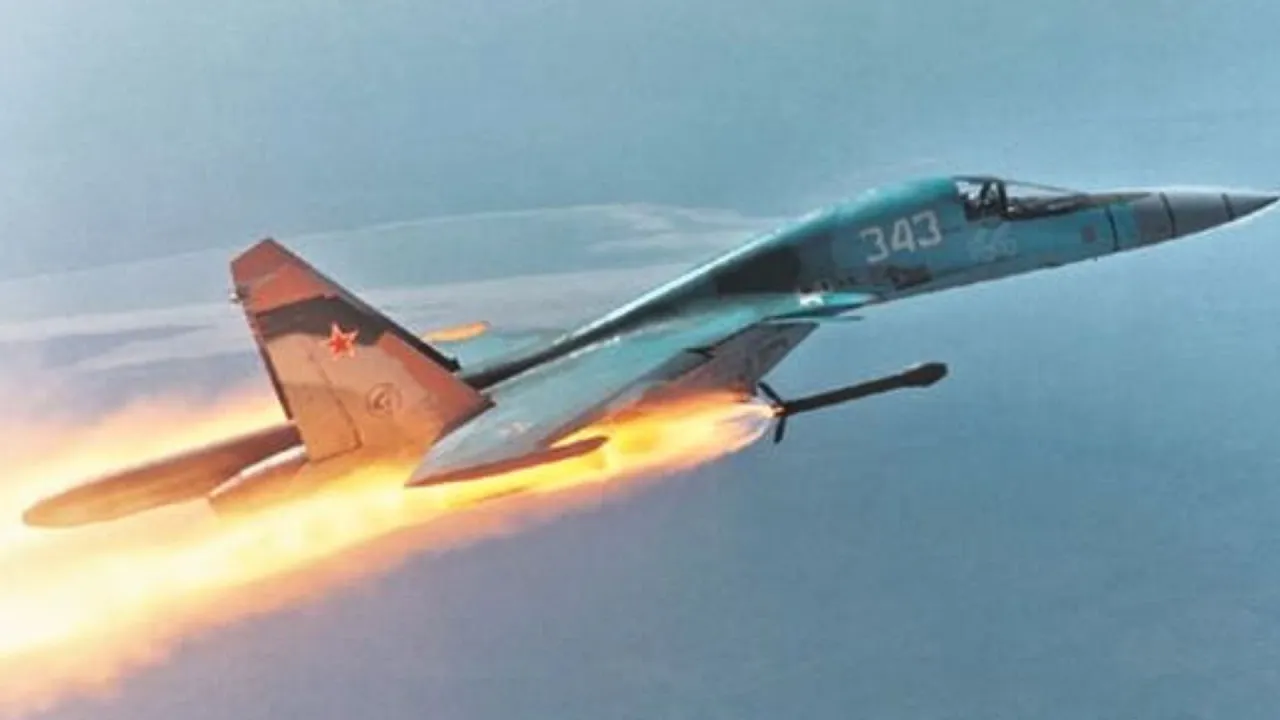
The sky roared, not with a MiG but a Sukhoi Su-34 strike/bomber. With terrifying precision, it released the first Kinzhal hypersonic missile in the conflict, showcasing that this post-Soviet warplane was far from obsolete and a formidable force to be feared. Though the Su-34 had seen minimal action since its official induction into the Russian Air Force in 2014, this brazen act thrust it back into the limelight.
Sleek, nimble, and boasting an impressive 4,000-kilometer range and a 14,000-kilogram bomb capacity, the aircraft seemed unstoppable. But as it tore through the skies over Ukraine, a haunting story began to unravel piece by piece. The battlefield soon bore witness to the charred remains of the Su-34, and theories emerged about its design being its own worst enemy.
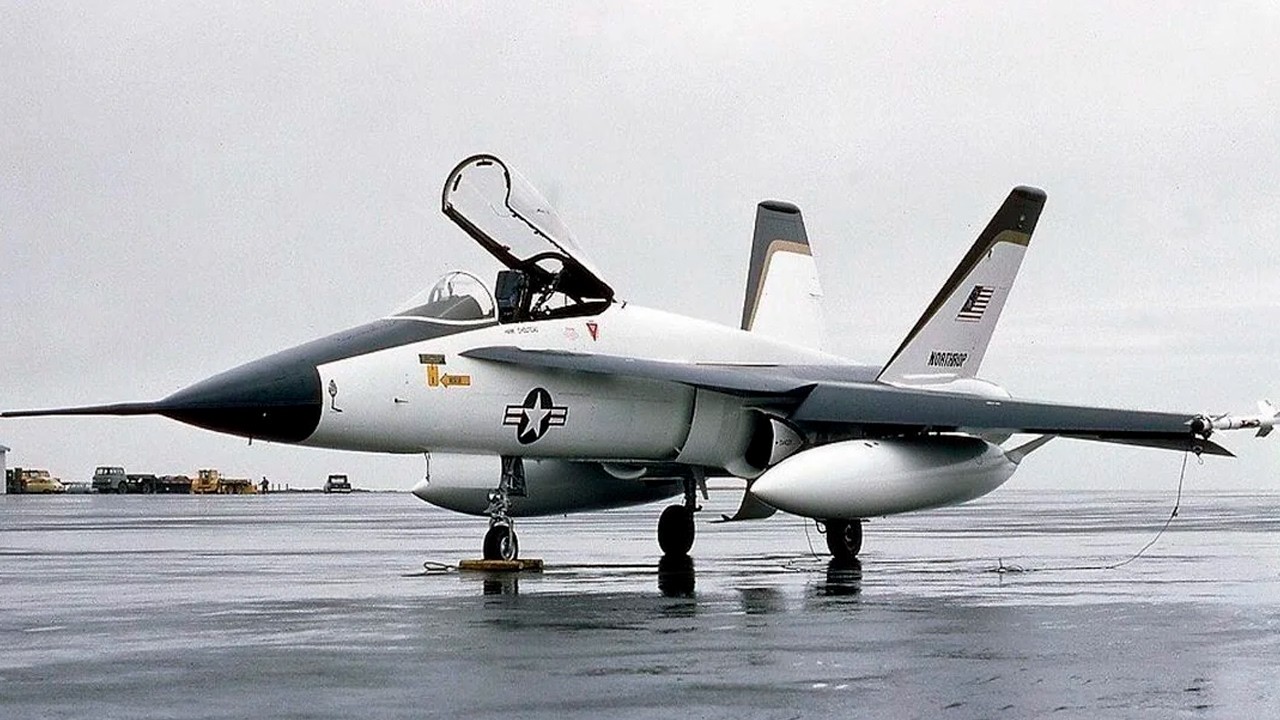
A Mysterious Jet In 1990, a strange, never-before-seen aircraft was photographed by a Russian News agency silently trailing the Russian aircraft carrier Tbilisi. Western intelligence immediately focused on the enigmatic warplane, perplexed by its unique design and distinctive nose, which hinted at the rise of a new threat from Russia. The aviation world hummed with speculation.
Soon, the aircraft was identified: Russia had unveiled its formidable new jet, the Su-27IB, a powerhouse designed for a new generation of combat aviation and specially created for fighting and bombing sorties. Russia’s ability to develop such a marvel in hushed tones became apparent as the story traced back to the mid-1980s. With the Su-24’s dominance on the decline, Sukhoi, fueled by vision and determination, set its sights on sculpting its successor.
The Su-27, celebrated for its stunning maneuverability and range, became the foundation for this next-gen fighter-bomber, which could bring world-class performance and efficiency while adhering to a specific budget for production. Yet the journey faced turbulence. The tumultuous aftermath of the Soviet Union’s disintegration threatened to halt the project.
Nonetheless, the Su-27IB prototype soon began to turn heads, most notably during its display at the 1992 Mosaeroshow. During this international airshow, the newly developed aircraft stepped into the global spotlight and flaunted its aerial refueling prowess. By December 1993, the Su-27IB had transformed.
A newer variant, featuring an enhanced design and a cutting-edge rearward-facing radar, took to the skies. The official introduction of the SU-34 came in 1994. Over time, this jet underwent several name changes, with the title “Su-32FN” shining at the 1995 Paris Air Show.
Even while navigating financial turbulence after the fall of the Soviet Union, Russia fiercely clung to the Su-34’s design, posing it as a symbol of Russia’s post-Soviet military might. By 1996, the tests of several Su-34 variations took place, underscoring Russia’s aerial ambitions. Today, the promising aircraft leaves its mark on the battlefields of Ukraine in the first confrontation that has taken the Su-34 fighters to their limits.
Russia continues to vouch for its 20-year-old design with the bold announcement of two upcoming distinct versions on the horizon—one focusing on electronic warfare and the other on intelligence and reconnaissance. Russia’s confidence in the Su-34 jet derives from the remarkable technology under its hull. On paper, the engineering within the warplane had the potential to level the playing field even against America’s most advanced fighters… Design From its inception, the Su-34 was conceived to build upon the legendary lineage of the Su-27 and Su-30.
These jets established the benchmark for Russia’s ideal aircraft — robust, reliable, and time-tested. Meticulous design refinements endow the warplane with unparalleled advantages in its category and role. Its canards, for instance, are not merely aesthetic; they serve as crucial instruments in aerial combat.
In the high-stakes arena of a dogfight over treacherous mountain ranges, agility often determines the victor. The canards grant the Su-34 this critical agility, allowing it to weave through the skies, dodge missiles, and outmaneuver adversaries just enough to secure the upper hand. This nimbleness is complemented by the sheer force of the Saturn AL-31FM1 turbofan engines, which deliver exceptional thrust.
Even when venturing deep into enemy territory with a full load, the Su-34 can soar at speeds exceeding Mach 1. 8, rapidly retreating and leaving pursuers trailing in its supersonic aftermath. For high-priority missions that demand a long-range strike followed by a stealthy return, the Su-34’s impressive range enables it to traverse vast expanses, unleash its deadly arsenal, and disappear before foes can retaliate.
With the capability for aerial refueling, its operational radius expands even further, placing the world within its grasp. Armament Regarding armament, the Su-34 delivers with the force of a sledgehammer. It features 12 hardpoints, capable of bearing a combined weight of 12,000–14,000 kilograms of ordnance to rain destruction on enemy targets.
This includes the formidable 30-millimeter GSh-30-1 cannon, six R-77 or R-73 air-to-air missiles for defense, and Russia’s latest precision-guided munitions for ground assaults. The aircraft can unleash stand-off weapons with a reach of up to 250 kilometers and is fortified with the Khibiny electronic countermeasures system. When Russian units confront multifaceted threats, this jet wields a payload comparable to a compact armored platoon, guaranteeing decisive and potent counteractions.
Inside its cockpit, the Su-34 places a premium on pilot welfare. During extended sorties over hostile regions where the pressure is immense, its roomy interior ensures pilots remain at their optimal performance level — alert, focused, and perpetually prepared. Equipped with the Leninets V-004 radar and further enhanced by Pika-M integration, the aircraft boasts unmatched situational awareness as it dominates the skies.
Should an enemy fleet mistakenly assume it’s securely hidden beneath cloud cover, the Su-34, with its cutting-edge radar, can detect, engage, and neutralize multiple threats, plunging foes into chaos and disarray. Yet, for all its advanced engineering, the combat performance of this pioneering supersonic jet would soon reveal itself to be less than Russia had hoped for… First Flights In the early 1990s, Western powers first encountered the Russian twin-engine, all-weather supersonic fighter-bomber, the Sukhoi Su-34, which NATO later codenamed “Fullback. ” These maiden flights primarily involved testing prototype units, as the warplane had not yet transitioned into full-scale production.
Official records indicate that it wasn’t until 2008 that the Su-34 completed its testing phase and entered mass production. Intriguingly, while it remains unconfirmed, the Su-34’s combat debut is speculated to have occurred during the 2008 Russo-Georgian War, with rumors suggesting the conflict served as a real-world testing ground for the aircraft. Only in the 2010s was the aircraft formally introduced to the global stage, with plans in motion for its induction into the Russian Air Force in subsequent years.
Russia proudly touted the remarkable capabilities of its new jet. In the early 2010s, the Su-34 demonstrated its long-range prowess by completing a 6,000 km non-stop flight from European Russia to the Russian Far East, making clear to global powers that Russia had built a warplane of remarkable capabilities ready to take on combat warfare of the 21st century. Dominating the Skies of Syria The aircraft was officially commissioned into service in early 2014, with Russia setting an ambitious target of deploying 124 units by 2020.
Before its involvement in the Ukraine conflict, the Su-34’s most significant combat operations were during Russia’s military intervention in Syria, commencing in September 2015. Stationed at the Latakia airport in Syria, the Su-34s were instrumental in striking both rebel and ISIL targets. They showcased their precision strike prowess, zeroing in on ISIL command hubs, bunkers, and other vital installations.
Throughout the conflict, the Su-34’s performance was exemplary, delivering accurate and devastating blows to enemy strongholds methodically. The dynamics shifted after Turkey downed a Su-24 in November 2015. Subsequently, Su-34s in Syria embarked on combat missions equipped with air-to-air missiles.
The global community began to recognize the formidable potential of this new Russian jet. Its pivotal role in the Syrian theater not only highlighted Russia’s sophisticated aerial combat capabilities but also underscored its readiness to deploy them in intricate conflict scenarios. Moreover, the aircraft’s terrific performance in Syria doubled as a showcase of Russian military technology for prospective buyers.
Tensions escalated in 2018 when two Russian Su-34s allegedly intercepted a pair of Israeli Air Force F-16s over Tripoli, Lebanon. Given the Su-34’s track record in Syria, adversaries of Russia were served a clear warning: tread lightly… Into Ukraine While the Su-34 had seen action in various minor skirmishes, it was on the intense battlegrounds of Ukraine that the aircraft would either realize its full potential or be exposed as lacking. As the invasion began in February 2022, the mere presence of the fighter-bomber loomed as a formidable threat to Ukrainian forces.
The Su-34 was perceived as a modern juggernaut, having already demonstrated its lethal prowess in Syria. In those initial, harrowing days, anxiety surged in the West over Russia’s potential deployment of hypersonic weapons. It was well-known that Putin commanded an expanding cache of these devastating missiles, rumored to be unstoppable.
Even more disconcerting was the possibility of them being armed with nuclear warheads. Ukraine and its allies clung to the hope that these colossal weapons, primarily designed for the Soviet-era MiG-31K, would prove challenging to retrofit onto the more prevalent Russian aircraft. Yet, in March 2022, that hope was shattered when a Su-34 fighter-bomber deployed a Kinzhal, or “Dagger,” hypersonic missile during a raid.
The West was jolted into high alert. Russia triumphantly announced the Su-34 as the new launch platform for its vaunted “unstoppable” next-gen weaponry, boasting speeds of up to Mach 10. However, as the conflict wore on and Western support for Ukraine intensified, the perceived existential menace of both the Su-34 and the Dagger began to wane.
Undoing Despite the Su-34’s formidable specifications on paper, its actual performance in the Ukrainian theater was less than stellar. The aircraft began to suffer losses, succumbing to both Ukrainian defenses and their own technical shortcomings. Britain’s Defence Secretary, Ben Wallace, pointed out that rudimentary civilian GPS receivers were found in the cockpits of downed Su-34s.
This startling discovery cast doubt on the reliability of the Fullback’s integrated navigation systems. The Su-34 encountered formidable resistance from the Ukrainian Air Force and ground-based air defenses. The internet was awash with footage showcasing multiple Su-34 aircraft downed — predominantly by Ukrainian forces.
One Su-34 was observed in a flat spin before its eventual crash. Another, a modernized Su-34M variant, was allegedly downed by friendly fire from Russian forces. There were accounts of pilots ejecting, with some unfortunately perishing and others taken prisoners.
Most downed aircraft were identifiable by their distinctive red tail and registration numbers, such as Red 31 with RF-81251. In a tragic incident in October 2022, a Su-34 jet collided with a residential building in the southern city of Yeysk, resulting in 16 casualties. The series of mishaps befalling this once-promising warplane seemed to occur independently of Ukrainian defensive actions.
As of 20 May 2023, visual evidence has confirmed 20 instances of Su-34s being lost, damaged, or abandoned by Russian forces since the onset of the 2022 Russian invasion of Ukraine. Unexpected Fate A prevailing theory for the Su-34’s underwhelming performance is the hubris of Russia’s military leadership, which may have been influenced by the aircraft’s track record in Syria. There, the Fullback encountered negligible air defense threats from insurgent factions, vastly different from the robust Ukrainian air defenses and interceptors.
Despite its challenges in Ukraine, the Su-34 is projected to remain an active part of Russia’s aerial arsenal for years. It was conceived, in part, to take over for aging aircraft like the Tu-23M bomber and the Su-24 attack jet. The ongoing conflict will shed light on whether the Su-34’s setbacks in Ukraine resulted from strategic missteps or inherent design deficiencies.
Western defense analysts, including experts like Wesley Culp, have been scrutinizing the Su-34’s performance intently. The prevailing sentiment suggests that while the aircraft holds promise, its deployment strategy in Ukraine might not have capitalized on its core strengths. Yet, more skeptical voices argue that this airframe once heralded as a testament to Russia’s prowess in crafting cutting-edge warplanes, might end up being one of the most significant letdowns in contemporary combat aviation history.
Thank you for tuning in! For riveting tales of the world’s most formidable warplanes, don’t forget to hit that subscribe button and ring the notification bell. Interested in military content beyond the skies?
Dive into our other channels under Dark Documentaries. We’re always releasing new content, so keep an eye out!