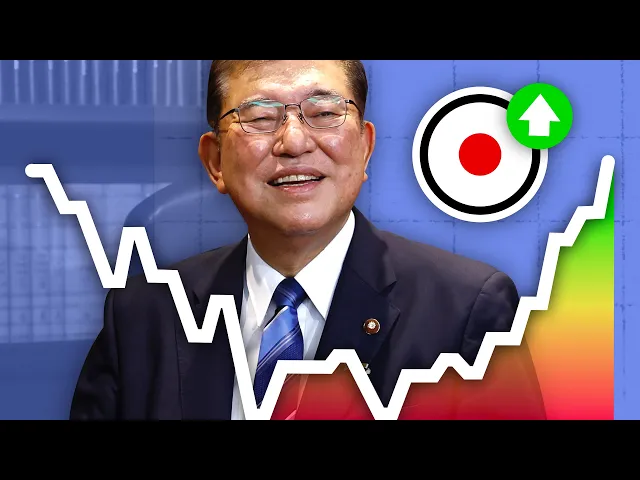
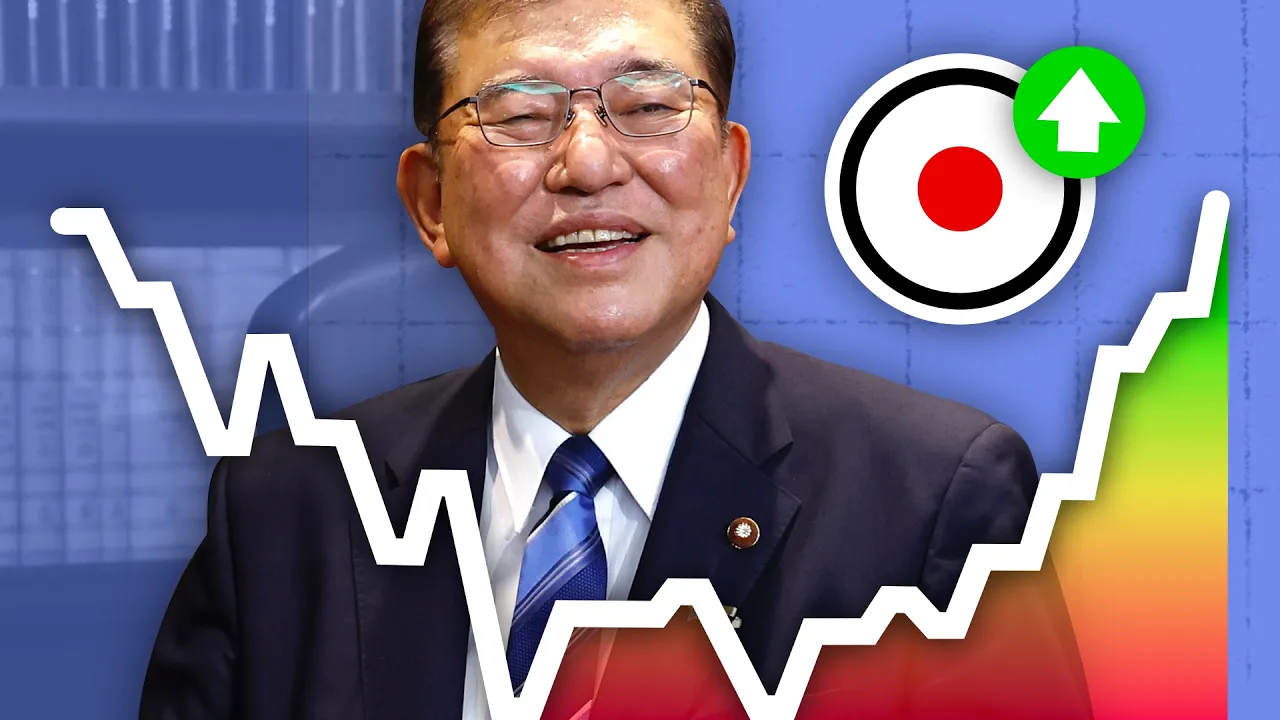
this video was brought to you by Hensen shaving economists sometimes say that there are four types of economy in the world Advanced developing Argentina and Japan and this isn't a compliment Argentina is renowned for its super high inflation rates while Japan has been stuck in a deflationary funk for more than three decades despite the fact that the Japanese Central Bank has effectively printed trillions of Yen trying to get it moving again however this py little quip no longer makes as much sense as it used to not only is hav a mill balanced Argentina's budgets and brought inflation down to a relative low but Japan's economy has also started looking suspiciously normal inflation is hovering stubbornly above 2% interest rates are above zero for the first time in ages and just last month Japan's prime minister Shira isher signaled that he wanted the government to rely Less on debt and fiscal stimulus so in this video we're going to take a look at how Japan's economy apparently returned to normal whether it could last and how Trump could throw a spanner in the [Music] works never miss a major news story by listening to the daily briefing T's daily rundown of everything you need to know listen along in your favorite podcast app or by clicking the link in the description so to understand this story you need to know a bit of context after World War II Japan experienced Decades of Rapid economic growth with the Japanese economy growing by an average of 7% every year from 1955 to 1990 however in the '90s Japan suffered from a series of economic shocks in quick succession after a massive boom in the 80s in the decade after 1990 residential house prices fell by more than 50% commercial property prices fell by something like 85% and Japan's main stock index the Nick a225 fell by about 75% Japan's economy never really recovered either and growth and inflation both remained close to zero for the next few decades this is likely because Japan experienced a so-called balance sheet recession essentially Japanese households and companies had taken out too much debt when asset prices were Rising so when asset prices fell Japanese individuals focused on paying down their debts I. E repairing their balance sheets and while this might make sense on an individual level if everyone in the economy starts doing this at the same time then the economy stagnates because Japanese households were focused on paying down their debt they also stopped spending money pushing Japan into a deflationary state this probably put further downward pressure on Japan's growth rate because when consumers expect lower or flat prices as they do in a deflationary environment they have little incentive to spend which means less consumption and therefore lower GDP this also explains why even Ultra loose monetary policy didn't restart growth the bank of Japan cut interest to below zero and bought up an unprecedented amount of Japanese bonds corporate debt and even stocks but not much happened presumably because Japanese households and companies were focused on debt minimization instead of profit maximization so didn't want to borrow more money regardless of the low interest rate this is why in a sense the recent energy-driven inflationary Spike was actually a gift for Japan's economy Japan has been unable to generate inflation internally so an external price shock was sort of its last chance to escape deflation and what apparently it worked in April 2022 Japan's annual inflation rate which had averaged at 0. 35% since 1990 Rose above 2% for the first time in nearly a decade where it's stayed ever since this looks like it's kicked off a mild wage price spiral which is exactly what Japanese policy makers have been trying to achieve for decades in the west policy makers are terrified of wage price spirals where higher wages lead to higher spending which leads to more inflation and then higher wages etc etc because they worry that it would lead to unpalatably high levels of inflation in Japan however this sorts of self-sustaining Loop is exactly what policy makers have been aiming for as a way of keeping inflation above zero anyway this seems to have happened because while wages lagged behind inflation in 2022 and 2023 in 24 the average wage growth for workers at large companies came in above 5% the highest level since 1991 this deep increase in wages might also explain the recent uptick in inflation which has actually risen from 2.
3% in October to 3. 6% in December all suggesting that Japan is experiencing a mild wage price spiral persistent inflation has also caused the Japanese Central Bank the bank of Japan or boj to raise interest rates to about 0. 5 % the highest level since the 2008 financial crisis unlike in other countries where interest rates are falling as inflation abates the boj looks like it's going to continue raising rates for the near future both because inflation is rising and because they've stated their ambition to quote normalize monetary policy at the same time Japan's current prime minister shago isaba made it clear in his opening speech to the Japanese Parliament last month that he wanted to move towards a more normal fiscal policy as well which would involve cutting government spending and therefore borrowing all in all Japan's economy looks surprisingly normal right now deflation is over interest rates are above zero and the government is at least trying to borrow less nonetheless there are still two big problems here the first is Japan's massive debt burden Japan's debt to GDP ratio is over 250% which means even a slight increase in borrowing as we're seeing right now will put a massive strain on government finances by making it more expensive to service this pre-existing debt pile I.
E pay off the interest while 50% of Japan's debt is actually owned by the boj which makes things a bit easier because the interest rate payments on this debt will eventually find their way back to the government this will still put immediate pressure on the government to find some steep spending cuts the second problem though is Trump for starters a trade war with the US which runs a steep trade deficit with Japan or even just more Universal tariffs would probably push Japan into a recession which would undermine consumer confidence and thereby potentially restart deflation but even if they're not directed at Japan the inflationary effect of Trump's tariffs will probably invite further interest rate hikes by the Federal Reserve which will strengthen the dollar and conversely weaken the Yen this will push up inflation in Japan meaning further interest rate hikes by the boj putting even more strain on the government's finances and debt servicing costs and finally if tarff fail to redress the US's trade deficit Trump has suggested that he might try and negotiate some sort of multilateral currency deal with America's biggest trading partners including Japan that would involve those countries increasing domestic demand and strengthening their currencies against the dollar in the hope that this leads to them buying more American goods and reducing America's trade deficit this potential plan nicknamed the maril Lago Accord has ominous Echoes of the plaza Accord a similar deal negotiated by Reagan in 1985 that required Japan to strengthen the Y and stimulate domestic demand this might not sound like a bad idea but many commentators think that the stimulus created Japan's asset bubble because there was suddenly too much cash flowing around and Japanese policy makers certainly won't want to risk making the same mistake again which is pretty irritating for both Trump and the people of Japan although irritation is something that those of us who shave regular are all too used to in fact lots of people actively don't like shave after all it's expensive with brand selling overpriced razor cartridges filled with useless technology and even if you do pay for all of that stuff you're often left with a bad experience razor burn ingrown hairs and irritation that's a problem that Hensen shaving have aimed to solve with their razor one that's actively designed to protect your skin in fact Hensen razors are better for three reasons firstly Henson's al13 Razer which they produce at their Aerospace machine shop holds blades at a perfect 30° angle extending the blade only .