in 1922 the Soviet Union was formed a new nation that would have a profound impact on the entire Globe it would emerge from the remnants of the Russian Empire after a long and bloody Civil War Russia in the aftermath of the bvic Revolution was a country in absolute turmoil a brutal and bloody Clash of arms trying to wipe out this new regime before it can take control of the country the Bolsheviks finally succeeded in about 1922 and then came the hard work of trying to create for the first time ever a new socialist country from
out of nowhere Vladimir Lenin had become the leader of the largest Nation on Earth and was now imposing his will Lenin won the war Lenin won the revolution Lenin's one of those amazing figures who really are decisive in history once's got to understand that Lenin was an autocratic character who really didn't want anyone to succeed him that's true of most autocratic characters in history but Lenin would have a successor who proved to be the most ruthless of all figures when dealing with both his own people and his foreign enemies they realized after the revolution that
the Soviet Union was surrounded by enemies didn't have a friend in the world they felt that way and they were probably right and the only defense was to build an enormous army with a lot of tanks and a lot of aircraft and a lot of ships which they did in the aftermath of World War II the Soviet Union emerged as a new Global superpower that matched the once Mighty Russian Empire of old all of us who were then young we were seeing great achievements by the Soviet Union they launched the Sputnik satellite fantastic scientific achievement
they put put the first man into space Yuri gagari fantastic achievement and so people were saying they saw the Soviet Union as a genuine comparable competitor with the United States now a century from its formation the Soviet Union seems to define the whole of the 20th [Music] century [Music] [Music] in October 1964 Nikita Peter krof was about to be removed from Power whilst on vacation in pitsunda on the Black Sea he grew suspicious of activities developing in Moscow and he immediately flew back to the capital city upon arrival he was forced to step down as
leader of the Soviet [Music] Union the official Russian announcements said he resigned the red say ill health prompted Kusa to step down observers say that his abortive Feud with red China that broke apart the front of Monolithic communism was the real reason a man who clawed and fought his way to the top woed leaders like Nasser of the neutralist Nations kof probably made his greatest impact on a strangely fascinated world when he came to the United Nations assembly in 1960 and attempted to purge Secretary General Doug hamash He piled shock upon shock when he and
the Soviet delegation rudely interrupted speeches by Western [Applause] delegates the Soviet leadership overthrew Kristof they called him in and they denounced him and they sacked him from all his positions and the reason they did it was because of really because of his kind of arrogance his despera ISM his completely ill-thought out Adventure what sealed kush's fate was his interference with Agriculture and his hairbrain scheme to imitate the Americans by growing lots of Maze and in order to do that Wrecking existing crops so there was serious food shortages in the shops and serious discontent that was
more important to the party than anything else there had already been a number of RS by workers who are dissatisfied and that was the decision to get rid of him forces began to conspire against him and leading those forces was Leonid BNF who sees that maybe now is the moment to act that maybe this is the moment where he can get his hands on the levers of power the crowds that once cheered krch wildly were left in the dark as Su just what went on when the Central Committee met to act on his retirement and
to name Leonid brf as the new leader of the party while Alexi kosan took the job of Premier rnf has lately been considered kof's Aira parent but the question remains as to whether he had anything to do with hurrying his boss's departure christop is on holiday he's summoned back to Moscow and the polit bureau led by bref denounce Christof they criticize him for everything he's done and they say they want him to step down from Power this will not be a coup quite as brutally as Stalin might have done it he's allowed to resign but
it is the end of kristof's Reign of Power now Leonid BNF is is the man at the helm you know they voted him out they didn't execute him they didn't imprison him they just retired him in the meeting he said you know whatever else happens my one achievement has been that no one's going to be shot now I'm just going to retire and so happened and bref became the next leader bref was a a pair of safe hands a man with a good military record he just wanted to keep the apparatus going as it had
in the past to appoint suitable first secretaries and heads of Soviets and so on and who allowed a fair amount of corruption his own family was horrifically corrupt his daughter Galina was a a nightmare but um that corruption was a sort of lubrication for the party and under under BNF everything had a had a price brn is known among Western diplomats as the red and the gray flannel suit a man who is expected to continue peaceful coexistence with the West while trying to heal the breach with [Music] China it had been indicated that brf would
be kush's successor on his death but no Spectre of death or disgrace marred the scene of kush's 70th birthday party last spring he seemed to have the world the Communist sphere at his feet and his power over 220 million Soviet citizens seemed impregnable now For Better or Worse the kof era has come to a close well brf was a generation younger than than kusov uh and he had been a real beneficiary of of Soviet higher education of of Soviet Social Mobility so born in a workingclass family he got a degree in in engineering and and
became a practicing engineer in the 1930s joined joined the Communist Party served in the military as as a party official so he had some practical knowledge of the economy and and he wasn't ideological the way the early bolik had been uh the party was was the Soviet Union was the only thing that he knew so he had worked his way up into the party uh you can see his face in the great kitchen debate uh between kof and Nixon brf is standing there just behind kusf so he was a a trusty Aid at the time
and so was one of the the leaders at the time of kof's dismissal along with Alex kosan the two of them came to power together brv soon eclipsed kosan but initially it was a dual leadership and he was a bluff good natured pleasure-loving quite capable appara Chic who'd been chosen by Stalin and promoted who'd played a part in the arrest of barrier and served Christof quite loyally until the end but it gradually became a stagnant period for the Soviet Union no reforms were really succeeded and the Soviet Union needed reform unlike Christoff who'd uh attempted
to decentralize the economy to give more power to the regions BNF wanted to do exactly the opposite he was much more in the mold of Stalin he wanted to bring everything back to the center to bring power back to Moscow and to bring power back to himself one can see at this point the Soviet Union is reverting much more to the model that have been created by Joseph Stalin the reign of BR has seen to be one historian has called it uh that he made a little deal uh with the Soviet people that he promised
them economic Prosperity which included because the the Communist economy was so inefficient it included increasing tolerance for a shadow economy for some black marketing some private Enterprise the government turned a blind eye to that in exchange for political loyalty and most of the people made this bargain and and agreed not to be in opposition to the government what bref wanted to achieve was a parity in terms of weapons between the Soviet Union I and America and he begins injecting vast sums of money into military expenditure at one point some 12% of GDP is being spent
on the missile program inside the Soviet Union remarkably he does achieve a parity by the' 70s the Soviet Union has an equivalent number of warheads to the United States the world thinks that it's business as usual and it's just a change of leader in the eyes of the world the Cold War continued unchanged but what we could not see then but we can see now is that all this time the enormous strain upon the Soviet economy of maintaining this Empire and the stupendous Armed Forces at Colossal cost that all the time the Soviet Union is
creaking and cracking under these enormous strains since 1954 every American president has offered support to the people of South Vietnam we have helped to build and we have helped to defend thus over many years we have made a national pledge to help South Vietnam defend its independence and I intend to keep that promise in 1965 president Lyndon Baines Johnson followed up on his promise and ordered US troops to intervene directly in Vietnam one of the great proxy battles of the Cold War had [Music] begun the Vietnam War affected the Soviet Union more in in the
sense of the Soviet Union's relations with China than just with the United States so that the Vietnam War was kind of a triangular communist uh Enterprise between China the North Vietnamese uh and the Soviet Union the Soviet Union really didn't want the North Vietnamese to invade the South because that was going to destabilize the region but they felt it was the Chinese who were urging them on so initially the Soviet Union was not vocally opposed to the invasion of Vietnam and and and the war in Vietnam viam but once it happened they were certainly willing
to use the propaganda points of an imperialist War being waged by the United States in Vietnam with the Vietnam War um all he had to do was Supply missiles and laugh as the Americans lost it because he knew perfectly well that there was no way in which you could win a war when you supporting a corrupt regime in the South and you had a dedicated regime in the north which had armaments from Soviet Union arms from China and didn't care how many people it lost Vietnam was a strange phenomenum because you know America poured in
forces in there and was never actually defeated but it lost the will to win which is always decisive in a war partly it was a Vietnamese nationalistic Uprising against foreign control that had started against the French and it continued against the Americans and their regime in the South partly it was a proxy war between the superpowers American troops were there Russian advisers armed the Vietnamese in massive quantities but the Vietnamese were thought by the Americans to be completely under Soviet control but in fact they did they fought the War they wanted to fight and were
quite recul in in taking orders from the Kremlin but you know it was it was America's first great [Music] humiliation but just as America was becoming embroiled in Vietnam the Soviet Union was facing its own battle in Europe in the 1950s uprisings have been crushed in Poland and Hungary but a new crisis was emerging in Czechoslovakia under the rule of Alexander dubek the Prague spring had [Music] begun the Prague spring was an attempt in Czechoslovakia by czechoslovak communist leaders to find a different path towards communism they called it socialism with a human face uh and
in fact all the East European countries were somewhat different from one another and not all following a lock step to the party line uh so certain deviations were allowed but brna felt that there was a danger to socialism Itself by these reforms in Czechoslovakia uh and so he invoked what became known as the bref doctrine that any threat to socialist power in one socialist country should be combed by all of them another version of the brn doctrine is what we have we hold and so rather than let the reformed Communists succeed in Czechoslovakia he created
the pretense to send warsa Pac troops into the country to put down this reform Russia's purpose in continuing to keep such large powerful and mobile forces in Czechoslovakia has been in effect to put a pistol to Mr Dub's head there is plenty of evidence that for his own part Mr dubek intends to go on resisting the pressures and is prepared if necessary to get his head shot off but there is now a question mark over the continuing loyalty of enough members of czechoslovakia's communist party's presidium to give Mr dub the support he needs to say
no to the Russians or the demands they will make when the talks begin the Prague spring this uprising in Prague against Soviet rule is a real challenge for brn how on Earth is he going to deal with this his initial response is to try and do a deal with Alexander dubek but it quickly becomes apparent that this is impossible and under pressure from the polit bureau he decides to send in the tanks and send in the troops and then you have the brutal crushing of this Uprising in which thousands of Soviet soldiers will crush and
fight against dug's civilians never again in the cold war did either Soviet Union or the United States attempt to interfere in each other's recognized spheres of influence the Americans who'd already stood by amid terrible blood bars in the Polish shipyards amid the 1956 Hungarian Uprising 1968 when there was the uprising in Prague the Prague spring that once again the Americans did nothing and the Russians were left free to crush that whereas again while all that was going on in Vietnam although of course the Soviet Union provided terrific material Aid to Vietnam at no time did
the Soviet Union think of directly intervening in the Vietnam War so never again was there such a dangerous moment when either side attempted to infringe either other spheres of influence the first 2 and a half Decades of the Cold War had been filled with revolutionary uprisings and proxy battles all across the globe but as the 1970s began a surprising period of day tant emerged where more direct relations between the Western world and the Communist world were established in China with Cho and Li President Nixon begins a dialogue which marks an historic change in American policy
a political realist the president knows that communication with China is indispensable to his Grand Design the result of a long careful planning of a vision for peace born long ago the thrust for peace leads to the Soviet Union the president will not be dissuaded by the days of hard negotiation ahead the opportunity to reduce World tension is at hand and he achieves a breakthrough with agreements in environment space medicine and a trade pact creating new jobs for Americans but most significant of all a treaty to limit [Music] arms with the significant decrease in tensions in
the Cold War Leonid breev focused on the domestic challenges that faced the Soviet Union the Hallmark I think of rf's uh economic policies were the five-year plans he liked these 5-year plans in the early '70s saw a big increase in the consumer goods that were being produced by the Soviet Union something of an economic Miracle took place in these years and uh even the West was surprised at how the Soviet economy was performing but it wouldn't last the Soviet economy was too reliant on natural resources on oil on gas and the whole thing would begin
to stagnate and we're soon going to enter what gorbachov would later call the era of stagnation so there was certainly stagnation politically in the Soviet Union under BNF uh fewer and fewer freedoms were allowed writers were censored people self-censored themselves rather than risk getting into trouble the economy actually was not so stagnant it continued to grow we think of the rush of period as a period where a Soviet consumer public actually came of age people were aware of of fashion and able to choose what they wanted to buy but overall there was a sense that
it wasn't progressing as as fast as it could and this was reinforced by the stability of of the leadership who were getting older and older uh and not really allowing any new blood to come in so there was a sense uh that the whole thing was was grinding uh to a slow halt there were all sorts of holes in the system that made it possible to live under brff so although it was stagnation that the country made no big progress in GDP or in facilities there were loopholes and so while the kremin looks unchanged and
in the eyes of the world some people thought the Cold War was going to go on indefinitely some people still thought that the Soviet Union might emerge as the economic Victor so self-confidence in the west was not nearly as high as one might expect and it is quite extraordinary that were all those expensive intelligence services in Britain in the United States and everywhere else that the understanding of the fundamental weakness of the Soviet Union which was getting worse and worse all the time and that far from the danger to the west Western Trav that the
gap between the economic attainments of the West and the Soviet Union is widening relentlessly um and yet none of this was understood in the west at the time in 1979 after a long period of deant tensions in the Cold War suddenly Rose once again with the Soviet Union's invasion of Afghanistan brf was very worried that the Soviet Union was losing its influence in the countries on the edge of its borders and one of these was Afghanistan the communist government of Afghanistan was under withering attack from the Afghan maaden and so BNF decides to send in
Soviet troops and tanks and forces to try and prop up this communist regime the Soviet invasion of Afghanistan was part of the Soviet effort to project itself as an alternative to capitalism uh in the eyes of of the third world so they were always trying to promote Liberation movements Independence movements 1978 a a communist government took power in Afghanistan there was internal fighting the first government was overthrown a second communist government came to power they appealed to the Soviet Union for help against their enemies uh and so the Soviet Union agreed to send in troops
to help keep them in power the plan was really controlled or or proposed by andropov who was the head of the KGB and was the most clever and interesting person in the leadership and really the most talented he believed it could be done easily just by chopping off the head of the of the leader who was a communist who' turned against rf's uh the kremlin's own candidate executed him and taken power they didn't trust this guy who was called hullah Amin and so they began to fear that Amin would turn against them and actually embrace
the Americans all the Chinese and so you know they decided to replace him and so in the end they sent him Special Forces with an army what they didn't expect was a massive islamist rebell that would be backed by the Americans many people compare the Soviet engagement in Afghanistan with the United States in Vietnam they got sucked in uh without realizing what they were getting into without an exit strategy many many young Soviet men died LED rise to a movement among mothers uh trying to uh stop men from being drafted uh so it it it
severely weakened the government uh in in the eyes of its own popul potion Afghanistan was one of the decisive strategic mistakes of the last phase of the Soviet Union before its collapse and it was the same story as with a lot of American wars that they got nowhere and they were made fools of by their own clients in Afghanistan and their casualties were repoing and the bungling the military bungling was fantastic but the United States could afford its mistakes in the Cold War and the Soviet Union couldn't so you had this extraordinary situation there as
this terrible tenier War went on and there's this drain of casualties which was desperately unpopular at home because people saw these body bags coming home and coming home and as the Americans and the CIA of course who were arming the madin the um resistance movement that the price that here was the Soviet Union already creaking and groaning and on the edge of on the edge of an abyss and you can argue that it was Afghanistan that pushed it over the edge that was a major mistake Russians in the 19th century knew very well although they
took over most of central Asia and they would have liked to take over British India that you leave Afghanistan alone nobody has ever successfully dealt with a Afghanistan since Alexander the Great invaded it everyone has had to retreat even the Mongols couldn't stick it uh the British Army in the 1840s which just had one blind person staggering out the rest of the army dead was an example and the Russians knew this and uh yet that was a major mistake to think that they could somehow take it over 3 years into what would be a near
decade long conflict in Afghanistan the Soviet Union would lose its longtime leader Lenard breev BNF dies and he's succeeded by Yuri andropov his former head of the KGB who'd been so ruthless in crushing internal descent but andropov is simply ill equipped to deal with the financial crisis that are facing the Soviet Union brf's successor was andropov who who he chose himself but he himself was already too ill from kidney failure to really do the reforms that were necessary now to make industry in the economy work to rethink the Soviet communist system and to reinvigorate it
and he very quickly deteriorated his successor should have been gorbachov who was the young and intelligent and upand cominging younger leader and who was a prote of andropov but instead chenko who once had been an executioner for Stalin and really was a sort of known as The Silent One he really never said anything he was just a sort of non- entity he too was dying so he came to leadership for a very short period uh and the joke at the time uh because both BNF and and chenko were not really mobile uh brv was seen
to be immobile and chenko seemed to be moving around so they said the trouble with brn was he was running on batteries but shenko had transistors uh and could get around people believe that that Treno would be giving broadcasts from his office but it was really a hospital room made up to look like uh an administrative office the manner of the collapse of the Soviet Union was extraordinary in that um it's almost as if the physical collapses of successful leaders mirrored the collapse of the whole edifice and all these very old charred discredited men in
the Kremlin one by one attempting to seize the Reigns of power and then proving completely unable to exercise them and collapsing and being removed to their tombs um and it was symbolic Constantine chernenko who is so old so infirm and so almost scile that when he gives a eulogy at androp of's funeral he can hardly speak the words it's clear he's not going to last long and within another year he's also dead and this is the moment of change this is the moment where a younger man Mikel gorbachov comes to power on a promise to
transform the Soviet Union gorbachov was an extraordinary man to have reached the Summits of power in the Kremlin that he was capable of recognizing failure of recognizing what had gone wrong or recognizing the need for radical change whereas for years the Soviet Union had been governed by people who were still clinging desperately to the past and struggling at all costs to avoid the humiliation of um public defeat G of course it comes from Russian word gorba which means bent and the Russian proverb is that the only the grave will straighten the bent uh so people
laughed when he came in with a name like that his idea was that um as everyone was being dishonest even he couldn't find out the truth you had to release the journalism let the newspapers expose things and he allowed complaints and Scandals to be aired on newspapers and then on on on television and so on so people found out more about what was actually happening in the country and the public came around to his side when it became clear that some sort of campaign was being mounted against uh the corrupt and and the rich and
of course what wrecked it was the Chernobyl accident on the 26th of April 1986 the Chernobyl nuclear power plant went into meltdown and an enormous cloud of radioactive contamination was released the Chernobyl happened early on in gorbachov's Period of rule uh and was a key mistake uh in in that period because when it happened they reverted to their old habits of secrecy and and denial which led to much greater loss of life and more damage than otherwise would have been necessary and also created more suspicion toward the Soviet Union among Western Europeans who are were
disposed to be think positively uh this was a period of Euro communism and of Germany's OS politique trying to make make deals with the Soviet Union and this was kind of a throwback uh to the bad old days so it was a domestic disaster an international disaster in health terms but also a very bad signal for what the Soviet Union was becoming the White House says Mr Reagan's attempts to discuss the situation with Mr gorbachov personally have been ignored by the Kremlin for 4 days uh not very much they're usually a little close mouth about
thank would reception would you rather hear more from Mr gach yes I think it would be helpful gorbachov had spoken of glasnost he'd spoken of openness of a more open media and the first instinct is to go back to the old Soviet way of doing things to hide everything to cover everything up and this was a disaster because the Western media had already picked up from very early on the uh increased levels of radiation they knew something disastrous had happened at this nuclear reactor but gorbachov tries to hide it and this proved the limits of
his policy of glasnost gorbachov in the end uh used this to his advantage to him it was proof that the old system was so dangerous you could have made half of Russia uninhabitable if those reactors had melted into the ground the Western Ukraine would be strictly for the animals it proved to to the Russian public there was no point having the traditional secrecy that you had to have openness and the Very fact that foreigners knew about it and Russians heard about it from foreign broadcasts and then they found out in 1985 the final leader of
the Soviet Union came to power miky gorbachov the name gorbachov is really synonymous with perista this was his great idea he wanted to reform the system he wanted to bring an element of of the markets into the system he could see that the Soviet economy was simply not functioning it was moribond he was going to revitalize was going to be a renaissance to the economy I think gorbachov is misunderstood by everyone everyone nowadays thinks that he was in the west anyway that he was a sort of anti-communist um liberal Democrat rather like one of our
leaders but in fact it was very different he was a leninist he believed in communism he believed in the Soviet Union and he wanted to reform it to make it to make it stronger to make it work better to make it to make it more formidable what in fact happened was he had very attractive features in terms of his openness and his his smile and his ability to go and walkabouts and he immediately impressed the Western leaders but in the Soviet Union himself he really attempted an an insane plethora of reforms that undermined the whole
the whole empire and in some way his Ambitions were hubristic if not arrogant he thought he could do it he hadn't really thought through the nature of the Soviet Union and the nature of the leninist system he tried to reform the economy the power politics and ultimately the the nature of the Union itself in other words the Empire all at the same time and no one had attempted that before and with good reason because each of those reforms was a colossal re form that could have destroyed the Soviet Union in it on its own we
can all see today um that he was something very remarkable and he broke with the past but I remember so well when the first reports of gorbachov from our correspondents in Moscow and some imaginative correspondents did see that gbop was something quite new and quite special I met him and he was an extraordinary man and I do hope that history will pay him the tribute that is is due because he was the one who broke the mold but for us who lived almost all our lives and the shadow of the Cold War it was almost
impossible to believe that the whole edifice the whole structure around which we live was suddenly changing and that um the Soviet Union and Russia as we' known it was suddenly tottering so we were very slow some of us and governments to realize the nature of the change gorbachov wanted an end to the Cold War he wanted an end to the arms race but this was very difficult when during Reagan's first term as president of the United States Reagan spoke of the evil empire he was very antagonistic uh towards the Soviet Union but this began to
change I think he saw in Mikel gorbachov somebody he could do business with and they eventually sat down and they began to discuss the reduction in weaponry and I think really it was the personal relationship between these two men and also with Margaret saer and gorbachov that it was a a a a coming together of personalities that enabled the Cold War and the arms race to come to an end General Secretary gorbachov if you seek peace if you seek prosperity for the Soviet Union and Eastern Europe if you seek liberalization come here to this gate
Mr gorbachov open this [Applause] [Music] [Applause] [Music] [Applause] gate Mr Mr gorbachov tear down this wall [Applause] not long after Ronald Reagan's famous speech at the Brandenburg gate one of the great symbols of the Cold War the Berlin Wall would finally form the Berlin Wall had been a success in the sense that it it's stopped East Germany becoming depopulated but it hadn't made it much more prosperous Ian it had a limited uh uh Prosperity because it produced better Goods than any other East European country but even so uh the desire to to get across that
war was very very great and in fact when gorbachov thought about he clearly realized there was no enormous advantage to the Soviet Union in having Germany divided he perhaps made a mistake he should have insisted that Germany be per neutral never be allowed to join NATO if it was reunited that would have reassured a lot of people but it was a way of making gorbachov extremely popular in Germany but of course he didn't realize that he had to be popular at home in Russia and um the problem with gorbachov is all that he's been adored
abroad and loed at home there were people within the party who opposed his reforms they opposed it because they they believed in a different kind of Communism or they opposed it because they were going to lose their positions of privilege a lot of backsliding and a lot of opposition so that's when he decided 1988 to launch democratization opening up the Communist Party to elections hoping that that a re rejuvenated party would decisively defeat the Old Guard uh and provide support within the party for his policies of Reform and so starting 1988 there were elections for
committees uh and people started to join the the party in Rose because suddenly the party was becoming very interesting there you know important things were being discussed they were being discussed openly so there was a real ferment 1988 1989 uh as a result of his democratization but unfortunately it awakened sentiments in Eastern Europe that suddenly the countries of Eastern Europe East Germany Poland Hungary they sniffed at Freedom here and we began to get unrest protests against the Soviet Union and this began in Poland where we have the first semi-free elections and we have solidarity under
the charismatic leadership of Le feno with his wulus mustache storming to victory in this election this is a a huge shock for not just for Poland and the Soviet Union but for the whole of Eastern Europe suddenly a whole new way of doing things becomes apparent we see the first cracks in the entire Soviet system 1989 proved to be the beginning of the end for the Soviet Union its forces finally left Afghanistan and political uprisings could not be stopped either among the warsa pack countries or within the Soviet Union itself the economy completely failed gorbachov
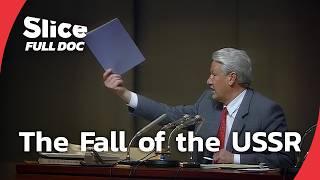
and the Communist Party lost all authority and the 15 republics particularly those that had joined the Soviet Union very late particularly the Baltic republics the three baltics Estonia Lithuania lvia pushed for for freedom and for the breakup of the Soviet Union and in in August of 91 there was an attempted coup by his own effectively by his own government which from which he was only rescued by yelson and that was really the death the death Nowell of the Soviet Union and of gorbachov if you go back to it its Beginnings the hopeful replacement of of
of an autocratic Zar with Democratic Socialist Republic and it it failed to do that uh the question is did it fail because a socialist economy was inherently incapable of providing prosperity and development for the people or was it badly run was it uh did it descend into corruption it was a strong military force it it was decisive in defeating Hitler and I think that's today one of the the enduring sources of Pride for Russians in the Russian Federation is the victory that they had over Hitler and that became that that happened because of of the
strong support of of the people but it was also known for its repression uh for the numbers of victims for its inhumanity and and the tremendous costs of this this experiment the final dissolution of the Soviet Union happened in a forest Hunter Lodge on the Polish border with a lot of vodka consumed that they they recognized it couldn't go on that they might as well split up and try and remain friends and then go back to Moscow and announce that the Soviet Union no longer existed gorbachov resigned himself to the fact that the Soviet Union
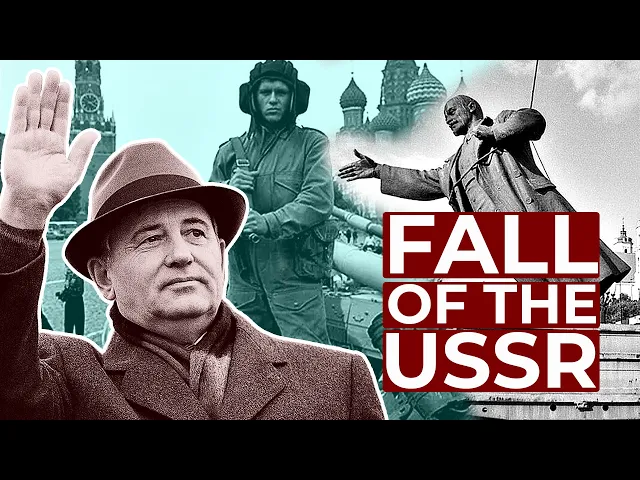
was finished it was no more on the 25th of December 1991 he resigns of as Soviet president and as commander-in-chief on the following day the Supreme Soviet vote the Soviet Union out of existence it will stagger on for a couple more days but it comes to an end on the 31st of December 1991 the USSR is no more broke apart into its constituent Parts lvia Lithuania Estonia had already voted for Independence Georgia became independent all the 15 Union republics that have been part of the Union all went their separate ways as independent republics the Central
Asian republics probably didn't really want to be independent but but they really had no alternative because there was no Soviet Union and so all all the parts of the machine if you like fell fell to pieces at the same time simultaneously and Russia emerged as an independent republic as did the other 15 republics the constituent republics of the Soviet Union which lenon and Stalin had designed never to become independent never to S sucede well now they all became independent at the same time and the Soviet Union was no more a