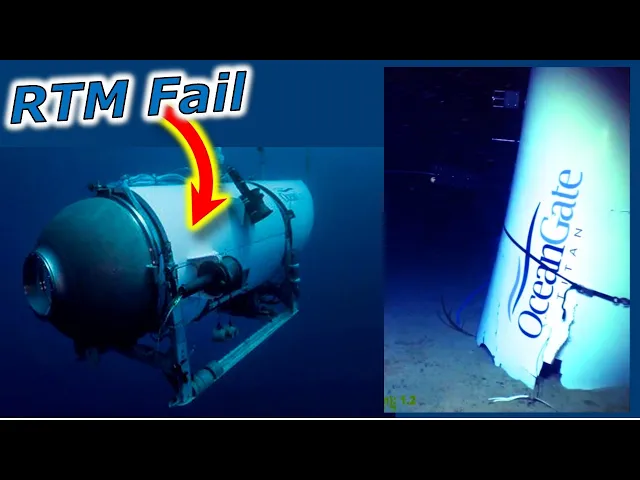
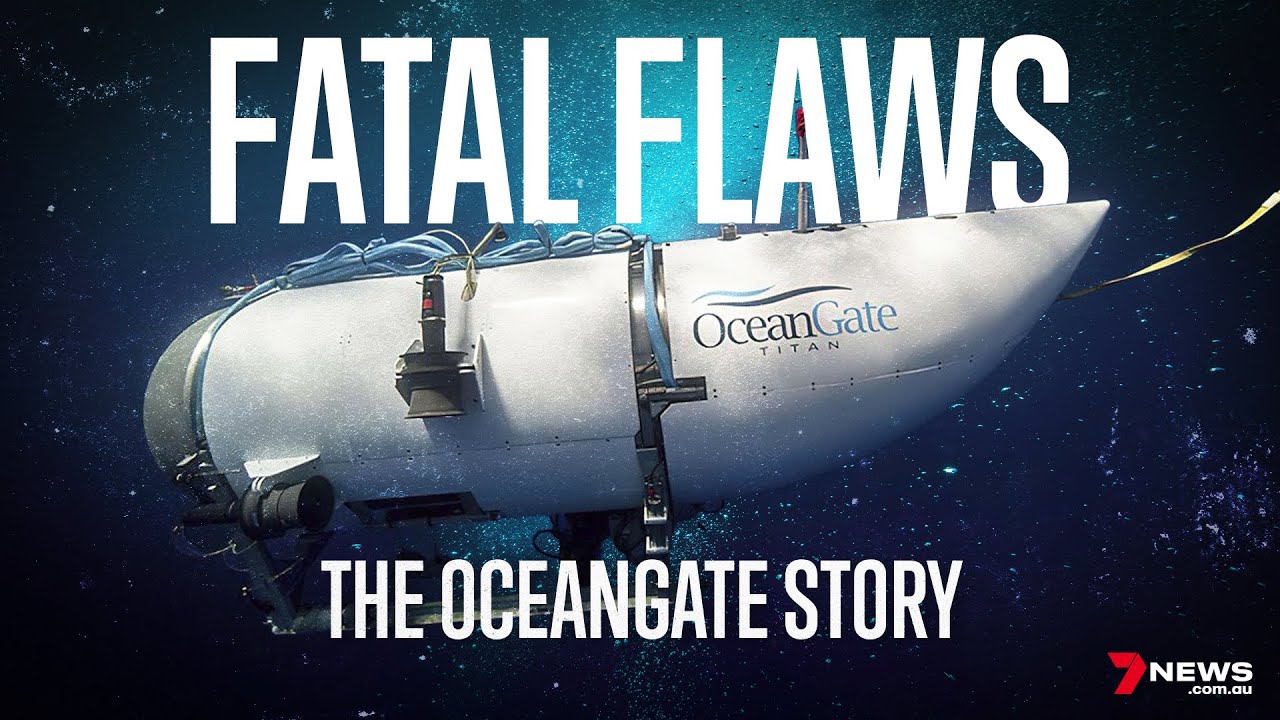
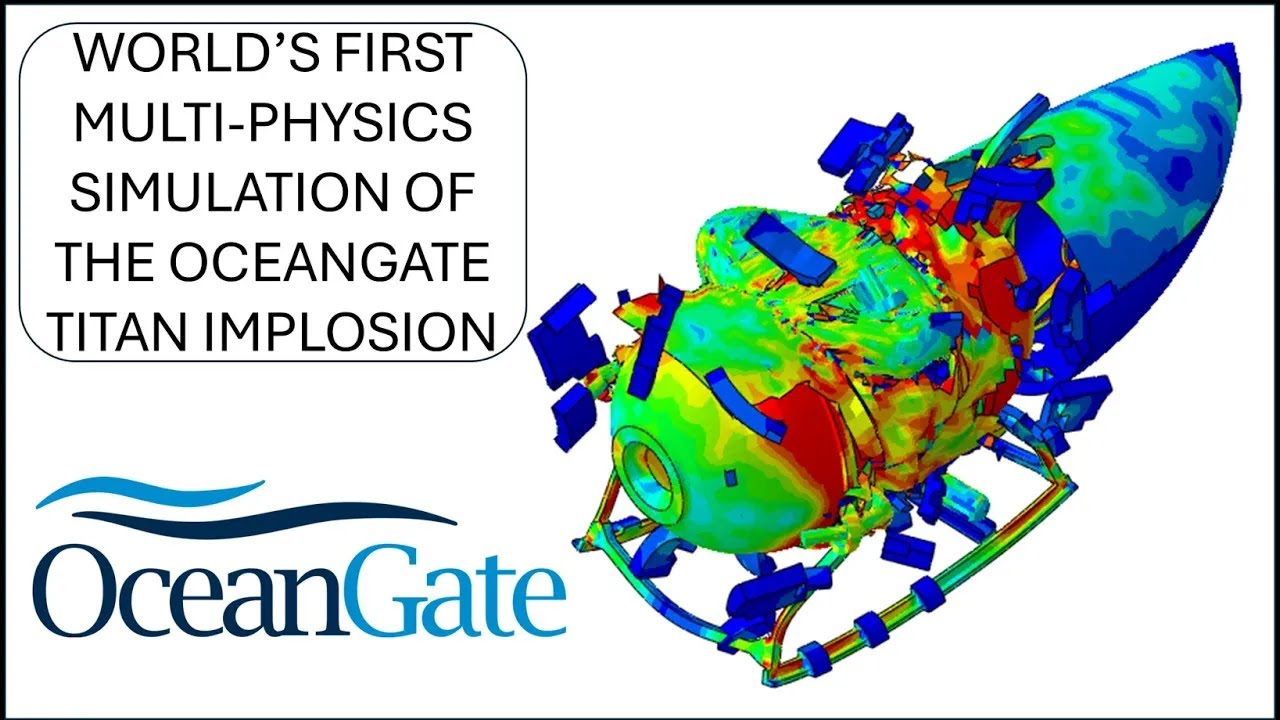
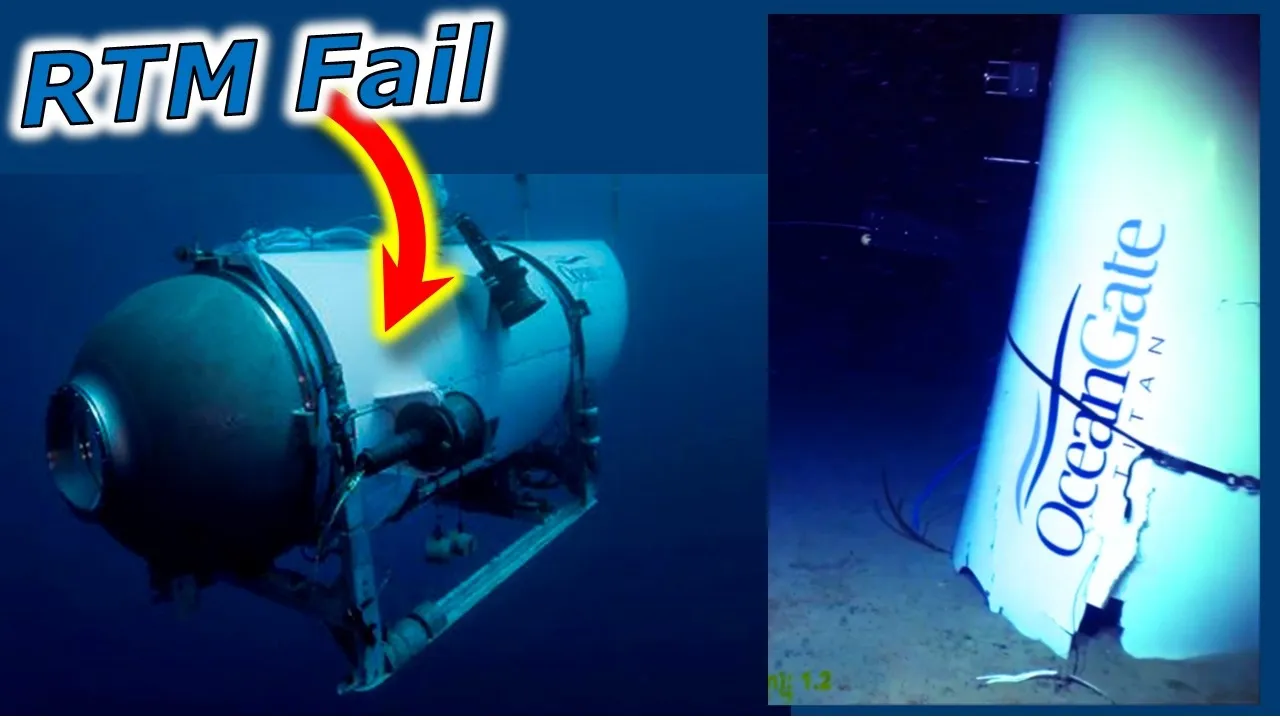
continuing on in the investigation of the Ocean Gate Titan submersible implosion the Titan sub was equipped with an early warning system designed to protect the human occupants a patented safety feature known as the realtime monitoring system this system of multiple sensors placed throughout the interior side of the carbon fiber pressurized Hall were designed to give a series of feedback from acoustic sensors and strain gauges to alert the occupants of the carbon fiber submersible to pending catastrophic damage of the hall it was supposed to give them enough warning time to be able to resurface to safety
before the carbon fiber Hall could implode or Buckle instantly but on the morning of June 18th 2023 history was made when the Ocean Gate Titan sub imploded leaving the world with questions on how this could have happened and now that everybody knows how this sub was engineered we are all wondering how could this real-time monitoring system have failed and allowed the implosion of the Titan sub to progress without warning like to be remembered as an innovator um I think it was General MacArthur said you remembered for the rules you break and you know I've broken
some rules to make this I think I've broken them with with logic and good engineering behind me the carbon fiber and titanium there's a rule you don't do that well I did it's picking the rules that you break that are the ones that will add value to others and add value to society so Ocean Gate CEO Stockton Rush he broke more than just a few rules he broke many strands of carbon fiber along the way so let's take a look at this realtime monitoring system here and try to determine what's wrong was there something wrong
maybe with the design with the patent with the algorithm was he ignoring key indicators and alerts in the data so let's take a look think I'll give this little tug of Lucky L check for safety violation so remember this version of the hle was version two and it is the one that went down to the Titanic and the one that imploded now here you can see it's being manufactured at Electro impact and being hoop wounded around a steel mandrel so then the steel mandrel is pulled out of the cylindrical carbon fiber pressure hole and the
ends of the carbon fiber pressure hole are then cut off as you can see by the red dotted lines there which the ntsp will use later sort of as witness panels and these are basically representative pieces that allows investigators later on to come back to the material and look at it and find any manufacturing defects which we of course know by now that they found plenty of those now one thing that you have to remember here is that this 5in thick cylindrical carbon fiber pressurized hle you can't pierce it you can't drill any holes into
it you can't do anything to it it must stay as one whole product so that's why they have to make this insert sleeve that goes inside the middle of it which they mount everything else too on the inside of the Ocean Gate Titan sub so before they do all of this you'll see here where they mounted all of these sensors for the real-time monitoring system and they're glued onto the interior wall of this carbon fiber Hall so we can see here they have eight acoustic sensors laid out around various parts of the carbon fiber hole
and then to measure the movement of the actual carbon fibers The Strain they use these strain gauges and these strain gauges are also spaced around in various parts around the interior wall of the Hall of the Titan these sensors are placed in pairs together 90° apart and of course the ntsp provided us with this handy D andd lookup table here showing us where on the hull all of these different sensors were placed okay so Stockton rush you know what he's trying to do here right with this real-time monitoring system he's trying to listen for sounds
of maybe some cracking of the fibers so those are the acoustic sensors and then the strain gauges he's trying to determine if the material is moving enough so now the problem with this though here's the whole problem I've had with this idea from the beginning is that this is not a proactive solution this ladies and gentlemen is a reactive solution so to me this is almost like the idiot light going off on your dashboard on your car when your car overheats right your car stalls out you got have steam coming out of your hood there
and then the if you're lucky and you have a high temp light that goes on you know whereas in reality I prefer to see a temperature gauge so I can see long before that there may be a problem and take appropriate action not wait until it's too close now I want you to take a look at this sound bite here of Stockton Rush speaking at the geekwire summit where he is talking about his real-time monitoring system he seems to put a lot of faith on These acoustic anomalies that he thinks the system is going to
detect and he's almost making it sound like it's a self-healing type of carbon fiber which I don't particularly agree with he thinks the problems are going to go away which is another scary thought um because the pressure and temperature at 1,000 MERS and 2,000 M and 3,000 m is always the same and so if it's making noises at that depth that it didn't make on the last dive then we can stop the dive we can go up we can find out what might have happened we did work with Janek Boeing NASA there's 667 layers of
carbon fiber uh in just a what's called a 090 uh axial and um um uh rotational uh layup which is not normally done but in the ocean that's all you see you don't get any torsional moments so it seems that Stockton Rush has a very low aversion to risk unlike folks like you and me who would be pretty careful like for example I don't like the idea of jumping out of a plane and I realized that people want to be Innovative and they want to take risks and do do some thrill sinking but even the
people that jump out of planes check to make sure that their parachute is packed properly and everything first it just seems like all of the risk elements were thrown out the window here okay so check out this father and son who were supposed to go on the Titan submersible down to the Titanic but when they met with Stockon rush they didn't like what they saw about his project and he believed everything he was saying and he said he was coming in on a a two-seater experimental plane that he built and I started think about he's
coming in on a two-seater experimental plane to pitch me out to go on a five-seater experimental sub that he built down to the ocean floor to see the Titanic and it was just it was it was uh he has a different risk appetite than I do I'm a pilot I have my helicopter Pilots license I wouldn't get into an experimental aircraft the way this works is see this green shape right here this line so as you start and if you look down the right side of the screen it shows you the depth so you're coming
down and you're descending descending till you get to here and you're at 3800 or so met below the surface so you're at the Titanic depth at this point and then you're moving across just hanging down at that depth for a few hours and then you begin your Ascent back up and so this right here is some of the the noise that they pick up and you're they often hear some at the end once once they're getting back up onto the Lars and being dragged back up up onto the boat because it apparently is very disruptive
to the whole unit and then the NTSB showed us after looking through the ocean Gates data log on the RTM system that three of the sensors never recorded any acoustic events during all of the 2022 Dives H see and this doesn't give me a good warm and fuzzy feeling at all this makes me very scared because now it just seems like okay you knew that through all of 2022 it wasn't producing any data and you're just ignoring three data points here and those could have been data points that maybe if those sensors were working maybe
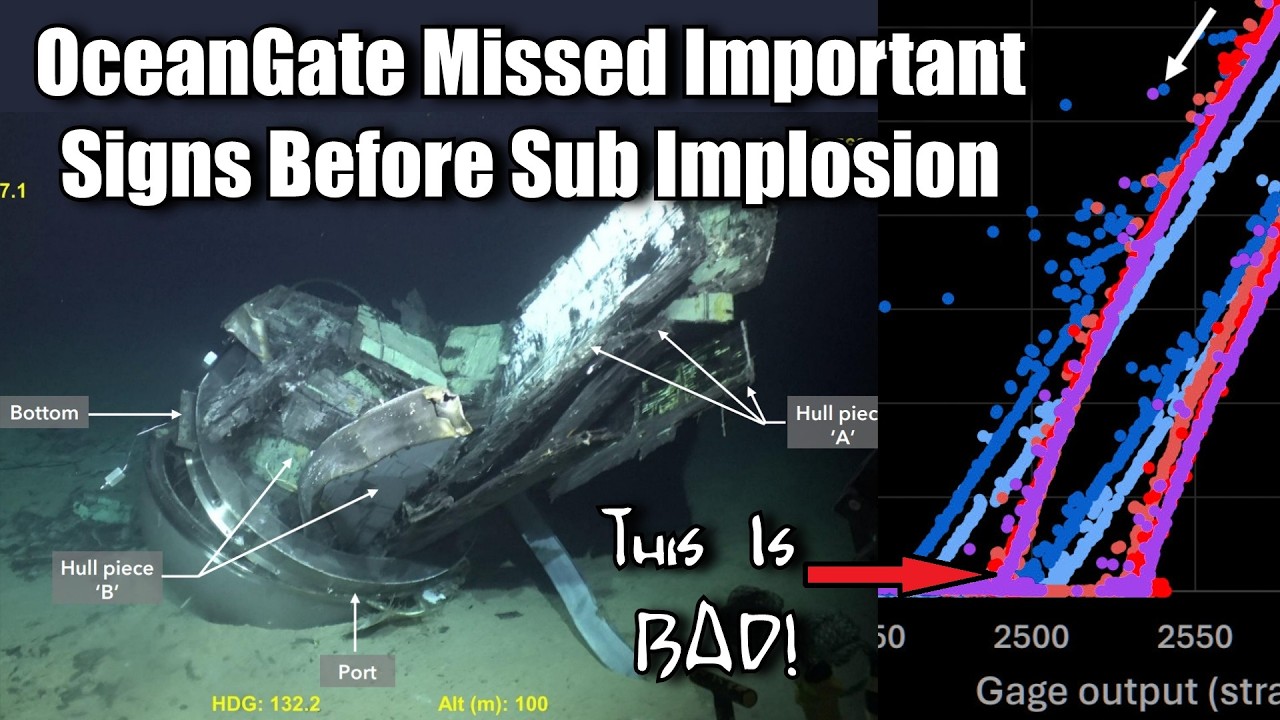
they would have been louder and they would have prevented you from going down and then you remember in a video I uploaded a few weeks ago I showed you how the NTSB reported this big spike here this audio Spike on dive 80 which is eight Dives before the Fatal dive and so you can see that acoustic anomaly there and Stockton Rush wrote it off as the carbon fiber hole was recting itself in the car which makes absolutely no sense to me and then also on dive 80 The Strain gauges reported the same type of response
at the exact same time when they all heard that big boom after they came back up from the dive so now I'm wondering if Stockton Rush was maybe misinterpreting the data or just ignoring it all together because now I'm going to show you how all of the Dives after this we started to see anomalies here in the readings and they don't seem to be doing anything about it so it has me questioning whether Stockton was is even really looking at these numbers later on after the fact as a postmortem and trying to take any types
of corrective action for it so here what they were showing you is two different Dives 75 and 80 so 75 is the dark line and dive number 80 is the blue line right so and they're both look at this they're like both pretty perfect there so everything seems normal there right oh but Houston we have a problem because now we're looking between the difference between Di 80 and 81 which is seven Dives away from failure now and suddenly you're seeing this happen now so 81 is the red and 80 is the blue so see how
the blue has that straight line that goes all the way down but if you look on dive number 81 here in that first th000 M they had a curve there something was different there remember dive 81 is the one right after the dive that had the loud bang so now every dive after dive you can see from 81 82 and 83 they're all showing this deviation curve so here's another one of my problems that I've always had here with this real time monitoring system is that These acoustic events that we see on the charts here
whenever you hear an acoustic event what you're hearing really is you're hearing fibers are cracking all over the place and when a fiber cracks it doesn't ever just miraculously heal itself once a fiber breaks that's it folks and it might even be groups of fibers at a time or even worse even worse it could be delamination going on too so this is why I think this was the early warning sign at this point and I believe possibly his real-time monitoring system if if you had paid attention to it would have saved you that's the problem
there I think they simply ignored what the data was telling them it was misinterpretation of the data so to get an idea as to why Stockton Rush decided not to classify the Ocean Gate Titan submersible let's hear from Roy Thomas who is an engineer from the American Bureau of shipping and he's telling us exactly the rules of what you can and can't do with submersibles and what materials you can use and what shapes you should be using and this will help explain why Stockton Rush decided to sidestep the rules that everybody else plays by so
typically what we have seen is anytime you go below a depth of 1,000 m sea water or 3,280 ft Sea Water the shape of the pressure Hull is spherical okay we have not seen cylindrical pressure hulls being used Beyond a depth of, M sea water the reason is a spherical pressure Hull is the best shape for resisting external pressure okay the stresses are evenly distributed around the hull so if you take a spherical pressure hull versus a cylindrical pressure of the same thickness when exposed to the same pressure you will see that the that the
hoop stress in a spherical pressure Hull is half that of a cylindrical pressure Hull okay so if you see a cylindrical pressure Hull being used Beyond a th000 m it is pretty unusual so you see this you have the American Bureau of shipping who classifies all the boats and the submersibles telling us directly that a spherical pressure hle vessel will far outperform a cylindrical shaped vessel and that the cylindrical shaped vessels are not even normally used below 1,000 M the important thing is uh this this code states that for a new construction pressure Hull no
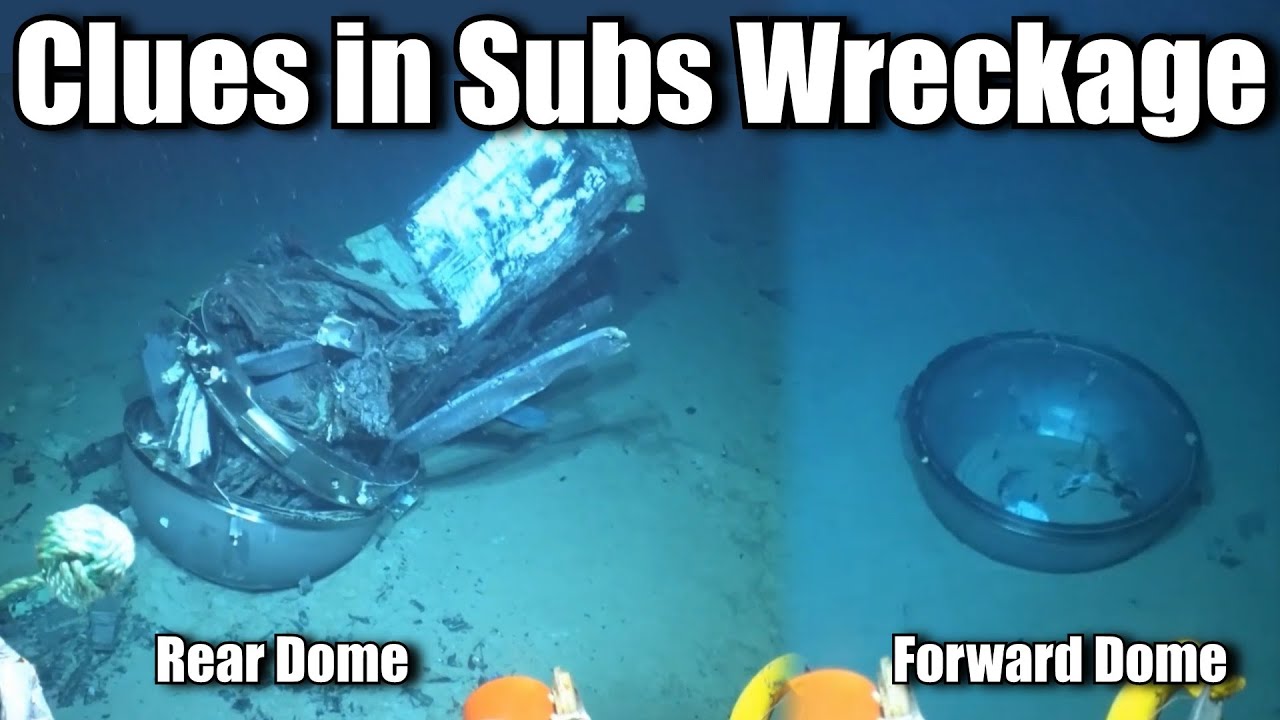
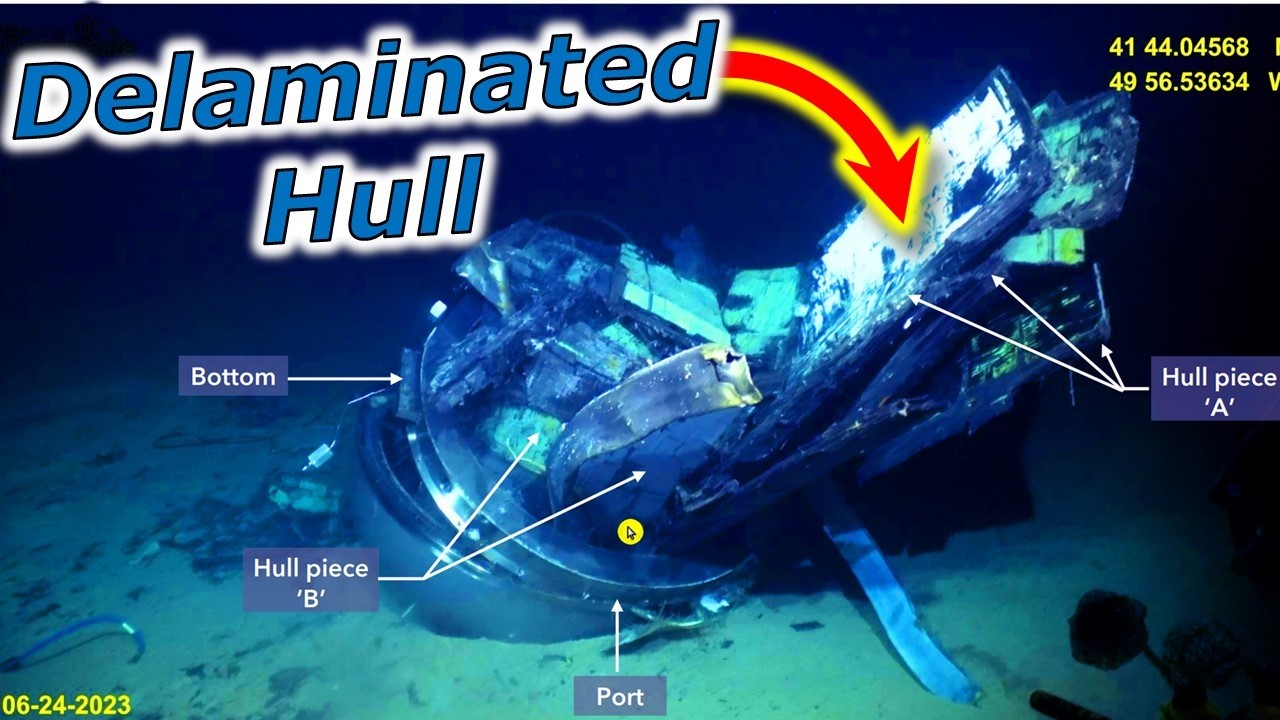
delamination and no cracking in The Matrix is permissible okay so if you have a new Hull with delamination or cracks it is not acceptable as per this code now I've showed you on some of my previous videos in the last couple of weeks on the Titan implosion how when they found the debris down at the bottom of the ocean floor a lot of it was just severely cracked and severely laminated and and of course later on the NTSB showed us those pictures that I I've showed you too with all of the voids those huge voids
and bridges of voids as well in the adhesive and these types of manufacturing defects are not permissible At All by the ABS classifications so had he gone for classification all of this could have been caught early on and the entire implosion might not have happened had they taken corrective action so one of the very important failure modes for thick shell carbon fiber composite sections under external pressure is snap through buckling okay now slap through buckling is an effect that has been observed in subc pipelines made of glass fiber reinforced Plastics okay now this buckling causes
sudden and catastrophic failure of the pressure Hull okay and it is thought to be triggered by shape imperfections for example if there is out of roundness that can trigger this buckling okay okay now snap through buckling is different from traditional buckling which is caused by Progressive over pressurization of the pressure Hull Beyond its design depth so when snap through buckling occurs it causes instantaneous delamination of the pressure Hull and instantaneous collapse of the pressure H which can occur in less than a millisecond okay so if you have uh sensors for real-time monitoring it will not
pick up any signs of this failure before it occurs okay so when he's talking about this buckling and this is the failure mode that I think actually happened I don't think this was a progressive but it just seems like it came out of nowhere you remember they sent that last transmission that says we're dropping two weights that just means they're slowing down they're getting ready to go near the bottom they had no indication that anything was giving them any type of problem and it just boom happened just like that and that's the way a buckling
failure occurs and when you look at the hall sitting there on the bottom of the ocean floor it has a large Buckle in it it so under the ABS underwater rules carbon fiber pressure HS are not acceptable materials for submersibles this is Ocean Gate testing a 1/3 scale model of the original um actually you could call it they called it Cyclops at the time this is the carbon fiber hle and here you can see they put the RTM sensors in there and you can see it actually running on the computers as they're collecting the data
off of it it's a test the biggest test we're going to have for some time so much pressure gets the heart pounding it has to be done at night Tony's setting up sensors inside a test Hull about a third the size the real one will be then he'll put it into a pressure chamber to simulate diving in the ocean nice but before we do that we want to make one last check that we can communicate with the instrumentation [Music] inside Those sensors are key to Stockton's entire project during the test they'll hopefully let him know
if the H is about tolow a crucial heads up to get out of Dodge you want to know that when you do hear a pop or a crackle or or a noise from the hull that uh that gives you sufficient warning it shouldn't be the case that at 3,000 M it's dead quiet and then the hull fails a few moments later not knowing when a carbon fiber Hull is making normal sounds or sounds that mean it's about to crack in half is one reason it hasn't been used before in man subs and I think we
may have solved it with our real-time monitoring system there's only one way to find out what a hull failure sounds like put the pressure on so we're holding a 2,000 PSI so here you can see the RTM system collecting all of the data the question is not as much it when it fails but that we have sufficient warning to be comfortable that when you put people in the sub you won't have a quiet Hull and then a failure but what pressure will that be the acoustic measurements we will see on the Monitor and what would
look like an Excel spreadsheet of data flying across the screen but the we will not hear anything sometimes you hear a little bit of cracking if they're pretty big uh event but if we if we go to failure then we'll all hear it it's many six of dynamites of energy so it's like having your head next to a shotgun and you don't know when somebody's going to pull the trigger it's been relatively quiet at 6,000 so we're going to go up to 6500 shall we 6500 new territory I would say that was it the model
imploded at 6500 PSI about 15,000 ft underwater yes this will be interesting let's see what she looks like we had an extreme Extremely Loud implosion shook the building we had seen a number of acoustic events of increasing intensity and that's where it failed was 6,500 the next step is to Crunch the nearly one terab of data that they got as we analy the data more we'll be able to um trace the Fingerprints of a failure uh way in advance of when it happens if Stockton and Tony can do that today's failure will be a huge
success [Music] so now we see that the 1/3 model finally imploded at about 6,500 PSI which is probably why Stockton Rush didn't think that there was any problem ever going down to the Titanic depths and which could be one of the causes I think of why he might have ignored some of the other warning signs coming from the RTM data he simply didn't think that it was an issue until you get to 6,500 M okay so here is Stockton's patent on the real-time monitoring system and you can see there's his name right there Richard Stockton
Rush III he's got his diagram and he shows the U the acoustic emission detector on the interior locations and he also shows the strain detectors on the interior locations in various places the present disclosure also relates to methods and systems for analyzing data determining background conditions assessing and validating the health of a composite material or structure deter determining alarm conditions and predicting failure conditions and the like and so right here it says programmed alarms and notifications may be implemented to alert an operator when and if the vessel or component of the vessel is compromised or
in potentially unsafe condition so right here the main core of their algorithm you can see right here it says in some embodiments methods and systems as described here in compare realtime acoustic and or strain measurements acquired during a current operation with acoustic operation right here see of the same composite structure and then here he says it's compared for example to values acquired during a previous operation right there these would all have to be realtime values at the same right here or similar vessel depths acquired during previous dive of that vessel so you wouldn't want to
use for example a dive down of the andri Ador because that's only what is however that is few hundred feet you would have to compare the data from a previous dive down to the Titanic in this case okay so here's my take on why I think there are some of the reasons why the real-time monitoring system failed here on the Ocean Gate Titan sub well first of all here the main item is they went with a big old cylindrical Hull instead of a spherical Hull if you had done that maybe just maybe things might have
turned out different and then you wouldn't even need the real-time monitoring system the other problem problem too with carbon fiber is that we don't have a solid database of previous testing by standards bodies or third-party labs and so you can't just go and use off-the-shelf software or really pretty much anything to help determine what parameters you're supposed to use to determine hey if I go past this threshold of a voltage does this mean that the sub is going to implode so right off the bat it looks like they just went with whatever Stockton wanted to
go with and we don't know if he made bad assumptions or not also you had three channels not producing any data could one of those channels have been one that would have given you the necessary alarm you never know also if you remember Boeing at one time had suggested going with a 10in thick hole the thickness all the way around and Stockton Rush had dropped it down to 5 in so I've always wondered hey if they had left it at that original 10in thickness do you think maybe it would have been more resilient to the
pressures and you wouldn't have all of this fatigue that it wouldn't be able to push in and and deform the shape or maybe crack any fibers so that one still bothers me to this day uh another issue you have here is what about possible problems with the autoclave process remember they had to wrap this carbon fiber one inch at a time and then stop and they had to make five trips over to jiki Industries there to put this thing into an autoclave so remember you have to bag it it transport it by truck put it
in the autocave transport it back and man a lot of things can go wrong there um so one of the things too you can look at is maybe the real-time monitoring system algorithm is flawed itself maybe it's insufficient you know you're choosing random layers of sound level to trigger an alarm and who sets these arbitrary numbers stockt in and it's based on what criteria so we don't have any basis for that I think also that stockt and Rush put way too much faith in the fact that he had a patent on his system which may
have been flawed to begin with and the reason why I think it's flawed is because it is more reactive type of engineering than it is proactive engineering so even though stock and Rush thinks we're getting enough advanced warning apparently we were not getting enough advanced warning and maybe he didn't know that buckling failures give zero warning one thing I've always wondered too is do you think maybe they could have just gotten some kind kind of metal rings and just added a little more support near the ends and maybe in the middle as well for example
here's our carbon fiber hole and so what I was proposing is let's say you got some metal rings and you put one sort of right here near the end to help support it a little bit so it couldn't be pushed in that much by the pressures and then maybe you do one in the middle as well and then you do another one here on the opposite end so I think that this might add some more additional support to the carbon fiber Hull now if you want to binge watch all of the videos that I've done
here on this channel on the Titan sub you can go to my homepage here on YouTube and you can type in Titan and search and it will give you all the results of all of the Titan videos I've done and I will also put a link down in the video description to some of the more recent videos that I've done here on the Titan also make sure you check out this video over here on the FIU pedestrian bridge collapse that's probably one of my best engineering analysis yet and then after that make sure you check
out this other video here that I did on that kitchen remodel with the double decker cabinets and the 45 degree refrigerator so thank you so much for joining us folks today and keep those questions coming and we'll see all of you on the next one