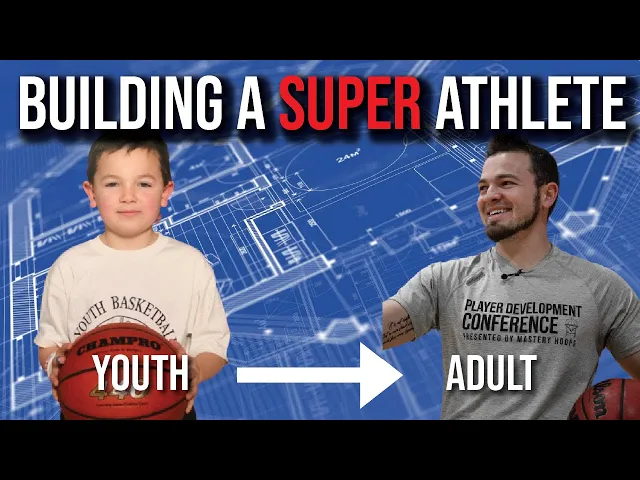
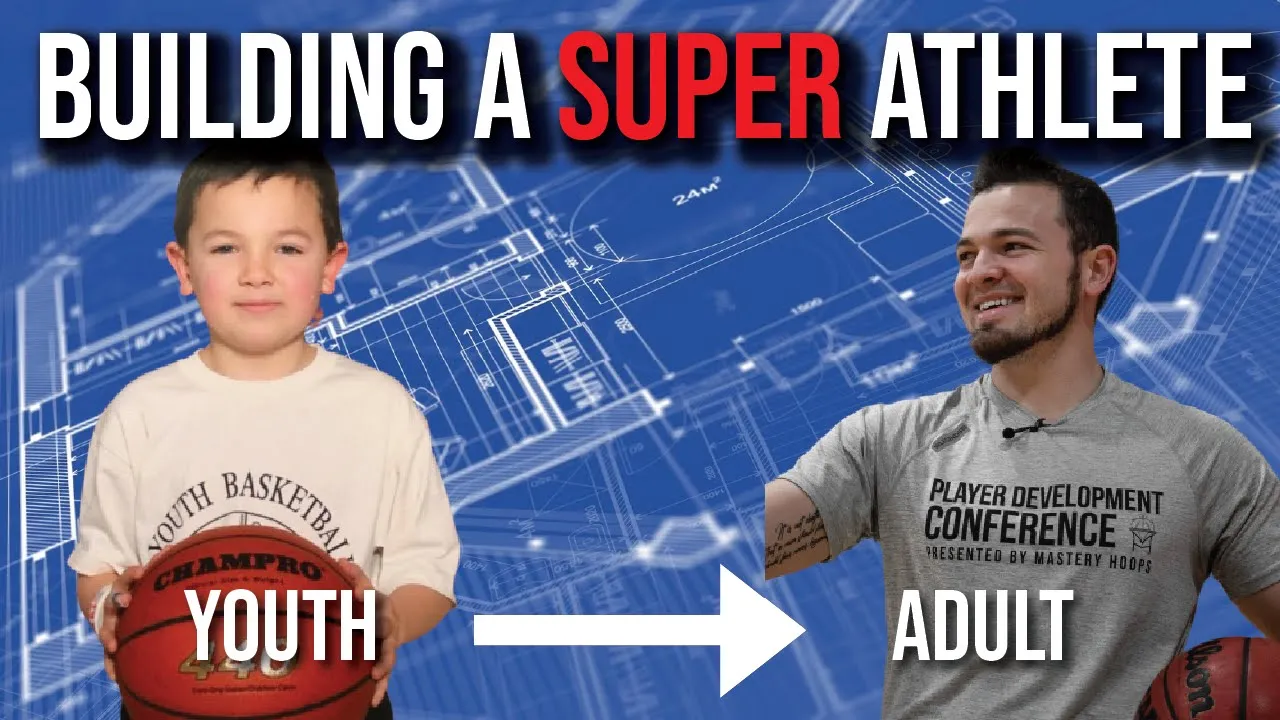
there are so many different factors that go into someone becoming an elite level athlete and i think for the most part a lot of coaches parents and athletes get the wrong idea of what that process actually looks like and how most elite level athletes actually become elite level athletes so in this video i'm going to kind of give you my blueprint if my sole job was to take a kid from the age of 0 all the way to 21 and build the best athlete possible how would i do that and what would that process look
like so my first point up until the age of 10 really all the way up until 18 but especially up until age 10 we should not be forcing them to work out to practice to go play when they do not want to be playing basketball right everything up until this age should be because they want to do it if we're forcing them to go train or go outside and go play basketball when they don't want to it's going to start to create some resentment they're not going to enjoy the sport because they're being forced to
do it even though they don't want to so really in general this is just going to hurt the entire cause that we're talking about in this video so up until that age try to make everything about just fun they want to go play encourage them if they want to allow them the resources to go and play if they want to whether it's a hoop outside or them being able to go and go to a court when they want to but the biggest thing up until this age is really just fun and exposure and going off
that point point number two is there should be no formal training or workouts that this kid should be attending right everything should be competitive games with their friends or with you as the parent or with their coach everything should be actually playing the game of basketball with their friends three on three five on five there should be no real formal training working on specific skills right again to kind of go back to that whole prodigy thing is most of the kids that you see that are prodigies at age 10 12 they don't become high-level players
because they relied on those fine technical skills that they had early on so they just didn't have to develop everything else around that most kids who don't have that skill have to develop so really again everything is just about exposure first and then accuracy second so we shouldn't be focused on these technical skills refining their form at 10 years old again everything's about fun allow them to enjoy the game play as much as possible and there should be no formal workouts or training that they should be attending so point number three is this kid should
not be specializing in basketball at all at this age they should be playing as many different sports as possible even if they just play basketball from an organizational standpoint they should be playing other sports outside that for fun right playing soccer with their friends playing baseball playing tennis right whatever sports that they want to play or that they enjoy they should be doing this is going to be super beneficial for them to get away from basketball so they don't burn out early to reduce the chance of getting injured but also just give them exposure to
as many different movement patterns as possible so we're starting to build that coordination and foundation for that athlete down the road and when they're playing these sports as a parent we need to make sure that we're praising effort as opposed to performance right so especially early on whether it's basketball tennis soccer don't don't critique them based on their performance critique them based on their effort if we're starting to critique them this early even in general all the way up until they're 18 based on their performance they're going to be more worried about that at this
age it does not matter how well they're performing in these games the biggest thing is development and effort they enjoy working hard and they get praised for working hard they're going to continue to do that but if they're getting praised based on their performance that's all they're going to be worried about and that's going to hurt their development because they're not going to stretch outside their comfort zone which is going to help them improve again it doesn't matter how well how many points your child scores or if you're a coach how many points that this
certain kid scores at 10 years old right it's all about getting better and them being comfortable stretching trying new things getting outside their comfort zone messing up and being okay with that especially early on if we ingrain in them early that performance is the biggest and most important thing at this age again we're going to be hurting their development long term so my last point for up until age 10 is these kids need free time and they cannot be over scheduled now i totally get where this comes from again these parents want to provide as
many opportunities as they possibly can they're going from a training session to aau practice to travel practice which is great they're doing a lot of different things but everything is supervised and they're also only playing one sport so when they're in this supervised environment again they're not challenging themselves as much they're not stretching they're not just trying as many different things what you see with a lot of kids when they're doing unsupervised activities maybe they're at a park with their friends playing tag jumping climbing on jungle gym playing soccer they're trying different things and they're
comfortable stretching their comfort zone because there's no parent or coach telling them that they're messing up or they have to do it this way right what you see with a lot of these elite level athletes is they did a lot of supervised sports and activities and playing at the park and because of that they were able to develop their game because they weren't worried about the judgment of a parent or of a coach so even though we're trying to build this elite level athlete and again this is where a lot of the misconception comes in
is we need to give them as much exposure to the game playing as much organized basketball as possible we need to be helping them training with them at all times it's actually really the opposite give them as much exposure to the game on their own allow them to go play with their friends at the park by themselves play tag with their friends by themselves and this is where a lot of that exploration and learning is going to come from which they're going to benefit a lot down the road so now we'll get into that 11
to 14 year old range this is where often a lot of parents again really try to start to push that issue to putting their kid on the best team really putting them in organized training trying to just focus on one sport and again this is where parents often go wrong and i completely work get where it's coming from again you want your kid to be the best that they possibly can but oftentimes that turns around to bite them in the ass so at this age the child should still be playing multiple different sports would not
recommend just focusing on basketball at this stage allow them to explore as many different opportunities and sports and movements as they possibly can at this stage oftentimes aau comes in as well which can absolutely be beneficial but make sure you're putting them on a team that is going to help them develop right it's not about exposure at this age i know a lot of parents like oh 8th grade years so important or 7th 7th grade is so important for their exposure no it's not your kid is not going to get any certain exposure that's going
to really make that big of a difference maybe if they want to go to a prep school maybe but at the end of the day if your kid's good enough they can go to a prep school or they can do that later so again 11 to 14 we're still just focused on development so put them on a team that's going to help them do that don't put them on the best team where they're the worst kid on the team they're not going to get better because they're not getting minutes they're not getting reps in practice
try to get them on a team where they're somewhat in the middle to maybe a little bit on the better side of the team right they're getting plenty of minutes in prac in practice plenty of reps and games so that way they can develop their skills also coach really matters at this point in the game i'm not going to get too much into that but again make sure a coach that is focused on development not critiquing them and making sure that they're performing to the best of their ability and trying to win championship games in
seventh grade aau right that does not matter development is the main focus now from a training perspective this is a good time for them to start to get into some organized training get into some athletic development now that doesn't necessarily mean strength training and lifting but if the kid wants to do that they can again that's another major point don't force them into training at this age if they want to start working out with a trainer if they want to start lifting allow them to but do not force them to do it again they're just
going to resent it and not want to do it as they get older so with that said what should workouts look like at this age from the 11 to 14 year old range i still think it's mainly about exposure i wouldn't at this age try to completely change a kid shot or just completely solely focus on very specific skills i don't want to box a kid in too early this is what you see a lot of times with travel coaches oh this kid's a shooter so the kid just keeps working on shooting or this is
a big guy let's just work on big guy skills and then that kid starts to not grow anymore now they're a point guard right so i'm still gonna work on a very broad range of skills at this age i wouldn't fine-tune anything be too specific and then everything would be getting them a lot of exposure to game-based activities right so two on two three on three working on spacing right this is where it's teaching them how to play the game as opposed to just working on fine-tuned skills if they can play with an environment they're
getting a lot of reps in terms of their reads passing reads finishing reads all of these kind of things then we can fine tune the specific skills later as they get a little bit older but that's how i would have typically trained 11 to 14 a lot of game-based activities still a lot of competitive stuff still making it fun but being a little bit more specific somewhat with what we're working on but everything's still really based on the games based approach a lot of reads and playing within the game itself spacing cutting handoffs pick and
roll situations all that kind of stuff and then we'll work on the specific skills later on and with that training parents should still be as involved as little as possible if you're working with your child in training and that's how you guys are working out completely okay but try to not be involved as much as possible again this is a really tough dynamic some parents do it really well most parents do not and if you are going to work out with your child don't judge them based on how they're performing just judge them based on
their effort right if you're critiquing every little thing they're not only going to get resentment for you but they're just not going to want to work out which isn't going to help the cause at all and then my final point at this age is make sure you're giving this kid time off right a lot of parents are 12 13 14 years old the kids playing aau year round they're playing a sport at all times and they never get time off to be a kid to do what they want to do right so still give them
time off they're still a kid allow them to be a kid there's still a lot of time left for this kid to develop and improve so with that said now we'll get into the 15 to 18 or 21 year old range so with this age range this is where i would say it's okay for a kid to specialize in one sport they make that decision again not the parent they say i don't really want to play these other sports i just want to focus on basketball this is what i'm passionate about this is what i
want to do every day that's completely okay i would still try to micro dose with other sports just to reduce injury reduce burnout and just give them exposure to other movements that they don't normally get during just basketball and then this is also where aau and exposure becomes a little bit more important again at the end of the day you can get all the exposure you want but if you're not the athlete that you need to be it's not going to matter anyways right so i think again even from that 11 all the way up
until 18 year old range a lot of parents focus too much on exposure if your kid's not good it doesn't matter if they're getting seen right so it's obviously a balance they need to develop and get exposure your kid can be as good as you want if they never get exposure they're never going to make it to the highest level possible so it's definitely important getting on to a better team is going to become a little bit more of a priority in terms of exposure it all depends on your area your aau team do you
play for a prep school team all that kind of stuff what kind of connections do your coaches have all really depends is very situational but i would make this a little bit more of a priority to make sure that your child or if you're an athlete watching that you are getting seen in some capacity now in terms of training this is where it can become much more specific right that player most likely has a certain type of game that they're going to be playing with for the rest of their career maybe they grew now they're
six foot eleven they're most likely not going to be a point guard not that they can't but they most likely have some sort of a game that that you can kind of build around and be a little bit more specific and because we worked on all those reads playing within a system they know how to do all that now we can fine tune those skills right so it's a lot easier to teach a player who has the reads to just teach them the skill to accompany that read and just fine tune that skill it's a
lot harder to teach a kid that has the technical skill the right reads and to do everything at the right time so that's why again at the beginning i said exposure first accuracy second it's a lot easier to do that you're going to see a lot quicker improvement if you do it that way now it's also important at this age that the person your child is working with if they're doing training with somebody they actually know what they're doing in terms of on court as well as off court in the weight room as well this
is where a lot of kids can really thrive and make big jumps if they're not the most athletic kid or they haven't really fully developed once they start lifting and they're training in a very specific manner and they're getting the right amount of work in the right way this is where they can see a huge jump in their game and this is where a lot of kids if they just did this they'd see huge jumps but often they don't do that so i would definitely prioritize athletic development and some sport of specific training at this
age not that it's the end-all be-all you don't need to do that but if you don't have the best genetics in the world you're often going to need some sort of work in the weight room in terms of athletic development now even if you do all of this still might not be enough basketball especially even other sports is very very determined on genetics right you can tell your kid all you want hey just work hard you become the best player in the world not true to a degree right there's obviously some exceptions but for the
most part the average wing span the nba six foot nine if you're my height five foot seven your wingspan's five nine five eleven you're already at a disadvantage if you're not six foot four you're already at a disadvantage there's so many things that you can do so it's not necessarily about reaching the pinnacle making it to the nba but maximizing the potential that you had as a player so this is what i would say if you want to maximize your potential from a whole all the way from zero to 21 this is that recipe that
i would do so this is often the blueprint that you guys see a lot of these elite level athletes have they played a lot of different sports they didn't have a parent overlooking their shoulder at every turn at every single game every time that they wanted to go outside and just mess around and play hoop or go to the park they got a lot of exposure early on and then maybe they fine-tuned with training at 16 17 18 years old then they started to get in the weight room and then they started to right so
everything kind of coincides to build towards that bigger picture to become the best athlete possible so it's not just get your kid into the door get them training at eight years old get them playing aau focused on basketball often times that's the worst recipe possible to getting your kid to the highest level possible so rambled a bit hopefully there was some value in this that you guys could take away let me know your thoughts is there anything that i missed within this blueprint obviously this can go so much deeper this could be an hour-long presentation
if i really wanted to be but there's a lot of different factors that go into play the coach the athlete parent all of it works into building that elite level athlete so hopefully this helped you guys if you guys enjoyed it like comment subscribe appreciate it see you guys soon