Did you know that losing strength in your legs after 50 is not normal? It's a sign that something much deeper is happening in your body. Maybe you've noticed that climbing stairs is harder, your thighs look thinner, or keeping your balance isn't as easy as it used to be.
You're not alone, and it's not your fault. What you're experiencing is called sarcopenia, the progressive loss of muscle mass related to aging. And if you do nothing, sarcopenia doesn't just progress.
It feeds on inactivity, weakening your muscles, reducing your mobility, and increasing the risk of falls, fractures, and even loss of independence. But here comes the part that almost no one tells you, yes, you can reverse it, and you don't need weights or a gym to do it. That's why in this video, I'll show you how to regain leg strength after 50 with just three simple exercises designed for older adults like you that can be done at home without harming your joints and without expensive equipment.
If you're ready to stop feeling weak and start moving with safety and confidence again, this video could change your path. Exercise one, traditional squat. Starting at age 50, many people begin to notice a silent but significant change in their bodies.
climbing stairs becomes harder. Getting up from a chair requires more effort and legs that were once firm feel weak or unstable. What few know is that this is not an inevitable consequence of aging, but a clear sign of sarcopenia, the progressive loss of muscle mass and strength related to age.
One of the first muscle groups to be affected by this process are the quadriceps and glutes, fundamental pillars for mobility, balance, and independence. In this context, the traditional squat emerges as a powerful and accessible tool capable of reversing part of that deterioration without the need for machines or a gym. This exercise performed solely with body weight allows for deep engagement of the lower body muscles without straining the joints, making it a safe and effective option for older adults, even those with knee or hip discomfort.
Doing squats regularly helps rebuild muscle mass, improve functional endurance, and activate muscle groups forgotten after years of inactivity. In older adults, where the risk of falls and loss of autonomy is high, this type of exercise can make the difference between relying on a cane or moving freely. Moreover, squats not only benefit the lower body, they also strengthen the core, improve posture, and stimulate neuromuscular coordination.
all essential aspects for maintaining a good quality of life. In a time when many seek quick fixes through supplements or expensive gadgets, going back to basics to functional movements like squats is returning to what the body truly needs to stay strong, agile, and self-sufficient. The effectiveness of the traditional squat in older adults is well documented in the scientific literature.
Research published in the Journal of Strength has shown that squat training programs significantly improve leg strength, dynamic balance, and functional capacity in people over 60. A clinical study conducted on adults between 65 and 80 years old showed that those who performed simple squats for 12 weeks increased their muscle mass by 8% and reduced their time to rise from a chair by nearly 30%, thus improving their independence in daily tasks. These findings are even more relevant when we consider that according to the WHO, one in three people over the age of 65 experiences at least one fall per year, many due to leg weakness.
From a physiological standpoint, squats activate a high number of muscle fibers in the quadriceps, glutes, hamstrings, and calves, triggering a positive hormonal response in the body. This stimulus promotes the production of IGF-1 insulin-like growth factor and growth hormone, both fundamental for muscle regeneration. As a closed kinetic chain exercise, squats also generate bone stimulation in the hips and spine, helping to prevent osteoporosis, which often coexists with sarcopenia in older age.
Additionally, performing them regularly improves basal metabolism, which translates to better weight control, lower insulin resistance, and better cardiovascular health. All this without needing to leave the house with no joint impact, and without relying on costly training programs. But that's not all.
To ensure this exercise is safe and effective, it's essential to respect the technique and adapt it to your current capabilities. The starting position should be with your feet shoulderwidth apart, torso upright, and core engaged. From there, begin the movement by bending the hips and knees as if you were going to sit on an invisible chair.
Keep your weight on your heels, knees aligned with your feet, never in front of them, and lower only as far as you feel comfortable. There's no need to go all the way down to benefit. Then slowly rise by contracting your glutes.
For those just starting out, a good option is the assisted squat with a chair behind you, lightly touching it as you descend. This provides stability, confidence, and safety, especially if you're afraid of losing balance. Start with two to three sets of eight to 10 repetitions three times a week.
If you can't complete the set at first, don't worry. Every attempt counts. What matters most is consistency.
As you gain strength, you can gradually increase the repetitions or add slight resistance such as a resistance band or a light backpack. Remember to maintain steady breathing and perform the movement in a controlled manner without rushing or bouncing. If you feel pain in your knees or lower back, adjust the range of motion and consider consulting a physical therapist.
With practice, this exercise can restore your functional strength, confidence, and ability to carry out your daily activities with full independence. Exercise two, standing heel raises. Standing heel raises are a simple yet tremendously effective exercise that targets the calf muscles, gastromus, and solius, as well as the tendons and joints of the ankle.
This exercise allows you to reconnect with your base of support, strengthening not only the muscles but also proprioception, the body's ability to know where it is in space. As we age, this ability diminishes along with balance and coordination. That's why this exercise is especially useful for older adults as it helps restore stability while walking, prevent stumbles, and improves safety with each step.
The calves perform essential biomechanical functions. They absorb impact, propel the body during walking, and stabilize the ankles. However, after age 50, muscle mass in this area begins to decrease rapidly if not stimulated through exercise.
This weakens gate mechanics, makes steps more unstable, and increases the risk of falls. According to a study published in Gate and Posture, older adults with weaker calf strength are up to three times more likely to fall than those who train this area regularly. Heel raises by strengthening this critical zone not only reduce the risk of accidents but also improve postural alignment since weak calves can alter how body weight is distributed causing strain on the knees, hips, and lower back.
For this reason, training them regularly is key to maintaining a firm, stable, and safe gate at any age. The importance of strengthening the calves in adulthood is not just functional but also metabolic and circulatory. These muscle structures act as a venus pump that helps return blood to the heart from the lower body.
When they are weak or inactive, this venus return becomes more difficult which can contribute to swelling, chronic leg fatigue, varicose veins, and even deep vein thrombosis. Studies published in the Lancet and the Journal of Vascular Research show that ankle flexion extension exercises such as heel raises significantly increase Venus return and peripheral circulation, especially in sedentary individuals or those with limited mobility. From a neuromuscular standpoint, heel raises also stimulate the activation of the soius, a deep muscle that is engaged more during slow sustained movements.
This muscle is essential for ankle stability and posture during prolonged standing. Meaning the ability to stand upright without losing balance. As we age, this ability to stand for extended periods without fatigue diminishes, but it can be restored with specific training.
Furthermore, by strengthening the calf muscles, the ankle joint is also protected. Interuscular coordination of the leg improves and gate biomechanics are optimized reducing strain on other areas like the knees. In summary, this simple exercise represents one of the most effective ways to improve the overall functionality of the legs in older adults with minimal risk of injury and great benefits.
Performing standing heel raises correctly is key to gaining all their benefits. Start standing with your feet hipwidth apart and gently support yourself on the back of a chair or against a wall if you need extra stability. From there, engage your core and slowly lift both heels off the ground, trying to rise as high as possible onto the balls of your feet.
Hold the top position for two seconds, feeling the contraction in your calves, and then slowly lower until your heels touch the ground again. This movement, although it seems simple, requires control and attention. To begin, perform two to three sets of 15 to 20 repetitions three times per week.
As your calves grow stronger, you can increase the repetitions or add difficulty. For example, by doing the raises on one leg or holding a light dumbbell. If your balance allows it, you can perform a few reps without support to challenge your stability further.
It's important to maintain steady breathing throughout the exercise and not lock your knees. In just four weeks, many people report significant improvements in their walking, less fatigue in their legs, and a greater sense of firmness when standing or climbing stairs. Exercise three, step up.
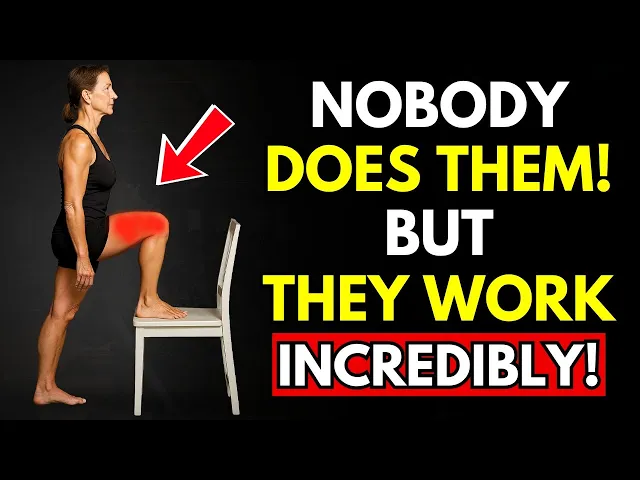
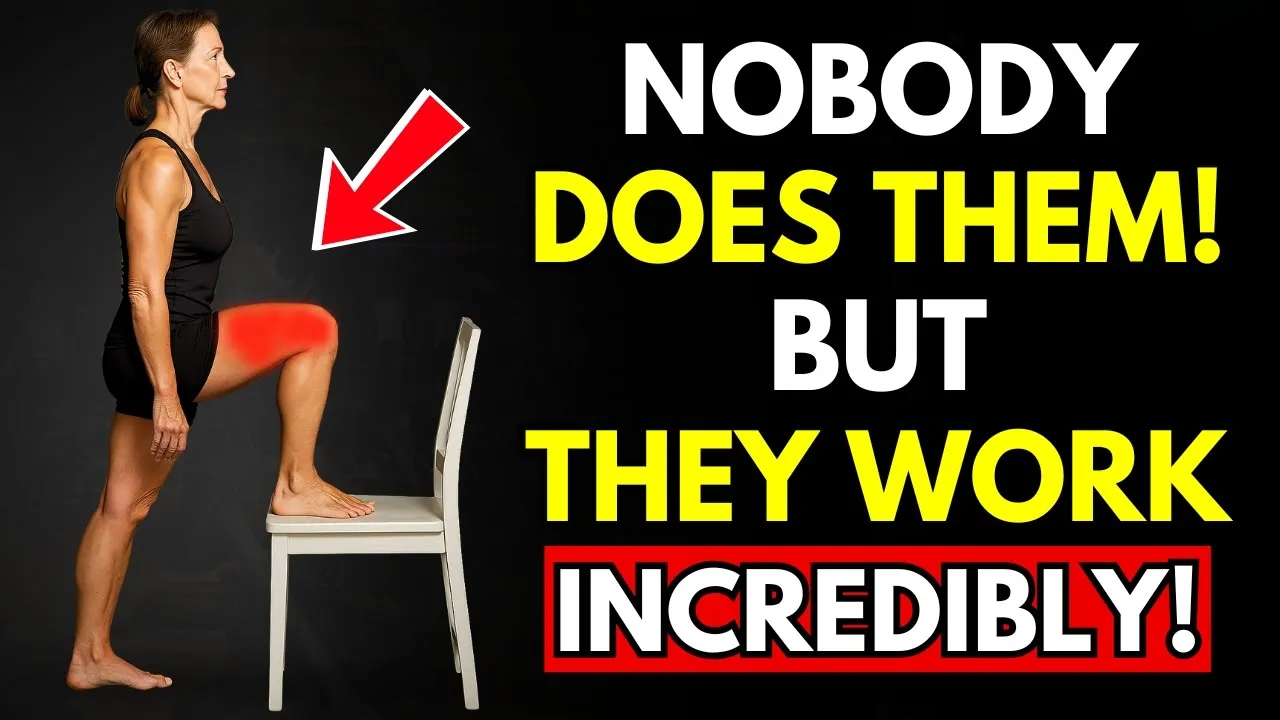
The step up is one of the simplest and most functional exercises out there, and at the same time, one of the most effective for improving mobility and strength in older adults. Its power lies in the fact that it mimics a daily movement, climbing stairs, something most people do every day without thinking until it becomes difficult. If you've ever felt that you lack the strength to lift a leg, that you lose your balance when stepping up, or that you need to hold on tightly to the handrail, you're probably experiencing a loss of functional strength in the lower body muscles.
This exercise specifically targets the quadriceps, glutes, hamstrings, calves, and core, key muscle groups to support and move your body effectively. Additionally, since it focuses on one side of the body at a time, it also improves balance, coordination, and lateral stability, all of which are fundamental for preventing falls. Unlike other exercises that require machines, weights, or padded surfaces, the step up can be done at home with a simple, sturdy platform, a step, or a low stair.
It's ideal for older adults because it allows for progressive functional training. In other words, you can start with a low height and gradually increase it as you regain strength. This exercise not only strengthens but also improves the neuromuscular connection between the brain and legs, facilitating quicker and more coordinated responses when walking or changing direction.
In other words, it prepares you for real life where every movement counts. Stepping onto a bus, crossing a street with agility, or standing up with stability after sitting down. Science strongly supports the use of the step up as a tool to improve functional mobility in older adults.
According to a study published in the Journal of Geriatric Physical Therapy, older adults who practiced this exercise three times per week for eight weeks experienced significant improvements in leg strength, static and dynamic balance, and reported feeling safer while moving around their environment. Another controlled clinical trial published in archives of gerontology and geriatrics concluded that including step-ups in exercise routines reduced the time needed to perform the timed up and go test, a key measure of mobility and fall risk in sedentary older adults. This means they improved not only their strength but also their speed, stability, and confidence when moving.
From a biomechanical point of view, the step up activates a chain of muscles that are rarely worked completely with other exercises. By pushing the body upward against gravity, a high recruitment of type 2 muscle fibers occurs. These are responsible for fast and powerful movements and they are the first to atrophy with age.
Additionally, this exercise strengthens the glutius medius, a crucial muscle for stabilizing the pelvis during walking. When this muscle is weak, compensatory movements and the risk of falls increase. Likewise, using the core to maintain balance and an upright posture during the step up improves overall body alignment and protects the spine.
To perform the step up safely, choose a firm, non-slip platform between 15 and 30 cm high, depending on your fitness level. Start standing with your torso upright and core engaged. Place your right foot on the step, making sure the entire sole is supported.
Then push your body up by pressing through the heel of that leg and bring your left foot up to join both feet on the step. Next, step down with your left foot first, followed by the right, returning to the starting position. Alternate legs with each repetition to work both sides equally.
Perform two or three sets of eight to 12 repetitions per leg, resting between sets. As you gain strength, you can increase the step height or add a light backpack as resistance. It's essential to maintain control of the movement at all times, avoiding momentum or bouncing.
If you initially find it difficult to keep your balance, lightly support yourself on a wall or fixed bar. You can also start with a partial step up without bringing both feet onto the step. Simply step up with one and then back down.
This gentler version is perfect for those just starting out or with limited mobility. The most important thing is consistency. Practicing this exercise regularly can lead to noticeable changes in just a few weeks.
Many older adults who incorporate this movement into their daily routine report greater stability when walking, more energy in their legs, and a renewed sense of confidence. Starting at age 50, men begin to experience a progressive loss of muscle mass and strength, a natural process known as sarcopenia. This condition especially affects the thighs, calves, glutes, and core stabilizing muscles, which are essential for daily tasks such as walking, climbing stairs, or getting up from a chair.
The exercises proposed here are specifically designed to activate, strengthen, and preserve these critical muscle groups using body weight and functional movements that simulate everyday life actions. Research in exercise physiology has shown that aging muscles respond positively to progressive resistance training even in sedentary older adults as long as it is done with proper technique, controlled intensity and regularity. One of the key factors in the effectiveness of this routine is that it requires no equipment or external loads which significantly reduces the risk of injury.
Studies published in journals such as the American Journal of Physiology confirm that even low impact but focused exercises such as unweighted squats, heel raises, and step-ups can generate a sufficient stimulus to increase muscle protein synthesis, improve bone density, and enhance neuromuscular function. Moreover, by performing these exercises slowly and in a controlled manner, there is a greater recruitment of type 2 muscle fibers, the most powerful and the ones most lost with age, thereby improving functional power and the ability to react to stumbles or sudden movements. One of the most damaging myths surrounding exercise in older adults is the idea that a lot of time, expensive equipment, or constant supervision is needed to get results.
In reality, consistency and quality of movement are far more important than quantity or extreme intensity. Dedicating just 5 to 10 minutes a day to this simple routine can generate progressive neuromuscular adaptation, strengthening muscles, and improving coordination without overloading the joints. This is the key to the approach, respecting the pace of the aging body, allowing it to adapt gradually without subjecting it to excessive strain.
The plan is simple but scientifically sound. Repeat these three functional exercises daily for at least four weeks, starting with a few repetitions, for example, six to eight per side, and gradually increasing them as the body responds. According to the World Health Organization, WH, and the American College of Sports Medicine, even this minimal level of exercise can improve balance, stability, functional strength, and reduce the risk of falls by more than 30% in older adults.
Listening to your body is essential. If you feel muscle tension without joint pain, you're on the right track. If a joint hurts, adjust the technique or the amount.
Remember, the goal is not to compete, but to gain confidence and autonomy each day. The transformation brought about by these exercises is not only muscular, but also functional, emotional, and postural. After just a few weeks, many older men notice that climbing stairs no longer exhausts them, that they get out of bed or up from a chair with more firmness, and that they walk with a more upright and confident posture.
This has a physiological explanation. By strengthening the legs and core, body alignment improves, the load on the knees and hips is reduced and trunk stability is regained which positively impacts the entire muscularkeeletal system. In addition, strengthening the ankles and calves significantly improves the sense of balance which helps prevent falls, one of the main causes of fractures and loss of independence in old age.
Beyond the physical, these improvements generate a deep emotional transformation. Gaining strength is gaining confidence. Each completed repetition, each step climbed with less effort.
Each moment when you stand up without support becomes a victory that renews your self-esteem and reminds you that you can still improve no matter your age. You don't need to be an athlete or train like one. You just need intention, consistency, and the right exercises.
With this plan, you won't just improve your muscular strength. You'll start to feel young again, capable, and in control of your body. Because moving freely is not a luxury.
It's a right. And reclaiming that right is now in your hands. Now that you know the impact of these exercises on your strength, stability, and quality of life, it's time to take action.
If this video has been helpful to you and you feel it could mark a before and after in your well-being, give this video a like. It motivates us to keep creating valuable content for you and for others who face the same challenges. Subscribe and activate the notification bell so you'll always be uptodate with upcoming routines, tips, and tools designed especially for older adults.
And if you've made it this far and are committed to your health, leave us a comment with the words strong legs after 50. We want to know that you're on this path of transformation with us. Your body and your health will thank you.