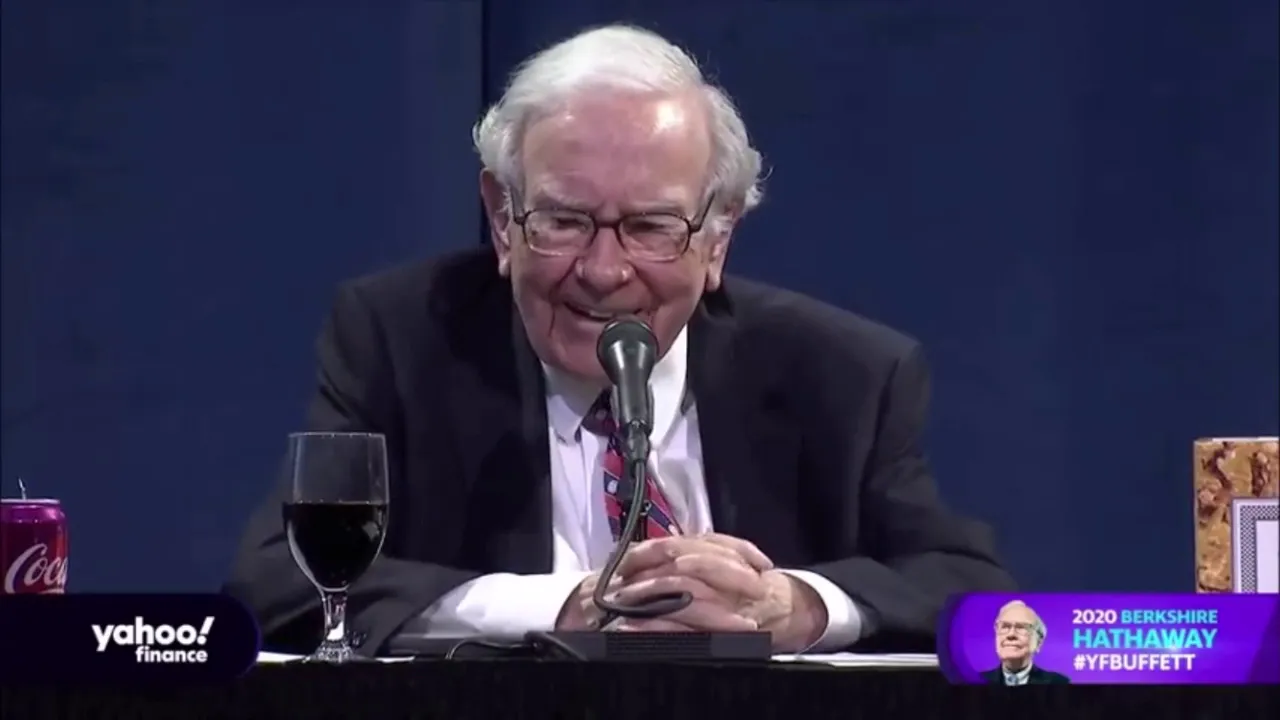
why are you recommending listeners to buy now yet you're not comfortable buying now as evidenced by your huge cash position well hey as I just explained the position isn't that huge when I look at worst-case possibilities I would say that that there are things that I think are quite impossible improbable and I hope they don't happen but that doesn't mean they won't happen I mean for example in our insurance business we could have the world's or the country's number one hurricane let it's ever had it but that doesn't preclude the fact we got out the
biggest earthquake a month later so we we we are not we don't prepare ourselves for a single problem we prepare ourselves for problems that that sometimes create their own Menem momentum I mean two thousand eight and nine you didn't see all the problems the first day when really what really kicked it off was when the the Freddie and Fannie the GSEs went into conservatorship in early September and and then when money market funds broke the buck I mean there there are there are things to trip other things and and we take a very much a
worst-case scenario into mind that probably is a considerably worse case than than most people do so I don't look at as as huge and I'm not I'm not recommending that people buy stocks today or tomorrow or next week or next month I think it all depends on your circumstances but you shouldn't buy stocks unless you expect in my view you you expect to hold them for a very extended period and you were prepared financially and psychologically to hold them the same way you would hold a farm and never look at a quote and never never
pay it you don't need to pay attention to them I mean the main thing to do and you're not gonna pick the bottom and you're not gonna nobody else can pick it for you or anything of a sort you've got to be prepared when you buy a stock them have it be down 50% or more and be comfortable with it as long as you're comfortable with a holding and I pointed out I think a year maybe two years ago in the annual report well just the one before this most recent one I pointed out that
there have been three times in Berkshires history when the price of Berkshire stock went down fifty percent three different times now if you hold it on borrowed money you know you could have been cleaned out there wasn't anything wrong with Berkshire when those three times occurred but if you're going to if you're going to look at the price of the stock and think that you have to act because it's doing this or that or somebody else tells you why I'm you know how can you stay with that when something else is going up or anything
really you've got to be in the right psychological position and frankly some people are not really careful some people are more subject to fear than than others it's it's like it's like the virus it strikes some people with much greater ferocity than than others and and fear is there is something I've really never felt financially but but I don't think Charlie's felt it either but some people can handle a psychologic if you can't handle it psychologically then your religion known sucks because you're gonna buy and sell in the wrong time and you should not count
on somebody else telling you this you should do something you understand yourself if you don't understand it yourself you're gonna be affected by the next person you talk to and so you should you should be in a position to hold and I don't know whether today is it a great day to buy stocks I know it will work out over twenty or thirty years I don't know whether it'll work out over two years at all I have no idea whether you'll be I had her behind on a stock you buy on Monday morning or the
market this is a question that comes from William Lewis he said please did I understand correctly mr. Buffett to say that Berkshire Hathaway sold its interests in four different Airlines and if so can you name them they can the names of those airlines be identified yeah I wouldn't normally talk about it but I think it requires an explanation and and it requires an explanation that means we were not disappointed at all in the businesses they were being run and the management and but we did come to a different opinion on it than the the four
Lord they're the four largest US airlines it's American Airlines and Delta Airlines and Southwest Airlines and United Continental and I think collectively they they probably at least 80% of the revenue passenger miles and the in the is flown in the United States and and they have significant international flying to is excluding Southwest so we like those Airlines we like but we don't like so the world has changed for the airlines and I don't know how it's changed and I hope it corrects itself in a reasonably prompt way I don't know whether the Americans will have
now changed their habits or will change their habits because of of an extended period if it happens that we're semi shut down and in the economy I don't know whether the trends toward you know what people have been doing by by falling I mean I've been it's been seven weeks since I've had a haircut at seven been seven weeks since I more than seven weeks since I put on a tie or anything I've been just a question of which with sweatsuit I wear them so who knows who knows how we come out of this but
I think that there's certain industries and unfortunately I think that the airline industry among others that are really hurt by a a forced in fact shut down by events that are far beyond her control Gregg would you like to end really nothing nad one okay got another charlie yeah I didn't I didn't intend to use that as a wine but you know you've covered it well yeah we would have bought other airlines to incidentally but those were the four big ones and that those ones we could put some money into and we put but whatever
it was seven or eight billion into it and we did not take out anything like some right oh yeah then that was my mistake but it was it's always a problem if there are things on the lower levels of probabilities that happen sometimes and it happened to their lines and and I'm the one who made the decision but Warren just to clarify on his question he has to do several states the answer is yes yeah when we when we sell something when we sell something very often it's going to be our entire stake I mean
we didn't we don't trim positions or like that's just not the way we approach it any more than if we buy a hundred percent of a business we're gonna sell it down to ninety percent or 80 percent of me to be we like a business we're going to buy as much of it as we can and keep it as long as we can but what we change our mind I'm sorry now go ahead when you change your mind well I want when we change our mind we don't we don't take half measures or anything of
the sort so I was amazed at how he frankly now we thought we were selling a bit far lower prices than we paid but I was amazed at the the volume their Airlines always trade in in large volume relatively but but we we have sold the entire position I was encouraged to see your investment in the company but with passing weeks it became evident that your investment facilitated auxin Occidental management's ability to avoid a shareholder vote on the Anadarko acquisition a very shareholder unfriendly outcome this deal proved to be irresponsible and expensive from an oxy
perspective and ultimately very valued destructive for oxy shareholders in my view it also permanently hurt Berkshires reputation in the marketplace please comment on this unfortunate outcome and tell me why oxy shareholders and other market observers shouldn't feel this way well yeah we said right from the beginning although we didn't certainly expect to agree to what's happened we said we said essentially when you buy into an oil a huge oil production company you know how it works out is going to depend on the price of oil to a great extent it it's not gonna be your
geological home runs or Hormuz or super mistakes or anything like that it's it is a it is a investment that depends on the price of oil and you know the I when oil goes to minus $37 happened the other day for burger I guess it was the may contract you know that's off the chart and and if you if you own oil you should only own oil if you expect these prices to go up significantly I don't know whether they'll go up significantly or not we're in that we're in the transaction our commitment was made
on a Sunday when the management of Anadarko favored Chevron and Chevron had a breakup fee of a billion dollars and and Occidental people have been working on it for several years and that was attractive at oil prices that then prevailed and it doesn't work obviously it doesn't work the $20 a barrel certainly doesn't work in - 37 dollars a barrel but it doesn't work at $20 a barrel and everything the oil companies have been doing whether it's Exxon or I've sit-down or anybody else it doesn't work at these oil prices that's why oil production is
going to go down a lot in the next few years because it does not be the drill now that's happened at other times in the past but the situation is you know you don't know where you're going going to store the incremental barrel of oil and oil demand is down dramatically in and for a while the Russians and the Saudis were trying to outdo each other and how much oil they could produce and when you've got too much in storage it doesn't work its way off that very fast now you will have production of oil
- down in the United States significantly it does not pay to drill in all kinds of formations that that paid before and it doesn't pay it doesn't pay to have paid the price that oil was trading at in the ground a year or two ago and and to that extent if you're an oxy shareholder you know you or any shareholder and any oil producing company you'll join me and having made a mistake so far in terms of of where oil prices went and who knows where they go in the future let me follow up with
this one then this one comes in from mohnish bahl who says is there a risk of permanent loss of capital in the oil equity investment certainly as you know that there's no question if if oil stays at these prices there's gonna be a lot of money a whole lot of money and it will extend to bank loans and it will affect the banking industry to some degree not that doesn't doesn't destroy them earning but it there's a lot of money that's been invested that was not invested based on a $17 or $20 or $25 price
for four WTI west texas intermediate oil and but you can do the same thing in copper if you can do the same thing and what and some of the things we manufacture I mean it but with commodities it's particularly dramatic and you know farmers have been getting lousy prices but to some extent the government subsidizing I'm all for in it than actually I'm but if you're an oil producer you take your chances on future prices unless you want to sell a lot of futures forward oxy actually did sell 300,000 barrels a day of what's in
effect that are they they bought puts but and sold calls in effect to match it and they were protected on attend out for a layer of $10 a barrel on 300,000 barrels a day but you're really buying when you buy oil you're betting on oil prices over time and and over a long time and oil prices there's there's risk and and the risk is being realized by oil producers as we speak there will be if these prices prevail there will be a lot of bad loans and energy loans and the bad debts and energy loans
and if they're bad that's an energy loans you can imagine what happens to the equity holders so yes there's a risk it comes from Richard sir sir from Tucson Arizona he says Berkshires annual report indicated that Berkshire had three hundred and ninety one thousand five hundred and thirty nine employees at the end of 2019 which areas of our operations have already been hardest hit or will be by the corona virus pandemic and what are the implications for the continued employment of those people those but those people are employed in dozens and dozens of different industries
and there's there are a few industries that there's a pretty fair likelihood that our employment could be reduced but they're not large I'm just thinking as I'm talking I mean it's not like it's not like were you know then the some of the businesses that you know we're not in the hotel business serves various aspects of travel and entertainment and all of that that could really be changed in a very major way so I don't I don't see our employment I I would I'll put it this way five years now I think Berkshire will be
employing considerably more people and and I don't I don't see where we'll have large dips but the virus could take off in certain ways than some of our manufacturing businesses for example the demand could be dramatically reduced and in those cases we would have we would have layoffs at some at some point great what I would add Warren is that as we are in the you know sort of crux of the the pandemic we're still dealing with it so our businesses have adjusted some have had to adjust more we have if you look at Berkshire
Hathaway energy for example you can see us electricity consumptions down four percent that realistically doesn't impact our business in a significant way and and longer-term will continue to grow that business so even in even during the crisis a relatively small impact of the business but as Warren knows we do have retailers that their doors are shut right now be it our See's candy the some of our jewelers and at that point in time we we we do adjust and adapt to the environment ie we adjust our workforce but equally we do see for example C's
at a point our stores will reopen and at that point we really folks and overall for Berkshire as a whole as Warren said five years from now we see our employment numbers being far far far greater than they were are today and that we see great prospects within the operating businesses as a whole there's already speculation of a post Buffett breakup of Berkshire and given the sway carried by modern activists the speculation should be taken seriously many long-term owners see the folly in this view a 25 billion dollar ancillary earnings stream provides a lot of
flexibility when investing insurance float on our and your estates behalf could you more forcefully make the case of maintaining Berkshires current architecture if you don't that responsibility will fall on an unknown set of shoulders with far less quell if you were to if you were to sell Berkshires various subsidiaries you would incur a very significant amount of tax at the corporate level before anything was tributes distributed to the shareholders you can spin off a given one or something of the sort but the ability to break up a diverse company without tax implications there was there
was something called the general utilities doctrine that prevailed in various ways up until 1986 and a lot of people seem to comment based on the fact that that didn't happen in 1986 and there's imagine of ways where people try to avoid taxes and can do it in some cases on certain types of transactions - were to break up Berkshire that would be one factor but the interaction of being able to move capital around in terms of being able to do things in insurance that we couldn't do unless there were the backup earnings and capital employed
in the other entities errs there's enormous advantages in capital deployment within the play so I there is not a big discount to breakup value embodied in Berkshires price and the situation actually is that although all my purchaser shares every share we'll be given to charities pursuant to a plan I'd developed back 14 years ago and followed ever since and will continue following this July I'll be giving away 3 billion or so worth of the stock and but it's all it still involves a big voting percentage that including other people's that still remain in the picture
aside even from from the Buffett family it it isn't going to happen now I will tell you everybody in the world will come around and propose something and say it's wonderful for shareholders and by the way it involves yuge fees I mean then you do not you do not get impartial advice from that street weather when there's enormous amount of fees possible from one action and no feasible from another action but you can you can be sure I've thought about it and I would say that you can you can count on Berkshires present posture being
continued for a long time I can't tell you what's gonna happen a hundred years from now and and I can't tell you exactly what would happen for example if if certain ideas in terms of wealth tax has changed or taxes on foundations change or I mean they're good but my plan has been thought out and then placed for a long time and it not only ensures that the money that's been made off Berkshire all of it ends up going to various philanthropies staggered over time but it also it will keep the walls away Greg yeah
thoughts on that well I think the comment on the the capital allocation is critical that we have the ability to move the capital amongst the biet the operating businesses are up to the insurance are down with really no consequences to our shareholders that's the value driver of the unique structure of Berkshire and it creates immense values that's all I would add or second I guess all right this question I was looking for one of these because I got several questions that came in similar to this I was looking for one of these a moment ago
this one's from Andrew Winkie he says King asked Warren why he didn't purchase repurchase berkshire shares in march when they dropped to a price that was 37 30% lower than the price that he had repurchase shares for in January and February it was very very very short period where there were 30 percent less but but uh we I don't think Berkshire shares relative to present value are at a significantly different a discount than they were when we were paying somewhat higher prices I mean it you know it's like Kane said or whoever was it enough
for the facts change hi Jed I changed I changed my mind what do you do sir you know that's so it's we always think about it but I don't feel that it's more than far more compelling to buy berkshire shares now than I would have felt three months or six months or nine months ago it's always it's always a possibility and we'll see what happens Greg goose you think about repurchasing shares oh no I I I think our approach warns the right approach I mean you're always I can't really add anything other than the the
approach is the right approach we approach it when we see a it's the right thing for our shareholders to be repurchasing and that doesn't mean we're repurchasing all the time or or the view doesn't change there could be a price relative to value at the time not really what it was worth the year ago I mean the value of certain things have decreased our airline position was a mistake Berkshire is worth less today because I took that position than if I hadn't and there there are other decisions like that and they're not you know it
is not more compelling to buy the shares now than it was when we were buying them it's not it's not less compelling I mean it's washed but we didn't do anything we it's nothing gotten it's the price has not gotten to a level or not been at a level where it really feels way better to us than other things including the option value of money to step up in a big big way over the last year he points out the the sale of Berkshire Hathaway media and then Charlie's comments from that interview saying that several
small Berkshire separate subsidiary subsidiaries will not be opening when the coronavirus lockdown is lifted so should short shareholders assume that Berkshire has now changed its long term policy in regards to keeping underperforming subsidiaries I think I think that policy would spell out for maybe thirty years or so and then addendum to the in the annual report that we have said that that if a company urban operation we think it its prospects are that will continually lose money in the future that we will certainly will try to sell it to somebody else but one way or
another we will we will not continue to to hold it and that is not a new policy and it's not been changed you can say in effect we did that with the airline industry to some extent that if we owned all of an airline now it would be a tough decision to decide whether to sustain billions of dollars in operating losses when you know hey you don't know how long it's going to happen that occur and secondly you know that it's very likely that there'll be too many planes around and we know what happens in
airline pricing when load factors go down and and and and there's an oversupply of airline seats so you know we didn't have to make that decision in terms of our own operation on it but but we did make a decision that that that's a very tough management decision to make and the government of courses as well they've had the first wave of financing for the airlines but to the airline's credit they have very aggressively raised money I mean it's amazing to me out what a good job they've done of that and and in the case
of I think in the case of three of them no two of them but there may be more coming that raised equity money too I mean they are met they are saying that the the debt holders and investors you know you've got to put more money into this business if we're gonna be able to continue and the government's done it and and private sources have done it and it's going to it's exactly the right thing for the management's to be doing but you know whether it's whether it makes sense we'll find out for the investors