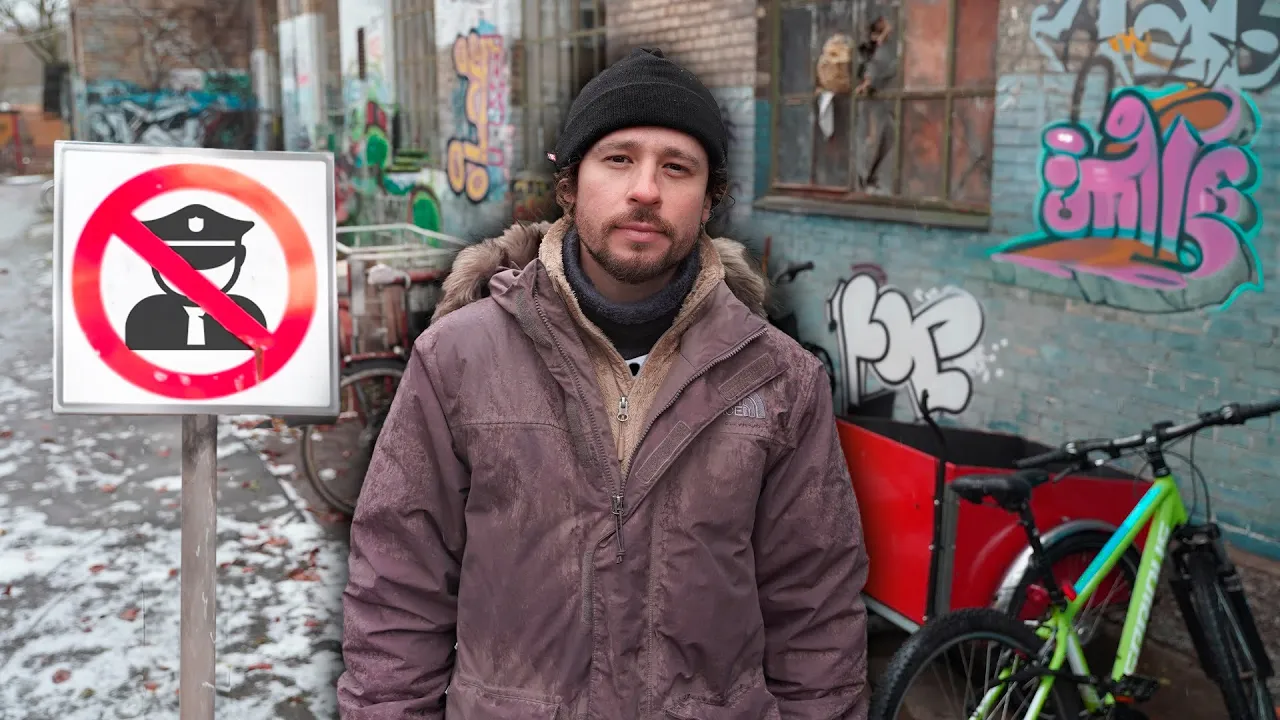
This is the lawless city of Northern Europe. They sell substances of many kinds. There are seven gangs that currently rule the area.
And to identify as to which gang belongs what you bought, they put as signs this place to skate. It is also used as a place for street fights. I didn't expect this adventure to be so interesting.
Greetings from Copenhagen, the capital of Denmark. Wow, what a cold dog it is right now! It's snowing hard, but really hard.
The crazy thing is that the people here tolerate it very well. We saw a man swimming in the freezing water just now. We talked to him for a while and he told us that the trick is in the breathing and that everything is in the mind.
Look, he looked like a very athletic guy, but well, in this video we are not going to talk about cold, we are not going to talk about modern Vikings swimming in freezing water. In this video I have brought you to one of the most controversial and most interesting neighborhoods. Not only in this country, but in all of Northern Europe.
This is the neighborhood of Cristianía, which as of the date I am filming this is an autonomous community that is conceived as outside of the European Union by the group of protesters that administers it. This neighborhood is well known because here you can get soft drugs. In fact, according to the values of this community, when addicts start arriving too often, they are not allowed to enter.
It doesn't represent their values, because the history of this place is very much based on values, on rebelling against the authorities, and since I arrived here it has really, really caught my attention. It is said that around the seventies, although many say that a little earlier, maybe the late sixties, this whole area was a military base that was kept standing in case Denmark went to war, but really the country had long enough without having a war as such and the people who lived in the surrounding area began to say that this is our land, why can not we use it if we are a country that is at peace? So the story goes that it was a family that started to break down the fences so that their children could play in these fields.
First they started to build playgrounds for children, eventually more and more people, more and more groups of protesters started to arrive with the excuse of This is the people's land and against the will of the authorities, they started to build houses, they started to put businesses and it grew so much that the police lost control of the situation. So come on, let's venture into the controversial, controversial and autonomous neighborhood of Christiania. Come on, let's hit it.
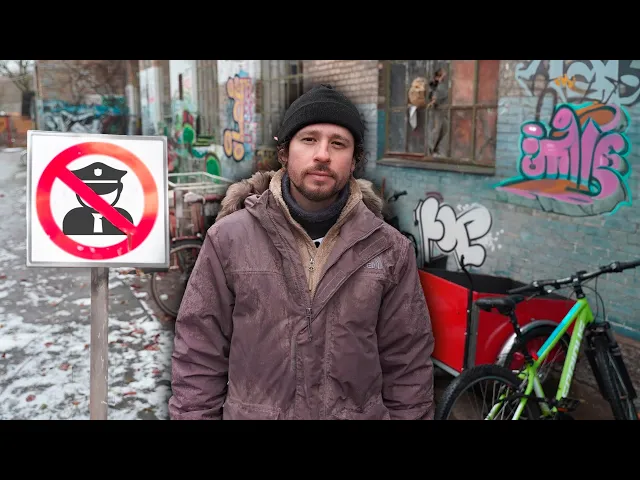
So let's go. First interesting fact about the neighborhood of Christiania There are no cars here and there are signs indicating this. In fact, right here is the border.
Let's call the neighborhood autonomous. See how there are posts and rocks here that impede the flow of cars. And likewise it is an area where no credit card payments or any banking method is allowed.
Why is this? Because this way they avoid taxation, not the payment of taxes. There are large buildings that in fact these were the old military barracks which were later given the use of housing, because it is part of the whole rebellion of why people are here now.
Christiania, as it is considered as such an independent city, as outside the European Union, has its own flag, which is red with three yellow dots, red represents socialism, the socialist ideology. The three yellow dots represent the values of Christiania, which are faith, hope and love. This one here made me very curious.
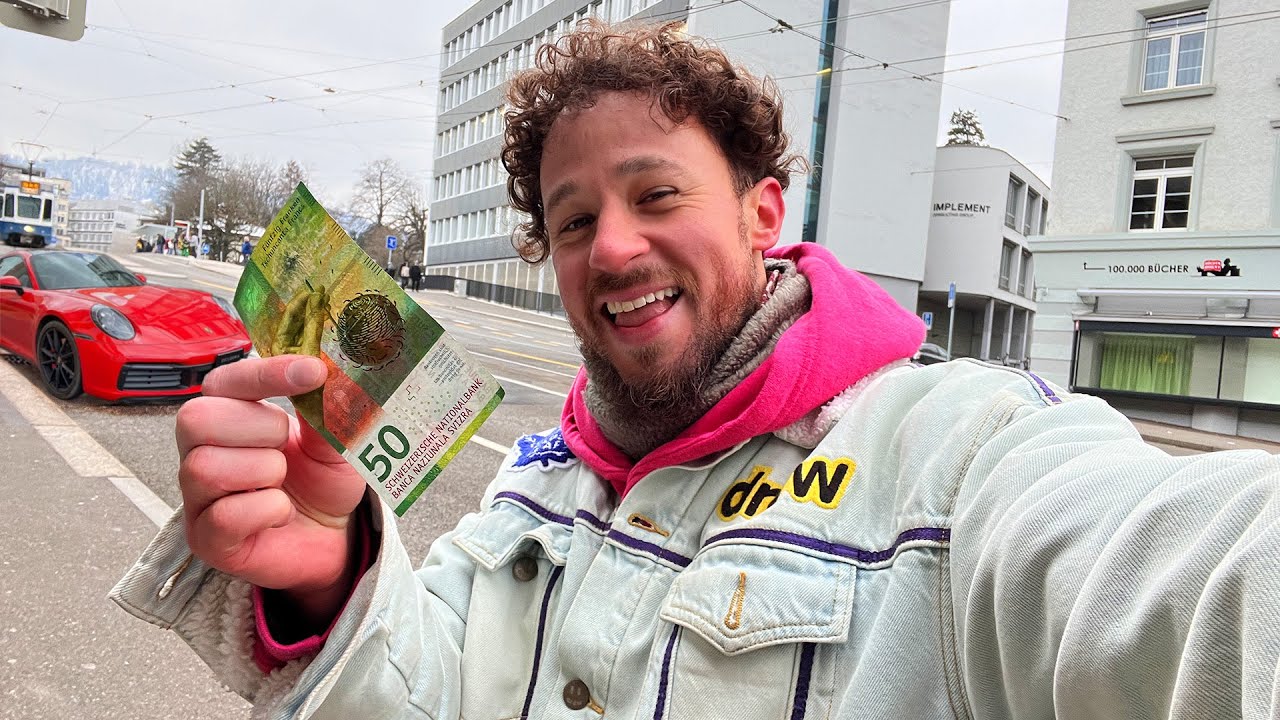
What you see is a Christiania flag that says here in Danish Wilfried, I saw a town without cars, is what it says and literally here we are seeing a car and a very luxurious car. Where is the preference? There one encounters military bunkers on a daily basis.
Today they are used as warehouses. In fact, we are seeing that this other one is also padlocked, so I imagine it as a chance, resources for the community. I don't know if one day something happens there they have canned food, things like that.
The most common transportation in Christiania is bicycles. And not just any bicycle, but the one known as the Christiania bicycle. It is said that, at least in the Northern European area, those kind of bicycles that have a cart in front, not that they become more like tricycles, are invented here, because as originally the ideology was no cars, people had to find a way to transport their things, to transport what do I know, the baby, the resources to build, to take another person, etcetera, etcetera.
So yes, and right here there is a big workshop that claims to be the original inventors of the now famous Christiania bike. But if this whole thing of no cars is disproved very quickly, see, here is one, there is another, so you can see them passing by. I don't know, I want to get to the bottom of this, who can bring a car and who can't?
Does this place represent a little bit of what the values of the neighborhood are, which is how everyone cooperates a little bit with what they have left over, right? So, well, we have a community library, you don't leave books, you take books and also clothes. For example, right now in the winter, if it's cold, they come to leave their boots here, right?
You leave them here and Ale doesn't need them, he picks them up hippies. Those are like the values for which at least originally the community was founded. And look, I laughed a lot at this protest poster that says I'm still waiting for the legalization of cannabis and well, my friend, all dead because it is a big issue here, as in many parts of the world, as if they were going to legalize it, but at the very first moment they don't, and at the very first moment there isn't even any.
Society, especially here, is waiting for what is going to happen. How curious. Oh, see here a star of the Zapatista Army of National Liberation, of the Ideology of Mexico, not of the Zapatistas.
I see how the ideology could be similar and why they idolize it here. Look, this is something to be analyzed in more detail, more deeply, hey, and I correct, I thought I would think that in this neighborhood cocaine is easily obtained, because cocaine is very common everywhere, especially in Europe, but no, in fact here in Christiania you find many signs that indicate that you can neither sell cocaine nor consume cocaine. It even says something here like if you sell cocaine in the toilets, we're going to close the toilets so you can't sell it anymore.
So yes. Soft drugs. Here everything that is cannabis is considered, natural things, not chemicals.
And well, see now that no one is here, let's take a look at a little bit of what the public bathrooms are like. Here. Yes, the same in quite an eyelet, yes, obviously.
Well, it is a city outside the conventional system. You're not in the conventional garbage collection system, the health system, etc. At the most emblematic point of entry and exit to the community, there's a big sign that says Now you're entering the European Union.
And yes, it changes a lot. See, for example, here is the community of Christiania, no cars, there are some cars there and yes, we passed the sign, Now you are entering the European Union. Here we are here, changing, already much busier, public transportation, security system, health system, hospitals, etc.
, it is what is really here, well we have to be very realistic, when a child is born in Christiania, then what the parents do later is to register him/her in the European Union, no? So I feel that there is a lot of this ideology of being a rebel, but at the same time I like it because I live here outside the laws, but here there are no hospitals, no, here there is no school system. So, as much as I want to be outside the ideology of the European Union, I need it.
We went for a walk to Pusher Street, which is the street of the dealers, where they sell all the marijuana, jazz, etc. There they don't let you record anything, not even a little bit. And I was warned not to do it naughty there, because there are strong stories.
We became good friends with a diller who has been working here for a long time and he told us some strong stories. He once told us about a journalist who arrived with a camera and tried to record on the sly. Neme They grabbed him between all of us, stripped him naked in the cold and then gave him one or two blows, one or two cocks and eventually they told him to go to the burger here.
What I am going to tell you is that I am going to tell you what it is, it is very interesting, that is, it is literal, a square like this, open, with little stalls as such, as well as these that we are seeing, these are more of utensils and souvenirs, as well as stalls as such and installed with the diners. The most interesting thing is that it is not really anything obscure, it is actually very friendly. They sell only jazz.
Jazz is what is marijuana and some others, if you look hard enough they could sell you mushrooms, hallucinogens and everything else. Chemical drugs are very condoned and in fact they are not supported at all and they take the diller out of one and our friend was telling us that there are seven gangs that currently rule the area, which are quite a few, and if undesirable situations happen, for example, about three months ago he told us that a carnal was going to take place there, although it is not a common scenario. Now an interesting little thing, they sell very curious souvenirs, for example these here are little papers to roll up with the Christian flag of that local craftsmanship and check this Clipper lighters with the flag of and all this is locally manufactured and to identify what gang belongs to what you bought, they put signs on it.
For example, look at this one, they put a cross on it, there were others with a little drawing all in different colors and let's see, our friend Dile from here is already giving us a tour of the city, he explained to us how the garbage issue is, how they don't pay taxes to the state? They don't have the right to many things, among them garbage collection, so they have their own little trucks and you see how they are all graffitied on the sides around here. Here they have the warehouse, not with all their tractors, not the tractor with the Christiania flag.
And these are the receivers that go by color. From what they tell me, people tend to be very respectful about recycling and so on. So they try to reduce it as much as possible.
The rest is sold to second-hand markets and so on, and the rest is needed from the city as such. They tell me that it is basically small trucks. They go to a garbage deposit that already follows the processes of Denmark.
My brother-in-law brought us here to see the skating center. It's good, it's big, well done. There are some boards there that anyone can borrow and this skate spot is also used as a place for street fights.
The skating community has a dual use. We pass by a sports store where they sell team jerseys and they tell us it's the Christiania team. So there is a soccer team and they are not that bad.
I know they participate in local tournaments and they even have local industry. See beer produced locally here from hemp with cannabis components. In the local stores they sell everything and they even have it.
The local neighborhood newspaper is printed weekly and includes news, events, invitations to meetings, concerts and is printed, of course, right here. In fact, someone without profit, because this is totally free, is in charge of writing and printing it. So there you have it.
The supposedly lawless city of Northern Europe, a neighborhood that is actually quite touristy today, very friendly, I would say, with a very low level of risk. Thank you for joining me and see you as always, you know, in a few days with a new video. Bye!