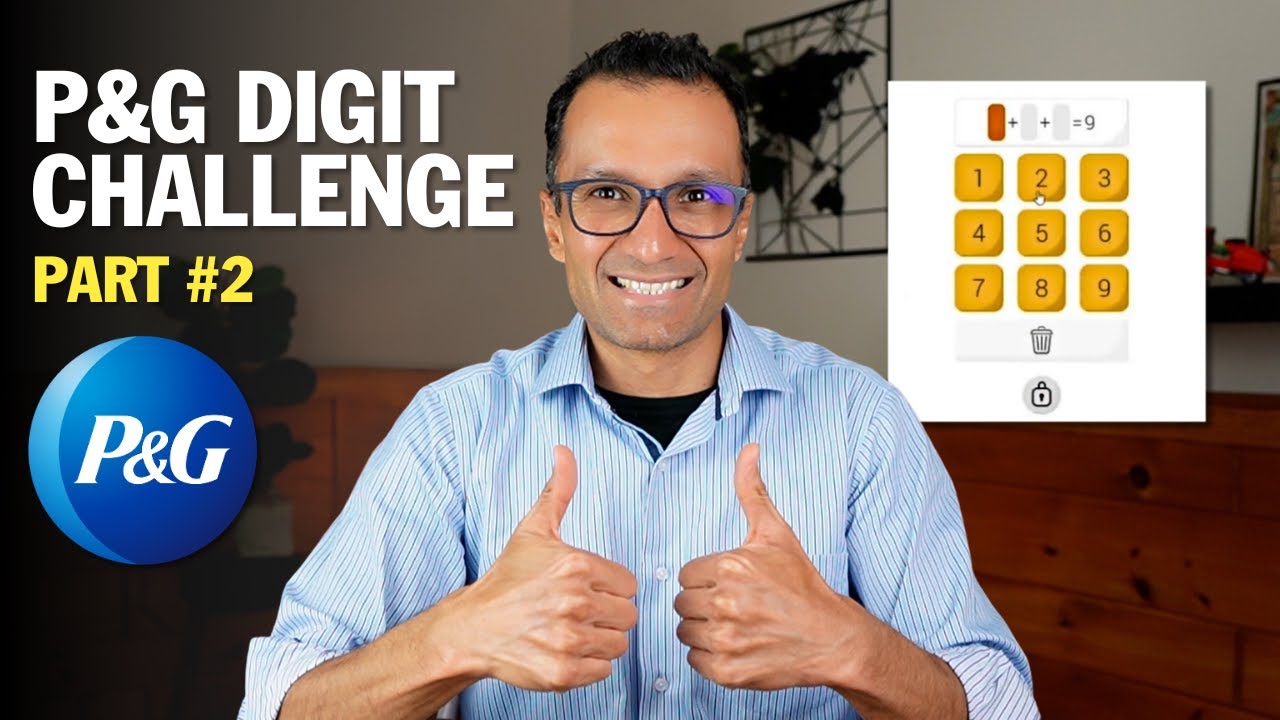
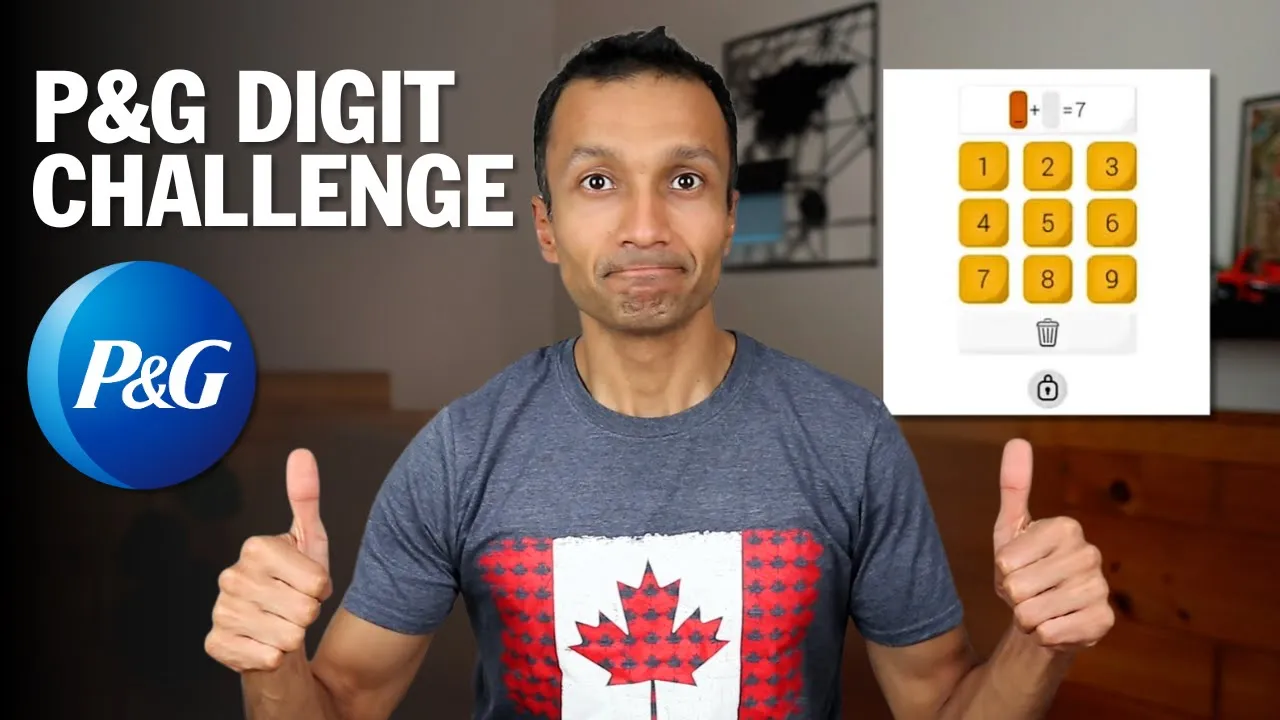
hello friends my name is burrows and welcome to the channel where i share with you tips tricks that i read learn and apply in order to become the best version of myself now in this video i will share with you how to ace the png interactive online test which is actually designed by png in order to assess your reasoning skills now given the png online interactive test has three parts the digit challenge the switch challenge and the shape challenge i will create three separate videos in order to take you through each of these sections in these videos i will take you through the approach and logic that you need to take and understand in order to answer each of the questions that will come in each of these sections and i will be making use of a large number of examples in order to help illustrate the approach and the logic and the reasoning that you need to take in order to answer these questions especially because while there are a number of questions available on the web for you to practice however don't expect the same questions to come in your test that is why it is very very important that you understand the logic and the reasoning behind answering these type of questions in this video therefore i will focus on the digit challenge in the description box of this video i will leave the link to the videos that i will be making on other parts of the interactive png online test along with the videos that i've made on png hiring process peak performance online test and frequently asked interview questions now before moving into the specific part of the online test some quick info on the png interactive online test first and foremost it should take some around 30 minutes for you to complete the entire interactive online test whereby each section is timed and once you have completed one section you would automatically move to the next section as the time runs out so speed is of the essence here you are required to answer as many questions as possible in the given time that is allotted to you once you answer a particular question you will be moved to the next question and will not be allowed to go back to the previous question to change your answer if in case you need to disconnect and exit the test at any given point in time you can definitely do so and can go back to the test by using the link that is provided to you in your email the link will take you directly to the start of the next round of assessment following the last round of assessment that you already completed given this test requires your sustained concentration make sure you give it in an environment which is free of distractions now let's quickly move into the digit challenge part of the interactive png online test the digital challenge is timed for 6 minutes during which you will be provided with various equations that you need to solve the timer will start automatically when the first question appears on the screen for the assessment you must fill all empty gaps before you can unlock the next level at the top of each page you will see an equation with gaps in order to fill the gaps the numbers 1 to 9 are available each number can only be used once your task will be to fill the gaps of an equation with numbers so that the given result is correct questions get harder as you go along and you can only use each digit once per question you need to answer as many questions as you can within the time limit the timer and the timer bar indicate the remaining overall time for the whole activity the level number indicates your current level progress which you will see as you answer each question you will be moving up each of the levels now a very important tip which will be very much needed in the questions as they become more complicated because they will start including multiplication and subtraction in those questions so the order of operations is multiplication should be calculated first then addition and then subtraction now using the first example which is very very simple so in such example where you have two digits adding to a single digit number just start with number one and see whatever number is required to add to number one to make it seven so here i would do one plus six this is again easy multiplication if it's an even number start with 2 if it's an odd number start with 3 and then just see whatever number is required in order to reach that number so here in this case i will use 2 so 2 is the number because 6 is even and then multiplied by 3. similarly for addition given there are three numbers here start with one so the first blank will be one the remaining blank will need to add up to eight which can be done by simply adding six plus two here the most standard ways to first place number one in the blank which has a negative sign to it that means the other two blanks need to be at least one number above the answer which is 12 here so they need to be adding up to 13 so in order to make 13 so place 7 and 6 in the remaining blanks so these initial ones are very easy but as you start progressing the questions will become difficult and difficult this is simply nine plus eight this is some simply seven into three twenty one here we can simply put eight seven five again here start with filling in the negative blank which is with one and then the remaining two numbers should add up to 10 so it can be six and four or seven and three seven plus four eight into five and plus eight plus five adding one in the negative blank and then the balance need to add up to 16 which is nine plus seven four plus six plus two plus one adding one in the negative blank and the balance should add up to 15 which is six plus four plus five here since we have multiplication so we'll solve multiplication first here the number we have is 23 since something needs to be added in the brackets for it to become 23 so we'll find a number which has a multiple under 23 so this can be 21 so for 21 the two multiples are 7 into 3 and then we add 2 to it we will get 23. here is the opposite we need to find the number above 71 which has a multiple because there is a negative because the numbers in the bracket after multiplying are being reduced so the number would be 72 72 can be reached by 8 into 9 and then if you minus 1 from it will become 71.
here because there are two numbers that are being added to the product within the bracket so we'll need to find a number which has a multiple but under 77 and it cannot be 76 it has to be at least three numbers below 77 because the two blanks can take one and the other blank can take two because even if you use the smallest numbers which is one and two they add up to become three so whatever the product will get into the brackets will at least have three digits added to it now if you assume it's one and two the number and the bracket should be 74 but it's not possible to reach 74 because there are only three digits that can be close to reaching that number which is 8 and 9 because 7 into 10 is 70 and hence it doesn't reach to 74 so it can only be 8 or 9 and 74 is not a multiple of 8 or 9. so when we see such large numbers we'll start for multiplication first so the blanks in the bracket can be 8 and 9 which reaches 72 and the balance is 5. we can reach 5 by adding 3 and 2.
this one is very easy 5 into 6 into one when you have more than two blanks in the multiplication brackets use one number as number one because that will make life very easy and will get rid of at least one of the brackets completely so here we have 43 finding the nearest number which has a multiple under 43 because there is a blank being added to the product in the bracket so we will have to find a number which is lower here we can use 42 but since one is already used within the brackets it has to be a number which is at least 2 less than 43. so the next number which has a multiple which is 2 less than 43 is 40. 5 8 are 40 into 1 is still 40 plus 3 is 43.
so here we guess a number for the blank which has a negative sign to it first and by the same value we'll increase the answer which in case is 24 and the balanced product should have three different divisible so let's just take one as an example if we take 25 25 only has 5 as a divisible so not possible if we do 26 26 only has 2 as it is visible here so if you take 27 it only has 9 if you do 28 28 doesn't have three different visibles 29 doesn't have a divisible so we move to 30. so 5 into 2 into 3 is 30 and then if we subtract 6 from it it will become 24. 6 into 9 is 54.
another way of solving a number which has three blanks and is adding is first divide the number which is 14 into two so seven so seven could be one number and the balance is seven so add two numbers to make seven which would be five and two so seven plus five plus two here again we first fill in or guess the blank with the negative digit so let's say it's one if it's one the other two blanks should add up to six which can be done through four and two now in case we have four blanks there's a large number then we can use big numbers first so we can do 9 plus 8 is 17 plus 7 is 24 and the balance is 4. so 9 8 7 4. again we start with filling in the blank with a negative number let's say we start with one which means the balance should add up to nine which can be four to three so here i'll assume one in the blank which means that the product in the bracket should add up to 12 which could be six into two here one approach could be that whatever you put in the brackets should multiply and be more than 23 so if i have to guess 5 into 4 is 20 so it has to be larger than that i could use 6 into 4 is 24 and then we can do minus 1 so 6 into 4 24 minus 1 is 23.
now similarly here the product in the bracket should be lower than 39 so a number which is less than 39 and has two multiples of single digits so it can't be 38 it can't be 37 it can't be 36 because that requires two sixes it can be 35 which is five into seven and then we need to add four which for which we can use one and three here i'll use kind of the similar approach which is make sure that product in the bracket is more than eight so let's say 4 into 3 is 12 now i need to reduce 12 by 4 but with two digits 1 is negative 1 is positive so i'll reduce it by 5 and then add one so in the negative one i'll put five and then add one alternatively what we can do is we can use one as one of multiples within the bracket because whatever will multiply with one will just be one which means that in the bracket we can just use one and one other digit let's see in the bracket i put one and two so it will become two then the blank with the negative is could be three which is minus one and the next blank could be nine so nine minus one is eight forty five is a multiple of five so i'll use 5 into 9 is 45 into 1. here i'll start by plugging one and one of the numbers within the bracket just to make the multiplication easy for the balance i'll use 4 into 2 which will make it 8. because it has to be less than 11 and then if i add 3 into 8 it will become 11.
let's start by using one and one of the blanks in the brackets again to make simplification easy which means in the blank with the negative the lowest number that i can use is 2 so the product of the remaining blanks in the bracket should be 36 which can be 9 into 4. so 1 into 9 into 4 minus 2 is 3. so here since the number is very large we'll have to use big numbers so we can't start by one because if i plug one in one of the numbers in the bracket i won't be able to reach anything above 142.
assume a plug-in number in the blank which has a negative sign which can only be between one to nine so let's see if it's nine product of the bracket should be 151 and if it is one then the product of the numbers in the bracket should be 143 so which number between 143 to 151 has three divisibles now we can't use one as one of the numbers in the blanks because then given the number is big it has to be more than one so one is already eliminated and cannot be used in one of the blanks so let's go one by one so let's start with 143 143 is not divisible by any number so we move to 144. for 144 we cannot use 2 as one of the divisibles because we'll need 2 in the blank which has a negative number to it because it will reduce 144 by 2 to reach 142. so how can we make 144 using three numbers let's start with 3 144 divided by 3 is 48 this makes sense 48 divided by 6 is 8 so 6 into 8 into 3 is for 144 minus 2 again a big number here product in the bracket can only be between 140 to 148 and start with 140 140 is divisible by 5 it gives us 28 28 is 7 into 4 so 7 into 4 into 5 is 140 minus 1 is 139 again a big number can only be between 192 to 200 so let's start with 192.
192 is divisible by 2 but then the other numbers are not single digits that can be multiplied to reach 96 which is 192 divided by 2 which is 96 so we'll do 192 divided by 3 gives you 64. 64 can be divided by 8 but then we'll need 2 8 so it doesn't work either so let's try 192 divided by 4 which gives us 48 which can be divided by 6 and 8 so 6 into eight into four minus one will give us 191.