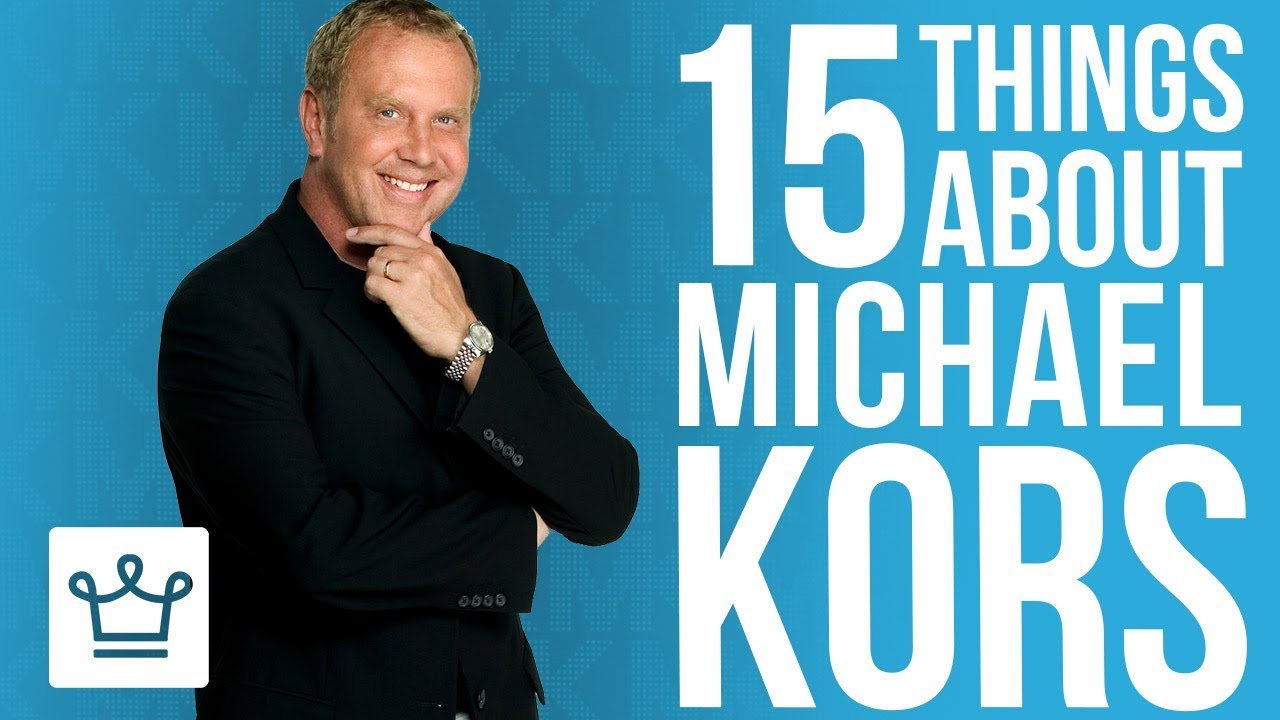
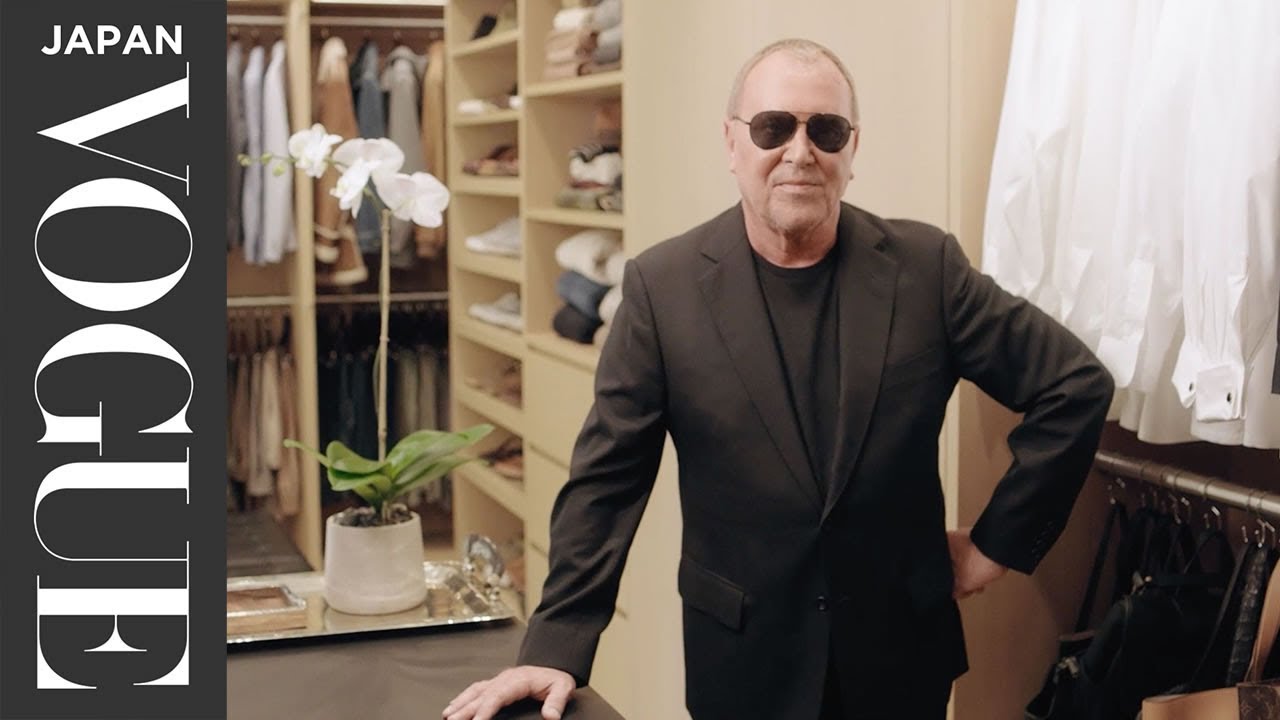
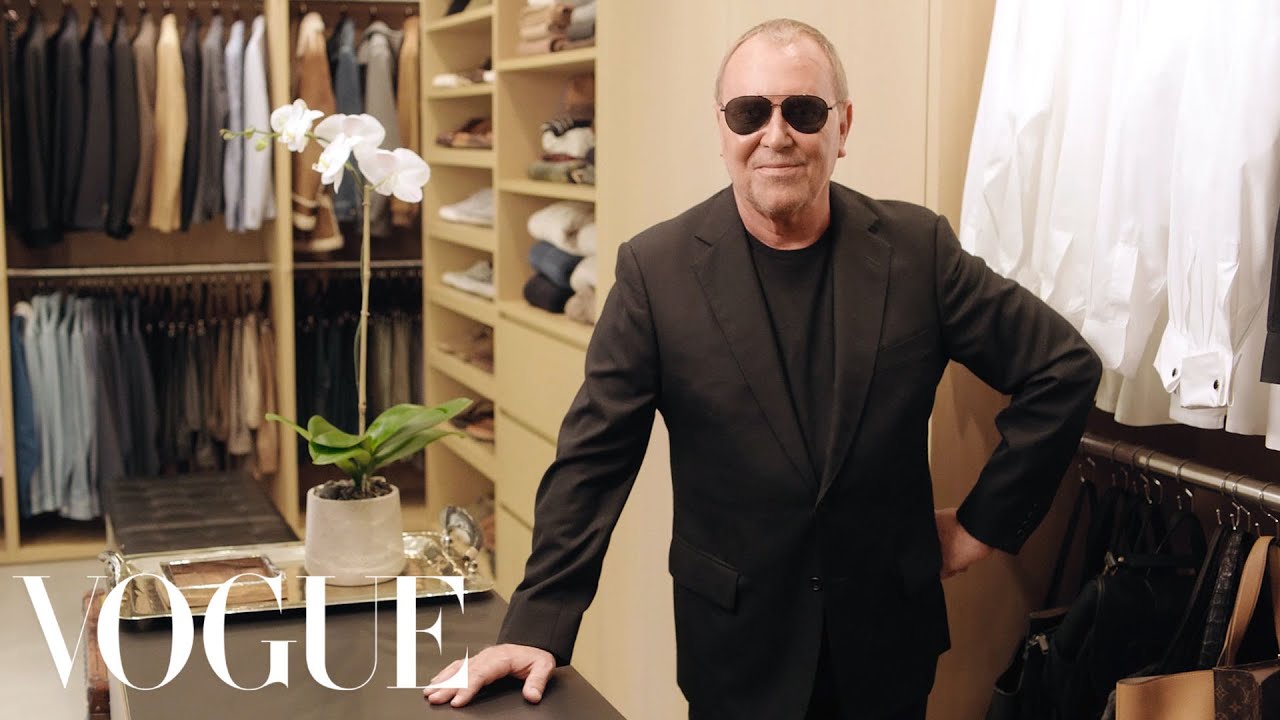
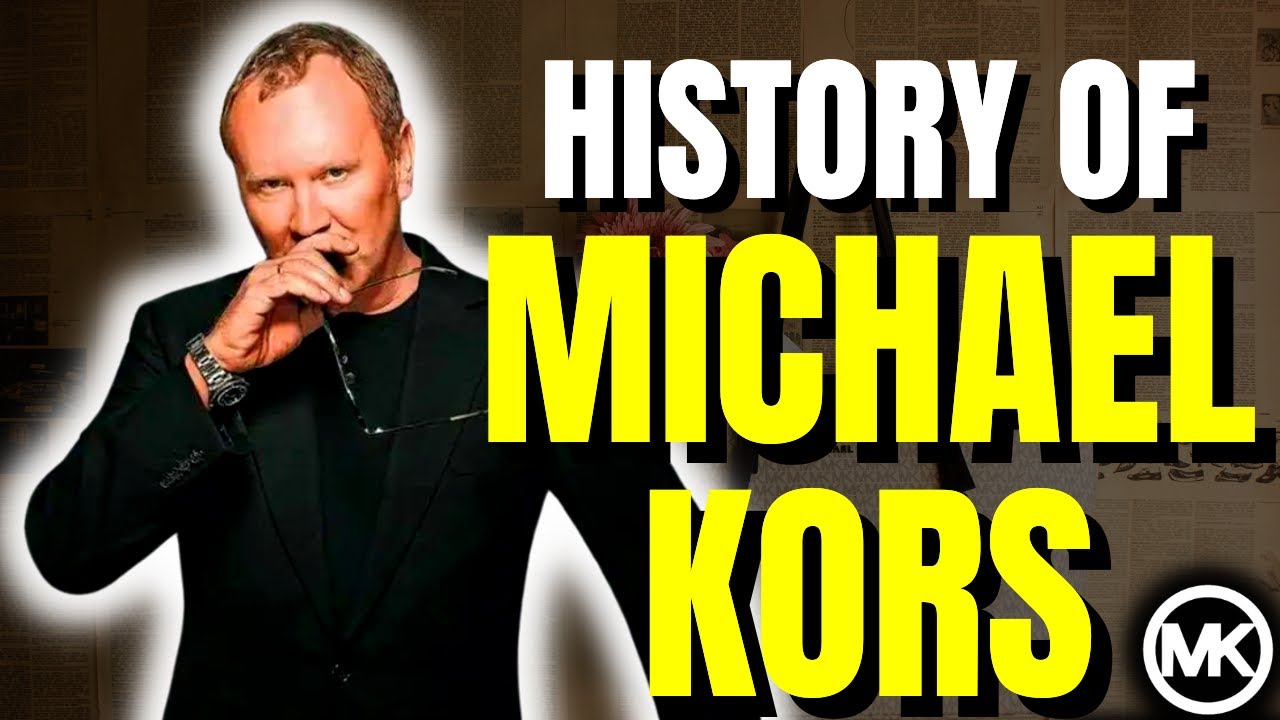
[Music] some people are lucky enough to find their calling in life at a young age raised in Merrick Long Island USA 23 mi from New York City Michael Kors gave his first bit of sage fashion advice at the ripe age of five when his mother was deciding on the right wedding dress for her second marriage since then Michael Kors has gone through a series of ups and downs but has come out right on top today the Michael Kors business has more than 500 stores in 94 countries more than $2 billion in annual revenues and a
market capitalization of more than $18 billion so how did he do it it wasn't necessarily easy or straightforward Kors enrolled at the Fashion Institute of Technology in 1977 but 9 months later he left school and began working at an upscale store called loar there he came into contact with the international Jet Set like Jacqueline Kennedy Onasis Rudolph nurv and Diana Ross sewing the seeds for his own brand by 1981 he began designing his own collection for loar this collection was spotted by Don melow of Bergdorf Goodman and soon the kid from Long Island was Stalked
at the venerable New York Department Store a few years later in 1984 Michael Kors held his first fashion show it was very positively received and the the brand continued to grow but when a recession hit in the early 1990s the company was forced to file for bankruptcy protection but Kors kept on going and in 1997 he started designing for lvmh owned Seline the french sports were brand eventually becoming the Brand's first creative director lvmh also took a 33% stake in his business providing some much needed stability when he was ready to focus on his own
brand again Kors exited his role as Seline and took on an investment from Silas chow and Lawrence stroll but it was his star turn on the hit television show Project Runway that was the real game changer for Michael Kors as his clever humorous commentary on young fashion design contestants was beamed into households all over the United States and all around the world through Project Runway the public got to know him much better and as his profile grew so did the business his original investors made billions of dollars when in December 2011 Michael Kors executed the
largest ever fashion IPO valuing the business at over $2 billion in recent years social media has made his relationship with the public grow even further Michael Kors has been the fastest growing fashion brand on Facebook and the brand has more than 17 million fans across social media platforms today as he celebrates the opening of his first flagship store in China we will hear his stories advice and experiences through all the ups and downs of building one of the fastest growing fashion brands on the [Music] planet thank you everybody for joining us um and thank you
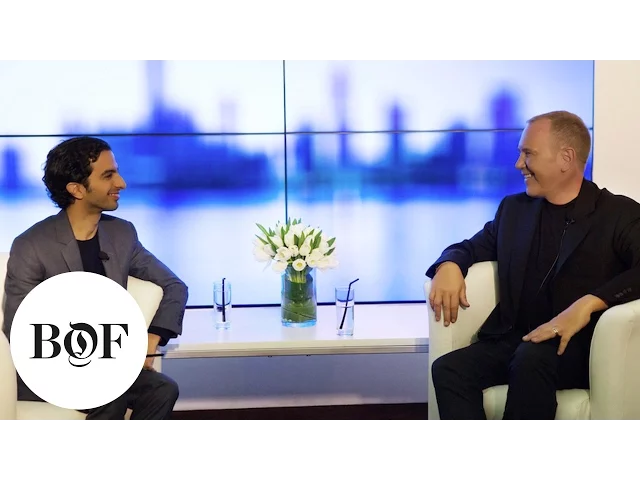
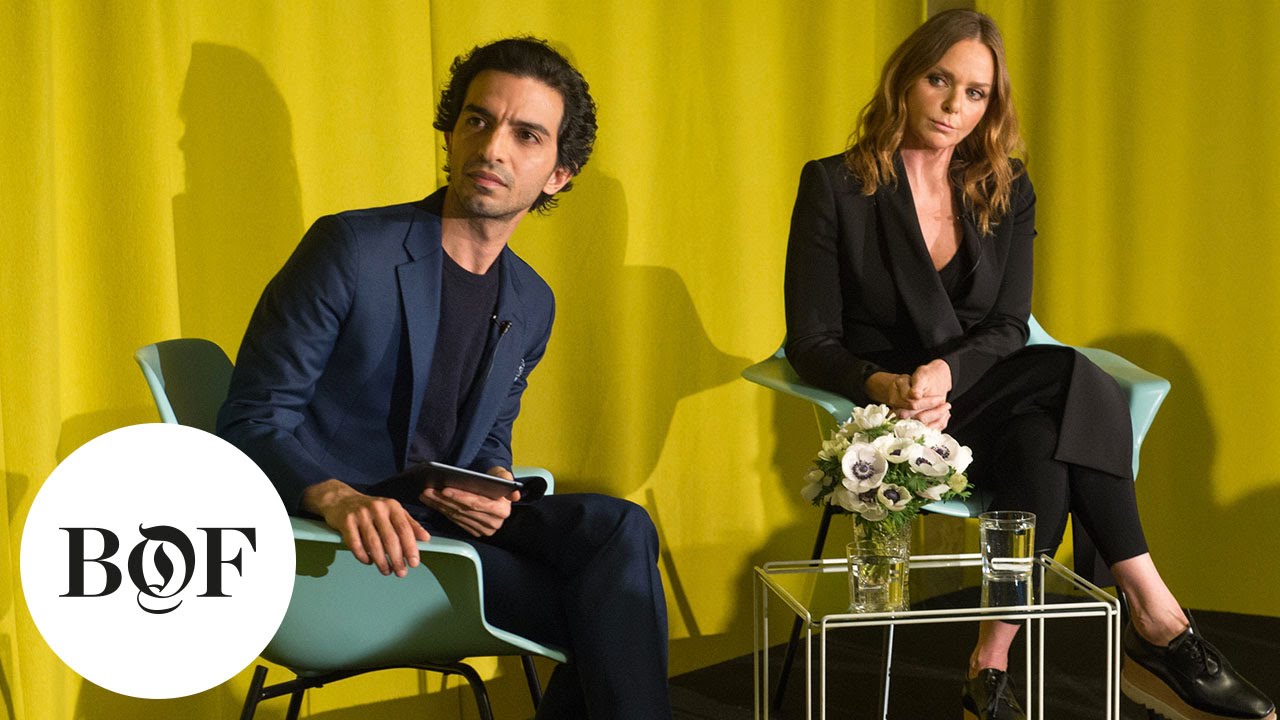
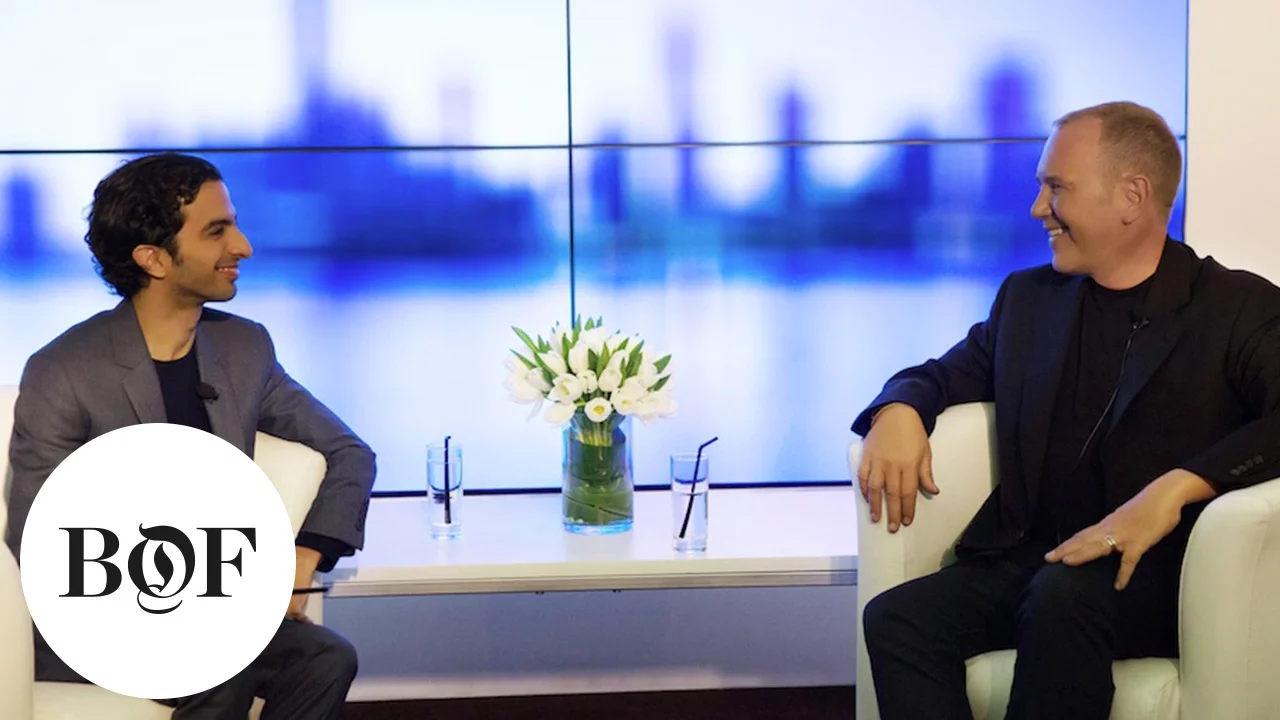
to all of you tuning in on live it's the day before a blowy Michael Kors event here in Shanghai and I'm here with the man himself for a special live broadcast on the business of fashion as he celebrates the opening of his first major Flagship in the largest luxury Market in the world we are here to learn about The Incredible Journey he has taken through professional ups and downs and all of the experience he's had in building one of the biggest fashion businesses on the planet all week we have been taking questions on on Twitter
using the hash boff live and you can continue to follow the conversation and participate using that same hash boof live throughout the interview Michael thank you for joining us today happy to be here I wanted to start you know in the intro video that we saw earlier um we noted that your interest in fashion began at a very young age and I want you to take us back as far as you can remember to your first interest in this industry which you know you've continued to work in for for more than 30 years how did
you first take an interest in fashion and how has that developed over time well I I I have to say uh there perhaps a lot of families where you know if a a a little boy said oh I want to be a fashion designer they would say oh please why that how about a doctor how about an engineer how about you know in my family it was the opposite I grew up in a family of people who were really a lot of them were first off in the fashion business uh my grandfather was in the
textile business my mother was a model uh my grandmother was a teacher obsessed with fashion I think more obsessed with fashion than teaching um and uh an uncle who was a manufacturer so talking about fashion at the table was something that was the norm shopping when you're only child with a fashion obsessed mother I was her shopping partner and and I always loved to sketch I think I was consistently drawn to the idea of Designing something you know when I was really small I would sketch cars and houses and but it always went back to
Fashion my mathemat mathematical skills weren't that fabulous so I definitely wasn't going to build a house that would last um and fashion and and and just the the whole kind of transformation uh when you found something great and something new when you shopped that was my turn on um I remember even when I was really small uh if we spent a day at the beach uh with my family the most fabulous part of the day was what are you going to change into at the end of the day when you're finished with the beach and
what are you going to wear when you go out to dinner right uh when you traveled on a vacation a family vacation what are you packing um so that was always something that I loved and then I realized by the time I was a teenager that this was just the life I was meant to lead um I kind of always looked at people growing up and did my own makeover I'm like she should cut her hair she should wear more color um and and you know it's I guess it served me well to know early
on what I wanted to do yeah and and then you made the decision to go to the Fashion Institute of Technology yes and after nine months you chose to drop out take us back you know what was the decision first to attend a formal fashion school and then to decide listen that's not for me I'd rather go work at this store loar well the funny thing is um you know I I think we all think there are the ways you're supposed to do things so I said okay I'm going to go to school I'm going
to learn how I could sketch beautifully but I could not sew at all a disaster um no patience sketching I could do quickly sewing was being methodical and not for me but I said okay I'm going to go to school I'll graduate I'll go to work for someone who I admire I'll be their assistant I'll pick up pins I'll do all of that I got to school and suddenly I realized I was never going to be a brilliant seamstress that was never going to happen and I knew even though I was 18 I knew what
kind of woman I wanted to design for I knew what the aesthetic was and I actually had a teacher who said to me you need to go out into the world you're ready you've got to get a job you're going to be stuck if you stay here in school you're going to learn more if you get out into the world she said I wouldn't tell this to most people she said but I'm going to tell this to you and she said if you have the right opportunity grab it and uh starting starting in retail I
got to design I got to merchandise I got to sell I got to do displays I really got to think about the whole experience 360 that was your education that was and Retail will always be my education it's still my education you know I think that I always I always think that a store whether it's uh a brick and mortar store or it's online I mean this is a laboratory it's a constant laboratory so the education never stops you know we had a question come in on Twitter from uh a young woman named far vayani
who's from Nairobi Kenya and she said do you still see value in a formal fashion education oh I absolutely do listen I I'm heavily involved at fit in fact uh we have an endowment set up and and we have a student every year that we follow their entire career I think though the one thing you have to remember about fashion is there's no set rule the minute you think there's a set rule in fashion well then it's not fashion uh I mean you know we never thought people would wear bare legs in the winter we
never thought people would wear boots in the summer um or that you could wear a t-shirt to a to a black tie event um so I think you start with the rules but you have to know yourself but certainly going to school and I think going to school combined with the right job in the industry is still the way to set out for most people um so I wouldn't necessarily look at me and say okay look what happened for him right um I I happen to have a first job that allowed me to you know
kind of see so many things that I don't think most jobs would okay so let's continue on your journey you're at loar and you start designing a collection for them I want to get into your design process you know you say sketching comes very easily to you it does talk to us you know when you're coming up with you were just telling me backstage you're working on Resort right now talk to us the through the process for all of those people who want to understand how it works behind the scenes how does a collection a
Michael Kors collection come to life oh there's so many different layers I mean first off I always you know now that I've been doing this a long time now I kind of feel that on a journey with my customers and I I like to think about this closet I imagine if she had this enormous closet that she never got rid of anything and what would be something that would be exciting to add to the closet to change what she owns to tweak it to take her on this journey so that's a part of it um
every day as a designer some designers go to a museum and you know I don't know there's a there's a Jackson poock exhibit and they see the Jackson Pollocks and they say oh splatter prints I'm going to do splatter prints and they work on their collection for three hours and they say I've got to get it out every day my eye is traveling so it's it's constantly what you're experiencing uh that's layered with knowing my customer and what works for their lives um so travel is a huge part of it fabric there's always something new
how do you fabricate something we were playing around with the idea I kept seeing women either carrying bags that were very structured and felt like rocks and they were too heavy or really soft and just had no structure and really didn't work so I started working with my team who develop all of our leathers and I said isn't there a way that we can Bond suede to a very soft leather and give you a handbag that looks structured but is still soft so the next thing you know you have a different kind of handbag so
it's material it's travel it's pop culture you know I've done collections based on Amy win housee yes it's true subliminally I we didn't send it out looking like that but there was just this kind of attitude in the air that I thought was right when I first heard her music so it's pop culture it's travel it's my consumer and it's fabrication okay a big part of your brand DNA and I know you spent some time talking about this earlier is this idea of Jet Set and we were talking about your travel plans after here I
mean just so you know Michael's jetting off to Milan and then he's going to Capri for a vacation I mean this whole idea of Jet Set which you first kind of encountered at loar when you're working there with all of those fabulous people coming through what is what is that Jet Set DNA because you know I have my own students at St Martin and I talked to them about knowing their customer and finding their own voice your voice has been defined by this idea of this life around travel and Jet Set and this kind of
totally tell us about that what why is that a distinctive positioning for you well the funny thing is I think when you uh if you think about how the wealthy lived prior to the mid 60s the wealthy lived a very slow leisurely life they Trav with trunks they had hat boxes life was very slow and wonderful and and then there were the people who did all the work then suddenly the mid-60s came and the wealthy started Living a fast life so suddenly you weren't jumping on the plane with five trunks you were you know going
to a business meeting in London in the morning and then you were able to jump on a plane and you know go to Paris and have lunch and then she could go to shad and she could be skiing the next day so her wardrobe had to encapsulate all of that and so I think it's the first time that we thought about the idea of practicality and glamour combined um you know and Jackie Kennedy was a big part of that certainly and I think that what's happened now in today's world everyone's living a fast life doesn't
matter if you get on a plane or you've ever been on skis in your life the simple truth is we're plugged in 24/7 we're always on the go we're moving quickly but at the same time we don't want to wear things that are banal and utilitarian we still want Indulgence we still want glamour um and Jet Set is a kind of a perfect way to sum up how do you have both and that's why it to me is always compelling I'm so intrigued to see how Angelina and Brad get off the plane I mean the
real it is the cameras are on they've got to look great um and at the same time they're dealing with a lot of things they've got a busy life so whether you're Angelina and Brad or not it's it's all about that fast busy life I mean that kind of takes me to my next question I think it's really interesting how this idea of Jet Set is no longer you know the the sole exclusive right of the Rich and Famous and now all of us lead Global lives air travel has grown and everybody can travel around
and enjoy the world because and another big part of your brand and a big part of the success of the brand has been the positioning in the affordable luxury sector of the market so do you was there a particular moment where you saw a market opportunity there in that particular segment to say listen this idea of Jet Set it doesn't have to only be for the rich and wealthy it can be for everybody well it's sort of twofold I mean first off I when I think about you know my own own closet that I would
never consider wearing all clothes that are accessible and I would never consider wearing all clothes that are precious you know I wear a t-shirt but I wear crocodile shoes um I mix things up uh and I think that suddenly everything became much more democratic that the wealthiest people in the world we vintage um and someone who is just starting in the work Workforce saves up and they buy one handbag so suddenly it wasn't about money being the determining Factor about your taste or your style um the simple truth was that you finally had this opportunity
to see that everyone lived that fast life everyone was interested in style and people mix it up um so and that's just quite frankly the internet changed that you don't have to live in a big city you don't have to live in New York or Shanghai or Paris or London or Milan to know what's happening you're plugged in you have the information um so everything became Democratic and I think we see a lot of our customers just mix things up you know I might have it's funny I have a a client in New York who's
very very wealthy and she buys Michael Michael cor's trousers from us and she kind of buys them as dispos Ables she said you know she said I leave them in the country house I leave them here I leave them there and then for someone else who's just starting in the workforce that's her one fabulous trouser um and I love the idea that it can do both that's that makes sense I mean there was uh a particular moment in the early 1990s which I mentioned also in the intro where things weren't going so well you just
you just introduced Michael by Michael Kors I think cores cores back then right and um the economy took a turn for the wors and you know one of the the things that's true for many F great fashion success stories is that you know I think some people imagine that success comes really easily and it's a straight path you know but more likely it's a circuitous path with a lot of ups and downs when when your business that you'd already worked more than 10 years um to build at that stage was put into the state of
bankruptcy protection how did you react personally you know what was going through your head at the time I think you know when it first happened you know I at the time I couldn't acknowledge uh in my mind that we had a ly who ended up owing us a lot of money they didn't pay us they went bankrupt so it was kind of the house of cards but I started blaming myself and I said said oh I said maybe my clothes are too sporty maybe they're too simple maybe I have to make evening clothes and I
remember I had to work on my next season and I started sketching and started thinking about it and and everyone said well evening clothes no matter what when the economy is bad she'll still buy special evening clothes so I started sketching all these crazy cocktail dresses and I was looking at them and I kept thinking but why would you come to Michael Kors for that right I said you know I've got to be true to myself and I think it forced me to focus and and and say wait a minute find what makes you Michael
Kors don't look over your shoulder I think the big trick you know we used to laugh fashion shows used to have the designer's name on the back wall many years ago um and I think that now in today's world a lot of shows you can look at a collection and you don't know whose show it is yeah and that's a problem so I think that you have to find a way to still evolve and always change and do all of that but at the same time you have to have a point of view so when
times get tough you have to find yourself you have to dig in and find yourself so I basically I remember the time I said okay no crazy cocktail dresses we're going to do beautiful Chic Sleek luxurious sportsware it's what I do so focus is important we had another question from Liverpool England this time from Chris Roberts and he said well how did you overcome that setback so you've just partially answered that I did that and I think at the time I um I really went back to uh the consumer and I did a lot of
personal appearances I spent a lot of time in the stores to really hear what women had to say um and it's funny when a decade changes it's not normally the first year that it changes and we had come out of the 80s and everyone was just you know shoulder pads and jewels and Glamour and all of a sudden the 90s were coming and things were getting a little quieter and you had to figure out how is that going to happen um so I spent a lot of time in the store um hearing what women had
to say the best thing a designer can do is you know stand near their merchandise in a store talk to people uh watch them see when they try something on what works what doesn't uh and and I think that's the best learning curve you have and what did you learn I learned that quite frankly uh the sadness of grunge that happened that certainly wasn't going to be the answer for most women nor did they want to continue with the opulence that was obnoxious from the80s that you really had to find a blend and you had
to find something that women still felt luxurious and glamorous when they put the clothes on but weren't ostentatious weren't in your face it was a new decade it's always changing um and I think at first the Fashion World thought you know that nose rings were going to be the answer and after you had gone through Joan Collins and Dynasty it was going to be a a rough transition to nose rings and stomper boots so how did you blend the two and and and you see it when you spend time in the stores and you don't
have to even ask women my job isn't to ask them what they want I have to know what they want before they know it but you can watch you have to be a good Observer okay um continuing on through the Journey you know one thing I wanted to spend some time I'm on is Project Runway I mean for me I mean I'm and I'm looking at it as an outsider but for me that was the moment where you know after having honed your point of view after having better understood your customer after having you know
had your education at loar and kind of had this Foundation that was the rocket ship that enabled you to take that take your kind of perspective on things and and really build a global profile on the basis of a a television show that became extremely popular how did you first get involved with Project Runway and had you any idea what it was going to turn into well uh the two things that happened um I knew Heidi Clum socially uh we weren't good friends but we knew each other socially I knew one of The Producers on
the show um I'm certainly not shy um I'm certainly kind of oh always have an opinion and I'm brutal with my own things I mean I have people who work for me who are almost in tears I'm like it's hideous I throw it out uh and we move on but they approached me and they said you know what we're going to do this television show talking about the design process they explained it all and initially I said you know what it's reality television I said I said no way I said fashion is always made to
seem like a joke I said it's really hard work I said I you know what are the designers going to be in the jungle eating bugs and I said no no no no and they said no listen you used to work with students at Parson as a Critic and it's going to be that process but it's going to be televised and you'll be taped so we thought the first year quite frankly I said you know what few fashion people will watch it and you know maybe some guys who think Heidi is hot and and that's
it and I thought that'll be the end end of it I didn't think that the public would be that intrigued to see the design process and I remember I was at a party and I ran into Rashida Jones the actress and she said oh I love Project Runway I said thank you she said my father loves it and I said Quincy Jones like Quincy Jones Quincy Jones Is Watching Project Runway and she said my dad thinks it's so interesting to see nothing turn into something so I think that you know that became obviously a huge
part of the success I think people got to see why I think the way I think and also fashion at the same time truly I've always thought it was part of Pop Culture but now suddenly it really was you know families watch together and vote no I know out out out in out and suddenly people got to see uh me as more than just an article they read in a magazine or they saw online they got to see that this designer this is why he thinks that way and you know as a designer quite frankly
it made me a better designer I never go to fashion shows I don't sit in a fashion show audience suddenly I was like oh my gosh edit smooth fast quick quick Pace Pace Pace you know I think my shows suddenly went from years ago they used to be a half an hour then they went to to 15 minutes 12 minutes now we're at 7 um and it's just the times we live in speed it up so you learned yourself from the process absolutely I got to sit there as a journalist would yeah yeah that's fascinating
um you decided to leave after 10 seasons you a you know after that 10-year period why did you know you know this was a time to simplistically time yeah I mean you know there's just only so many hours in the day and uh my calendar is tight to say the least and I I enjoyed being you know with everyone on the show we had a great time and every episode we filmed was always a surprise um but it's just there's only so many hours in the day we did have one question from a young woman
named Judy lpy in London saying can you please come back to Project Runway is is this something you would ever consider unless cloning becomes a possibility Judy um I think I think perhaps a guest a guest appearance here and there is about it that that we can really handle at this point um but it's listen the show the show has also I think what's fabulous about the show I grew up with the opportunity of having this family who were thrilled that I was in fashion do you many kids around the world I have heard that
their parents are suddenly like like oh this is a real job right like this is really a fabulous job and you can actually turn out to make a really great living if you're talented and you work hard and I think that's amazing it's opened it up to the entire planet that's that's entirely true and I think this whole openness that we've seen in the last 10 years um both through the internet and television and fashion becoming part of the mainstream has really in a way legitimized the industry and I think the way outsiders look at
it I totally think I think that now it's not you know I think a lot of people unless you really knew about it a lot of people always thought that fashion was kind of fluffy it's not important it's not serious you know is that really a real job and then suddenly I think now the internet and television all of this has shown people this is this is the business of fashion this is this is this is a lifetime love and pursuit it's not just you know a cherry exactly um so through the period of Project
Runway um and then starting when you know you took on a new investment um the business grew rapidly and I've been looking at some of the numbers and they are they're stunning numbers for a business of that scale to be growing that quickly MH how did that change the way you as the creative director and designer had to work as you know the business is growing you know 6 60 70 80% a year how did how did that change things for you inside because all of a sudden you're reaching a global audience you're designing for
you multiple different lines multiple different collections you know it's a lot of work as you've you know rightfully pointed out you know how does that change the way you have to work well I have to say it's it's a strange thing that everyone says well when you're young you have all this energy and endurance and and the simple truth is you think that but in fact I kind of feel like an athlete that when I it's reversed you know athletes as they get older do they have the endurance designers as you get older you've experienced
more you've seen more um when I think about when I was 25 I thought I was busy and in fact I actually wasn't it was actually pretty smooth faing um I think the older I've gotten I've kind of stepped it up at each level of experience you know uh working on Seline for seven years I learned about how to make decisions and be in more cities at once to think about a global business um and it it kind of develops your skin to take you to the next step um even Project Runway the simple truth
is to be that opinionated that quickly I was never scripted I had to sit there it comes out fast what do you think well so today when I'm working on the amount of things that I'm working on I have to have a sharp quick opinion I have to be a problem solver um I have to be always curious and because it's always changing that's what keeps me curious if it stayed the same I'd be bored quite frankly so you want to see a change you want to see something new um but it all really goes
back to loar I've always consistently designed for whatever I designed to actually be worn right I mean no matter what we send down the catwalk people actually buy it we sell it you know I think there's so many fashion shows that none of it's produced you know it's just for the show and I think that's that's perfect for some designers it's just not how I operate so now I'm just doing it at a much grander scale but it's always been my point of view you know when I see someone wearing it I know I did
my job well so we're in China yes and this is your first trip to Mainland China yes I want to talk a little bit about the the the market here um I was talking earlier with some of your team about you know the plans for growth here in China and with a business that's growing this quickly you know you need the different growth grow factors some of that can come from creating new collections or new types of products and some of that comes from Geographic expansion what do you see I mean you I know you've
only been here for 24 hours but what do you see as the opportunity here would in and what's very quickly becoming the largest luxury goods Market in the world listen I think for fashion uh the two greatest things as far as a market uh can be concerned you know as a designer some of the fashion business I'm concerned with with markets where people are curious and thirsty and the Chinese consumer is curious about what's next what's New and when you think about a fast life well this is the epicenter of a fast life um I
and I'm always intrigued to design for that kind of consumer you know this is a market that's always changing uh and that kind of change is about speed so if you're thinking about speed and and and just what's next and what's new that's why I'm intrigued to be here um because you see that here you know as a New Yorker it's you know the city that doesn't sleep well New York is quiet and sleepy compared to Shanghai so so you know you really have to acknowledge that um and I think though as a New York
designer we've always had had this pragmatism New York designers have a pragmatic side to them working in Paris on Seline I learned about an Indulgence side and the balance of the two is probably what makes a market like China so exciting because I think that what works here is that balance of the two certainly okay we we actually had a a question come through on Twitter from one of our interns at bof in London who's from Thailand Okay and she said China is entering a period of luxury cool down so why have you decided to
open your first major flagship store here now well to be honest with you um I still think nness counts for a lot here in China so I think that you have a cooldown on some brands that have been here for a long time that people are bored with um I think that as an American house I approach things differently I'm not a Heritage House we've never made Couture we don't have we that's not what we do we're not selling you the dream of you know a 1950s Couture evening gown my Heritage started in 1981 so
I have a modern perspective and also quite frankly we are dealing with uh a mix of product that we have a range of prices that makes us accessible to a huge range range of people um so I think the Slowdown if there's a Slowdown I think it's an opportunity okay um we've talked a little bit about the internet already but I I did want to spend some time specifically talking about social media and as someone who's been part of the industry for more than 30 years you know and seen this opening up of the industry
that's come through a variety of different um media social media is probably one of the most interesting because it's you know now a brand like Michael Kors a designer like Michael Kors doesn't need to rely on you know Vogue or a television show or advertising to communicate with the customer um Michael Kors as a brand and as a as a designer can communicate directly with that consumer talk to us a little bit about that shift and and how you think that's changed the way you perhaps as a brand you've approached your communication and engagement with
consumers well I have to I have to really go back to my original you know starting point in fashion and think that you know there I was designing product for this one shop on Fifth Avenue I would bring it into the store I would put it on the mannequin in the window a woman would walk in and say oh I love the dress that's on the mannequin the next thing you know I'm working with her putting the belt on her fix fixing it Heming it doing all of that and then that progressed to personal appearances
what we call trunk shows in the states and hearing women's feedback um as we've grown uh it would be impossible for me to do personal appearances everywhere where you could buy Michael Kors but social media is allowing me to have this constant dialogue that's fantastic because you know you you can experiment I don't know with I don't know let's say I decide that you know Green I'm in the mood for green I love green and everyone says yeah but you know women don't buy green Handbags and I'm like no but I really love green so
the next thing you know we decide when you have your own stores I can experiment we can put green handbags in the stores and I can post a great photograph that we've done of a green handbag and I could post it on Instagram immediately she votes and she's like I love the green bag the green bag is great and suddenly I'm like well I'm not crazy green is the new color that you should have in a handbag and why do bags always have to be neutral why can't we have green bags so it's an unbelievable
way to communicate globally with this customer and I think also to take them on a journey uh tell them about my life why do I think the way I think uh I was at the Met Ball on Monday night in New York most people are not going to be able to go to the Met Ball um the fact of the matter is they got to go to the Met Ball with me isn't that a fabulous opportunity um and I think that I think that it's conversation is so great for a designer so if you can't
talk to people on the street in every city because it's impossible you can communicate you know so many different ways now how does it actually work for you though are you literally using Instagram yourself and checking it [Music] okay some of them are my specific personal because I'm just nuts about something yeah some of them are things that my team and I work on together that I'll say you know what I really want to do a whole thing on bright color I really want to do a whole thing on polka dots I want to do
a you know am I sitting and shooting it all absolutely not it would be impossible um but a lot of it is just what are what am I feeling for at a given moment um and it changes I'm not particularly one of these people who thinks that people need to see you know an Instagram photo of my hamburger right you know I mean and and and I don't bemoan anyone for doing that if that works for them that's great but that's not what I'm interested in uh because because this is really all about the Journey
about why I design what I design what I think is important at a given moment what I'm excited by um but you know it's not me laying in bed and shooting my foot and posting it I got it never will be well I felt like I was with you at the Met Ball with zo salana on the on the red carpet and that's that that's that's different that's a fun moment um and you know it's and it's it's a hard thing in today's world to to be open but still have some privacy you know and
I know a lot of actors and musicians who struggle with this it's really hard because you know you could be an actress who's getting ready to go to an event do you do you Instagram every part of the process as your eyelash goes on as your earring goes on as the shoe is buckled you know I mean so and and we're all grappling with it um but I think it's whatever is right for you know the brand and sometimes the actress or the performer is the brand I'm going to turn to some of the questions
that we've had come through a lot of them Michael were from Young aspiring fashion designers young people who've seen you on TV or followed your brand one of of them came from Stephanie Moreno an aspiring designer in Australia and she said you know what what's it like to work in the high-end fashion industry you know basically what is it like to be Michael Kors it's exhilarating because I mean I look down I get excited you're carrying a Michael Kors handbag you have a Michael Kors handbag I mean I could look through the room I'm always
you're in hitor Michael of course you look great um but the reality is uh it's exhausting and exhilarating at the same time I always tell everyone it's like people say to me why aren't you nervous backstage before a show I I'm you know at this point in life I'm not nervous I'm excited the minute the show is over though I feel like I jumped off a cliff so it's exhilarating um but it's it's something that you you have to have the the tenacity you have to be able to really have the strength and the tenacity
to stay in the game you know if you want it to be a long-term thing but it's it's certainly fun I always tell people being a designer and being successful I don't have to be Brad and Angelina and have packs of Paparazzi chasing me people say can I get an Instagram picture can I get a selfie you know that's lovely and do you like that for the most most part as long as people are polite as long as they're polite when people try to shoot you without asking it's a little strange um but for the
most part fashion Fame means you get a nice table and people are very sweet so the life is good the life is good absolutely uh Sophie Wilkinson in London says do you have any advice for emerging designers something perhaps that you wish you knew beforehand that I knew beforehand no I would I don't regret anything that's happened I I don't regret even when if I've had a collection that didn't get great reviews that's fine you have to go through everything to get to the next step um so I don't I don't have any sort of
regret about anything everyone has to do things their way I've been very kind of slow and steady in building up kind of and then you know really putting my foot on the gas and you know and seeing everything explode but I had a lot of experience leading up to that but I don't think that there's one way to do things I think everyone has to follow their own journey and their own path so for Sophie if you were giving her advice and she was retail retail retail retail retail I think that every designer when they're
starting out makes a huge mistake you know one of the things that would drive me crazy on Project Runway I would look at the clothes and I'd say well who's your customer inevitably she owns an art gallery yes I'm like wow there's this huge market for art gallery owners fabulous like really doesn't Ray kaak Kubo have that covered yeah you know I mean there are designers who answer that why are you going to be in business and how are you going to grow and exist so I think if you spend time in a retail store
while you're in school while you're starting a business you get to see why do people buy what they buy when someone tries something on what kind of woman is attracted to it how do you know who your customer is going to be so a retail retail retail if you lock yourself in a room with your friends you have no idea what's going on it's so funny that you talk about the art gallery thing I was with my I did a class at St Martin's last week and they have to talk about a marketing strategy and
everyone is going after art gallerists so it's the same problem in London as in gallerina the gallerina is just in every city there's just these armies of galleras all around the world uh there's a question from Desmond and Dempsey also in London and they're saying what do you see as the biggest challenge and the biggest opportunity for young brands in 2014 well I think the biggest challenge quite frankly is that in today's market it's very easy to get noticed quickly when you have nothing to back it up so the simple truth is don't think you
have to put on a fashion show right away don't try to make a full collection focus on something that's specific whatever it might be who knows maybe it's just amazing socks maybe it's uh maybe it's evening gowns that fit in an envelope I don't know but find something that's small and focused I think the biggest thing is how do you do something that you feel in your gut and at the same time when you look at the marketplace is it missing because if you can answer the question differently no one will care so don't delude
yourself that you're going to you know have a fashion show everyone's going to love you you're going to be amazing and blah blah blah the simple truth is you have to answer a question differently because if you can't then you won't last you'll get noticed you know when I started there there it was the opposite you actually it was hard to get noticed now it's easy to get noticed it's hard to last and the biggest opportunity opportunity opportunity to me well I have to say that I think that we have not yet at all uh
fully explored how can we find things that are Greener um that do not uh sacrifice style do not sacrifice how things feel um we scream at the textile and yarn people constantly it's hard to get them to move they will um and I think that's a huge huge opportunity but it's slowo um uh but I think you know I think that's something that we're going to see grow and grow okay thank you Michael I'm afraid we've run out of time these things always seem to go so fast and there's so many other things that uh
I hoped we could cover but thank you for taking the time to to talk with us during this busy trip and um thanks to all of you for coming and we hope to see you on our next talk live talk on the business of fashion very soon thank you Michael thank [Applause] you e