hi in this topic briefing we're going to take a look at the concept of change management now there's only one thing certain in business and that's change and you don't have to take my word for that you can also use if you wish a quote from a well-known Greek philosopher he said in life the only thing that is constant is change and that's certainly the case in business but the the challenge for business managers uh in terms of how to respond to change and how to manage it manage it is that increasingly they're grappling with
constant change in lots of different parts of the external environment so change management is the way in which that business responds to the the environment in which it operates and to changes in that environment so but that could be changes in technology and changes in in laws and regulations uh variations in the e economic conditions but it can also be change that's that arises from from from their own decisions some some from actions that within their control self-induced change if you like for example deciding to adopt a strategy of of a takeover or to to
cut back the scale of the business so the point about change management is that all businesses change over time some have an external environment in which the change is particularly profound or sign significant or unexpected how do you manage the change that is what change management is about this process now a nice little bit of theory just to build into your analysis to help develop the The Logical chain of analysis is that you can distinguish between two broad types of change the the stuff that happens step by step constantly but in small ways in small
steps it's change that happens incrementally incremental change and often it's quite hard hard to spot you might look back a year or two later and say well haven't we changed but you didn't actually notice those many little steps that involved uh the change that that has taken place the change that is particularly challenging for management is the alternative type which is Step change significant tramatic radical change often as a result in a significant as a result of a significant change in the external environment or as I said self-induced change as a result of a strategic
decision so it's quite an important distinction to make very useful one to make uh when you're writing answers and responses that are about uh either the importance of change or whether change is required or successful is to make this distinction between incremental change lots of small little changes almost imperceptible and step change this dramatic radical and often high-risk change in the business now uh there are lots of examples out there we're going to come back to a few of these at the end of what we mean by step change some of these are in response
to the external environment some of them are in response to something that happens internally a change a change in management a change in leadership uh the guy on the left there Kazu hiai uh who uh was brought in as a CEO of Sony a few years ago and his first action was to say this isn't good enough Sony heavily loss making very difficult bureaucratic slow moving business his words were Sony must change Sony will change very clearly signaling the need for a fairly substantial step change in the nature of Sony's activities change can also be
in the context not just of operations and products and markets but also in a context of culture so there's a really close link with organizational culture here the guy in the middle Anthony Jenkins brought in as the CEO of Barclays in 2012 I think it was as a result of the Fallout from the bonus culture and the liall Scandal and all the other scandals that have that have overcome so many Financial Services businesses he came into to Barclay in fact he was already in Barclays but he was given the top job and he said Barclays
is changing we're going to change the culture there will be no going back to the old way of doing things step change in relation to culture and of course it can also be in relation to your products and your markets so the guy on the right Satia Nadella who's the new CEO of Microsoft who took over a few months ago from Steve Balmer uh really interesting chap uh he's basically saying no what needs to change at Microsoft is the markets in which we compete and how we compete in them and in particular he wants to
move Microsoft to what he calls the mobile and Cloud first world away from desktop loaded operating systems for example and software packages to a mobile Cloud first Cloud first world so three great examples there of what we mean by step change now in order for change to happen uh a number of things have to happen uh for step change that is firstly there needs to be a reason in other words there's some kind of dissatisfaction with where we are at the moment or there's a a change in the external environment that you must respond to
in order to to succeed or even to survive then what the leader needs to do is to say this can be better we need a different approach there is a better alternative you have to paint the vision for those who you want to take along with the change that's not enough what you then need to do is to develop the the detailed strategy for how you are going to implement that step change and finally be ready for the fact that with any kind of Step change project or process there will be inevitably resistance of some
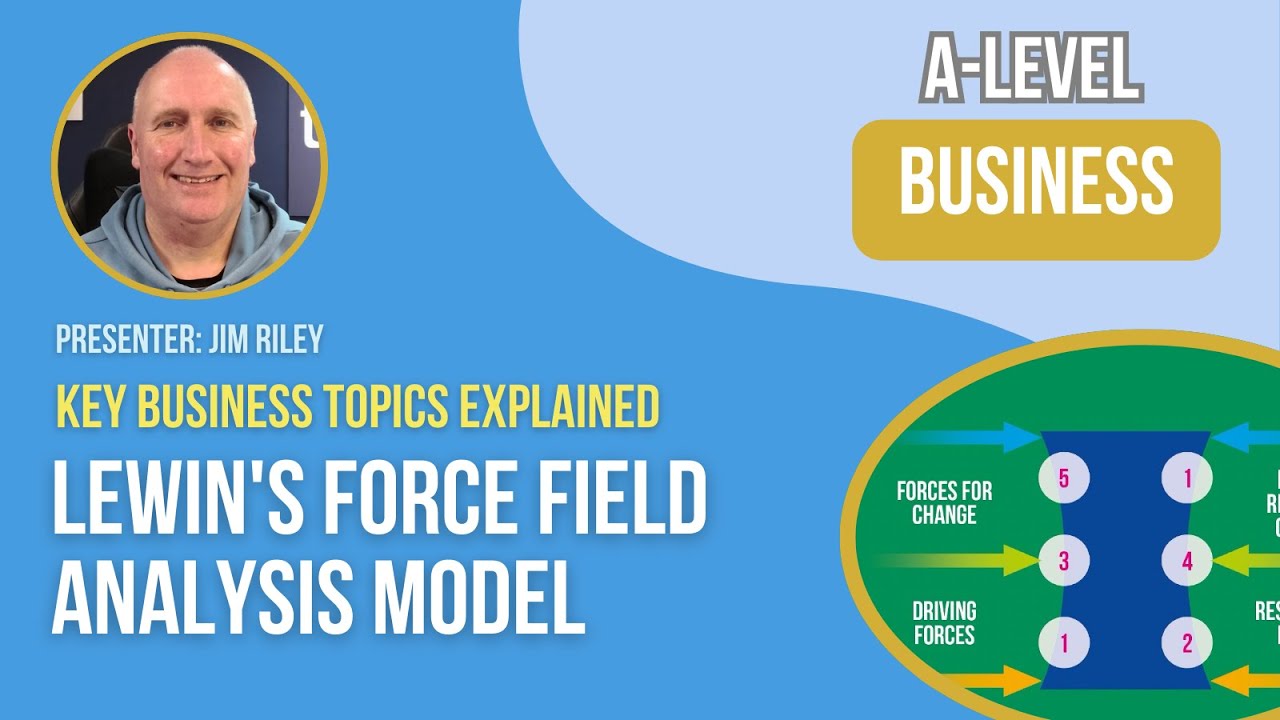
form or other and the question is what kind of resistance is it how powerful is it and can it be overcome now when we come to think about whether change can be successful or not and the nature of the forces pushing for it and resisting change there's a terrific model which you can very usefully use in your in your answers and essays which is a model called luu's force field analysis and there he is there's Kurt Leen he was the guy who looked at this and considered the uh the forces that are pushing for change
the driving forces and considered the forces that are resisting change restraining trying to stop change from happening and he came up with this really simple model there it is leen's force field model on the left what he called the driving forces what are the factors that are trying to encourage the business to adopt step change secondly on the other side of the model what might stop it what's pushing back what's resisting and what Leen said was that there are inevitably forces on both sides of the model uh where those forces are broadly equal in terms
of power basically there'll be no change but in order for step change to occur the driving forces there we are on the left the driving forces need to be greater than the restraining forces for for step change to be possible to give it a chance and of course uh those forces for change could be more than one uh it could be as I say stuff that uh is is pushing for change as a result of weaknesses in the business you can link this really nicely to SWAT analysis weaknesses are factors that are within the control
of the business that are actually leading to competitive disadvantage and they need sorting in order for the business to uh to to thrive so for example it could well be that simply the profits of the business are not sufficient or even worse the business is making subst Cal losses that's a very good reason a very strong force for change you need to do something about it it could be that the business is not sufficiently productive it's unit costs are too high compared to the competition uh it's inefficient in some way you need to do something
about it it maybe lacks competiveness in some other way perhaps through Innovation a lack of innovation a lack of uh of adoption of technological change perhaps there are issues around culture the business isn't quick enough making decisions it doesn't respond to changes quickly enough those are all good forces for Change and of course on the other side the key point to remember is that change can be forced on a business from changes in the external environment so a change in legislation or the law means that the business has to change in response the introduction of
a new competitor into the market or an improvement in the competitive position of another firm U that would also be a force for change they can be quite powerful but so too can resistance because the point about any kind of change we know this don't we we're all creatures of habit we like to know what's going on we like to know to expect when we get up in the morning and as soon as someone says everything is changing a degree of resistance is inevitable because we by and large human beings find change pretty stressful and
there's always going to be those out there and say well why what's the point what are we trying to change for are you sure this is the right thing to do um so resistance to change is inevitable and cotter and schinger looked at this and said that actually there are four main reasons why change is resisted and in the an you might develop maybe one or two of these to to explain uh why resistance can make change programs pretty hard to to to succeed with you've got this issue of parochial self-interest yeah we're only concerned
about ourselves so the question you might ask yourself is what does this mean for me okay it's changing but what does it mean for me because that's all that matters isn't it it may well be that the change or the issue of the problem is poorly communicated that staff weren't aware the business were making losses or they weren't aware that there have been a significant change in the external environment and that was the reason why the the factory was quiet or the orders weren't coming in and also it could just be plain disagreement we don't
agree with the change that you are SU suggesting uh for example a trade Union may take a view that actually they fundamentally disagree with the change that the senior management team wants to implement and there's just a different assessment a different perspective on the business issue that's a reason why change might be resisted but on the other hand we mustn't just assume that the employees in in an organization or the organization as a whole will say well no no we want to we don't want change it could well be that actually this is a welcome
relief to people within the organization you know you suddenly ex you suddenly explain that we're bringing two organizations together in a big merger well that provides opportunities for some people maybe threats to others uh reorganizing organizational structure uh delayering which is a great example of Step change provides for those who are left in the organization and for those who are given new responsibil it provides a great way of improving their their work experience and their prospects so don't always assume that people will resist change because it depends what the nature of the change is for
everyone's threat there's usually somebody thinking great news this is exactly what I want to happen and of course the other thing to remember is that there's a very clear relationship between the process of change management and Leadership now we're going to touch on on change when we look in in a separate topic briefing on leadership ship and leadership styles but just for now I think it's worth just reminding you that in order for step change or strategic change as I've written here in order for that to be successful I think it's pretty clear that the
organization or the business needs strong leadership and ideally it needs leadership who've been through the change management process before so the role of the leader is not just to explain and to announce the change but it's to to create that Vision why do we need to change what might the benefits of this be what are the driving forces and create a bit of Hope and a bit of blue sky as to actually it's a good thing to get behind and then making sure that the organization is aligned to what that vision is so explaining very
clearly communicating what the change process is going to be what the implications are for those in the business and what perhaps some of the downsides are what the likely costs are honesty is obviously a key issue there as you lead a change program and it's undoubtedly true that a key part of leadership is is deciding when change is required and then having identified it pushing it through making it work one of the benefits of having somebody new come into an organization in particular a new leadership perhaps a new CEO is that that actually can help
make change happen and there are quite a few examples out there aren't there of of of organizations that have brought in new CEOs or new senior leaders at the same time as embarking on a change program and one of the benefits this does it it it brings in A New Perspective and it provides a mandate for change you know the existing CEO departs somebody new comes in and says yeah strategic review we're going to make a change here a step change and actually they've got a mandate haven't they to to pursue that program uh but
it doesn't have to be the CEO for example it can be bringing in new operational or functional management as part of the change process that can help accelerate the uh the process and of course what often happens in major complex change programs is that the CEO also brings in external Consultants to help to help shape and project manage the change program I've been through a few of those over the years and I've got a view on how effective those Consultants are but it's undoubtedly true that there are a lot of of of quite successful change
management Consultants who help make the change happen so let's just summarize the the very clear link between leadership and change management and essentially the role of leadership here is it's not about doing the day-to-day stuff it's about stating the case for change developing a very clear Vision as to why the change is needed what's involved why the organization needs to do it what the effects will be I guess more importantly to handle the stress of change how's this going to happen um lots of research has been done about which change management processes have been successful
and why and conversely change management that has been unsuccessful and why and there's some quite interesting stuff that comes out of that that you could use to help develop your your answers in a relevant way essentially change management processes that succeed happen where there is decisive action firm leadership and it creates an almost Unstoppable momentum for change that overcomes the resistance so the new CEO comes in and acts decisively says he or she says this is what we're going to do they involve the organizational uh stakeholders particular Senior Management and the employees in the change
process Consulting informing frequently but not getting communication in the way of taking action so it's a change program that has very clear deliverables and is delivered quickly speed appears to be a key characteristic of successful change management programs but also flexibility not just necessarily just pushing ahead but recognizing if you if you identify some resistance or an issue that you can just deviate around it and find find a solution conversely the evidence around why change management fails is sort of not doing all the things that successful change managers do so embarking on it without explaining
properly to the employees why there's no Clear Vision about the purpose for change that sounds like a failure of leadership doesn't it poor planning poor preparation poor communication that sounds like a change process that's poorly managed and organized and also it may well be that the the costs of the change Program start to drain the resources that are needed to make it happen change it's a key point to make change is is not only complex but it can also be quite costly and so before embarking on a change management program you've got to know that
you've got the resources to be able to follow it through to the end look there are some great examples out there in terms of your application of change management we've already mentioned uh Kazo hi at Sony there saying Sony must change we've mentioned Sati and Adella at Microsoft pointing Microsoft to a significant step change in in its product and Market position we've mentioned uh Anthony Jenkins who wants to change the organizational culture of Barclays uh three more there for you uh Dave Lewis on the left the new CEO well relative new CEO has been been
in post for a year as I speak uh had some major issues to address uh but he is implementing a fairly significant rationalization and change management program at tesos in an attempt to restore the business's profitability still a market leader but it's got some fairly major organizational cultural cultural and competitive issues great example of a change management program that has succeeded by and large the uh the the achievement of of moag green and her team Mo green was the first Canadian first non-english or non-british person to run the Royal Male and she came in and
and significantly changed at Raw male against some fairly significant resistance uh thinking back to leen's model ahead of what's turned out to be a fairly successful privatization and uh the one on the right is possibly one of the best examples of a change management program that that that failed pretty spectacularly Steven elop issued a f a famous email to his employees when he joined another Canadian as it turns out when he joined a CEO of Nokia to say that uh the employees had a simple choice that they either stood on the burning platform and uh
and burned to death or they jumped off with him into the IC wats below and uh bought into his change management program well uh the rest as they say is history but Nokia essentially uh failed in its change management program and the bulk of the Nokia business was subsequently sold to Microsoft but not for the want of trying and there are a number of issues why the Nokia change manager program was perhaps too late as well as being unsuccessful let's just spend a minute or so just thinking lastly about how change management might be covered
in the exam or in an essay question don't forget change management is essentially around changes in the external environment so uh the concept of change is really closely linked to organizational culture very closely linked to leadership and leadership styles very closely linked to technological change anything that changes the external environment by definition uh provides the challenge of change within the business uh the uh first question is actually the first one listed there is actually one that's been an essay question on a business paper before you know is considerable opposition from stakeholders inevitable when change is
being introduced well the answer is some change is inevitable but it's considerable opposition inevitable have to think about whether what circumstances would be where perhaps St cers Embrace change and support it as well as resist it fiercely um and I think the third one down there is is the classic question it's the hybrid question which says is the best way to achieve step change significant change the word used in the question that's step change is to recruit new a new leader in other words if you want to achieve step change is new leadership new leadership
required uh that is the classic change management question linking leaders leip and change management hopefully you find those those essay questions useful have a think about how you might respond to those uh and plan some plan some some some relevant paragraph points i' be delighted to continue the conversation on change management and other related a level business topics if you want to follow follow me on Tut or myself and graah Rachel Jamie and all the team on the at Tut to bus handle for you guys who are preparing for the aqua Buzz 4 exam papers
don't forget also that uh we track and follow and contribute to the to the Buzz for hashtag so use that as well this has been a short topic briefing as an introduction to the concept of change management and I hope you found it useful
![What is Change Management? [2024]](https://img.youtube.com/vi/GSWGPTx24JY/maxresdefault.jpg)