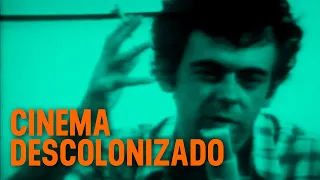
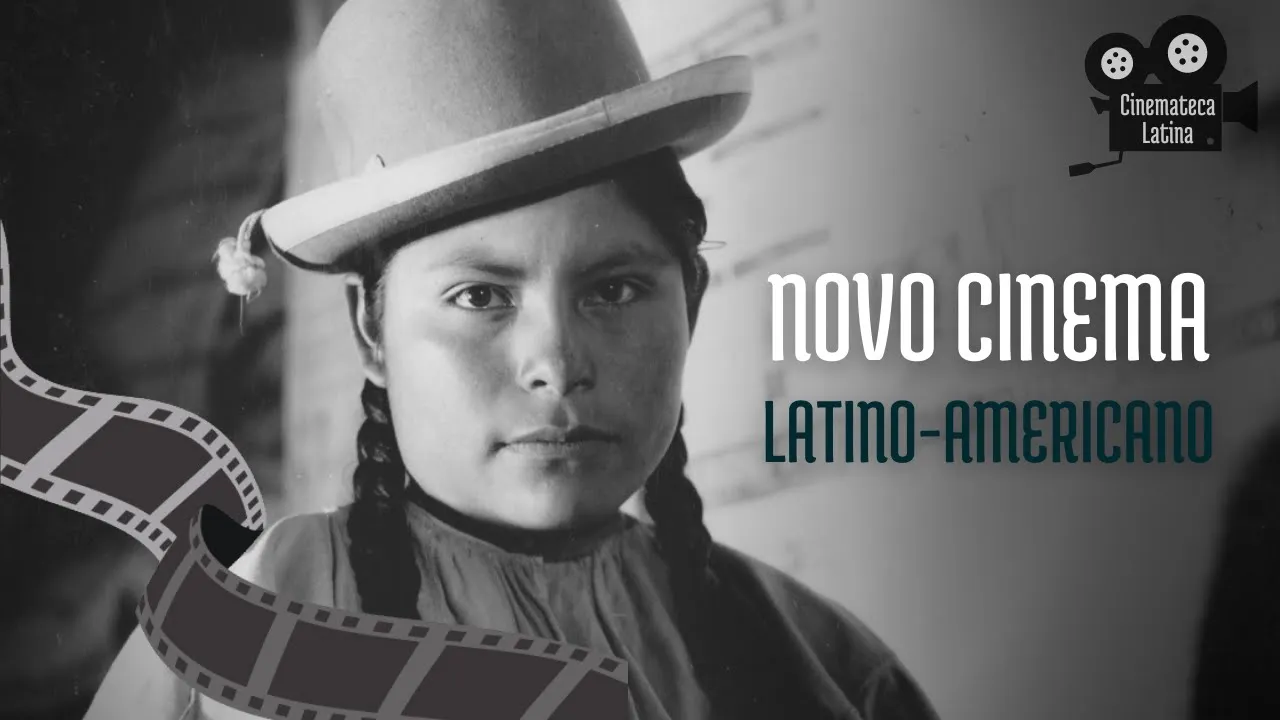
When we study the history of cinema as a whole, we are faced with some movements that were very important for the consolidation of cinema as an art. Among these movements, it is common for people to come across the Brazilian movement called "Cinema Novo" whose main name was director Glauber Rocha. However, what many people miss, or go unnoticed, is that this movement, it also had its peak throughout Latin America, was not restricted only to Brazil.
And that's what we're going to talk about in today's video. For those unfamiliar, the new cinema was a Brazilian cinematographic movement that appeared more or less there in the late 1960s. What was the new cinema?
What did he aim for? What did he understand? It was a movement of strong opposition to the Hollywood logic of thinking about cinema.
Because until then you had that classic story of the heartthrob, the young lady . . .
And that logic was reproduced here in Brazil and forgot about the social issues , the political issues and that made the filmmakers of the time, some directors, some thinkers stay very dissatisfied with that. We have several things going on, such as the Cuban revolution in 1959. So you have the seizure of power by the working people and this in Latin America echoes to Argentina, from Cuba to Argentina.
What else? We have, for example, in cinema, Italian Neorealism, which is a project that was actually a way of contesting reality, because Italy was destroyed and there was no more studio to record film, so what happened? The productions had to go to the street, we had to use them.
"Not us", right? They had to use non-professional actors, talk about themes about that fascist reality of questioning fascism and that influenced many filmmakers around the world. For example, we have here in Brazil in 1955, the film by Nelson Pereira dos Santos, called "Rio 40 Graus", which brought a lot to this logic of thinking about cinema outside the big studios, of centralizing production more, of do not get too attached to foreign capital.
Guard: "Where does this boy's father live? . .
. Yeah, he goes with me" Boy: Leave him here, your guard Guard: I can't, the commissioner sent me to see if he has a father or a mother Woman: He doesn't even have father or mother, he lives here at home with my son. We give him everything!
And in the 1960s, this movement was consolidated. We have big names, but the two that became more famous are Leon Hirszman and Glauber Rocha. Glauber Rocha, when we talk about new cinema, we automatically remember Glauber Rocha.
And Glauber Rocha was a very political guy, a guy who studied cinema since he was very young, so he saw in this whole scenario, in this melting pot of things happening, an opportunity to break with that logic, to decentralize the production of not depending on foreign capital and make a film that spoke of the reality of Brazil. To talk about the question of the northeast, which was a very explored region - until today it is - about the question of coronelismo, about the religious question in Brazil and he has two films that became very famous. His filmography as a whole is well known, but we will talk about two briefly here just to illustrate better.
There is the "God and the devil in the land of the sun", which is considered, for much today, the best film in Brazilian cinema . . .
Which is a film that spoke to this issue of the sertão, the drought of coronelismo, religiosity. The other 1967 film, the "land in a trance" that has this very strong political charge, of showing what people do to take political and economic power. This whole context that will favor both politically and economically with which movements like this arise.
In 59, we have the consolidation of the Cuban revolution. The war ended in 45, so the United States again turns its attention to Latin America and the process of establishing military regimes throughout the rest of the continent so that a "new vat" does not happen is set in motion. So we have in several countries taken from coups d'état.
Here in Brazil, we have the dictatorship in 64, so this whole scenario of persecution, underdevelopment, poverty, in short, several things . . .
The Cuban revolution and the logic of capitalism versus socialism in the world happening made this scenario, this environment would be propitiated so that several authors not only in Brazil, but in all of latin america to contest this: why are we underdeveloped? Why do people depend on American capital? Why can't we consolidate our art, our cinema.
Why can't we talk about this reality? And now we are also going to talk about other countries that also had this same logic, that same thought and that ended up consolidating the term "new Latin American cinema". Leaving Brazil, the term best used to designate this movement that took place throughout Latin America is the "New Latin American cinema".
This term became known, it became a little more popular from 67 with the festival that took place in Chile. , in a place called Viña Del Mar there, these young filmmakers from various countries in Latin America started talking, showing the films and saw that their way of thinking, their way of producing were in a certain harmony and as a way of unifying this they began to use the term "new Latin American cinema" which later with the creation of the Havana film festival, back in Cuba, was made official. They started using this, to designate themselves directors of the new Latin American cinema at this festival in Chile, at Viña Del Mar, we had several filmmakers who later came to be well known for their films and went down in history as great directors who contested this American, Hollywood logic .
Among them we have names like Glauber Rocha, Santiago Alvaréz, Humberto Solás, Mario Handler, Eliseo Subiela, Raymundo Gleyzer and Jorge Sanjinés. Some of the directors showed their films there at the Viña Del Mar festival. Of course, in this video I will not be able to talk about all the movements because it would be something very extensive and it is not the channel's proposal.
I chose some countries that I consider to be very important in this process of consolidating Latin American cinema. Among them are Argentina, Bolivia and Cuba. In Argentina, there were two groups that basically had the same political objectives.
The first was the Cine de la Base founded by Raymundo Gleyzer and the Cine Liberacion founded by Fernando Solanos and Octávio Gettino. For Raymundo Gleyzer, the problem with Argentine cinema is that he didn’t talk to the working class for him, cinema was very restricted to the middle classes and didn’t reach people in general. So he thought that the films should be shown in the unions, in the factories, in the countryside, public exhibitions so that he could have a debate with the working class.
The Cine Liberacion headed by Fernando Solanos and Octávio Gettino, they also came in this logic of problematizing and showing the social reality of the Argentine context of that period, at the end of the 60's. An epic film that became very famous and that is still used today as a political pamphlet it is a film called "la hora de los hornos" from 1968 which in free translation would be something like "the hour of the ovens" is a four-hour film that shows the whole question of Argentina's underdevelopment submitted to mainly American capital. The increase in the external debt, the precariousness of work, the increase in inequality .
. . So their objective was to go to the countryside, to go to the mass of workers, to use this cinema to contest, to politicize and to call people to the revolution and also to have an anti-imperialist character to expel all American influence from Argentina.
Now in Bolivia In 1966, filmmaker Jorge Sanjinés founded the Ukamau group together with Antonio Eguino, Oscar Soria, Ricardo Rada and Hugo Roncal. They made two films that ended up becoming very well known which was "Ukamau" a film spoken in Aymara. And the second was "Yawar Mallku" which was a film spoken in Quechua.
Ukamau is very important because it was shown at the Cannes festival in 67, it drew a lot of attention for the way it approached the confrontation, the clash between indigenous culture and the culture of the white man. The photograph was very beautiful, it was very stable, it had the relationship between man and nature, it is a very important film for Bolivian cinema and it is worth taking a look. Now to conclude, we are going to talk about Cuba.
There are several important filmmakers from that period, even because of the consolidation of the revolution, but what I will pay attention to is Julio Garcia Espinosa who had a very well-known manifesto. The so-called "Por un cine imperfecto" what is this "for an imperfect cine"? It is basically the logic of new cinema, of Latin American cinema.
It is to contest that very perfect hollywood thing disguised to impose cultural values, social values . . .
For him any popular expression, any popular film regardless of the way it was made, would be cinema, would be art. And if it dialogued with the national reality, with the issue of underdevelopment in Latin America, even better. It was a valid way of contesting reality.
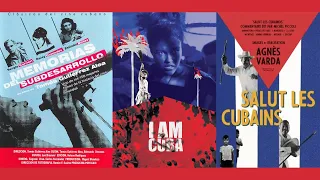
Very important films from that period, we can highlight: The adventures of Juan Quin Quin. Memories of underdevelopment. And the film "La primera load al Machete" by Manuel Octávio Gómez.
So that this short video can help in the contribution of studies for those who like Brazilian cinema, Latin cinema as a whole and if you liked it already, subscribe here on the channel, leave a comment that is very important, especially now that it is the first video of the channel. Thank you very much!