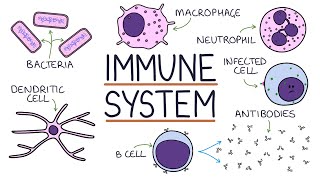
hi this is tom from zelda finance calm this video is designed to cover the different cells involved in the immune system so these are the cells responsible for body's defenses to pathogens and are responsible for destroying abnormal cells such as virally infected cells or cancer cells specifically we're going to look at the family tree of these cells of this importance understand where these cells come from how they develop and differentiate and how they relate to each other this will give you a good overview and reference point for later videos where we'll go into detail about
how these cells interact to provide an immune response so the development of immune cells happens in the bone marrow and it starts with a pluripotent hematopoietic stem cell so Clarie meaning multiple potent meaning potential he motto meaning relating to blood and poetic meaning creative and then stem cell being an undifferentiated cell that has the potential to create multiple different types of blood cell so when this cell is stimulated by chemicals called differentiation inducers it starts to specialize in to a variety of different types the first subdivision is to become either a myeloid stem cell or
a lymphoid stem cell now myeloid refers to the bone marrow and lympho refers to the lymphatic system so first let's look at myeloid stem cells as well as the cells of the immune system myeloid stem cells are also responsible for producing platelets and red blood cells so they can become something called megakaryocytes and mega means obviously large and carrier refers to the fact that it has a nucleus and site meaning cell so as you might imagine this is a large cell with a big lobulated nucleus and it's responsible for producing platelets and platelets obviously essential
for forming blood clots so the myeloid stem cell can also become reticulocytes reticular means net like and sight means cell so these are immature red blood cells and they've lost their nucleus but they still contain remnant RNA material called reticulum and this RNA material as you can see in the picture is sort of net like so these reticulocytes are released from the bone marrow into the bloodstream where they gradually lose their reticulum and change shape becoming the classical donut like red blood cells the red blood cells themselves can survive up to three months in the
blood and they contain a lot of a protein called hemoglobin which is the molecule that binds to oxygen and allows the red blood cell to carry oxygen around the body so normally about 1% of the red blood cells or reticulocytes and where you see a larger proportion of reticulocytes to red blood cells you know that the bone marrow is having a rapid turnover of red blood cells and that'll be because of situations like acute blood loss or hemolysis where the red blood cells are being broken down and this causes an increased rate of production and
therefore a higher proportion of reticulocytes to red blood cells so alternatively myeloid stem cells can become milah blasts and the maiale refers to the bone marrow and blast refers to immature cells so these myeloblast themselves then differentiate into other immune cells so they can differentiate into monocytes and these monocytes then become macrophages so mono refers to the single nucleus sight refers to cell macro refers to the fact that it's large and phage means to eat so monocytes circulate through the bloodstream and then when they enter the tissues they actually differentiate into the macrophages so these
are very similar the same family of cell macrophages can be found in most tissues in the body and they simply wait in those tissues to encounter a pathogen they're the first line of defense for a pathogen that has penetrated through the barrier defenses of the body now they have receptors called toll-like receptors and these are essential in recognizing molecules that are unique to pathogens and these molecules are known as pathogen associated molecular patterns or PA MPs once they recognize a pathogen or abnormal cell they can then destroy them using a process called phagocytosis where they
essentially absorb or eat the pathogen and then digest it from the inside they're also essential and secreting cytokines that initiate the inflammatory response when these cytokines and inflammation alert the rest of the immune system of the infection and then they generate the immune response so they're the first step in the innate immune system it's a response to a new pathogen and they alert everybody else so myeloblast can also become neutrophils neutro refers to neutral and fill meaning attraction and this therefore refers to the fact that neutrophils are generally attracted to pathogens which described their role
as a general attack cell in the innate immune system they spend their time circulating through the bloodstream and then they migrate to areas of inflammation in response to signals from macrophages and there they destroy the pathogens and abnormal cells again by phagocytosis my Oblast can also become something called a sinner Phil's a sinner refers to red-colored referring to the fact that their cytoplasmic granules take up dyes really well and give a red color under a microscope the sinner Phil's are particularly important when the invading pathogens are too large to undergo phagocytosis such as in parasitic
infections so they normally hang around in tissues until they're activated by cytokines or they respond to an invading pathogen so they have granules that contain pro-inflammatory cytokines and chemicals that are directly toxic to pathogens and parasites such as major basic protein which is an enzyme that digests parasites these chemicals can be released in a process known as degranulation or exocytosis in which the granules fuse with the cell membrane and then they're released into the surrounding space where they can travel to cause damage to nearby pathogens these cinder fills are also capable of phagocytosis but not
usually to the extent of macrophages or neutrophils so the myeloblasts can also become Marcel's and basophils and these are two very similar types of cell that both contain cytoplasmic granules that have various cytokines in them and they can be released in response to a pathogen again by degranulation the main difference between these two is that Marcel's are fixed in place in the tissues whereas basophils circulate through the blood and that basically concludes all of the cells that result from the myeloid stem cell and these cells are responsible for is called the innate immune system so
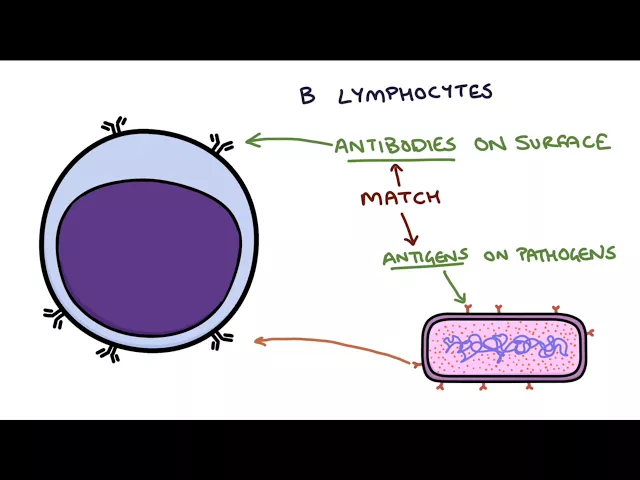
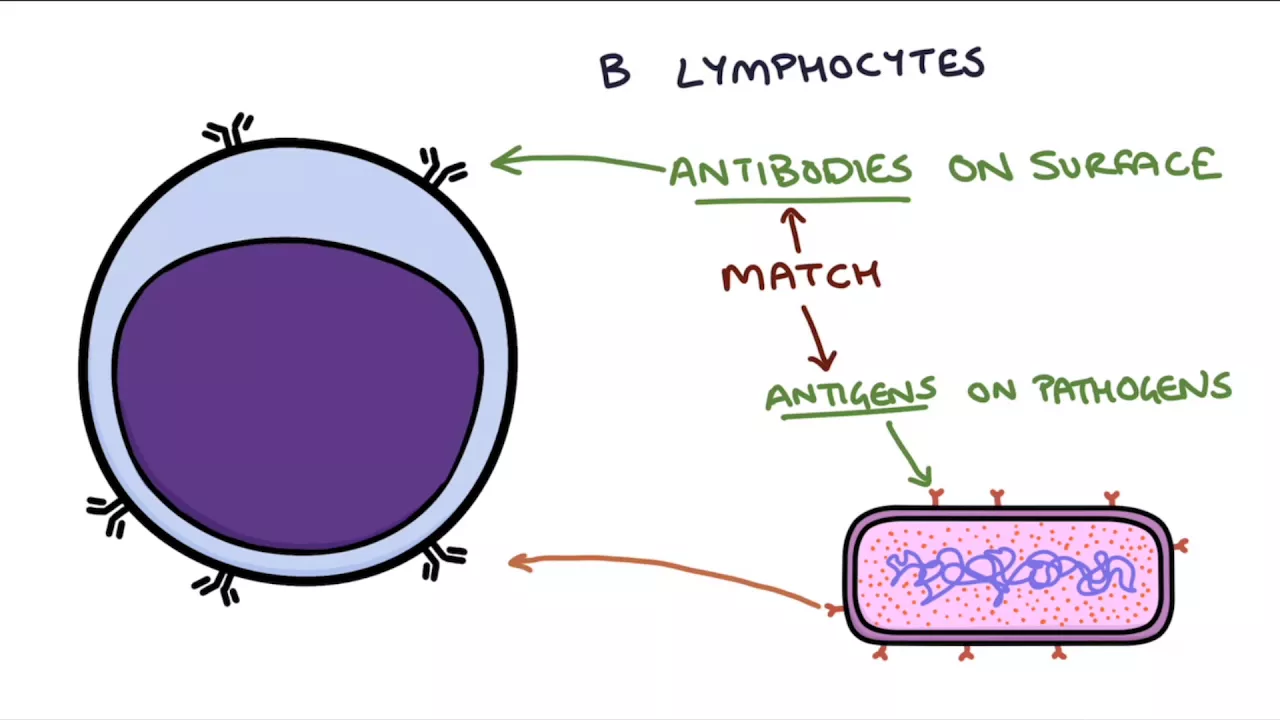
the innate immune system forms the first line of defense to pathogens within the body and involves the mechanisms for general recognition and destruction of pathogens so next let's look at the cells of the specific immune system and these results from the lymphoid stem cell so the lymphoid stem cell through a series of intermediate steps including lymphoblasts can become one of three types of lymphocyte the first is the B lymphocyte or B cells they're called B lymphocytes because they mature into this type of lymphocyte within the bone marrow itself our b-lymphocytes have antibodies also called immunoglobulins
lining their cell surface these antibodies are matched to specific antigens that are displayed on pathogens so each lymphocyte has a single specific type of antibody that matches a single antigen there are millions of different possible antibodies and therefore millions of different specific b-cells so each b-cell is only capable of recognizing the specific pathogen that displays the antigen that matches their antibody the role of the B cell is that once it is activated by the specific antigen it multiplies furiously and becomes either plasma cells or memory b-cells plasma cells produce fast quantities of antibodies against the
pathogen and the memory b-cells hang around long after the pathogen has been cleared so that they can respond much quicker when they encounter that pathogen again the second type of lymphocyte is the T lymphocytes or T cells and the code T cells because they actually leave the bone marrow has PROFIBUS sites and traveled to the thymus gland where they mature into T cells details have t-cell receptors on their cell surface that are specific in the same way as antibodies on b-cells to a specific antigen and so therefore only the t-cell specific to the invading pathogen
will become active in an infection so t-cells fall into two categories based on the type of receptors that they display the t-cells that display cd4 receptors are called cd4 cells and the T cells that display the cd8 receptors are called cd8 cells and importantly cd4 cells respond to MHC class 2 receptors on other cells of the body and the cd8 cells respond to MHC class 1 receptors on other cells and this is important to remember and will become a lot clearer over time as we go through some of the other details of the specific immune
system so cd4 cells become T helper cells when they're activated many cells in the immune system rely on these T helper cells to provide signals that then activate them including the cd8 cells so with the help of T helper cells cd8 cells become activated when their T cell receptors match a pathogen and they multiply very quickly and differentiate into cytotoxic T cells so cytotoxic t-cells can destroy virally infected or otherwise infected other cells in two ways the first way is to attach themselves to the cell and spray it with proteins that are destructive to that
cell's membrane and therefore destroy the cell by cell lysis or they can activate the fast pathway FAS pathway and this pathway is like a self-destructive process and it causes the cell to destroy itself by apoptosis the third type of lymphocyte is called natural killer cells these cells are activated by cytokines from macrophages and by interferons and they recognize infected or abnormal cells like the cells of tumors without requiring the MHC or specific antigen receptors they can then kill these cells by releasing cytokines that induce cell death again by apoptosis they can also secrete something called
interferon gamma that further activates macrophages so by creating this cycle of macrophages releasing sides of kinds that then activate the natural killer cells who then release the interferon gamma that further activates macrophages they create a cycle of positive feedback that increases the inflammatory response after contact with a pathogen so that concludes all the cells that result from the lymphoid stem cells and the cells that are involved in the innate immune system and there's one final cell type that we need to consider which is very important within the immune response and that's dendritic cells there are
various types of dendritic cell and they all originate from different precursor cells however they perform a very similar function specialist dendritic cells that are found in the skin are called Langerhans cells so dendritic cells are responsible for taking up antigens in the infected tissue processing them and then presenting the antigens on their cell membrane for other cells of the specific immune system to recognize and respond to they have both MHC class 1 and class 2 molecules on their cell membranes so they're able to present antigens to both cd4 and cd8 t-cells they act very much
like postman delivering messages that a specific type of pathogen has infected a tissue somewhere else in the body they pick up these antigens in the infected tissue travel through the lymphatic system and the blood to the lymphoid tissue such as the lymph nodes and spleen and there they deliver the antigens to the cd4 and cd8 cells and by doing this they play an essential role in initiating the specific immune response so that summarizes an overview of the cells of the immune system I hope you found this video helpful it was created as part of a
set of videos that covers everything you need to know about the immune system for medical school and practicing very well as a doctor so go ahead and check out the other videos in this series if you like this video please like comment and subscribe for more videos you can also check out the zero de Finals web site at zero two finals com for notes illustrations practice questions and a blog all of which has been purposefully designed and built from the ground up to help you prepare for your medical exams and for your future career as
a doctor and I'll see you with the next video