You. People bring unique spirits to the world. Every region has its own worldviews and lifestyles.
This diversity means that wherever you go, you will encounter different cultures and strive to understand their way of life. When you think of warm hospitality and delicious, healthy Mediterranean cuisine, Greece is likely one of the first countries to come to mind. Today, we will focus on Greece and its largest island, Crete, and discuss the lives of its 625,000 residents.
Greece has an astonishing 6000 islands, and Crete stands out as the largest, with its 8336km² separating itself from the Greek mainland. The island attracts numerous visitors, especially during the summer months. Located in the heart of the Aegean Sea, Crete is not only Greece's largest island but also the fifth largest in the Mediterranean.
Greece welcomes over 30 million visitors annually, largely due to its valuable islands like Crete. Tourism is a major source of income for Greece. Greeks proudly call themselves Hellenes and refer to their country as Hellas.
This pride stems from their ancestors, who were among the most advanced civilization in ancient times, especially during the Hellenistic period when they spread their culture far and wide. Modern Greeks take immense pride in their heritage, proudly declaring we are Hellenes. Additionally, Cretans claim their land as the birthplace of Zeus.
Greeks hold their country and islands in such high regard that it is rare to see a Greek vacationing in another country. Those living on the islands in particular, seldom leave during the summer months, except to visit the mainland. Cretans and other Greeks believe that their climate offers everything they need.
They say every year millions of tourists come to our country to vacation or live. So why should we feel the need to go anywhere else? Mountains, plains, seas, waterfalls and healthy natural foods all contribute to Greece's infinite beauty.
However, if you're considering living on one of Greece's islands, such as Crete, rather than on the mainland, you'll undoubtedly face transportation challenges. For example, if you want to travel to another country or a distant region, you must first get to the airport in Athens and catch a flight. Even worse, Crete is about 350km away from the mainland.
So your flight could take up to an hour. Severe storms often hit Crete during winter, making air travel difficult and leading to flight cancellations. This could leave you stranded on the island for a while.
Additionally, military exercises are frequently conducted on the island, although these exercises pause during the summer. The Greek islands have military bases, and airplanes occasionally perform patrol flights. While Crete and other Greek islands are mostly inhabited by the elderly, in the winter they offer a lively atmosphere.
In the summer. For instance, Crete boasts numerous undiscovered coves where you can swim, whether you prefer crowded beaches or secluded rocky spots. Crete has something for everyone.
Some beaches have sandy shores, while others are pebbly. You can rent sunbeds on Crete's beaches for a modest fee of 1 or €2 for the entire day. Beach showers and toilets are mostly free and exceptionally clean.
If you're coming from a cold inland place, you'll be pleased with the clarity of the water at Greek beaches. The pristine waters will enhance your visual experience and allow you to swim with peace of mind. The Greek government takes excellent care of its beaches because it doesn't want to lose tourism revenue to neighboring countries.
Even if you're not a strong swimmer, the water near the shore rarely exceeds a depth of one meter. Since Greece is in the European Union, most visitors to the country are from other European countries. Accordingly, the tourism sector and lifestyle cater to a European audience.
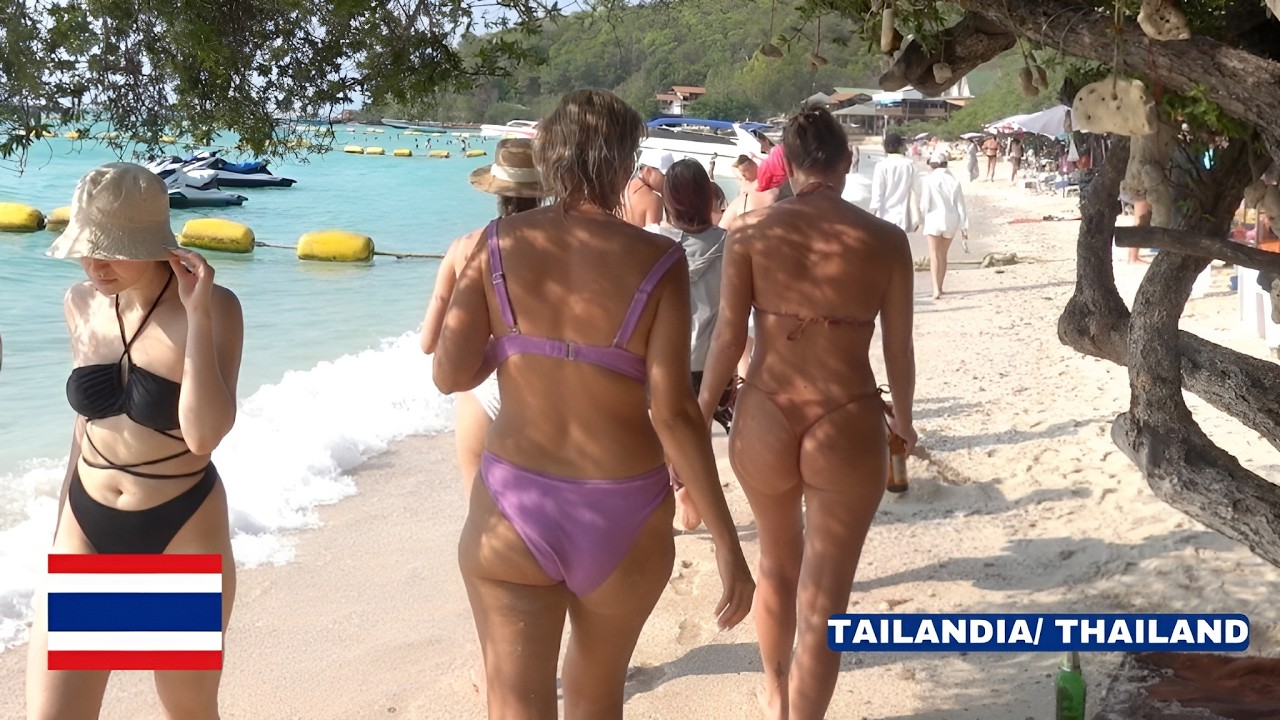
For example, if you are a conservative religious person, you might feel uncomfortable seeing so many naked people on the beaches here on Greek beaches. Women often sunbathe and swim topless. You may also come across adult parties involving nudity, especially on the islands.
While these situations might be enjoyable for some, they could be disturbing for others. In this context, consider visiting elephant and scenery beaches in Crete. Similarly, many venues use attractive young women to attract customers in the evenings.
These young employees do everything they can to draw you into their establishments. Sometimes men will approach you and invite you to their establishments in nightclubs on islands such as Crete. You can meet fun friends with whom you can enjoy a one night stand.
There are many well-groomed and attractive individuals around. It probably won't take you long to find someone suitable for you. These areas are known as the Red streets of Greece.
In Crete, you can also find shops openly selling cannabis products that resemble marijuana. People are completely free to purchase these substances and engage in one night stands. So farmers on the Greek islands don't just grow vegetables and fruit.
They also cultivate tobacco and sell it in tourist markets. On the other hand, Crete has many stunning places with captivating ambiance. Even if you visit alone, you will likely make friends with Europeans in Crete and other Greek islands.
Wandering around the narrow streets during the day is never boring. Apart from the beaches and nightlife, as you stroll around, you will encounter narrow streets lined with shop tables. The island is full of colorful motifs worth photographing.
The Greeks of decorated the front of their shops with vibrant decorations to make places like Crete more appealing. Since Crete is geared toward tourism, you won't find any tall, high rise buildings. The buildings in Crete's streets usually do not exceed two stories.
However, one of the major downsides of the Greek islands is their location on a seismic fault line, which makes them susceptible to sudden, large earthquakes. The Greek islands are ideal for cultivating many vegetables and fruits, so you can find quality food at affordable prices in the shops. Greeks often live well into their 80s, largely because the warm climate boosts their mental wellbeing, and they have access to natural foods grown in their land.
For example, Cretans claim that their soil produces the world's tastiest olives and olive oil. The people of Crete use olive oil exclusively in their meals. Greece is the third largest exporter of olives and olive oil in Europe, behind only Spain and Italy.
Greeks produced nearly 2. 5 million tonnes of olives annually, much of which comes from islands like Crete. Greek olive oil is said to be darker, green and more natural than oils produced in Italy, which enhances its aroma and natural olive scent.
However, it should be noted that Greeks, both on the mainland and on the islands, tend to drive hastily. They are generally quite lively and want to get to their destinations quickly. If you decide to live on one of the country's islands, completing bureaucratic tasks can be challenging.
It is nearly impossible to conduct business electronically through local administration means you will need to visit various institutions in person to collect each required document. Everything is paper based and government employees work slowly. They are just as slow in public services as they are inadequate in the health sector.
It is difficult to find hospitals with high capacity on Crete or any other Greek island. For instance, if you live on an island and require surgery, you often must travel to Athens or another country. Therefore, if you have serious health issues, getting treatment on the islands can be a real ordeal.
While you can visit private doctors and clinics if you can afford it, even these services are limited on the islands, meaning you will pay more than usual for them. State hospitals provide general health insurance for treatment, but the Greek government, however, you may have to wait up to three months for an appointment with a doctor. Therefore, you need to be patient to receive health care services throughout Greece.
Another downside is that the Greek islands can become boring after a while. The locals are accustomed to their land, but if you move there later in life, you may realize that each island is essentially like a small village. For example, in Crete, all the locals know each other.
They are aware of each other's lives, which leads to a lot of gossip, since there isn't much else to talk about besides Greek politics and the economy, discussing other people's lives becomes the primary topic of conversation on the islands. Additionally, you might eventually crave the hustle and bustle of more developed cities. The islands are fun in the summer, but they become deserted and quiet in the winter, combined with insufficient infrastructure.
Life can become quite dull. Despite being a member of the European Union, Greece pales in comparison to countries like Germany and France. For example, Greece adopted the euro in the early 2000 and subsequently received numerous loans from EU funds.
Initially, these loans seemed beneficial to the country's development, but Greece is still repaying the debt, which amounts to around $350 billion. It doesn't look like Greece will finish paying off these debts before 2055. However, there is some good news for Greece.
Recently, gas reserves were discovered near Crete. This discovery could transform Greece, currently one of the UK's weakest links, into a significant gas producing country. Greece could sell the gas to Europe and use it domestically to support its population.
As a result, Crete boasts the lowest unemployment rate among the Greek islands in 2023 alone. 5 million tourists visited Crete, contributing €21 billion to the local economy. This is an extraordinarily high amount for an island.
Crete was once an independent kingdom and only joined Greece in 1913. Before that it was under Ottoman control. Because of this history, you may hear some islanders refer to themselves as Cretans rather than Greeks.
When they meet new people, they often say we are Cretan. Although this community fought for independence for hundreds of years, they are quite similar to modern Greeks today in terms of genetics, culture and personality. The only noticeable difference is their accent when speaking Greek.
Someone who learns Greek in Crete can be easily identified as being from the island when visiting the mainland, because Cretans pronounce some words differently. Some people claim that Cretans are marginalized on the Greek mainland. While some believe this is true, others deny it.
This belief stems from historical events. Cretans were frequently invaded by mainland Greek states in the past. Some Greeks and certain Cretans families refer to this as a blood feud.
One of the most notable traits of Cretans is their constant friendliness towards strangers. Almost everyone on the islands works in the service industry, running real estate offices, cafes and restaurants in cafes. You will be greeted with warm smiles and friendliness.
This warmth is part of their character and a crucial element of their customer service strategy. Those with Greek friends often say that Greek friendships last a lifetime. On the other hand, both Cretans and Greeks start their days quite early.
For example, farmers and restaurant managers begin their day around 6 a. m. people take a coffee break around 10 a.
m. . Coffee is almost a sacred necessity in the Balkans.
Greeks who start their day at 6 a. m. take a work break around 2 p.
m. despite starting work early. They don't work continuously until late at night.
You've probably heard of the siesta, a nap break also present in Greek culture around 2 p. m. .
Even in the most touristy areas of the island. You'll see shops closed and streets deserted. That's because shop owners have gone to rest.
They take a three hour break and reopen their shops around 5 p. m. , serving customers until late at night.
However, if you are a Greek civil servant or banker, your workday ends at 2 p. m. .
In this sense, civil servants work fewer hours and are less tired than those in the service sector. Work hours in Greece are generally divided into two shifts morning and evening. Greeks are hard working but often lack punctuality, which can be frustrating for a Greek.
Being half an hour late to an appointment is not considered late. They might even show up an hour late. In some cultures, being late is seen as disrespectful and undisciplined.
The Greeks don't see it that way. To them, being late doesn't mean they don't respect you. It's just that delays are considered a normal part of life.
When visiting Crete, Greece's largest island, be sure to see the Cathedral of Saint Minus. It is said to be one of the oldest buildings on Crete and among cathedrals on the Greek mainland. Located in the center of the island, the cathedral was hit by a bomb during World War Two that did not explode.
Cretans believe that saint protected the cathedral. As you explore the island, you'll see that it is indeed a safe place. For example, if someone commits a serious crime like murder, it's unlikely that they would escape the island undetected.
However, residents main complaint is about illegal immigrants arriving by sea. Cretans claim that people from the Middle East, Africa and South Asia are entering the island illegally in inflatable boats, which damages the island's economy and security. Although the Greek islands resemble Paradise in the summer, the high humidity in the winter makes the cold feel harsher.
Despite this, even on large islands like Crete, there are no central heating systems. You won't find natural gas heating systems in most Balkan countries, including Greece. People rely on air conditioning for warmth in hotels.
Electric water heaters are installed in bathrooms instead of natural gas systems. Some residents use a more labor intensive method involving solid fuel heating systems. They have boiler rooms where they fill the boiler with fuel, which heats the radiators throughout the building.
Some Greeks use wood stoves or fireplaces to stay warm in the winter. However, since the weather is warm for more than nine months of the year, the period of time when they struggle with the cold is brief, making the absence of natural gas heating less critical. Have you ever wondered how people living on Greek islands meet their clean water needs?
Locals on Crete claim to have the cleanest water of all. The Greek islands. They attribute this to the abundant limestone found on the island.
Limestone contains many beneficial minerals, and the water from the island's sources undergoes simple purification processes to become drinkable. Additionally, the mountains and rivers of Crete are covered with snow during winter, which melts and provides clean water for the locals. Anyone wishing to settle in Greece today must learn the Greek language by mastering the language.
You can handle public affairs more effectively. Gain respect from Greeks and receive their help more easily. Another requirement for being accepted in Greece is respecting their culture, history and mindset to integrate into Greek society, embrace their values and avoid criticizing Greeks in their presence or speaking ill of them behind their backs.
Additionally, Greeks and Cretans dislike being compared to other nations. They believe Greece is a special place and consider themselves a unique people. They enjoy living according to their traditions and do not wish to compete with the outside world.
For example, they have a saying to Kasuga meaning slowly or take it easy. This reflects their philosophy of enjoying life and avoiding stress. If you want to rent an apartment in Crete, expect to pay around 700 to €800 per month for a place that can accommodate four people.
As is the case everywhere else in the world, prices have increased significantly in the past three years. An apartment that cost €500 three years ago can now easily rent for €800. Utilities, including electricity, water, natural gas and internet can add up to about €300 per month.
Therefore, including food expenses, a family of four would need at least €2,000 per month to live in Greece. If you have children, you will also need to factor in education costs. Education in public schools is free up to the end of high school, covering a 12 year period.
If you can afford it, you also have the option of sending your child to a private school. Additionally, wealthy individuals can obtain unlimited residence permits by investing €250,000 in property on the Greek mainland or its islands. This golden visa is offered by the Greek government, and grants you and your family the right to reside in Greece indefinitely and enjoy almost all benefits.
After seven years of owning the property without selling it, you can apply for Greek citizenship, thereby gaining citizenship in an EU country for yourself and your family. This could be a fantastic investment in your future, because having citizenship in an EU member state allows you to travel freely within the Schengen area without a visa. Another thing that applies to Cretans and all Greeks, especially those living on the islands, is the importance they place on continuing their lineage due to living in a limited area.
Islanders consider raising new generations that will carry on the family name to be vital and sacred. Therefore, in places like Crete, the primary goal after marriage is often to have children and pass on the family name. Those who have male children feel particularly fortunate because they believe their lineage will continue through their sons.
The desire for male children is present in every Cretan family and stems from historical traditions. During invasions, male children were essential for defending the island, so the birth of a male child was significant for protection. Thus, a male child is seen as an heir.
And fathers often name their sons after themselves. Cretans also claim that all life in Greece began on their island. According to them, the ancient Greek god Zeus was born on Crete.
You will frequently encounter designs depicting Zeus in shops and museums on the island. Remains found here indicate that palaces, clean water systems and sewage systems existed in Crete in ancient times. This suggests that people lived on the island before settling the Greek mainland.
Similar to the Vikings, the Cretans engaged in fishing and maritime trade. The island was home to the Minoan civilization, which is believed to have ended due to a massive volcanic eruption. Today, Cretans take great care in burying their dead.
Their cemeteries are made of marble and adorned with beautiful flowers. Given the importance of family ties among Greeks, they place photos of the deceased on their graves. This allows them to remember their loved ones not only in their minds, but also by seeing their images and cherishing their memories when they visit the graves.
In this video, we explore Greece through Crete and gain insights into island life. If you enjoyed the video, please like it and subscribe to the channel for more content like this. Goodbye.