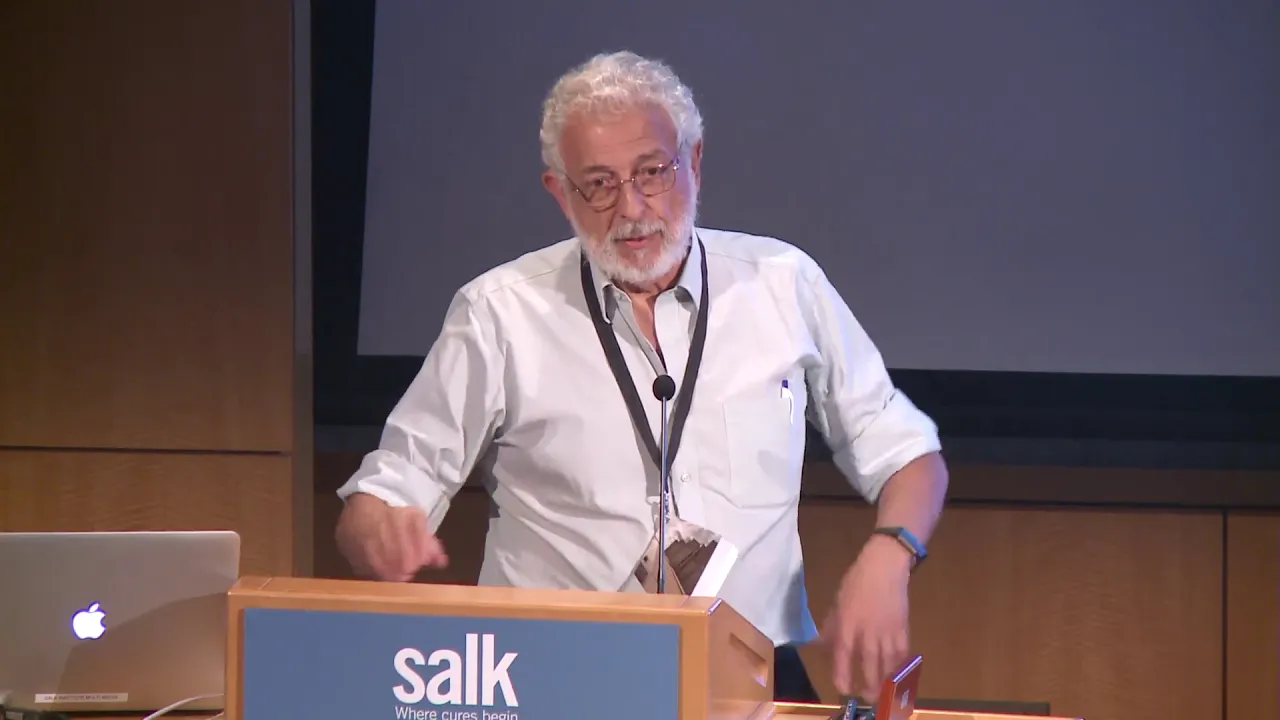
good afternoon and welcome to the 2018 international conference of the academy of neuroscience for architecture I'm Frederick Marx president-elect of antha and chair of this conference putting a conference of this type together takes a lot of work as many of you know and doing other conferences and there are many people to thank for their assistance on this one if you look toward the back of your program booklet after the contributed poster listings you will find the a4 border directors and the volunteers noted I want to call particular attention to the help I received from Anthes
executive administrator rosie Greenberg who you may have already met during registration and for those of you who still need to register you'll also find a kind face and very helpful person the board members Betsy Dougherty and Curt hunker as well should be recognized for this assistance in his program over many many months in addition a significant recognition needs to be given to the conference sponsors or noted in the booklet and on the screen behind me please don't fail to spend time visiting with representatives of both Lutron and Cal wall and I have observed that you're
already beginning to do that so I appreciate that interaction and also learn something about what the new School of Architecture post design from San Diego has been doing to its curriculum to introduce neuroscience to its students very interesting program during the course of the year with a special program that takes place each summer I also want to extend my thanks to all of you in the audience for attending this conference and in many cases contributing to the content that we will be hearing over the next two and a half days this conference has exceeded the
total attendance for 2016 and this new number is nearly double what ampere experienced in its first conference in 2012 that says a lot about where research falls within the architectural practice today research that is empirical and considers the scientific method research in cognitive science that helps designers be more aware of evidence that impacts health and well-being of building occupants antha is celebrating its 15th anniversary this year during the organization's humble beginnings there was some question as to whether scientists and designers could have a meaningful interface we have more than proved that that is the case
as translation of scientific studies on the brain mind and body associated with the built environment become available this relationship will only grow stronger a trend already exists where architects are collaborating with scientists on studies that are being conducted within academia as well as private practice and thanks to the postdocs the technicians and the pis were with us today from Salk and elsewhere for taking an interest in this new frontier if you've not had a chance to read through the entire conference program there is a full schedule of talks poster presentations and panel sessions alpha following
its tradition will have you experience all of this contact content as one group the format is slightly different in other cases however we are devoting more time to hearing the poster authors and will make posters from past sessions available for your viewing throughout the conference to add some drama to this exercise there will be a prize given out for the best poster under each conference subject designation I'll spare you the details until later in the conference in addition the program will include an activity called table talks on Saturday afternoon where you will be given a
chance to express your feelings about the presentations that you have heard here and where you think the commingling of science and architecture is going in the future this year's conference theme is shared behavioral outcomes its purpose is to set the stage for considering what we study in one field or about one building type may have implications for knowledge in another you will be the judge as to how relevant that is right now but I ask that you keep an open on for the potential finally some housekeeping items keep your program booklets with you at all
times while you are on the Salk Institute campus it is also suggested that you may write your first name on the the book itself to help with meeting a new friend and colleague don't forget to sign the forms for architectural continuing education credits that will be available each day for each AIA approved learning unit session they are out on the registration desk I think some of you have already taken advantage of signing up explore the Alpha website for information about past conferences workshops interfaces lectures and databases we have updated the website this year and hope
that is user friendly meeting them by which you can discover old things and new things and most of all just enjoy yourself and with that I'd like to introduce Laura mechag now from UCSD who will talk to you about the rest of the program today thank you [Applause] you may notice that we tried to balance so I'm a neuroscientist and of course fred is an architect so we'll try to do a kind of a two-step so that no one gets a feeling that they are selected I mean fields anyway welcome I wanted to say a
couple of words about the name of this session what we measure and what does it mean because I think that as we interface more and more between the two fields what the neuroscientists are bringing to the interaction is a lot of technological know-how for measurement and so you know if you listen to and you will listen to neuroscientists in a few minutes they'll tell you about what they can measure with EEG or GSR or you know some mixture of letters and your question should always be but what does it mean right because if we're listening
to what the brain is saying it's very complicated and the brain is just part of our nervous system right the brain is also giving signals to your body right so you might feel some stress your heart rate goes up or you might feel calm and your heart rate goes down it's you know it's something that we have to keep in mind that that the nervous when we talk about neuroscience we're talking about many fields really from psychology and Cox eye to what is going on with neurons so it's a whole range there are a lot
of fields and if you ask the person who is psychologists what does it mean or you ask you know cognitive scientists or you ask a person that works with neurons what does this signal mean the answer may be significantly different now the interesting interaction that we're looking at which is the human space you know our environment what we're looking at really is how we respond can be measured in many different ways okay and we use many different technologies and we'll have a demo this afternoon from a group that I work with on multimodal biosensors portable
etcetera etcetera you'll see that we can actually collect a lot of information and I think where we have to go is to collect a lot of information simultaneously in order to interpret any one of the signals unless of course we do an experiment in a laboratory with VR or something where we have more control but but we want to know what behavior is like in the real world and to really assess what's going on what we need to measure is complicated it's connected there's a lot of synchronous things going on and we can't control all
of them okay so I think the conversation this afternoon begins with what can we measure but really what does it mean and how do we know that it's X and not Y okay so a slight change one of our speakers today stefano and rainy was not able to come so one of our colleagues David Kirsch grace graciously or maybe because I twisted his arm is going to give a presentation and will take his place also in in our later panel I have asked the speakers to stay within a frame of time 20 minutes max for
anybody so if you have some questions about what they just said please ask them unless I say there are of time but during the panel save your questions we'll have time to answer questions and have a fuller discussion after the posters the demo is going to occur during the poster session and hopefully will not disturb it too much you'll know when it's going on because a lot of information will appear on a screen okay so 120 times doing pretty well just to reiterate what happened was we did not realize that we should have open registration
at 7:00 in the morning as opposed to noon and so a lot of you have not had the time to register you can do that during the poster presentation okay so don't feel like you're going to be left out and and as Fred said in order to go walking around the salt we're gonna have these things around your neck I don't know what happens if you don't but it's it's good okay so we're going to start this session with dr. Giovanni Ducato who is in the department of physiology and pharmacology at La Sapienza which is
a university in Rome and he said truly a neuroscientist but he was going to tell us a bit about neuroscience and architecture