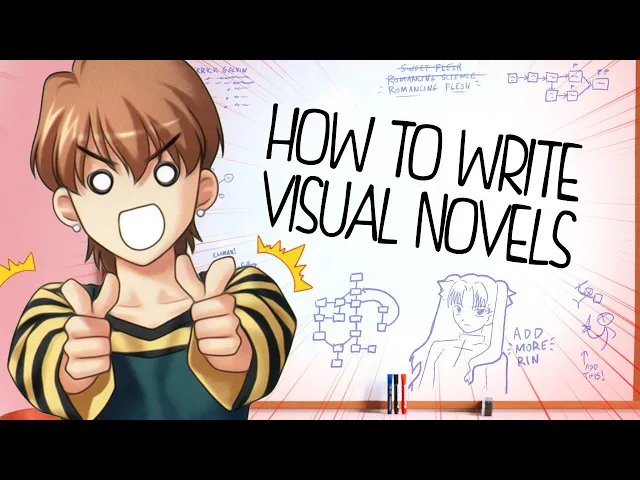
a lot of videos i've seen on writing visual novels and branching story narratives they really seem to focus on that last little chart of all the different ways that a story can branch from like one point to another which looks really impressive and really helps sell the video but they don't go over the step-by-step process of how do you get to something that's that complicated looking now honestly there's a lot of ways to do it but here's the method that's worked best for me i know this is gonna sound a little overly simple but really
step one is to have an idea and it doesn't have to be like a fully fleshed out story it literally just needs to be an idea so the idea could be you know a fun character you want to do some sort of doodle where you're thinking like oh i should have a story based around that a plot a setting or even just like a phrase just some sort of message that you want to tell your audience now that root idea that you started with that doesn't necessarily need to be the same thing over time i've
had projects where it started off with a very kind of loose ethereal idea and over time i kind of realized like oh this idea is really more about this like there's something deeper there so don't be afraid to kind of keep evolving this idea of what that seed of an idea is over time and don't be afraid to just change details of that as you kind of figure stuff out and honestly if you want your projects to be profitable start with an idea of this visual novel is for an x type of person or this
visual novel appears to fans of property y using your idea seed as a start just start coming up with other ideas that kind of branch off of that if you started with a character what kind of situations would be really interesting to get that character into if you started with a phrase what sort of things pair well with that phrase and sometimes the things that germinate off of that seed can just be you know game mechanics visuals that you want to suggest a narrative style then once you feel like you have a kind of complete
grasp of what this idea is and what it might fully turn into then you kind of have to make a hard choice are you going to do it or not and that's really the most important part of this process because if you're anything like me you're just coming up with ideas all the time but a lot of them suck not every single one of them deserves to have months possibly years of your time dedicated to fully fleshing out that idea and it's better for you to drop those ideas at this stage of the process than
much later i've had to throw out ideas that i got to like the scripting and storyboarding stage and realize like oh this doesn't quite work that hurts a lot worse when you have months of your time dedicated to something seeing it get to a certain point and then you have to go okay nope gotta cancel a project now so it's worth being really selective at this idea stage once you have an idea that you're happy with that you want to take to that next level grab all your notes that you have on it and write
it just in a loose dock i usually throw this on like a google doc somewhere because that's going to be where you're going to be starting from just all those loose ideas and you're going to use them for the next stage of the process and it's important to treat this as a living document because it's something you're going to refer to over and over and over again and you're going to see that starting from the next step and you're going to see that living document being used over and over and over and over again throughout
this entire process [Music] the next step is going to be setting up the outline for your story now for this stage of the process don't worry about making all the different branches we're going to focus just on one main branch where you're going to want to hit all the major story beats that you want to hit during the course of your story now what are those story beats so you're going to have lots of like little scenes little ideas things that you're going to want to hit over the course of the story so for your
main branch go ahead and just pick out like a whole bunch of moments that you think really work well together put those along a line and then figure out ways that you can get from one scene to the next now this part's kind of loose it's kind of free form there's lots of different ways people are going to be writing their little outlines but i find this method works really well for me because i just have a lot of ideas for just like oh that we should have a whole bunch of things in this story
and it's very loose it's very free form and by forcing myself to put this in an outline method i'm reducing all of these really complex ideas down to how can i fit all of these things in a single story and at this stage i'm not just worried about including all the ideas i like but also how are they gonna form together to create like a full story you want your visual novel to be like an additive experience on top of some sort of base gameplay so if you have an rpg a dating sim some sort
of rts just whatever game genre you have if this is supposed to be a story that goes on top of that gameplay you're going to want to set your plot line to work along with the major beats of the game so usually you're going to have a lot of story beats happen earlier on and this is going to reflect how the player is going to learn different experiences and skills during that kind of a mini tutorial section and then you're going to want other story beats to align with when you're learning new mechanics in the
game or when there's some new interesting wrinkle on top of gameplay you want to align those things with story moments and that'll end up kind of becoming the plot structure for your whole game if it's not an additive experience on top of gameplay then you're going to want to consider what genre your visual novel's in and that's because most genres kind of have their own narrative beats and genre conventions that you're going to want to hit so even if you have very clear ideas of what things you want in your story if you know it's
going to be a romance you're going to want to hit certain romance tones at first meeting you know the midway fight the rival character or if your visual novel is like a classic adventure sort of sword and sandal thing you might want to follow along with joseph campbell's the euros journey so you're gonna want to have your character have them hit you know the call which they refuse and then they have to pick up again it's a whole thing there's a whole bunch of different story pyramids and structures that you can kind of align your
visual novel to and even if you're trying to make your visual novel buck against those trends those are things that you're going to want to think about but most importantly make sure that your outline really focuses on the key scene throughout your visual novel big story beats make sure they're reflected in your outline and on each one of those nodes you're going to want to note what changes from the start to the end of that scene so like in star wars in that first scene in the blockade runner the outline scene card would include princess
leia gives the plans to r2d2 princess leia is captured and the droids escaped tatooine and i'll get into why this is kind of an important part of this process later also at this stage in the process you want to write some character profiles for any major character now you don't have to write a whole character backstory but we are going to want to know what motivates them what are their primary character flaws that are keeping them from achieving those goals and then likes dislikes just various little character quirks that you might want to keep in
mind for later this is also going to be a living document it's going to change a lot over development so don't get too attached to any small aspect of it but it's good to have for each of the major characters and if you're writing an episodic visual novel something that you're going to be releasing one episode at a time this is probably the most important part of this outline process in hirohiko araki's creating manga in theory and practice he covers why making like really detailed character profiles is important in the manga process because you're not
really going to know where your plot's going to be going from month to month to month because you know lots of things could affect it or change it over time you could have audiences not really react to essential antagonists so all of a sudden you need to change it your editor might not like how a certain story arc is going so you might need to pivot that or you could just have the audience really respond strongly to something that you were not expecting and now all of a sudden you need to change your whole manga
to fit that interest like originally yu-gi-oh was kind of like a horror manga but it eventually turned into a card battle anime dragon ball changed from a gag manga to another battle manga and golden kami turned into like an adventure battle manga to well this so amongst all these changes that could happen to your plot and this might happen with your visual novels you want to make sure that you have a really solid idea of who your characters are from the forefront your characters are going to be the one consistent thing that you can really
control the big focus is that if you have interesting characters you can kind of make any plot you want as long as people are interested and invested in those characters so that's really important to get nailed down kind of at this stage of the process because that's going to make the next stage a lot easier now from this outline you're going to want to start on your draft don't worry about the proper syntax to look properly integrated into engine like we're not worried about that at this stage we just want to write that story from
start to finish but we still want to keep the story separated into those different scenes and we're going to want to make sure that that outline is constantly updated if you make any major changes at the draft stage now i like to write out these drafts chronologically because as you're going on you're going to realize certain sections that you outlined you thought it would take a really long time but it doesn't and other sections that you thought were not going to take very long at all you realize oh i actually really need to elaborate a
lot of things and it's kind of easier to adjust your story outline if you're doing these things in narrative sequence as opposed to if you'd kind of pick and choose what sections you want to write if your story isn't entirely gameplay focused but you still want some gameplay in it write notes on what you want that gameplay to be so no need to design that part out yet but make sure you align those mini games with certain story beats that you want to hit now at this stage things might change a bit over time and
that is totally fine like you might have a character written where their main character flaws that they're arrogant but as you're writing the draft you realize like yeah he's a little arrogant but that's not really his flaw that's just a symptom of a deeper sort of neurosis maybe he doesn't really believe that people care about him and he doesn't want to go out on a limb asking for help only to get rejected or maybe he honestly just is as good at things as he thinks he is but he just hasn't confronted better people out there
and once you find out these sort of deeper problems as you're writing stuff through you can kind of realize like there are some real depths to some of these characters that maybe you didn't anticipate at first now keep in mind even with these changes this you know character that i kind of made up hasn't really changed at all you know he's still arrogant but now you have a more nuanced view of who he is and what motivates him and you're gonna find that those little changes do change the plot over time that motivation is really
important it's what's gonna drive the plot personally i find that i have the worst writer's block when i don't have a clear idea what each character's motivation is going into a scene if everyone's just going in going through the motions if i as a writer just know whatever is happening here i just need them to walk away with the key or i need to have them get into a fight like i have a really hard time figuring out how to get there but if you have a really good idea of who these characters are what
motivates them a lot of the interesting things that come out of this stage are figuring out how different people's motivations clash so i try to make sure that each character goes into the scene with their own agenda so let a scene grow organically by seeing how these different needs and wants and emotions how all of these things kind of conflict with each other now personally this is where my visual novels tend to change the most a lot of those my new little details what motivates who where those motivations lead they can sometimes lead to i
get to a scene and i realize this should progress entirely differently or i get to a certain climax and i realize hey this really isn't the climax for this character because they have this thing but this thing that they say they want it's not really what they want so i realize i need to give them some resolution for some new underpinning maybe the arrogant guy realizes that his defense mechanism is really bad so maybe the resolution for his story isn't everyone getting the mcguffin it's him finally trusting other people asking for help and having that
be rewarded it's a very different visual novel from where it may have started and at this stage like that's fine for it to change just make sure that each step of this process as you're changing this draft you're changing the outline to reflect these changes next we have the edit stage which is kind of a rough one read through your draft which already can be kind of hard because it's a first draft and then you're going to want to start cutting stuff a lot of visual novels like to brag my visual novel's twice as long
as war and peace like it sounds really cool but right now we just want to have a really tight really nice story and that means trimming out like a lot of the fat we'll add some of that stuff back in later trust me but for right now we want to make this as lean as possible to do that reduce multiple lines of dialogue to just one really strong line removing story tangents that aren't really related to the plot or combine characters together sometimes you'll have two to three characters doing the job that like just one
really good character can do so it's not bad to just reduce the number of characters in the story honestly it's less stuff you need to draw it's fewer assets you need to worry about later this also goes for story locations sometimes you'll have people going from location location location and each one of those locations is going to add a little bit more money to your budget because you all of a sudden need to make that new asset so if you can find places where you can reduce the number of locations for scenes that's going to
end up saving you money in the long run and then once things are edited down i usually like to do like just another quick draft so sometimes you'll have scenes later on where it's like oh i should foreshadow that a little bit let me just tuck some little elements in there or if i have a scene that you know is a little terse little short maybe i'll pat it up a little bit or maybe i have a really important plot point later on that's really only mentioned once or twice in the beginning i'll just add
some little scenes as i go along just to make sure that the readers are constantly reminded oh yeah this thing's important and it's important that we get this main story as nice as tight as polished as we can get it because now's the part where we're going to make it a little bit more complicated we're going to turn it from this to this yes that means this is the branching stage and the first branch that we're going to make isn't really one that we're going to make off of that central story outline we're going to
start back at the beginning even before the outline we're going to want to take that story seed and we're going to want to plop it right at the beginning of that story and start outlining what the roots of our story really are so to go back to that really nice looking draft that you just finished and start to pay attention to what patterns or motifs might be popping up or what sort of aspects of this story are things that you really want the reader to focus on so maybe a lot of characters have you know
suffered loss so you know loss is something you're going to want to add to your roots maybe you've had more than one character compared to an animal in some way some sort of like totem spirit and you'd want that to be kind of more of a recurring theme going forward or maybe writing a romance and you kind of realize that all the characters you know aside from the romantic entanglements involved they have kind of more consistent internal struggles that they're all dealing with at the same time you know that's a theme that you're going to
want to focus on now all these roots are going to come out grow and you're going to get a map of not just where your story's gone in a literal sense but where it's gone in a figurative sense what sort of themes that you really want this thing to be about what really the central conflict is and then each branch that you're going to make off of that story narrative you're going to want to have it be fed from all those roots that you just created now when you start making those branching paths off of
a branching narrative you're going to want to make it the same way that you did the main branch you'll start with little story ideas turn it into an outline write a draft edit it and then update those little root themes because as you make new branches you're probably gonna have new ideas emerge and you're gonna do that over and over and over again until you get something more complicated now the first branch is gonna be the longest and toughest one to write but it'll still be way easier than that main branch not just because it's
shorter because this time we have this central branch as a rubric and we also have that outline which is telling us what things we need to have change from the start of a scene to the end of the scene in every little chunk so for simplicity's sake we're going to define each one of those changes as flags variables that change as a character moves from scene to scene and they'll let you create new branches that work in parallel with existing scenes now this system one of the major issues that's going to crop up as you
make new branching elements is you're going to realize that sometimes you'll have unexpected inconsistencies like in an earlier branch you're going to introduce one character and you don't even realize that that's like an important flag you don't realize that's an important story moment until later on you realize like oh that's actually a very important character for this thing to happen and whenever you find any of those consistencies which once you work on one branch you're gonna spot a whole bunch of them you're just gonna set each one of those moments as its own new flag
so you're just gonna add that list of important things that are in that scene and then what needs to change it at the end so we're gonna keep updating the outline as we go on just kind of realizing what are important moments now once you have that first branch done you're gonna spot most of those inconsistencies and now each new branch is going to be a lot easier to set up you can add new branches off of the central story path off of other branching paths new branches that can be both integrated separate and parallel
with other story blocks a new starting branch that might lead to a later branch shortcuts from one section to another a branch that takes you back to an earlier path and wow okay this tree metaphor is kind of breaking down quick because that's not what a tree is supposed to look like but just roll with me here however as you add each new branch you're gonna wanna see how that compares to that central story that you set up from the beginning so let's say you wanted several endings that had even sort of weight with that
central story this is really common with romance stories where really the only difference between one play-through and the next is you're romancing one character versus another you don't want to suggest that one's like the correct choice one is but you want to make that feel unique for each new player that comes in in that case we want each new branch to kind of end at a similar point as that main branch and follow a lot of those same story beats so we want to use that central story path as a map that we're going to
base every other branch off of so if we're playing that dating sim we're going to want to have that moment where the bookworm girl really opens up to the main character we're going to want to have that matched with a similar dramatic scene with a pretty similar amount of intensity to it with the sporty girl you know it doesn't have to be one-to-one we don't have to have the sporty girl necessarily unload a new truth onto the main character or anything but you still want to hit that same emotional intensity so maybe the sporty girl
breaks a leg and she can't finish out the rest of the season and now you kind of have to deal with the fallout from that maybe the fashionista girl from this other branch maybe at that point she gets one of her designs picked up by a local boutique like these are very different sorts of emotions but they're along that same line of emotional intensity and just by having them along those same story beats by making sure that one isn't much more different in intensity than others we can give each storyline a similar sort of weight
to it so one doesn't feel stronger or weaker compared to the other ones but if we want the different branches to feel like you're playing an entirely different sort of story and we want to consider how the story flow and plot structure change for each playthrough like for instance if we want the main branch to feel like a classic heroes story we do a tragedy maybe at this moment where the hero does something heroic maybe they make a critical mistake and now we can follow the trajectory of a tragedy we can even end this story
right then or the hero doing the wrong thing at the beginning of the story can turn it into a cautionary tale so maybe it's just a little offset of that branch we follow most of the other steps and then at the very end we have the hero fail because this critical mistake they had early on so these stories have like different links to them we have different story beats that we want to follow with each one of them but they're all deriving from this same story that we are branching off of now even if you're
doing a kinetic novel if it's just one story going the whole way through i think it's worth at least considering branching if only because we're worried about streamers nowadays and if they play through a game and it's the same game that everyone else can play through if these streamers don't have a chance where they can kind of express their individuality in some way it can make the process like a little bit less fun for them to participate in and you want people streaming your game so even just giving little options things that don't change that
central story branch that much but just little things little diversions in a story that can lead to the same section later on that can be enough to give some varied gameplay to make it a little bit more appealing to streamers and on a story side i think that introducing new branches little offshoots that you can do that lead back into a central branch make it so the path to the end is a little bit more winding that can be more than enough to make a streamer see the value in doing a unique play through [Music]
also at this stage is a little mini stage i like to call graph thing how i was just talking about creating variety in your story by introducing like little variable story paths you'd also kind of do that by integrating gameplay in your visual novel but the trouble i found is that early on when you're doing the outline stage you can have a very good idea for a type of game that you want to integrate but as time goes on you might realize maybe this game doesn't work maybe the story doesn't really need it and that's
kind of a sucky thing to learn after you've spent a lot of time trying to make this game work so i usually like to wait until i'm planning all the branching stuff before i start really heavily planning out that part of gameplay and part of it's just a production thing if this is a game that i'm only going to use once during a non-important story moment i'll kind of realize how long the visual novel is getting and i'll go you know maybe i can cut that maybe that's not worth it or alternatively you could realize
there's a story event that seems to happen like over and over and over again and i realized oh i can actually kind of replace this with a somewhat procedural system that would be good as a game finally we come to kind of one of the most fun parts of the process is a stage i like to call the twig stage so once you have all your main branches made your roots mapped out you should have a whole entire picture of what your visual novel's about so now go back to everything that you cut abandon storylines
bits of dialogue that you liked that you had to remove loose ideas from your idea seeds and see if any of them fit within the themes that you've outlined earlier in your roots because we're going to repurpose them as story twigs that's a term that i've made up for just little story bits that i like to kind of salt and pepper throughout my narrative it's like optional bosses or side quests we want to reward readers who really enjoy what they're reading for delving into the story a little bit more but we don't want to give
them penalties for skipping it none of these little story bits are imperative to understand the plot going forward but they should just be something that people enjoy when they can come across it and we want all these things to add back into the central themes of your visual novel then you have some new characters that kind of parallel stuff that's happening in the main plot little side stories that give us details about the world the characters inhabit have side characters comment on things happening in the plot stories they can pull off of a bookshelf someplace
anything that you want that you feel like enriches the entire story really signal to the reader that these are optional things like you don't want to lock a reader out of like a good main branch because it was very important to the story that they read this book off the bookshelf when there's like 80 other books on that bookshelf even if you want your visual novel to be challenging to get through there's a difference between challenging and annoying if you're training your reader that they need to click every single little thing check out every little
side plot if they want to get to a good ending you're not making these little story details feel fun and rewarding to find you're making them feel tedious and a little tiring and we want these things to be fun because these are the rewards for your die hard fans you know hide fun little details in here you know go crazy with it if a character is like deathly afraid of popcorn for some reason you know you can add the explanation in here you don't have to explain the primary plot again remove a lot of that
fat and you can transfer it out to this part of the story and if you have readers that really love your work they are really going to clamp on to this part of your visual novel but if you have people who just kind of like your story this is going to make it a little bit easier for them to handle and heck maybe it'll incentivize them to go back to find things that they missed later on now a little caveat to this process what if you have multiple writers working on this so you'll want to
divide the work amongst the group but you're going to want to make it collaborative they're all doing mini versions of this same sort of process on the outline part just do that collaboratively once we get to the drafting stage that's when you can divide it into different chunks so going in if you know that there are certain things you need to happen before you get into a scene and things that need to change by the end of the scene you just need to make each writer's chunk of work fit together like legos once you put
the pieces together go through the editing stage collaboratively so have everyone read through it have everyone take a stab at editing it maybe have different writers edit different chunks of the writer's story or have a separate editor that can just go through the whole thing and then you can adjust the story bible the character cards the outline just update that at that stage now once you've edited that draft and gotten it to a good stage divide out branches to different writers and again at every stage once everyone kind of adds their work to it and
as long as you divide stuff pretty evenly hopefully everyone should be finished like around the same time every new thing that comes into it just collectively look stuff over look for any mistakes or discrepancies mark new flags that might be there and edit the outline whenever you need to and then hopefully once you have all those branches made the twig stage you can kind of just go crazy any little idea that the writer has as long as it supports that main narrative as long as it reflects the themes that are in the roots your writers
can kind of just do whatever they want at that stage you know just let them have fun with it this is their victory lap so hi me again from later on in this video i guess now that i've gone through my entire writing process from start to finish i can let you know where i'm at currently in that process i have a little walking engine that i enjoy that i think readers would like but there's not really any reason for the readers to actually explore the world at this stage i'm going to take this later
story branch i'm going to kind of merge it in with that section i'm going to make the mini game a framing element for all of this so i'm taking these story elements and instead of treating them as just a thing every reader's gonna go through i'm gonna make it like its own story branch that branches off of that mini game god i hope this is all making sense it's very abstract at this stage but like i i feel like it's gonna work out okay so in a later video i'll probably go over what exactly this
project is for now if you want to see my whole process for actually making visual novels in renpi the engine i'm using for tomb gamer you can go ahead and check out a video over here and i have a lot more videos on how to actually bring visual novels from the writing stage to completion so be sure to check them out