Hello, Today, we will discuss the first aspect of defining Zionism through several dimensions, beginning with the territory. I will begin with the territory because, as we all know, it is the most contested one. It gives rise to the most quarrels and debates between Jews and non-Jews and between Israelis and the Arab world.
I will start with the territory also because if there is one thing in common to all forms of Zionism, it is the idea that Jews need a land. That the Diaspora model is no longer viable. The Jews must be regrouped and own their land.
It seems self-evident that this land would be Zion, as the movement is called Zionism. However, it was not initially the case, as there was uncertainty surrounding the available land. We did not know whether Israel would be available.
For a few years, the location was unsure. The most important aspects of Zionism were political freedom and sovereignty. We needed to be together in one place.
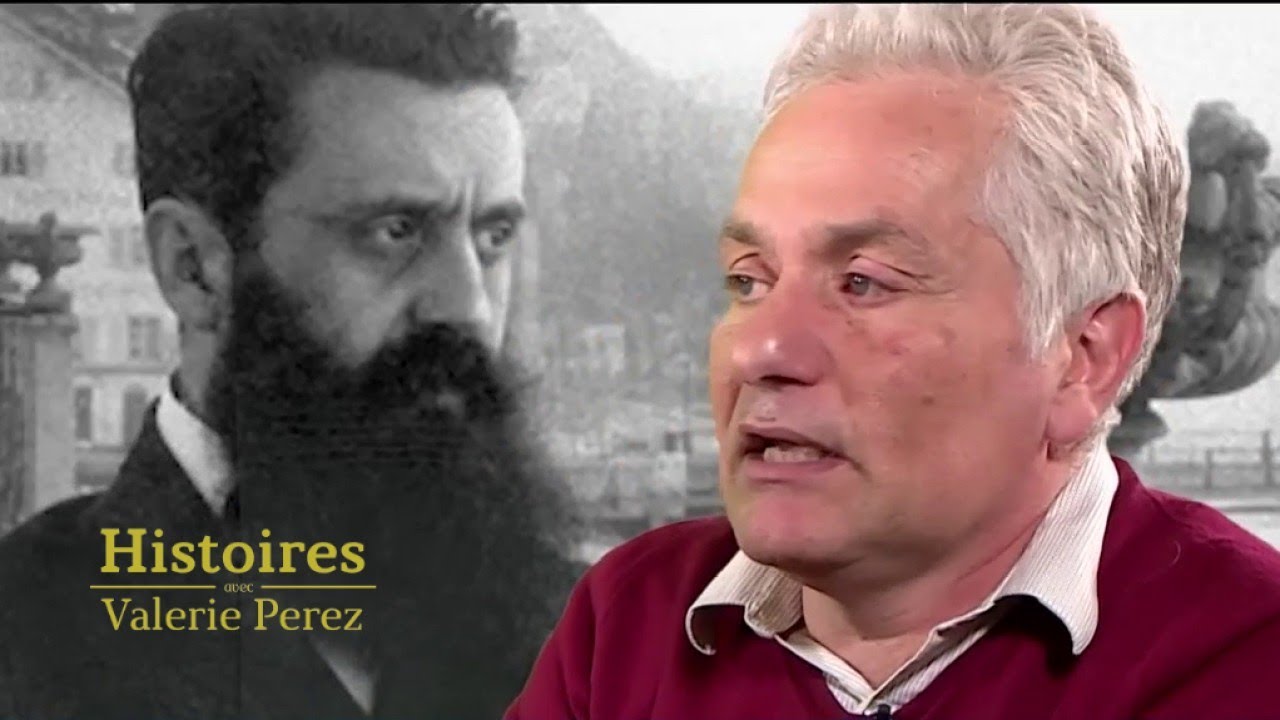
If that place was Israel, then great, but if not, we had to examine other options. Let us discuss two key references in the history of Zionism. The first is Theodor Herzl's book "The Jewish State", which has a chapter titled "Palestine or Argentina".
Herzl did not choose this title for the sake of rhyme or aesthetics but because, at the time, experiences were being made for the gathering of the Jews in Argentina. The question arose of which to choose: Palestine or Argentina? Herzl believed Palestine would be ideal, but was it available?
The territory's identity was evidently secondary to the project of having a state for the Jews. The second event that crystallized this question was the pogroms of Kishinev. After the pogroms, the British feared a massive influx of Jewish immigrants into Great Britain.
Therefore, they consulted Theodor Herzl, the president of the Zionist executive, and offered him 50% of his program. They offered to put together all the Jews in one state, but not in Palestine. Not because they were against the idea but because they did not own Palestine.
They had no presence there. However, they owned a lot of land in East Africa, particularly in the region of Kenya, at the time still known as Uganda. Hence, they gave Herzl the opportunity to create the state of Jewish reunification he called for in Uganda (present-day Kenya).
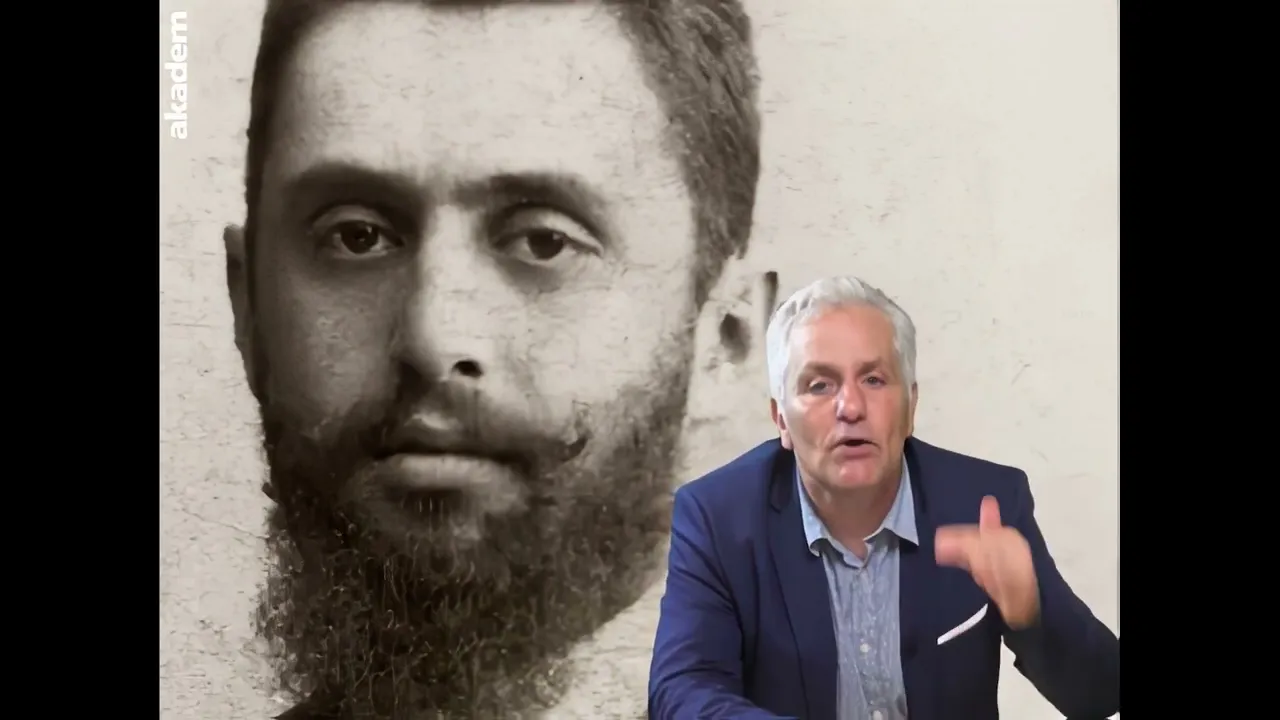
Herzl was torn. On the one hand, only six years after the commencement of his movement, he had almost achieved the establishment of the state he called for. On the other hand, he knew that it was not the destination hoped for by the Zionist movement.
He convened a Congress, which agreed to send a delegation and check whether the conditions were suitable. Ultimately, the Uganda proposal was not tested, mainly because there were severe dissensions within the Zionist movement. In particular, a few argued that if they had already waited 2000 years to return to Zion, they might as well wait another 2000 years if necessary.
They even considered that if Herzl insisted too much on this destination of Uganda, then he may just be a new Messiah. Herzl passed away a few months later, just as the Zionist movement became embroiled in a schism between territorialists, also known as Ugandists, and adherents of Zion. The following Congress resolved the issue by definitively decreeing that henceforth, the Zionist movement had no other territorial ambition than to establish a Jewish state in the land of Israel.
It was now the land of Israel or nothing. The Uganda proposal served to clarify once and for all Zionism's precise territorial objective. As I mentioned, it was no longer merely about a land for the Jews.
It was now the land of Israel for the Jews or nothing. Otherwise, the project would be postponed. From 1905 onwards, Zionism has strictly adhered to the idea of a land for the Jews, a land that can only be the land of Israel.
However, that did not solve all the problems, as the location of Israel was still a challenge. Israel does not have fixed boundaries like Egypt, Greece, or China. In the Near East, how to define precisely the land of Israel?
Should it be defined by biblical considerations? If so, which ones? The Bible has various descriptions of the borders of Israel.
It includes the pinnacle during Solomon's reign as much as other periods when it was nothing more than a small province. Should we include the Kingdom of Israel? The Kingdom of Judea?
The biblical tradition cannot make all Zionists agree. So, instead, the Zionists considered political and diplomatic developments in the region, particularly the first world war, followed by the dismantling of the Ottoman Empire. There was no longer an Ottoman Empire in this area, known as the Middle East or Near East, which includes Lebanon, Syria, Israel, Saudi Arabia, Iraq, Jordan, etc.
All of that is the former Ottoman Empire. After its collapse, the British, with the consent of the French and the League of Nations, made a crucial decision to find a solution for this vast Arab province. They drew borders within the former Ottoman Empire, creating distinct territorial entities like Lebanon, Syria, Iraq, and Palestine.
Initially, Palestine stretched from the Mediterranean Sea to Iraq rather than just to the Jordan River. However, this arrangement only lasted for two years. Indeed, in 1920, as I mentioned, Palestine went from Iraq to the Mediterranean.
But in 1922, Winston Churchill, who was not yet Prime Minister but Minister of the Colonies, because of the dissent generated by the original division and his promises to Abdullah, one of the leaders of the Arab revolt, divided Palestine into two regions, uneven in size. He established the Jordan River as a border, which it was not between 1920 and 1922. Churchill then decreed that west of the Jordan River would be Mandatory Palestine, under which the British were tasked to establish a Jewish national home as outlined in the Balfour Declaration.
East of the Jordan River, up to Iraq, would be another region. This region was much larger in terms of space but was essentially a desert. That was called Transjordan.
The Balfour Declaration, which, between 1920 and 1922, was intended to apply to the entire area for the establishment of a Jewish national home, ended up limited to the region between the Jordan River and the Mediterranean. This new division caused the first significant split within the Zionist movement. Two movements emerged: the revisionist movement intended to revise the boundaries established by Churchill.
It was led by Vladimir Ze'ev Jabotinsky. He considered that a promise had been made in 1920 for Palestine to go from the Mediterranean to Iraq, and that the British must keep their promise. So, they challenged this territorial division and demanded its "revision".
However, after the creation of the state of Israel, this claim was muted. In the early 1960s, on the eve of a political gathering between a Liberal Party and the Herut of Menachem Begin, Menachem Begin officially abandoned the claim on Transjordan, which had become known as "Jordan". The second movement was socialist Zionism, also known as practical or constructivist Zionism (it was given many names throughout the history of Zionism).
Socialist Zionists took a pragmatic approach and settled for the British decision. Although the border at the Jordan River was not ideal, they accepted it, having no other option. They comprehended the balance of powers keeping them from being able to challenge Churchill's division.
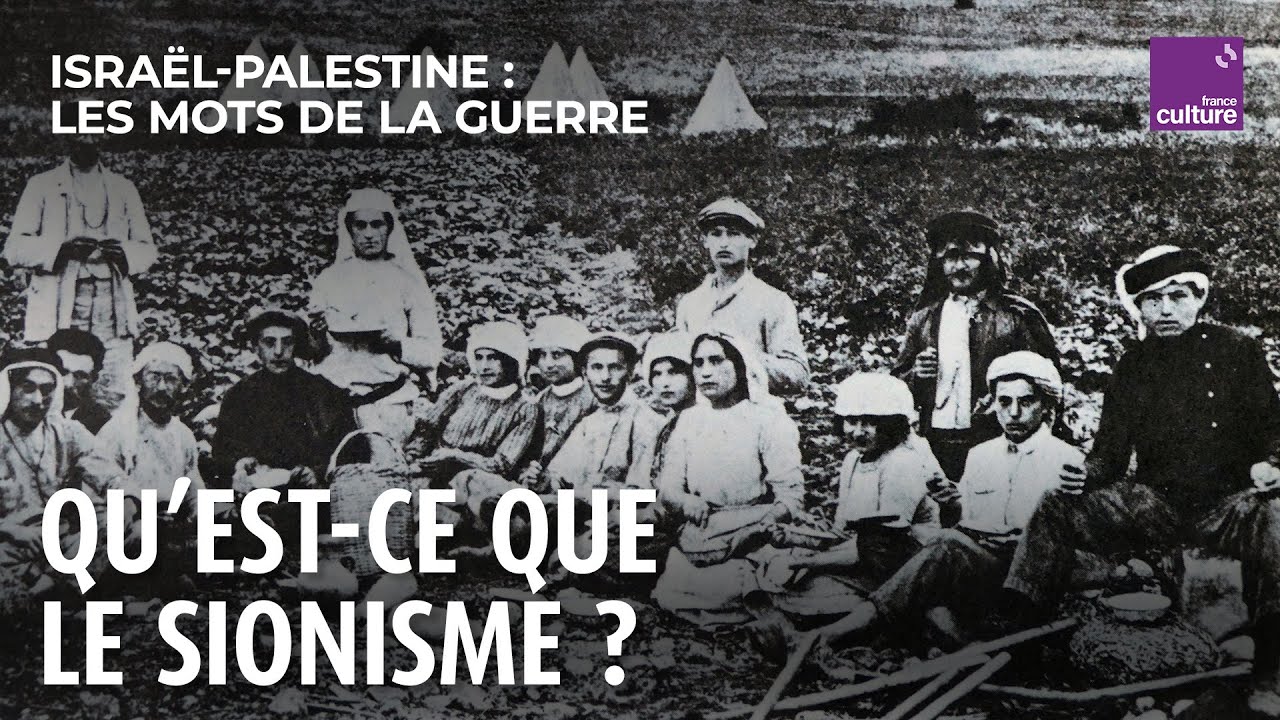
They developed a completely different approach to the territory, believing that Zionism was not only about returning to the land of Israel but primarily about returning to the earth and nature. The possibility of transforming the Jewish condition thanks to the acquired territories. To no longer focus only on intellectual, artistic, professional, economic or industrial professions but to rediscover the joys of working and being in contact with the earth after being deprived of it for 2000 years.
According to this school of thought, one cannot claim ownership or legitimacy over a territory or country if they do not cultivate it or bring forth the fruits of the land for the benefit of the people. This is where singular creations such as the Kibbutzim, Moshavim and all these forms of cooperatives came in. When the socialist Zionists arrived in Palestine, they realized that while the proletariat was all very well, there was no proletariat because there was no industry.
Therefore, they created a kind of agricultural proletariat. However, to be independent of employers or landowners, they asked the Zionist Organisation to provide them with land. They then organized the work in a fair, egalitarian way with this great invention - at least for a century - the kibbutzim.
So, we can see here two conceptions of the territory. This territorial debate was settled in 1947 with the partition plan and the War of Independence, which shook things up a bit. Ultimately, the State of Israel was established on 78% of Mandatory Palestine.
Then, in 1967, the Six-Day War once again redistributed the cards, as Israel emerged victorious up to the Jordan River, thus returning to the borders of the British mandate until 1947. This is where the famous debate emerges, the issue that not only divides Israelis but also defines the Israeli left and right: what should be done with this territory? Should it be annexed by Israel in the medium or long term?
Should Jewish settlements be established in the region, known as "Judea Samaria" in Hebrew? Alternatively, do we believe that, in the context of reconciliation with the Arab world, especially with the Palestinians, a territorial compromise can be reached that would require Israel to withdraw from the area? This may include adjusted borders, similar to the 1949 cease-fire line, if not the pre-1967 borders.
This territorial debate, which originated between the Ugandists and the Zionists, has continued into a conflict over a Greater Israel that would encompass Transjordan. Nowadays, the focus is on the future of the West Bank. It is not so much about the Gaza Strip, which no one intends to reclaim today.
As you can see, this territorial issue is both a source of unity and division. All Zionists agree that a Jewish state can only be established and maintained in the land of Israel. But which part of the land of Israel precisely?
This debate remains ongoing.