In 2013, I have what is I got very ill with a hypothy thyroidism caused by a virus. So basically the guy said my nervous system shut down. So it's a nervous breakdown is you get like a little flu and it should go in two days and it then attacks another part of the body attack my thyroid and I got really sick. You know how I got better? I had some really big Hits in 2014. took a year of feeling sorry for myself like a true exact right I realize trust me I know the power of
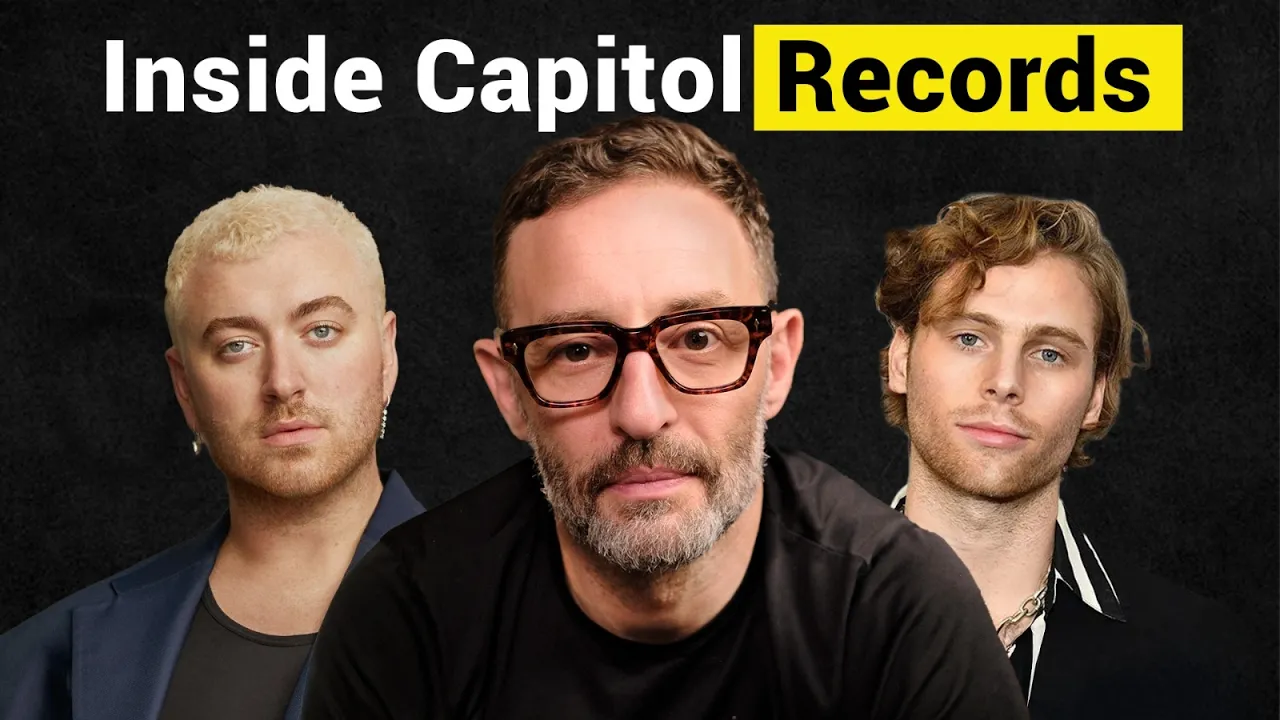
a hit it's a drug and it hit me 2016 the world changed I worked for for labels from 1994 I joined a company called London Records through to 2000 last week of 2021 I was the president of capital in the UK which didn't exist prior to Universal Buying EMI. Lucen asked me to change the name of the company I had which is London Records Which I'd already signed Sam Smith and 5 Seconds of Summer to become Capital because he said he wanted to expand EMI's presence rather than contract it with the uh the when they
bought EMI he wanted to make the EMI labels bigger. Uhhuh. So he had this vision and he said I want to change the London company we created with you into capital which I obviously agreed and but 2016 the world changed 2013 that happened by the way I joined universal In 2011 but let's be get back to 2016 the world changed in 2016 because up until then I genuinely my hand on my heart is my opinion the majors controlled distribution Correct. And the reason they controlled distribution because it went through bricks and mortar. Correct. So what
happened is in America you had to get in Walmart and you had to in the UK you had to get in Walworth or you had to get in uh the supermarkets targets and the Targets in America Fax in France. There was the equivalent everywhere in the world. But these stores were not music stores. They were general stores. So they may maximum would take in a week maybe 20 t new titles maybe 20 new titles but they would have all the like Bob Marley Legend or they'd had the BeeGees greatest hits or they'd have Born in
the USA by Bruce Springsty. They would have the big titles all the time because they were they were the Legendary classic titles. Thriller by Michael Jackson would have been in there every week. So they would take 20 new titles, but the majors would probably put 18 of those 20 titles in. At least 18, right? I'm not saying it in a bad way. They had the conversation. They had the dialogue. They did the same at radio. And therefore, it was harder as an independent to get your music in store. Yeah. Getting the MS and pups, the
equipment around the world, but you Couldn't get mass penetration. Then 2012, I believe Spotify comes online. People can correct me, but my recollection is 2012. But Spotify didn't really hit as hard until 2016 when I felt the tipping point. The reason I say that is in 2014, both Dell released an album and Sam released an album and the Sam was a breakthrough album and we both held the records back from Spotify so we could get physical in store, right? which Seems so antiquated and I'm almost embarrassing admitting it now, but at the time it seemed
like the right thing to do. Hindsight though, right? Hindsight. The chairman of hindsight records is the most successful executive of all time. It's the easiest job in the world. Undefeated. Yeah. The chairman of hindsight records is the easiest job in the world. But I can look back with hindsight and say I was foolish even though we did it. We did it to protect The artist. And by the way, the album is now at 27 million copies worldwide. So it still worked out. But I felt from 2016 onwards there became a democratization of distribution which meant
that Spotify or Apple or Daer later Tidle later all these it didn't care. It said yo just put your music up and if the public liked it they loved it but something else was happening at the same time alongside this where everyone Could get the music up. you could do a deal whenever Drok Kid turned up and tounc all these things all these distributors and there you know now we have unbelievable ones 1 RPM symphonic uh you got Empire all these things came up all around the world United Masters um with Steve and everyone you
got all these things going on but at the same time you suddenly found this channel Tik Tok Instagram YouTube before your label in each country had to Release commit to a release and they had to commit to going to radio and now you don't need them to go to radio until you're at a certain level of streaming right and you have this platform where your artists my artists can talk to the world on day one second one they can build an audience of 10 people 100 people a thousand people 10,000 people just by posting about
their music, about their lives. They can create a Discord channel. They can do All these things. They go I've even hearing artists now don't even stream yet, right? In any meaningful way playing 2,000 cap room cap cap rooms. And I'm like and I'm looking at streaming going, "No, they're not playing." And then someone says to me, "Look, I speak to the agent or the promoter and he's like, "Yeah, we sold these tickets out in like minutes." And I'm like, "Really?" He's like, "Come and see the show. You go and see the show And it's like,
"Holy [ __ ] it's real." What happened before we had to beg MTV or beg the TV channel or was it back in the day for for America TRL and Park or all these things, right? 106 and Park 106 and Park where TRL mixing them all up. Okay. Yeah. Now you put a record up, people either a viral moment happens or more importantly before you have a viral moment, start building brick by brick, fan by fan, conversation by conversation. Take a Leaf out of Taylor Swift's uh book where she still replies to some of her
Instagram posts of her by her artists herself. Of course, it's not all of them, but she'll pick a few. All she has to do is do one or two a week and the whole world goes, "Did you see Taylor responded?" Yeah. And then the other millions of fans say, "Shit, she might she's reading this stuff." Yeah. She's reading it. She might respond to me. There's validation in it because now the Artist that you love is now recognizes who you are. It's funny in the same breath in 2016, our lives changed. And I mean that with
myself, Byron, and Jesse, because August 23, 2016, we put out a record called Figures, and it goes bananas. Literally, I would say probably 100 to 200 emails from every single record exact, ANR, chairman. The first person I ever spoke to, an executive in the labels was Darcis. Yeah. And he called me from island. He told me he Signed Amy. He said, "I get it." I said and then we were overwhelmed. But we took our time cuz we were like, well, we were at the same time getting mentored by Pat. Yeah. Also starting to see, listen,
we don't necessarily need the labels right now because we have the fans. She has Instagram and that was the main method at that time. There wasn't even stories at that time. Video just got introduced a year prior. Tik Tok probably didn't exist yet. No Tik Tok. It was Vine. No, Tik Tok. Vine now. Vine was there, but it wasn't really something that we used a whole lot, but I think it was there. Yeah. And I remember within like I've told this before on this podcast, but within 30 days or so, you get the toncore statement.
Yeah. I called Byron. I go, "Yo, are you looking at what this what's in this statement here?" He goes, "No." I'm like, "Go open it up." And we saw it and it was it was tens of thousands of Dollars. Yeah. And it was just the beginning. And we were like, "Okay, looks like we have some leverage when we go to these labels." Yeah. And it really changed. And we were the first ones, if I'm not mistaken, and I've been told this before from a couple of of lawyers, that the deal that we did was one
of the first that was ever done in a major label system, which is a 50/50 profit split at the time. There was distribution in it and all that, but That was just a it was a very different and we we licensed the record. Yeah. Reversing back I think 10 12 years. can't remember exactly right now, but we had a lot of leverage and we made sure that we got exactly what we needed because Jesse had the fans. Yeah. From the beginning. Yeah. It was amazing. We living in an age where the power has now become
dispersed between not just the labels used to have the power and then when the artists were big, they got they Got uh what's the word? a balance with the label. Now the artists can build their own ecosystem. Absolutely negotiate. The bigger the ecosystem, the better negotiation to get the right how the rights work. But one thing I will say is I think artists in the modern age get too focused on the rights, the splits, whatever. If you really want to be a superstar, really want to be a superstar, I don't think there's a Problem going
with a major label. Can you be a superstar in 2025 at the level that they were 10 years ago? Oh, 100%. Okay. How? I think it can be even bigger. Even bigger. Even bigger. Okay. I find it like unbelievable these South Korean acts play stadiums outside of South Korea. It's just unbelievable to me. And they have incredibly robust ecosystems. But they build that stuff. Yeah. And they build their ecosystems and then They travel around the world. Now they're doing English versions. In the past they weren't even doing that. Mhm. Uh now they're some of the
most important and biggest acts in the world. This would never happen pre- the digital age. It couldn't have happened. No. Right. And you know the boy bands of the era when I grew up in the music business with the back streets and I worked on InSync merely because it was a internal license and we were asked to do it as a Favor at BMG. So I met Justin back in the day and did that first album. had uh Tearing Up My Heart was the big hit and there's another one I can't I want you pack
I think it was might be whatever the songs were uh by the way had nothing to do with signing him I just did a favor to my American company cuz we had a big boy band in the UK and they put it out in the UK through Ariston it failed and then the head of BMG in the UK said will you just do me a favor and just do A job on this and I was like yeah I'll do a job on it and little did we know that it's about to become the biggest superstars
on the planet but there was a lot of big sorry big English speaking acts. Yeah, look at the way the Spanish acts have now dominated. It's not just diaspora. It's the digital platforms allows this stuff to go around the world. And I know in my own new business, we're having hits everywhere, right? So The new setup is NWS and my partner Christian and Ben and Charlie who who are our partners as well in the company. We, you know, we had South Africa number one this week. We've had Nigerian number ones. We've had platinum records in
Holland. We've had multiplatinum records in Latin America in our in in an office in London. By the way, we're going to have to open an office in America soon. It's just a guarantee because shit's too big. And we got this record image and heap at the minute that's been in the top 50 of US Spotify since the beginning of the year. And I think it's peaked at 32 in US Spotify, peaked at 60 in the world. We're through independent distribution on that record. and we're in independent um uh and we fund ourselves. It's pretty crazy.
Yeah. So that shows you what you can do. But Imagin is proof in the pudding. I signed her in 2004 originally to Sony. She spent 20 years building an Ecos. In fact, she spent time before that. She told me this morning at breakfast. She went on a road with a band called Urban Species. I didn't know that. She's friends with Jeff Beck and played with him and did stuff with him. I'm like, I didn't know that either. Right. So this woman is Ariana Grande's favorite artist. She wrote with Taylor Swift. She's part of the modern
ecosystem. But the reason this is working now and all of her catalog is Working now. It's really simple. She spent this is not an overnight success. And when people become superstars, there is the Malcolm Gladwell. We've got a Seth Goden book there, but there is a Malcolm Gladwell thing of 10,000 hours outliers. I agree with him. I agree too. I agree 100%. Yeah. Right. And I think in this modern age, the power, by the way, the other thing I'm going to say is record label cannot take you to A to B. An Independent record label,
a major record label, because that's your job. Your job is to get from A to B. When you get to B, some labels are better at that stage. Mhm. Some labels are better at D, E, F, further up the alphabet. I'm just making up so that everyone understands where I'm coming from. But A to B is on you, the artist. That might even be before the manager. Yeah. Then the manager comes in says, "Yo, I noticed you've already got some fans. You've already Got some music. You've already got an image. Look, that might be your
fourth attempt." You know, whether it be Jay-Z back in the day, who'd been our eight years out there before he became Jay-Z that we know today and Reasonable Doubt came along, or whether it be Sam, who got signed when he's 13 to an independent label and then resigned to me when he was 19 or 20. I can't remember exactly. I remember he had No, I think must have Been 20. He had his 21st birthday in May, I believe, in 2013. I reckon thing. But he'd already been signed and put out music and had failed miserably
right beforehand. Mhm. So when I got him or them, they were already developed, went down one route, it didn't work. When we see the Chapel Ran thing, we look back at what she was before. When we look at all these artists, we look at Bruno Mars have been dropped, we look at, you got to go out there to A to B and finding Yourself, you have to do yourself. Mhm. You have to have adversity. You have to learn this stuff. But in a digital age, you can create an account this week that you are this
person. Mhm. And you can take everything down and put new music up as a completely different. You can have the same name but a different complete outlook. Right. We you ever seen the early Post Malone stuff? Yeah, of course. I mean, that stuff does not look like Post Malone today. Of course, And Post Malone the rapper compared to the singy country stuff I'm hearing now. He even changed in front of my very eyes as a pop artist, right? But now you can do it. You don't need, by the way, when I joined the business, you
have to go to a recording studio to make a record and that would cost you 1,500 a day. And then you had to make vinyl or CDs and you had to do a minimum run and that cost you a couple of thousand. Mhm. Mhm. And then to make a video cuz you needed A video would cost you 5 to 10,000, right? And that's with all your friends helping you. It just cost, right? Yeah. I now say to kids when I go, I want to play pay it forward. I've had a beautiful career, been very lucky.
I'm building a new company. We have a thing called the NWS Academy. I want to encourage people to contact us because I'm looking for the young ANRS of the future. the the fact you haven't worked in a major wonderful because you're not The system hasn't groomed you to be or train you to be a certain way. We have different mindset about how to do it. And to and to be clear, yeah, not to stop the train, it's not that you have their whole to be clear, you know, you are somebody who's been in the business
for a very long time. 31 years. 31 years in the recording side. On the recording side, on the major label side, you were also the president of Capital Records UK from 2013 to 2021. So nine, eight years Essentially at Universal, president of Universal from 2011. 2011. So, and I also was a pres youngest ever president in the UK and replaced Rob Stringer who's now the Yeah. At Sony Epic. Okay. Yeah. Yeah. Yeah. Uh and that wasn't my first gig. I had my own label before that which is where we signed Jay. So, this is right.
Like, so you've signed I mean you signed 5 Seconds of Summer, you signed Sass Smith, you signed Jay-Z. Yes. You were the first person like you Originally signed Well, not originally signed Jay-Z, but you did the deal with him for the world. Okay. 2000 1996 um I started a new label with Christian Tatzfield, the guy I had now have NWS music group with. It was called Northwest Side then. It's now called Northwest Sound Recordings on that's why we kept the name. So that was the original version of Northwest Side. Got you. Uh so on the
first day in the Office Yeah. We arrived early cuz we got thrown out of our old when we said we were leaving. The old company said no serve notice. Leave today. We don't want you around. If you don't want to be here, leave. So, we'd already had a deal set up with BMG, which they know. We told them that. And we get into BMG and they said, "Look, we don't have any space for you." So, they said, "Can you go in the finance director's office? He's on holiday for two weeks." And we Shared this one
tiny office, which the finance director had. And Christian sat one side, I sat the other side. We had one oldfashioned real phone, right, and one computer. We didn't even turn the computer on. And the guy in the finest guy always has the wackest stereo in the whole place, course. Cuz that guy doesn't even listen to this music, right? He's probably listening to the radio maybe while it's [ __ ] Yeah, exactly. So, we borrow we had his thing And Christian said to me, "You got anything you want to sign?" I said, "Yeah, I just I
had this guy uh Norman Cook signed to me as a Mighty Dubcats and his manager, Gary, has told me about a mix album they're doing on Boy George's label, More Protein, Boy George from Culture Club, and he's doing it as the Mighty Dubcat, sorry, as as um Fat Boy Slim, and he does these break beat stuff." And I said, "And the stuff's ridiculously good." And he's talking About making an album of it. And I was like, and I I know him already. I already had a relationship with the manager, having relationship with the art, the
the artist. And Norman had had loads of pseudonyms and been successful. Loads of number one records in the UK. He'd been in the House Martins. He'd been uh Freak Power. He'd be all these things have been successful. Yeah. So this guy and then he had Mighty Dubcats, so it was a hit all over Europe and I Picked up in the UK and I was like, "This guy's a repeat offender. We need to be in business with this guy." I've never heard that before. That's good. Yeah. We we I love that term. I I told about
executives, managers, if they've done it more than once. Hard enough to have one hit. Absolutely. Some some, you know, I'm very lucky. I've had a lot lot of hits. But, you know, you get a manager comes in, he's had two or three over two or three decades. I'm like, Yeah, that guy knows something. That woman knows something. Doesn't just have to be a guy. So, anyway, he said, "Yeah, okay." We were the dance guys before, so we were known for being dance. So, Norman was like, "Oh, that's fits in our thing." And I said, "There's
the other thing that I always wanted to sign, but my boss had called." He called some random lawyer in New York. I don't want to say the guy's name. I don't I I haven't met I haven't heard of the guy since who was like the hip-hop lawyer. And it was some American lawyer who tried to hustle and said, "Lo, I can get you that Jay-Z project, but we want uh you need to pay a minimum of a million dollar." So, what the guy was going to do was call Jay and Damon and say, "Yo, I
got you a million dollars. Will you give me my 5%." It's like a hustle. Yeah. Yeah. Yeah. Yeah. Yeah. So my boss came back and said, "Look, my hip-hop lawyer, hip-hop like, You know, London, London Records had things like um Salt and Pepper and stuff." So they had a history in hip-hop music. Little did I know, by the way, Payday, which was owned by London, run by London, Patrick Mox's label, had already dropped Jay over an argument in New York on he had two singles, Dead Presidents on one side and ain't no You know what
was on the other side. And they made a video for Dead Presidents. I believe I'm a lot of this stuff I'm Getting wrong. So I apologize to all the Jay-Z purists saying he got it wrong. But they made a video for the A side and the B side blew up in the clubs. It was like the hottest club. Their presence on the A which used the same sample as Nars, right? And on the B side was uh Ain't No, which was just an incredible record. No, trust me. Trust me. No one needs to hear me
say that word. you can listen to the record. Okay. So, great record. Great record. What a great record. I mean, a mind-blowingly good record. I'm like, and by the way, Jay's a genius. Let's be real. And but to be clear, at that time, nobody wanted to sign him. No one wanted to go near him. That's why these two guys in London when we called up. So then I was with Christian in this office and there's like Fat Boy Slim or Jay-Z, Fat Boy. And he said, "Yo," he said, "You and I have only done dance
music like that's what our reputation's For. This album's ridiculous." We were playing the tracks off it. He like um Can't Not the Hustle. Yes. And then uh which Melissa Morgan then the Mary Jay version. Yes. I love Ain't No. And I love the whole album. Right. I just thought the album was just genius. Yeah. So I was looking at the cover. No, sorry. Christian was looking at the cover cuz I had both CDs and and he said freeze. You know the freeze lot? That's Todd Terry's the label Todd Terry comes From. went Will Sakalof cuz
I used to do and dance and I said I never noticed that before. So I had Will's number in don't laugh address book. There was my mobile phone didn't have a contract. Open the address book. I called Will. Will said to me, "Yo, I'll introduce you to these guys. I'm having problems." And I said, "What's the problems?" He said, "Well, in the old retail days, the records go from the distributor from the Label to distributor, from the distributor to the stores, and each of them have a a period in which to pay. So, let's say
the payment terms were 90 days from the store to the distributor and 60 days or 30 days from distributor to the label. So by the time they got paid 90 days, let's say it's 30 days, four months to get your money, right? So you bought a copy Mhm. in wherever you were at the time. By the time Rockefeller got their money, but at the Same time, the record was moving up the Billboard chart. Right. So they wanted to spend more and more money marketing, but Will had a cash flow problem. Okay. The money wasn't coming
in quick enough to spend the money in marketing. I see. Okay. That's my recollection of the conversation. Again, this is a long time ago. Yeah. Yeah. So, he's like, "Yo, Nick, take the number. Call the guys. If you can make a deal, make a deal." I just started a new label at BMG with Christian. So, so literally this guy, Christian and I just sat in, we sat like we're sat opposite each other. I made a call. We're like, "Yeah, give me I was going number." Yeah. uh 917 whatever the area code or 212 to their
office and I put the phone down without even missing a beat. Boom. Pick the phone up. Damon Dash. Damon Dash. Okay. What's his name again? Damon Dash. Okay, cool. Don't laugh. Swear to you. So I don't want to say like I think I called him Jay-Z on the first call. Sure. Because like Canadian Canadians as well. Yeah. Yeah. We do the same thing. So I called said Damon. He said yes. And my name's Nick Raphael. I went and I came through. The lady picked up and she said, "Oh, what was her name?" There was a
lady, I can't remember name, she was really lovely. I think she worked with them for years. And she picked up, she's like, "Who who are you?" I said, and I made it sound bigger than I was. I said, "My Name's Nick Raphael. Got a label with BMG in Europe." I didn't want to say the UK. Yeah. You had to do what you had to do. It seemed like Yeah, I was hustling for sure. We didn't have marketing department. Two of us. Yeah. Yeah. So, I they put me through and Damon took the call and he
said, "What's up?" So, um, BMG, so you know BMG said they got Puffy and they got Bad Boy Records and they got Arista with Clive with with LA Reed's label lefase and he's like, "Yeah, yeah, yeah, I know who BMG is." I said, "Yeah." I said, "We're interested in making a deal on on the Jay project and JZ project." And he said, he said, "Man, when can you get to New York?" We were two young executives. We were like, "Tomorrow." He was like, "Really?" I was like, "Yeah." So he said, "Cool. Meet us tomorrow." So
we went, we literally left the corridor, went to the boss who was like the UK chairman, Jeremy, and we said, "Can we book two tickets to go to New York? We want to sign this artist." And he's like, "Go." He just like, "Just go." Okay. So we got on the plane. We flew to New York. They had an office down in Wall Street. We go and meet them. Jay was sat on the radiator looking at uh radio play charts and which territories he should go into. He he was impressive from day one. Damon was there
being Damon, being loud, being whatever. They met us. Uh the album had just gone gold in America after 13 Weeks. So it was already successful. Yeah. But all the American ANRS had said, "Yo, this guy's eight years out there. He ain't the real deal. He he's got weird flow." They all had an opinion, right? We were just like, "The record is a hit. It's got smashes on it. We'd called all the record shops that we could call and say, "How's the import going?" They're like, "Yo, this is the hottest import." So, we're like, "We just
want to sign It." Yeah. So, we went and we had dinner with them. There's lots of convers. I don't want to go into the details of the conversation. We had lots of conversation. Sure. And they said, "Yeah, we'll make a deal." So we made a deal had a structure where we could have the world outside America and then we had an option on America but with a larger sum of money a really decent large sum of money but it was for it was for Rockefeller Label and they already told us they had this DJ clue
and Memphis Bleak album coming soon which both did well. One did gold and one did platinum. Right. Right. So I said cool. So I'm thinking great. So I came back to London. We literally went back to London. We stayed I remember stayed at Soho Grand Hotel. I remember going to an Italian restaurant. I remember it had in my head they had a white 190E Mercedes, the lowest Mercedes at the time. They had a Rockefeller logo On it. Jay would sit in the front and hand out free CDs as they drove along the streets of New
York. Damon drove I think Bigs was with with them. Bigs Kareem. That's my recollection. We went to the office. I think our branch was there. I think hip-hop might have been there. I can't remember. our branch definitely. I remember Colleen was the lady who looked after them. Okay. She was lovely. And I remember this crew and I came back to London. We made the Offer. We'd already discussed it. It wasn't like a negotiation. The negotiation happened there. They call and then we had a time frame in which the American labels had to make the deal.
So I remember calling head of Arista, calling the head of RCA, calling the head of black music at RCA, Kevin Evans. remember calling the head of Pete Jones who head of distribution for BMG and they all said go for it. No, they all Said no. But but they you had to do the deal with them. So no, I had to as a UK label I had to get them to commit to release. Oh, in the in American I could pay the money. I could pay the money and they all said no. And they all said
no we we're just not feeling this. That's crazy. I was like you're crazy. The minute our period ended, Def Jam, Colombia and I think Incope were all trying to close a deal with him. Yeah. because the record was carrying on Climbing the charts and we were like how did that by the way this is the digital changes that I don't have to kiss the ass of American record exact say please work my record in America because if it's doing that sort of business it's going to do it anyway it's going to do it anyway so
at this stage unfortunately at the time but listen life worked out brilliantly Jay became a mega star and a billionaire and is one of the greatest talents of all time and to me is one of The goats of rap music and will always be. Okay. Yeah, for me too. That's that's that's my goal. Okay. Easily will say that. And we did the first three albums everywhere outside America. Um first time I met Leo cuz Leo had the license eventually for America. First time I met Todd Marowitz because he was the right uh he was the
business affairs for Def Jam in New York. I met all these people. I met Steve Stout because Trackm did an extra track for us and won the Album. I met the whole world of rap music uh from London and then my boss came in which was Richard Griffith who later became a very good friend of mine and he I he managed 5 Second Summer he managed Ollie Ms which I did with him JLS which I did with him and Lamar I did four acts with him and everyone was very tough but I I adore him
and I got nothing but love and respect for him. He turned up and went these guys got the whackest rapper and the boy band is Never going to work. The boy band's second single went to number one, sold a million albums, and the rapper is Jay-Z. Yeah. And the minute Jay-Z released Hard Not Life, my boy band had a number one. All of a sudden, he's like, "These guys are the greatest." I always knew, by the way, he's been brilliant for me ever since. Uh, and it shows you show business, you know, just have one
hit and everything changes. But did you have Hard Knock Life? You had You had all those albums. had reasonable doubt in my lifetime volume one in my lifetime volume two for 20 years 10 years plus an extra 10. Oh wow. And by the way that's when people get all like crazy on me like oh I don't want to do this term. It doesn't matter to Jay has got everything now and he's a 50 something year old man. He owns his entire catalog. Yeah. Great. But 20 years all the record labs got to make money. But
who made the most money out Of the whole project? Him. He became a billionaire because he's a genius. Right. So when everyone gets like all twisted on me. Yeah, I want to do the shortest deal ever. I'm like, look, Riri, Kanye, Jay, Dr. Dre, um, all these artists, I don't know how much 50 Cents worth, but very wealthy man as well. These really wealthy artists all made their money by being a name in music and using their branding, leveraging it to Build other vertical. Stout's book, um, Tanning of America. Tanning America, what an incredible book.
Yeah. But how they turned black artists into product endorsers who owned a piece of the company. It's genius, right? Genius. And not and I feel that Steve was instrumental in this whole process. But you also had some of the great minds, you know, obviously there's other issues for The moment, but Diddy was is a genius in terms of marketing and music, right? Of course, there's there's other stuff. Sure. Sure. Jay is a genius, right? Dr. Dre beats with Jimmy. Genius. These things are genius, right? But what they did was they levered they look look we
just lost the incredible boxer uh George Foreman. Mhm. But he leveraged his celebrity to make the the George Foreman grill. The George Foreman grill. And I watched a whole thing on it the other Day him talking about it on a TV show years ago. He made more money from the grill than he made from boxing. They say Paul Newman would have made more. He gave the money away, didn't he, from the sources and he gave it to charity, I think. But Paul Newman, no, Paul Newman as well, the actor. Yeah. He had a source range,
like a salad dressing range, and he made more money from the dressings than he did from his acting career. But I think he gave it all away. I might be wrong. It's hilarious. I never put two and two together. The Paul Newman that that dressing is his. Record labels. Yeah. Not only make you make your music successful, they make you as a brand name. Yeah. I was just looking how much the biggest Instagram people and some of the musicians uh so you've got people like Ariana on there and you got Justin Bieber on there, but
also you got things like Ronaldo and Messi from football and how much and and Kardashian And everything else. How much they can charge per post on uh Instagram, right? It's like north of $2 million to a brand a record label. So we I watch your podcast. I listen to your podcast. Especially when friends run. But like Lex, I've got nothing but respect for the guy. I met him when he was working Universal. You knew him went Universal in Canada. He he recently helped me out one of my Latin records. He introduced me to the head
of Latin music at Spotify Who support the records now seven or eight times. Platinum Kiki. Uh brilliant brilliant artist and a wonderful record. Uh Tango Unplanned, which I'm really proud of. It's one of our records on our label. Um, and uh, he said, you know, manager deserves 50/50. I'm not a manager. I know it's the manager's playbook. I know that's what you guys do. But I'm not mad at him for saying it because if you come along and you're a nobody and this guy helps You go from a nobody to one of the most famous
people on the planet. Mhm. He's gone on a journey. He's believed in you when no one else believes. And you can get fired in a heartbeat on your 20%. I'm not mad. I understand why he's calling on the 50%. Yeah. Yeah. Yeah. But I got a mad thought. People are rude about record labels. It's the same thing the concept with the record labels, right? What you're saying is listen, you might not get the fairest deal, but at The end of the day, maybe or let's say it's not the fairest deal, you might not think that.
But you're wrong because they've got the expertise, right? They've got the knowhow. They've got the offices in all the countries in the world. When you come and work with my new label, let's start with majors. You go and work with a major. There are great people in all majors. There are great people. They're Also bad people. There's bad people in every It's just easy to book them all as bad. But Taylor Swift goes through a major. Drake goes through a major, right? They might have different deals along the way and it might be signed via
this company and that company, but they go through a major. Mhm. Beyonce goes through a major. Jay-Z came through majors. Now, as we have this stuff now and the digitization, there may be other ways to Do it, but these other ways involve people with expertise. Mhm. So, I'm not a major anymore. I have a distribution deal with the incredible Virgin, and I respect them and love them, and I think Jacqueline and the whole team, they're incredible. Mh. and they bring skills to the party. It's not surprising when they break the Remma record. It's not surprising
when they break the David Kushner record. It's not surprising cuz these are the A-list people. They're top Top quality in my opinion. Okay. No artist is a success on their own. Absolutely not. And I have this concentric absolutely not concentric circle theory. Okay. In the middle is who? Artist. In the next circle is who? Manager. Agreed. As you require more agent, PR PR merchant merch. Yeah. You need people who've done it before. Now, some of your people, some of your people are going to be fresh and they're going to give Energy. Yeah. But you're going
to need people in the seat who know what they're doing. When you want to do your first tour, lawyer. The lawyer. Oh my god. The lawyer is so important. Zack Cats always talked to me. The first time I ever met with Zack Cat. Exactly. I said, "Amazing. Amazing." He's going to do the pod as well. Bringing up, he comes up every second pot on Yeah. And uh he told me, he's like, "Five seats at the table are the most important, you know, and You need your you need your record label, publisher, agent." This is 2015,
you know, and your manager along those lines, but he very much said, "This is what you need." Do you want to go back to Richard Griffith? Let's go. Richard did he wrote a note to Bob Levitz. I'm going to say his name wrong if I apologize. who has the letter and he said these are the requirements to be a successful artist. I've got my version, his version I printed off, I framed it And I have it in my office. Okay. Okay. Send me a photo of that, by the way. I will. Number one. Number one.
Okay. Where how important is talent in your list? In my list? Yeah. Personally? Yeah. Incredibly high. Nope. Well, I'll tell you why. Well, hold on. I No, no, no. I'll say I'll tell you. For me, it's incredibly high, but I don't think it is this. But the highest on my list is work ethic. Well, by the Way, I'm going to say work ethic's out there, but it's one above that. Likability. Likability. Now, you could have the best work ethic in the world and you could have the most talent in the world, but if you are
an unlikable human being for whatever reason, Yeah. no one's going to buy into you. Yeah. If you're the someone who's got a slight sneer or you're a little bit too you got an awkward way about you, you might end up being an Incredible producer or a studio musician or whatever. But you're not the guy or girl who's going to be on Instagram, right, or Tik Tok and people going, I love them. I love what they're about. I love how weird they are. I love how this they are that they are. You have to have likability.
Now, I reference an artist, okay, who I think is amazing. I love her. I was in love with her as a teenage boy. She is a mega star of modern music. Where would Madonna finish in a Singing competition? Now, let's go back to likability. Her likability is clearly by her success huge. Yeah. And she kept a narrative and her work ethic was 11. Mhm. Work ethic, likability, manager. Because if your manager is a douche, no one is going to want to do business with them. I saw I I I wrote that quote down. You said
that yourself. If your manager is a douche, even if you Are likable, I am not in. You won't sign him. I won't sign him. Cuz you imagine Richard Griffith, I adore. Harry McGee, I adore. I've worked with these guys for years, right? Um Richard and I and Harry normally have a dinner once a year that has nothing to do with work and I hear old war stories, stuff that happened during the year. It's a it's none of that stuff would ever get repeated. Uh-huh. And we laugh out loud. And there are times in the year
where Richard will call up when I was working with him, scream the place down, make my life a misery on behalf of his artist. We were friends. We are friends. But when he had to go to war with me for his artist, he went to war. But if I had to go to a concert and spend the evening and have a meal afterwards and everything else, I look forward to it. There are other times I didn't look forward to it as much. Jack and Sam who Manage Sam Smith and Disclosure and Jimmy Napes. I look
forward to being in their presence. Why is that? Because they are bright, affable, interesting. These days I learn a lot from them. In those days they just ask me a million questions because I was like the old man in the situation. Yeah. But they brought a warmth. I invited them to live in my office. When we did Sam Smith, they ran their business on free desks in my office. And David Joseph, who ran Universal, said, I said, "Can I have permission? I've got 15 desks. I've got eight staff or we end up with 10." So,
we had all those mega hits with 10 staff. You don't need 400 staff. We had a small roster and wow, we were successful. Yeah. Yeah. And uh the boys would work in my office and every day I saw them when we had to make a decision on something. Uh can we Make decision on this? Can we get an answer on that? They were just there. They were there. They're right there. And then they were like, "What do you reckon about this? Who what about this for our agent? What about for this for this? What about
this?" That's the best That's the best kind of situation you want to have. That type of closeness. Let me go back to it. Teamwork. Yeah. You will not become a global star without a team. Now that Team may be an independent distributor, maybe a major distributor, maybe a major label, but you need when you come out as a new artist and your friend is your manager, your best friend from college, someone who worked in a studio over the years or might be an artist themselves. They're bringing they're bringing some stuff. They might be your person
you go to for listening and being good to you and am I being unreasonable here? Mhm. But you also Need someone who's going to say, "Guys, I've been in this situation before. Stay calm." Yeah. Because it takes a minute. Don't Don't think this is going to happen overnight. Look at this. that friend is could become a very successful manager and they're the they could they're the best for you. But if you don't have those mentors or those individuals who have great experience like yourself, you could spin in circles and never get to the place you
were Supposed to be. Look how lucky I was. My first ever job, uh Roger Ames was the owner of London Records and the chairman of Pol, right? Roger is a legend. He's a genius. He later ran Warers. around the to this day I go to him for advice. My next the next job I went to BMG and I get to work and I even Clyde picked up one of my acts from America. Clyde Davis my hero. I read every book everything about him. Wow. Lifelong Still to this day I can send him an email. He'll
respond. Incredible. I get to sit at the table with Clive Davis and I meet Pete Edge in that process who I've got huge respect for because he worked for Clive at the time. It was amazing. And Ashley Newton, who I was a fan of in the UK, was then in the US. Another guy I adore. He signed the Spice Girls. He worked with the Foo Fighters. He was brilliant. He did Image and Heap with me the first time around in 2004. The man is a top top executive. Then I go to Sony and I replace
Rob Stringer who becomes global chairman. The man is immaculate as an executive. He busted my balls on a daily basis. He fight with me tooth and nail. And one time I said to him, "Why do you fight with me and not the others like some of the others?" You know what he said to me? He goes, "Cuz when we both love soccer." And he said, "When you got a really talented player in the team and he has a good Game, that's not enough from the really talented player. You want him to have a great game.
Don't come in here and tell me he had a good game because I'm not judging you on good. I want you to be great." And I hated him for a time. He made me a better executive. He made me better and god I have fought with him. And then Lucen who tried to hire me when I went to work for Rob eventually gets me with a guy called David Joseph come to Universal with girl called Joe who Worked me at the time and we set up London. It becomes what's his name. So now I'm in
the system and then they hire this guy who in 2001 I met who's head of international in Epic, Steve Barnett and they hire him to be head of capital in the US. Steve was my buddy. Mhm. He's a guy who used to call me up and tell me to sell Anastasia records when I was running a UK company. Okay. And he said, "Nick, Capital US at the moment has no ANR People. You've signed 5 Seconds from Richard, who's his best friend, so I'll release it in America. I got you." And I said, "I got this
other act." And he said, "Yeah, yeah. Let's do one at a time." And then about four months later, his whole ANR team or actually three people, Wendy, I think it was, uh, Dan, I'm going to forget his name. It's terrible. I must remember his name. He was a brilliant publisher. He was head of ANR at the time at Capital. He Left shortly afterwards. And someone else, Curtis Pastel, I think three of them. Going to remember Dan's name in a minute. It's going to kill me. Um, and they went to see Sam in New York. Yeah.
And they called Steve and said, "Look, the UK company got his artist. He's on the disclosure record. He just played a show in New York. He's game changer." Steve called me. He said, "Yo, what about this other artist?" I said, "I tried." He Said, "One at a time." He said, "I need to come see it." So, he came to London, saw thing, saw Sam at Islington Town Hall, and he said to me, "I'm doing it." Two songs in. said, "This guy's going to he" He said, "Points his finger in his in my face. He's an
older man. He's like, he's, you know, bit younger than my father." And he said to me, "Nick, this guy's going to change your my life." I said, "Really?" He said, "Yeah." He went downstairs and he'd done Adele in America with Rob and he said to me, he said, "And Adele's guitarist Ben Thomas Mhm. was playing with Sam that night, and he walked into the changing room and he said, "Sam, you're I'm going to put you on Capital in the US. That's where I want you to go. Trust me, it's the right place and I'm going
to do for you what I did for Adele. I'm going to tell the whole world you're going to be the biggest star and trust me, it's going to happen. Came out the meat Thing. Sam, I waited a second. Steve walked out. Sam said to Ben Thomas, "Is this guy for real?" And he said, "Well, he's I met him on the Dell project." He said to me, tell him, "Yeah." So went in the corridor, said to his managers, "Do you want to go have a quick word with Sam?" He went in there. managers came out, said,
"Steve, we're going to do it with you." He's like, "Cool." Nice. And Steve went out and told the world, "Sam's the next most important Artist. He's the most important artist I've worked with since Adele." Cuz he'd finished. You know, Adele had been broken by the time he'd come to thing. This guy, these people changed my life. Rob, Lucen, Steve, Clive. Clive taught me to do ANR. He didn't sit in a room and teach me to do ANR. I read everything he'd ever done. Yeah. And then when I got a chance to sit with him and
hang with him, I bust his balls. What about this? What About that? Who' you use for this? What did you do for that? He must have thought, "This kid's so annoying." No, I probably, right? But the reality is you need that experience. Now I can sit in a room and talk on your podcast and talk about stuff cuz yeah, I achieved and I still will achieve and I'll continue to achieve some incredible things. But I didn't do it because I was a clever kid. I did it because I always thought someone knew more than me
and I Was looking for all those people like I know about you and I've heard about you. I remember meeting London Dozia. My when I grew up I had to clean my parents' cars. I'm ranting by the way, but when I wake up, I used to clean my parents' cars and they had the Mottown story. It was a three cassette or four cassette thing and Lionel um was the voice over. I think Smokeoky was as well and they voice overed some of it and talked about between the Records and this happened and that happened and
and this happened and D and the reason Marvin Gay came out is because he was married to Barry's uh sister and he never wanted to release what's going on and he had a view on it and then it's in the book that Barry wrote and it's all these things amazing and I did it and the Lamont Mont do normally Norman Wit was still my favorite producer of all time and he produced in my opinion one of the first Rap records. Um, people moving out, people moving in. Why? Because of the color of the skin. Run,
run, run. So, it's just unbelievable. Ball of confusion. What a record. It still sounds fresh today. And he produced things like Wishing on the Star. And he produced Rolls-Royce and all this sort of stuff. And he produced War by Edwin Star. I mean, the guy's a genius. Anyway, I get to meet Lamont Dozier doing an artist called Lamar. And Lamar Called me up said, "Who's this old guy work?" I said, "You're working with him?" The truth was when the demos were ready from the session, I went over there on my own to hear the demos.
I spent four hours just asking about making records, how he did it, the inspiration cuz I'd only heard I was cleaning cars. I was seven, eight, nine years old. I was like, who is Lamont Doza? Yeah. Hollando and Holland. Yeah. Who is Norman Whitfield? I met Gwen Dicki later on. I just asked a million questions about Nor. I wanted to know. I'm the same way. And this is a very important reason as to why I have the manager's playbook because I get to sit in front of people like you and just ask all these kinds
of questions. When I went to London for the first time, one of the very first times I actually remember going into the building Universal. Remember seeing all the labels there and I thought to myself, Where's Capital? Met with David Joseph and I asked him that same question. I said I said I noticed that Capital's not in this building. David Joseph cross-legged or however you sat, you know. She's like, "Oh, they they do their own thing. They're not in this building with us." I did. What's that? I did. And so, explain to me what what was
it that how did you guys operate because you had such a high level of success. Not only success for the UK, but like Success for the world. I got I got into a load load of trouble when I was at Sony. They Sony when I got there was going through a change. Yeah. I think a guy called Rick Dobbis brought in Boston Consulting or one of the big Mckenzies or whoever it was and they went around the world and I think he was head outside America to look at how to evolve and change the company.
Yeah. and they got the statistics on all the people who did ANR and we had two incredible ANR people, Muffinwood and and Lincoln Elias and they've been involved in everything from Shard Day through to uh the Clash through to um uh Jiraquay, Terrence Trent Derby. I mean they were just they're genius ANR people. So they had thing and by the way I'd copied them. I'll get back to that in a minute. I get all the way back to the story. And they came in and each of us who was senior either a president or Was
like high up in INR would have to meet with these guys. These guys were so square. But they come to the meeting, they put their tie in their pocket. They'd wear their shirt and put their jacket in on top of their bag and they came in and they'd have like those yellow um lawyer notepads. Yeah. And they had a list of questions and I sat behind my desk and they came in, two guys and a woman. and they said, "We've looked at the Statistics and it seems to me you have a three in one success
ratio terms of profitability in your artists." I said, "Yeah, three in one of my artists go platinum and multi-platinum pan." When you epic. No. And I think it also maybe it gone back or definitely when I was at Epic had this mad run from 2003 to 2011. We released 11 artists and had 20 platinum and multiplatinum out albums. It was insane across multiple genres. Yeah. And they sat with me and they Said, "How do you have a track record like this?" And the industry as a whole has a track record of 98 to 100 or
99 to 100. Fail to the one success. And I said, "Well, let me start by just telling you it's there's a single word, focus." And they said, "Yeah, yeah, yeah, yeah." I said, "No, no, no. I'm telling you, the secret of success for me has been focus. I said, I sign two artists a year and a break one every 18 months in this current pattern. I said, but two out of three fail and one out of three works. But on the two out of three that fell, I get out early. I see the signs. I
see the problems. You get out early. I get out early. If that makes me a bad person, I'm sorry. If it's not working or the person doesn't like how we roll, let's not let's not get crazy on each other. Pay You the money. Thanks. Good night. Move on. No, there's no drama. Personal. And also, what's the worst thing? You've been a manager. An artist gets sat in a label for two, three years. The label's got no ideas. The artist loses their confidence. Y and they're just sat in the label. They're just dying at home. Mhm.
Right. So, my attitude is no, not working. Get out. No. Our artists are thankful for that at this point. It's just not working. I I believe that. By The way, one of the things I've been accused of over the years is they laugh. Just calling Andrew Goulder, a good friend of mine who's publisher runs Rock Nation Publishing. He said the best thing about when you he said he said to someone else, when you see Nick Nick Raphael, you get a yes or no in the room. You never leave the meeting going, "Is he going to
cut that song? Not going to cut the song." It's like, "I've cut that song. Let's make a deal." Or, "Dude, go and play it to someone else. I'm not interested." Back to the focus. Back to focus. Get things off your desk, get it done, and when you have a winner, double, treble, quadruple down, spend the money, focus, go for it. Mhm. And I said, "Guys, the word is focus." And I tried to explain it nicely, and they kept asking me questions. I was like, "Dude, I signed two things a year. How many executives signed two
things a year, Max?" I didn't have loads of ANR people. one brilliant ANR person, Joe Charington, who worked for me for years, who was a manager who I hired in and she'd managed one of my boy bands and she met me. She was an assistant at London Records. She's one of the characters and Kill Your Friends. Uh don't want to go through the whole book. If you haven't read the book, read it by John Nven. Incredible book. Uh it's like comic thing of being in a record Company. Don't watch the film. It's terrible. Anyway, I
said, "Let's focus." two two days after I do the meeting get a call from Paul Burgerer and he said Rick Dobbus' office has called and says you were really arrogant to the people I said I give you my word the last thing I was was arrogant they asked me the secret source I shouldn't tell my secret source and I told them it's focus and he said you know you just kept Saying focus and I kept saying yeah baby let's focus that's what I And I worked at London Records. It was a small record label when
I first started. So, did you get let go from when when that happened? And no, no, no, no, no, no, no. I just got I got beat up. Okay. Verbally beat up. Listen, you got to play. By the way, I think Rick, if I'm not wrong, and I think it's a brilliant, famous, legendary executive. He left not long after they get their reporting. One Of the some of the times when you bring in management consultants, the person who brings them in normally gets fired. Right. Right. I see a lot of places because their bosses say,
"Why are we hiring you if you're asking someone outside?" I've heard that. Yeah. Right. I'm just saying that from a holistic point of view. I don't know if that's true, but that's my understanding. So, I got in trouble for that. My view of the music Business was from London Records where it was a small company punching above its weight, had global success with stuff, had financial and pepper, had really interesting successful stuff. Mhm. There were other record labels um that I saw within the Universal system that had tiny tiny staffs, tiny rosters, and they would
do like my friend Ferie wor with a guy called Andy McDonald's. had a record label called Go Disc and Go Beat. Freddy Younger. Uh yeah, amazing Executive. One of my I think is world class. Where's he at now? He has his own company. Okay. And it goes through Virgin uh Promised Land. But he signed uh Gabrielle and Porterhead and Porter Head became massive. And I was like, they're a small company. They have ways success. And then Andy had things like the House Martings and Beautiful South and a bunch of stuff on their label that was
on a small thing. Then the next other big person in the record business At the time was um Simon Cow. He later came through and I saw him firsthand. I was at BMG and there was like Simon Sunny Vana as an assistant. They're the tiniest team. They were having bigger hits than everyone. Mhm. And then I saw Lincoln and Muff and they had S2 with a team of about six people and they had Terrence Trent Derby and they had uh Jurine had all these other things. I was like, "Yo, they all have one a couple
of Things in common. No international repertoire, no catalog, small roster, small stuff. If you have that setup, you have to have success to stay in business, right? Necessity is a [ __ ] You don't eat unless you kill." Mhm. But if you have a big label with a big roster and loads of ANR people and you're going to make your budget whether you open the doors or not because Beyonce, Drake, Taylor Swift comes, the incentive to Break a new artist is less, right? Look at the setups at the minute doing incredibly well. Unbelievable. Ireland doing
incredibly, those guys are doing incredibly. Mercury incredible, but they don't have a bunch of international repertoire. They come into the office every day. You work with David Massie who's a brilliant executive, right? He's great. And I work with him at Sony, but he does well because he Well, he likes to pick up stuff from around the world. He's slightly different, but he's still a great because you have to find stuff to justify the reason you're in the company. Mhm. These bigger companies will have an ANR staff of 100, 200 people, right? And they're signing all
the time just to stay in the job and be busy. Mhm. I'm like I'm making one album, two albums at a time max. Maybe sometimes three or four. But guess what? When we were at Capital, we had this run that was incredible. Sam, which we all Know won the greatest, you know, you took that same process and applied it to Capital essentially. So took it to everything to everything. When we had the label, Epic was originally a big label and when they closed me down, I created a company called White Rabbit that traded as Epic
and we again we had eight staff, 10 staff. How big was the staff at Capital? 10. Wow. Yeah. 10 people and we had 5 seconds, three US number one albums. Sam, we know what Happened. Um, and then we had Liam Payne. RIP and I'm awful, terrible, but we had a number one Republic in America. We stripped that down. Mcquo. Um, and we had a bunch of other stuff you won't even heard of that was also successful. We were could we we had the first three years was just grind. We had nothing. And then we had
uh like seven years of unbridled success. Like huge. So can you take me through what those those three years were like because then you were a Failure. Yeah. Oh, it was awful. I had a nervous Let's talk about that because I think it's important to talk about that failure. Awful. This happened to me multiple times in my career. Okay. Where you start something new. Yeah. And you lose like an artist, like a manager, you lose confidence. [ __ ] maybe I had my best moments. Maybe I'm never going to have them again. And you're trying
to find a hit and you lose your mojo. You lose your feel for a Minute. And you have to like go shut out the noise. Get my head down. When came off Sony, we had, like I said, between 2003 and 2011, 20 platinum or multiplatinum albums by 11 artists. Just insane. just unprecedented and big big like UK alone some of these albums we're doing 1.6 1.8 8 million copies platinum in the US. Platinum US. There's only 300 be platinum UK and I was having albums do crazy amounts. Yeah. Physical. Yeah. This is not streaming and
downloads. This is physical. Yeah. So we were doing disproportionately successfully. Right. I felt that we weren't doing as well internationally as I wanted to do. Ironically, the last two things I did, Troublemaker by uh uh Olly Murs, number 17 on the Billboard Hot 100, number top 10 in the top 40 radio in America, was one of my last hits there. I was lucky I was still the publisher afterwards privately. Uh and then I had this project by three Catholic priests. I Made it the Vatican, Mad Story. There's a documentary about it now on the BBCI
player. And that sold 1.6 million in the first eight weeks. And over the first three over the first three hours. Hold on. Did I hear that right? Did you say you made a a record with three Catholic priests at the Vatican? Yes, 100%. There's a docu. We can get back to that. Okay. Yeah. I was So they were the last they were the And they were the two internationally successful. Curious to Know. I've got some hookups there. Uh anyway, weird, isn't it? A Jewish executive in London has a hookup about. So um we so I
I left publicly. I loved Sony. I would happily have gone back there. I loved Rob. I had he was a mentor and a boss and a yeah tough boss. But he uh I spent some time with him. He's a he's a great executive. And Lucen had been caught in me for years. He caught me in the time before Rob. Uh and I eventually Said, "You know what? My peer group like you talk about Darkest Ferdy and these people had had success in the Universal thing with albums and artists I thought weren't as good as mine.
Interesting. Okay. And I thought Universal seemed in my opinion at that point better a breaking product. When I joined Sony it was legendly legendary for Sony breaking UK artists around the world. You know from Shard Day, right? Even Bewitched worked in America. Uh Charlotte Church To work in America. The UK was good at breaking around the world. Over the time after the merger of the BMG, in my opinion, it was harder and harder to get my material released around the world. Pre-digital, you had to ask each territory. Sure. And I felt I was having disproportionate
success and I felt I was getting that was my view. Okay. So, I left and on the promise from Lucen that I would get a look in, he said because it's a meritocracy and that's How it works. By the way, I love both companies. I wouldn't have been a success at Universal I was if I hadn't been at Sony. I wouldn't have got better as an executive if I hadn't worked for Rob. And I get to Sony and I publicly say in Music Week, which is the Billboard of the UK, I loved everyone at Sony,
but the only reason I came here is to have international hits. Like I I made it like almost like tell everyone I'm going to lose weight, tell everyone I'm going to run a marathon. So I do. Yeah. And I do I tell the world I'm going to be this internationally successful executive and then Joe and I leave and we don't have a hit from 2011 until 2014. Yeah. So two and a half years not one hit. Then we come out the blocks with our first number. What do you think went wrong? Nothing. Or what do
you think was taking it so long to to figure out? You Got to sign the artist. You got to find the artist. Sign the artist. Yeah. Develop the artists. Yeah. And put the records out. Because you're starting at net zero. I start at zero. I got their checkbook. Yeah. Their support. Yeah. But I don't have a roster. Yeah. I don't have an international repertoire. Don't have any catalog. And Joe kept saying to me, Nick, it's going to take three years. And I said, I am not ready for. And we were coming off number one after
Number one after number one. So I'm like, I'm used to being number one. You can't tell me I got to start. and and in 2013 I have what is I got very ill with a hypothyroidism caused by a virus. So basically the guy said my nervous system shut down so it's a nervous breakdown is you get like a little flu and it should go in two days and it then attacks another part of the body attack my thyroid and I got really sick. You know How I got better? I had some really big hits in
2014. took a year of feeling sorry for myself. A true exact right now. I didn't realize. Trust me, I know the power of a hit. It's a drug and it hit me and I got really ill. And then when I had a when everything went crazy and five sauce went to number one in America on the album and and um uh Sam went to number two and the single went to number two and it was like we're going to have that amazing year and then The Grammy has get announced and very very nicely Steve very
magnanimously told Dennis and those guys you know you should interview Nick because it's really been his year and they interviewed me uh and I said I had a nervous breakdown in 200 3. I was real. That's what happened. And a couple American execs called me and said, "Bro, you don't tell them the weakness. You don't show the Vulnerability. You're the man, right?" And I said, I said, "There's no arc to my story if I'm just the man." I came out of Sony where I was treated like a king. I was paid like a king. I
loved the teams there. I get to Universal and I couldn't find a hit for two and a half years and then boom, it goes. And I was vindicated. But my stupid big mouth had told everyone at the door, I'm not just gonna have hits, I'm gonna have global hits, right? And Very, very nice. And Rob was so nice to me on the night the Grammy sent me a lovely text the night before. He grabbed me in the headlock in Soho uh house in the bar and said, "You know, you always had a high opinion of
yourself, but man, you delivered." And uh there's and I said, I wouldn't and I said to him, I wouldn't have done it without him and everyone else. There's nothing but love and and I wouldn't have met Steve if it wasn't for Sony. And then when Steve Came to Universal was brilliant, you know, that's the other thing artists and managers don't realize. We're building a network every day, right? I'm now hanging with you. Mhm. Something comes up. Oh, I know him. I'm going to call him. I'm going to text him. Like, yeah, you the other way
around, Nick. We're all one phone call away from whoever we need to get to. Mhm. But we built the network. 31 years of building a network. I've been in did my first thing as a Nightclub promoter when I was 16. A lot of people seem to look down on networking. And I think a lot of people got it kind of confused because they'll say, you know, when people talk about networking, for whatever reason, I feel like they think it means to network up and find like you have to go this way. That's the wrong way
to look at it. This way. You got to go you got to go that way. To those individuals who are in the same class as you, like you said, the Darkest. Yeah. Well, there's another thing I want to say another thing. I believe now my new company believe I we've only hired people no experience. We have an NWS Academy. I go around talking to universities. I go around talking to people and say, "Look, I'm looking to hire people all the time. I'm looking to hire people now." Yeah. Someone's watching this, they want to reach out
academywsmusic.com. Apply. We got guys Working in in Mexico. We got a guy working north of England. They send their stuff in every day. Yeah. Yeah. Yeah, they don't come to they can they can zoom into the meeting if they want, but they send their stuff in. They talk to the team. They learn how to do it. They come and stay in London for a bit. Anyway, it's amazing. We have an amazing network. Network below your peer group. Y and in your peer group. So, if you go to College or you're in a band or you're
with a tour manager, these are people that will grow in the business with you 100%. Number two. Number two is if someone calls you up and say, "Yo, I love what you did with Jesse. I love what you did with your podcast. I want to come and meet you. I want to have a chat with you. If they approach you the right way, have a coffee with them. Mhm. Half an hour of time. 10 minutes in. You think this person's not worthy of it? Say, "Yo, you're not ready to have this conversation. Go away and
be real with them." Yeah. I had one this week. Guy came in. Want to start showing me his band? I flipped up sound charts or chart metric. His biggest song was getting six streams a day on Spotify. I said, "Bro, even if they're the best band of all time, you haven't done A to B, right? You haven't come to the meeting with your clothes on. The first requirement is put your Clothes on." Mhm. And your band having six streams a day is like you coming in here naked. Mhm. Not that's not cool. Go away. Get
them to a stage where there's things to acknowledge. I said, "When's the last time your artist posted?" He said two weeks ago said, "Bro said, "You need to work on yourself. You don't need me." Right. And by the way, when you do it, I'll call you. Yeah. I'll notice or come and tell me what's going on. Yeah. I've helped artists and managers, I've Helped them navigate deals when I wasn't involved because I said to the person, "Go and do this." And I and I said it to them in a way like, "Yo, you're not ready
for me." And then they call me, "I did it." And guess what? This person and that person, cool. Do you want some help with that? I don't want no money. I don't want no accolade. I'll privately for sure. You've now got these people involved. Great. You should speak to this lawyer. You should speak to this Person. Do this. Show me the deals. I'll give you an opinion on it. Yeah. Just because I want to play I want to pay it forward. I've had I've been blessed with so much success. I've had so many hits and
I continue to have hits. got this mega one at the moment. We had a massive Latin one last year. We had Nigerian one, Image and Heat head. Yeah. Yeah. Even that came from Paying It Forward. I sent a text to her the day I heard it was going from one of my team. They Loved this record. It was on the TV on Spotify in the office. And I said arrogantly, I signed that 20 years ago. I signed her 20 years ago. And he said, "I was going mad today." And I sent a text saying, "Congratulations.
Only took 20 years to go viral." She came back and said, "Yeah, just in time for right reversion." I said, "Amazing. Could do with your help." I said, "I got you. Should we speak?" We spoke and we made a deal. Amazing. Right. Now, I didn't text Her with any knowledge. I texted to show love. Yeah. Yeah. Yeah. Show love. Yeah. Be respectful. Clive Davis had time for me. Right. Roger Ames had time for me. Rob Stringer hired me and mentored me and shouted at me and told me I could be better. Told me it wasn't
good enough. Told me that I need to do better. You know, I had great people all the time. Muff Wimwood, in my opinion, one of the greatest ANR men in British history. I even handed him the award and the ANR Awards to acknowledge he's a legend. The guy ANR the Clash. Let me say that again. He didn't sign him. He ANR the Clash. His first day at CBS. He produced This Town Ain't Big Enough for both of us, Sparks. He produced Drait's first album. He was in the Spencer Davis group with his brother Steve Wimwood.
The guy is a legend. Mhm. Mhm. He was as old as my father. He did one of the funnest. Can I tell one anecdote about him? Yeah. So I'm there one day and we had two Mixes on a on a project. We you know when you AB something she had two mixes and two mrings and lady who worked me for years, Joe, brilliant ANR person. Me and her couldn't make our mind up. So we put them on a one CD. We were a B. Didn't explain which mixer, which version, which producer, which mastering. We didn't
have any of that. And Muff had the office office directly opposite me. We had glass partition things and he had His door open. His assistant, my assistant in the middle pool. Yeah. And I walked and said, "Muff, can I ask you a favor?" And he said, I said, "Could you listen to these two versions of this song and tell me which one you think is better cuz my ears have gone dump like my ears are lost on this." He said, "Okay, cool." So, I'm making calls and emailing and then I suddenly hear my song on
and he listens to the first one all the way through, takes out the Machine, puts the thing in, he comes over to my office, says version A and gave it to me. I said, "I don't mean to be disrespectful, M, but you only listen to one version cuz I can hear your office from over here and you had the door open." And he said, "That's correct." He that version sounds like a hit. Why do I need to listen to the other version? M says, "No one's ever Going to hear the other version." And let me
tell you, Nick, that version sounded incredible to me. I'm not going to waste my ears listening to a version the other it's going to confuse me. And I was like, he's he's like instinctively I made a made a choice. He said that because it would confuse him if he heard the other version. He's like, "The first version is incredible." Yeah. Why do I need to hear something else? Right. Incredible is incredible. Right. It made Him feel great. It was right. He's like, "No, that's the version." By the way, I released it. Yeah. It was a
massive hit. Massive hit. Yeah. You've had incredible success rate and you talk about hits a lot and cuz you have several. Yeah. And I've and I know that you can't explain Yeah. what a hit is, but you you talk about the feeling of it. Feeling. What are those? What is that feeling that you get when you hear a hit record? If you can describe that. Should I go back to the beginning? Yeah. And this will teach this will show you how I know why did I get the music business. I was a soccer player who
failed. I went to university to do economics. I live I was living in the north of England a university in Leeds and it rains all the time. It's cold and it rains. You don't say. There was an ecstasy explosion in UK and Europe in the late 80s. Mhm. I finished playing football in 8 I went to University 89 90. Okay. And now ex coming out and I really hadn't dabbled with drugs because I've been playing professional sport, right? So there was these rave clubs and my friends in London were into it. I've been to a
couple with them and I find a few place in Leeds that do this stuff. So we'd go to the clubs that played it. There was only a few of them and we queue outside to get in. There's always a big queue and there is a girl walking Down the queue and remember I am a young heterosexual male full of testosterone and I want to get with the best looking girl I can get with and I know I'm not Brad Pitt. I know I'm not going to get there. I'm not Brad Pitt and I'm not a
success in anything that I'm doing. I'm a student who failed at his last thing. And this beautiful woman, better looking than anybody in the queue, walks down the queue, goes to the front, and I said To him, "This guy in the queue, who's that girl?" And he says, "Oh, it's the DJ's girlfriend." That's a lie. Sorry. A guy walks down the queue holding record boxes with this incredibly beautiful girl. And I said, "Yo, who's that?" He says, "That's a DJ with his girlfriend." I'm like, "So the in my eyes, the best looking girl is gone."
Yeah. Yeah. Right. And I'm like, "Shit, I'm desperate to go in the club and dance to music, but already the girl of my dreams Is gone." Yeah. And then this other girl walks down. I remember she's she's um in my year at the university. She was I think a swimmer as well. She was gorgeous and tall and long dark hair and she just had this web b. She had an amazing bone structure. She you she had this presence and she walked down the queue and I was like, "Oh, it's so and so from like hi."
And she's like, "Hi, Nick." and just walk straight past me. I'm getting wet. She taps on the door. Guess this guy comes and I said, "Yo, who's she dating?" Because I knew her name. They said, "The promoter." I'm like, "Yo, the promoter DJ." I was like, "I need to become one of these people." A DJ or I end up becoming both. Right. Right. Right. So now I'm a DJ. I'm a promoter and a DJ and I become successful as a DJ. Yeah. So that's the reason I got into music other than the passion for music.
Yeah. because I wanted to meet a Beautiful and by the way I end up marrying beautiful woman who's in the hotel here in LA and she's visiting LA while I'm here. She's staying and I'm going home. Uh but she is an incredibly beautiful woman and I don't think she would have noticed me if I wasn't the club or the DJ but she obviously like me you met in that time 31 years later we're still together. We got two children. So it all works. So for anyone watching this thinking you misogynist Pig. Well I've met the
woman of my dreams and she still is the woman of my dreams. Okay. So, that's all cool. But when I was a DJ, if I played a record to the crowd, a new record, and they didn't like it, they go to the toilet or go to the bar. They let the dance floor would be empty. They'd let you know. What year is this? This is This is 1991 92. Uh I think started in late 90. I made pizzas in between. Anyway, I had real world jobs, Real world problems. Sure. But I very different time in
the past. Very different time. And I was playing vinyl and I was DJing. And I learned if I wanted to get rebooked, if I want to keep my venues full, I had to play music the public liked. Mhm. It might some of the records might not be my favorites, but I had to find an instinct and learn. But when you played a new record and everyone liked it, that feeling you felt inside, that feeling of acknowledgement, Gratification that you chose correctly. Mhm. Felt like nothing else. You're like, "Yeah, I'm vindicated." I know what I'm doing.
I'm good. And it was instant. Right. I then I played four nights a week, a thousand people a night, 4,000 people. So before anyone had seen TikTok, seen any data. Yeah. Yeah. Seen anything else. I'd be playing you give me a record on white label. Uhhuh. I play it alongside the hot records already and your record got as Big a cheer or as the dance store got busier. I'd call you after and say, "Yo, we need to make a deal." These are one-offs. These are something you made in your bedroom with your friend or you
made it in a small studio. I'll say, "What do you want to do?" And you say, "I don't know." And I was working for a cool label called FFR that everyone wanted to be signed to. Yeah. And my boss was Pete Tong and he's the most famous club DJ. There you go. So, and Another mentor, another person I learned from and I call you up and say, "Let's make a deal." And you say, "Yo, cool. Yeah. Yeah." And I say, "I give you 10,000." You say, "Yeah, great." And we make a deal and 20% royalty
and I put it out. It's a big hit. Then you're a big DJ and you're a big producer and you're doing remixes. The network built. Okay. There was incredible DJs. Paul Oakenfold, all these credible people I got to work at the time. But I play Those records in the club and I get this feeling and you would get them right more times than not. No, no, no, no. Well, first the first what happened? You play and you'd learn quickly. Before that, when I was a kid, I used to make mixtapz for all my friends. Right.
I take the songs off the top 40 radio. I'd snippet them up by playing a cassette to cassette. People already remember this. Cut the cut the bits out and the the DJ speaking, get rid of that and make my Own compilations. And then I give them to my friends and I see the ones they liked and didn't like and I got a sense. But then I became a DJ and I learned to play and I got this feeling of oh yeah yeah yeah yeah. So my first hits at London Records I signed 18 songs and
eight went top 10 or maybe yeah eight went top 10 and eight out of 18 or 10 out of 18 I think went top 10 and eight made money but didn't go top 10. Top 10 in the national chart. There were dance Records not in the dance chart in the national chart. And then there were hits in Spain and hits in Mexico and hits in Europe where I own them where I own them. company owner. So, I learned by playing, looking the audience in the eye, feeling the vibe in the room. And by the way,
the drugs enhanced the feeling of that. Yeah, I'm not going to deny it. And haven't taken drugs since 1997, but during that period, I took some drugs. I took a lot of drugs, but Anyway, uh not not saying anyone should take them, but I had a crazy period. Sure. Uh and thankfully never had fun, man. Yeah. Okay. So I would I learned to do that. Then I started evolving into bonus section of the manager's playbook. Exactly. Drugs, you know, by Nick Raphael. Exactly. Take them, but not for the rest of your career. This certain point
get super early. Yeah. So, so um I got this understood this feeling. So when I was not start making pop records Later on, I would get someone would play and I go, "Oh, I got that weird feeling." Oh, interesting. Yeah, but it's almost like I train my body. Let's say you worked I love martial arts. I've been into contact sports for years. I've trained martial arts. I teach martial arts. When you do martial arts long enough and someone steps to you, right? You see what is the back hand, You see the way they turn their
body. You see the front leg. They're going to punch you with this hand. Most people are not going to jab you in a street fight. They're going to throw a big right. Yeah. So, I'm looking at you the way you set yourself up. I'm waiting for the big right. Yeah. So, I already know. Boom. Boom. I'm going to do this. How do I know that? Cuz I trained three to five times a week for years. When you go to nightclubs and you Have to DJ and I did a thousand shows, I learned the feeling. Mhm.
Mhm. So, then you get into a studio Mhm. and you hear a song and you feel the energy in the room, you feel the feeling. And the other thing is ANR Christian has this brilliant saying, my business partner. What does ANR stand for? Artisan repertoire. No, it doesn't. What does it stand for? It stands for amplification and recordings. By the way, you're correct. I'm correct. He said you have to amplify your recording. Mhm. So once the artist has created the repertoire, you have to amplify that to the world. You have to tell the world Sam
Smith could be the male Adele. Right. That's what Steve Barnett was telling people. And because he told them Adele was Adele. Mhm. And she was the next big thing. They believed him. They're going to believe him. So and because I had so many hits, Monty Told me the same [ __ ] Yeah. Really? Yeah. Yeah. Monty told me the same. Monty's an incredible example. Monte Litman. He told me a long time ago. He's like, "We're just going to go around and saying Julia Michaels is best new artist and and she's going to be the best
new artist or like at least get in that category." And what what they what they call it in the new world of new thought that behavior manifestation. Manifestation, right? Yeah. Yeah. Yeah. He's like he's like this is what this is what we do. We just say we say it and it happen and we make it happen. Yeah. No, you could say it sometimes and the artist is not good enough. Sure. But like you're at least driving towards something. Yeah. And I agree with Christian is artist and repertoire, but once the record is made, it's amplification
and recordings. Your job is to take that recording and tell the World this [ __ ] is going to be the most important artist in your life. It's like when you're talking to a radio station, you're talking to someone and if you don't believe it and you don't have any belief and the only way you can have belief is that feeling. Yeah. Then once you have that feeling and you have that belief, you have to turn the music on and has to deliver. The other thing the artist and you have to do is the narrative.
Tell the story of the record. Okay. Explain that a little bit more. An artist and for this day and age. Yeah. Well, that's what Instagram and Tik Tok and Discord and everything. Yeah. Olivia Rodrigo Driver's License was about a situation that all the kids knew in her life. So when they hear the song, they go, "That's for real. I believe that." Mhm. I believe it. I heard this story back in the day. Makes me sound so old, but I don't care. I'm telling it. I love Norman Whitfield. And he worked with a guy called Barrett
Strong, I believe, and he wrote a song called Love Don't Live Here Anymore for Rolls-Royce. Gwen Dicki told me that Barrett was told by his wife, "Do not stay at the studio all night. I am sick of it." Norman makes the songs. You are the lyric writer. Once you've written a lyric, come home, be with me, but you don't have to sit in the studio till the song's finished. And they would stay in the studio till 2, three in the morning. And the musicians would sometimes sleep on the floor because they only had a four
track at the time. And she said they finished one song one night. They finished early hours in the morning and Barrett goes home and he says he opens allegedly this is the story she told what's those things called the letter box at the end of the drive takes out the letters. This is like in the whatever mailbox. The mailbox. He walks down the drive opens The door to his house. It's like sun is up. tiptoes up the stairs and the door to the bedroom's open and he walks in, "Babe, babe, where are you?" The bed's
not been slept in. The wardrobe is open on her side. And he opens the door to the um bathroom and in lipstick she's written on the mirror, "You abandon me. Love don't live here anymore." Wow. Now, she told me this story. She then tells me that he had the the Mail and then he went to find a pen and he wrote you about me loved and he wrote the entire lyric as a stream of consciousness. Right. Wow. And he cried. Amazing. I said how do you know he cried? She said because when he came to
the studio and he told the idea to Norman when I later had to sing it, you know when you're crying the bro like smudges, they had to go and get the secretary to type it cuz I couldn't read the lyrics in the booth. Oh [ __ ] Now that gives me the chills cuz I that's the ethmology which is how a word comes back. That's the ethmology of a song. And I love finding out where the heart of the song is, what that spark was, what the thing is that makes someone write that song. And
and then can I can the world feel it? Can they feel the thing you're talking about? Do they believe you? Do they understand you? Stay with me is about a failed one night Stand. I'm not very good at one night stands. I need love. I'm just a man. It's vulnerable as well. Sam wrote it from a real place. songs. Now, I don't know if I've got the Gwen Dicki song story right, but I remember it like this at Gwen, right? But my regardless, it made an impression on you. That song has been a hit multiple
times with multiple artists cuz it got a heart in it. It's got something that's real and it feels and it means You can have a dance song and it's just a groove and it's whatever, but some of those great songs, they have a heart. They mean something. The person wrote them. The story came from a real place. It comes from somewhere that you go and it hits you and it feels. And they're the really special records. And if you do ANR or if you're an artist or a producer, you feel those things in a room.
Mhm. And if you're not, you're not Intuitive. Mhm. Right. Now, data is important. Data can help you determine if someone is likable, if someone is working, if someone's doing this, if people like the song. But there is a hit songs have something in them. They're really big hit songs that really really bite, that really feel. And a great artist when they sing a great song, they add emotion and pain to it. Yes. That wasn't there. Sometimes I hear a songwriter demo and I'm like, I ain't feeling this. And then the artist sings it and you
different story because the best artists in the world understand how to interpret those 100%. 100%. The same line of a movie Yeah. done by a bad actor is a bad line. It's a bad line. Yeah. It's a bad film. It's a bad film, right? You know, a silly line from a movie, right? I'll be back by Arnold Schwarzenegger. anyone else says that, but that weird voice and that Austrian Accent, I'll be back and the size of him and everything else and you're like, [ __ ] that's become an iconic Yeah. thing. What happened? Right. You
know, and that's not the best line from a movie. There's loads of great lines, but I'm saying the way you deliver it is important. No, but that's a hit line. Yeah. Is by the way, that is a hit line. It's a hit line. Yeah. Right. And you hear things over the years, you're in a studio and you're like, "Yo, stop. What? What was that?" So when you hear something like that in this day and age, incredible record. Yeah. I got one for you, one of yours that we did together. Promises. Right. Right. I remember coming.
Tell me about that one cuz I remember I'd love to hear your side. I remember coming I remember the record get sent to us. Yeah. And the weirdest thing was uh I got sent the demo by Mark from Calvin having done it. It got sent I think sent to Jack and I and I Listened to it on the first listen I'm like their promises and the melody I was like and then it had that thing tonight right just that really weird which I think is Jesse isn't it is Jesse yeah okay and it's just that
stupid thing tonight and the funny thing was when we came to LA with my kids for the summer to Steve I used to come at the beginning of the summer and bring my children with as well I go to Steve's capital congress And then I stay for like three weeks whatever and they'd have a summer holiday the first week I work solid and they just hang out and next two weeks I'd do like breakfast meetings and then I'd hang with my family and I think we shot the Sam video. Uhhuh. Uh in LA uh with
Oh, I'm going mad. I know the video director is lovely. He did all the Calvin stuff. Yeah, but he's my name. He's not Jake. He's Jake's brother. Emil Nava. Emil Nava. Yeah. And we get in the Car afterwards and my daughter and her friend and my son and we played the record and every time it got to the end of the chorus they went tonight and it was just like this stupid thing. It's like the promising and then I just go like that and they'd all go tonight like on mass like and I was in
the car and I was like it's going to be massive. That's amazing. Another one. This is before it came out. Before it came out. How did you get how did how did Calvin End up Sam? Yeah. happened up on the record. Uh well, no, how it happened was Sam had done Latch as the first thing we ever heard from Sam as the new Sam. Sam had had music before, but this incarnation of Sam and Sam was very loyal to Disclosure because they helped launch Sam's career. So Sam didn't work with other dance producers. Calvin had
reached out. They were mutual friends. They really admired each other. And Sam did Omen on the second album. And then I Think the vibe was look you we're cool. just do what you want to do. And Sam was like, I think sort of checked back in with them is my recollection just to say they're same managers. They're all friends. So, I'm thinking of doing something Calvin. They're like, "Yo, Calvin's cool. You know, do your thing." So, eventually after Calvin and Sam had talked about it for ages, uh Jack and I came to we we' gone
to LA. We'd organized for Sam to do the writing Because obviously there's a diary. there's a guy who's become that big a superstar and artist become that big a superstar there's always diary and diary issues so we worked out a time they could do this and then Mark said to us okay so we come to LA and Mark said can I see you guys I hear you both here like yes we go up to 360 offices and Mark says this writing session uh just to clarify is it for our record or your record we haven't
even started this new Album okay well so it can be for our record we're like yeah yeah Cool. We're cool. Just Yeah. Do your thing and let's first of all, let's write some songs. See if anything comes from the sessions. He's like, "Yeah, I just want to clarify." Like, Mark, he said, "We're making an album at the minute." Well, you're ahead of us then because we're not making anything. You know, Sam's in the early stages of writing. And I think this is seen by Sam and by us as, you Know, if it's a feature, it's
a feature. It's cool, cool, cool, cool, cool. And he kept asking the same question. Definitely. Sure. I haven't misheard this. I was like, "No, remember Sam's a mega star, right? Calvin's huge as well. Calvin's the biggest DJ in the world. Sam's probably the biggest male singer of that." You know, one of the biggest male singers, obviously. Ed's also super huge at the time. So, we leave, get call, what are you doing for Dinner tonight? Don't know. Do you want to go Matsuito? I said, "Cool." One of my favorite restaurants. I'm going to come with a
couple of my friends. You and Jack come. So, Jack and I agree to come. Get to dinner. We we sit down and Mark goes, "Let's I got one question for you in front of my friends some thing and if you answer it correctly, I pay for dinner." I said, "Okay, what's the question?" He says, "This session if we get a song, it's for Sam or from Calvin." I said, "We had this conversation afternoon Calvin and what about Sam doing a video?" And Jack said, "Look, we have a break in the US tour on these dates.
He'll be Sam will be in LA. If we find one, we'll make a day in LA. So, we get a video performance and we'll get a thing. I said, "Yeah, cool. Right. I'm buying dinner." I had the most lovely dinner, I think. And he kept saying, "How can you is it not a Universal Sony issue?" I said, "No Issues. Two artists want to do it. I'm the head of label. Jack's the manager. You're the other manager." What are we talking about? I know Mike Pickering, your a really good friend of mine, personal friend of mine.
No one's stopping this happening. This is cool. He's like, nah, there's got to be more politics and drama. I was like, bro, I don't do politics. Let's just do it. Anyway, they did the writing session. They sent the demo. Jesse co-wrote the Demo, performed on the record. Yeah. Uh co-wrote the record. Um and yeah, the break in the in the tour, video gets shot, song comes out, massive abs makes over a billion streams now. Yes, Calvin, Mark, quality human beings, wonderful people. Absolutely. Uh we get a record together, does a billion streams, but the reality
was the whole thing was zero drama. Two people want to do it. Sam waited a minute out respect for disclosure. When they do do it, it's Becomes a mega hit. Yeah. And nothing but love, nothing but positivity. And then Sam had Dancing with a Stranger, right? And I think that had been written in the break when we were doing the video. So I'd come to LA to shoot that and Sam had written Dancing with a Stranger, which I absolutely loved. I mean, I just thought that record was, you know, I broken up and now I'm
in a club Dancing with a Stranger. I mean, what a great clever Lyric. Sam at their best. Yeah, very much so. It's just a G. Jimmy and Sam together in the room. I mean it is it is one of the great modern writing still I mean was 2022 was Holy huh holy didn't Holy was 28 on on Holy that was the last record for me at Universal Sam Sam I mean that's Jimmy and Sam and Stargate again sorry not Stargate nothing to do with Stargate apologize sorry it's Jimmy Sam and um Circuit and Blake and
Omar And Ilia oh wow What a team. They went away they went away to Jamaica at G Jam to write. Yeah. Sam had this idea about situation where someone was talking inappropriately in the studio and Sam was like, "Yo, they kept talking about going to a strip club and the [ __ ] that was going down and Sam was like this isn't cool." And it just stuck in their mind. Uhhuh. and came up with the whole concept and they were talking about I think they had dinner in G jam is my Understanding and and then
they came up with a d that's how it happens d again hear that piece of music that cause a lot of arguments for sure for sure as a piece of music oh it it doesn't fit with Sam as an artist as everything else sounds I love this song I want to come with it that's when you back an artist by the way artists earn the right to be backed when you're that big when you're at that level for sure you want to do something like that is amazing or Controversial. What a record. By the way,
that gave us chills. That gave me chills. I got it when you heard that record. Now, when it's a when it's a newer artist though that you're working with, when you're talking about telling that story, how are you telling that story? And I think we can go back to a little bit more of the ecosystem, right? How is it that if you hear a hit record, because there's tons of great records Out there, but they don't it's Do you think they all get hurt? All great records get heard and can become massive or do you
need to like you did back in the day? A great record into it. So a good strategy to it. What's okay? A great record on a bad artist is not a hit. An okay record on a great artist can be a hit. Well, not the biggest hit. Uhhuh. But has a chance. Like look, Taylor, Ariana, uh Beyonce can put songs out That other artists wouldn't even get in the top 200. No, I'm fine. I'm fine. I'm fine. Those artists wouldn't even get their song wouldn't even be top 200 song, but on the big artist, it
might be a top 20 song. Top 10. Top 20. Top 10. Top 20. And it won't be a big career song for them. That can be big. Yeah. Right. Okay. With the how the way streaming is in the stage. Yeah. That that can work. Okay. On a new artist, you have to have a Really special record, right? To get hurt, right? Because you don't have the fans. Mhm. So, you got to get word of mouth and people aren't looking out for your next record. But what you need is a team of believers. You need enough
believers on your team from your manager to your label. It can be your publisher. Mhm. You know, it can be all these things, you know, big the story of Big John when he hears um Empire State of Mind as a full song and it gets sent to Him. I can't remember if it's Guy Moo or the writer or whoever whoever sent it to Big John. And he came back and he said, "Yo, can you take the verses off?" And they take the verses off. He sends it to Jay. Oh, interesting. And he says, "Check this
hook. Check this track. It's incredible." And the chorus is, you know, New York. Yeah. And you're from New York. Jay's like, "Boom. Go. Let's do it." It's that artist with that song, the ANR knowing that's the right thing. And that becomes a mega hit. Yep. Right. Uh it's the right artist at the right time with the right song. That's dynamite. But it takes an army of people to make a career. Mhm. So if you're sat there arrogantly going, I want to do this and I want to keep that and I want to Well, you're making
it harder. The more people fighting for you, the more people on your side Yeah. the more chance you have of being successful in my opinion. Yeah. Now, by the way, you Can go into a big company with lots of people and you get lost. Well, again, very easily. Very easily. So, sometimes a good team of believers is great. Mhm. But that good team of believers have got to get my concentric circles. Yeah. They got to get more people to believe. Another circle, more people believe. Let me ask you if you don't mind. Yeah. You're like
three or four years removed from capital. Yeah. You decided to do your own thing independently which I want to talk to talk about now but but being four years removed from that now three yeah three years 2025 that was 2020 end of 21 so I start okay um how do you feel now that you left that system cuz you're talking about how nothing but love and respect for the people nothing but love and respect for the system but I feel there's an Incredible moment happening where the middle section of music is getting bigger, bigger and
bigger and bigger. Um, was that a part of your decision? My part of my decision was the minute I left, I got a call from one of the majors and offered a label deal immediately, but even though it was a label deal, even though I would have owned the majority percentage, it was a job. Yeah, I could sell at the end and think, but it's Technically a job, however you dress it up. And I would have loved to work those people. And there was a bit of me that went, I've done 31 years. I've had
some of the, you know, my artists have got Oscars, won American music awards. I'm using a lot of American ones here, Grammys, uh, in the UK. Alvin's ASCAP awards, uh, CEC awards, BMI awards, uh, Billboard Awards, Disney, every award You can win. Yeah, I've had diamond singles, platinum, everything. And it wouldn't have happened without the people at Universal, wouldn't happen without people at Sony, wouldn't happen without people at BMG before that, right? All these people allowed me to help me help my artist have hits. Mhm. But I felt this is the first since 2016 there's
been a shift. Mhm. And I've been paid incredibly well. Sold Those pud companies I had and I've done really well. And I felt to truly do one more thing. I'd love to make an independent company of significance that could help artists throughout the world, have hits in every country in the world, make differences to people's lives in the so being make difference to my own life and achieve again. I'd done it in the system. Yeah, I would love to. And I had an Opportunity at one stage to come and run an American label, but due
to family circumstances, I had to reject that opportunity. I don't want to discuss that, but that happened, right? Will you? I don't want to say cuz it's not fair on the person who took the job and did very well. Okay. Um, and I wanted to do that job, but family circumstance didn't allow it. Okay. I now new challenge is to have a globally successful record company that We start from scratch that helps artists and can have the next weekend, can have the next Sam Smith, could find the next Taylor Swift, could find the next Ed
Sheeran because I think there's an opportunity. Would I partner with a major along the way on some of those artists? Potentially. Yeah. No. I I say no. Never say no. Love those people. Yeah. Um one those artists might say, I'd rather stay independent and I Don't want to go in the system. I would argue with them the pros and cons of it, but can do it. Can we have hits in every country in the world? Well, currently the image and heat record which uh we're working is so high up in the charts. I think it
can be achieved. Our Latin record last year, Kiki Tang Plan has been a humongous Latin record, right? And streamed incredibly well. We did that um ourselves with uh sound on distribution because it was already in The system there. Can all these things happen? Yeah. Do do I feel now I think there is layers to the business now. So can you talk about those layers? Yeah. I think the majors are there to service those incredible cataloges and the superstars they have. Yeah. And they're and they're looking in every artist to be the superstar of tomorrow. I
would love to find a global superstar. I have and I will and I'll find others Again. I genuinely believe that. Um but there's an area where they don't look because there's only so much they can do. Totally. And there's so much music. Yeah. Yeah. And AI will mean there's even more music. And the model seems like it's now distribution mainly. Well, a lot of it is distribution with the labels. I got to be honest, I've got so many good friends in the system. I don't want to speak anything negative. I don't Think that's what No,
no, no, no, no. It's changed since even since I've left, it's changed. They also two of them are publicly public companies. Yeah. That's changed the dynamic and thing of it. I think when we look at record companies building up around the world, there's some big companies building, have built, are doing well, are building outside of the system. Look, Concord just bought STEM, so they're going to be in Distribution. Uh you've got create with broke, great, you know, new world companies. You got AEX just started with branding in America. Yeah. Right. So, and they're a privately
owned uh situation that do a billion dollar in turnover already. Yeah. Before they even start. These are f there are fast growing companies. My own company's growing crazy fast. If you look how much we're turning over and how quickly we've done it in three years. It's faster than Any other company I've ever look even when I went to Universal took me three years to have a hit, right? We had a hit in our first 12 months. How big is the team? 10. 10 again. Again. Yeah. I like that number. It's a good number. I like
that number. It's a good number. Yeah. Um but so soccer players number right there in South America. I don't know. Oh, you mean well Messi and uh Maradona is Maradona? Maradona was Yeah, Maradona is a 10. No, for me it's V Rama. I think Val Rama was number. You like Vera? I'm from Colombia. Okay. Yeah. Yeah. Your goalkeeper was the one that did the crazy scorpion. Yeah, the scorpion. Yeah, I remember. Yeah. Um, so I believe there's now a whole new layer, the middle layer that's growing bigger and bigger and bigger and bigger. By the
way, the majors still take more and more money and they're still becoming bigger and bigger and bigger and making more Profit. But the the record business is growing so quick that even the majors and the m what the majors are doing now, look, Rob's being very public about it. They acquire lots of things. Yeah. They acquire AWOL. They acquired Downtown and Fuga. They're acquiring these things. They buy cataloges. You know, the labels are now when I first joined the record business the prior period. You know, Universal Polygram didn't start as a record label. They bought
Island. They Bought&M. They bought all these companies, right? They bought Def Jam, right? Yeah. People forget that. People forget that. I think we're in this new era. I think we're going to build a load of record companies. Yeah. and they'll be acquired by whichever entity they are. [ __ ] that. And that's how I see it now. Wow. We've just gone full circle. We're back in the age of we're back in the age of independent people. Look. And so what does that company look like Then? So for your company, what what are the what are
the positions that you have in there? What are you focusing on in terms of like 10 people ANR? Uh there's 12 of actually a lot. There's 12 of us, me and Christian included. There's 10 staff. Um we have one office manager. One person does sync and everyone else does owner. Marketing. Marketing. We outsource. Outsource. We're in a digital age. We're in a digital age. We hire everyone to do everything. Gotcha. Look, I I've had with my artists so many billion stream records, so many multiplatinum records, but put me in a studio and there's a desk
and there's the instruments and say make a record. I can't do it. I've been a producer. I've been an artist and I was terrible. Right. But I can hire the best writers, the best musicians, the best producers, the best stuff, and I can sit in a room and say, "I'm feeling that. I'm not feeling That." Right. Doesn't make me, but I don't I can't actually make the record. Yeah. So, I don't need I don't But I don't need those songwriters sat around waiting for me all day long. Right. Right. Right. I'll call them when I
need them. I call you and say, "Oh, I need a girl to help me out on this. Is Jesse available?" And you say, "Yeah, yeah, yeah. She's doing her artist thing at the moment, but actually, you know what? She's taking a couple of weeks off to Write with other people." Yeah. I feel I'm feeling your artist. Let me send it to her. Right. I can make that call to you. Yeah. I don't need to have you say, "Look, keep her on hold for me for 6 months." You'll be like, "Bro, I ain't keeping her on
hold for no one." Right? So, I don't need my own writing team. This isn't back in the day Mottown, they had a full-time writer team. They were incredible. That's how they did it. I don't want people sitting around, you Know, and also someone who works an African record versus someone who works a uh Dutch dance record, they're different people. Yeah, they're different people you're plugging. It's different relationships. I don't need the same people. I need different people working the record. Interesting. So then when it comes from an ANR perspective, what are you looking for in
an ANR? this we show them the way that we do it. Oh, don't tell them you're not going to give Me the sauce. No, no, no, no. You know the sauce. I've told you already. Focus. Fair enough. Okay. But what we do, this is where I'm going to start saying, "Yo, man, I'm real arrogant and this and that." I'm arrogant again. You're back again. Yeah. No, no, no, no, no. What we say to them is, okay, let's let's be real. We've named some incredible executives. Yes. From Monty to Rob to Lucien to the guys that
run Ireland to the guys that run Mercury to Pete Edge Who I think is an absolute G. These incredible people right you mentioned Dark is a brilliant Ferd brilliant these incredible people most people when they work at a big company these gods of the business they don't see they don't sit in meetings with them generally. Mhm. I always loved is when I'm hiring someone is that Christian and I and Ben who runs a publishing company who signed Nars Barkley Crazy. He he signed CEO Afterwards. He signed Ax Twin. He signed some of the most important
artists. He did Estelle American Boy. He had Pendulum who did Rub Boy by Rihanna. He's had Oh yeah. Charlie runs a label for us dayto-day. The kids that sit in our meeting, they don't have a meeting with their team and then have a meeting with us. They present their ideas to us all the time. We do ANR every day. We have an ANR meeting every day. Two and a half Hours. Really? And we talk about records we talked about two weeks ago, three weeks ago. What's going on? Has it got any better? Even if you're
in different parts of the world. Even if we're in different parts of the world. We do it all the time. Okay. And guess what? When we're not doing ANR, we have we have what's we have WhatsApp groups. Yeah. Oh, found this. Oh, what does everyone think? But when we're in a meeting, we'll say to the guys, that's just a Terrible idea. Why would you bring that record up? And they have to be able to justify themselves. But they're see dealing with us directly. So it's like when I went to Clive Davis ANR meeting, he inspired
the meetings that we do now. They took on forever. You can ask Pete and Keith and all those guys Larry Jackson tell you and all those guys. They could take six, seven hours. I think eight hours probably. He starts just after lunch or During lunchtime. They could leave there at 8:00 at night. He'd go through every lyric on every song and what about this for Whitney and what about this for Monica and have we heard the Alicia Keys demos and have we got the Santana demos? I sat in one of those meetings when they were
doing a Whitney Houston album, right? And WF Jean, who was the hottest producer in the world at the time, was sat in the meetings and I heard it's not Right, it's Okay, Rodney Jerkkins record With a sounderike Whitney who sang it first. Okay. Before Whitney did it, so they'd like even get someone to sing it to sound like the artist and then you would go, "Oh, it'll suit her voice and they presented it to her so that she didn't even have to think about the key." It was like, "Yo, do do you like this song?"
But then present it with a man singing it. Oh, we change the key for you. No, we'll we'll do the work now. We'll make sure it's a female Vocal. Make sure it's the girl who sounds like you and I could feel this. Yeah. I love the way they presented it. I love the lyric. I love the way they looked at every lyric. I was like, "Oh my god, this is a master class in ANR." I didn't write notes, but mentally like, "Shit, this is the best ANR meeting I've ever been in." By the way, it
would have killed me doing it every week with Clyde cuz eight hours and he'd wear a suit. It was Crazy. But and I read all the books about the great NR people and the great executives. They [ __ ] inspire me. And I want to inspire those kids. And I don't think I think you as the leader if you start your own company Jimmy with his own company Jimmy inspired them. No question. Right. Um Rick and uh Russell Russell at the beginning. Yeah. They inspired them. Leo came in and he he was the embodiment of
it. Right. Leo Leo Kevin and Julie. Yeah. Yeah. Then they all came in and they were the next crew. Yeah. But they inspired it. I think great record companies are driven by great individuals. For sure. It's not the brick and mortar. It's the people that are in the building. Yeah. I watch the way Rob operates. I watch the way label heads operate. I watch the way Lucen operates. I've seen them in in close hand. I've seen the thing. They're music guys. I love the way finance People are getting involved in music. But they'll never get
it like us. Yeah. It's just a number to them. It's just a what's your decline? What's your decay? What's your this? Tell us that. Mhm. Bro, listen to the tune. I I' I'd say that, you know, the the limited amount of time that I spent with Lucian, I didn't know what to expect. It was just like a mythical character and figure, but when we sat down with him, very intelligent person, very smart, wise. Yeah. But what I wasn't expecting was his love and passion for the music. I don't know why. I think it's because he
just runs this massive corporate business. But Jesse played this song, unreleased record that she still hasn't put out to this day. Yeah. And plays it on her guitar acoustic. And he goes, "Your music, not this is music, like he's like your music. Your music." And he kept repeating that. I was like, "Oh, wow. This guy's really inspired by Her." Yeah. And I was and I for whatever reason I wasn't expecting that but I was like oh this is refreshing to know that Lucen Graange head of a corporate company like this is he's a music guy.
He's a music guy. He's an NR guy. He's a publisher guy. The more I spent more and more time I spent with him the more I realize how much of a music guy he is. Rob is as well. My heroes are LA Jimmy Armut Barry. These are some of the greatest music executives. Rick with Russell when they ran the label. These are music people to the core. I mentioned Muff Wim, we mentioned F. We mentioned Darcus, right? Sec episode with Chris, man. Chris is a great guy. Chris Chris is a great ANR guy. Yeah. Yeah.
Chris is a proper but I look out for the ANR guys. Yeah. And let's look at Chris because I looked at the English lot and then the guys who are my like above my like the the decade above me in the business. So I'm in I'm in my early 50s. These guys in their early 60s. So they were the guys breaking through. And you know when I mentioned Muff, he's like 70s. He might even be he might even be 80 now. I don't know. But these are the guys I'm like they're the best of the
best of the best. And then I read the books and I'm like who is the best? Who did this? Who did that? Yeah. And I ke and I'm not looking at the money guy music. I'm looking at the guy who built a label, built an identity. Yeah. Right. And they inspire me. I I I want to know about these guys. Chris Blackwell, he started island records, right? Amazing, right? Martin Mills, who owns XL with Richard. Yeah. But he's got the beggars group, right? Guy inspires me. Emanuel deell in France. Legend. They still exist. They [
__ ] exist. Yeah. And by the way, to this day, I would like myself one day to be looked at. I would like I got to achieve their status for me cuz they're miles ahead of me. But I Want us I want people to say, "Yo, he did all that in the major system and then he came out. He built that company and today that company still exists and I'm long gone. I'm you know I'm I'm you know I'm whatever." The legacy of the legacy legacy and you might say your ego is crazy. Cool. I
think any great record executive has to have an ego. I'm not I don't think that way. But I know people will think about that and say that. But it is what it is. Like you but you're Honest about it. You don't hide it. I'm okay with it. Yeah. I'm okay with it because guess what? What I love about my job is I've never had a hit record myself. I've helped other people have hits with their music, right? That's what I remember. I'm the guy in the background. I'm doing your podcast, but I'm not doing Joe
Rogan, right? Mhm. But my artists could do Joe Rogan or they could do Diary of the CEO or they could do whatever the big podcast is. I'm Talking I hope the people watching this are inspired because they're they want to come in the music business. They want to be a background player. The the way that you're describing it is very different from I think a lot of people think about the music business. I think a lot of people think about it in like this different that it's it's incredibly different today than what it is 10
15 years ago. The music business is you Know in many ways not about the music. Yeah. A lot of people think that and I think kids really get it confused as I I I I say this all the time as well. When you're a young artist or young manager and you want to have five 10 artists that you want to manage, I'm like that makes zero sense to me just from like a time perspective. And then focus focus. Yeah. And then I speak to someone like you who's done it at the highest levels and you
say you signing two artists a Year. So and you're one of the best to do it. I think when I left Sony, I had eight artists doing half a million or more on their prior album. Yeah. But by the way, once an artist has made their second album, the third album, they don't need you as much. You're doing they want to come in and talk to you and chat with you, but you ain't Yeah. They might say, "Yo, can you do me a favor? Can you call so and so and so and so?" Yeah. Yeah,
I can do that. Right. Exactly. But you're not calling around saying people meet me. I'm having you demos on a fresh I'm doing amplification. This guy's totally fresh. I have it's half as much work, a third as much work. And by the way, they might take two years touring because they're so big. Yeah. So, in the two years touring, what am I going to do? Right. Sit there waiting for them? No. I have to go and do a new thing. So, you're going and building a new thing. New one. So, by the time I finished
at uh Sony, we had Yeah. eight artists do half a million album. And that's the amazing thing to hear this day because people think of the music business so fragmented and so different. It's like, oh, like anybody can be an artist today day and age. You're giving a very fresh perspective, I think. Yeah. Where it's like, no, this is still about the music. No, it's always about the music. It's called the music business. Yeah. Yeah. Yeah. You got to make a tune. Yeah. But, by the way, if you make a tune and you haven't built
an audience, who you playing it to, right? If you haven't built an audience, in this day and age, you think that it's it's I keep saying this day and age because I like to go back to that, but but cuz I did hear you talk about this before. It's like, and I think this was an interview from like 10 years ago. Yeah. where he Said it'd be nice if you had an audience. Way better if you have 20,000 people that are listening to your [ __ ] but it's not about just the audience. But what
about now? That kid that's got six streams on Spotify. You're basically I'm saying dude's been out there for I said to said to them, poor guy came and presented to me. Said, I am private on Instagram. I am not famous. I'll only accept you if I find two or three people that you that Follow you. Yeah. That I know, right? Yeah. If you just say, "Can I follow you?" And I've never met you. Mhm. Delete. Cuz I put [ __ ] up there about my kids sometimes on there. Do stuff about jiu-jitsu on there. Stuff
that I care I care about. I don't want somebody else looking. There's none in their business, right? Yeah. And I'm not political on there. It's none of my business. I don't want to That's not my [ __ ] But I do that. I said I had I told Him I had 1,200 followers. I had 1,700. Didn't realize it. Okay. I followed 1300 people back. So that's not a good sign. And his artist had 689 followers and followed 649 people. And I was like, how long's the artist been going? Oh, two years. I said, if I
was young and I was public, I'd have 10,000 in six months. Yeah. I just be up there and I'll be doing It. I've seen artists come in who are so exceptionally beautiful, male or female, that if they just did nothing but smile and look cute, they could have tens of thousands of followers, 20,000 like that. Yeah. If you add in music and personality, they can have a 100,000 in two years. Mhm. And if they add in one good song, they could have 100,000 in 10 weeks. But if you come and see me and you've been
releasing music for 2, three Years and you got 649 followers and your last song has got six streams, you haven't done the work. You're right. You haven't done the work. Yeah. My son's really good at baseball. Why' you say that? Because every time I pitch him the ball in the garden, he hits it. Good analogy. Cool. Yeah. Right. You want to now go to LA Dodgers. They just won the World Series. Is that true? Yeah. And you want to say to the head coach, you don't even want To go in and see a scout. I
want to see the head guy. And say, "Okay, why are you here? I want you to meet my son. Has he played little league? Has he done this? Has done that? Does he play for his school? Does he play thing?" Oh, no. But trust me, when I throw the ball at him in the garden, he hits on the backyard. He hits it sweet. Trust me. Trust me. Right. So that's like, bro, there are certain things you have to do before you get to Talk to a professional body. What are some of those things? What are
three things? Find an audience, post regularly on social media, and make some music. and make sure you're not got your followers because you're a male ripped and take your top off and looking cute and little girls loving you or a girl that's got half her cleavage hanging out and did it and people say, "Oh, she's got loads of followers." And I'm like, "Yeah, because Teenage boys, you know, are crazy on her. Make sure that if you have a following, it's not because you're a makeup influencer or this. Make sure it's because you're you're showing you're
a musician. You're showing you like singing. Whether it be covers or originals, whether it be you doing you're finding viral things and you're singing them or doing you're trying to By the way, Adele hardly does any promo. Now, now on her first album, people forget that. Yeah. She did a show called Loose Women. Yeah. It's like the most basic daytime TV. People say she doesn't do any promo. I said, "Let me tell you at the beginning, she'd turn up to everything." Right. Right. That girl's got talent like no one else and she struggled to break
through on one. Mhm. She had to work hard. Now she's established it. She can be an enigma. Mhm. She's earned the right to be Yeah. Yeah. So, do the work. They say the same about Frank Ocean. The amount of stuff that he did on his was he called Lonnie Burrell. Frank Ocean. Yeah, he was dropped. He was on a different label and I think he was called Lonnie I might be wrong. I did not know that. He he was he was under a different name. Future and them like he did stuff with Tyler the Creator
and then he was signed to Death Jam under a different name. Okay. Check on your Phone. It' be quite good. Tell me I'm wrong. Frank service here. Yes, sir. Okay. Okay. Be great to do it. I believe Frank was dropped. Well, it wasn't even dropped. He was on Def Jam. They weren't even feeling what he was doing. So, he made a new project with Malay, the producer, and they put it up on Soundcloud or wherever it was, and everyone started buzzing on it. And one of the people that called them was the ANR from Def
Jam signed him and said, "Yo, we love this thing." And they're like, "You know, it's the artist. You already have signs." Now, that by the way, I I'm not mad at the ANR. I'm not mad at Frank. Frank was going down one lane. Sure. As a different artist. Please correct us if it's true. What? What exactly? It's Frank Ocean was an artist before he was Frank Ocean. And his original name I might be wrong. I thought it was Lonnie Burrell. I might be wrong. Lonnie Burrell. I think he was A he had a prior Lonnie
Bar. See signed to Death Jam previously and then reinvented himself. Wow. Look how Chapel Road reinvented themselves. Right. Right. Look how Post Malone reinvented themselves. Look how Sam Smith is a reinvention of the previous Sam. But they all did the work. They put the work in. Yeah. And I'm looking forward. By the way, if you can add in live shows and people turning up to your live shows. Oh, that's a game Changer. That's a game changer. That's a game changer. People buying your merch. That's a game changer. Yeah. But guess what? If you're doing dates
to let's say five cities and you're playing three to five two to 500 caps and you're selling them and people are buying your merch and you are regularly posting your streams might be low. Mhm. You might be streaming 10,000 streams a day and I'm saying, bro, one good song on this person, game changer. It's still And and even doing 3 to 500 cap room, selling merch, you still making a living, a real living. Yeah, that's the beauty today. Yeah. But the artist has to do A to B. The artist manager may help them. Maybe artist
manager has to do B to D. Yeah. Then they're ready to be in the room. But trust me, you done your work correctly. I'm begging. I'm coming to your room. 100%. Right. Like when you got those calls on Jesse on figures. Yeah. Absolutely. Different. The whole world was You could have done I walked into label meetings and I won't name where, but in our home territory a year prior to that, played a bunch of music. They said they all and when we were done it was like they couldn't wait to get out of there and
then they said keep us in keep us informed and it was like okay they were right as well. You weren't ready. You know what? And you know what? You're Absolutely right. Don't be mad at them. I wasn't. Because they go to their bosses and say I wasn't. Yeah. And and the more narrative remember I said your narrative is important. They were right. And here's here's what this is a good lesson because when we went into that meeting, I went in with Jesse and Jesse wanted to let her run the meeting. So, she ran the meeting,
but she played them. I'll say this, it was Lori Lee, Actually. Lori, you remember Lori Lee? She was she was in the UK for a little bit. Obsessed with Jesse. Was at UMC at the time. Her and Rich Cast Rich Castillo came to UMC Canada. Yeah. And Rich is a good guy. Rich. Yeah, he's solid. And uh Lori was obsessed with Jesse. Nobody really knew about her. And she's like, "I really really want to do something." But she knew we didn't I didn't want to do anything. We didn't want to do anything cuz I didn't
want to Sign her in Canada. It was too early anyways. But she's like, "Please come to the meeting." She set up a meeting. There was five people in there. Jesse played I want to say five records. Like three of those records she played. Yeah. She said, "No, this isn't for me though, but this is for somebody else." So she was just all kinds of different vibes. So she was giving her the songwriter pitch but saying, "But this is also me." Yeah. So it was it was all Over the place that meeting. She had to find
herself. Well, she found who she was. No, but I'm saying she had to from there. Yeah. Yeah. Yeah. Yeah. But I'm not mad, by the way. Yeah. Yeah. Everyone's got the right to pass. Yeah. I I have no shame in saying, "Okay, I didn't get it." Right. Yeah. And they call you six months later and go, "Bro," and you say, "That's the same record." I'm cool with that. Yeah. Steve did not pick up Sam the first time I discussed It with them. They said, "Nick, you got one with me is good." You know, I had
to go and make the narrative. Mhm. By the time I made the narrative, Steve then heard the music. If he heard the music the first time, he would have said, "I don't get this." But when he heard it with the story and he saw the latch and then la and then he heard uh stay with me and I'm not the only one to lay me down, he's like this is the greatest thing I've heard in a like it's going to change our lives. But the truth of the matter is I was lucky Steve didn't just
take the meeting and say to me, play me this new act. Yeah. He's like, you got one. It's on tour One Direction. I know the manager I I made I did One Direction. that Sony so I know the guys give me give me this project. Mhm. And Steve was focused. Steve was all about focus. When Sam reared their head, Dan McCarrol, that was the ANR guy. He Was head of ANR. Yes. There you go. Dan McCarrol. And Dan came back from New York with Wendy and Curtis Postell and said, "The UK company has got one
of the greatest artists we've ever seen." Steve called me and said, "Who's this artist? Is they're all crazy on at that point." He was he listened to the record differently. If I play you songs and I tell you nothing's going on. I know. I've been there. You listen to it differently. You're like, "Yo, why are You wasting play?" If I say to you, "This is the hottest [ __ ] out there. This is what happening. This is the Tik Tok. This is the Instagram." So, you're selling on top of it, but also cuz the people
are connecting. Your job is to sell. Yeah. What is your job? Your job is to sell this [ __ ] Lex is the I mean Lex has been on here. What a salesman. Chris, you can hear it in his voice, is a salesman. Yeah. Yes. Relle, who's on here, I've worked With her with her writers and stuff. I've actually did a song um with uh band of mine, No Guidance, uh Victoria did. Yeah. Relle is not like some of the guys you mentioned who are hard salesman. She's charming. She's very charming. She's in the room.
She's warm. She makes you feel comfortable. She speaks softly and nicely. Yeah. I'm animated guy. Yeah. I'm a salesman. Yeah. Right. I'm not talent enough, but I can tell you a narrative on my artist. Mhm. And I can have you listen to me. Mhm. I know it. I can feel it. I know what I'm doing there. But but I'm doing it because I believe I believe in the [ __ ] that I'm telling you. I believe in artists. Yeah, it shows. And I think about this and I go away and I go, what makes my
artist When I come to America, I got to step my game up because America is as big as Europe. Right. Right. And I come in markets the UK, it's a tiny market. Look At it. It's a percentage of the world. A lot of weight though. Yeah. Used to But the minute I think it's un underd delivering executives overd delivering, you know. Yeah. We, you know, we just had one. That's what I mean. But Harry signed directly in America. Adele signed directly in America. Now Artimus last year, Breakthrough signed directly to Elliot in America. Americans are
picking up directly cuz our market seems slow at the minute. Mhm. Now that will change. Mhm. There will be a change, I'm sure. But when I came to America back in the day, I would have million sellers. I'd be in a publishing meet with a guy's got a gold disc above his head like it's a big thing. That's half a million. And he would be talking down to me because my record wasn't a hit in America and I'd be like, I'll come and show that is what I'm thinking, right? Yeah. Yeah. And then what makes
you from Canada? Yeah. You come to America, they talk down to you when you first get here. Not I'm not dis because the America is such a big powerful market. So I had to learn and I had to earn the respect. How I earned the respect? make hits. Yeah. Prove to some of the writers and publishers you have a European hit, it pays big. So twothirds of the world is outside America. You have a hit outside of America and it's two-thirds of the world. That can pay you crazy, right? So I work with Zack Catz,
JR, and an English writer, Wayne Hector on JLS, and I had a song called Everybody in Love went number one. I'm telling you, they got paid. Mhm. You know, not all not all Calvin songs like um Promises wasn't as big at radio as a normal Sam song in America, right? But you told me it was a change a life-changing amount of money for you and Jesse and the team, right? Yep. Uh the duo record was a huge hit, right? They weren't number one airplay Records in America. No, not at all. Okay. But you made Crazy
Bank on it, right? Or the artists got paid properly on it. Correct. because there is a world outside of here. By the way, I always wanted to break here. I always want to be successful here because it is the pinnacle of the music business. Yeah, for sure. I believe that still to this day and I respect that. And my heroes were American executives or executives Who worked out of America. Same. Same. Right. And you're a Canadian. You feel the same. Well, you're not you're Colombian, but born in Canada. My parents are Colombian. Canadian for sure.
So for me, I had to come here and I had to that guy. It was a guy who had the 500 disc above his head and talked down to me and I'm talking about a project that just did 1.6 million on his last album and saying, "Yo, my I write is I'm going to write on that." And I'm Like, "But they wrote on this and you got the disc above your head. That's onethird of what I'm talking to you about." He's like, "Yeah, I'll bring the guys to you." Yeah, I might speak to them, right?
I was like, "You're killing me. You're killing me. and I've got the bigger project, right? But I hadn't done it in their market, right? And it's very now the great executives, the Clives, the LA's, but I think LA because he'd been an incredible writer, producers, Success, realized the power of, by the way, for writers, they get paid for radio play outside America. They only get paid for radio play on serious here, right? Sorry, I mean um per as performance. Yeah. Yeah. Oh, no. Sorry. The artist, sorry. The artist you get paid for radio play. You
understand what I mean? The artists get paid for radio play. You don't in America. Mhm. Right. Other than the serious. Mhm. That can be a big amount of money as well. This Things. And by the way, touring in Europe is huge. Huge. Australia, Asia is huge. Absolutely. So I wanted to earn the respect. I wanted to go to America and be successful. So when I did have this incredible run and I was treated respectfully, offered American jobs and I was like, "Shit, I'm now stepped to level again." Yeah, of course. I'm playing with the big
boys. I loved it. And I want to continue doing it. Yeah. And I think it's that Ambition. Well, hopefully you realize I still got that. And by the way, Oh, absolutely. It's very clear, man. But I And also, you love this [ __ ] I love this [ __ ] I'm addicted to this [ __ ] I love it. And I'm thankful I'm thankful that I got to do it for 31 years. Yeah. And compared to a real job, this isn't a real job. And the the highs, there's no better high. Yeah. The night of
the Oscars and we won an Oscar. Jimmy was the writer. Sam was the artist. Sam co-wrote the record. and announces massive James Napierre, Sam Smith. I was like, she I never thought that would happen. The Grammy night, song of the year, record of the year, best new artist, pop vocal. What was you, the Oscar or the Grammy? I needed to win Oscars. I needed to win Grammys. I never thought in my life I would ever get to go to the Oscar and be part of an award ever. Yeah. So the Grammy is more important because
I'm a music guy, right? But then to actually go to Oscar, I was just like I can't articulate. I cannot articulate. Without a doubt, the Grammys is more important. Yeah. Yeah. No question. Yeah. I was gutted that Beck won album year. We were the album of the year. No question in my mind. I I don't want to disrespect Beck or Michelle who signed Beck or anything else, but that was not Beck's finest Moment. and Sam's I'm sorry will go down in history. Look, UK albums of an ill walked up and then came down. Kanye walked
up and then came down. Is that when Beck won that? Is that Kanye wal that year as well? He walked up as Beck was like receiving but then he like he kind of faked the crowd as if he was going to take the and then he walked like did the Taylor Swift thing he did with the MTV awards. It was Yeah. That's what people thought and then he went cuz Beck was winning an award and then he just walked off. It was like no I'm just joking. I remember cuz all I was with Steve and
I was with the capital team and Steve got Yeah, we won that as well. And I'm like, no, we didn't. Oh [ __ ] Beck's on your label. I'm so sorry. I'm so sorry. Cuz I was like, my dream was, you know, no one had won the four, right? As a male since Christopher Cross and I love Christopher Cross. I Love York Rock. But and I was like, [ __ ] we could do this. And we didn't. So, was it a great night? Incredible. I'm just now I look back and I say think the last
record I made at Universal won a Grammy for duo which was unholy. Uh by the way I never won anything. Sam won uh short but 5 seconds won things. That's all part of your story though and everything. I just want to be clear. Yeah, of course. Of course. I'm very lucky my artist won this [ __ ] Yeah, Absolutely. I I I was I was driving them to The way I see it is my job was to drive them to collect their awards. Yeah. Yeah. You show I drove the bus. Made sure that they got
there and I made sure they had the best seat on the bus and I make sure everybody else sat on the bus was for their benefit. Yeah. And that's my job because I love being thing. And by the way, if the manager sat there directly behind me saying, "Why are we going Left? Why are we going right? Why can't we go this way and that way? That's their job. Yeah. Just to say to me, and the artist saying, I want to go the long way round. And you say, okay, but it's going to take 18
months longer. And the artist says, that's how I feel. My job is to hear that, respect that. Ask them if they understand the consequence of that. But my job is not to tell them. My job is to help them. Our job is to service the artist. Right. And then is to make a piece of music that connects with the public. That's so simple. And by the way, I want to say thank you as well at this point because I've seen the guests you've had, Lex, Relle, Chris. It's like Troy. Yeah. I mean, yeah. Troy, I
mean, Troy is another person I know really well. I rate him so high. Great, man. You got you've had some good guests. I brought the tone down, the level down. What's that? No, no, no, not at all. No, not at All. Listen, this has been great. I I love the passion and I mean you're obviously incredible success in the business and you absolutely crushed it. By the way, I want to be clear. I'm now looking at the future because the the past is dumb and that's what we got to do. As Lucen Graange once said
to me after I had that brilliant year where Sam and five sauce and everything and the Grammys I never got to hang out with them and the Brits, I came over and I Said, "I want to apologize. I didn't get to hang with you and see you and I haven't spoken to you really since the awards season started." And he said, "Nick, congratulations. What you got next?" And I said, "Well," and I start. And he said, "I bank that. Tell me what we got next." Yeah. I don't want I don't I know what we did.
Yeah. I want to know what we got next. He said, "Now, now, now we step up again." Then that's And I was like, "That's the coach. That's the Coach." Rob was the same. I went in one year and I said, "Rob, first year I was there, we hit smash budget and I went into Rob's office to collect my bonus." And he said, we talked about bonus and he said, "Look, you haven't really delivered." I said, "Bro, you gave me a budget, broke the budget, D." He said, "You broke the budget by cutting costs, having international
success, D, but you're an ANR guy. I want you to have platinum albums." Yeah. And you haven't Had one yet here. So, come back in, break the budget with a platinum album of your own. Okay. Year later, didn't the third year, boom. Platinum. My first platinum at Sony. I was like, "Yes, I've done it." I think I had two in the same year. Might have been mean. I had a really like I came out the traps quick once it started working year three again. Never worked in year one. And I went into his office and
he said, "You know when you walk up From the car park in Sony old offices in Great Morb I?" I said, "Yeah." He said, "Do you know the albums you see on the wall?" I said, "Yeah, they're like Bow of Hell, Thriller, there's a Jira Quay album. There's all these things, a shard album as you go up the thing. Do you know why they're there? I said, I heard cuz they all sold a million in the UK. He said, "Yeah." He said, "You haven't got one of those yet." I was like, "You first you say
to Me, budget's not good enough. Then you say have a platinum album, then I have a bunch of platinum albums, and then you say you don't have one at a million in the UK." And he said, "Yeah, until you're on that back wall, man." Until that back wall. And I was like, "Bro, this guy's not giving me a break." But trust me, I got quite if that back wall still existed when I left. Yeah. I had quite a few would have been on that back wall. On that back wall, but without someone recognizing my amii
my, you know, saw my ambition. Yeah. And said every time I thought I ticked a box, that box was an easy box for you to tick. You got to tick the next one. The next one. and they inspired me. It's the one thing about this business that I really do love is that meeting people like yourself, every single exec or artist that I that I've had on this podcast Competitive. Whether people don't realize this is incred like I am mad competitive. Yeah, absolutely. Former footballer. Yeah, exactly. Everyone we talk about all these execs. Yeah. Trust
me. Yeah. You know, they want the next ahead of you. Absolutely. You know, I Monty's trying to beat John Janick trying to beat Monty's trying to beat his own like he's trying to get 10 top 10 records. I don't think he still has it. Y like and that's what they're Always gunning for. Like I I know that from firstirhand experience. I never heard Monty or Avery say it, but I've heard someone close enough to say like we've got six of the top 10. Not not good enough. Let me say this one other thing that's more
important to me. Having worked with Jay, having worked with Sam, having had the 5 Seconds summer, having worked with incredible artists like Imagigen and all the artists I worked with who've been Platinum multiplatinum, you want an artist who is so special to the world. Look, the books about Clive Davis. It's because of Whitney Houston. Yeah, Clive's had an incredible career. Whitney Houston, if you sign Prince, there'll be a book about you, right? If you Barry Gordy build a whole label, but you got Marvin Gay, what's going on and you've got Dina Ross in there, right?
That's that's so the artist, you know, We talk about George Martin because of the Beatles. Mhm. So, you want those artists that define careers. That's the only reason told you he signed Amy Winehouse and he wrote a book and it's all about he signed Amy Winehouse, right? That's what we do. By I want more, but I but I only really I only have a podcast because I managed Jesse for so many years, right? Like my success is a lot of it is attributed to that and I and I Manage other artists today. But that's that's
why people pay attention. But I want I I want to have significant new artists. I would like to have an artist like Taylor. I'd love to have an artist like Taylor. Yeah, for sure. Sam's incredible. I will forever be proud. And whatever I do next couldn't have happened if I hadn't had Sam. Absolutely. And what I did before couldn't have happened if I hadn't had Jay when I was 24. Yeah. Right. Jayzed. Jayz, you talk about books a lot. I want to end it on this one over here. And I ask most of my guests,
sometimes I forget. What are three books that you would recommend for people to read? Doesn't have to be about the music business or not. I'm a huge huge huge reader. Um, I read a lot of books about finance. What's a good book about finance? Well, a good book about life and finance is the Tao of Charlie Ma. Oh, okay. There's another one of Warren Buff Teao. T a t ao. Oh, okay. Of Charlie Ma. There's another brilliant one obviously Warren Buffett who's his partner. Right. Right. And they just talk about how making good and bad
investments and actually a lot of the stuff you can take it out as investments and investing in people in artists and thing when you're building a company. That's really interesting. Um, what else do I love as a book now? I'm On the spot. I'd have to look in the things. There's so many. You just read you just posted one on Instagram. Go on. Uh, I forget the name of the book. It's Oh, yeah. The Will Page one. Pivot. Yes. Pivot. Incredible book. Will Paige was the in-house uh economist, the chief economist of Spotify, right? Okay.
And it's really interesting. It's a brilliant book. I recommend that to anyone. Okay. Okay. I love that book. Um what else would be a book that I Absolutely love. Oh, look, we've Let's go there because we've talked about it. Outliers by Malcolm Gladwell. That's a great book. I think Malcolm Gladwell is great. I love 4 hour uh 4-hour work week by Tim Ferris back in the day. Yeah. I love a book called uh Winners which Alistister Campbell wrote where he interviews like loads of people who've been mega successful in their careers and they ask them
about it and it's like a chapter on each. Alex Ferguson I think Did it with Alistister Campbell is unbelievable. I look for books that just inspire me. I don't read much fiction. I read a lot of non-fiction. Same I listen to a lot of audio books. The inner tennis one about the inner coach or whatever it's called. The one about the tennis guy who stops showing people how to play tennis and tells them that they already know and gives them that confidence. I love that idea cuz I feel like a coach. Yeah. That's what my
job is. Yeah. Managers are coaches. Yes, sir. Yeah. Some days you just say, "Bro, I got you." Other days like, "What the [ __ ] you doing?" Yeah. We got to do X, Y, and Zed. Yep. Other days you're like collecting checks. Yep. But you're doing something. Some days you're not talking to them and you're just making it happen. Yeah. Yeah. Yeah. Yeah, sometimes you try and explain to a family member or someone else what you actually do to get your No Two days are alike in this business. Agreed. I I love that. I love
that too. But I want to inspire young people to do it. I want to do it again and again and again. By the way, I will not do it. I did not find Sam Smith. Joe had a scout called Alex and he sent it to her latch before it' been released. Joe played it to me and said, "I think we should meet the people behind it. That was great. What do you reckon? I said, "Yeah, 5 Seconds of Summer." Uh, actually was just Richard bringing it to me. Mhm. Because I'd done good work with him
before. Mhm. My mom recommended one of them, Lamar. He was on a TV show and I said, "Yeah, but Universal had the rights to the TV show." And then the guy came forth and did had a bad meeting at Universal and his manager, which was Richard, said, "Look, I'll talk to Lucen because he's got three other acts off the show and see if he'll let you go somewhere else Because you're not happy." And Lucen be was actually cool and said look he's not happy here he's the fourth act on the show I let him go
and he came and he was a big artist for me I was really thankful David Massie brought me big brothers one of my other projects was really successful so I even my hits my successes came through the team and it's a network it's a network I when I say I that's always [ __ ] We Yeah. And I say I a lot and I don't mean to be disrespectful to him. Joe and I did 20 years together. Wow. Right. And we had we sold I don't know maybe 120 maybe 130 million albums, maybe a billion
plus singles. Incredible. I'm a geek for even knowing that. But the reality is I couldn't have done it without the team. Yeah. And the people who work for me have been brilliant and the managers and the artists. So it's a brilliant, brilliant thing. And the people I do it With next are the young kids I work with now. Or maybe one of the people watching this podcast. Maybe one of them is going to be my superstar of the future cuz I now as the at my age I'm coaching the ans as well. Yeah, of course.
Yeah. I'm trying to inspire them. Yeah, of course. But they're bringing them hits with this conversation right here. I'm sure you're going to inspire a ton of them, man. Thank you, Nick Raphael. My pleasure. Appreciate you, man. Thank you. See?
![ALI SIDDIQ: MY TWO SONS [75 minute Full Stand Up Comedy Special]](https://img.youtube.com/vi/nnKYmo_tUXQ/maxresdefault.jpg)