in ancient Greece the treatment of disease was based more on philosophy than in genuine understanding of human anatomy surgical procedures were rare and human dissection was not an accepted practice as a result Physicians had little firsthand information about the inside of the human body it wasn't until the Renaissance that the science of human anatomy was [Music] born a Belgian physician Andreas salus shocked many by deciding to investigate Anatomy by dissecting human bodies bodies that he was often forced to procure under cover of night for medical students like velus who wanted to dissect they had to
just find bodies from outside of the legal channels once velus became a professor at Padua the person in charge of executions was actually a friend of his so velus could even go in and observe the living prisoners who are waiting execution and say I want that one I want that one and and then the person would be executed according to Dr Babel velius was determined to pass on the firsthand knowledge that he had gained from his skillful dissections by writing a book on human anatomy the result was his dumani corporis fabria on the structure of
the human body first published in 153 8 febria is considered one of the greatest books in medical literature it's regarded as one of the greatest discoveries in medicine because it contains the first accurate description of the interior of the human [Music] body this was the first major challenge to the authority of the ancient Greek Physicians the book had a great sale that must have been to a wealthy literate public that went far beyond the medical profession and the pictures are very elaborately keyed in with the written text so it just made knowledge of human anatomy
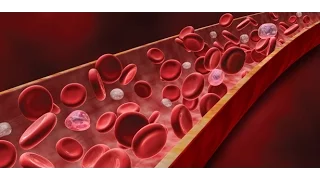
much more accessible thanks to velus the study of human anatomy through dissection became an essential component of Medical Training and helped lead to our next great [Music] discovery the human heart a muscle the size of a fist beating more than 100,000 times a day over 2 billion heartbeats by the time you turn 70 pumping more than 5 gallons of blood a minute blood flows through the body traveling a complex Highway of arteries and veins it's estimated that if all the blood vessels in just one human body were placed in a line they'd reach some 60,000
miles more than twice around the Earth but in the early part of the 17th century how blood works in the body was misunderstood the prevailing theory was that it ebed and flowed Through the Heart by way of pores in the soft tissue among those who believed in this theory was an English physician named William Harvey he was fascinated with the workings of the heart the more he studied the beating heart of animals on his dissecting table the more he realized the accepted theory of blood flow couldn't be right quite explicitly says I began to think
whether the blood might have a motion as it were in a circle and then he begins a new paragraph and he says and this I afterward found to be true in his dissections Harvey observed that the heart had one-way valves that kept the blood flowing in One Direction some valves let the blood in While others let it out here was his great discovery the heart he realized was pumping blood into the arteries where it then circulated through the veins coming full circle back into the heart ready to start the cycle all over again today it's
obvious that blood circulates in the human body but in the 17th century William Harvey's Discovery was revolutionary this was really striking at the very core of traditional medical ideas and at the end of his tretis Harvey says when I think of the countless implications that this will have for medicine I see a feeli of almost unlimited possibilities Harvey's Discovery led to Major advances in anatomical research and surgery and simple life-saving ones too in operating rooms and Trauma Centers around the world surgical clamps are used to stem the flow of blood and keep a patient's circulation
intact a simple device but each one a reminder of William Harvey's great [Music] discovery another great discovery having to do with blood occurred in Vienna in 1900 there was a great enthusiast throughout Europe for transfusing blood and at first there were claims that this had marvelous therapeutic effect but this was followed within months by reports of people who died why did some blood transfusions work and others didn't an Austrian physician named Carl liner was determined to find the answer he makes blood samples from various individuals and study the effects in some cases the samples mix
safely but in other combinations the blood clumped and became sticky on closer examination liner found that clumping occurred when certain proteins called antibodies in the recipient's blood bonded to other proteins called antigens on the donor's red blood cells for liner this was the moment of Discovery he realized that not all human blood was the same he determined that human blood could be divided into four distinct groups he called these blood groups a b ab and O he realized that blood transfusion could only be carried out safely when people received blood from someone who shared the
same blood group the impact of liner's Discovery was immediate within a few years blood transfusions were being practiced around the world saving countless lives by the 1950s accurate blood typing helped make organ transplants [Music] possible today in the United States alone blood transfusions are performed about once every 3 seconds without them it's estimated that 42 million Americans would die each year Mr Mooney all the first great discoveries about human anatomy enabled Physicians to save more lives there was little they could do to reduce pain without anesthesia surgery was a waking night Vis patients were held
down or lashed to a table surgeons worked as quickly as possible the sooner the torment was over the better in 1811 one woman wrote of the ordeal when the Dreadful steel was plunged in cutting through veins arteries flesh nerves I needed no injunction not to restrain my cries I began a scream that lasted during the whole time so excruciating was the agony surgery was a last resort many people simply chose to die rather than to have the surgeon cut into them with his knife according to Dr Harden for centuries various remedies were used to help
ease pain during surgery some like opium or an extract from the mandre rout were narcotics by the 1840s several individuals were on the trail of finding a more effective anesthetic in Boston two dentists Horus Wells and William Morton both of whom knew each other and in Georgia a small Town doctor named Crawford Long they experimented with two chemicals thought to have the potential for reducing pain nitrous oxide or laughing gas and ether a liquid mix of alcohol and sulfuric acid just who discovered anesthesia is still a matter of debate all three doctors claimed it one
of the first public demonstrations of anesthesia occurred on October 16 1846 William Morton had been experimenting with ether for months trying to find a dosage that would enable a patient to undergo surgery painfree with a special device of his own creation he convened a demonstration before an audience of Boston surgeons and medical students he administered ether to a patient who is about to have a tumor removed from his neck Morton waited the surgeon made the first [Music] [Applause] incision remarkably the patient did not cry out after the surgery the patient reported feeling nothing throughout the
entire operation and word quickly spread C surgical pain was conquered anesthesia had been discovered despite the discovery many people were reluctant to use anesthesia some religions believed that pain was to be tolerated not relieved especially during child [Music] birth Queen Victoria played a role in this in 1853 she was giving birth to Prince Leopold and she asked for and was given chloroform and found that it relieved the pain of childbirth and shortly thereafter women in general said I think I'll have Chloroform too if it's good enough for the queen it's good enough for [Music] me
it's also impossible to imagine life without our next great discovery imagine surgery without first being able to see where to make the incision which bone may be broken where the bullet may be lodged or what pathological condition may exist the ability to see inside the human body without cutting it open was a turning point in the history of [Music] medicine to find out more about it I paid a visit to bettyanne Holtzman kevas a professor of history at Yale University the end of the 19th century people were using electricity but they didn't understand what it
was this is a tube which I believe is a copy of the one made by the Seaman company which was the one that would have been used by runin runin was German physicist vilhelm runin in 1895 he was experimenting with a cathode ray tube an evacuated glass cylinder a vacuum [Music] tube runen marveled at the glow created by the Rays coming from the tube for one of his experiments runin enclosed the tube in Black cardboard and darkened the room then he turned on the tube moments later something startled [Music] him a photographic plate in his
lab was glowing so he realized that something very unusual is going on and he knew that the whatever the red that was coming out of here was not a cathode ray he also discovered that it didn't respond to magnetism it couldn't deflect it the way you could cathod raise it was something altogether new and he called it X for unknown like in algebra absolutely runen had accidentally discovered a radiation unknown to science which he called x-rays after having been rather mysterious for several weeks he called his wife down he said Bera let me show you
what I'm doing because uh no one's going to believe this and he had her put her hand under the Ray and he took an image of her hand well the image was a lot like this picture and she is reputed to have said I have seen my own death because in those days you only saw a skeleton after someone had died the idea of seeing part of the body on an image of a living person was just beyond anybody's imagination yeah it was as if a secret door had been opened revealing a hidden Universe runen
had discovered a powerful new technology one that led to a revolution in medical Diagnostics in the history of science the discovery of x-rays is the only discovery that was made when no one was looking for it was totally by chance but as important once it was discovered it was accepted by everyone in the world there was no controversy within a week or two our world had changed today the legacy of rin's Discovery can be found in the powerful technologies that followed in its wake from the CAT scan that helps diagnose what ails us to NASA's
Chandra x-ray telescope which astronomers are using to detect x-rays from the first furthest reaches of space all from a discovery that happened by [Music] accident some discoveries like x-rays seem to come out of the blue While others like our next great discovery develop over time with one scientist contributing to the work of another Vienna 1846 a city of beauty and culture but at Vienna General Hospital there was the Spectre of death many of the women who came here to give birth were dying the cause child bed fever an infection of the uterus when Dr ignot
sovis came to work at the hospital he was a long armed at the scope of the problem and intrigued by a curious discrepancy they had two Wards in one the mothers were delivered by physicians and in the other the mothers had their babies delivered by midwives Sam Vice noted that in the ward where the Physicians delivered babies 7% of the mothers died from what was called child bed fever in the ward where the midwives delivered only 2% of the mothers died from Child bed fever and this bothered him because Physicians have more training they're supposed
to do better by their patients sov Vice was determined to find out what was going on he noted that one of the main things that Physicians did that midwives did not do was to conduct autopsies on these mothers after they died then they would go back and deliver babies or examine mothers without washing their hands just like an auto mechanic who would finish up on one car and then move to the next car without washing his hands to get the grease off he didn't see any reason to have to do this simov visce wondered if
the doctors were carrying some invisible matter on their hands which they passed on to their maternity patients causing them to die to find out he conducted a test he decided that he would have the student Physicians under his control wash their hands in a chlorine solution and suddenly the percentage of maternal deaths dropped to 1% that's lower than the midwives with this demonstration sov visce realized that infectious disease in this case child bed fever has a single cause if you eliminate the source of the infection the disease does not occur but in 1846 six no
one had made the connection between bacteria and infections as a result semo's idea was ignored it would take 10 more years before another scientist would turn his attention to germs his name Louie pastur pasture had lost three of his five children to typhoid fever which perhaps explains why he was determined to find the cause of infectious diseases it was pastor's work on behalf of the beer and wine industry that put him on the right track pasture was trying to find out what was spoiling so much of the country's wine production he discovered that the spoiled
wine was contaminated by microorganisms germs and the germs were causing the wine to sour but with a simple heat treatment he showed that the germs could be killed off and the wine saved the pasteurization process was born so when it came to finding the cause of infections and contagious disease pasture knew where to look germs he said cause specific diseases and he proved it through a series of experiments and demonstrations that led to his great discovery germ Theory the germ germ Theory literally marks the beginning of modern medicine The Germ theory has one central idea
that one microorganism causes one disease in [Music] everybody our next great discovery happened in the 18th century when small pox killed an estimated 40 million people around the world [Music] doctors were unable to find the cause or discover a cure but in a small English Village talk of how some locals were immune to small poox got the attention of a country doctor named Edward Jenner it was said that villagers who worked in the dairy business were Sav from small poox because they'd already been infected by cowpox a related but less severe dis disease that Afflicted
cattle cowpox victims suffered fever and sores on their hands but little else Jenner studied the phenomenon and began to wonder if the pus in the cowpox sores was somehow responsible for protecting against small [Music] pox on May 14th 1796 during an outbreak of smallpox he decided to test his [Music] theory Jenner withdrew pus from the cowpox sores on the hands of a dairymaid then he visited another family in the village he inoculated a healthy 8-year-old boy with the cowpox virus confident in the outcome in the days that followed the boy developed a slight fever and
some cowpox blisters then recovered 6 weeks later Jenner returned this time he inoculated the boy with small poox then waited the moment of success or failure was at hand within days Jenner had his answer the boy was completely healthy resistant to small pox vaccination for small pox was revolutionary because it represented people's attempt to intervene into the disease process to prevent it upfront this is the first time a man-made product had been used actively to prevent disease before it occurred 50 years after Jenner's Discovery Louis pasture pushed the concept of vaccination even further developing vaccines
against rabies and humans and Anthrax and sheep and in the 20th century Jonas sock and Albert Sabin independently developed vaccines against polio and we owe it all to Jenner's great [Music] discovery our next great discovery depended on the contributions of researchers working independently on the same problem over many years throughout history scurvy was a painful disease that inflicted Sailors with hemorrhaging and skin lesions finally in 1747 a Scottish Naval surgeon named James Lynn found a remedy he discovered that scurvy could be prevented by including citrus fruits in a sailor's [Music] diet another disease afflicting Sailors
was Barry Barry a degenerative disease that attacks the nerves heart and digestive system toward the end of the 19th century a Dutch physician named Christian ikan traced its cause to diets that included polished white rice rather than unpolished brown rice while both these discoveries indicated a link between diseases and dietary deficiencies it wasn't until the work of British biochemist Frederick goland Hopkins that the connection became clear Hopkins suspected that our bodies need certain nutrients that can only be acquired by eating certain foods to prove his point he conducted a series of experiments he fed mice
as synthetic diet consisting entirely of pure protein fats carbohydrates and salts the mice became sick and stopped growing but given a small amount of milk the mice recovered Hopkins had discovered what he called accessory food factors which later came to be known as [Music] vitamins berry berry it turned out was caused by a deficiency in thamin vitamin B1 which was lost in polished rice but plentiful in the natural grain and citrus prevented scurvy because it contained ascorbic acid vitamin C Hopkins Discovery was a major shift in our understanding of the importance of nutrition vitamins are
responsible for so many of our body's normal functions everything from fighting infection to regulating metabolism it's hard to imagine life without them just like our next Great [Music] Discovery World War I more than 10 million dead many from the infection of their wounds after the war research intensified to find safe methods of repelling the bacterial Invaders among those on the case was Scottish physician Alexander Fleming while studying Stafa caucus bacteria Fleming noticed something unusual growing in the culture dish a mold penicilium Nota he saw that the bacteria surrounding the mold had died off which led
him to speculate the mold was producing a substance that was Lethal to the bacteria he named the substance penicillin for the next several years Fleming tried extracting penicillin and applying it to treat infections but he was unsuccessful and eventually gave up Fleming's work however proved invaluable in 1935 scientists Howard Flory and Ernst chain at Oxford University came across a record of Fleming's curious but incomplete work with Penicillin and decided to [Music] investigate this time they successfully extracted in purified penicillin and in 1940 they tested it they injected eight mice with lethal doses of the bacteria
strepto COI then they injected four of the mice with Penicillin within hours they beheld the results the four mice not treated with Penicillin were dead but three of the four that had been given penicillin were alive from Fleming to Florian chain the world's first antibiotic was born it was a miracle drug it cured so many diseases that had caused so much pain and suffering strep throat rheumatic fever scarlet fever syphilis and gonorrhea it was things that we wouldn't even think about today should kill [Music] you our next great discovery came to the rescue in World
War II it provided Soldiers with a drug to fight denter while they fought in the South Pacific eventually it also led to a revolution in the chemotherapeutic treatment of bacterial [Music] infection the scientist who made it all happen was pathologist Gart domach in 1932 domach was studying the potential medical applications of some new chemical dyes working with a newly synthesized chemical die called pronil dumok injected it into some lab mice that were infected with strep tocky bacteria the Dy attached to the bacteria just as domach had hoped but the bacteria survived the Dy it seemed
wasn't toxic enough then something startling happened while the dye didn't kill the bacteria it did inhibit their growth the spread of the infection was stopped the mice recovered it's not clear when dook first Ed pronol on a human patient but the new drug achieved Fame when it saved the life of a boy seriously infected with strep to cockeye the patient's name Franklin D Roosevelt Jr son of the president of the United States from that moment on doak's Discovery was a sensation because pronol contained what was known as a sulfanilamide molecular structure it was called a
sulfa drug the first of its kind a synthetic chemical substance that could cure and prevent bacterial infection dook had opened the door to a revolutionary new approach in the treatment of disease the use of chemotherapeutic drugs a discovery that would go on to save tens of thousands of [Music] lives our next great discovery helps save the lives of millions worldwide who were Afflicted with diabetes diabetes is a disease that disrupts the body's mechanism for processing sugar which can lead to blindness kidney failure heart disease even death for centuries Physicians studied diabetes searching in vain for
a cure finally in the late 1800s a breakthrough occurred it was discovered that the bodies of diabetics had something in common a group of cells in the pancreas was always damaged these cells produced a hormone that controlled blood sugar that hormone was called insulin then in 1920 another breakthrough Canadian surgeon Frederick banty and a graduate student named Charles best were studying how insulin was produced in the pancreases of dogs on a hunch Banting took an extract from the insulin producing cells of healthy dogs and injected the extract into other dogs already Afflicted with diabetes the
results were astounding within a few hours the blood sugar levels of the diabetic dogs decreased significantly now Banting and his team set their sights on finding an animal whose insulin bore a close resemblance to human insulin [Music] they found a close match in the insulin taken from cow fetuses purified it for safe treatment then in January 1922 conducted the first clinical trial Banting administered the insulin to a 14-year-old boy dying of diabetes and the boy made a dramatic recovery how important was B Discovery why not ask the estimated 13 million Americans who rely on insulin
to control their diabetes every [Music] day cancer the second leading cause of death in the United States intensive Research into its Origins and development has spawned remarkable scientific breakthroughs perhaps none more significant than our next great discovery how far is to find out about the discovery I caught up with two Nobel prizewinning cancer researchers Michael Bishop and Harold varus at the Memorial Sloan ketering Cancer Center in New York City varas and Bishop first joined forces to research cancer in the 1970s at the time there were several prevailing theories about the cause of the disease the
malignant cell is complicated it's not just a a cell that can replicate indefinitely it's a cell that can invade uh elicit new blood vessels it has a very complex capability one Theory concerned the Rouse saroma virus a virus that caused cancer in chickens when the virus attacked the cells of a chicken it inserted its genetic material into the host's DNA according to the theory the viral DNA later became a cancer-causing agent a second theory suggested that once the Rouse saroma virus inserted its genetic material into the host cell the cancer-causing genes didn't activate themselves but
remained dormant until triggered by outside influences such as harmful chemicals radiation or even viral [Music] infections these cancer caus genes called Ana genes became the focus of varus and bishop's research the fundamental question was does a human cell does the human genome contain genes that either are or are capable of becoming unog genes of the sort that are in a virus tumor causing genes tumor-causing genes cancer-causing genes right are they in there or not so what did you discover first we started with the chicken because that's where this virus came from is there Gene and
chickens and and then later is their Gene in other birds in mammals in humans related to the cancer Gene of the Roma virus so we did was to make um a radioactive molecule that could be used as a probe for asking whether the enco gene of Rous saroma virus resembled a normal Gene present in in the chromosomes of of a chicken and the answer was yes it was a landmark Discovery varis and Bishop found that the cancer causing Gene was already present in the DNA of normal uninfected chicken cells even more remarkable they found it
in human DNA as well proof that the seeds of cancer may already be inside each of us at the cellular level just waiting to be activated how can one of our own genes which we've we've had our lives cause cancer when cells divide mistakes are made they are more frequent if the cell is stressed by Ray cigarette smoke cigarette smoke a good example it is important also to recognize that when cells divide they have to copy three billion base pairs of DNA and anybody who's ever tried to type something knows that it's not easy to
do that we have spell check mechanisms that allow detection of mistakes and repair of those mistakes but still things slip through when you're doing things on such a large scale so why is this a great discovery that difference between the gene in the virus and the gene in the cell exemplifies the fundamental way people were trying to think about cancer and we now do think about cancer that small changes in particular genes in our cells can convert cells from controlled regular growth and other Behavior to the behavior of a malignant cell and this really was
the first direct illustration of that sort of thing is modern cancer research a result of your Discovery it's a fundamental platform on which almost all um molecular approaches to cancer is built and indeed you know someone now who runs a cancer hospital uh what's exciting for me at the moment is seeing how an understanding of cancer at the molecular and genetic level is influencing the way in which we treat a lot of our patients why is it important the looking for this kind of gene is vital in Diagnostics now it's vital in in prediction of
how cancers are going to behave and above all else it's vital because it's provided these targets for truly specific therapy that we simply didn't have before the city of Chicago population about 3 million the same number of people who are dying each year from AIDS one of the worst epidemics in modern history the first clues about the disease emerged in the early 1980s researchers in the United States reported that a rising number of patients were dying from rare infection infections and [Music] Cancers blood samples revealed that the patients had extremely low levels of CD4 T
lymphocytes white blood cells vital to the body's immune system in 1982 the Centers for Disease Control and prevention gave the disease a name AIDS acquired immune deficiency syndrome two researchers took up the case Luke Monier at The Institute past year in Paris and Robert G at the National Cancer Institute outside Washington DC both share credit for the Breakthrough discovery that eventually uncovered the cause of Aids HIV human immuno deficiency virus what is different about human imuno deficiency virus from another virus like like like the flu or something firstly uh the virus doesn't give evidence of
disease for years let's take an average 7 years 7 years second problem that was rather unique by the time a person presented themselves with AIDS and said you know I'm sick I'm here they go in the hospital they had a myriad of other infections what was the cause how do you demonstrate which one of these is the cause of the disease in most cases a virus exists for one purpose to infect a host cell and reproduce typically it attaches itself to the host then releases its genetic information into the cell this enables the virus to
take over the cell's normal functions redirecting them to produce new virus particles these particles are then released to attack more cells HIV is not a conventional virus it it belongs to the family of viruses or the category of viruses that scientists call retroviruses how are retroviruses different just like the virus classes that include polio or virus classes that collude influenza retroviruses are another type of virus MH what's unique about a retrovirus is that and what we might say is the sinanan or the definition of a retrovirus is its genetic information in the form of RNA
is converted into DNA but it's what happens to DNA that gives us our problem what is that the DNA gets incorporated into our genes the DNA of the virus becomes part of us as the te- helper cells reproduce they're reproducing with the virus the exactly the retrovirus DNA in exactly exactly forever forever you never get over it you'll have cells harboring the genetic information for the virus sometimes making virus others silent quiet perhaps hidden but only later to pop out and reproduce virus again that means very rapidly upon infection we're establishing a an infection that's
likely to be lifelong that's what that's the Crux of the issue for me a cure for HIV remains elusive but the discovery that HIV is a retrovirus and that HIV causes AIDS has led to breakthroughs in the fight against the disease and Beyond what has changed in medicine since the discovery of retroviruses or more specifically discovery of this virus AIDS has been the lead ship in showing that antiviral drug therapy is possible in general it was thought because viruses usurp the cell our cells for how they reproduce themselves it would be nearly impossible to Target
them effectively without poisoning a person badly you're saying that nobody was investing in if I antivirs AIDS has opened the door to antiviral research in the pharmaceutical companies and in universities broadly across the world AIDS has also had positive spin-offs sociologically I witness firsthand a difference between developing and developed Nations you can't just drop the drugs on the beach and run home it requires training on how to use the drugs and we have that relationship with several African countries now so this is an irony that this horrible disease is actually bringing people together I think
so thanks to the discoveries that we've just seen the world has changed from germ Theory to uncovering the origins of cancer these breakthroughs have altered the course of history saving countless lives and pushing the boundaries of our medical knowledge to where we are today ready for the next breakthrough the next great discovery