Leadership is only hard for good leaders because you have to do all this work. Oh yeah. >> It's lonely and it's selfless. And one of my favorite leadership mantras is >> when something goes wrong, accept all the blame. And when everything goes right, give away all the credit. And I can tell when somebody's a good leader in a class cuz some of them will go, "Yep, yep, that's right. That's right. That's right." Some of them will be like, "That's stupid." And they don't want to do that. To be blunt, older generation leaders say, "I don't
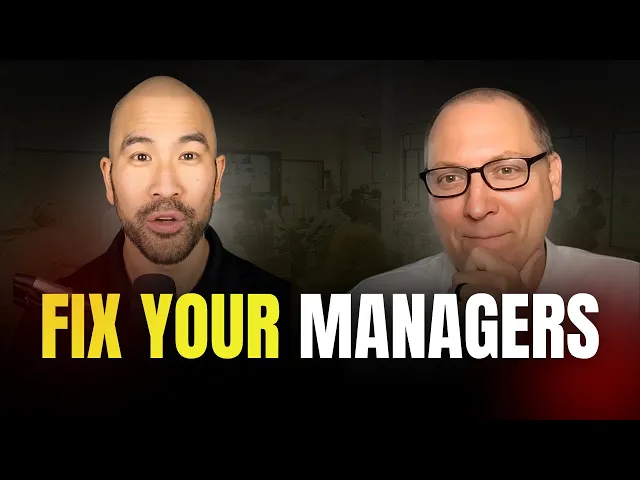
want to have to be their mom or dad." But great leaders really understand what an honor that is. >> Younger generation look to you as not their mom or dad, but a mentor and someone they feel safe and comfortable with to be able to fail. Cuz any good parent helps their child feel safe Enough to grow. And a good leader does the same thing. [Music] [Music] You're listening to the revenue vault, where we architect bulletproof revenue engines with the leaders who dominate their quotas. Hey, I'm Marcus Shen, CEO of Venley, and I'm obsessed with system
that scale performance. Now today's guest is Frank Zed, a leadership performance coach who's trained teams at Tesla, BMW, Rivian, Koga, and so many more. We dissect his leader versus manager versus boss framework that transforms toxic cultures, the 8.8 trillion cost of disengaged employees and why the marshmallow test reveals your hiring blind spots. Frank shares his power methodology for authentic communication explains why companies that hire slow and fire fast crush their competition. Plus, we go into the counterintuitive reason why cutting Training budgets during tough times actually destroys your revenue per employee. And Frank's whisper is a
shout principle that makes team perform without micromanaging. Let's head to the vault. So Frank, you have worked and trained with some of the biggest brands in the world. I mean from I was looking at Colgate, Tesla, BMW, Rivian, Coach and and like tons more and you you have said leadership is only hard for good leaders. >> Yeah. >> What exactly makes it hard even for really good leaders and how do they move past these hurdles? So, let me tell you where I got that quote from. It was on a t-shirt and the actual quote said,
"Parenting is only hard for good parents." And I remember seeing the shirt and I I am a parent of a 15-year-old who has who's neurode divergent >> and he struggles in those things. I was Like, man, that is so true. If if >> parenting is easy for bad parents because you don't care enough, you just sort of say, yeah, go outside, handle yourself, do whatever you're going to do or you dominate the child and you're like, man, you shut your mouth and do what I say and blah blah blah. Right? >> And so it made
sense there. But then I do so many leader trainings and leadership conversations and I was like, man, that's the exact same thing that, You know, leadership is only hard for good leaders >> because you have to do all this work. Oh, >> yeah. >> It's lonely and it's selfless. >> And you know, one of my favorite leadership mantras is when something goes wrong, accept all the blame. And when everything goes right, give away all the credit. M and I can tell when somebody's a good leader in a class cuz Some of them will go, "Yep,
yep, that's right. That's right. That's right." Some of them will be like, "That's stupid >> and they don't want to do that." So, it's it's very selfless. And that's where that that's where that phrase came from. Shout out to whoever came out with the teacher. I was like, and the other thing, you know, I have so many, to be blunt, older generation leaders who say this phrase to me, I don't want to have to be their mom or dad. My employee is My employee. I always think of Don Draper in Mad Men like you don't
ever give me credit. And he's like, that's what the money is for. But great leaders really understand what an honor that is >> and a blessing it is for someone of a younger generation to look to you as not their mom or dad, but a mentor and someone they feel safe with and comfortable with to be able to fail because any good parent helps their child feel safe enough to grow. And a Good leader does the same thing. So how do you how do you make that shift then right like I mean I think even
regardless of generation some some I think you know I see for there's some account executives who want to go into leadership roles like oh I don't want to do I don't want to be a babysitter right and then these can be young AES then you have maybe people who are leaders they're like oh you know I don't like leadership or you know man it feels like I'm just babysitting all the time >> how do they make that shift in that mindset to really embrace what it really means to be a great leader So there's a
activity that I created back uh I don't know five six years ago called leader versus manager versus boss. And so the very first thing I have them do is typically we do trainings in person 12 to 24 people at a time and we bring them together and we say okay let's let's get your opinion cuz my opinion is third Party. It's not what you want. Your own opinion convinces yourself. How can you compel yourself to believe your own information? And so I say, "Give me a list of what describes a leader and what describes a
manager." And they get very specific very quickly. Leader is hands off. A manager is handson. A a leader is empowering where a manager is micromanaging. >> A leader uh leads by example. A manager says do what I say, not what I do. And So I paused for a second and they may be aware of it or may not, but they are really establishing that a leader leads people. The manager manages things. So the mantra that I want them to come out of that with is people first, product or process second. >> And so if you're
putting the product and process first, you it means you're putting your people second. That means just like you said micromanaging or you know all those things and I have to Babysit people. >> That's not what leadership is about. But the third part of that is the word boss. >> So they really made a clear distinction between these two things. And I was like, "All right, define the term boss." And boy, they they lay into me with like a broadsword. They're like, you know, shitty, terrible, aggressive, blunt, harsh, diminishing, insulting, uh, you know, opinionated, aggressive, just
terrible. And when I I'm a big fan Of antmology of words, like the origin of them. Leader comes from laden, which is, I think, old English, which the definition means a guide. Man, manager. Uh, I didn't look that one up. I should look that one up while we're talking. The other one was boss. And boss is like an old Dutch word boss and it means master. >> And so I think by by putting an activity in front of people, experiential learning is the best type of learning. Participant-driven discovery of information is so much better than
tell teaching from a lecturer, you know, at at the front of the room. And so these people, they see this clear distinction and nobody wants to be a boss. >> That's right. >> But they're doing boss-like things. And everybody wants to be a leader, but they don't want to have to do the hard work of what leadership is. So instead of Telling, you know, speaking at them, I just asked them to discuss it on their own. The one thing that stuck out with me from a recent class I did in Florida with uh Southeast Toyota,
I said to them, "How many of you have had great leaders?" Very few hands went up. This is like 65 people. I said, "How many of you have had bosses?" 80% of the hands went up. And so I said, "You're all quote leaders in training at all time. Even if you don't have the position, What I call leadership and leader in title, but if you're a leader in training, you're all learning what you either do or don't want to be as a leader when you get the title. >> And a lot of these people are
learning so much more about what they don't want to do than what they do want to become when they get the title. >> So, I don't know if that answered your question in the long way. We got there. >> Well, I think I mean I think at the end Of the day, right, I think that there's a lot of power in helping them increase their own self-awareness of what they perceive to be those words. I think generally speaking people perceive boss as a negative connotation you know like for instance you know I have a couple
people on my team they're from they're from overseas so they don't understand the anthmology of certain words so they just like to call me boss and it it actually bothers me I told him I'm like Don't call it I actually feel very weird when you call me that feels like this like master like slave feel which is like not the feeling I want from like my own cop company culture right yeah >> but they're kind of stuck to that word right because they they see as hey it's just cuz I report to you that's how
it is you They don't see as a bad thing, but I'm like, but I see as a bad thing, you know, culturally, I think it's very, very tough. So, let's just say for Example, let's just say you're, you know, you're a CRO, chief revenue officer. >> Yeah. >> And you looked at you multiple layers of leadership, right? So, you have sales VPs, you have managers, you have directors, and you know, if they were to look at their organization, they're like, man, like I just seem to have a lot of these, they're actually they act more
like managers >> and like and some and bosses. like what can they do as a leader themselves that oversees like a hierarchy of of other leaders. What could they do to start working on shifting that culture? I think that you made a post, we just talked about this the other yesterday or the day before about when you got the role and I can tell this cuz you put it on LinkedIn%. >> You said I went in and I said, "All right, I'm going to take charge. Here I Go. And I'm I'm the top salesperson for
the last 10 months. So everybody should do what I do the way I do it. And your significant other when you came home cuz they didn't respond well to that said that's not a good approach. Maybe you should ask them what they think. >> What we do in training is no different than what what's going on in business. Participation. What is the participant learning on their own? Never do for a participant what they could and should Do for themselves. And so when when I think about this, nine times out of ten, that's that's not a
scientific number, but in my experience, >> there are many people who get a leadership position because they were the top performer. >> Yeah. >> And they're not given >> the necessary tools to understand what coaching, mentoring, and leadership is all about. They just were the top Performer. Now lead other people to be to be their version of a top performer. But they step in and they go, "Well, then everybody's got to be like me. >> I was number one. I know you don't do it as good as I do it. And that's why you got
to do it the way I do it. That's problematic. You're not leading. You're basically becoming a dictator. You're saying, you know, finish these phrases, my way or the >> highway, right? Take it or >> Yeah. Leave it. >> Leave it. Yeah. Everybody knows them. And so, you know, I this is a totally self, you know, indulgent promotion, but train your people on what leadership looks like. in instill the opportunity for them to engage with written material, video material, have instructor-led courses, mentor them. I one person said, "The best thing I could do for a new
hire is have them shadow a person." I was like, "No." >> Yeah. >> You're that's sha that's shadowing their job description. >> That's right. >> That is not leading that person or coaching that person in the right way. So, I would say have a clear understanding of what leadership is or isn't for your team, your culture. You know, culture is something that is thrown around all the different, you know, this way on that way on LinkedIn. I just did a scrolling video the other day of all the LinkedIn posts on Tik Tok and I mean
leadership posts and everybody's like leadership is this and leadership is that. The reason why everybody's got to try to talk about it so much is because it's in short supply >> 100%. >> So we just find a way to establish a clear definition what leadership should be and what it should look like. And I would say the big thing that I've had to Teach a lot of leaders is is dstigmatize failure. find a way to let these people who are now in these leadership positions to realize like here's you okay let's say that Marcus is
the head of our company which is you're the CEO of there you go and so now I'm below you I'm I'm that person next person on the ladder one rung down I need to feel from you that it's okay for me as the manager of a team of five that my team fails they're going to stumble they're going To do something that's problematic I heard Tom Peters do a quote that said reward epic failures punish mediocre success is growth only comes from failure and you're going to have to have a stumble. So if you can
destigmatize that, then I can work with my team and I don't have to be so so bullish and harsh on people and I say, "Hey, I saw what you did there. You made us stumble. Talk to me about how you think we can adjust this." And then the leader comes in at The end and goes, "Now I have the strategy. Here's the different thing." So long again, long answer, but if you look at Donald Miller at story brand, >> his whole thing is you're the guide. Any leader is a guide. You're Gandalf. You're Yoda. Your
people are Leia or Luke Skywalker. They have to be the hero of the story and no, you know, you how would we'd be ridiculous if Obi-Wan was the one that went in and solved all the problems that Luke just got to tag Along, you know? >> So, make your people the hero of the story. You're just the guide. >> That's that's leadership 101. >> Well, I love that so much, Re. It's so critical, right? Because especially when someone goes from like an individual contributor to a leadership role, it's such a different focus. They go from
them being themselves being the hero. Now they're like, "Oh, I need to take a step back and be that guy now." And I Think it makes a lot of sense, right? You get someone new. If you have you take over an organization, you have to like develop them. Okay. Maybe my team is not they're not literally leaders. I'm going to bring someone like you in. I'm going to bring people in. I'm going to help give resources trained and make them better. Right. this from your stance, what about people that like I think sometimes like when
you think about it, when you have a like a new Leader and like once they're in the role and you wait too long to to develop them, it's like they already got some bad habits you got to break and you may not may not be able to break them, right? So >> in your opinion what can organizations do in like proactively >> to prepare people for those type of roles whether they're jumping from like you know I see an individual contributor to a manager a manager to a director and So on to them until a
point they have like they're running a whole org. >> So most organizations they hire very uh quickly and they fire very slowly. So they're keeping around the bad apples or the people who are unable to change. Every organization should hire incredibly slowly and then fire very quickly >> and it shouldn't be a problem to fire quickly because you've you've refined your pick to add to the team. I think of Charlie Kim at NextGel which is a software company that had a lifetime hiring policy that if you get a job with them you had a job
for life and if you decided to quit they would help you find your new job. Obviously, if there's any ethical or legal situation, you know, there's there's a contract. But if you stumbled in a role, you didn't I think you're in sales all the time, right? And so, if you didn't hit a sales quota, they didn't look at that as, well, You're on the out. >> No, at at Next Jump, they'd be like, fantastic. This is an area of opportunity. Let's go to work. >> But they only can do that because they hire so incredibly
slowly. I had one manager who said, "What if I what if I sit down with a person for an interview and I can in five minutes, two minutes, I can tell they're not a good fit?" I said, "Well, then you should take your hand and you should ball it up and you Should punch yourself in the face because it's your fault that this has happened. >> You could have done so many more interviews via LinkedIn. I mean, not LinkedIn, but Zoom or Teams. You could have done emails back and forth. You could have had them
create videos and send them to you. You have to do this process methodically because when they are on board now you have to realize, okay, you're locked in. Everyone's like, "Oh, well, I can fire them." That's so expensive. The cost of turnover is never ever fully evaluated the way it should be. Background checks, drug tests, the the HR staff times and salary for bringing a person on board. Then onboarding, whether that's inerson instructorled training or online training, how many hours are you paying them for? then the cost of revenue that wasn't happening when you brought
this person on, then they're on. What if They're losing clients for you? And then when they're gone and you fire them, now you have to do that process all over again and there's lost revenue between the time you let them go and you find the next person. So Southwest Airlines, >> Trader Joe's, these are brands that don't really do any customer service training because they hire the right person with the right attributes. M >> they they go very slowly and they're like does this person have that sort of Innate sense in them that they know
what's required because I can teach skills. I can teach logistics but I have to know that they're they've got that internal wiring the right way to be a part of our team of what we're after. >> So I would say slowly slow your hiring process. Do you know the marshmallow test story? >> Oh yeah. >> So what give me your version of what you know about it? So the version I know About is uh this is like I don't know how many decades ago right back >> 70s right the group of researchers brought in a
bunch of kids so I don't remember how old maybe I call under 10 let's say for example >> yep >> and they say hey listen we're going to give you one we're going to put a marshmallow in front of each of you >> if you can wait one hour and not eat it >> at the end of the hour we'll give you Two marshmallows >> and they left the room and of course it was being observed right they can see what the kids are doing and the kids were like some like some couldn't like you
know could not handle just ate immediately, right? And some were trying to distract themselves, whatever, right? But ultimately when they came back in and you know, some kids had eaten it and some had waited, you know. >> Yeah. >> What they had realized with the kids who had the most delayed self-gratification >> in the future eventually had more success because they were far better be able to hold off on, you know, getting the the dopamine hit right now. >> That's kind of what I understand in a nutshell. >> It's perfect. And there were there were
uh some scientists about 25 years later who said that that doesn't sound right that somehow your marshmallow choice it Dictates your life. So about 25 years later another researcher team came in and they exponentially made the group of kids larger. So it was only I think about a hundred kids in the first test. Now they did like a thousand kids and those numbers are off but it was it was five to 10 times more participants. And when they expanded the size of the group and they looked at the kids, what they found was the difference
between why they chose a marshmallow or they chose To wait was a mindset of that kid, >> either scarcity or abundance. >> If they had a scarcity mindset, meaning these were kids that socioeconomically did not know when their next meal was going to happen or did not have trust or faith that they were going to have a family structure or home life that was going to be like, "Hey, if you wait, you'll actually get more." So they got what they could get because it's survival instinct. But the kids who Actually waited for the second marshmallow
were living in an abundance mindset typically from better socioeconomic situations had a structure around them where safety was happening and they knew they had this innate sense that if they waited for that that second marshmallow it was going to come because of previous experiences. So what I say to all businesses is are you in a scarcity or an abundance mindset when you're hiring? Right? If you're in a Scarcity mindset, you've got three or four open desks down there that are almost like rotating doors at the front of a hotel and that person lasts their only
6 months, one year, and you're like, "Well, let's at least do something now because I don't know when I'm going to get the next person." >> But if you have an abundance mindset, you're like, "Hey, we are going to wait because we know that our company's doing the right thing, that our culture is the Most important thing, not this quarterly report. Those are always important, >> but it's people first, product or process second. So if you can wait for the second marshmallow when you're hiring someone, you know, and then do all the onboarding and do
all the things that, you know, help them feel even better and better and better. >> But I remember I I saw I saw that story the first time and then a friend of mine smarter than me said, "Well, here's the Actual study 25 years later." Well, that makes perfect sense. >> Well, I think powerful when when you think about this, right? Because, you know, it's it's easy to say higher slow and fire fast, right? You know, like >> but it's it's hard in practice, you know? Totally. And a lot of times, you know, especially when
you're interviewing and hiring, >> you get obviously the pressure to obviously fill the open headcount, Right? You might lose it, etc. But on top of that, you know, there's different things that come in play like, you know, what I learned was we call like the pick of the litter, right? You kind of like maybe interview like 50 candidates, but like okay, maybe it's the best one out of all of them. Like you're like, I think let's just go with them instead, right? Or maybe it's like I also learned about what's called the halo effect where
they have like one or two core Attributes >> that just kind of outshine everything else. It helps you actually force it doesn't force you, but it it helps you avoid seeing the red flags you wouldn't normally see. For instance, if you're like, "Oh, they have this certain like they worked at a certain company. Oh, they worked at a Tesla. Oh, you know what? Like they must be great, but you know what? Tesla also makes mistakes in hiring too, but but that over that Empowering of like that background oversh everything else, right?" And I think it's
really key. >> I just wrote that down that a halo can be blinding. That was awesome. >> That's the halo effect, right? you're like that's that's basically what it is, right? So, you know, let's just say for example, you know, if you're if you're like, you know, you're interviewing, you're hiring and you you bring somebody in, right? >> Yeah. >> They generally speaking, I find even if they're going to be a great future leader, they still need to development. >> What can leaders do to help prepare them? Because sometimes you'll see you might do the
most you might hire slow you vet them out you have multiple people in part of the process and they come in and like they're good but maybe there's a certain behavior still they're not quite there in terms of maybe a more Leadership quality. What could a high level exec do in place like a like a way to onboard and train them to get them more of a an actual leader? >> Yeah. So great question and I'm still trying to get over the halo type thing. That was really really smart. I could just see somebody and
you're just like it's so blinding. It's so awesome. >> I can't take credit. Bast company taught me in in our in our hiring training. I'm like, "Oh, that's a good point. I Definitely fall by mistake." >> That's cool. Yeah. I hadn't heard that before. >> Yeah. >> I think that there's I'm I'm a big fan of threes. All good things come in threes, right? This Socrates like beginning, middle, and end. So, the first one there is when you're a leader, a whisper is a shout. That was from Steven Shedletki, who was on Simon X team
and wrote a book called Speak Up Culture. Meaning, if you're going to try to get in and give feedback to somebody, you shouldn't be yelling. >> I don't understand why people still think that yelling is good. I mean, did you ever get yelled out or chewed out by somebody at the end of it? Go, >> boy, that was great. >> I really It chewed me out. I feel much better. I'm immediately >> the fact that you did it in front of everybody, I just feel leadership Pulsing through me. The the whis when you're leader, a
whisper is a shout. You've got to find a way. And that leads me to the second point on sort of our threepoint journey here, which is seek to understand. >> Great leaders, they they ask questions and then they ask more questions and they ask more questions. That's what any good coach does. That's what a good mentor does. They don't start start telling because telling is not teaching. >> So when your leader whispers a shout, lower your voice, get softer, get quieter. That's how you maintain authority as a leader. If you see these viral videos of
a police officer arresting someone and they're calm and professional and then you know but the the suspect is screaming and yelling, wouldn't it be so crazy if the police started screaming, yelling the same thing, the same curse words at each other and I think everybody watching Would be like that person just lost their authority. Well, I think it's the same way with leaders. You can't go in like a bull in a china shop. You've got to slow down in the process. >> Slow down. Be be a little bit quieter and then ask a bunch of
questions. >> And then the back part of this would be, are you up for the real hard work of accountability? >> You have to come to a collective understanding of what went wrong, what We're going to fix, how we're going to fix it. And then I can't just say, "All right, Marcus, show me what you got." I got to say, "All right, I'm going to meet you in 7 days. We're going to check in. and we're going to see how this is going. And then I'm going to do that for probably the next quarter. So
once a week or once a month, we're going to check in and we're going to see how we're moving this needle. And you notice I keep saying these words, we how are we Going to do this together? We are on the same mission. Uh Jaco Willick, who wrote extreme uh ownership, a former Navy Seal, his sort of thing is like it it's your fault too as the manager. This person didn't do this thing. Did you set a clear enough expectation that they shouldn't do that thing? Well, no, but I think everybody's supposed to know that
you don't do that. Don't assume that everybody knows that they shouldn't do this or that. They didn't have your life Experience. They didn't have your parents or your former bosses. They didn't have your former culture at the last job. Maybe they're new in the workforce. They don't know these things. I saw somebody the other day who sent a resume to a hiring manager and the resume was 29 pages long. >> Wow. You and I both are like, "That is not good." >> Wild. But maybe that person wanted to include letters of recommendation or Dissertation that
they wrote, but who knows? So don't just assume, how do you not know that that's the wrong thing to do? Well, but stop for a second. Hey, thank you so much for your resume. You ought to ask you a couple of questions. Tell me in detail why you sent such a long comprehensive email, you know, a resume when in in our industry, typically what we experience is one to two pages. I'm genuinely curious what what your thought process was and I Really do want to hear about it. So, it's being curious, being empathetic, and then
on the back end, if it's terrible and it's illegal or unethical or just plain stupid, right? Then on the back end, you've earned the right to go, "Uh, Marcus, I got to tell you, man, it's just not going to work for us. So, you need to make this change, and this is how we need to make this change." Instead of come in my office, got to make this change. You did this wrong, And you you got it. go forth. That's not leadership, man. Like we said at the beginning, leadership is only hard for good leaders.
>> It's easy for the bad. >> Powerful. You know, it's interesting. Um there's a couple things I think we're 100% aligned here. And even as I obser observed you role playing with me, right? >> Yeah. >> You know, I always focus on this even from a sales perspective is like, you know, whenever we're giving that feedback, you always incorporate what I call the triple T's, your tact, your tone, and your timing. and you intentionally even shifted how you did that role play from a tonality perspective. So it it created a comfortable environment to be able
to give that feedback. The second point I want to point out and I love the point You mentioned which is you you say you say we a lot >> and um I'm not sure have you ever read the book characteristics don't work by I think it's Frank Marciano. I could be wrong about the author. >> Okay. So he has a really powerful leadership model and I read this book years ago but I you know because I was running pretty large organizations it actually probably had one of the biggest impacts to how I led across the
board. Um but he had a model called the respect model right and it it it's it's inaccurate but also the word too because for instance like obviously you want to respect your people they want to respect you and obviously when your people respect you they respect your company and leadership it's it's amazing right but the acronyms for a few different things and I I'll circle back in a second but it would be R recognition so you want to show recognition E uh Empowerment you want to make sure you empower them right uh S is you
want to be supportive supportive to them. Uh P partnering and that goes into the W, which is like the Wii, right? Or not the the the Wii, which is like when you partner with your people, even if they're not performing, and you say, "Hey, listen. So, over the next seven weeks, you and I will sync once a week. We'll take a look at your behavior. We'll work on it together because my job Is to help you become successful in your role." Now, it's not like, "Good luck, I'm throwing you into the wolves." It's like, "We're
in this together. I'm going to take you there." Right. Yeah. >> Um but that was really really powerful and there's other you know there's like I think the other E is expectations then consideration and trust but if you do that consistently it's amazing what happens with culture because now you you develop employees who will display Discretionary effort and to be specific discretionary efforts is is defined as doing things outside the scope of the role not because they have to but because they want to to actually help move the organization forward right so I think it's
like um pretty powerful some of these things that you actually mentioned already. Now, we're going to pivot slightly, right? In some in some and typically in tough e economic times, people are looking like inflation Starting to go up. They're getting all worried and whatnot. Training is often one of the first budgets get cut high to bring to say, "Frank, we're not going to bring you in. Mark's not going to bring you and your team in like we're going to be cutting. We're going to just do it internal. We're not going to do it at all."
>> Yeah. >> Why Why is that a mistake, do you think? And what are some ways Cubs can Safeguard the trading so it doesn't get sacrificed? >> I think that it's a long-term approach. You can't look at training as something that's on a spreadsheet. I can show you in the quarterly report that it's going to happen. You know, there's nowhere on there that I'm going to be able to prove in some sort of ROI that this person is more receptive to your leadership style or that they are going to be more uh curious about what
a customer thinks or They're going to be able to overcome and have a greater sense of resilience when they get objections with customers. and they're going to be able to stick to itness and and dive a little deeper and then hopefully gain the sale that they're looking for. So, if you're, you know, if you're looking at your training department, well, when it comes to people, they're not widgets. They're not ones and zeros. I'm sorry, but if that's what you're after, I can't provide it. >> Yeah, >> but I know training works. And anybody who's been
to good training knows it works. How did anybody get to where they are? you read material or you you gathered information or you were involved in things. So that I think that it's just it's a survival mentality. It's the scarcity mindset again. Hey, times are tight. Let's cut back on these things. And the very first thing is human investment. >> That's it. >> Isn't that crazy? How I mean can we maybe can we cut back on uh this pizza party or can we cut back on this you know this shipping thing? Like I I don't
know what it is, but how is it that when we get a little bit under the the thumb of pressure and stress that the first thing we say is, "Hey, we got to stop investing in our people." >> Yeah, it's interesting. >> I think I think it's so wild to me, Right? Because >> Yeah. >> When you think about it, like, you know, the the most elite organizations also measure revenue per employee, right? So they understand how based on how many how many employees they have, how much revenue per employee, and their goal is always
drive that number up, right? Yeah, that means like cutting out things that don't make sense and investing in things that actually do increase it, Right? And skills are making employees more skilled is like the most powerful thing you can do because they will generate a far greater return. And I think about it's much like much like having kids, you have a kid, I have a kid as well, but if we didn't invest in our kid, you know, like we're like, well, you know, things are tired, we're not investing in a kid. What's going to happen
to that kid in a couple years? You know, you know, like it's it's Dangerous kind of to start thinking that way, right? >> So, I think it's um I think you bring up some good points. Now it's more about leadership, right? What are maybe some common blind spots you see in leaders who want to do the right thing? >> Yeah. >> But they struggle to achieve maybe the emotional engagement with their teams to deploy an initiative that's supposed to be done. >> I mean, we have to all understand that we're different. We have to understand
that we have different motivations. I I deal a lot in training with a behavioral assessment called the the DISC behavioral assessment, the WY brand. It's a series of 28 questions that helps you figure out but two it's only really assessing two factors pace and focus. And the reason why I bring that up is I think that's one of the biggest blind spots for human beings. >> So would you consider yourself Marcus fastpaced or more moderate pace? >> Uh fast-paced. >> Right. So you rock and roll. Your mantra is ready, fire, aim. >> Yeah. >> There's
not a problem with you making a decision. You don't call them mistakes. You call them a decision that was already made and now it's time for another one. >> That's right. And so if I'm a moderate Paced person, I'm methodical. I'm timely. I need to be left alone. I don't want to be told what to do. Give me the material and leave me alone. So all of a sudden, we might have a crash. We might have a conflict. The other aspect that they put in this behavioral assessment, and there are many out them out there
like MyersB, Briggs, and the big five, but this one is just so simple, and that's why we use it a lot in training with BMW and things. The second thing is Your focus. So, do you feel like you personally are more logic focused or more people focused? >> Um, logic focused. >> Right. So, you like checklists and spreadsheets. You're the type, Tell me if this is true. Do you ever have a list going and you know you've already completed something, but you write it down on the list just to cross it off? >> Oh, 100%.
Helps to keep track of everything that has to be done. That's Right. >> Right. So, it's you you're you're about accomplishment and you're about data. In your world, facts are facts. >> That's right. >> But my style specifically, I am people focused. So emotion matters to me. I care so much about what other people think, probably to a fault. I need that connection and I want to be involved and I want to I want to have a leader that wears the same rosecolored glasses that I do. But if you're in that leadership position, I hate
to put it on you again, but your job is to be the adapter. The employee is going to, you know, be who they are. And the manager has to come over, the leader has to come over and go, "Okay, how can I adapt to the person that's in front of me?" Once again, exhausting, lonely, selfless. But if I know that you, Marcus, are my staff member and and it's this whole golden rule, platinum rule thing. I know it's Out there everywhere. Golden rule, treat others the way you want to be treated. Let me try that
with you, >> Marcus. Man, hey, what's going on? How are you? It's good to see you, man. Tell me about the your child and your kids and life. Yeah. Yeah. We'll get to the work stuff a little bit later, but I just want to see how you're doing, how you're feeling. This is my golden rule version, by the way, >> because I'm giving you what I would want And how I would want it. Um, so tell you know, tell me how you're feeling. You know, what's going on in your mind? Like, how did it go
with that interaction with your coworker? Yeah. Well, you know, let's just take this easy. It's that's that's what I want. But platinum rule, let's treat others the way they want to be treated. So, version two, the the the modified to Marcus version is Marcus, Excriminate, man. You're killing it. I know that You're one of our top performers for a reason. Got something very specific that I want to talk to you about. It's this item on the checklist. You tell me what's going on with this item on the checklist. Boom. Boom. Boom, boom, boom, boom, boom,
boom. You tell me because again, I trust your leadership. I know you're out there crushing it on the sales floor. What do you think we need to do to switch this over? Boom, boom, boom. Now, your style also likes a Little bit of conflict. You're you're okay with it. So, I would be like, "Well, Marcus, I'm going to challenge you. I don't agree with what you said on three." And as the person in the authority position, I need you to get on board with that because I think you've got what it takes, man. I'm challenging
you to compete with yourself and drive yourself to that next level. What do you think about that? Good. Let's do it. I'm gonna see you soon. You know exactly What we're after. There's no speculation here. You need anything, you let me know. Otherwise, I'm just going to get the hell out of your way. >> I'm g talk to you in a month. Right. And so that that is just so you know, that is painful. That is not how I like to operate. >> Sure. >> Yeah. >> But that's what we So adaptation to the actual
employee and something like that, The DISC behavioral assessment I think can help. >> So leaders need these tools. I think another one is Gallup 212. >> Y 12 questions from Gallup that you should be asking your staff all day. Do I have the necessary tools to do my job? Do I know what's expected of me at work? Does somebody check in with me on a 7-day basis about my growth within this team? >> These tools help you then go in and Start to adapt and modify. >> I think it's really powerful and um I I
love the examples you broke down, right? Because I think one of the greatest things that we can do for ourselves as leaders or even if we're individual contributor role because we're still leader in that sense is how do we increase our own self-awareness of how we how we view the world, right? That's why I love, you know, I love the disc Myersbrig, you know, I love, you know, The anagram, whatever one you want to do. It's like >> they give you a really, they give you a lens kind of look through life, but then also
allows you to see, oh, you know what? When I'm working with Frank or somebody else, how can I meet them where they're at? >> Yeah. >> You know, and it's really hard to meet them where they're at if you're not aware where you're currently at, how You're being perceived, you know. >> Uh, >> real quick on any of those systems, I just want to be clear, don't use them as a hiring tool. It could be illegal that you're saying this person isn't a good fit because they're not the style that I think would be right
for that role. And it's not about judging anybody else. It's a self assessment tool to then say, how can I modify? I just want to make sure any leaders out there don't use This thing as a crutch and go, "Well, that's why they're this bad in this job role because they're this behavioral style." No, it's just they are who they are. So, I appreciate the grace there. Well, I think I think it's a great point, Fright, because the other point is if you let's say if you were aside for it being illegal, if you will,
because you're, you know, realistically just, you know, you actually discriminated now against other people, Right? >> Yeah. >> The other point is like let's say you didn't you weren't aware of that, you disre you you get this like this like echo chamber of like people acting and thinking the same way. You don't get different ways of thinking. Like I think one of the greatest things I I I did especially earlier as a young leader >> was really hiring wildly different People from me >> and was it really hard for me to learn how to work
within those profiles? Yes. But you know what it actually made me better but actually made our team overall stronger and better. So like we would have better more diverse conversations more robust problem solving. They would think of things different way. even deal strike strategy they like that's kind of a silly way like and they they would kind of share Maybe like a softer perspective like oh that's a good point because I'm a I'm a hard D you know I'm ready >> right >> I'm I'm ready to like break through right and like that's a good
point maybe I need to be more careful and I think this also applies to even parenting right >> totally >> you know like how are we showing up as parents to our kids is the same thing You know like you know and I'm reading a new parenting book right now it's kind of same thing I'm like you know I'm a little bit like this actually I need to be a little more careful with how my approach is a little to I'm bringing something about intensity which does not does not always work well you know with
a kiddo right so I think it's really interesting >> and on point like there are so many people who let's just be real blunt Didn't have great parents >> so or didn't have a parent >> so if we're learning so much about parenting from our parents and then we go out into the world and we use parenting sort of as a leadership mantra maybe that's not the right strategy >> totally yeah go ahead oh no I mean it's it's it's a lot like um you you probably read the book the five love languages, right? It's
very >> I know it haven't read it, >> but you know, essentially it's like it's like each person has their own love language or even in the workplace their own appreciation language is how it's redefined, right? So, it's like if I'm speaking Chinese and my employee speaks Japanese, there's a disconnect, right? >> Yeah. >> If I can understand their language and and I can now speak their language, >> Yeah. then they're going to be the messaging is much is clearer and we feel More connected and it's not about compliance but that they're probably going to
be more open to the change that I'm wanting them to do right and uh that's why you know influence really is an ongoing thing at all times. >> So let's talk about um your upcoming book. It's called uh uh giving a Is that what it's giving a Is that >> lost art of giving a >> The lost art giving a cool >> customer service actually pays. >> Awesome. So yeah, what does that look like in practice, especially for like a large organization? >> Sure. I think it's I I've done my job for about 25 years
now and I started working on it during COVID because I had time on my hands and many people said, "Well, what's the title?" And I say, "Well, it's called The Lost Art of Giving a Shit." And they I've had multiple managers, department heads, clients stop me and go, "Whoa, that's Exactly what I need." and they have this whole what they feel are just people who don't care anymore about their jobs >> and it's it's my I feel for me it's just this line in the sand moment where I want to put out to people you
got to make a choice so there are five sections in the book either you do or you don't give a >> it's okay be honest about it >> y >> if you don't figure out why there are a Lot of benefits to doing this and if you are disengaged that means you might be dealing with some trauma or depression or you just you you want to give a Trust me. Uh the the the fourth section, excuse me, third I've got my fingers all screwed up. Either you or you don't, right? If you don't figure out
why why you should. So that's a whole section filled with scientific research and data. God, I've had to put so many footnotes in my edit from my publisher. Uh but it's a whole bunch of of evidence to say here's all the benefits of doing it. Financial, spiritual, physical, mental, right? All those things. The the fourth section is how to give a with a thing called the give a kit and it's a series of tools right you you were working on acrostics earlier rebct mine is power so it's preface everything open it up wonder why engage
fully and then you know recap everything so it's about how to be a better Conversationalist with your staff or your customer I think the communication is at the heart of giving a >> and then the last section is people who do so right now it's about 25 stories big or small uh real life examples of people who have given a about you know a person that's in front of them and the whole thing starts with the big idea on page one and the page one it's the big idea in three parts number one according to
Gallup this is a real Number in 2024 there was $ 8.8 8 trillion dollar in lost productivity due to disengaged employees. Part number two, some of you who just heard that or read that don't give a And part number three, some of you are more upset than I said the word than the first thing I said. And so I've I mean the whole preface of the book is I thought about calling it the lost art of caring, >> the lost art of giving a hoot, >> but none of them have the gravity of What we're
talking about here. trillions of dollars are on the table for people to get to grab and get a hold of. But we just don't seem to want to admit what it's really going to take. And that is us leaning in and committing. Am I in or am I out? Do I care or do I not? And if you're a leader and you're asking yourself that question, you're like, I don't really care. I'm not in. This ain't for me. Then just be honest about it >> and go figure out something else because people need you to
give a M so >> so what do you so I mean I have so many different ways we can kind of angle this right when I think about giving a right like yeah like there's like there's there's situation one which is like you have people on your team organization you know some give a and some don't right then there's people that you hire in right and there's and it's like cool will they give a or Will they not give a and there's kind of like the two different angles that you can approach which is like
hey how do we hire people who do give a >> and how do we make sure people continue to give a right for two. What do you think would if we had to choose one, what would solve the problem most likely, you know, and how we solve that problem? >> Incredibly clear expectations of what that looks like. >> There are many people who get a job and they're still trying to figure out their login and figure out what the culture is at the at the the office >> and who should I trust and who should
I not. >> And they say, "We just got we're a family here. we got like let's define for everyone if you're gonna be on this team what it's going to take >> and that's I don't want it to be unrealistic. I don't want you working 12 Hours extra every day or week. I don't want you to put yourself in an uncomfortable psychological situation. But every time a situation presents itself. It is a past fail moment for you to decide are you in or are you out? >> So customer is calling you and they have an
issue. Do you give a >> Do you care about it? and you just be all blunt and honest and say, "No, I don't really want to care today about what a customer wants," then that's a Problem. That's a struggle. >> So, I think it's very clear expectations of what we're after. Um, in the in this conversation about caring so much and trying to find the right people and all those things, I just think we have to be honest with ourselves and say we can never ever expect any employee to care more than we do about
than we do as managers or leaders. And the other thing is, shout out to Gary Vaynerchuk. You can never expect your staff to work Harder than you do because they do not get the piece of pie that you do. >> That's right. >> So just be that example. That that's that's the other thing I would say is just give a and practice it every single day. They went to Chad GBT and AI and all these different versions of it that that they said, "What's the greatest definition of leadership?" Every single one of them spit out
the same thing, which is leading by example. So, I think that we should look at the data and you just got to show up every day. So, are you the first in the office? You should be. You're the leader, >> right? Are you showing up, you know, in the best possible way? Are you caring about an employees complaint less than you're caring about a customer's complaint? Well, then you give a about the customer, but you don't give a about me as the Employee. Go ahead. >> No, I was going to say is I think you
mentioned a couple key things, which is number one, which is the model success as a leader. I mean I think it's absolutely about your people are always watching whether you are aware or not even as remote team you're seeing how responsive you are whether it's in Slack or email to how even when you respond how detailed is it are you paying attention right to if you void them like They know you don't respond like I I still remember sending emails to certain people in my organization that did not respond I needed their attention for something
that was really really important right yeah so people remember this thing right so they always remember um the second piece is it's the expectations piece and I think wildly powerful and I think it's why there's a there's an older book I think it's called the seven hidden reasons why Employees quit or leave or something along those lines >> very it's like an older book maybe like 20 30 maybe 40 years I don't remember now but one of the one of the reasons was a mismatch in expectations and I thought it was really power and that's
everything from you know income the salary to like the job description to the culture to everything right and one thing that was really critical for me is like you know we I took over sales or That went from like 50% down to like 19% turnover for like a sales order was pretty good, right? >> Awesome. >> And a big part was there's many things but one of the core components we did for new hires because also I also measured first year survival rate as well >> and their speed to rent time is um in the
interview process I would lay out crystal clear exactly what expectations Were. meeting like I would literally show them what the perfect week looked like, how many hours meetings they had to attend to the job description or to the the compensation to what they could earn if they performed and did perform if they underperformed to like the meetings we had to my leadership style actually show them in a slide deck and see and see what their response was after each thing because if they're like oh that's I don't like that at all I Knew that could
be an issue down the road but they're like I love this I love the structure. I I I've been wanting this my like when they're like salivating for it. >> Yeah. >> That's really important. And then >> making them an insider >> 100%. Yeah. >> We're just showing them. And then I think the other piece is like when you when you give them that level of taste On on top of that, it gives them a choice, right? >> They're going to be in or not. And then when you build your interview structure to uncover these
things that are involve a give a shift factor, you hear in their answers. Yeah, >> you actually you actually see like how do they prepare, right? Or if you're like, "Hey, give me an example of maybe a customer situation you had where you made a huge mistake. >> What did what happened? How did you solve?" And you'll hear quite a bit to the level extent they'll go into to solve that problem, which could be hints towards do they give a or not, you know? So, I love it. I think we we need more people who
give a My my buddy calls it the gas effect, right? You give, you know, it's so critical. Uh >> I think if you look at Tony Sha's, you know, he's now passed away at Zappos. I don't know the exact number of time, but I've read the stories where they offer somebody $1,000 to quit after the first six months. >> And then they try again, I think, at the oneear mark with three grand. And they're like, we if you're out, that's okay. >> And the crazy thing is like I've heard many managers, man, I'm not going
to pay somebody three grand to quit my job. You're getting off cheap. >> Yeah. You're getting off cheap, man. Do It now. Otherwise, you're going to wait three years. You're going to fire slowly and you're going to lose all this revenue and you weren't even conscious that you lost it. >> Yeah. So, we're we're right we're right there. I also see the the task driven part of you and you're like this this data and that data and the PowerPoint deck, that's why you're, you know, beneficial in that role because you got the analytics, man. >>
You do you do a balance of both, right? you know, like you know, I I've had great leaders who have punched me in the face in terms of like getting better my social and self-awareness, right? Which is good to a certain extent, right? So, I can be a better leader because, you know, like at the end of the day, >> when you're leading people, you're you have to win their hearts and minds. That's what it comes down to. You know, can't be all logic, it turns out. So, >> well, Simon SK always says, "Why would
why does nobody say winning minds and hearts?" >> Because it just doesn't work that way. >> Yeah, it's exactly right. It's exactly right. So, powerful. I never heard that before. Uh, great interview, Frank. Uh, people want to find out more about you, go get a copy, your book, work and find you and and get learn more about your book. >> Yeah, my website is FTZ. So, it's me incorporated, frank. So, FTZNc.com. There's uh contact information on there or on LinkedIn you can find me. That's where I put all of my content on. But that's where
the the book will sort of come from. FTZNc.com. And yeah, probably won't be out until summer next year. I'm working with Page Two Publishing, which has done a bunch of different, you know, books in this field of business. And uh yeah, off we Go. >> That's a wrap on this episode of the Revenue Vault. Now, if you got value, here's your next step. Go to eventconsulting.com/teams. Get a free performance scan of your sales or we'll show exactly where deals are still and how to actually fix it. And if this episode gave you even one insight
worth sharing, send to a sales you respect. I'm Marcus Shan. Thanks for being in the room.