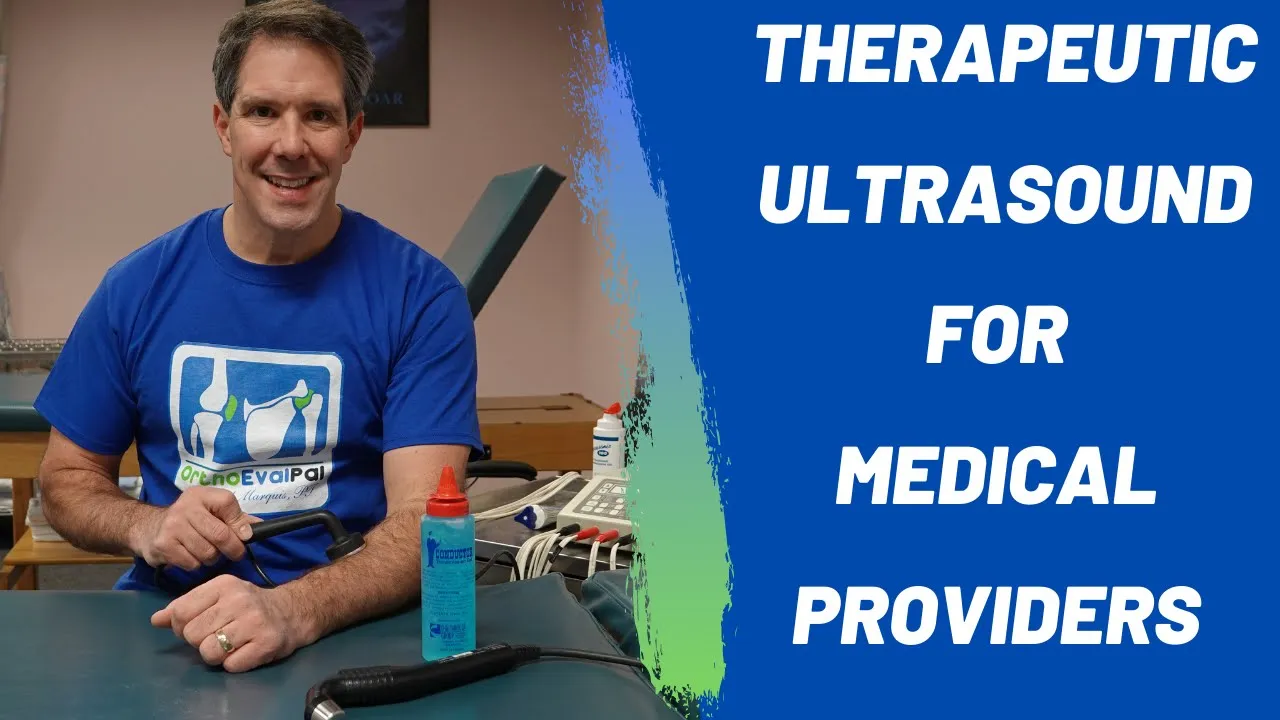
hello everyone this is paul from ortho eval pal and today i want to talk to you a little bit about ultrasound but before i do that i just want to give you a little background for those of you who are new at viewing some of our youtube videos or listening to my podcast on ortho eval pal i just want to give you a little background who i am what i do um so i'm a physical therapist have been for over 28 years now and i actually did some teaching for about five years on therapeutic modalities
for athletic trainers so i do have a little bit of background on the use of modalities i've been using modalities ever since i graduated uh probably using him a little bit less now than i used to but i still use it and an ultrasound is a tool that we use and if we just depended on one modality alone i think we would all be in trouble so let me explain a little bit about what ultrasound is how it works and why we use it so therapeutic ultrasound is different than diagnostic ultrasound we're not going to
find kidney stones and babies and things like that with this type of ultrasound um the effect we're trying to do here is get a little increase in tissue temperature deep inside the body so different than putting a hot pack on the skin and having the heat go through the skin through the fat into the muscle and into the tendons those deep tissues this actually sends a sound wave that's a little bit deeper to help heat those tissues that are deeper than you would get with a hot pack so how does ultrasound work well inside of
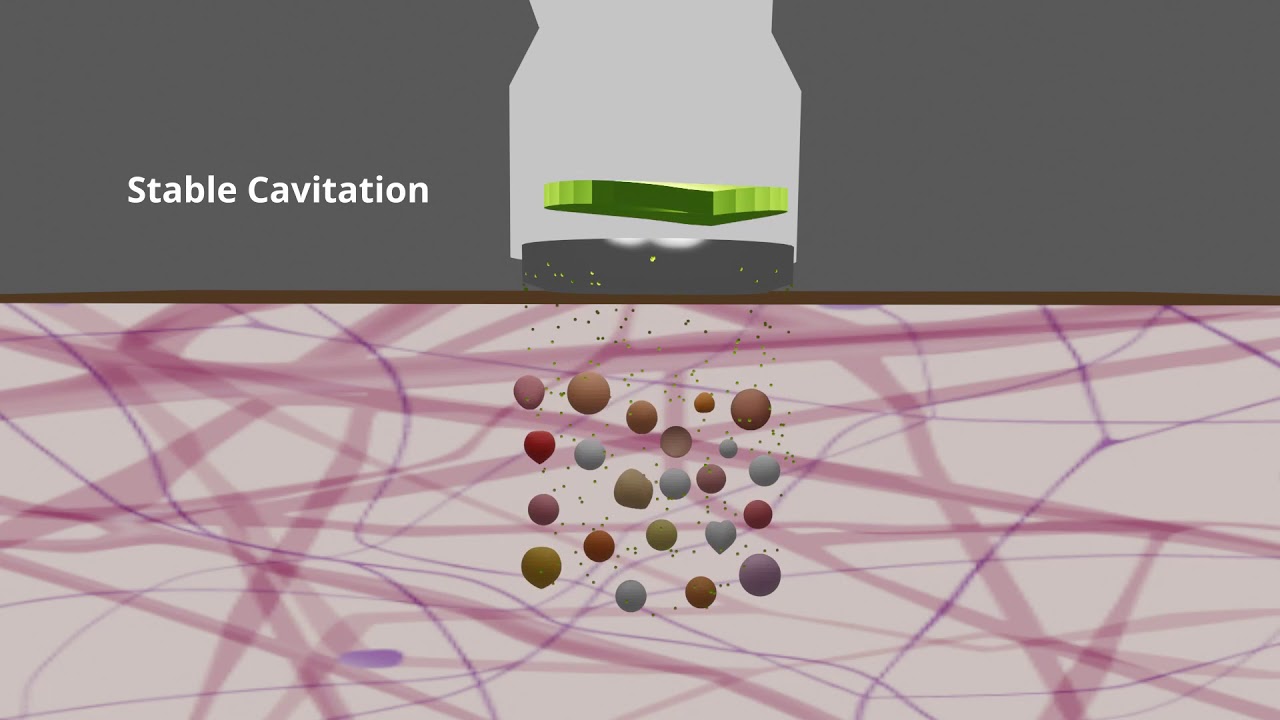
this sound head right here is a man-made crystal um i might be able to take this one off and i say a man-made crystal there it is you can see in here deep inside there's um it's lead zerkin eight titany it's uh basically three elements put together so that when electricity hits it um it expands and contracts really really quickly and when it does that um that expansion and contraction will cause a vibrational sound wave and that sound wave will penetrate through the skin and into the tissue so the way i explain this to patients
is that when that sound wave goes through it causes friction to the cells in the soft tissue just like rubbing your hands together so the harder and faster you rub your hands together the hotter it gets and that can increase that temperature of that tissue up to four degrees celsius four centimeters deep if you use the right parameters now um so you can increase the tissue that temperature by doing that you increase blood flow to the area well anytime you increase blood flow to the area that can be helpful in bringing nutrition to that region
help the healing properties of that damaged tissue the other thing it can do is increase the elasticity of that tissue by warming it up a little bit now one of the things that you need to remember is that when you ultrasound a tissue to help increase the tissue temperature once you finish that ultrasound within about three minutes or so that tissue temperature will drop back to its normal and then you lose that ability to make the tissue a little more extensible so one of the things that i'm going to talk about today is location and
how to use your ultrasound but i also want to get a little more in depth about you know the types of ultrasounds that you have out there and sound head size and whatnot so that you can make your ultrasound treatment a little more effective so if you take a look at these two ultrasounds the sound heads are both two different sizes okay so if you're going to be doing a really large area let's say you're doing a quad or piriformis or even a lateral epicondyle you're going to want a little bit larger sound head if
you're doing let's say a decor veins in this area or just a one specific tendon you're gonna wanna get into a ultrasound head that is a little bit smaller like this okay so you can see the difference in the size of the sound head so one of the things you need to remember is that a ultrasound has an era or an effective radiating area that means that the sound wave does not come out through the whole sound head it only comes out of about three quarters of that sound head so strongest in the middle and
then a little bit less on the outside so if you would take a look at the sound wave it makes kind of like a little bell curve like this when it comes out but the edges don't produce a lot of sound waves so when you think that the whole head is that's touching the skin is sending sound wave it's not so that's why when you ultrasound an area you should really not ultrasound an area any more than two times the size of the sound head okay so let's say the area that we're doing is right
in the center here we want to do about two times that sounded you don't want to be going all over the place because then you'll lose the effectiveness of that sound wave penetrating into one spot so that effective radiating area though if you keep it in one spot number one it will burn the patient and be very very uncomfortable because of a high concentrated sound wave in one area and then you don't get all of the sound waves coming out of the whole head so you want to cover that area by doing little circles over
the region okay that's the effective radiating area the other important thing about the mechanism of how an ultrasound works is the beam non-uniformity ratio or the bnr and so when you look on a ultrasound head like this and it should tell you what that bnr is or when you purchase an ultrasound the higher the bnr the better so if you have a nine to one uh bnr that will make that sound a little more uniform over the area that where it comes out it won't feel so spiky or sharp some of the old old ultrasounds
have really low bnr's of two to one three to one those can be quite uncomfortable you can actually burn capillaries with some of these really old ultrasounds so it's not a bad idea to update your ultrasound take a look at that bnr make sure that number is really high so you can get the most effective treatment so again ultrasound alone is not a great treatment just to do on its own but if you're going to use it as a tool make sure that you use it as efficiently and effectively as possible okay so it's very
important that you understand the type of tissue that you're ultrasounding and the depth of the tissue that you're ultrasounding so if you are doing a really deep tissue let's say like a piriformis muscle um or a gluteal muscle you want to really want to heat that tissue nice and deep you want to use one megahertz that will penetrate a lot deeper if you're doing something like a decor veins or the back of the hand maybe a patella tendon the triceps insertion then you want to go with three megahertz because that will give you more of
a surface ultrasound and that will not penetrate as far down because if you're close to the bone you'll get a little discomfort when you ultrasound that area now with that in mind so now you know the depth so using one megahertz for deep three for on the surface um there are continuous and pulsed ultrasounds that you can do so if somebody comes in with an acute injury there's maybe a lot of inflammation a lot of swelling you probably want to use a pulsed ultrasound i typically use 50 pulsed if it's you know subacute acute just
to help decrease that inflammation in that area when you're using pulsed ultrasound you want to go a little bit slower with your ultrasound uh motion so that you get that pulsating because if you do 50 percent pulse that means you're gonna get the 50 sound and then it stops 50 sound and it stops so it's on and off on and off whereas if you use continuous that sound wave is continuous all the time so that continuous is more thermal it's going to help increase the temperature of the tissue you don't want to do that on
somebody who has an acute inflammation or a you know fresh ankle sprain or something like that um the other consideration is you know what are you trying to achieve with your ultron if you're trying to achieve you know elasticity of the tissue and increasing blood flow to the area then maybe you want to consider stretching that tissue while you're doing the ultrasound because remember that the temperature of the tissue will decrease about three minutes after you've done the ultrasound so if you're doing a plantar fasciitis let's say underneath the bottom of the foot i like
to stretch the patient into dorsiflexion and extend those toes a little bit and stretch that fascia while i'm doing that ultrasound so that i can help increase the elasticity of that maybe i'm stretching the achilles or i'm stretching the extensor mechanism if i want to increase the mobility of that i might stretch it as i ultrasound it so that i'm heating it bringing blood flow to it and stretching all at the same time so think about that when you're doing your treatment think about the depth of the tissue now ultrasound cannot penetrate much more than
four centimeters deep if you're doing one megahertz at two watts per centimeter squared so if you think it's going to penetrate really really deep on you know somebody who may be a little overweight or you're trying to get to a facet joint or something like that are you really getting an effective treatment out of that so remember the depth of the tissue and your parameters that you use when you're using ultrasound some of the other things you need to remember patient comfort so when you explain that it produces heat deep heat patients will oftentimes say
well i don't feel anything so i don't think this is really effective um one thing you need to remember is that your sensory fibers are more on the surface this sound wave is being produced deep inside the tissue okay and you don't have sensory fibers deep inside your muscles and tendons and whatnot so they're not going to feel that they may feel a little warming effect later on as you're you're getting into six seven maybe eight minutes of doing your ultrasound because the the sound head is actually starting to warm up because all those sound
waves are coming through obviously that sound wave is going to move those molecules warm them up and cause a little friction to the surface of the ultrasound so they may feel the ultrasound getting warmer but you should never adjust your ultrasound to what the patient feels in regards to the heat okay and that's something that people used to do in the past you don't do that you do you adjust your parameters to the tissue that you are working on explain that to your patients so they don't have this anticipation that they should feel a heating
effect if you're doing pulsed ultrasound um you're going to be going a little bit slower and they may not feel any heat at all when you are ultrasounding the technique is important you should not just keep your ultrasound in one spot if you're doing thermal ultrasound because that will really hurt the patient because you're going to concentrate that sound wave in one spot and just like you know a rope that's rubbing on your hand in one spot for a long time will cause a burning effect well this will do the same thing you won't physically
burn the patient but they will feel a sensation that is very very uncomfortable they're not going to like it so it's important that you have this constant little circular motion going in that area and you're not going any further than twice the size of the sound head to be most effective while you're doing that if they can't stand the discomfort you may want to turn it down a little bit but you don't want to be going really fast in one circle because that will also be quite uncomfortable for the patient so a mini circular motion
is important and if you're doing pulsed ultrasound you can actually go a little slower just so that you can focus it on that area make sure you expose the area as well as you can that you're working on so if you're doing a rotator cuff let's say insertion the deltoid's a pretty thick muscle so you can expose that cuff a little bit by extending the shoulder some to work on that area and that may make it a little bit more effective so again i try to make sure that the location is correct that i'm not
ultrasounding an area that is too large i'm using the right frequency so 1 megahertz versus 3 megahertz i look at the depth of the tissue in order to increase my watts per centimeter squared so if it's a little deeper tissue you're going to want to go a little higher with that if it's really surface and near the bone they won't be able to tolerate that because that sound wave is going to hit the bone and bounce back cause a lot of discomfort there some people have utilized therapeutic ultrasound to identify you know stress fractures or
fractured areas like a metatarsal stress fracture because that sound wave when you go slowly over the fracture site causes the vibration and that vibration can cause some irritation to the fracture site and if you are going over the area and then you hit the fracture site they have a significant amount of pain or a deep ache and then you continue on and it's not so bad you rub back over it and it's painful again you may want to suggest that they go to the emergency room or get an x-ray to identify if there actually is
a fracture it's not a super dependable way of doing it but if somebody comes in and they haven't had an x-ray you could utilize that as a tool to try to identify if there is a fracture in that region what do you use for conducting gels we just get an ultrasound transmission gel aqua gel works fine lotions can work fine there are medicated gels that you can use out there they call that phonophoresis when you try to drive medication through the skin into the tissue and they found that to be um quite ineffective so i
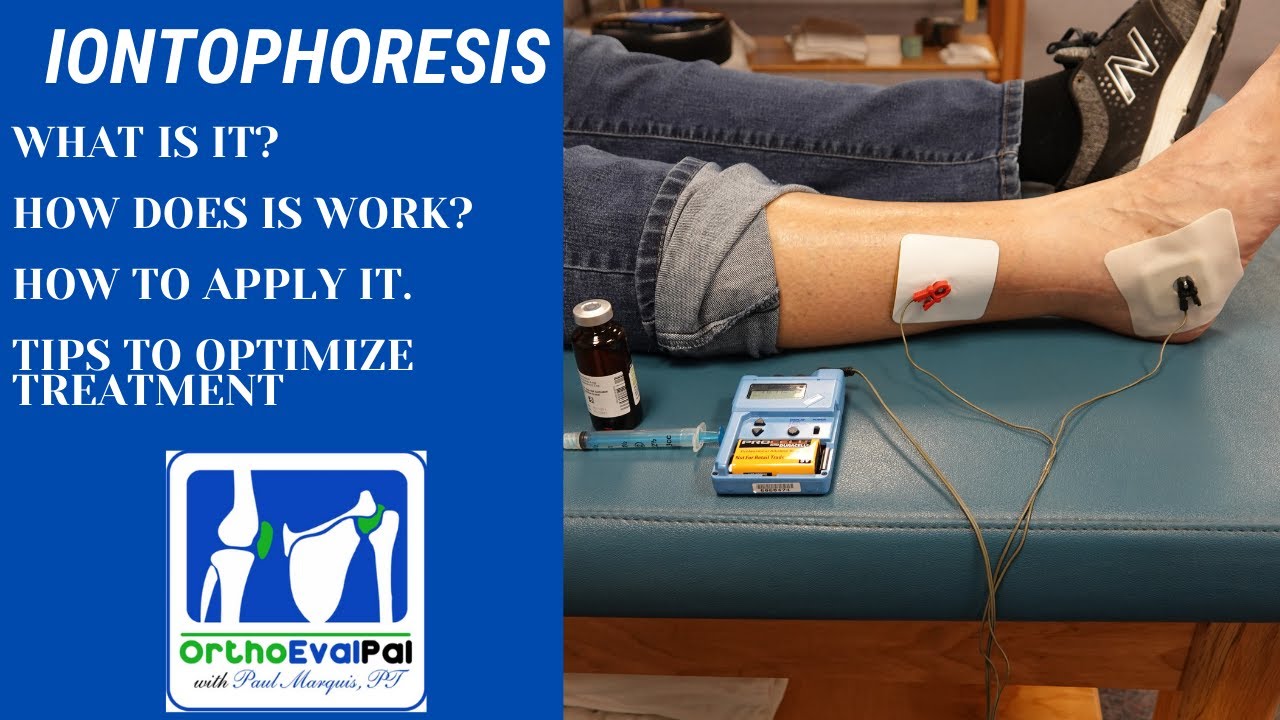
have not done a phonophoresis treatment in over 15 years i'd rather do iontophoresis which i find to be a little more effective like i said i do ultrasound with patients i'm quite selective i try to keep my programs a little bit more functional but if you have a lot of tightness or a lot of muscle soreness patients can find quite a bit of comfort by doing therapeutic ultrasound and i have actually added that one thing to a treatment program to find a pretty significant improvement in how they're doing sometimes so i don't do it all
the time but i do use it as an adjunctive piece of treatment when i am when i'm working with patients trying to think if there's anything else we need to know about ultrasound um you know indications you want to make sure you don't do it uh trans cerebrally don't do it over the eyes not over a belly of somebody who is pregnant you want to avoid doing it over um a total joint replacement where there is cement over the cemented area you want to avoid that you want to avoid doing it over an area of
a pacemaker try to avoid open wounds if possible but other than that it's a pretty safe modality and again something that i use quite often now if you folks have any questions about ultrasound or you want to make any comments about this video please leave those in the comments section of the video today if you like our video give us a thumbs up i know it was a little on the lengthy side i apologize um if you haven't already subscribed to orthovalpal please do so um our subscriber base is increasing significantly all the time glad
to say we just hit 5 million views and over 21 000 subscribers we want to get that growing some more i want to keep teaching like this i really enjoy that if you want to help ortho without pal hit the applaud button next to the thumbs up button and uh and help us out again folks thank you so much for watching and for listening to ortho valpal i really appreciate it and i appreciate all the great comments you've been sending take care






![How to Regrow Cartilage & Reverse OsteoArthritis? [Can We Do It?]](https://img.youtube.com/vi/w25yl6lHL78/maxresdefault.jpg)