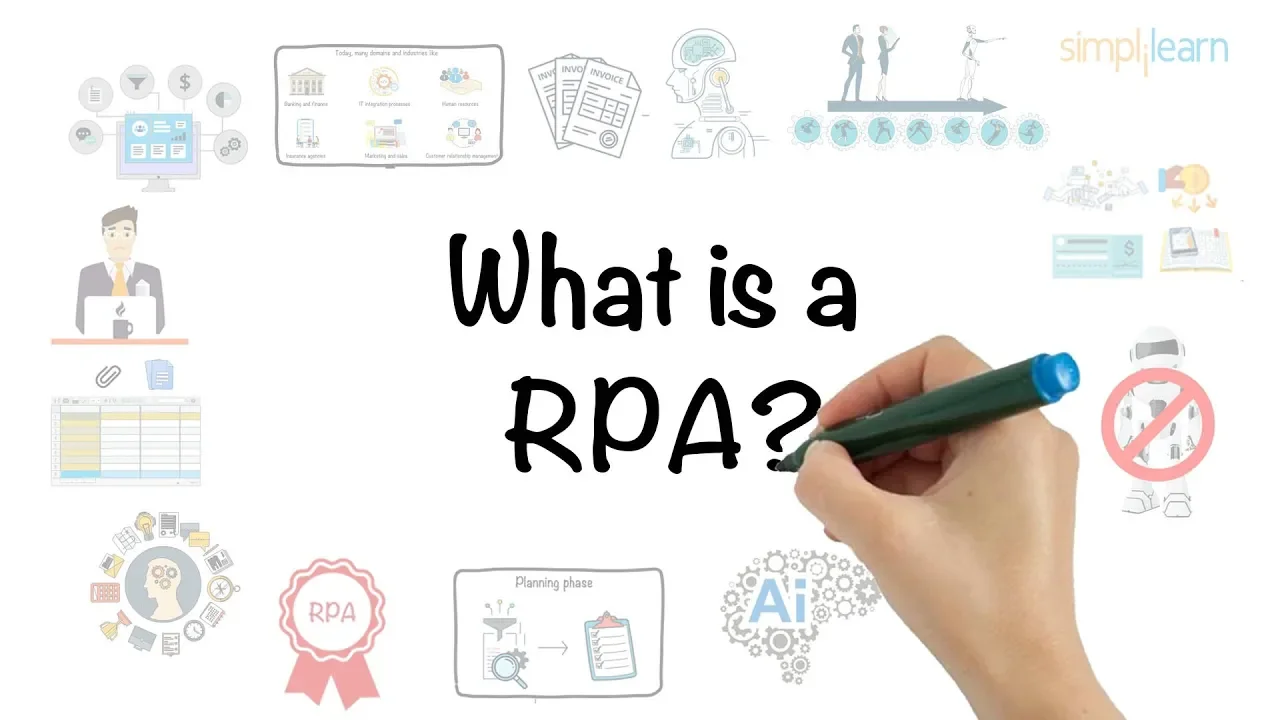
this is jim he is an accountant in a multinational company he handles several invoices and other financial records like monetary transactions liabilities checks and ledgers on a daily basis one of his tasks is to copy all the relevant information from these invoices such as the name of the company invoice id and data processing into a spreadsheet and mail the sheet along with other financial reports to his superiors by the end of the day as any prompt employee he transfers all the information to the sheet attaches the reports and sends them over to his boss via email every day but over a period he starts finding this task to be time consuming and repetitive frustrated jim looks for a way to reduce the time and effort it takes to complete the task and voila he stumbles across robotic process automation aka rpa using robotic process automation he builds a simple bot that extracts information from several invoices into an excel sheet attaches all the necessary financial reports and sends them over to his superiors via email at a specific time every day so what exactly is robotic process automation robotic process automation rpa is the use of software with artificial intelligence and machine learning capabilities to handle high volume repetitive tasks that previously required humans to perform some of these tasks include addressing queries making calculations maintenance of records and performing transactions there are several misconceptions about rpa rpa is not a humanoid robot it does not have a physical form and no resemblance to humans rpa cannot replace humans or replicate human cognitive functions it does not have a brain of its own and cannot perform logical or critical thinking as humans do the working of rpa includes four crucial phases one the planning phase typically involves gathering the processes to be automated identifying the test objects and finalizing the implementation approach two the development phase includes the creation of automation workflows as per the agreed plan three deployment and testing is a vital phase since it uncovers any unexpected outages and ensures a bug-free product four lastly there's the support and maintenance phase which ensures that the product is continuously updated with smooth deployment across the user base to meet the objectives of rpa tools are used these rpa tools are software applications that can configure tasks and automate them some of the popular rpa tools in the market are uipath automation anywhere blue prism work fusion pega and redwood among others when it comes to quality rpa ensures consistent error-free output leading to reduced operational risks this in turn improves customer satisfaction in the area of delivery rpa can help decrease the average handling time and this enhances the customer experience and ensures 24 7 business continuity with respect to cost according to nascom domestic businesses can reduce the cost by up to 65 percent through rpa it offers a higher roi by driving positive returns within quarters as opposed to years other advantages of rpa include reduced training costs minimal utilization of i. t resources and easier software migration today many domains and industries like banking and finance i t integration processes human resources insurance agencies marketing and sales and customer relationship management readily deploy rpa rpa service adoption has been showing tremendous growth since 2016 and will continue to increase beyond 2020. according to mckenzie's research knowledge and work automation could have an economic impact of 5 to 7 trillion dollars by the year 2025.
it will impact more than 230 million knowledge workers which constitute nine percent of the global workforce any company which is labor intensive where people are performing high volume high transaction functions stand to benefit the most with rpa adoption boosting their capabilities and saving money and time now that we've discussed what rpa is and isn't here's a question for you which of the following is not an rpa use case 1. email query processing 2. data extraction 3.
image recognition 4.







![UiPath Beginners Course [2021] - How to Learn RPA](https://img.youtube.com/vi/sp5ZwFKfh-0/maxresdefault.jpg)

![🔴 1. [Hindi] : What is RPA in Hindi | Robotic Process Automation in Hindi | Introduction | UiPath](https://img.youtube.com/vi/F4IgCrlmm-k/maxresdefault.jpg)