right back here with Dr Thomas Cunningham MD how you doing today awesome good what can deadlift do for us as climbers how is it going to make me a better climber yeah so if we're going to talk about the physical aspects the deadlift is going to Target pretty much the entire posterior chain and that's everything all the way from the feet all the way up through the shoulders and so that's something that's going to help you keep your feet on the wall it's going to help you hold that core and body tension on the overhung
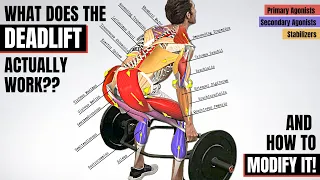
routes and it's also going to develop kind of the overall body power what is what muscles are those yeah so that's everything starting from the heel so you go up you got the gastroc and the Soleus and the cap you got the hamstrings the glutes latissimus dorsi the posterior Rector muscles all the way up through your paraspinal muscles in your neck and the deadlift is working all those in one move exactly let's talk for a second about the programming and so we've got on season and off season I think generally speaking right now it's summertime
here at Rock sport Climbing Gym in Louisville Kentucky so it's feeling warm it's off season it's awesome um definitely so let's talk about uh frequency set rep schemes for deadlift on the off season yeah so I think that if you're someone that is not yet seasoned with some of this lifting I think two days a week is really all you're going to need to see gains and you want to stay within the three to five rep range that's going to allow your body to develop the strength but not really get into the hypertrophy so we
as climbers we don't want to put on that muscle mass in the legs or the glutes or the upper body and so we want that strength aspect so if you stay in the three to five rep per set range and really only I would say three to five sets total per workout got it so if we're doing on the low end say three reps three sets that's only nine lifts nine lifts total total twice a week you're talking 18 maybe 20 times and I think that's a good place to start just to kind of get
your feet wet to get those muscles really used to the Loading and so when you're doing such Low Reps is the idea to have them be pretty Max in effort like what's the the kind of the rate of perceived exertion or um are you building from one set to the next uh how are you thinking about the the weight that you're going to be adding to the bar sure sure so they are heavy right so um a lot of times what we will use as a percentage of your one rep max and so if you're
doing say two reps in that workout you want to be somewhere in your 90 to 95 percent of your one rep max if you're more in the three four or five reps in your workout probably somewhere in the 75 to 85 percent of your one rep max got it and keeping that consistent set after so yeah exactly sometimes I'll you know start on the lower end so if we if I'm doing you know three or four sets that may start out at maybe 70 or 75 and then 80 85 maybe two reps at 90. and
that's after a pretty generous warm-up and I do a pretty good body warm up get the cardiovascular system going maybe 20 or 30 minutes in the warm-up before I jump into those lifts and are you warming up by doing deadlifts as well but lighter weight deadlifts or is the warm-up tangential to the deadlift sure I I will definitely do some some kind of pulls with the bar I will definitely do some lighter you know one or two sets of one or two reps just to kind of get the body and the neurologic system firing I
think it would be it'll advise to just jump into you know an 80 or 85 percent one rep max for a couple sets you might you may definitely screw yourself yeah so then in season we're you know we're straight in the summer right now but let's say September October is rolling around getting to November the conditions are really good um you're looking at just maybe one day a week I just do one day a week and my lifting history is I think long enough where with that one day a week I can maintain that upper
end strength and so I will do usually only three or five sets of three to five reps just one day a week and I can that last set I'm still hitting those same benchmarks on most those lifts it may taper a little bit in the season but I'm okay with that got it and let's talk about form for a second here we're going to have you show us something with the bar but what do we need to be focusing on particularly those who maybe the last time they did at the uplift was when they're in
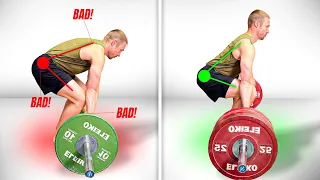
like high school sports or maybe they've never done a deadlift um what what are the what's best practices and what are the the areas where or the things we could do that might risk injury short so I think that the the deadlift is a good one to start with actually I think it's probably one of the easiest lifts to learn just because there's there's not very many things that you have to teach right so I think the biggest thing is starting with the barbell over the middle of the foot so the middle of the foot
is where we're going to generate that power and that strength we're going to press from the middle of the foot not the toe not the heel right through the middle of the foot so we want that barbell about an inch off of the ankle that's where the middle of the foot is in most folks and then you're going to want to make sure you keep those hips in a neutral kind of more to a high position and we're going to want to pull the bar up the shin up the leg the whole way so some
pitfalls that I see are people really rocking back on those heels and getting off balance one way or going towards the toes getting the bar to push forward and then we're trying to move that bar back into that neutral position so when we set up over the bar if you can set up the bar over the middle of the foot everything else will really kind of fall into place and we'll show that and the arms are locked straight arms are locked straight yep and you're going to start with those arms a little bit outside the
shoulders your feet are going to be slightly towed out a little bit kind of in a squat position maybe a slightly narrower that allows for your knees to kind of come out over your toes that allows room for your torso and your belly to kind of get into the deadlift position and then what about the velocity of the lift sure so I it depends yeah right I think that when you're really putting on a lot of weight and you're maybe in a strength phase or you're doing a lot of volume you're really going to want
to concentrate on form and you're not going to want to pull very fast as I move closer to the season I subconsciously will try to think about more speed and velocity so I'm taking a little bit of weight off I'm maybe doing less weight but I'm really trying to do that more of an explosive movement so then you get to the top of the lift which is you're standing up straight your hips come forward hips come forward the vertical and the chest is raised at the very end of the lift um and then the biggest
one that I see is people just drop the bar right so I think that's a big faux pas we don't want to drop the bar we do want to come down as fast as we can but in a controlled motion so that's what the bumper plates are for it's not just to you know throw the CrossFit bar you know off of off of you you want to make sure that it's a controlled lift and you're going to descend by releasing the hips first and then releasing the Torso all the way down with the bar okay
you're not just um you're not trying to slowly lower no it's not a eccentric no the the yeah The Eccentric movement is really what's going to produce that delayed onset muscle soreness so if we can really keep most of the lift as a concentric motion up to the top and then on the way down there is some control but it's as fast and controlled as you can all the way to the bottom you're gonna basically mitigate more of that soreness afterwards and then you mentioned one rep max and in order to help us kind of
determine how much we're going to do that's 75 to 85 percent if we're doing you know three to five reps how often are you testing your one rep max and is that truly just you're just seeing as much as you could possibly do with one deadlift for short so you know in my age I don't do that I use a two rep max and I usually will use that hypothetically saying that's 90 to 95 percent of my one rep max got it so there there are plenty of tables out there in powerlifting manuals or online
that you can take a look at to say okay this is my two rep max what should my percentage of one wrap or two or three or four or five for a specific lift B and those are pretty well studied um you know lifting power lifting those kind of things have been around long enough to have some good literature behind it Kelly yeah love it all right well we're gonna lift some weights in a second here is there anything that we didn't touch on on deadlift that you feel needs to be said sure I would
say because it invokes so much muscle tissue all the way through the entire body it's probably the best lift that you can do to stimulate hormone production growth hormone testosterone so I think that you know if we're really trying to look to optimize our whole body especially in recovery especially in a strength season especially in the off season doing these lifts especially the deadlift is going to get you a boost in those good hormones to help with recovery and strength love that fantastic last question and that's where something like this fits into your other climbing
training yeah I think it depends on where you're prioritizing the gains so right now in the off season I'm really prioritizing strength I'm really prioritizing my sleep and my hormone and getting healthy and so I will put this at kind of the beginning after a good warm-up and I integrate it with my hangboarding so I'm in between sets in between sets yeah so I may do my warm-up which is 20 or 30 minutes I get a couple of lifts in to get my body warm and then I'll do a deadlift and then I'll go straight
over and I may do a Max hang and then I'll rest or do some stretching and then go back and do a deadlift set and then do my hanging board and then move on to the next workout may do a you know a shoulder press and then move over and do another handboard got it so you may do a few of the foundational exercises in the same workouts I do them all you do them all I do them all five all five in in one session working hang board in and some other things in in
between yep and then I put my climbing in kind of at the end of that so and that may be a limit Boulder session it may be endurance like we're going to do today it may be a campus board session and so over the course of the the whole workout I may do 20 or 30 minutes warm up 20 or 30 minutes of lifting or hang board and then maybe you know an hour of climbing well let's get started let's do it all right man [Applause] foreign [Music] foreign