Russia is on the ropes. Its forces are taking heavy losses, with hundreds of soldiers being wiped out daily. The war in Ukraine has dragged on far longer than the Kremlin ever expected, and now, Russian President Vladimir Putin is running out of options.
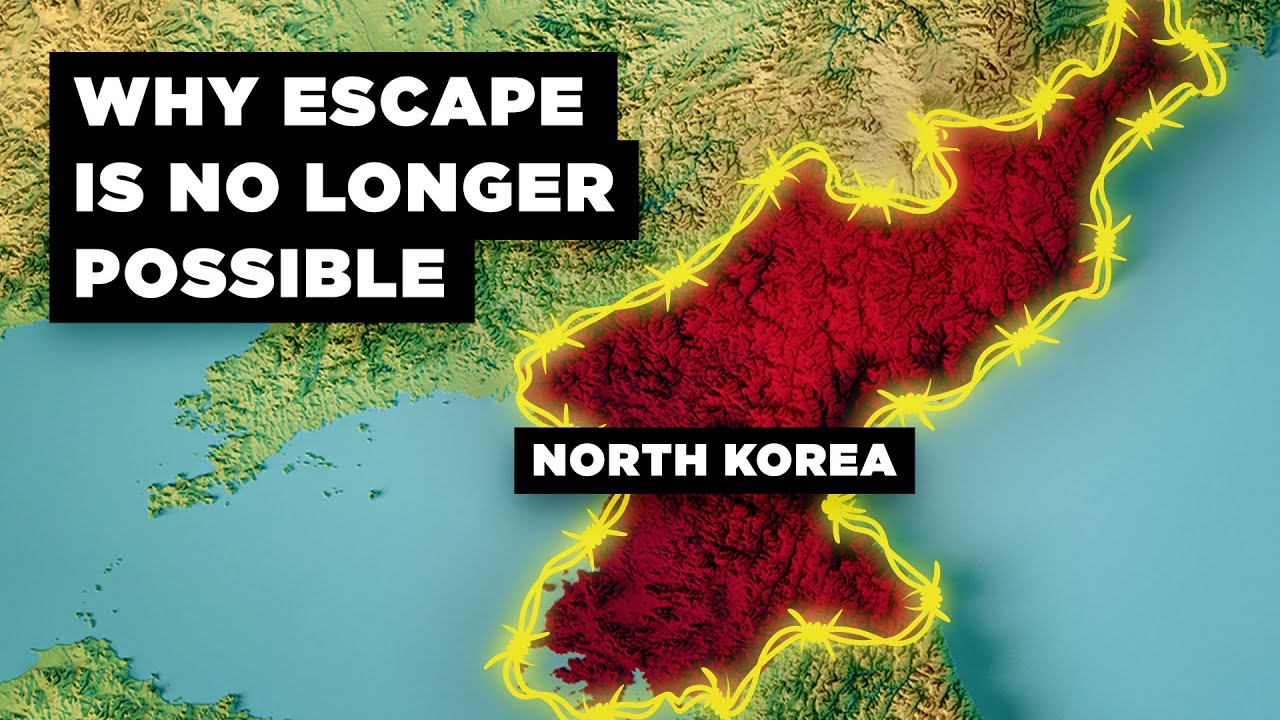
So, in a desperate move, it appears that Russia has turned to an unlikely and controversial ally – North Korea. But not for weapons and ammunition, which Pyongyang has already been accused of supplying to Moscow. This time, it’s different.
Far more serious. Reports suggest North Korean soldiers may be sent to the front lines. Real boots on the ground.
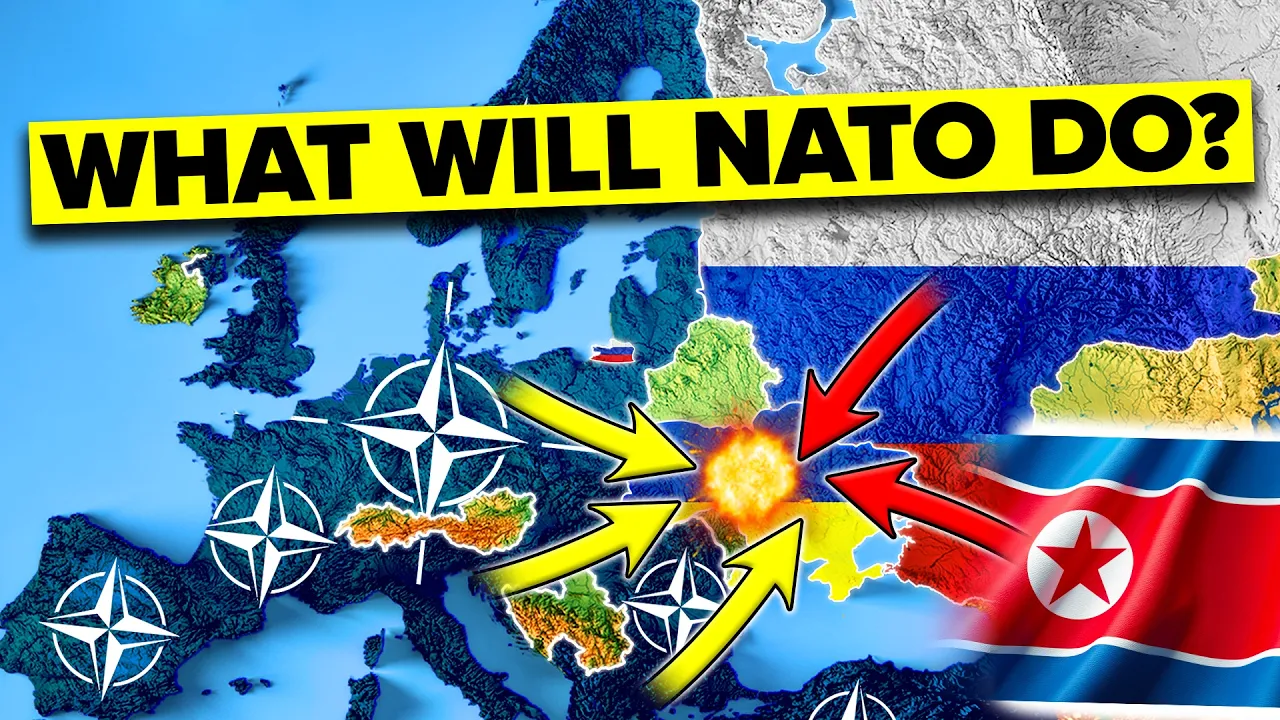
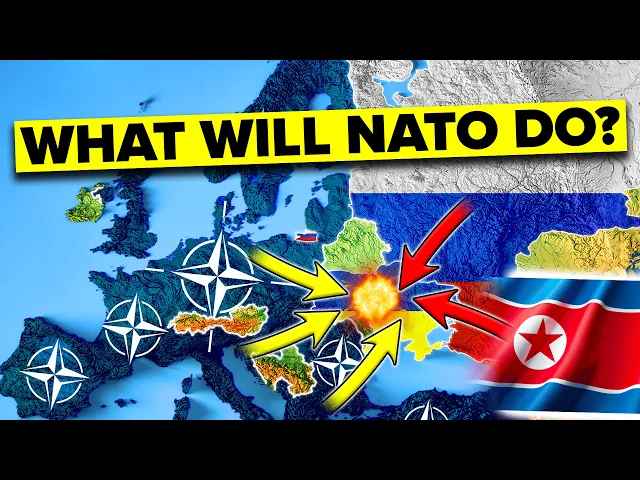
An alliance that marks a dangerous new chapter in this war. It’s a move that begs the question: if North Korea is willing to throw its weight behind Russia, what does that mean for the war in Ukraine? And, more importantly, will this prompt NATO – the world’s most powerful military alliance – to step up and fight directly for Ukraine?
In this video, we’ll break down this dangerous alliance, what it means for the war, and how it could force NATO to reconsider its role in the war in Ukraine. Because, at this point, it’s not just about Ukraine anymore. It’s about the future of global conflict.
Before diving into any scenarios, let's look at the basics. After all, you can’t understand the full picture without first learning what’s going on with North Korea’s involvement. In other words, we need the facts before we can face the consequences.
So, let’s start with what we know. We know that the reports on North Korean involvement in the war in Ukraine are stacking up, and they’re hard to ignore. Ukrainian military intelligence, Ukrainian government organizations, South Korean intelligence, and Western media… they’re all saying the same thing – North Korean troops are entering the war on Russia’s side.
However, all these sources can’t seem to agree on one thing – just how many North Korean soldiers are actually involved. A Ukrainian military intelligence source revealed to the BBC that Russia is forming a unit of 3,000 North Korean soldiers. Kyiv believes that this unit might be preparing in Ulan-Ude, close to the Mongolian border.
At the same time, a military source from Russia’s Far East confirms that some North Koreans have already arrived at a base near Ussuriysk, north of Vladivostok, but stresses that the numbers are “absolutely nowhere near 3,000. ” However, this source refused to specify how many soldiers were actually present in the Far East. This leads us to the reports from South Korea’s National Intelligence Service, or NIS for short, which claims that 1,500 soldiers have already been shipped to Russia.
These soldiers reportedly arrived between October 8 and October 13, 2024, transported on seven Russian ships to Vladivostok. But they didn’t come alone. Reports suggest they also brought uniforms, weapons, and even forged Russian identification documents.
However, the NIS claims that this is only the first wave of soldiers. According to the agency, more North Koreans will follow, potentially swelling their numbers to a staggering 12,000 soldiers. That’s a number large enough to make a real impact.
Although the figure hasn’t been officially confirmed, it signals just how deeply North Korea is getting involved in the war in Ukraine. As for where these soldiers are heading, the North Korean unit from Ulan-Ude is expected to be deployed to Russia’s Kursk province, the same area where Ukrainian forces launched an incursion back in August. Their role may be to guard sections of the Russian-Ukrainian borders, freeing up Russian units for more direct fighting elsewhere.
But don’t expect the North Korean soldiers on the frontlines just yet. Experts, like editor of theUkrainian publication Defence Express Valeriy Ryabykh, believe that these troops will be used in more supportive roles at first. But even if they’re not immediately sent into combat, their very presence allows Russia to shift more of its own forces into offensive positions.
Now, you might think to yourself – all of this evidence sounds pretty speculative. Where’s the hard proof? Well, what about video proof?
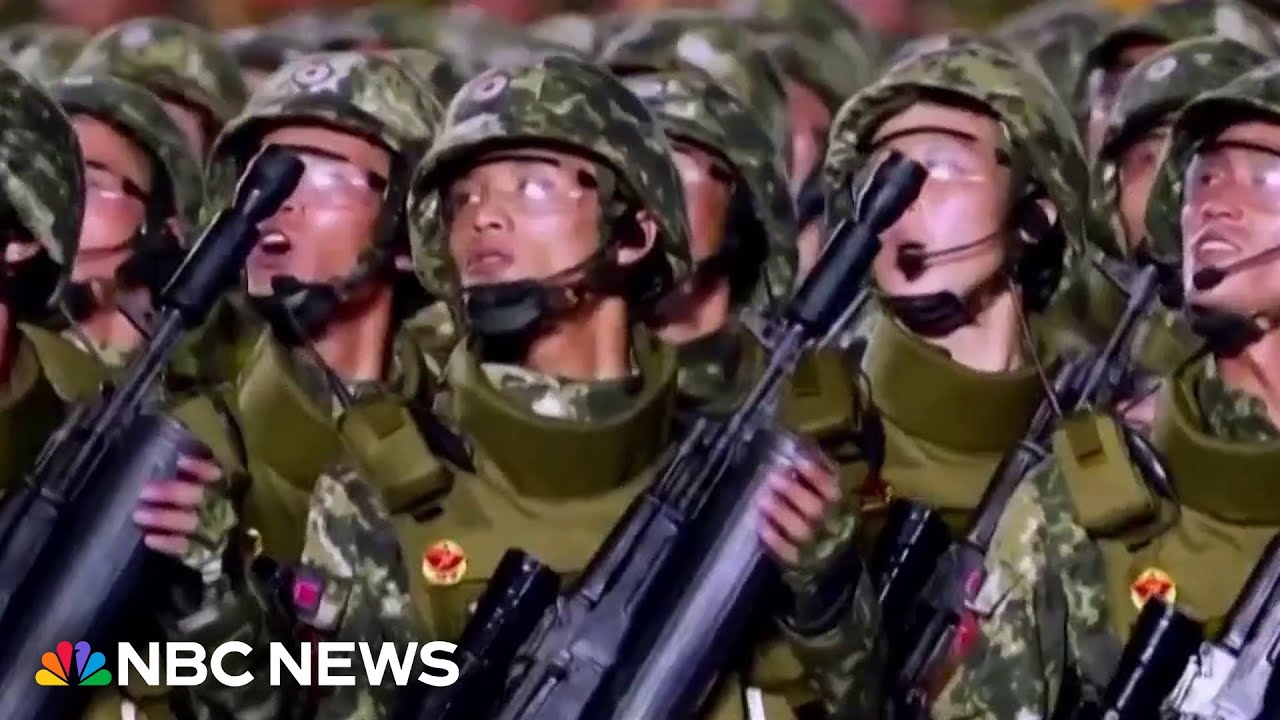
Undoubtedly, the most striking evidence of North Korean involvement comes from video footage shared with CNN by the Ukrainian Center for Strategic Communication. In this clip, North Korean soldiers are seen queuing at a Russian training ground, receiving uniforms and equipment. Although their conversations can’t be fully understood due to low audio quality, they do appear to be speaking Korean.
And this is only one video. Another one, geolocated by CNN, shows North Korean troops arriving at the Sergeevka Training Ground, close to Russia’s border with China. A Russian speaker can be overheard saying, “We can’t film them,” followed by, “There are millions of them here.
. . this is just the beginning.
” While “millions” is clearly an exaggeration, these words underscore the scale of this development, as well as the secrecy surrounding it. CNN also shared a copy of the questionnaire the North Korean recruits were asked to fill out upon arriving in Russia, providing their sizing for hats, headgear, uniforms, and shoes. The top of this questionnaire is written in Russian, while the various size options are written in Korean.
This indicates that the North Koreans aren’t just being integrated – they’re being outfitted for their new role. The questionnaire and the two videos also back up reports from the NIS, which claim that the soldiers are being equipped and trained for deployment to Ukraine. According to the NIS, the North Korean soldiers, currently stationed at military bases in in Vladivostok, Ussuriysk, Khabarovsk, and Blagoveshchensk, will only be sent to combat zones once they finish their training.
A common courtesy that hasn’t been given to many Russian nationals, who have been thrown into the fight with minimal preparation, undertrained, and under-equipped. But given who these North Korean troops reportedly are, “special” treatment shouldn’t come as a surprise. You see, the NIS reports that the units sent to Russia were personally inspected by Kim Jong Un himself before deployment – an indication that these soldiers could be among North Korea’s elite forces.
Given the country’s distrust of conscripts – who might be prone to defect – it’s likely that special operations soldiers are involved in Ukraine, as they are highly trained and, more importantly, highly loyal. Now, “special forces” might sound intimidating right off the bat. The kind of elite troops you wouldn’t want to face on the battlefield.
Your mind might envision the likes of U. S. Navy SEALs, the British SAS, or even Russia’s own Spetsnaz – elite units known for precision, deadly tactics, and cutting-edge training.
But let’s not get ahead of ourselves. This is North Korea we’re talking about – a country notorious for its outdated equipment, unreliable tactics, and a military more skilled in grand parades than modern warfare. Sure, they’re loyal – maybe to a fault – but when it comes to battlefield prowess, they’re hardly in the same league as the world’s top special forces.
So, what exactly can Ukraine expect from these North Korean forces sent to oppose it? Well, these personnel reportedly sent to Vladivostok have been sourced from the estimated 200,000-strong ranks of the Special Operations Forces – the SOF – primarily tasked with probing and testing South Korean defenses. Now, this number alone will probably raise some eyebrows.
Why? Because the world’s truly elite special forces count their ranks in the hundreds, not the hundreds of thousands. The SEALs?
About 2,500 active-duty members. The British SAS? 400 to 500 elite operatives.
Even Russia’s Spetsnaz, as infamous as they are, doesn’t come anywhere close to that six-figure claim. So, either Kim is redefining what it means to be “special,” or we’re dealing with an inflated sense of military grandeur. Ahmed Hassan, CEO of Grey Dynamics, a London-based intelligence firm, puts things in perspective: the North Korean SOF may be “special” by their own standards, but that’s hardly a badge of honor when measured against NATO or Russian criteria.
“If there’s a ranking between one and ten,” he says, “let’s say one is a basic soldier and ten is Delta Force or the SAS, then the NK force sits at a solid five. ” Essentially, they’re the middle-tier performers of the special forces world – if we’re generous, that is. The only area where the SOF truly ranks at the top is secrecy.
Without a doubt, this is one of the most secretive military units in the world, which shouldn’t be surprising given its country of origin. For the most part, the SOF is an enigma to Western powers – loyal and highly trained, yet lacking the advanced military equipment seen in NATO forces. The SOF has a colorful history, too.
Founded around 1968, they gained notoriety after a disastrous raid on the Blue House, South Korea’s presidential residence, which resulted in the death of 26 out of 31 operatives involved. Given that their introduction to the world was an outright disaster, it shouldn’t be surprising that not much else is known about any of their follow-up exploits. There have been reports that the SOF has been deployed to Syria to support Bashar al-Assad’s regime.
However, there’s also speculation that these troops were merely North Korean mercenaries, further muddying the waters of their true capabilities. What we do know for sure is that they participated in a rare public event in 2017, proudly marching alongside regular army soldiers. Because nothing says “elite special forces” quite like a synchronized march.
The same year, North Korean state media showcased SOF troops adorned in black camouflage paint and dark sunglasses, wielding what was described as a “new rifle fitted with a grenade launcher. ” Yet, several reports pointed out that their uniforms bore a striking resemblance to those worn by South Korean special forces, known as the Black Berets. Perhaps South Korea should take solace in the adage that imitation is the sincerest form of flattery.
Even the few details we know about the SOF are enough to pose a question – will their presence really change the tide of the battle, or are they just another set of boots on the ground for Russia that will struggle? Given the challenges they’ll face in Ukraine, the second option seems far more likely. Whether the North Korean soldiers fighting for Russia are truly special forces or “regular” troops, one thing’s for sure – their integration will be an uphill battle.
For starters, there’s the language barrier. North Korean soldiers aren’t just non-native speakers of Russian; they’re entirely non-Russian-speaking. This poses a significant problem in the chaos of the battle, where communication is critical.
Integrating thousands of North Koreans into Russian military units isn’t as simple as adding more manpower to the ranks. One analyst pointed out the difficulties Russia faced when trying to incorporate hundreds of prisoners into their forces – and those guys spoke Russian. Now, imagine the added layer of complexity when the troops on the ground don’t even share a common language.
Moreover, the eastern front in Ukraine has morphed into a war of attrition, a brutal mean grinder where traditional covert operations and special forces tactics might be rendered ineffective. With the current state of affairs, the real question becomes, what exactly will these North Korean troops be doing on the battlefield? Without a clear role, they risk becoming an additional liability rather than a valuable asset.
Another daunting challenge is the lack of recent combat experience among North Korean forces. While the country boasts an impressive active military of around 1. 28 million – the fourth strongest in the world – most of these soldiers have not been engaged in any significant combat operations in years.
Unlike Russia’s military, which, for better or worse, has been actively involved in conflicts, North Korean troops are largely known for their engineering and construction skills. The war in Ukraine could very well mark their first foray into an international conflict, and entering such a high-stakes environment without proper experience could spell disaster. There’s also the issue of tactics.
North Korea’s military structure follows the old Soviet model, which raises questions about how well its motorized infantry units could adapt to the realities of modern warfare in Ukraine. Their traditional tactics may not translate well in a battlefield defined by rapid maneuvers, technology, and adaptability. And let’s not forget about the risk of exposing North Koreans to life in the West.
If these soldiers find themselves in a situation where they can see how the other half lives – particularly when compared to the stark realities of their home country – defections could become a serious issue. Even with the so-called elite forces. That’s why Bruce W.
Bennett, a senior international defense researcher at RAND, an American research institute, has called on the U. S. to start information campaigns aimed at convincing North Korean soldiers sent to Russia to defect.
This just leaves us with one more question before discussing what the presence of these troops means for the war in Ukraine: Why did North Korea send troops in the first place? Well, for starters, Putin is in desperate need of manpower. After over two and a half years of war, Russia has suffered unbelievable losses.
Reports from the General Staff of Ukraine’s Armed Forces indicate the country has lost 678,520 troops since February 2022. With that severe blow to his ranks, what does Putin see as a solution? Bring in the North Koreans to do some of the fighting.
It’s a desperate gamble, but that’s where Russia finds itself – backed into a corner and scrambling for any allies it can get. But there’s more to it. Russia might not be reaching for foreign troops if any of its latest mandatory mobilization efforts have been successful.
Valeriy Akimenko from the U. K. ’s Conflict Studies Research Centre argues that deploying North Korean soldiers might be Putin’s way of dealing with the fallout of that failed mobilization.
The Russian military has faced public pushback, and many conscripts have simply refused to fight. So, if you can’t convince your own citizens to risk their lives, why not outsource the job? But why would North Korea agree to help under these circumstances?
Well, it turns out that Moscow and Pyongyang have a lot in common. Most importantly, both are pariahs in the West, pushing them to deepen their ties in recent months. Kim even referred to Putin as his “closest comrade” while wishing the Russian president a happy 72nd birthday on October 8.
However, for the two countries, it’s not just about diplomatic niceties. It’s about survival in a hostile global environment. But let’s not kid ourselves – this burgeoning relationship is driven solely by shared incentives.
As mentioned, Moscow desperately needs soldiers. And Pyongyang? Money and technology.
It’s a classic case of “You scratch my back, I’ll scratch yours. ” North Korea is cash-strapped and isolated, and the prospect of receiving aid from Russia is too tempting to ignore. Not to mention, the country could substantially benefit from access to Russian military technology, something Moscow would typically be hesitant to share.
Think about it – Kim wants his country recognized as a nuclear state. A little Russian tech could go a long way toward that goal. Plus, being involved in an active conflict gives North Korea a chance to demonstrate its military capabilities on a global stage, a dream for any nation seeking legitimacy.
But beyond the theatrics, the arrangement between Russia and North Korea provides North Korean soldiers with something they sorely lack – real combat experience. Now, on the one hand, this can be a major challenge for these troops, as we already mentioned. But on the other hand, they can see it as a chance to finally get a taste of battle after years of isolation from actual warfare.
This can be a huge deal for a military whose personnel have largely been trained for parades and posturing rather than practical combat situations. If they do manage to make it back to North Korea, they will come back with valuable insights into modern warfare, tactics, and equipment that could be used to bolster their own military capabilities. In short, North Korea’s involvement isn’t just a random act of kindness.
It’s a strategic play for survival and growth in a world that has largely turned its back on them. Both nations are operating from a position of weakness, so they’re naturally drawn to one another in a bid for survival. And as they move forward, it’s clear both Russia and North Korea will be keeping their eyes on the prize – mutual benefit at all costs.
This leads us to the mutually beneficial security arrangement that holds the answer to the titular question of this video. You see, in June of 2024, during a rare visit to North Korea, Putin and Kim signed what they described as a “peaceful and defensive” pact. However, truthfully, this landmark agreement is less about maintaining peace and more about establishing a military alliance designed to provide mutual assistance in the event of aggression against either nation.
This partnership, framed by U. S. State Department spokesman Matthew Miller as a “new level of desperation by Russia,” indicates a profound need for support as Russia continues to face heavy losses in its protracted conflict.
Now, let’s break down the specifics of this pact. The agreement represents a substantial shift in the two nations’ historical ties, which have waxed and waned over the decades. It replaces previous deals from 1961, 2000, and 2001, marking the first formalized military cooperation between the two countries in over 20 years.
The pact is primarily designed to bolster both nations’ defenses against what they perceive as encroaching threats from the West, particularly the U. S. , South Korea, and Japan.
While the exact text of this mutual defense pact remains classified, key elements have been highlighted that offer insight into its implications. For the purpose of this video, the mutual assistance clause is front and center. This clause stipulates both countries will support each other in the event of an attack.
Now, you might be wondering how this clause – or this agreement in general – could possibly justify North Korea’s involvement in Ukraine when Russia is the aggressor. Well, when the Armed Forces of Ukraine launched an incursion into Russia’s Kursk Oblast, the situation changed. Russia could interpret this incursion as an attack on its territory, thus triggering the mutual assistance clause of the defense pact.
This allows Russia to call on North Korea for military support under the guise of “collective self-defense. ” Now, this might sound far-fetched, given that Russia initiated the broader conflict by invading Ukraine. However, legally, the incursion into Russian territory provides just enough of a pretext for Russia to frame itself as the defender.
Of course, this move would raise numerous complexities. For North Korean military involvement to be considered truly legitimate, Russia would need to demonstrate that Ukraine’s actions constitute an armed attack on its sovereign territory and that the response is proportionate to the threat posed. The principle of proportionality is essential here – excessive or disproportionate military responses could violate international humanitarian law.
Additionally, the world can see right through these claims of self-defense, particularly given North Korea’s ongoing sanctions and Russia’s widespread condemnation of its invasion of Ukraine. So, while this cooperation pact might offer a convenient legal pretext for Russia to call on North Korea’s assistance, the reality is far more transparent. This call is nothing more than a thinly veiled excuse for further escalation, not a genuine act of self-defense.
This brings us to a crucial follow-up question – why can’t Ukraine call on NATO’s assistance then? Well, unfortunately, there’s a pretty straightforward answer to this question. Ukraine can’t call on NATO’s assistance because it’s not a NATO member.
NATO’s collective defense mechanism, enshrined in Article 5 of its charter, only applies to member states. And as much as Ukraine’s leadership – especially President Volodymyr Zelenskyy – has pleaded for accelerated membership or more direct involvement from the alliance, the country is still in the “partner” category. This means NATO is under no legal obligation to intervene militarily, no matter how dire the situation gets.
And, according to Zelenskyy, the situation will get rather dire. The Ukrainian president has repeatedly expressed alarm over the potential involvement of North Korean forces in the conflict. According to the reports he received, up to 10,000 North Korean troops could be preparing to fight for Russia.
“This is no longer just about transferring weapons. It is actually about transferring people from North Korea to the occupying military forces,” he said, painting a troublesome picture of a conflict that could escalate beyond current borders. But Zelenskyy isn’t the only one concerned about the prospect of North Korean troops joining the fight.
Though it didn’t independently make any accusations against Pyongyang yet, the U. S. did express concerns over the potential North Korean military presence in Ukraine.
On the one hand, North Korean involvement would allow Pyongyang to get real-time feedback for the first time, emboldening the already overzealous nation. As General Charles Flynn, the U. S.
Army’s Asia Pacific Commander, puts it, “That kind of feedback from a real battlefield to North Korea to be able to make adjustments to their weapons, their ammunition, their capabilities, and even their people – to me, is very concerning. ” However, there’s also the question of what North Korean involvement would do for the war in Ukraine. U.
S. lawmakers, such as House Intelligence Committee chair Mike Turner, have labeled the reported troop movements as “alarming” and an “extreme escalation of the conflict in Ukraine. ” This sentiment was echoed by the French Foreign Ministry spokesman Christophe Lemoine, who referred to the North Korean involvement in Ukraine as an “extremely worrying and serious development.
” This reaction is particularly notable as, if you remember, French President Emmanuel Macron was the only Western leader to suggest sending in NATO troops to defend Ukraine, which caused quite a stir at the time. But what does NATO have to say this time? For their part, NATO Secretary-General Mark Rutte has expressed that the alliance is closely monitoring the situation, but he also refrained from confirming troop deployments.
This suggests that even with these rising tensions, NATO’s hands are tied. The legality of intervention remains a significant barrier. The worst part?
Ukraine doesn’t appear to be any closer to NATO membership than it was at the beginning of the conflict, which leaves the country in a precarious position. Although Zelenskyy has recently presented his “victory plan” for Ukraine, which includes NATO membership, concrete steps toward reaching this goal appear elusive. Furthermore, NATO diplomats emphasize that Ukraine’s borders must be clearly defined before any membership can be considered, which is complicated by the fact that about 20% of Ukraine is currently controlled by Russian forces.
So, for now, NATO is only willing to pledge money to Ukraine, not membership. But could this change if North Korea joins in in a greater capacity? Absolutely.
The potential for a major escalation could absolutely prompt NATO to rethink its position. If North Korean involvement results in significant military gains for Russia or increases the intensity of the conflict, it could compel NATO members to act more decisively. Moreover, the political ramifications of North Korean involvement could pressure NATO to intervene, particularly if that involvement leads to humanitarian crises or significant threats to European security.
If North Korean actions are perceived as destabilizing the region or contributing to atrocities, NATO might justify intervention to uphold international norms and protect the stability of Europe. Throw the implications of a strengthened Russo-North Korean alliance into the mix, and NATO could truly have no choice but to intervene. After all, we’re talking about the alliance of two nuclear-armed states led by two of the world’s most unpredictable and aggressive regimes.
A strengthened Russo-North Korean alliance would not only destabilize Ukraine but could threaten the entire security of Europe. But here’s the issue. If it comes down to it, NATO will essentially have to choose between two impossible choices – standing by and letting Ukraine fall to an emboldened Russia backed by North Korea or stepping in and risking World War III.
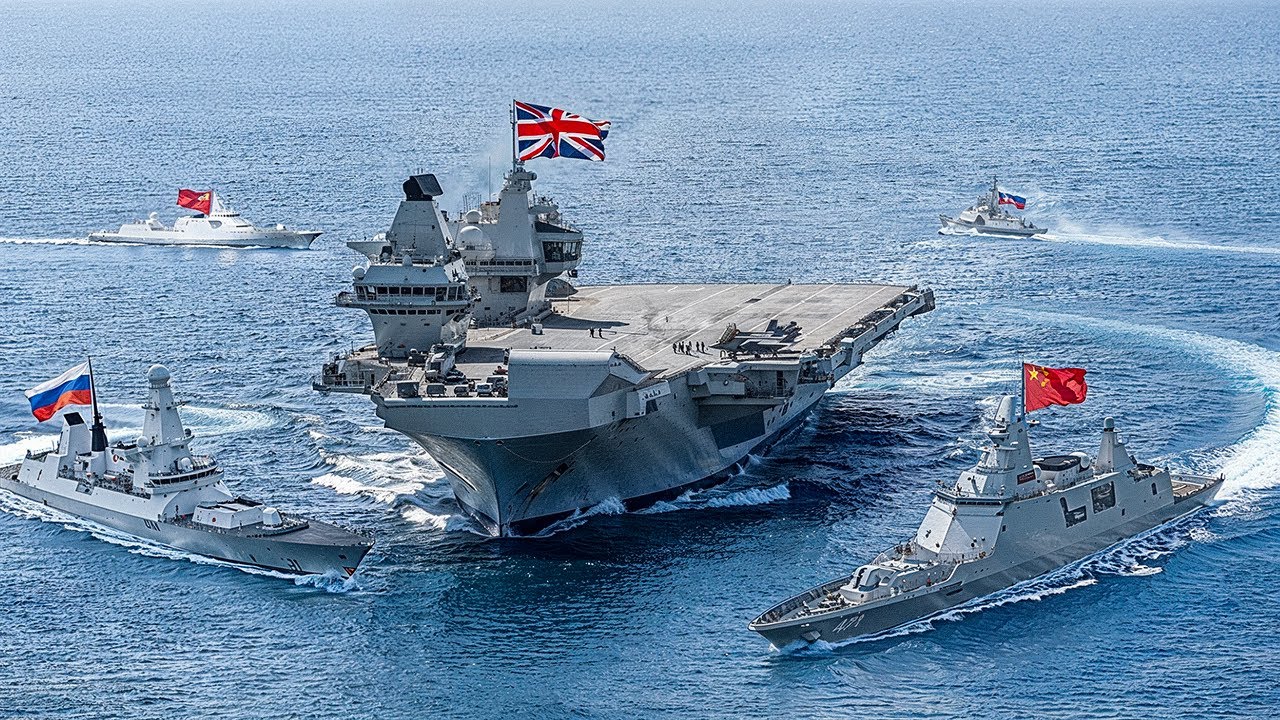
You see, if NATO steps into the conflict directly – with troops and new weaponry – the stakes would escalate to an unprecedented level, turning what is currently a regional war into a global one. A direct military confrontation between NATO and Russia would almost certainly trigger Article 5 of the North Atlantic Treaty, which would obligate all NATO members to come to each other’s defense, effectively turning the conflict into a multinational war between the West on one side and Russia and North Korea on the other. But remember – this isn’t just about boots on the ground or aerial engagements; it’s about four out of five recognized nuclear weapon states facing off in open conflict.
The potential for catastrophic escalation is undeniable. Russia, already under immense pressure from sanctions and military losses, would perceive NATO intervention as an existential threat. In such a scenario, Putin has made it clear that Russia wouldn’t hesitate to resort to nuclear weapons.
After all, the Russian military doctrine allows for the use of tactical nuclear weapons in conventional warfare, especially if Russia believes its territorial integrity – or regime survival – is under immediate threat. Introducing North Korea into the equation, another country believed to possess nuclear weapons, only amplifies the danger. So, in this context, World War III wouldn’t just be another large-scale conventional conflict like World War II.
It would almost inevitably involve nuclear strikes. And once the nuclear threshold is crossed, a path to de-escalation is virtually non-existent. Both sides would be compelled to retaliate in kind, leading to widespread destruction on a level that humanity has never experienced.
Even if the conflict only involved Russia and the U. S. , NATO’s most powerful member, the outcome would be nothing short of apocalyptic.
After all, with 5,044 and 5,500 nuclear warheads, respectively, the U. S. and Russia own nearly 90% of the global nuclear arsenal.
In a potential conflict between these two countries, entire cities, infrastructure, and possibly even nations would be wiped out within hours. The death toll could reach into the tens of millions, with the long-term consequences of nuclear fallout and environmental damage affecting billions across the globe. The 2019 simulation devised by Princeton University’s Program on Science and Global Security gives a more precise overview of these figures.
The simulation estimated that over 90 million people would be either dead or injured within the first few hours of a nuclear conflict between the U. S. and Russia.
Of course, we also can’t underestimate the involvement of other countries. NATO’s involvement in Ukraine would likely draw in other global powers, such as China. The aspiring global superpower, which has a complex relationship with both Russia and the West, could be forced to take sides in the conflict.
Of course, China could also use this escalation to further its own interests in regions like Taiwan or the South China Sea, though a nuclear war would undoubtedly make any strategic gamesmanship in these regions futile. Other nations, whether aligned with NATO or sympathetic to Russia and North Korea, could be pulled into conflict as well, expanding the scope well beyond Europe and Asia. Basically, what starts in Ukraine would spiral into a conflict engulfing every corner of the world.
But let us ask you – do you agree? Can NATO plus North Korea in Ukraine only equal World War III? If so, what do you think will be the trigger for NATO’s involvement?
Or do you think a major global war can be avoided altogether? And if so, how? Share your theories in the comments section below!
Now go check out 800,000 NATO and U. S. Military Troops Ready to Enter Ukraine or click this other video instead!
![Morning Joe [6AM] 10/30/2024 | 🅼🆂🅽🅱️🅲 BREAKING NEWS Today october 30, 2024](https://img.youtube.com/vi/stcIMHjRoXo/maxresdefault.jpg)