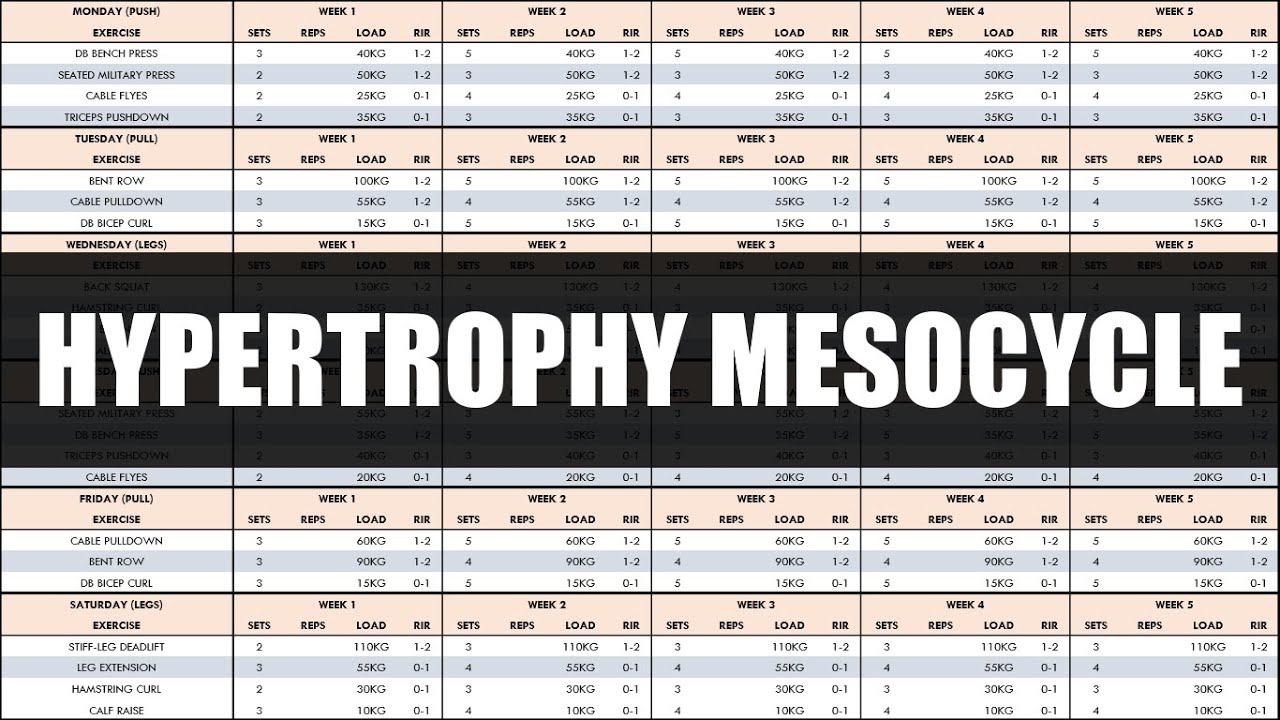
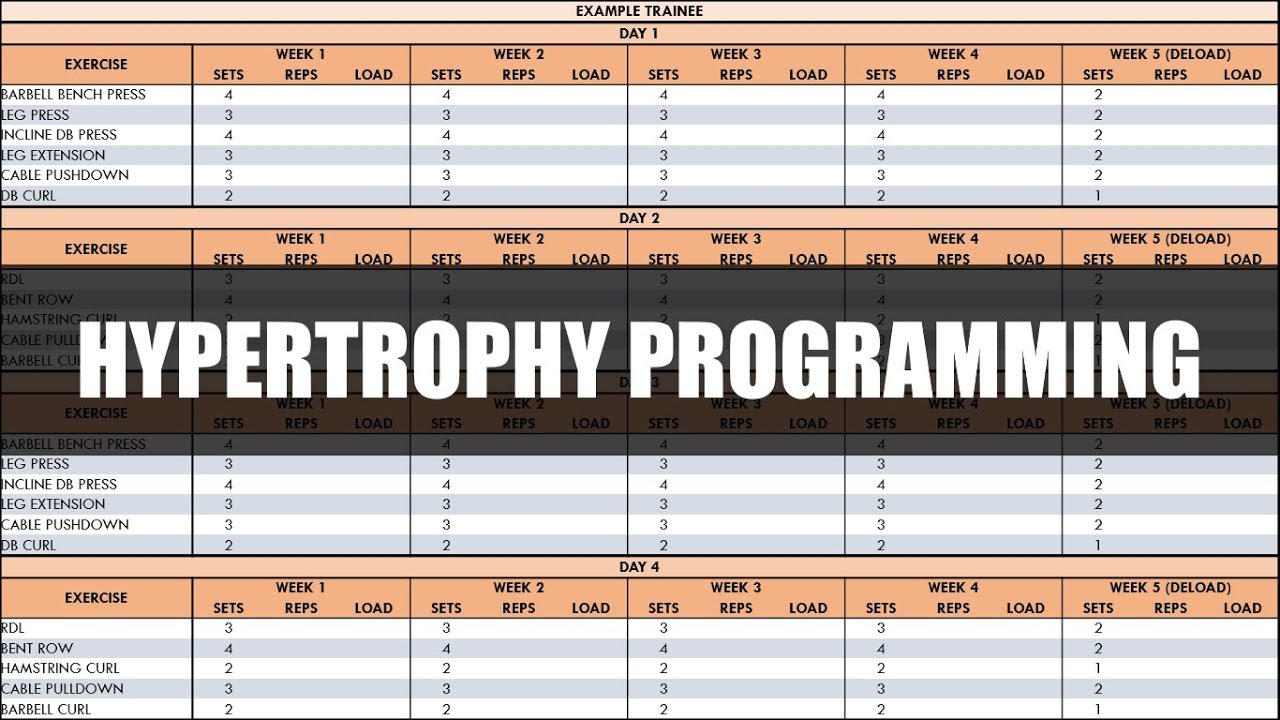
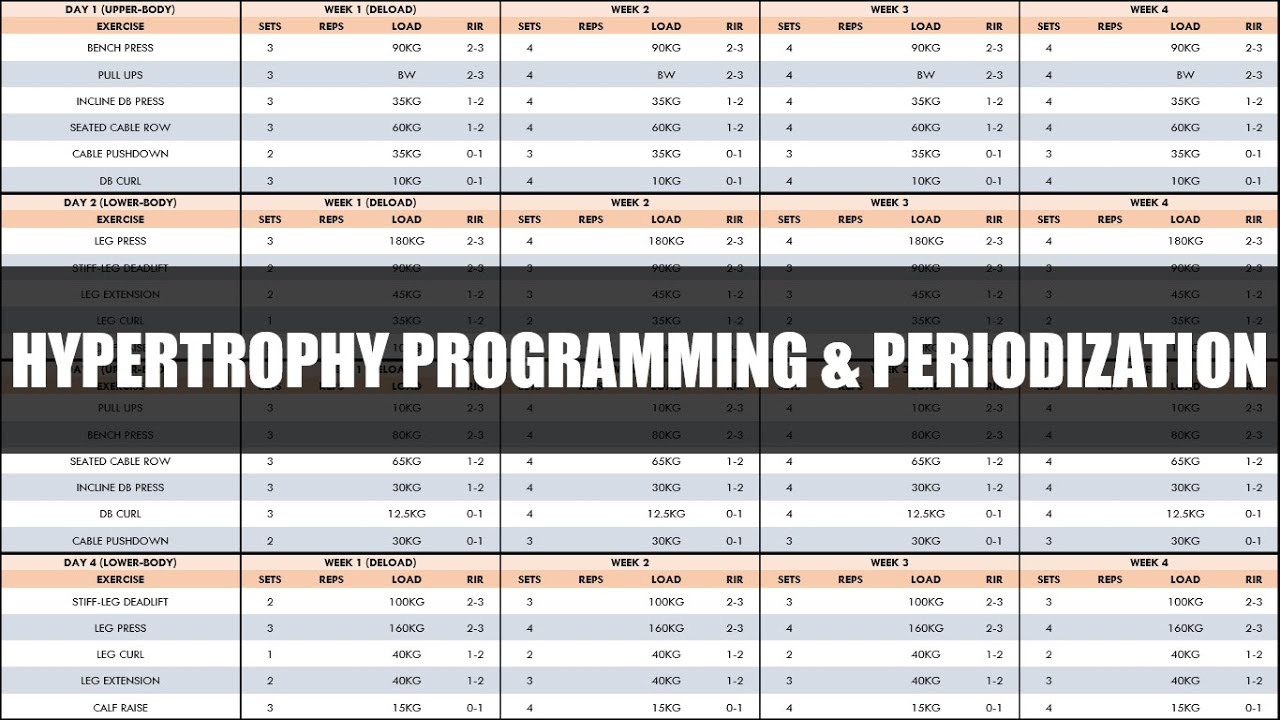
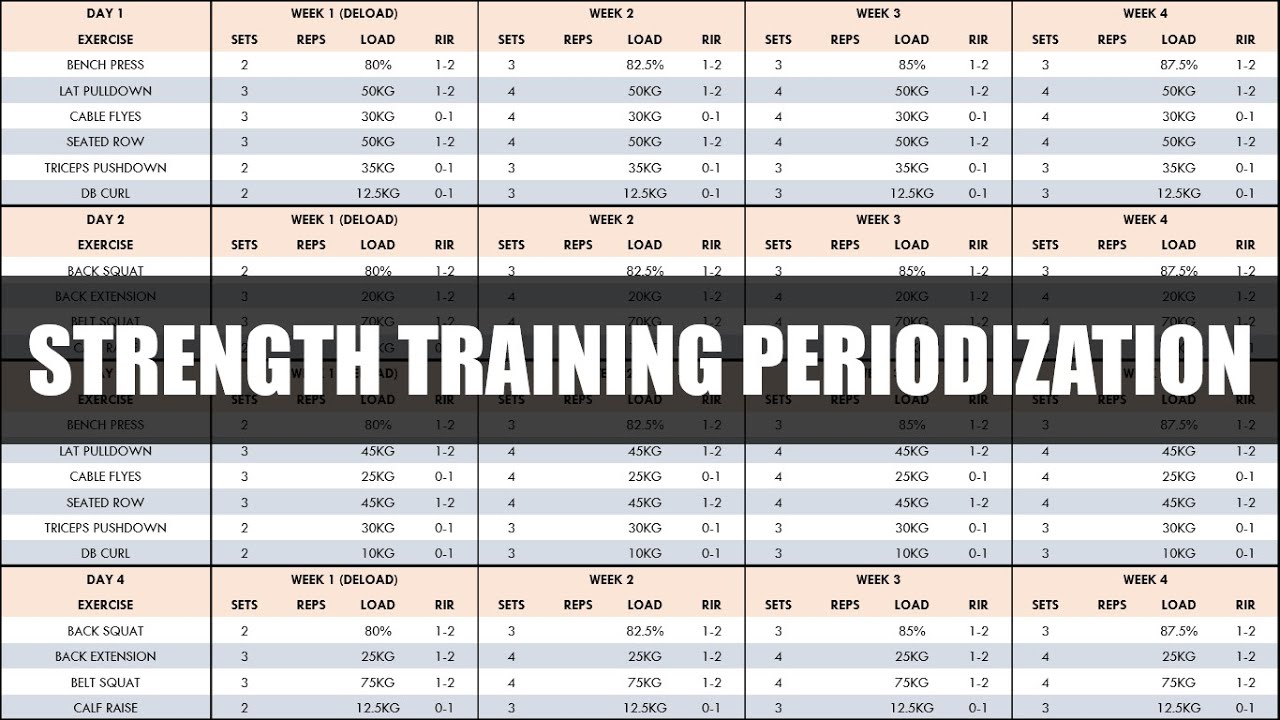
today's video mesocycle progressions for hypertrophy training the last video we figured out how to design a confer trophy mesocycle super but we only really talked about the first week of training what do you do in the second week thirdly fourth week so on and so forth how do you modify variables to do what well the answer is to continue to challenge the physiology appropriate ladies remember the body adapts over time what used to make you jacked the most starts to deteriorate and its abilities to make you jacked and you need a little bit more somehow
but there's totally a possibility to have too much it could be too aggressive too much fatigue do want this fine line of adjusting exactly to our body's needs let's take a look at how to do that with two variables one is making sure we hit the needed reps and reserve per set that we want per week and the other is how to adjust volume so first how do we adjust the number of reps or the amount of weight on the bar to accurately attend to our body's need for more stimulus well here's the deal we
start our mental cycle at about three or four reps in reserve because for a new set of exercises and a new set of rep ranges that's probably a really good mix of stimulus just enough to get some good growth going and doesn't deposit so much fatigue that ends up having to carve as a cycle short because the T prizes too much so it's a good start but we also know that if we get more hypertrophy as we go from three or four reps in reserve to two reps one rep and eventually zero reps in reserve
going all the way to failure in any one time causes more growth we also know the cumulative fatigue expands as we go through mountain cycle it's gonna chase us down eventually we might as well walk that line with it and make training progressively harder so the answer for progression here is we want our first week of training to be about three or four months in reserve and then based on how long our messy cycle is what the last week to be zero reps or one rep in reserve usually at most so things get progressively harder
over time which means that you can have like a four-week mesocycle which is pretty typical you can drop one rep and reserve every time to go for three to one or you know four three two one zero and then if you have an eight week month cycle or anything in between some weeks you could just keep the same reps and reserve what you never want to do is go up in reps in reserve for example this week you did everything three reps in reserve you have three reps let them tank after you stop each working
set if the next week if it's for episode reserve a firearm syndrome that's actually easier it's not nearly as much of a challenge and you can't guarantee optimal growth so we want things either to maintain difficulty or more often to get a little bit more difficult right how do we do that well there's two ways and both of them are totally cool one is really straightforward you have weight you do 225 pounds of the bench four sets of ten of three reps in reserve this week next week you want two reps in reserve well if
you just do the same 225 pounds four sets of ten you might be four or five reps I reserve because you've got a little stronger you're more capacity improve so maybe you want to put 230 pounds on the bar maybe 235 that's a decision you have to make but what you want to do is a roughly target that next reps in reserve the one you want two reps in reserve or whatever it is so it's always possible to add weight to the bar sometimes adding reps is a totally cool option and really the two are
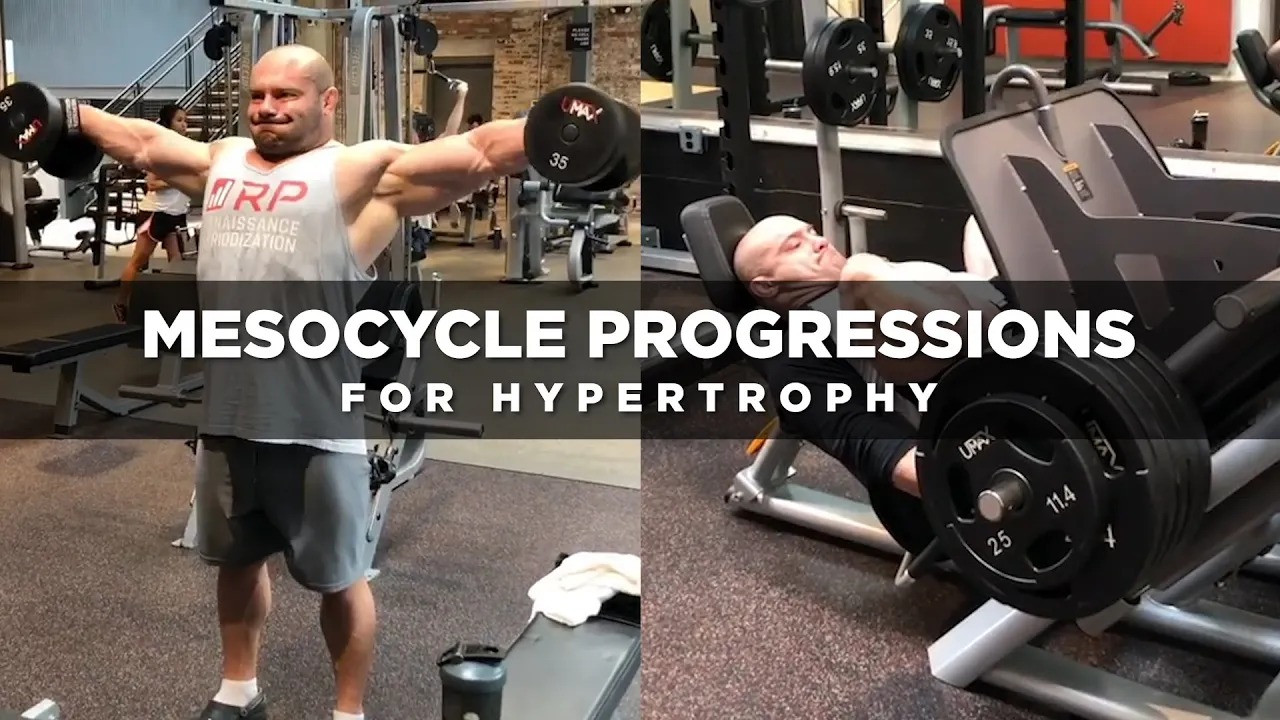
probably very roughly effective sometimes adding reps is a really good idea because you can't add weight for example if you do lateral raises with the tens right ten pound dumbbells we're gonna do go to the 15s next week that's gonna drop your reps like crazy you might get two wraps or something so what you want to do is do the tens one week and then okay I still need to go to our IR this week instead of three maybe I'll do the tens instead of for roughly sets of ten I'll do the percents of eleven
I'll add our rep or two to every single set how much weight to add how many reps to add the answer is whatever thing you think will get you the closest to your reps and measure of target with roughly the same amount of reps that you did last week when you're adding reps if you choose to add weighted straight form if you choose to add reps throughout your method cycle what you want to do is stop adding reps of add weight if the reps get out of the Ranger party so for example if you chose
to do leg presses on the 10 to 20 range and you start with sets of 12 and you add reps instead of weight at some point you're gonna be doing 20 reps 21 reps on your first set that's too many that's outside of rep range so that point you want to add weight again so there's a balance there but generally when it had as many reps of their own or as much weight as keeps the exercise the degree of we want and that degree is the reps in reserve we've targeted for every single week we
should be going down rather making it difficult every single week God so that takes care of how many reps we need to add if we add them and/or wait we need to add week to week to week perfect what about volume number of sets here's the deal we use a two factor model here RP and juggernaut strength for how to add sets of whether to add them and how many of them to end this factor is perceived recovery based on soreness and actual recovery based on performance we used to sort of sort of as a
hint and performance as a confirmatory measures here we go if you are healing ahead of time okay soreness wise usually you can add one or two sets granted that performance is good and we'll talk about performance in a second so what does that mean let's say you train chest twice a week Monday and Thursday you train chest on Monday and you didn't even get sore at all so by Thursday you were training and everything was totally cool but you never even got sore that's what we call healing way ahead of time next Monday you want
to do one or two sets more for chest needed last money because clearly you have way more recovery capacity than you're using and on average literature shows that the more volume you do to a point the more growth you get so if you have tons of recovery capacity free you might as well add quite a bit of sense what about if you're healing just on time for example you have a Monday Thursday chest workout and you healed completely the Wednesday night that means Wednesday afternoon you're touching a chest and that's a little bit sore still
a bit of a twinge there don't feel completely recovered Thursday morning you finally felt completely good is it a good idea to add two sets to max Monday that might be overkill only you won't recover on time for the next Thursday so maybe add no sense at all or potentially add one set if all the other measures are really good like your performance of stellar maybe you can add a set or advice yours play the conservative game most times don't have any sense in the next week if you feel a little bit ahead of time
then you can add a center to on the last point on soreness if you are still sore in the next session do not add any following most times that's the best advice for example Monday you do chest Thursday to chest again when you come into Thursday do your incline dumbbell presses your chest is still sore from under oath crap this is not read overlapping soreness that is not a sustainable future of training eventually it's gonna cost you a ton of fatigue it might even get you hurt and it probably hampers your hypertrophy so if you
did four sets on Monday for chest and you come into Thursday and your chest is still sore next week four sets again at most you do not want to go to five because they know for sure against get sore again so we're good so don't never recover you'll never grow much all right that's it for soreness now we can modify these instructions personas based on our performance matters so first scenario is if you're doing super well which means that you hit your reps and reserve that you are targeting with more reps than you did last
week and more weight or something like that so you just blew your numbers out of the water if your performance is super good then you just default right to the soreness guidelines you look at soreness whatever it says do you do that the next option is if you're basically just hitting your performance markers right spot on where you want them so for example you did sets of ten last week at three rir this week you did sets of ten with five more pounds to rir and they were exactly as challenging as you thought basically you're
not outlasting yourself you're not doing your performance you're just right on target for a mesocycle in that case default back to soreness same plan as always whatever the soreness says that's what you do the next option is different if you have to work harder to hit your reps in reserve or if you under did your targets right but didn't quite go to failure so for example let's say you want it to hit sets of ten you hit sets of ten or 225 times in the bench this Monday and then once you hit those sets of
ten next time you did it'll say it's a three reps in reserve next time you put two hundred and thirty pounds on the bar and you expect to hit sets of ten at two reps and there's no right but you actually have to go to one rep in reserve we can't say that you underperform because technically you still hit your target but it was more difficult than you expected you have to go to different Oregon or if you just stuck to the same hour you're like okay I'm not going over to where I are you
actually end up getting sets of nine and ten instead of just ten okay we can't quite say because you weren't pushing it all the way to failure we can't quite say underperform but it's close so in that case no matter what Sorna says do not abscess wait let your body's recovery catch up a little bit so that next time that workup could be more ideal because you're not quite at your recovery limits but you're close the last option is if you distinctly underperform compared to last week so for example you've got you know 225 pounds
in the bench that's a ten week you know whatever week the next week you got sets of nine and then the next week push it all the way to failure you got sets of eight that's a performance decline and often it'll decline even faster than that if two sessions in a row not even two weeks in a row so Monday and Thursday if your performance consistently declines in a body part or in a muscle group what you want to do is definitely do not have any volume and probably what you want to do is for
next week cut the volume in half take a recovery session a recovery half week or a half the week who trained you very light there very easy or an entire deal a week because that muscle group has accumulated so much fatigue it's probably at about its maximum recoverable volume you want to really bring that fatigue down so that you can continue to train it for the rest of the mesocyclone so basically you have your soreness and disease there the first guide you check with performance to make sure you're on track you combine those two together
as described and then you get a literal program an algorithm to figure out how many steps you need to go up some weeks you've bought two sets on an exercise some weeks you'll go up one some eight zero it's all okay because our regulation is the way to see that your body gets exactly what it means nothing less nothing more and at some point you're gonna reach a point where you hit you know basically one or zero rir for two weeks because you just got to that difficulty in your program most of your body is
gonna start hitting MRV and underperforming that's when you D load the entire body recover and then create your next mesocycle using the last video we talked about and this video as well folks if you like these videos please hit the like button the subscribe button check out all the links we've posted for you in the description if you want more information on this exact topic look for the scientific principles of hypertrophy training due out at some point in 2020 you