Paramilitary officer Chuku Emecha Odu Megu Ojuku once said, "It is better we live and die in Bafra than live as slaves in Nigeria. It is a common saying amongst the Ambazonian movement. " Ambazonian, not Amazonian, Amazonian.
We are not seceding from Cameroon. We were never part of it in the first place. Joseph Coney once said, "Ah, who are these people and what is going on with all these claims about the current state of sovereignty affairs in Africa?
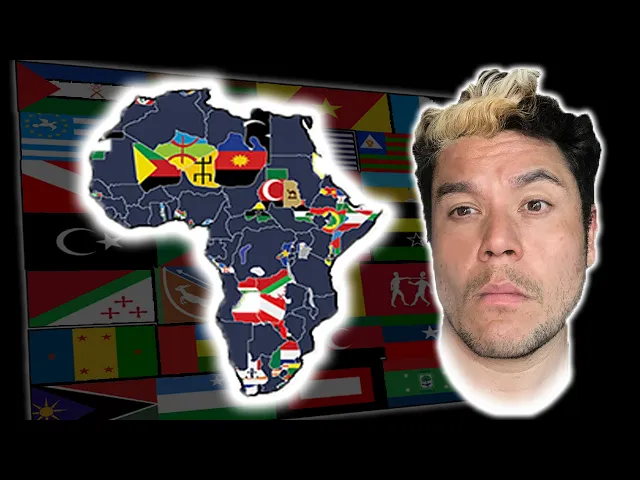
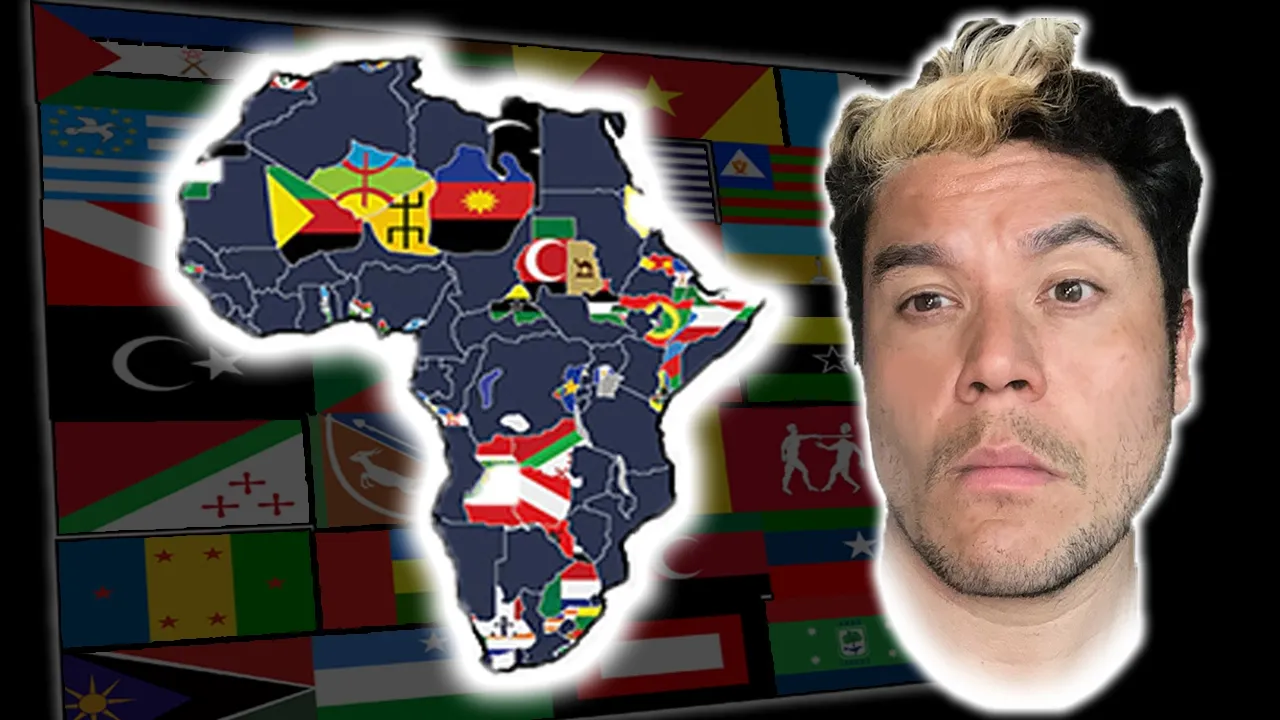
" Well, we did the European version. Why don't we talk about the African version? Here are the separatist groups of Africa.
Let's have a Geogra talk. Hey, jogger peeps. I'm your host Barbs and oh my gosh golly goodness graciousness on his pogo stick with Bob Saget and Nicki Minaj.
What am I wearing? It is a Geography Now t-shirt that you can get at geographynow. com.
We also got geography now mugs, a bunch of other stuff. Get your geography merch at geographynow. com.
Anyway, with that in mind, so Africa is a very rich, vibrant, and historically significant continent. It's come a long way since most of the 54 countries gained their independence about over half a century ago. It's growing and developing fast and putting itself out there in the spotlight.
But usually, when things grow really fast, it usually means a lot more problems arise very fast. Today, there are about 60 to 80 active movements in Africa that are vying for either secession or further autonomy in the respective nations that they lie in. Now, it's hard to properly define what is a categorically separatist or autonomous or secessionist movement because there's a lot of like conjecture and contention within the advocacy groups.
But I figure the best or maybe closest guidelines that I could probably follow to make a proper list of these secessionist groups or separatist groups or whatever you want to call them would probably be the criteria under the UNO or the unrepresented nations and peoples organization or the OEAS organization of emerging African states. inith such all the groups I'm going to mention right now have an active movement with active members whether it be a political party government in exile advocacy or military groups whatever something organized they are seeking greater autonomy or self-determination they are citizens and people of the conflict areas and do not come from another country and they have a proposed name for a seceding sovereign state with a proposed land area for said state that being said I'm going to go down the list of most of the African secessionist groups I might miss a few but these are the most well-known and active ones. Some of them are not as active, so I'm I'm just going to include the most active ones in this list.
Before I jump into it, I have to let you guys know that like research is one of the most important elements on how I do my job here at Geography Now. And often times that means I have to get the inside scoop from news articles from multiple sources across the world. The problem is often times the news can be very biased, failing to address certain factors that might not be convenient to their bias.
And that's why I'm so glad to say Ground News is able to support this episode. Ground News is great. First of all, they have the same initials, GN, ground news, geography.
Now, it's it's like Destiny, okay? Is a source that tries to take the biases and articles more transparently by giving you the tools and help you need to think critically about the information you consume. For example, they even had some articles about some of the stuff I'm going to talk about in this video, like separatist movements from Nigeria and Sudan.
Ground News basically gathers as many related articles from all around the world in one place with context about political leaning, reliability, and ownership. This allows you to compare the coverage of each source and quickly understand the bigger picture. The coolest thing though is that ground news has a blind spot feature.
It shows stories that have disproportionately or little to no reporting on one side of the political spectrum. And it offers perspectives from the ground, local, and media sources. You can subscribe to ground news and get 40% off their Vantage plan.
That's the thing that I literally just talked about right now, the blind spot, all that cool stuff that comes with it by scanning this QR code right here on the screen. I'll put it right here. You can scan it or you can go to my link at ground.
news. news/geography 40% off. Thank you so much, Ground News.
You guys are amazing. With that being said, I'm going to go down the list of separatist groups. I'm going to give you a short summary just like we did with the European one cuz I'm not going to waste 80 years of your life trying to talk so much in depth about each one.
We don't got a lot of time. Your time is precious. My time is precious.
We don't got a lot of time, okay? We're just going to have to get through this. So, here we go.
First one, Algeria with the Cababilia movement, aka the land of tribes. This is a place that was a unique region in the Atlas Mountains that has a long history of being ruled by native Amazik peoples. And oddly enough, there was a period of time where they actually mixed in a lot with the Germanic Vandal people.
And today, the Cababilia region has a strong sense of Cabilia identity. Today, they have a government in exile that operates in Paris, France, led by this guy, Ferhhat Mehenni. Angola, there's the Democratic Republic of Lunda Chokquay.
Basically, this is the far eastern part of Angola. That's in the middle of the jungles. In the year 2000, they claimed their own independence.
They argue that these areas were under the Lunda Empire and were not properly colonized by the Portuguese during Portuguese Empire times. To this day, there's some tension between them and the centralized government of Angola, especially when it comes to the management of resources, many of which can be found in this area. And also for Angola, Kabinda, Africa's only exclave.
This little section of land is actually part of Angola. Long story short, it is mostly inhabited by the Bakongo people that had three historical kingdoms here. And the most controversial part, the Kabinda exclave, is responsible for about 60% of Angola's prochemical industry.
Next up, Batswana has Zambesia. This is basically home to the famous Okavango Delta and also home to Chob National Park, which has the highest population of African elephants. I actually went there for my letter to Batswana episode.
It's crazy. So many elephants there. Anyway, the people here in addition to some parts of the Capri Strip in Namibia have expressed some dissatisfaction with the Batswan government and they are led by the movement for the survival of the river races of Zambesia.
Next one, Cameroon has two of them. Ambazonia, we mentioned that from the quote earlier in this episode. Basically, when Cameroon was formed, it was basically a fusion of the English speakers in the north and the French speakers in the south.
Long story short, it was supposed to be a federalized union of two separate but equal entities. But over time, the English-speaking side has said that there has been a lot of marginalization between them and the French-speaking side, which to me as an outsider when I observe that it's like you're arguing over the angophone and franophhone communities when neither are African languages. Anyway, it's an ongoing thing.
And some people in the Ambaz Amazonia region or the English speaking part of Cameroon have uh expressed the desire for either secession or for reunification with Nigeria. And the next one in Cameroon, Bakasi. Basically, this is a site that Nigeria argues a lot with Cameroon over.
They actually got the International Court of Justice involved. Most of the people here are of the Oruron tribe of which many you can find in Nigeria. And in 2002, the ICJ ruled that this area fell under Cameroon, but Cameroon would be required to protect their rights.
Originally, Nigeria did not withdraw their claim nor deny the judgment. They were just kind of like in a limbo state for a while. But then in 2006, they actually did withdraw their claim, which Picassi said that if that happens, we will declare our own independent state.
And despite the fact that Beicassi is not officially recognized, the movement still moves on. Next up, the Central African Republic has Dar El Couti or the Republic of Lon. It is the largest insurgent group within the country, controlled by the popular front for the rebirth of the Central African Republic or FPRC.
Basically, this is where the minority 15% Muslim population pretty much lives. They declared their own proto state in 2015. When I went to the Central African Republic, I heard a lot of stories about these people.
It's crazy. The military of the country rarely goes into these areas. Sometimes they have backup from like the UN peacekeeping forces like especially from Burundi.
The C. They love Bundians. They're like best friends.
Next up, Koros. So, Kamoros is unique because it's a country basically made up of three islands and they have kind of like a rotating presidency in which the succeeding president must be represented by a separate island. It's a very unique system of governance.
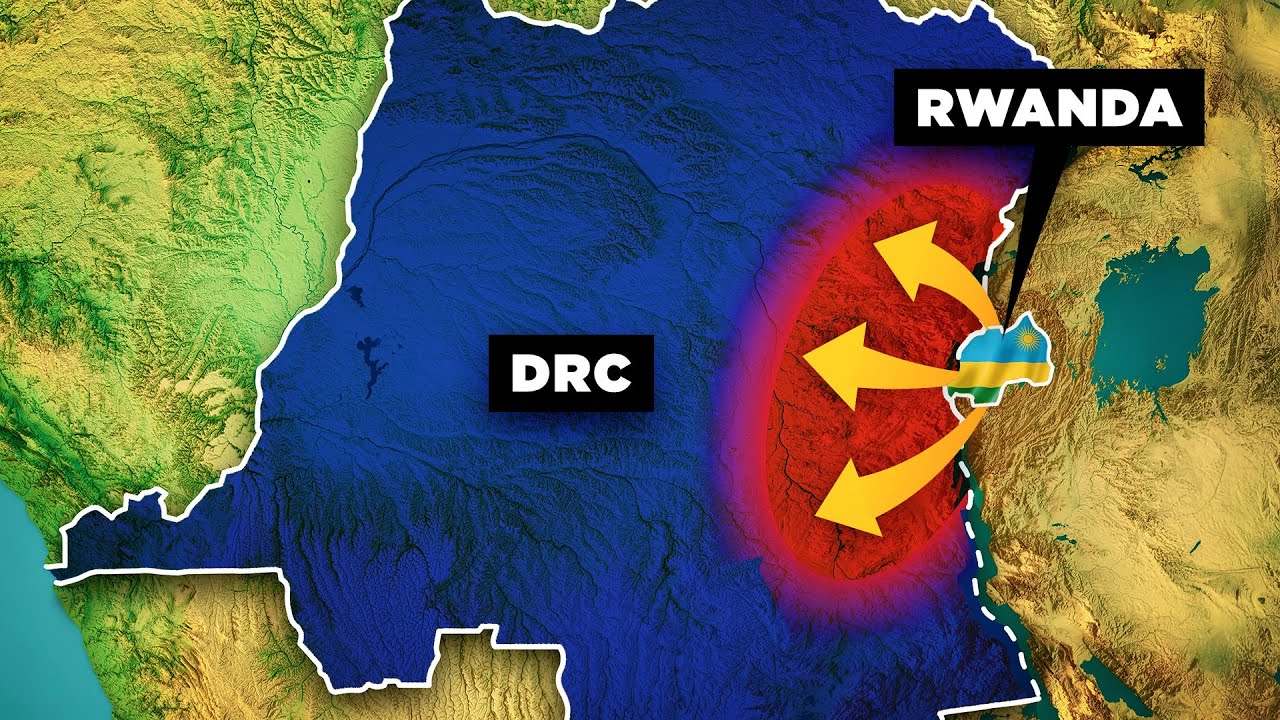
But the thing is, two of the islands, Anuan and Moeli, have expressed desires for self-determination because most of the centralized government is always kind of focused on the main island, Grand Camore. Each island kind of wants to do their own thing kind of, but they have to operate as one country. Anyway, next up, the DRC, Democratic Republic of Congo.
They got two of them. The Kingdom of Congo, which was historically an independent state for about four and a half centuries. So, basically, it was a historical kingdom.
They want to revive the kingdom along the coast. And then they have Kitanga which is basically the southeastern part of the country. It was actually a breakaway state in 1960.
Later on the Congalles government reintegrated Katanga back into the country but the movement still lives on in certain areas. It's an ongoing source of contention especially since they have some of the largest copper mines on Earth. Moving on, Equatorial Guinea.
This is a unique one. Basically the two insular island regions of Equatorial Guinea, Byoko and Anabon Island have their own movements for either secession or further autonomy within the country. The interesting thing is that the capital, the current capital, Malabo is actually on Byoko Island.
It's not even on the inland part of the country. However, they are trying to change that. They're trying to change the new capital to the inland part.
I actually got to go there. It's called Sodad La Paz. It's in the middle of nowhere in the middle of the jungle.
And if you It's crazy cuz the whole thing looks crazy beautiful. It's new. It's shiny.
It's amazing, but it's like almost completely empty. And I went to Anabon as well. And that place is very unique.
They have like a Spanish Portuguese Creole because they're right next to Stomia and Principe and they trade a lot with them. So, it's like each island has their own thing going on, but they want to focus more on the inland part, which makes the islands a little bit more like, hm, how should we move forward if they're going to move the capital to the inland part. Yeah, Equatorial Guinea.
It's one of the I'm Oh, I'm so glad I got to go there. It's such a cool interesting place to check out. Next up, Eratria has Danalia.
So, let me just kind of break this down for you, explain it. Okay, this is the area that touches the Red Sea in Eratria on the Babel Mandab Straight. Ethiopia is landlocked because of Eratria.
However, the Saho and Afar people in Eratria, they've had arguments with the Eratrian government. They've proposed the state of Dankalia or reunification with Ethiopia cuz they're kind of cool with Ethiopia. Or at least they were.
And for a while, Ethiopia actually was supporting them. But then in 2018, Ethiopia and Eratria had a peace agreement. And part of that agreement was that Ethiopia wouldn't be supporting these Dankalia people anymore, weakening their operations.
Regardless, the movement still kind of lives on within the people that live in this area. And uh yeah, it is it is what it is. Anyway, Ethiopia, okay, you got to know Ethiopia, the entire country, it's kind of like Spain, you know, it's a whole country of ethnol linguistic federalism, you know, like each region in Ethiopia has its own predominant ethnic group and they all kind of like have their own system of autonomous governance.
It's a country, but it's more like a bunch of many countries. So, today they have seven secessionist movements going on in the country. I'm just going to go down the list.
They have Oaden, which is basically where the Somali people in Ethiopia live. They are basically related to the same Somali people in Somalia. Oria, which is home to the largest ethnic group, the Oromo people in Ethiopia.
Amhara, the second largest ethnic group, which by the way has the Geese alphabet, which is one of the only native writing systems indigenous to Africa. Sidama for the Sidama people in the center of the country. Afar and Tigra peoples up in the north.
This is the site of all that conflict you've probably heard about in the news in regards to Ethiopia. And finally, the Waitita zone for the Waita people in the south. It's a small zone, but historically rich with their own long-standing monarch system.
They also have a secessionist movement. Ghana has western Togo land. This place is predominantly inhabited by the Awe peoples, which are cousins of the Awe in Togo, which are the largest ethnic group in Togo.
They vied either for secession or union with Togo. Kenya has two of them. The Republic of Mombasa, the largest secessionist movement in the country.
Basically, it's on the coast on the Indian Ocean. Their slogan is Kenya or the coast is not Kenya. This area is basically kind of similar to like Catalonia in Spain.
It's an economic secessionist movement, not an ethnic or religious one. In fact, there's a lot of Christians and Muslims that are both behind this movement. And the next one is the People's Republic of Kenya, which is basically the furthest western provinces of Rift Valley, Western Province and Yanza, led by the Azimo La Umoja Party.
These three regions are basically just vying for further autonomy within Kenya. They don't want to secede into a new country. Next one, Libya.
Libya has three historical regions, okay? Tripolitania, Sirena, and Fzan. And ever since the whole Libyan civil war thing, blah blah blah, Sirena wanted to split up from the rest of Libya and like, hey, we got our own thing going on.
They've accused Libya of neglecting the eastern regions, especially when it was under Gaddafi, always favoring Tripoli and the Tripolitania region. And also, Sirena is like home to like 80% of their known oil reserves. So, they obviously want to do their own thing.
Mali has Azawad. I actually mentioned this in my Sahel States video. It's basically they've claimed areas pretty much in the northern parts of the country.
At one point they even occupied the cities of Gao and Timbuktu. It is mostly led by ethnic Tor peoples that were native to the Saharan desert areas of the country. The Azawad movement has been criticized for a lot of the actions they've taken and uh yeah they are basically the largest group of insurgent peoples that caused the whole Sahel states union thing alliance.
So yeah, Maitius has Rodriguez Island. Basically, Rodriguez has a population of about 45,000 people. They have their own separate unique French-based Creole.
And uh it's just they they're so far and distant from the centralized government of the island of Maitius that some people on Rodriguez have expressed the desire for self-s sovereignty. Uh the movement is minor, but it is sometimes brought up. Morocco has the Republic of Riff found in the Rift Mountains.
So basically it is mostly run by a subset of the Amazerber peoples that live in the riff mountains or riffian Berbers. And this actually was a confederate republic that lasted for 5 years between like 1921 to 1926. And today there is a small fringe riff nationalist movement going on that tried to revitalize the movement back in 2013.
And also in the western Sahara region there's the SADR or the Polario front inhabited by the Sahari people in the Saharan desert. This is the site that I went to in my rebel territory video that I just made. So, basically in Western Sahara, Morocco took over 80% of it and then there's a sand berm that is built between them and the policario or sadr people that claim well they claim the whole western Sahara but they only manage 20% of it.
And Algeria gets involved because their headquarters are in Tinduf Algeria. And Algeria supports the policario which makes Morocco and Algeria have drama with each other. and they claim that Algeria is just using them to it's it's so complicated, but basically these are the people that argue with Moroccans the most aside from Algerians.
Next up, Namibia has the Rihoboth area. Basically, in 1968, the German government provided a separate government for the bastard people in the central part of Namibia, Nigeria. So, we already explained in the Nigerian states episode that I did a long time ago with my buddy Bosoon that Nigeria is a very ethnollinguistically diverse country, but many regions in Nigeria have like a dominant ethnol linguistic group.
And a lot of these ethnol linguistic regions have their own kind of autonomy/sessionist/separatist movements depending on where you go and today they have six officially recognized groups. The first one, BAFA. This is basically the oilrich south part, which is mostly inhabited by the ethnic EO peoples and their subgroups.
They actually did declare independence briefly in the '60s. Today, they're still trying to fight for further autonomy or separatism from Nigeria. The next one, the Republic of Odua.
This is the Yoruba dominant area of Nigeria. And unlike Bafra, they are only proposing further autonomy within the country of Nigeria, not separatism. Then we have the Niger Delta Republic.
This is in the southern Delta region of Nigeria obviously Delta. It's basically the same story as BAFA but it's more ethnol linguistically diverse and they are run by the movement for the emancipation of the Niger Delta or mend. Then we have the Awa Republic.
This is for the predominantly Housea people that can be found in the northern parts of Nigeria and they are predominantly Muslim and they are seeking for either statehood or further autonomy within Nigeria. Agoni land. This is for the Agoni people that are within the river state within the delta.
So it's like a separate thing from the Niger River Delta thing that we just talked about led by the advocacy group the movement for the survival of the Ooni people. It's like a little mini secessionist thing within a larger secessionist thing. And then finally you have the Kingdom of Benin which actually was a thing for centuries.
It was an independent monarchial state until 1897 when it was integrated into British Nigeria. It has a lot of history. It was once a very prosperous kingdom and some people today are advocating for the reestablishment of the kingdom separate from Nigeria and they have a really crazy flag that has a guy cutting off another guy's head.
Okay, next up, Sagal has the Republic of Casamans. This is the strange southern part of Sagal that Senagal citizens have to bypass the entire country of the Gambia that is completely enclaved within Sagal to access. Basically in Sagal, Dar is like all the focus is on Dakar.
It's like the Marsha and like Kasamance is like the Jan. They don't really get as much attention. They've expressed dissatisfaction with the Senagles government blah blah blah.
And uh in the '9s they actually formed their own militant group and that caused a lot of drama. Kasamats. Okay, next.
Somalia. Okay, so Somalia, here's the thing. You have to understand the Somali people, they have like five main clans.
You would think they would all be like, "Oh, we're all Somali. We should all be unified. " No.
Each of these clans has drama with the other clans. It's crazy. And uh each of them has their own demarcated spot of land that they claim for themselves.
The first one, Somali land, the most famous one. They're actually such a separatist group that they pretty much operate like their own country. It's the northern part of Somalia.
They actually used to be a British colony, so a lot of the people here actually speak English as well. They have their own currency. They have their own president, government, military.
It's crazy. Like I actually went here. It pretty much acts just like its own country.
And then you have a land which is actually a separatist group within the separatist group of Somali land. So it's like separatist inception. They are basically of the deer clan of the Somali peoples whereas most of the people in Somali land of the Isach clan.
They had a sultanate that they are historically tied to which is why they want secessionists. It's complicated. Then we have Juba land which is seeking further autonomy or independence from Somalia as a buffer between them and Kenya.
Then we have Puntland which is the actual horn of Africa. Basically this is mostly of the Darod clan of Somali people. In 2024 there was a constitutional crisis which led to the Puntland government saying that they no longer recognize the authority of the Somali government and they further declared themselves as an independent state.
And finally myand which is the southwestern state of Somalia. Basically this is the area of Somalia that is mostly Bantau not Somalia based. There is a distinction between banttos and somales which are mostly of the cushidic peoples.
Banttos in Somalia want their own thing. Next up, South Africa. Same deal as Ethiopia, Nigeria.
It's basically a country with a bunch of mini countries in it. Let's just go down the list. The Cape Republic.
This is basically the Western Cape province of South Africa, which obviously has the city of Cape Town. It's a very diverse province, mostly inhabited by colored peoples, which is the word they use for people of mixed African and non-African ancestry. And among them, some are even proposing the sovereign state of good hope, which seeks full secession from South Africa.
Next up, we have Folkstat, which is the section of the northern Cape province that Africconers or South Africans primarily of Dutch descent are proposing for further autonomy or secession. Next up, the Zulu Kingdom. Obviously, this is in the Zulu areas of South Africa.
Some people are thinking of reviving the Zulu Kingdom as an autonomous part within South Africa. And finally the state of Venda which is for the Venda speaking peoples mostly in the northern part of the country proposing either a state or autonomous region for the Venda people in South Africa. Moving on, South Sudan has Rolat or the newer land which is basically the homeland of the newer peoples in South Sudan.
They are one of the largest ethnic groups in the country. Basically the area that they are proclaiming takes up many of the northeastern parts of the country. Next up Sudan Darur.
Uh this area is mostly inhabited by the Fur, the Zagawa, and the Masalit and Tama peoples. You've probably heard about this one in the news. You know, there was a big war, the Darur war.
Basically, since the war, advocacy groups have been popping up, and they've been seeking either autonomy within Sudan or even union with the country of Chad. And they also have the Beja state, which is basically the coastal areas along the Red Sea. They are seeking further autonomy within Sudan.
They also have their own Congress. You know, coastal access will do that to people. It's like, "Hey, we have something that works well.
Give us our own option to manage it. " Tanzania has Zanzibar. Now, here's the thing.
Like, Zanzibar never really was like affiliated with the mainland part of Tanzania until they were kind of shoved together in 1964 upon independence. Zanzibar has had their own culture and like they're more Arabized and they're more Muslim and they were even part of like the Omani Sultanate. It's like they've always been set apart from the mainland.
Obviously, it makes sense that they kind of have a sense of Zanzibar identity as opposed to Tanzanian when they were kind of put together with Tanzania. I mean, Zanzibar is already an autonomous part of Tanzania. But it's like it makes sense that they would have like kind of a secessionist movement amongst the people.
Uganda has Achi for the Acholi people in the northern part of the country which overlaps a little bit into South Sudan. So this is basically the Joseph Coney thing, the guy who led the LRA or the Lord's Resistance Army. And it was a controversial thing that all Western people pretended they cared about in 2012 and they put up the signs publicly and like they only did it to kind of like bolster up their own self-image to pretend like they were good people.
The point is Joseph Coney, this is the Joseph Coney thing. It was very controversial and although the thing kind of died down, it still plays kind of a role in the northern parts of North Uganda. Next up, Zambia Barand.
I actually explained this in my Zambia episode. So this is basically the western part of Zambia that are predominantly inhabited by the Loi people and Loi people have a deep rooted connection to their history and kingdoms and empires that were in this area. Recently in 2012 a group of traditional leaders formed the Baroand National Council which called for the independence of Barro land but some other elders said nah it's not a good idea let's not do it.
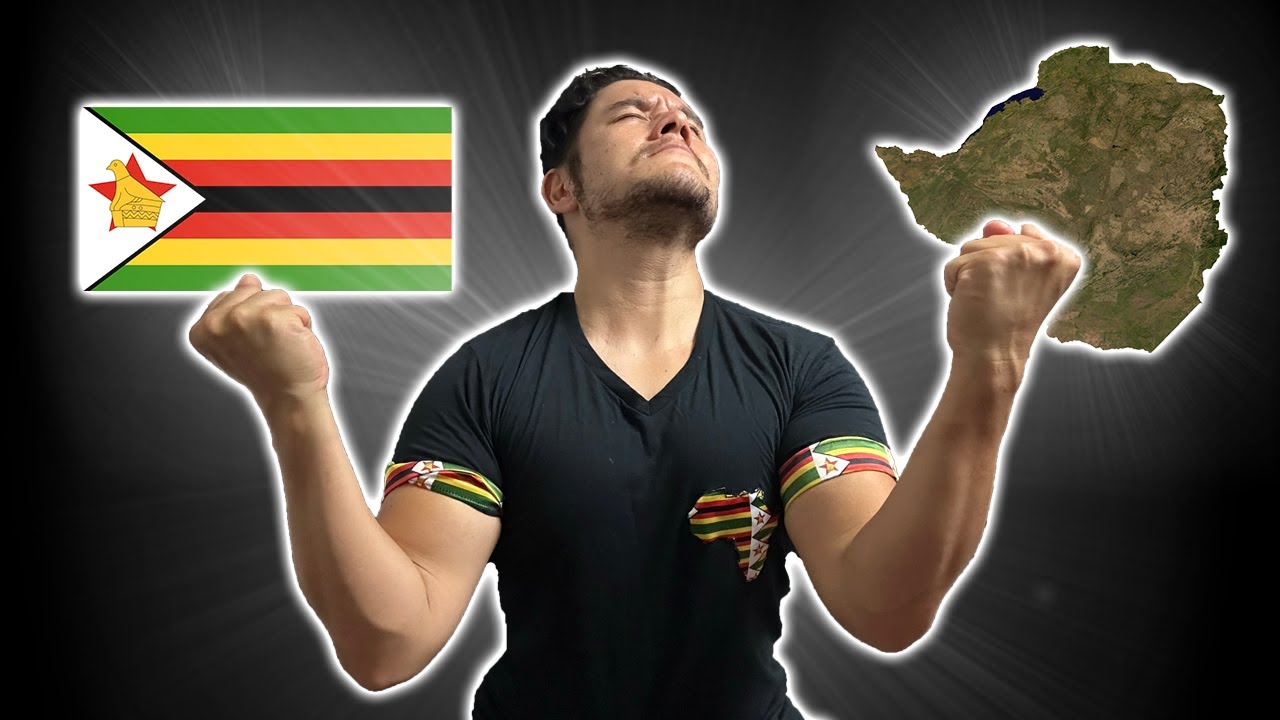
They're they're debating amongst each other but the concept of Barot land is something that is sometimes brought up in western Zambia. And finally, Zimbabwe. Zimbabwe has Mataba land or Tuakazi.
This is actually the area I visited in the Zimbabwe episode. It's crazy cuz this is actually the place where some of the most significant sites in Zimbabwe are located like you know Living Stone or Victoria Falls or Mosi Oatuna the smoke that thunders the largest waterfall in Africa. So basically the people of Zimbabwe there's two main groups.
There's the Shauna which make up about 70% of the population and then there's the Indelle which make up about 20%. This is the land of the Indellyle, the second largest group of people. Now, generally, Zimbabweans, no matter what ethnic group you're from, they generally kind of get along with each other and they're cool and chill with each other.
But some people in the Indelly side have kind of discussed about possible proclamations of further autonomy within Western Zimbabwe. So, yeah, there you go. Bonus, certain insular island regions off the coast of Africa that fall under European administration have also expressed possible autonomy/cessionist movements.
They are Reunion and Mayote Island in the Indian Ocean for France as well as the Canary Islands for Spain and Madera Island for Portugal. So there you go. The separatist/sessionist/ autonomous movements of Africa.
Why should you care about this? Because I guess it it it illustrates the social structure of peoples around the world and why they say and claim the things that they do, which gives you a well-rounded visual understanding of why things are in this world. I don't know.
So anyway, I hope you learned something and uh what topics would you like me to cover in these Geographs next? Uh write them in the comments. Feel free to give me your suggestions.
I actually do read them and then I get bored after a while because there's too many comments, but I read the cool ones. So if you have a cool comment, I'll probably read it. Okay.
Anyway, hope you have a good one. Stay cool. Stay tuned.