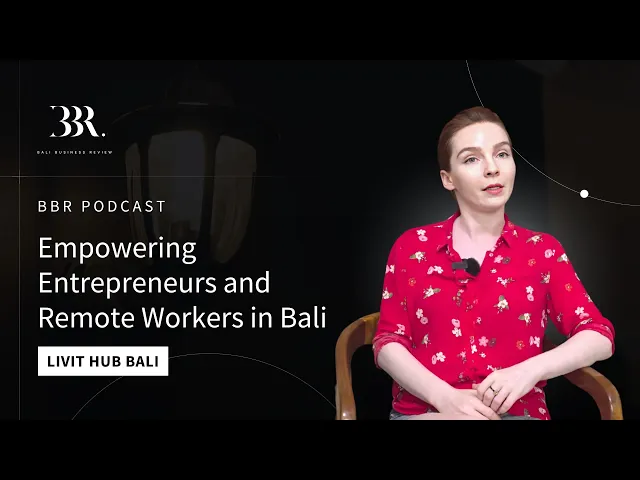
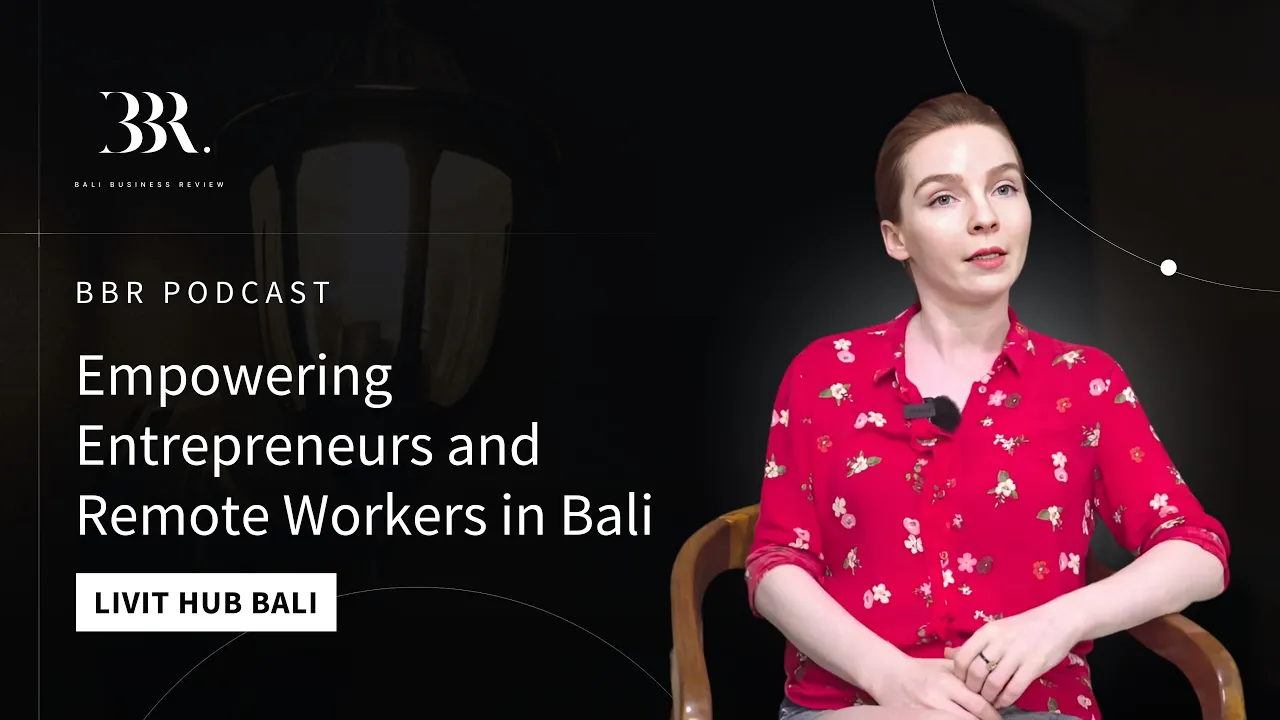
So, I'm Lavinia. I'm the CEO of a business called Livit International. We are a support ecosystem for entrepreneurs, for startup teams, and for remote workers.
We support them with a variety of different types of services and projects. I guess it makes sense to tell you a little bit about our history to say so. We started off about a decade ago.
In the sort of early digital nomad wave in Bali. With, um. With a small co-living space startup studio where we were incubating our own startups and working on tech and digital businesses.
And about seven years ago I was like, it's time for us to go to the next level and build something that is more, let's say, appropriate for the size and for the growing community that we have. And we built Livit Hub Bali, which is now a co-working, shared office, an innovation space in Sanur, in the, let's say, quieter side of Bali if you compare it to Canggu, and Ubud, and so on. So we obviously have space in there, which is the part that is really straightforward and people can easily understand.
But we also have all kinds of other types of services that support tech startups and digital, small and medium-sized businesses. So we help people with recruitment, we help with training, with consultancy, we can be an HR business partner, we can help with operations, with business support, with things around finance, legal and so on. We try to be as much as possible a one-stop shop, For people who want to grow interesting digital and tech businesses in Bali.
And we also have an education platform called the Remote Skills Academy, where so far we have up-skilled and re-skilled, help train about 8,000 people. Majority of them being Indonesian, with digital remote work skills, so that we have less of a gap between the people in Bali that are privileged to be able to work remotely and make money online and in digital environments, to say so, and the people who are perhaps stuck with maybe low-paid jobs in hospitality that are quite inflexible, just around the area that they live in. As we know, Bali is a huge destination for digital nomads and there is this big difference, right?
Between the people who earn dollars or euro and spend rupiah and the people who actually can only be, maybe a driver or a waiter, and so on even if they're otherwise very, very capable. So that's a little bit about what we do. We have received in the last few years actually a lot of distinctions, certifications and awards for our company culture, for being a great place to work.
Actually one of the best workplaces in Asia, in our category. and it's been a really interesting ride. As I was saying it's been a decade.
An interesting journey with a lot of different achievements. But if I'm to look back, I would say probably incubating, nurturing, helping startups grow that impact millions of people right now. I'm, for example, thinking of one of our startups which is no longer a startup.
It is actually quite large company. It's called Labster, it's revolutionizing the way science education is done through offering immersive labs in the online space for chemistry, biology and so on right. This is an award-winning technology which was, you know, in many shapes and forms built from Bali with other countries as well.
I'm thinking of, as you were saying, the Remote Skills Academy where we've upskilled and reskilled, helped all of these people and it truly is life-changing in many ways. Because once you are able to access this entire world of opportunities that is out there, not just in Bali or in Indonesia your life changes in many ways. I'm thinking of a number of, for example, hackathon events where we've seen so many interesting ideas being emerging and and being built sort of or having their inception in front of our eyes to say so.
Yeah, I am thinking of many other startups that we've either helped to grow or we've worked with in some other capacity or they've been part of our space in some shape or form. We are now for example also collaborating with Boundless Life which is a- A very interesting company that helps make remote work and digital nomads that has been moving around the world more accessible for families. (Remote work is) not just for, you know those of us who maybe, I don't know, single with no obligations and so on.
Things get much more complicated when we have families, right? And they're building an interesting solution to make quality education, co-working spaces, community and accommodation available for families in different places in the world. One of them being Bali.
Also thinking about a lot of things that we have coming up, even in the next few months that are very exciting. For example, AI, sustainability space. We are quite involved with a lot of, and we've invested as well in a lot of, organizations that are in the, let's say, climate tech or sustainability area.
Something that is top of mind for a lot of us these days. So yeah, there's a lot of things that we can look at. And the- The easy ones are the big milestones around the words and being ranked, you know, as a great place to work.
Or being, um. Recognized for our company culture, for leadership and so on. But also, I think for me, the really interesting and the most valuable achievement is actually working on exciting things that you feel make a difference or at least put a little dent in the world, in the positive way.
Every day, right? Every week when maybe nothing happens. Maybe no big media happened, no big awards and so on.
For me, that's the biggest achievement. It's a very, very, I'd say that's a very, very good question and it's also a really interesting challenge. I'm just gonna call it out.
I think what we sometimes see in Bali is we see this segregation, right? Between spaces or communities that are for foreigners and spaces and communities that are for locals, right? What I really didn't want to have at the hub in our, let's say, physical community, because we have a digital community that is much larger than what's happening in Bali.
But in our physical community and events and teams and so on across our organizations is that kind of bubble, right? Bubble reality. So it's not always easy because I think foreigners are here for their specific, let's say motivations and they have certain lifestyle preferences, budget preferences and so on, even food preferences, right?
And then sometimes Balinese locals can also be quite different from people who moved here from Jakarta, right? But also quite different from people who are here outside of their home country. So it's not always easy to converge or to bring together all of those different preferences, right?
When you think in terms of offering services or events, when you think of pricing, foods, topics being discussed, even the language that is being used and so on. We do our very best to integrate things as much as possible and to have a wide array of activities and topics that hopefully address everyone. Then also some of them that will be more relevant, for example, I don't know, let's say visa topics or how to run a foreign investment company in Bali for foreigners, obviously that's going to be more interesting for foreigners.
But also like, we hosted an event the other day, for example, about how to do your social media during Ramadan, right? In Indonesian with an interesting organization called Social Bread, right? That was clearly targeting locals in Bahasa and so on.
So I think, I think it's not always easy and it's easier to just do one thing, right? And then just be like, okay, whoever likes this, we just do this and then if not, the people can go wherever they find their tribe to say so. It's harder to integrate things a little bit more, but it's definitely worth it.
And across our membership, our teams and so on, we always try to aim, perhaps not a perfect balance seems pretty utopian, right? Like to just like sort of really count and be like, "Okay, who's from where" and, you know, genders and the nationalities and so on. We don't want to, you know, be too analytical about that in an exaggerated way.
But at the same time, we want to see all of those different communities coming together, right? And even across different, let's say sectors or backgrounds, we want to see people in tech startups also working with people in NGOs, right? Or people who work for the corporate or maybe in hospitality and so on.
I think the world right now, we live in an age of antagonist and the world right now is getting more and more segregated and separated and anything we can do to break down those walls, be it between religions, backgrounds, industries, right? People going to conferences with the same people from the same industry being, in the same echo chamber and so on and so forth. Across different nationalities, different sort of preferences, the more we can do that, the better.
So yeah, so we try to do a bit of everything. I'm even thinking in terms of, you know, we have people in our space who have families and at 4. 30 they want to be out the door, so they will not stay for social night, right?
For an evening of movies or things like that. But then we also have people who just finish their day at 6 and they want to do those things, right? They want to do the networking drinks on the rooftop and so on after hours.
So I think there's always a way to do a bit of everything and then to also try, sometimes, to bring everyone together and as much as possible to not favor only one type of activity or one type of person to say so. Yeah, this is a question I get a lot and I think I would give a more, let's say, more granular answer because a lot of people, when they think of us, they think of just the space. When we think of Livit, we think about the entire, let's say, ecosystem of different companies, of startups, different projects, services, communities, and so on.
So in terms of the space itself, I would say that's one of the ones that I would expand last? Because we're much more interested in expanding our reach through our tech and digital startups, through the Remote Skills Academy, which I'm currently working on to bring to two new continents, right? To Africa through a project in Rwanda and to Europe for immigrants and asylum seekers through a project in Belgium, right?
It is much easier in today's world to scale digital and technology-based things than it is to scale brick-and-mortar. However, that being said, I'm not saying no. I'm not saying we're not going to have more hubs, but when you look at the amount of time that it takes to build a brick-and-mortar business, right?
Especially in the volatile world that we're in, we're looking at, you know, even just what happened with the pandemic in the last few years, right? And anything that was physical-based, right? And so on.
The amount of effort that goes into that can sometimes be used to scale things in a digital online tech manner much more easily. However, I did tell my team that if they want to have Livit Hub in, I don't know, Lombok or Ubud or so on, I'm very open to that, to hearing about that. But, no- let's say no concrete plans for the time being.
We're expanding our reach in other ways. Diversity or global, to say so. I was just looking at numbers, and we've had clients and team members from over 60 countries so far.
So it truly is a pretty big reach. Learning. We love learning and we're always experimenting with something and learning something new, and building something new.
So that definitely is a pillar of it. Work reinvented, which is in many ways our tagline, because I believe that work is something that brings so many things in our lives. It brings meaning and identity and belonging and purpose and so many good things that make us human.
But the way work looks like right now for a lot of people is broken and needs to be changed and reinvented. And I'm all here for it.