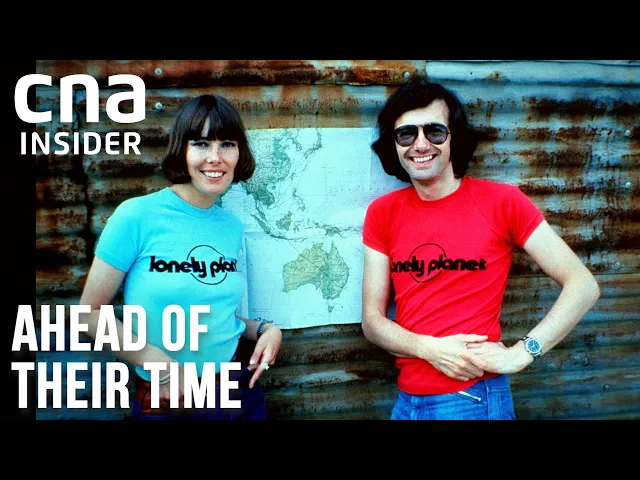
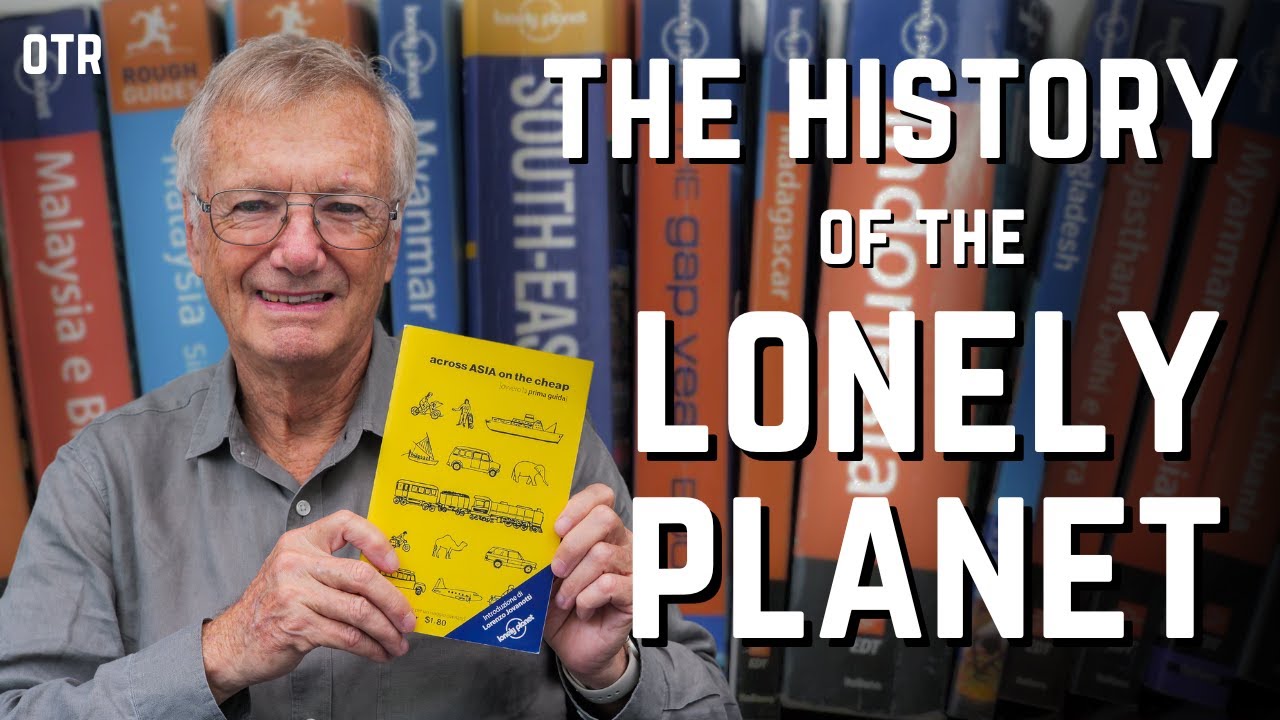
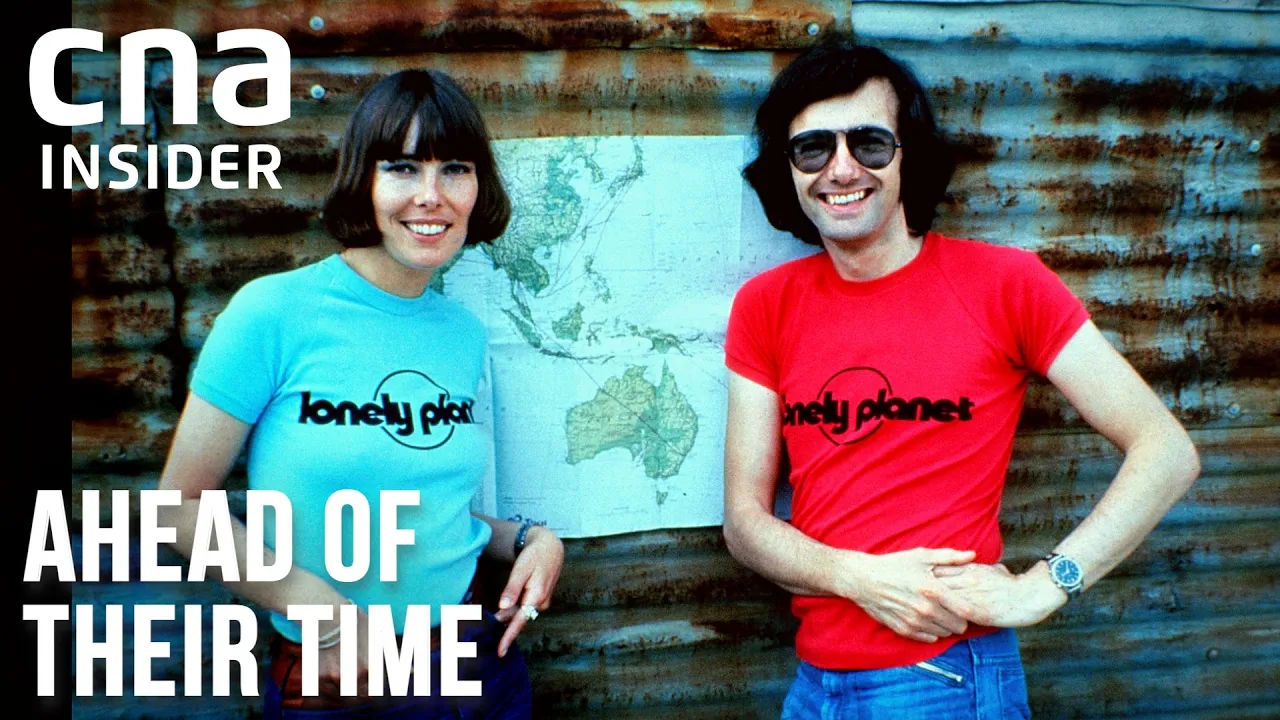
from the first man who walked the earth the great explorers who crossed the oceans to the modern nomad seeking out sun shopping and adventure our species has never stopped traveling [Music] there was a time when holidays were sold almost entirely by the man behind an agency desk until a little blue guidebook came along and swept travelers off the beaten track [Music] you very often hear terms like this is the lonely planet bible it's the the book if you wanted to really go out there and have some adventures lonely planet was the brand that was going to take you there today whether we dream of a solo trip to europe backpacking across guatemala or a staycation to escape the humdrum of everyday life a different name comes to mind airbnb created a new form of travel and it's a type of travel that now allows everyday people around the world to become hosts and welcome guests into their homes it is the most iconic brand to come out of travel in the last 20 years how did the pioneers of alternative travel get us all to roam explore and sleep in strangers homes from london to singapore the journey through every kind of terrain that europe the middle east and asia could offer george w bush got up and said there was an evil access i thought i have to go visit it 12 years ago three guests checked into an airbnb for the first time i remember we started airbnb i said this is going to be huge one day thousands of people will use this product [Music] to be precise travel for pleasure began with the ancient greeks who made trips to see the olympic games the oracle at delphi and all the way to the great pyramids of egypt during the renaissance in europe it became fashionable for young aristocrats to visit the great masterpieces of the classical era as part of their education this was known as the grand tour and was when the word tourist itineraries and souvenirs came to exist the industrial revolution in the 18th century made travel affordable to the middle classes in 1842 a businessman by the name of thomas cook from leicester england had a clever idea of organizing a guided tour escorting 500 people on a train trip to lasboro just 11 miles down the road [Music] six years later cook was selling tours in europe later he shipped travelers as far as japan india and the united states and by the 1880s established offices all across india sri lanka and mauritius in the 1960s and 70s with free love coursing through the air hippies began to travel overland on a route that had plenty of mystique and was as far away from the evil capitalist west as possible starting from europe it runs through turkey iran afghanistan pakistan nepal and india this would later be known as the hippie trail and the european capital of free love london was a natural starting point i've told this story too many times this is tony wheeler who in 1970 was an mba student wandering around regents park in london i sat down on a park bench on an october afternoon getting a little bit chill in london in october um to look at a magazine and the sun was shining on the bench and this young young lady walked by and decided to sit on the same bench as i was already sitting on and 12 months later we got married tony married 21 year old maureen and the happy couple was looking for an adventure of a lifetime in 1972 the wheelers jumped on a mini traveler and left england heading east the plan was to travel as far as the 65 pound van would carry them and it did all the way to afghanistan before they resold it and continued through nepal southeast asia and finally to australia back then those years ago that you'd meet lots of people who'd never been on an airplane or never been overseas this sort of thing the internet obviously didn't exist nobody had mobile phones hadn't been invented if you wanted to make a phone call in those days you had to go to a phone office you know and book it and you'd say oh i want to phone someone in london and they'd say well come back in two days and you know you'd go back in two days time and you'd join a queue and it would take you about five hours to get through they weren't using the travel agents they were going on this trip and making the bookings planning the travel as they went along and that was absolutely new at the time and the smart thing tony and maureen did was they just started writing it down tony and maureen made it to sydney five months later with 27 cents to their name while rebuilding their finances in sydney over the subsequent months the wheelers met people who'd ask about their trip and that gave them the idea of writing a guidebook for budget travelers like themselves it was really cutting edge because it collected all the information you needed which was just in people's brains it was all word of mouth at that stage and tony and maureen wrote down everything you needed was it okay to film what kind of people traveled how do i even leave australia because at the beginning it was just written for australians so they collected all that information all their learnings in one place the final product was a 96-page hand-stapled volume titled across asia on the cheap and we just needed a name for who was publishing it we've just been to a movie called mad dogs and englishmen and one of the songs in it was sung by joe cocker a song called space cat and there was a line which went once while traveling across the sky this lonely planet caught my eye and i said to maureen you know that line's really rather nice why don't we call it lonely planet and maureen said that's really nice idea to call the company lonely planet he said except he doesn't sing a lonely planet he sings a lovely planet the company has had the wrong name ever since tony and maureen's scruffy guidebook was a resounding success selling 8500 copies all across australia and setting the stage for a second title so we decided what we'd do is we'd spend a year in southeast asia and we'll do a guidebook just on indonesia thailand singapore malaysia that time you couldn't go to vietnam or cambodia and so on but the war was still happening nobody knew about thailand at all it's like a mystery zone and every time we came through singapore we just left a box of notes at the same hotel so when we got back at the end of the year to that hotel there were all our notes sitting in the cupboard and we took a room and we stayed for three months and we put the whole book together in that room and that was done on a typewriter by 1975 there they were 5 000 copies of southeast asia on a shoestring fresh out of the press and i went into mph bookshop i made an appointment with the guy for the books and i said all these these young people they're coming from america and europe and australia and going everywhere and i said and they'll buy this book you know it'll be really useful for them yeah i thought you know he would definitely buy 50 and then he got like an order form out and he wrote my name down in the name of the book and he wrote a number and i can still see this and you know it brings tears to my eyes today but because i was so emotional about it he turned it around and he slid it across the table and i'm looking for at least fifty might be a hundred and it was a thousand he ordered a thousand copies and i just went whoa i was i was just blown away i just you know i had no idea he was gonna do this four decades later lonely planets would have sold 120 million guidebooks changed how we travel and paved the way for other startups in the alternative travel space including a 130 billion dollar home sharing platform called airbnb [Music] around 627 ce a chinese monk by the name of xuanzang began a pilgrimage that took him along the silk route through what is today's uzbekistan nepal bangladesh and india marco polo arguably the most famous western traveler journeyed the same route in the 13th century 700 years later six english college students following in his footsteps embarked on an overland expedition from london to singapore word of their journey soon reached the curious young people of the west giving us the hippie trail and the idea of backpacking with the cost of air travel unattainable by the average joe blow the young and fearless were excited by the notion of traveling by local transport walking trails and hitchhiking meeting new people uh sharing a room with strangers the part where you overcome fear when you when you explore a certain place alone i went to south america to bolivia and argentina crazy experience like going uh two cities without knowing where you're gonna live where you're gonna sleep where you're gonna eat you're living on the edge during my time you don't have like a a glimpse or a pick up the places you're going to i usually give my passport very easy keyword and of course i'll get extra money put some uh u. s money yes i do that you know buy that that thing like you can strap your money inside your body and then put your shirt on putting my my cash in my socks or underwear so i mean unluckily for for those who will try to steal my money it will smell like my underwear or socks 1975 a tiny travel publishing company known as lonely planet has just published its second guidebook to asia a part of the world yet unknown to western travelers oh here it is southeastern shoestring hasn't got a yellow cover anymore which it had for so long yeah there is a book without my name on it there are stories there anyway that's that's all it needs our first books a lot of them were pretty scruffy but they were the only thing out there you know if there was nothing else available then you had the best book and then before you knew it you know the publishers in new york and london woke up and thought oh thailand someone should do a guidebook to tara oh somebody already has done a guide book to thailand you know it was we were ahead of the curve encouraged by the success of both books the wheelers followed with guides to nepal africa new zealand and new guinea the money made from one book paid for the next and the business grew bit by bit but despite having published a dozen successful travel guides by the end of the 70s the financial future of lonely planet remained uncertain it was all hand-to-mouth but as soon as you got people working for you friday you've got to pay them you know and god maureen and i we had so many sleepless nights we had this bank card and we used to go out with friends from the universities and we'd go to some restaurant the end of the meal the bill would come and everybody would all put in there ten dollars or twenty dollars and um we'd just take all the money and give our bank card in and you didn't have to pay the bank card to the end of the month we financed the business the money coming back to our pocket and then paying the you know that bank card did a lot of financing of lonely planet the turning point came in 1979 when the couple decided to write a guidebook for india with someone managing the office tony maureen and two other riders could get away for six months with one thousand dollars each for expenses we'd sort of bet the shop on that book you know we put a lot of money into something we could barely afford and it paid off the resulting india guidebook was three times as big three times as expensive and sold three times as many copies as previous titles lonely planet is one of the many iconic travel guides that came during the 60s and 70s particularly 70s rafat ali is the founder of the travel industry news website skift its rise was driven by a few factors post world war ii boom that led to rise of baby boomers that had a lot of money that had disposable income the airport bus is already bringing passengers for flight 801 so one of the other factors that obviously helped a lot is air travel prices coming down the deregulation happened in the u. s and european skies also opened up so the cost of international travel came down quite a bit obviously the vietnam war happened that made people aware of their lives outside of their own western bubbles terms like the hippie trail or the gringo trail gringo being the spanish word for white people traveling through these relatively cheap lands for the first time became a real thing what started based off a movement of independent inexpensive travel became a movement of its own with readers sharing its guidebooks and fans offering to write for the company for almost nothing one of those fans was piers pickard who today heads the company's publishing business i think this is a 1992 edition of africa on a shoestring i remember leaving school buying this book i used to read this book religiously and plan all the places i could go all the things i could do lonely planet offices popped up around the world and an army of writers researchers photographers and cartographers were unleashed to explore every possible country a lot of people think being a guidebook writer is like being paid to go on holiday and i've shadowed our writers in different places around the world and it is far from that they need to be very very organized and once they are in that region really the clock's ticking and the race is on our guidebook writers work incredibly long days because in the morning they need to be finding great places for breakfast at night they need to be checking out bars and nightclubs and the whole day in between a lot of what they do is figuring out logistics so how do i get from a to b and equally getting the lowdown on hotels restaurants sites it's not just sitting back and having the fun bits of travel it's really sweating the detail of what does this cost okay well what does it cost if it's two of us you know do you do a family ticket what if there's ac every little combination and yeah sweating every little detail as more countries opened their doors to tourists so did more books get published in 1984 lonely planets china a travel survival kit made the rounds in 1991 the first edition of ussr was published just as the soviet union collapsed books like yemen mongolia iran or ethiopia cemented lonely planet's reputation as the sort of travel publisher who would bravely set forth where nobody else dared one of the things that lonely planet did really well was it had a very strong brand from from early on and you have a few companies like this where the company's branding and the customer perception is so tightly bound with who the founders are and i think even still that in this sort of broader economy of different kinds of content businesses that nobody can buy lonely planet's opinion and that's sort of what they stand for right this independent kind of opinion on how to travel three decades after the wheelers wrote their first book travel has become a very different scene in 2004 facebook made its debut google maps took atlas's online the year after and double decker airbus a380s took to the skies independent travel has now become the norm rather than the exception for tech-savvy millennials who are more willing than ever to spend on authentic experiences and so in 2007 two unemployed designers in san francisco would too come up with an untested business idea joe jebia and brian chesky had just quit their jobs and needed some income to make rent they also knew that a big design conference was coming to san francisco and it was making hotels hard to come by being the uh very creative characters that they are they decided to list their space as a place where people attending the conference could stay because hotel capacity was very very high at that time and so what they did was they put down some air beds on the on the ground they provided breakfast to their guests overnight joe and brian created airbedandbreakfast.
com and drummed up business as tour guides at the conference within hours a man from india a woman from boston and a man from utah had booked into their loft for eighty dollars each they took quite a lot of video footage from that first weekend and in that you can see that they formed a really deep connection with their three guests after their successful first night as hosts they began receiving emails from people around the world asking when the site would be available for destinations like buenos aires london and japan thinking they could really be on to something joe and brian joined hands with their old roommate nathan bluchersick who had a solid tech background to turn their idea into a full-fledged business their home sharing idea would eventually make converts out of hundreds of thousands of users like paran mehta airbnb's apac managing director so in 2012 i actually listed my property in london on airbnb during the london olympics and i disappeared for three months so i could pay my mortgage off but at first their idea was everything but popular when brian joe and nathan went back on the market for the second time they were not recognized by anyone they tried their luck again at south by southwest but only had six listings and two customers one of them was brian himself not everybody saw the potential in the idea and like for example you know fred wilson at union square ventures it's like a very high profile investor who admitted you know many years later that they didn't quite see it but i think that you know what was really impressive was the fact that these founders were able to bootstrap themselves and this was how they did it at the 2008 democratic national convention in denver the trio launched their air bed and breakfast idea again when the site wasn't making money they ended up designing and selling cereal boxes with political designs and you deserve a government that represents the same enduring values that you live out in your own lives each one came with a limited edition number information about the company and sold for forty dollars a box this bootstrapped marketing strategy netted them thirty thousand dollars to put towards the company and caught the attention of one of the world's most influential vcs paul graham [Music] graham invited airbnb to join a prestigious startup accelerator known as y combinator which doles out cash and training in exchange for a small slice of the company when airbnb first launched the founders were launching a brand new category and there obviously wasn't a playbook for them to copy and so one of the great piece of advice they got at the beginning from paul graham from y combinator was to do things that don't scale as it turned out users weren't doing a great job of presenting their listings one of the important pain points that the founders found the hosts had was not being able to adequately show what they were offering and so one of the things the founders decided to do was they went door to door and met all their hosts and offered to take photography of each of the people's homes the concept was very new to many people so if you went to a person in the street and said hey why don't you let strangers stay in your home it felt like quite an alien concept and so on the trust side any guest or any host can see reviews on the website before they book a listing or accept a guest the founders would also take the customer service calls from the hosts so they could get direct feedback every day around what problems the community faced the photography the reviews and the personalized customer service led to two to three times as many bookings on new york listings growth followed in paris london vancouver and miami vacation rentals have been around for a long time initially used to be these antiquated sites that there was a listing you had to call somebody to probably pay through check credit card couch surfing which was a non-profit it was just a free site really pioneered people staying in different people's places airbnb came in and used a few things the larger thing is they cleaned up the whole act if you will like if i really wanted to stay at an awesome house as i was traveling and i know that there are lots of people who own these great houses that i i would love to stay at without airbnb how would i actually think about staying at those houses there are a lot of frictions right and i think that this is part of the reason um that airbnb was able to really grow what they're doing is allowing these transactions to happen and taking the friction out of it one of the reasons airbnb gained momentum was also down to fortuitous timing the collapse of lehman brothers set off a wave of panic on wall street in 2008 people were hurting from a financial crisis with job markets crashing just as quickly as the stock and housing market desperate to make extra income people flooded to the platform when they realized that it worked in march of 2009 the founders decided to change the company's name to airbnb dropping the association with the air mattress within a month they got a seed investment by sequoia capital of six hundred thousand dollars what followed was a period of exponential growth chesky famously lived exclusively in airbnbs for a few months in 2010 when their employees crowded out the bedroom space left in their apartment by 2010 airbnb had a full-blown photography program hosts could automatically schedule a professional photographer to come and photograph their space [Music] with a commission structure cheaper than most otas and catering to travelers with specific needs for example small social groups families or work groups seeking a shared accommodation space the young home sharing startup is about to challenge the global travel accommodation market in a way never seen before the 1990s the dawn of e-commerce in 1994 travelweb. com launched the first comprehensive catalog of hotel properties around the world the year after in a basement in palo alto california internet travel network oversaw the first airline ticket booking made over the web in 1996 microsoft unveiled its attempt at an online travel agency known as expedia and a danish college grad founded the european equivalent of it that later became booking. com that same year fellow travel enthusiasts suggested tony and maureen wheeler founders of the guidebook company lonely planet take a laptop computer with them on a trip around the us and post a daily diary on an internet magazine they were about to launch we did a daily blog and the word blog hadn't been invented you know the word blog didn't come along for another 10 10 or 15 years hewlett packard got involved with this as well and they gave us this little laptop it's the smallest laptop i'd ever seen the internet hardly worked you couldn't send emails very easily the wheeler's road trip in 1996 i think it it had its limitations from a technical perspective but it was successful enough to make them realise and i think people within lonely planet realize that investing in online technologies as they were emerging was it was a sensible thing to do there's always been a lot of restless energy around lonely planet and technology what can be done how useful are these things for travellers and what can we get out to people really quickly in 1995 the company launched lonelyplanet.
com one of the earliest consumer-facing travel websites and soon after the thorne tree forum where fellow travelers could meet share updated information and buy and sell things the team that put the first learning panic website together is of a team of really smart people who were driving pretty much the cutting edge of technology establishing um products that they thought could be useful for travellers getting them out onto the market trying to make the site as good as it can possibly be immediately not really in competition with other guidebook publishers but in competition with other big internet brands by this time the wheelers believed they were not the best people to take the business forward and a sale to the bbc was negotiated we were getting older it wasn't going to be handed on from us to our children everything was moving more digital and if you're not going to be right up at the front edge you're not gonna be anywhere it seems to me so we were we wanted to sell it to somebody who was um gonna do a good job with it so the bbc came to us and said look why don't we do travel with lonely planets you know and it sounded great and we sold it to them and where you were you go the only trouble was the bbc periodically goes through things where the government gets worried about how politicized they are so instead of jumping into doing things they sort of pulled back from doing things in 2013 ownership changed hands again to the us-based nc2 media at the same time the publishing business was facing a monumental challenge with experts questioning whether the physical guidebook was becoming a thing of the past 2005-2006 was like the peak of travel guide sales worldwide what happened was obviously the global financial crisis hit in 2008 people stopped traveling internet really came into people's lives and when people started traveling again after that google and other sources became the primary source so lonely planets digital destiny is not unique in the sense that travel media all of them pretty much missed the digital league the problem with internet is volume matters consistency matters you can only make a business if somebody comes to your site multiple times a month guess what most people travel only once twice if you're lucky four times a year for me to land on a lonely planning website three to four times a year aggregated across a big pool of people competing against everybody else on the web makes it very hard for any of these publishers to make a consistent business what did catch on the internet at the time was a different iteration on alternative travel in 2011 four years after their first air mattress idea brian joe and nathan's home sharing digital startup airbnb was now present in over 89 countries with one million nights booked on the platform that year it won an award for the best breakout mobile app in south by southwest and became a unicorn startup with a valuation of one billion dollars but on june 22nd just three days after this funding an airbnb user's home was ransacked other hosts also complained of guests being unruly throwing unauthorized parties the episode prompted the question of how airbnb would protect its guests and hosts from harm with little to no control over the behavior of either party at the front line of building these safeguards is head of public policy mish go do a whole range of things we rely on the latest technology and machine learning to assess for any potential risks related to any reservation the types of things that this will cover is supporting hosts if there's excessive noise or a really big party um smoking in a non-smoker we prepare our hosts through safety workshops we ensure safe payments through our platform and finally also we use a pretty innovative and new two-sided review system that focuses on host reviews and guest reviews in the unfortunate event that something happens during a stay we have customer service teams and trust and safety teams who operate 24 7 around the clock in multiple different languages to help guests with rebooking with reimbursements and to make sure that they have a positive experience coming off the platform in may of 2012 airbnb partnered with lloyds of london to cover every booking with up to 1 million us dollars in property damage protection and another 1 million host protection insurance to cover a host's legal responsibility to a guest or third party that gets hurt both features have now become some of the company's greatest assets for the longest time the hotel industry did not see airbnb as a threat their rationale airbnb served an entirely different market but as the company grew to become a formidable competitor the us hotel and lodging associations reacted lobbying for regulations and taxes to be imposed on home sharing commercial operators who take thousands of units off the market that should be going to permanent new york residents and turn them into rooms for tourists who are here one or two nights that has to end unless you regulate these commercial airbnbs we're going to continue to lose thousands of units of housing to this industry in 2014 new york threatened to ban airbnb and short-term rentals and fine every host in 2015 a citizen-led ballot initiative tried to limit airbnb rentals in its own hometown san francisco many city laws made it illegal to rent out your unit without being present for less than 30 days i think especially in terms of city governments taking different stances it's not that dissimilar to how the taxi industry has reacted to the rise of ride-sharing services like uber and lyft i think these transitions with any sort of new technology that inspires market level change is really difficult because that transition period is going to be a painful one in spite of the regulatory headaches the company tried to act on its belong anywhere promise there are things we've done that have had a negative impact on cities and we need to confront that and that's something we as a tech industry need to do it started collecting hotel taxes and remitting them to some cities it's also pledged to give cities some of its data as part of its community impact promise the city portal is the first of its kind collaborative tool that connects airbnb with local tourism organizations as well as local governments and what this does is it provides these organizations with a lot of access to both tools and data about airbnb's presence in their local community another tool that we've launched recently is the neighborhood support line which essentially lets anybody who has an issue with airbnb with an airbnb listing call to a rapid response hotline that is available 24 7 and report the issue we've partnered with over 100 tourism organizations and destination marketing organizations to rebuild tourism globally i've traveled all around the world and i've learned that what stays with me the most are the people i connect with along the way one such partnership was with the singapore tourism board where we co-partnered with them to co-develop and to promote local experiences that were led by passionate individuals to a global audience can you start a movement where kindness becomes the new extremism [Music] recently we conducted a survey in the philippines where we found that over 60 of our hosts relied on their hosting income to make ends meet and also we found that over one-third of our hosts shared local recommendations to restaurants to local businesses and to local shops with their guests thereby making sure that the benefits of tourism stayed within local communities in 2016 airbnb made up nearly 3 of all traditional hotel demand research also revealed that users did not opt to go back to booking hotel rooms after living in an airbnb once it also opened european offices in germany london paris barcelona and milan and is looking to the asia pacific market so in the very early days of airbnb regions like apac and europe grew almost organically because many u. s guests were traveling to those regions but beyond a certain point we wanted to see what we could do to accelerate growth even further beyond that we've also started to localize the product and we've also taken care of specific nuances in each country [Music] we know that in many cultures across asia the guest is known as god in india or in japan there's the concept of omotanashi which is bringing people into a unique type of hospitality and so a lot of what we've done across asia is really trying to tap in those historical and cultural nuances around hospitality and trying to make it acceptable for hosts to welcome guests into their home today i'm excited to announce that we are introducing airbnb plus these are beautiful homes from exceptional hosts and every single one of them are verified for quality since 2016 airbnb has been expanding its services launching airbnb plus a premium tier of homes experiences or one-of-a-kind activities hosted by locals and exotic stays with luxury retreats as of 2018 its yearly revenue was 3. 6 billion dollars with over 36 offices worldwide in preparation for an ipo in 2020 it had a total funding of 4.
8 billion dollars raised across 10 funding rounds in short the company was riding a wave until covet 19 hit [Music] in 2020 an unprecedented pandemic grounded travel across the world with borders closing and people holding off their holiday plans one-third of aviation routes had to shut the un estimates a loss of more than four trillion dollars to the global gdp as tourism activity slumps we could see the effects on revenues exceed 100 billion around about 19 of global passenger revenues so this would be a revenue shock equivalent to what was seen in the global financial crisis so serious situation facing airlines the pandemic forced the iconic guidebook giant lonely planet to further downsize closing its melbourne and london offices 2020 was a really really hard year for lonely planet i would say that the business was skirting at surviving like so many others in the travel space when there's no travel when borders shut down when people are staying in their homes you know the usefulness for a business like lonely planet greatly diminishes in december 2020 at a time when few were investing in travel u. s digital firm red ventures acquired the brand for an undisclosed amount putting it under the charge of digital entrepreneur philip von boris co-founder of the global media brand refinery29 when i first heard about the opportunity that we could potentially acquire a lonely planet i think my eyes just lit up my personal history and affinity for lonely planet runs so deep that to imagine myself being in the seat now reimagining this iconic brand in this moment of time you know it's a dream come true with new sites like trip advisor yelp and culture trip all offering travel recommendations lonely planet has fallen behind in the digital game it would be up to its new leadership to find a way to flourish in tough market conditions of a post-pandemic world we signed ourselves up for a mission of taking lonely planet into the digital age [Music] there's great content we just have to pull it all together in such a way that it's really easy for you to discover all the right information at your fingertips hundreds of guidebooks in your back pocket ready for you to discover the world with one thing that we're currently pioneering is a partnership in health we're realizing that covert has made it so that you navigating the world safely and in a really expert fashion and knowing the rules and regulations from country to country and from place to place is of the most significant when planning your trip so in this day and age we have to rise to the occasion to make sure that when you get to lonely planets thailand page you know exactly what it takes to enter thailand long term for us in terms of the changing of the business model we really want to make sure that as you come to lonely planet there's an amazing recommendation for you to you know book an experience or you know stay at a hotel that is also seamless that there is a an easy transition from you seeing something that we recommend that you know you can trust with you all to be able to book that on the platform that to us is probably you know the like the big part of the long-term vision here although social media and the wisdom of the masses have become the prime source for many people's travel information needs the new lonely planet team believes there's still a huge market for trusted guidance and expert advice there's an amazing amount of information on the internet but the value of someone going somewhere doing something having those experiences and then telling you about it in a friendly voice that can't be replaced and and that is what we've been doing since 1973. we've been the traveler who's been there before you who's experienced it who's asked all the right questions met the right people and they're gonna give you that very personal advice and if you follow their advice you're going to have surprises your trip is going to go in strange directions you weren't expecting covert 19 also saw airbnb's revenue plunged 67 in 2020 forcing the company to lay off staff and halt all marketing and projects that sat outside of its core offering of home sharing when kobe hit in 2020 things came to a very abrupt and crushing halt overnight people weren't able to travel right now when we look at the travel industry it's pretty much been the lowest in over 30 years in terms of international arrivals so as a company we've also needed to take a step back and ask ourselves a couple of questions so firstly especially in terms of like thought leadership and owning travel what does this actually mean looking forward and also in terms of treble um what do we actually see this looking like in the next few years and beyond and thirdly as a company who wants to lead this narrative how can we not only stay ahead of the curve but actually lead this curve as the promise of a vaccine became reality and the world reopens airbnb seemed to have pulled back from the brink it announced several key initiatives and policies including 250 million us dollars to help hosts impacted by covet related cancellations and a 10 million dollar fund to help hosts pay their mortgages on the 9th of december 2020 against all odds airbnb raised 3.
7 billion dollars in its public offering making it the largest u.