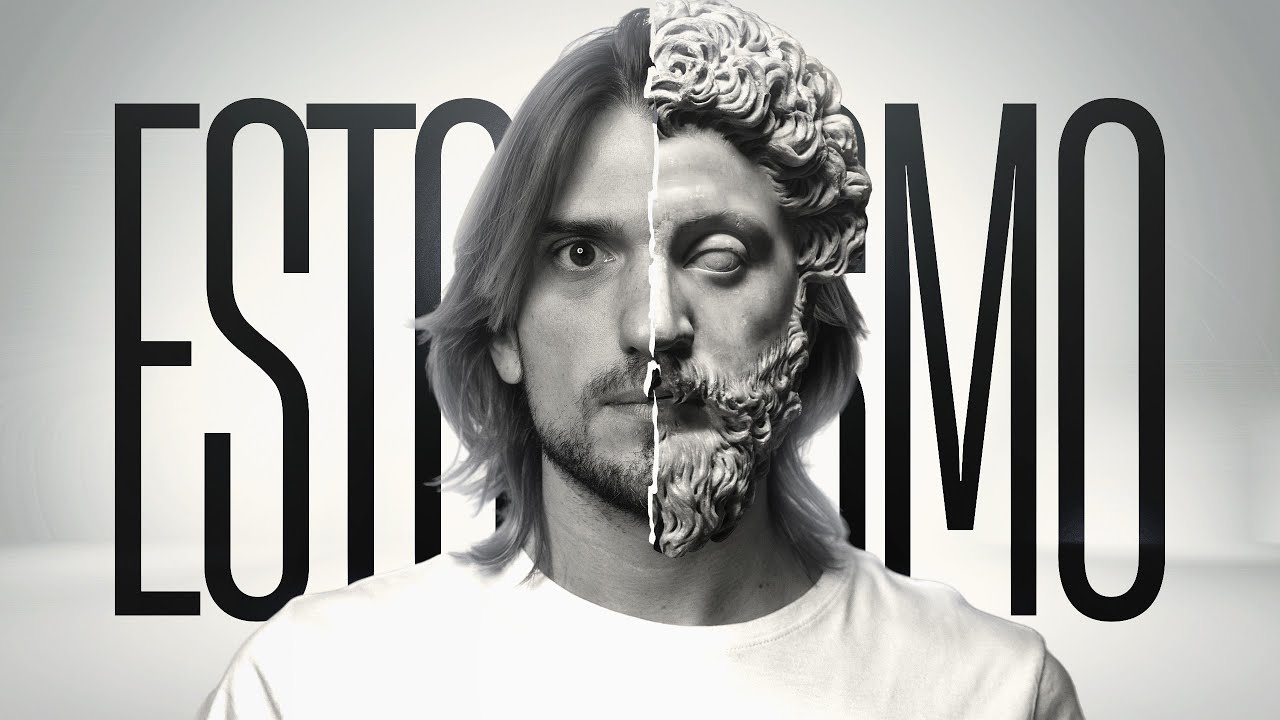
"These are the top eight nighttime habits that every successful Stoic has in common. If you want to be a successful Stoic too, immediately start implementing these eight nighttime habits into your life. But stay until the end of the video because the habit number eight is the most important, and I'm sure it will move you a lot and make you reflect a lot on your life, to the point of even making you cry.
So you need to know this as soon as possible. Let's get started. " This video was inspired by the writings of Marcus Aurelius, who was a Roman emperor from 161 to 180 AD and is considered the last of the five good emperors.
During his time, he wrote a series of autobiographical writings known as 'Meditations' in which he constantly advocated seeking Tranquility in life while his meditations often emphasized the importance of waking up early and seizing the day. He also highlighted the importance of taking time to withdraw inwardly and find calm. Because of his records, we have a fair idea of what his nighttime routine would have been like.
In this video, we'll explore eight habits of a successful Stoic, and better yet, how we can follow or adapt this routine for our modern lives. Let's start. The only thing I ask of you is that you do not skip this video in any way.
If you are here, consider yourself different from the majority. Consider yourself an exception. Now, act like one and don't skip any chapter, as I said before, habit number eight is the best of all and you can't ignore it.
Nighttime Habit Number One: Gratitude Practice: Give thanks for the experiences, people, and circumstances you have encountered during the day. Recognize that everything that happens has a purpose and an opportunity for growth and learning. Gratitude is a powerful tool for cultivating contentment and acceptance.
Practicing gratitude is a powerful approach to cultivating a positive mindset and promoting emotional well-being. It involves consciously recognizing and appreciating the good things in your life, regardless of how big or small they are. This can include people, experiences, circumstances, or even qualities in yourself.
Here are some ways to implement the practice of gratitude into your life, we will divide them into seven parts. Part One: Gratitude Journal: Set aside time each night to write down a few things you are grateful for. It can be as simple as a beautiful sunset, an inspiring conversation with a friend or even something as fundamental as being healthy.
Second part: Grateful Mentalization: Before going to sleep, reflect on the things you are grateful for. This can be done in your mind by simply remembering and being grateful. Part Three: Expressing Gratitude: Don't keep your gratitude just to yourself.
Express it verbally or in writing to the people who deserve it. This can strengthen relationships and bring joy to both you and the person you are thanking. Part Four: Focus on the Present: Instead of worrying about what you don't have or what you could have, focus on what is present in your life now and appreciate it fully.
Fifth part: Turn Challenges into Opportunities: Even in difficult times, look for the lessons and opportunities that can arise from these situations. Gratitude can be found even in adversity. Sixth part: Gratitude Meditation: Dedicate time before bed to consciously focus on gratitude.
This can be done through meditation, where you direct your attention to the things you are grateful for. Seventh part: Thank yourself: Remember to appreciate your own qualities, efforts and achievements. Sometimes we forget to be grateful for ourselves.
Remembering that practicing gratitude does not mean ignoring or minimizing the challenges or difficulties you may be facing. Instead, it's about finding something positive even in the most difficult situations. By incorporating gratitude into your nighttime routine, you may begin to notice a shift in your outlook and emotional well-being.
This helps create a more positive mental environment and can significantly contribute to your overall happiness and satisfaction. The second nocturnal habit of a Stoic is to practice physical exercise Marcus Aurelius tells us: 'It is a shame for a man to grow old without seeing the beauty and strength of which his body is capable'. Even though Marcus Aurelius lived almost two thousand years ago, he understood the importance of physical exercise.
He believed that a healthy mind cannot exist without a healthy body. The ancient Stoics believed that even a simple exercise routine can teach us virtuous life skills such as perseverance, self-development, discipline, overcoming challenges, and building self-confidence. They understood that it was more important to exercise to achieve these high mastery skills than to gain external approval.
Despite what the media might have us believe, the Stoics already knew back then that trying to have a perfect body just to show off rarely leads to true happiness. We often avoid our exercise session with excuses like 'I'm too tired', 'I have a big meeting tomorrow and I don't want to be sore', 'I'm so stressed at work that I can't even think about exercise'. Although many of us avoid exercise for various reasons, it has incredible physical and mental health benefits and we shouldn't completely ignore it as part of our routine.
Any form of exercise, whether playing sports or going to the gym, is beneficial as it releases a flood of feel-good brain chemicals known as endorphins, which reduce stress levels and improve mood. If you exercise in the evening, it can even help you fall asleep faster, leaving you feeling refreshed and ready to take on the day ahead. You can also incorporate the concept of taking a brisk evening walk to clear your mind, and as you walk, observe the air and your surroundings.
Let your mind shift from thoughts of the day to observing the night sky you walk upon. Appreciating the beauty of nature around you will help clear your mind from a busy day and set you up for a good night's rest. The third nocturnal habit of a Stoic is to contemplate the sage that lives within you In the words of Marcus Aurelius, 'the mastery of reading and writing requires a master, even more so life, a sage is someone considered experienced in a certain field and is revered for his wisdom, judgment and expertise'.
For many people, this wise man is a role model. The Stoics took time to reflect on their sages and whether their own actions conformed to those of the sage. Marcus Aurelius considered his sage to be Zeno, the founder of Stoic philosophy, and often asked himself: 'wouldn't the sage do that?
'. Sage contemplation should essentially be a time at night where you reflect on your day or the person you are and ask yourself what your role model would do. Your role model could be someone you know or just a concept of an ideal person.
It is important to have a clear definition of this person so that you can reflect on whether their actions are aligned with your role model. As part of your nighttime routine, take a few minutes to remember your role model and ask yourself: Did you act like your role model would? In what ways can you improve tomorrow so that your life is more aligned with your role model?
What characteristics of your role model have you identified in yourself today? Incorporating a few minutes into your nighttime routine to consider the situations you experienced today and whether you responded as you believe your role model would have done can increase your awareness of your choices for tomorrow and make you a better person, the kind of person you deeply admire. The fourth nocturnal habit of a successful Stoic is to eliminate external stimuli Marcus Aurelius says: 'It is in your power to withdraw into yourself whenever you wish'.
It is known that Marcus Aurelius used his nights to disconnect, although he is especially known for his philosophy that advises us to live each day as if it were the last. aquuuuuuuuuuuuuuuuuuuuuuuuuuuuuuuuuuuuuiiiiiiiiiiiiiiiiiiiiiiiiiiiiii He also believed in taking time to find retreat within his own mind in order to renew himself. He did this as an effort to free himself from stress or negative feelings by disconnecting from external stimuli and seeking value in introspection.
External stimuli are changes outside the body or knowledge that is transmitted to us through the senses. Nowadays, we face constant external stimuli, especially when interacting with people and technology, in order to meet the superfluous demands of our modern society. We overload ourselves and our days become full of tasks, appointments, meetings and deadlines.
We lose our freedom and our peace of mind, and even if we strive to create a work-life balance, we inevitably return home feeling exhausted, overwhelmed, and stressed. Our nighttime routine usually involves catching up on social media, watching television, or trying to respond to those last-minute emails . We need to reduce these stimuli and clean our mind.
Therefore, your nighttime routine should be the time you dedicate to yourself. This probably means eliminating many of the nighttime activities you've become accustomed to and replacing them with new ones that will actually help you disconnect and focus on yourself. This means putting your technology to sleep at least half an hour before you go to bed yourself and seek peace of mind.
This can be as simple as a five-minute guided meditation, like a body scan or breathing exercise. Mindfulness meditations help calm an overactive mind and tune in to your physical body. This type of meditation can be a retreat into ourselves and the impact of incorporating this into your nighttime routine can be incredibly positive.
Meditation is known to reduce anxiety, improve mood, and also significantly improve sleep. Your bedtime routine should be a break from the busy world and a retreat to your peaceful self. Although indulging in series marathons, playing video games, meeting up with friends or scrolling through social media may seem like a personal break.
These activities, in fact, do not help to achieve tranquility. In fact, they are distracting you from meeting her, and even though sleep is important, it is often not enough to restore you after a busy day. A true relaxing nighttime routine needs to contain something that allows your mind to switch off.
The fifth nighttime habit of a successful Stoic is to review how your day went. According to Marcus Aurelius, 'nothing has as much power to expand the mind as the ability to systematically and truly investigate everything that occurs in your observation in life' . Historians believed that the two best times for reflection were morning and evening, prepare for the day ahead by recording your thoughts in a journal in the morning, and review the day that has passed.
Marcus Aurelius wrote his meditations with the intention of reviewing his own daily life and thoughts to achieve personal clarity. He kept a constant eye on his daily actions and choices. The historicals emphasized the importance of being aware of your own actions and emphasized the importance of taking time at the end of each day to review what happened, as a way of becoming more aware.
In general, historians called this kind of attention an attention that aims to bring self-awareness to your actions and check whether they are aligned with your higher self. Some historians compared this type of daily reflection to presenting a case to a court. You remember and judge your day by scrutinizing your daily actions and choices and then revisiting them systematically.
This is not meant to be a judgmental practice, but rather a compassionate review that will guide you to make better decisions in the future. You can incorporate this type of daily review into your nighttime routine by taking time before you get into bed to look back on the day that just passed. Review every moment of the day, from the moment you woke up to the moment you are now.
Meditate on the various choices and actions you have made. What did you do well today? What emotions did you experience?
Which Have parts of your day brought discomfort? How can you learn from what happened today? What didn't you get to do today that you wish you had?
Daily reflections play a fundamental role in historical philosophy. They help us prepare for the next day by writing down what we would like to have done today. They are also essential for evaluating whether our daily actions are aligned with the person we really want to be.
For example, as you review your day, you may remember an event, such as an unpleasant interaction you had because of a misunderstanding. You will be able to identify how this interaction affected you. You'll highlight the time you spent thinking about the encounter and how it affected your mood.
During the morning, you can reflect on how you wish you had handled the situation differently. Or how this interaction ended up being insignificant in the overall context of your day. By becoming aware of this event, the next time you face a similar situation, you will be able to approach it with greater attention.
Taking time in the evening to review your daily progress is an important step toward leading a storied life. The sixth nightly habit of a Stoic is to adopt an elevated perspective. In the words of Marcus Aurelius.
Consider essence in its entirety, of which you hold the smallest part, and time in its entirety, of which a brief momentary period has been allotted to you, and in the works of destiny. How small your participation in them is! Marco Aurélio advises us to contemplate life from the point of view of the Cosmos, or to have a view from above.
A bird's-eye view involves taking a broad perspective on your life and observing yourself and your day as if you were viewing it from a third-person perspective, to remove personal emotions and anxieties. It is known that in his nights, Aurélio pondered his life from a cosmic perspective, to transcend his limited personal perspective. In today's world, there are many distractions.
Whenever we leave home, we are bombarded by advertisements, news, opinions and distractions. When we're not at work or with our family, we're on our cell phones, listening to the radio, watching TV or using the computer. All of this creates mental exhaustion.
It's hard to find space to reflect and breathe. Apps, games, videos and TV shows, and the fact that our attention is often focused on other things, hinder our ability to deal with our problems, anxieties, stresses and commitments. To help with this, the historical exercise of adopting a higher perspective can be used to alleviate the weight of our problems, as it changes our vision to a level above ourselves.
You can start by taking some quiet time in the evening to observe your immediate surroundings, your body, your home, and the people you live with. Start thinking about what they feel, how you relate to them. What problems, hopes and fears might they have?
Then broaden your view to see your own city and how all the people living around you have a unique life that you know nothing about. They have hopes, dreams and fears. Keep broadening your perspective to see your own country.
Then, even more, encompassing the entire perspective of the entire planet, considering all the people on earth, all our lives spread across countries, social classes, races and cultures. Think about the challenges that some of the less privileged people are going through. Continue expanding into the solar system, the universe and the entirety of existence.
When we look at ourselves from above, we perceive ourselves not as individuals disconnected from the things around us, but as part of a greater whole, a participant in everything that surrounds us. Looking at ourselves from the outside helps us see ourselves and our concerns more objectively. When we distance ourselves from the worries, anxieties, and problems we face, we can see them more clearly, with less emotion, and have a better chance of understanding their causes and solutions.
It becomes easier to see things in context. If you're feeling down because someone insulted you, try this exercise. It's much easier to overcome the emotional obstacles we experience when we put things into perspective.
The fights and small disagreements, in comparison, many of our problems can dissolve when we compare them to the problem of others or to the vastness of space. The seventh nighttime habit of a Stoic is to prepare for the mornings. Marco Aurélio says in his actions, do not procrastinate.
Marco Aurélio strongly defended the importance of waking up early every morning. He did this to create a morning routine that made the most of every living moment. Therefore, sleep was meant to be a restorative experience and not a time to indulge in laziness.
A morning routine was essential for Aurélio, but part of that morning routine began even before morning, as he prepared for the next day the night before. The Stoics used to prepare for the day by setting aside time in the morning to rehearse their days. They did this by considering what they wanted to accomplish that day, preparing for different possible outcomes, and reflecting on themselves.
These types of reflections were made by many historians in the morning and also at night. For starters, you can prepare the night before to make waking up easier. This could mean choosing your clothes for the next day, preparing your bag for work, or having a clear morning routine that you follow as if it were a checklist of actions to take, but without having to use your brain to think about what to do.
decide, as it was already decided the night before. Remember this: the more decisions you make throughout the day, the less effective they will be. Save your mind for making small decisions, like what clothes to wear in the morning.
This also means going to bed at a reasonable time so that you get six to eight hours of sleep. Not only is this beneficial for your health, but it will make waking up a more pleasant experience. Preparing for the day ahead during your nighttime routine will not only help you with your morning routine, but it can also reduce anxiety about the tasks that await you when you wake up.
The eighth and final nighttime habit of a Stoic is to dedicate quality time to family. Marcus Aurelius tells us, those who live longer and those who will die soon lose the same thing: the present. It's all they can give up.
Because it's all you have, and what you don't have you can't lose. For Marco Aurélio, at the end of the day, it was time to be with his family. He clearly loved his children and his wife very much.
Even though he was important, famous and extremely busy, he didn't ignore them. At night, he would put his children to bed and kiss them, silently telling himself, "Don't rush it, this might be the last time you do this. It's not guaranteed that you two will make it through the night.
" He used it, he valued this thing in front of him, which really was the most important thing in his life, and then he said good night. He did this repeatedly for as long as he was lucky enough to live. Historical people used the contemplation of death as a practice to remind themselves of the impermanence of life.
A popularly known nurse in Australia who cared for terminally ill patients said that one of the most common regrets a dying person has is the wish they had spent more time with their family. His patients often lamented having lost their children's youth and their partners' companionship to the demands of modern life. Families are spending a little more than half an hour of quality time together during the week, and even when families get together.
Many parents say that time is spent in silence in front of the TV because they are busy reading, playing computer games or simply too tired to talk. Just like the historical ones, if we regularly contemplate our death and remind ourselves that there will be a day when we or our children do not wake up to enjoy the beauty of life, we will begin to make some changes to spend more time with family and often tell our children or our family that we use family time is an essential factor that helps to create strong bonds, love, connections and relationships between family members. Spending quality time with family helps deal with challenges, instill family values and give children confidence.
If you liked this video, be sure to check out our stoicism playlist and for more videos that will help you find success and happiness using ancient philosophical wisdom, don't forget to subscribe. That was my contribution. Thank you very much.















![7 Coisas que você DEVE fazer todas as noites [Rotina de Estoico]](https://img.youtube.com/vi/oQ3vWskfFkk/maxresdefault.jpg)