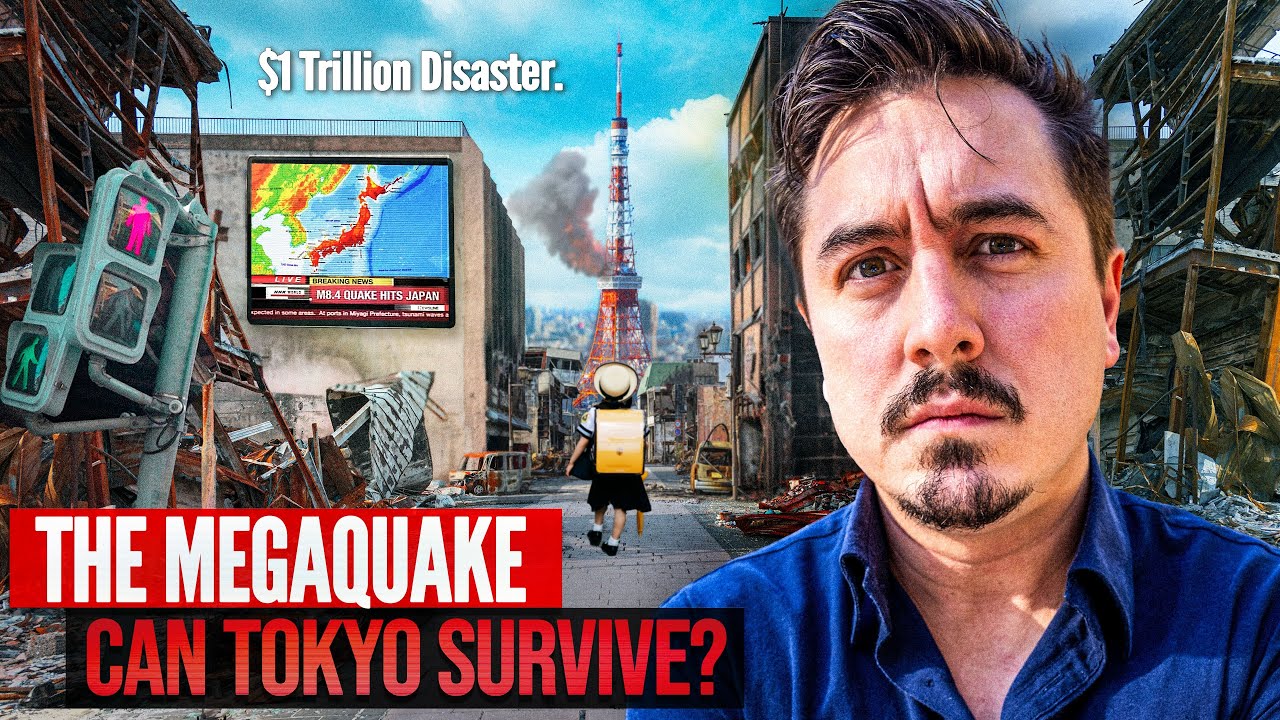
earlier this year a 7.8 magnitude earthquake hit turkey in Syria it was the deadliest day in modern history for both countries and more than 75,000 separate buildings were destroyed if you're wondering if it's somehow airag gun's fault the answer is basically yes but also just this time a little bit no it does admittedly make sense that these countries weren't totally prepared for an earthquake like this the last time this region saw a larger earthquake was more than 80 years ago but that doesn't mean that earthquakes of this size are rare it's just as they happen
in other parts of the world specifically here this region is called the Pacific Ring of Fire and it's the most seismically active place on Earth why it doesn't really matter it has to do with old rocks and stuff but all you need to know is that if you're planning on building the largest city on Earth you should probably do it anywhere other than in this red area here now unfortunately this video was slightly delayed and we didn't get it out in time for the founding of Japanese Society 14,000 years ago so they didn't get the
memo and now you have Tokyo the largest city in the world and home to 14 million people built on an island that gets hit with earthquakes the same size as the one that leveled turkey every few years sometimes multiple times per year and though these earthquakes do invariably lead to some casualties and some destruction Tokyo isn't this but how well the main ingredients in any Municipal mering is buildings and while the buildings in Tokyo look like the sort of buildings that might turn to soup with enough vibration there's a lot going on behind the scenes
to keep them in one piece every building in Tokyo Falls under one of Japan's three different tiers of earthquake proofing except for a small handful of buildings built before 1981 but these are pretty much all lowcost residential buildings so fortunately the only ones who are going to die are poor people anyway we don't need to worry about those buildings because they're all going to be gone soon enough whether Japan wants them to or not so instead let's talk about the buildings that do fall under Japan's three tiers of earthquake proofing the first and most basic
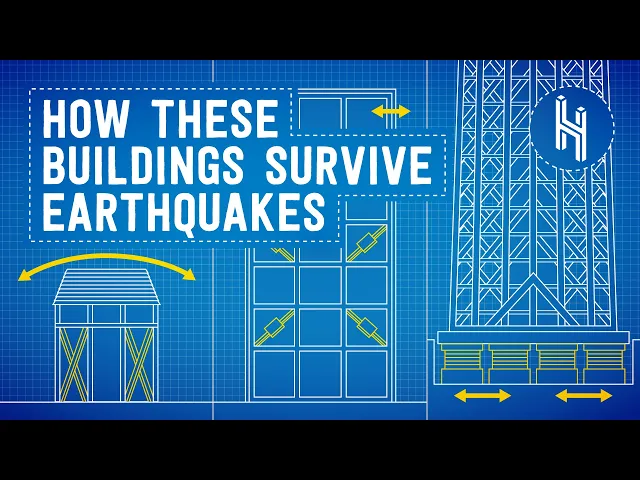
set of Standards is called the taen and it applies to every building constructed after 1981 from simple detached houses to everything else this mostly just dictates a building's General sturdiness having a certain thickness of walls and a certain strength of beams and columns pretty much every low-rise building in Japan is built in a frame of steel or wood you won't see the sort of stone houses you might find in Europe or America because unlike a flexible wood frame a stone frame is either upright or it's not that being said this tier is only the Baseline
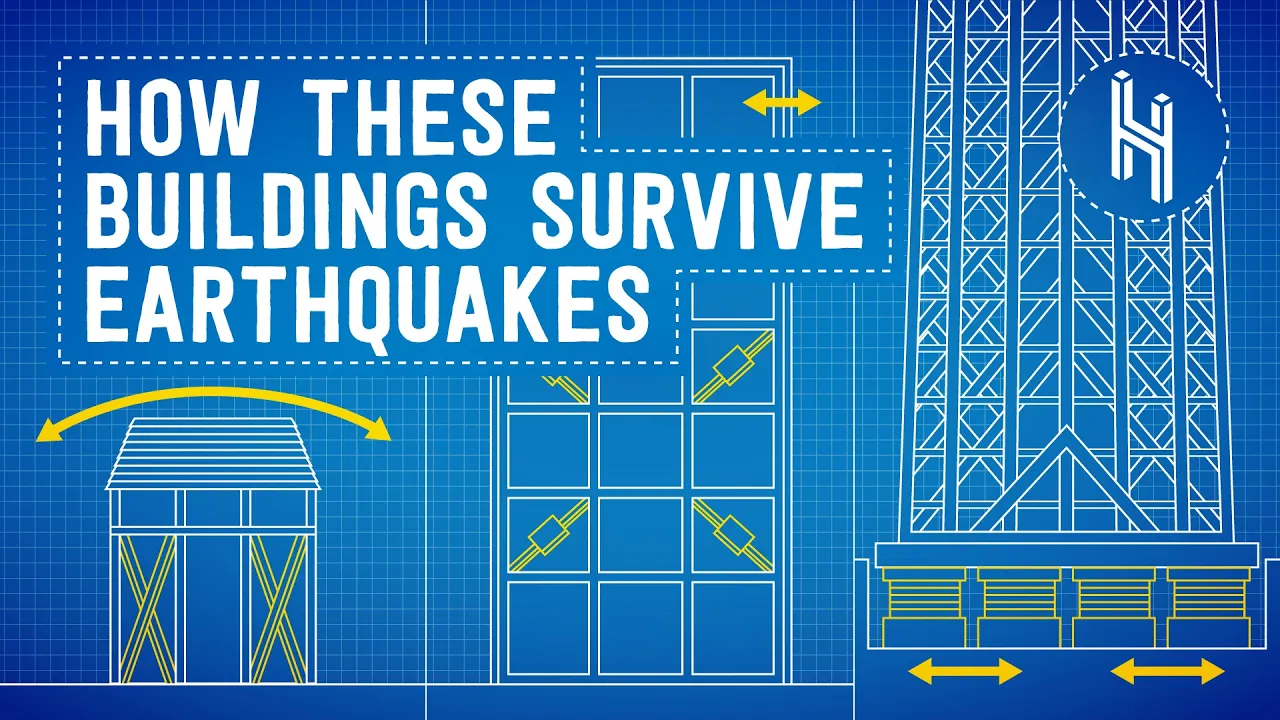
these buildings will still Shake during an earthquake and your Funko pops are still at risk of falling off the shelf taan buildings are mostly built to resist the smaller four to five magnitude earthquakes that Japan experiences every day and to avoid total collapse in the event of something larger but for buildings taller than a simple detached house or small business this might not cut it which is what the next tier of earthquake proofing is for this tier called station are features you'll find in many of Tokyo's high-rise Office Buildings and they're designed to counteract the
sort of swing that might shake a house but top a skyscraper this is typically done with a device called a seismic damper which can look like a whole bunch of different things if your building's engineer is boring they'll install a bunch of giant industrial Springs in your building's frame that essentially pulls it back uppr right when an earthquake shakes It One Direction or another but if your building's engineer is cool they'll install a giant swinging egg that weighs several hundred tons and swings through your building to remind everyone that deadly city- ending earthquakes are inevitable
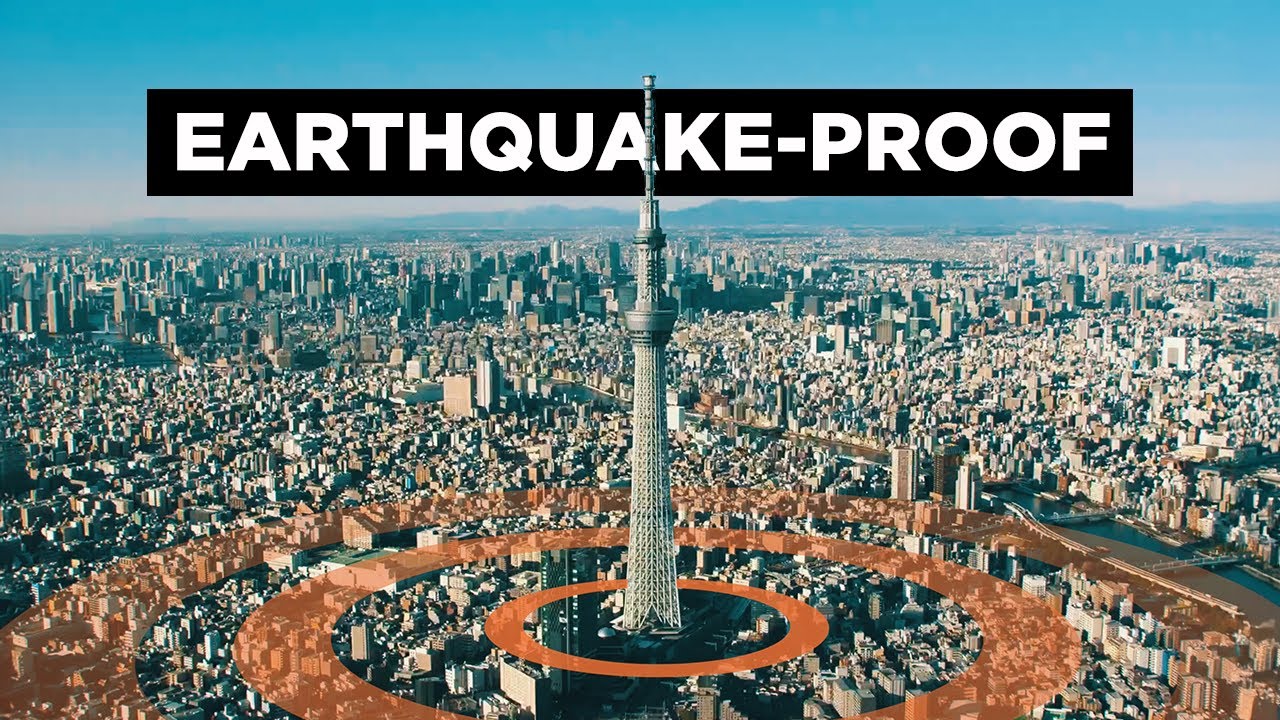
this basically does the same thing as the Springs by moving opposite to the building's frame and pulling its momentum backwards while also keeping everyone in the building humble Japanese buildings have actually had some version of this for well over a thousand years if you look at for example old Japanese pagodas you'll see that they're built differently than Korean or Chinese pagodas they have a central wooden column called ashin bashira that essentially acts as a seismic damper some buildings actually still use this exact method like the Tokyo Sky Tree which is supported by a massive concrete
shim bashira running through the full height of the tower but the Sky Tree which is one of the tallest buildings in the world needs more than just that to survive an earthquake that's why it's one of the 2600 or so buildings in Tokyo designed for the third tier of earthquake resistance called mention these buildings which are usually over 20 stories are constructed in such a way that they are almost entirely isolated from the ground itself it sounds weird but pretty much all of Tokyo skyscrapers aren't actually on the ground instead they're built on top of
extremely thick rubber legs that allow the building to sway independently from the earth and when combined with seismic dampers and decent enough construction even the tallest of Sky trees can live to do whatever the Sky Tree does another day now well-designed buildings are great and all but they're not worth much without their Plucky sidekick responsible Municipal infrastructure Marvel might have turned me down but I am right the city needs to be able to detect measure and respond to earthquakes in a matter of seconds because here's a fun fact it's not actually possible to predict earthquakes
before they happen the forces that cause earthquakes build up really slowly over hundreds or thousands of years so even a fairly accurate earthquake forecast is give or take a few centuries and that doesn't really answer my question of do I have to go to work today or will I be dead by noon anyway all that is to say once an earthquake has started every second matters and Tokyo is designed to use those seconds well the entire country of Japan and much of its surrounding ocean floor is covered in a network of 4,235 size MERS all
of which are recording the Earth vibrations around the clock and they're there to buy Tokyo and other Japanese cities about half a minute of time before the actual earthquake hits to explain how this works I need to say science words for like 15 seconds so just plug your ears if that goes against your morals basically an earthquake happens in two waves there's the swave which is the thing that actually causes major tremors and there's also a weaker but faster traveling p-wave which is like a polite little Messenger to tell you that the s-wave is on
its way to come mess your whole day up so when one of the nodes in this massive countrysize grid of siiz nomers detects a p-wave Japan can immediately calculate where the earthquake is coming from how strong it is and when it will hit which parts of the country with these 30 or so seconds the government can activate pretty much every phone and television in the country to tell people to take cover and even more pressingly they have time to stop the trains that would otherwise be derailed in the earthquake and all that in addition to
being about 5,000 mi from Aragon's sphere of influence is why Tokyo is still here today now I really only was able to scrape the surface of the ridiculous physics that go into designing a building that won't fall over but if you're interested in diving deeper I'd recommend brilliant's course on the physics of the everyday I'm not the most stem oriented person but I found that this course really elegantly breaks down the science behind a lot of normal things you might idly wonder about like how do planes fly or what makes refrigerators cold and as a
hinted at it also has a great little section about the physics of skyscrapers each lesson is quick intuitive and interactive you're not going to be slogging through any big blocks of text or sitting at your computer for hours Brilliance courses are designed for you to learn for just a few minutes each day at home or on the go and you can use it to teach yourself pretty much anything under the stem umbrella they've got courses on AI language models multivariable calculus quantitative Finance you name it it's the perfect way to get a little bit smarter
every day and if that sounds like a goal of yours I can't recommend brilliant enough to try everything brilliant has to offer free for a full 30 days visit brilliant.org slhi or click on the link in the description the first 2 of you will get 20% off brilliant's annual premium subscription and you'll be supporting this channel too