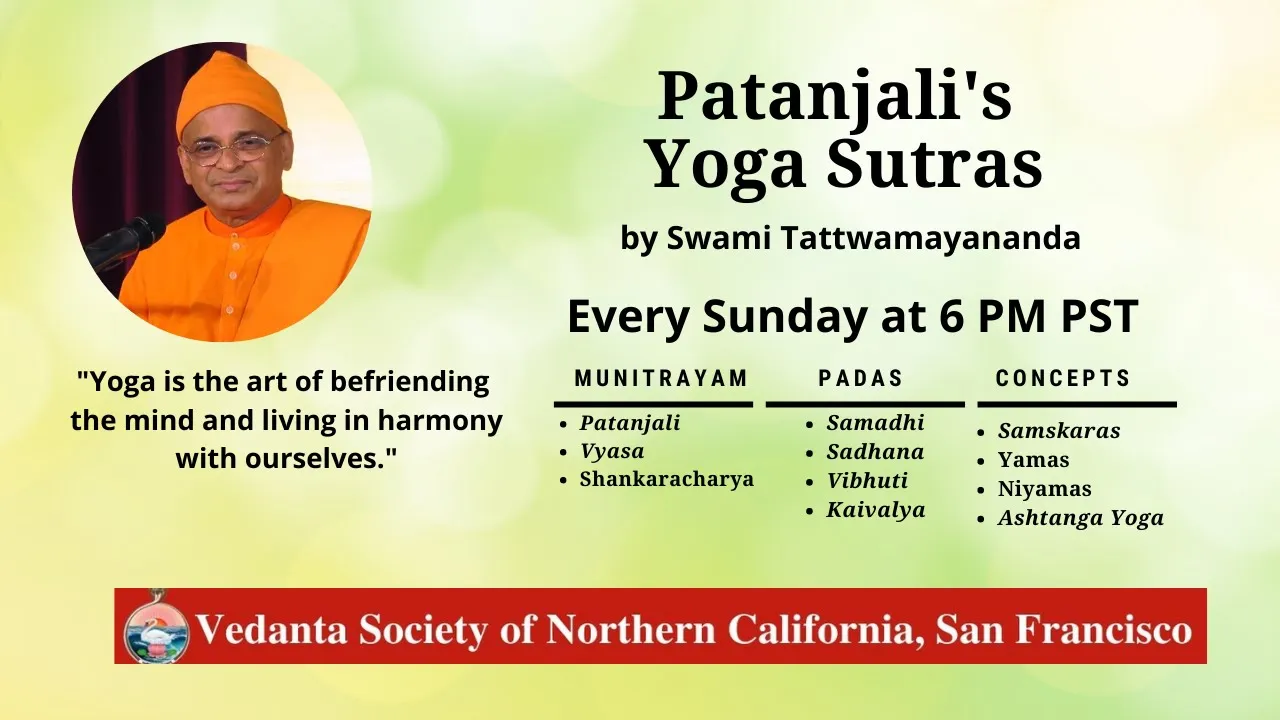
[Music] oh [Music] [Music] uh [Music] uh [Music] [Music] [Music] [Applause] [Music] so so you can begin uh hello everyone welcome to the discussion on yoga sutras this meeting will be recorded and uh it will be posted on youtube if you haven't missed any of the previous discussions on introductions to the appropriations all the way does so please feel free to go to youtube you can find it over there also please view yourself and uh is talking and you can unmute yourself whenever you have questions please feel free to ask questions this meeting is being recorded
so at the beginning i will chant one verse of invocation which is a tribute to the three great sages associated with yoga tradition this is the science good verse so try to explain in english so my my ambitions my respects to these three great sages munitram is the word used in sanskrit which means these three great saiyans or sages were associated with yoga tradition there are many many scholars and saints and sages who are associated with yoga tradition who come as a succession of teachers and students of yoga tradition but there are these three sages
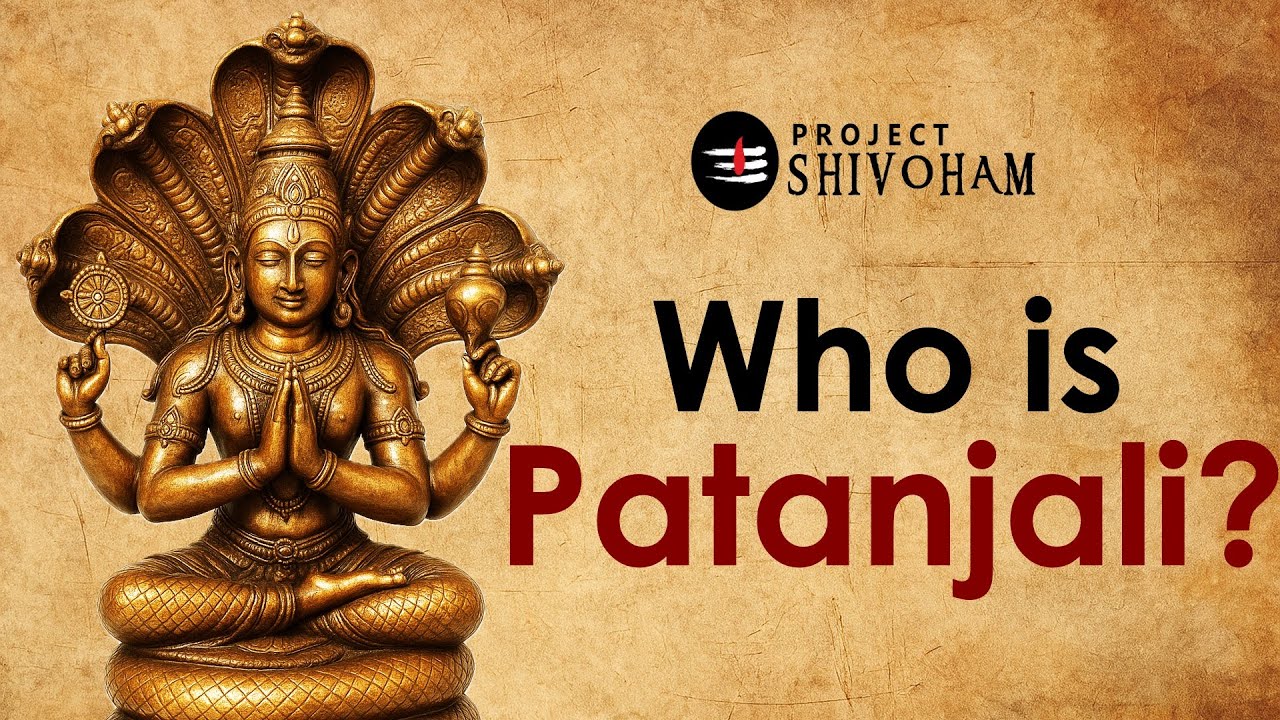
that is patanjali vyasa and shankaracharya so patanjali is the there are altogether 195 yoga sutras sutras the word sutra in sanskrit means a thread it also technically in the vedantic hermeneutics in general it means a pity statement it need not necessarily be just a sentence it could be a sentence sometimes it could be a phrase it could be a word it could be even some letters so sutra is a very interesting expression i think no other religious or philosophical tradition has got this unique mechanism of expressing a lot of great ideas in just a few
words or one word or a few letters to give you an example uh the to the enterprise is a sutra now you may go crazy if you don't understand the meaning behind patanjali himself has written mahabharatiya a huge several volumes comes in several volumes symmetrical verses on this particular sutra what it implies in sense grammar of course i'm not going into that subject it's an entirely different area so panini is a author of this vyagara na sutras and patanjali also wrote a huge monumental work a number of volumes together on sensor grammar so we'll deal
with that later so the first name yoga tradition is patanjali so in other words those of you who stand on your head or do different physical postures you don't know perhaps that you're actually practicing a a kind of physical exercise which patanjali mentioned only in one single statement mother julie made 109 statements it's called sutra stira sukham asanam that is the only sutra which has relevance to hatha yoga with yoga whatever you learn in yoga a series of physical exercises which helps you to sit for a long time with a with a perfectly relaxed mood
continuously for a long time keeping your spinal cord your neck and your head on a straight line so so that you can meditate properly so that's about patanjali sutras so you those of you are interested you can ask more questions we'll be happy to answer during the interaction so patanjali is the first name the author of the 195 sutras divided into four chapters in the printed book you will find samadhi bada sadhana pada vibhuti pada means concentration sadhana means practices means the powers the results the consequences the physical and psychological and spiritual benefits that you
derive by practicing this yoga yoga here means a series of spiritual and psychological practices that's give by way of definition to yoga such as to speak the second chapter is called sadhana is practices first concentration chapter one concentration second chapter practices the third chapter is the buddhi means consequence of the results and the fourth chapter is emancipation liberation and so on the chapter on concentration the chapter on practices the the powers for the benefit by practicing yoga and last one the chapter on spiritual liberation now if you look at these the the names of these
chapters you'll be puzzled the first one deals with samaji concentration the second one deals with practices the third one the results of consequences and the fourth one liberation the order in actual spiritual practice will be slightly different because in ancient indian gurukulas students used to memorize this 195 sutras according to the traditional schools they used to slightly change the order of the chapters that means first you practice then the results and then the concentration and the liberation always the last one is liberation so in actual spiritual practice sadhanapadha comes first the chapter on practices the
results the buddhipad ii the concentration which is the result of these practices samadhi bada and liberation during the guru system we were first sadhana practices [Applause] the order i'm going to practice here but there is one difference sutras contain a very elaborate uh introduction to the spiritual psychology of yoga which actually unravels the deep entirely different concept of human mind why we are able to why we are not able to do what and why we end up doing what we don't want to do in life see if you always could do what you wanted to
do there'll be no problem in the world if you can avoid doing what you don't want to do there'll be no problem the problem always arises because you end up doing what you don't want to do and you end up not doing what you want to do so actually this probably result in only one known system of huma branch of knowledge on learning that is only in patanjali system he gives a very wonderful exposition he human mind which though i am not i did have the opportunity to study psychology as part of my academic curriculum
and that brief introduction to western psychology so my understanding is western psychology stops a long distance away from where patanjali begins patanjali only begins with modern psychology stops modern psychology can give a medicine which can only postpone the problem by be numbing the mental system so psychology psychiatry can only correspond to problem the problem will return with greater force but patanjali really explains how we can start a new life right now today if you really want and you are ready to take the burden so first one is uh this sadhanapadha then bhudipada then samadhipada and
then kaivalyapatha now the second name in among the teachers of parliamentary system is vyasa actually today we are able to talk about patanjali yoga system today we are able to discuss potentially especially yoga system only because a great man called vyasa wrote a very elaborate commentary on pathanjali's yoga sutras because yoga sutras themselves are not self-explanatory they give only hints so maybe several centuries later after bibi patanjali's yoga sutras are placed sometime uh in the middle of the second millennium according to some historians sometimes they place around ninth century bc they bring it forward to
modern times 9th century bc but anyway vyasa appeared several centuries later he must have been one of the stu one of the teachers in the long line age of teachers of yoga tradition so he wrote a bhashya so sutra means you know uh this is the traditional interpretation of what sutra means it should contain a lot of meaning a lot of bit meaning it should be very brief and it so once you understand the meaning it should certainly leave no doubt and it should be capable of expanded interpretation leaving no doubt in your mind once
you understand it means an ex an exposition of a system of philosophy the essence of sutra literature that is martial means so now after vyasa the well-known the famous advaitha philosopher shankaracharya in eighth century he wrote a subcommentary on vyasa's commentary for patanjali sutras it is called vivarana so it's called vyasa bhashya vivarana vivarna is the name of with the book he wrote now why i'm making these statements you see a when you study yoga sutra if you really want to get the feeling when you get to know of these great spiritual names great preceptors
and teachers behind the yoga tradition and when then when you read yoga sutras or when you go visit the next the yoga studio next door to you you feel you are actually joining distinguished company really that is one advent because we are actually becoming part of an ancient spiritual tradition we just produce such great saints going back to several millionaires before christ that's the uniqueness of it now this much about uh introductions this is the the invocation now i must say few more things about patanjali the order patanjali is a well-known figure not only in
yoga tradition but also as i mentioned earlier in this traditional sense of grammar is the author of the most authentic exposition of sense grammar runs into several volumes in metrical form and it is it is it is an exposition of the original again sutra literature of panini and then patanjali made another great contribution that is he is also a great name in indian school of medicine he wrote a well-known book on character some channel these two names are well known in ayurveda charaga and susuta they also wrote in the sutra literature so patanjali wrote a
well-known famous book on ayurveda it is an exposition of sutras now i shall just begin the first sutra which is normally discussed in a traditional uh school of yoga that is the first sutra samadhi bada because samadhi bada comes in all published textbooks and manuscripts and the tradition of beginning with sadhana that that's not the way in which it may be taught in some of the universities where you may have studied or some of the yoga studios where you have studied but that is only from the perspective of spiritual practices but uh the first 14
sutras of samadhipada are very important because they give you some kind of a formal introduction to patanjala system the first sutra is you know ata yoga anusha asana so ata yoga anushasa only three words yoganushasanam is a combination of two words yoga and means now onwards henceforth right now let us now begin why now why hence forward that's because you turn to yoga only when you get exhausted knocking at so many other wrong doors you knock at the wrong door you decent open finally you come to yoga because means a lot of things in yoga
in the sutra tradition first after getting the necessary qualification you you enter a new class that's what that's one meaning another meaning is in the context of yoga you cannot really study yoga sutra or you cannot really study any spiritual literature unless you have come to a conclusion that this is something worth experimenting with so people looking for happiness and contentment looking for answers to the questions frequently their mind pauses the mind will be asking finally they turn to yoga you're looking for answers so some of the questions some of the challenges dilemmas they have
to face in life so that's the real meaning of atha i mean we turn to spiritual life only at some point when we come to realize that spiritual life for meditative life or some kind of con in in introspection is the only remedy to some of the problems we are facing in life that's one meaning of one great interpretation that comes from vyasa is that that is a very very important thing vyasa by way of explaining this sutra he gives a graphic picture of human mind when we turn to yoga so if you look at
the world of human mind you can find two categories one uh the one the person who experiences and experience we called bhoga experiences and the person who experiences things experiences could be manifold it could be in the form of extreme liking for certain things extreme dislike for certain things and the kind of indifference so avid dears either you find one sutra comes in this which you'll discuss later so extreme dislike for certain things we know there is no reason to dislike it but we cannot get out of it and extreme infatuation to certain things we
know it is totally irrational it becomes a burden but we cannot get out of it now modern psychology or psychiatry may call it obsession obsessive psychosis psychotic problems could be or it could be some kind of delusions whatever it is human mind is always uh even emotions are always colored by either extinct liking certain things extreme dislike for certain things now but vyasa says a normal human mind is not able to remain steady on a great idea all the time so he uses the word vikshipta bikshiptam like a pendulum of a clock a pendulum moves
from one end to the other end it doesn't remain steady and stable the middle of the clock so mind is always a mind stream consciousness a stream of consciousness william james himself modern psychologist defined settings an endless uh stream flow of thought currents if you analyze these thought currents you find you can divide them broadly into two categories raga and duasa in sanskrit extreme infatuation to certain things and extreme hatred of certainties liking and dislike so that's why sometimes when we go to a church or a temple or a holy place any place for the
matter if you go to library and read to read a great book or if you have got a book right on your table and you may have some other undesirable publications also on your table you want to read that wonderful book but you have a strong desire to read it but you are not able to read it so you find a kind of internal conflict between what we want to do and what our mind permits us to do spiritual practice yoga practice enables us to do what we really want to do or what we ought
to do what would be the best thing for us to do for our own benefit so this state of mind is called bikshiptamana according to vyasa please remember this is not from patanjali these ideas were supplied by vyasa by we are interpreting patanjali's yoga sutras so this is called vikkshita mana now there are two mental states behind and two mental states before so let us say i shall try to explain before you reach this state of wavering mind there are some there are two other states of human mind just slightly abnormal we call it you
know kryptom these are two terms used by vyasa means restless but inactive sometimes active sometimes inactive murder means total full of confusion but totally what you call thomasic full of inertia not able to do anything these are two states which vyasa refers to which we are not going to discuss because they are abnormal states of human mind but the normal states of human mind you know majority of people not only spiritual seekers but the majority of people they are excited when something goes on well so when you go to when you attend a prayer or
when you read a great book when you are talking with somebody whom you respect whose association you value very much you are very happy or when you are participating in some kind of prayer meeting any ceremony religious ceremony spiritual ceremony anything you are very happy and but then after some and then after some time you go back to your room and you feel you become a bit unhappy so when you when you go back to your home you become unhappy when you are in the church you are very happy so mind again is called bikshita
so that's the normal state of human mind a person who is turning to yoga normally belongs to this category ata yoga nishasana so you are you have you get a glimpse of something that you should do you can find this many people certain people come to vedanta society and i'm sure this happens in all other respectable religious spiritual traditions as well when people visit either churches synagogues buddhist temples available the different the followers of those respective traditions they feed great joy and after some time that joy is no more there when they come back again
tomorrow they feel a great job so you can find mind moving from one end to the uh clock to the other end like a pendulum that's the big ship so this is the normal state of human mind of course there are two other states which we which we'll discuss in the coming chapters that is called a gangram and state of concentration which is the result of a lot of spiritual practices according to yoga tradition and industry which is the ultimate stage of spiritual practices which we are going to discuss later so the first sutra is
yoga anusha so so according to vyasa you need to be fit for understanding yoga see people uh who have reached some degree of cultural evolution spiritual evaluation those are important a lot of noble values only such people will find interesting when you when you attend yoga sutra class all right there are many wonderful entertainments that actually keep your mind busy but discussing these things and enjoying these ideas are not easy that's why he says fitness means ability to enjoy spiritual practices so of course another commenter says etc i'm not going to those sanskrit definitions right
now now the next sutra is so this again this is a definition of what yoga is the purpose of yoga is that yoga is that state of mind in which all the vertices of mind are completely restrained now again birthday we should now we shall try to explain or yoga is the process of this buddhism what is bhurti once you understand bhurti the whole purpose of yoga becomes so obvious in simple plain english let us say emotions and feelings both conflicting emotions and feelings and also pleasant emotions and feelings attitudes and aptitudes or reactions mental
reactions to experiences from outside and also from our own mind all can be clubbed together under this category is translated sometimes as waves in english maybe swami vega and the translates as waves there's a great meaning in that you know you throw a stone into a pond and the stone hits the surface of the pond it makes a splash and it will remain there for some time the stone doesn't hit the water without an impact the impact will spread beyond the immediate point on which the stone touches the water like that whatever we experience whatever
we do whatever we speak or think by way of reacting to situations and circumstances or will have an effect and this effect is not only the effect that is immediately experienced there is also an effect that is invisible unseen and not experienced at the point of its happening suppose you give let's say you you help a person the immediate visible effect is that person gets your help pay hundred dollars to help papers a thousand dollars to help a person that immediate effect that is there for everyone to see is that he receive it he'll receive
it but you go back to your home after doing a noble deed an act of charity maybe helping blind man to cross the street or writing a check to help people suffering from natural earthquakes somewhere in some other continents and that night you oh i have done a wonderful thing you may not nobody will know that you helped this person you're drawn to check to hit somebody or you helped a person blind man to cross the street but you will know in your mind it will have an effect if it could be that you may
go to sleep more peacefully that's because you feel the soothing effect on your own mind a healing effect on your your own mind now that is there is a positive with an example of positivity now this is the unseen invisible but very intense and very strongly felt experience is an example of you the opposite example also is equally important you a person does harm to somebody of why i'm not talking about hardened criminals i'm talking about normal human beings you know of course viktor mana is that particular state it deals with normal human beings author
deals with normal human beings people who happen to do something wrong which they may not have wanted to do but they end up doing they will i mean apart from the harmful result that's there for everyone to see the visible result there is an invisible result the person who does that harmful thing he he like pricking of conscience whatever it is it is an example of uruthi in fact every action not only physical action every verbal action a word you speak or a mental action a thought you think radiated appliances in the mind all can
create with these and this birth is actually haunt us many people suffer because of brutish and of course vyasa the great commendator he has created a whole world of psychology out of this a psychology psychiatrist will tell you he will hypnotize you he will bring you back to your early growing years and then may try to under some childhood experiences and they give you medicine but that medicine doesn't explain things of course the medicine only help you to postpone your problem and the post when the problem will tell you i'll come back again you know
i'll be back that's what the problem is going to tell you when you take medicine but here vyasa explains this virtues create samskaras and what is samskara samskara is a tendency that is prone to action everything a sector with these which are the result of repeated actions can become solidified can become a concrete samskara as samskara frequently it translated into impressions tendencies attitudes etc but it is something that we are born with you cannot get up out of your own samskaras samskaras a part of our real nature and many of these samskaras may not be
conducive to spiritual life you know many of these samskaras created and may create irritations feelings agony mental agony and many of the samskaras are responsible for certain problems of obsession and certain problems of delusion delusions of reference delusions of persecution and many you know mostly you know in the manic depressive psychosis many of the body used to call in old times you know schizophrenic problems obsessions you can find some scars which are not there for us to see but deep down at the main mental level these samskaras are there and vyasa analyzes the samskaras and
he also analysis is possible but patanjali system recommends certain certain remedies to overturn to completely change our mental world to empty the mind of negative samskaras negative tendencies and to fill it with positivism scholars now that is called so restraining with this mean god restraining viktor's means it's not that you forcibly controlled birthies this birthes or the purtis can be restrained by manipulating the mental world that is a method that is the that is the remedy given the yoga sutra itself suppose you have got a nagging memory of unpleasant experiences from previous life that seems
like something that you want to shake off something you want to get rid of but cannot now that memory may be unpleasant no you cannot just wish away that memory it won't go away but you can counteract this that the force of that memory but creating a counter force but i mean suppose let us say somebody who is suffering from greed to give an example greed in an insatiable thirst for money and wealth and so on if that person can think of the terrible problems created by greed the terrible tragedies faced by people because of
greed if they can fill their mind with ideas and stories of persons and even episodes which teach us the evil of greed then you are actually creating a counter force that will reduce the intensity of greed so then what happens in everything a mental tendency an impression which makes you greedy more and more is restrained by a counter force so we have to remember the approach in pathanjali system is extremely psychological and extremely spiritual it is very rational it doesn't tell you anything about occult power that's even the even the buddhism it deals with certain
powers generated by yoga practices if you read it you will understand it is not something occurred it is very rationally explained and exposed just a few if a martial artist practices for years and makes his hands strong his physical hands may be different from the hands of a normal person so also somebody who practices yoga his mind becomes different his mind develops certain faculties and skills and it can be explained as scientifically as rationally as the powers of an athlete who can run faster than ordinary human beings you can run who can jump faster than
ordinary human beings so there is a very rational scientific and totally non-occult explanation to the consequences of yoga into buddhi bada that's what we are going to discuss in the coming sessions so what happens yoga yoga is nothing but overhauling purifying restraining and eventually transcending and what is you have to please remember something very interesting yoga sutra literature is so vast much more profound than anything that you can read by way of modern simple english translations yoga sutra literature the traditional yoga sutra literature is very vast one is called one of the written century 80
just maybe 80 ancient scriptures and there's a very important reason when it comes to science when it comes to science and technology the latest book is more authentic when it comes to yoga and philosophy the earlier the better that's a very important reason we should what remember this criterion when it comes to the interpretative books on yoga the earliest book will be the best the earlier the better because these great teachers could come in the wrong success in the line of succession of yoga teachers they expounded this yoga in such a scientific rational language and
their understanding of the human mind was so profound of course i agree with you if you want to learn technology information technology or artificial intelligence or physics or chemistry the latest books may be the most authentic when it comes to yoga the earlier classical works of the great sages who practice yoga their books are the earlier the better much more authentic so that's why he says it's not just mind that is meant open translation in modern translation would say mind no mind is only one of the four compartments of a mental mechanism is called internal
organs of anta karana in science fiction and this antakarana this mental mechanism has got four compartments of which mind is just one of the four mind functions as as a speculative faculty of these system buddhi is the decide directive faculty when you decide something that is intellectual buddhi mind always you know will display that way this is right or that is right there is always sankalpan bigalpa mind thinks this way and immediately eating differently buddhi means intellect he decide this is the right thing to do and chittam means the repository of main repository of memories
and impressions storehouse the platform the storehouse in which all these memories are stored akham is the fourth one it means the identification i am to give an example suppose you are seeing in front of you in semi darkness a picture or image and you mistook that picture you mistook that image to be a human being and when you come when you come close to it you understand it is just a statue so before you decided before you really found out it is a statue your mind was wavering whether it was a human being or something
else when you come very close to it you understand it is a statue when you remember i have seen this statue last week or yesterday it is a memory that is functioning and when you identify yourself as the one who saw the same statue yesterday you are the ego ego system is functioning so according to the great commendator tattoo of the the entire mental world mental mechanism that means yoga is nothing but restraining overhauling purifying and transcending the birthdays emotions and feelings which are accumulated in our mental world as a whole that is the meaning
of cheetah now we will come to the third sutra that is the third sutra and when you reach this level of transcending kritis with what happens at that time you identify yourself as a seer you can see things happening in your own mind without identifying you may may be getting angry but you can notify your anger see the person is as well i'm becoming somewhat angry you can't be aware of your own anchor when you simultaneously remember that there is no with your ankle when you identify yourself with your anger then you don't see anything
wrong in being angry when you are able to watch your own you are able to objectify your frustration or anger or emotions become the object and you become the subject you've become the seer and drastic means at that time when you are able to achieve the goal of yoga that is transcending virtues when the mind is free from all conflicting thought currents when the mind is fully established in its own nature touch ourselves you know when we are able to watch something we are not identifying with what we are seeing see you can enjoy a
drama not when you are playing when you are an actor in the drama you can enjoy your drama only when you are sitting in the galaxy on this you are sitting on a chair you're not participating when you are not participating you are not sharing in the emotions and feelings you are not having yourself any emotion you are watching your own emotion if you can watch your own emotion you'll be free from your emotion if you are watching the drama on the stage you are not on the stage this you are detaching yourself from what
is going on stage so that happens then what happens at that time when we are able to free ourselves from these birthdays what happens we are able to remain completely free from all these purdees so remember there are two and words brusia means the object but we see the drama going on the stage and drastica means the observer the witness the one who sees the seer all the problems according to yoga sutra occur because we identify ourselves with whatever is going on outside and whatever is going on inside we identify also with anger so we
identify also with frustration but suppose we witness for frustration then you are actually de-identifying yourself with frustration so you are actually drawing a line of demarcation between drastica and dressium the seer and the seeing the subject and the object and that's the purpose the goal of yoga so we'll conclude today the first day and you are most welcome to good questions most welcome any question from the subject hurry on swamiji [Music] is this a common thread across different [Music] is used in different implications the different meanings one meaning is it is called mangala it means
considered to be an auspicious beginning of anything so brahma sutra begins foreign so you find now we we are going to discuss we are going to be so could mean israel kind of means an auspicious way of beginning anything another meaning is after having completed after having reached fitness if you are going to begin you are going to sit the fifth fifth class fifth grade then you should have passed the fourth grade then you are you can go to the fifth grade child studying in school so fitness is called adhikari or ajikara ajigara means fitness
by way of previous qualification you have you are qualified enough to begin this new session that is also one of the adiga means the meaning of weakness other meanings mangalart means something auspicious of course here in the yoga context the commendators have given very very scientific interpretations yoga sutra is a little more rigid because it is a closed lineage unlike brahmasutras you know vedanda and other other uh sutras and other mean they got different interpretations from different angles but yoga sutra is like a straight road so the interpretation is simple after you have become qualified
to enter this new path of inquiry that's the meaning of ata here um what is the qualification that we have learned for us to learn this from you actually you are sitting right there listening to this class what does it mean it means you have a great interest in these spiritual ideas related to yoga that's why you're sitting there so because you have become spiritually mentally qualified if you that's why you're studied then you when you reach a point where we are looking for something higher something that we that we should aspire for that is
the real in sense it means fitness so you will understand this according to us according to our instagram means you have finished all the imam sauce all the karmas all now you can begin inquiring to brahmana you got it but according to vegan things what it means you have a complete you have already acquired this instead of renunciation spiritual qualifications of mental restraint renunciation a strong desire for liberation when you are reached or when you attain all these qualifications you are ready for brahma deepness that is the meaning of according to advance so here it
means yeah yeah okay yeah um the next question was uh so the third sutra you said that the once we once a level of transcending the british is attained then you begin to non-identify and you see uh you identify yourself as a senior you you see everything objectively now um here when you were talking about the emotions you were talking about the negative emotions like say anger for instance okay [Music] you know right now we have started the class today so as the classes progress you find many of the questions that we may be asking
today get automatically answered okay see that's important because when we begin this new session is it it's possible at the beginning we may have all these doubts slowly you find as we progress many of these become automatically answered in one context father jelly says it's a very striking language he says all these spiritual disciplines including yoga are just like removing obstacles that gives the example or suppose you have a you you want to irrigate the field and there is a river or a pond nearby and you want to cut a canal from the nearby river
and connect that canal with the field which you want to irrigate okay now what do you do you cut a canal so what you are actually doing is you remove all the soil and that part of the soil is removed it becomes a canal and water flows so if you are a sculpture if you want to make an image of buddha you have got a con you have got a granite stone block in front of you what do you do you remove your chisel out or unnecessary parts of the granite and what you get as
a result you get this buddha's image so like that all spiritual practices are nothing but removing the obstacles they stand in the way of our our discovering our self discovering our own true nature then you get fully established in the true position of the seer of the weakness of one's own self what is our true self that is that is the buddha so what do you do what you did you removed all unnecessary parts of the granite stone and the one result is you have got a buddha image in front of you that's right okay
one question thanks for opening the series it's wonderful actually um my question is about i was just uh trying to study this with us for a long time actually yeah and coming from 17 content excuse me can you if you don't mind can you make yourself visible yes yes one second i'm trying to do it one second yeah okay yeah now i think i'm miserable right yeah yeah okay there are 17 commentaries or something [Music] different distinct impact mutually distinct conflicting schools of vedanta emerged because they all wrote varsity's on brahmasutras shangra is the only
one who wrote varsity's on brahma sutras upanishads and all the banishing the sovereignty and bhagavad-gita now in the yoga tradition you don't have this kind of different streams of thought currents which are different from each other so the most authentic commentary and the oldest one is vyasas padanjillah sutra passion the next one that is a subcommentary explaining um ya subhashim but shankaracharya gives his own views certain unique flashes of insight you find in shangri-charis commentary in the 9th century 80 then we have got bhoja rajya called raja martha is a very famous man he was
himself a king he was a great emperor raja he wrote raja marthanda then we have got vikyana bikshu according to some scholars he was a buddhist he's called yoga bhashov it is a vartiga he wrote on vyasa bhasyam on yoga sutras so and of course you know there are certain commentaries written by the vikyana the schools of buddhism and they in fact they they have got another name called yogacara system the they got that name yokachara system because they were great practitioners of yoga charter philosophy it's a kind of subjective idealism which did not believe
in the reality of external world or external things total negation is kind of subject to idealism i mean things are things exist only so long as they are perceived in your mind of course that's a that is those volumes are not so closely studied uh but people they are very important so began a the case of 19th century but they more or less they follow the traditional viasabhashi so in reality except these eight important commentaries which constitute the solid foundation of yoga sutra partial literature i do not think there was any other interpretation which uh
as a distinct identity in one way one way or other being different from vyasa's main interpretations in english language for the first time in english language the first time yoga sutras were interpreted in very plain simple english by swami vekananda we know very well from swamiji's swami veganindus other writings and references that he he must have consulted vyasa's interpretation contains lot of flashes which are taken from different interpretative works so you don't have different schools of yoga philosophy yoga philosophy itself is technically yoga philosophy is nothing but sankhya philosophy yoga is nothing but some kind
of a spiritual discipline based on sankhya system they are almost identical you know they believe in that these two fundamental categories for goody and purusa and they believe that the whole universe evolves out of prague and so on all these are common in yoga system and also the sankhya system so the philosophical basis of yoga is sankhya only he cannot claim any independent status as a distinct philosophical system we don't have a book and yoga tradition comparable to uh sankhya karika we saw krishna nothing we don't have it's all uh philosophically it is just an
extension of sankhya except that this is it doesn't have any scriptural foundation because you know kabbalah sutras are not yet found not discovered we all depend upon isha krishna sankika as the only and the list available uh scriptural basis kabila sutras are not at least not in full form not yet available not even manuscript form thank you thank you thank you yeah please please no it's coming saw my question me what should we expect to learn from patanjali or sudras that will directly impact the way we connect your life starting monday oh really when when
we face the most distinct contribution is you know when we face conflict and i mentioned this earlier conflict between mind and intellect conflict be people face this conflict they want to do certain things they have they have a strong sincere desire to do certain things or not to do certain things so once we understand the forces of emotions and feelings the mystery the mysterious functions of emotions and feelings which actually create mental block mental blocks can be properly understood in the light of patanjali's analysis see at psychological level when you understand the problem there is
a lot of chant there there is there is a lot of they say every chance that you may get out of that problem once you understand this is the reason why my i feel this way this negativity or anything you know but this is how mind normally functions then you won't be shocked or surprised at the way your own mind functions then you'll be able to manage your mind so when we are not at all aware of the mysterious ways of the mind and then we confront the problem the mental level then it becomes a
serious problem it's just like when you suppose you're driving from san francisco to sacramento and you your iphone tells you there's a possibility of traffic delay uh 10 miles ahead then if you reach that point where traffic problem begins you won't be shocked you'll be ready for it but suppose you don't know it's going to happen then when you reach there you'll be concerned you'll be worrying you'll be complaining how long this is going to last but suppose you know already that it's going to last 15 minutes be ready for it like that when you
get a deeper and deeper understanding of the way your mind functions then you'll be able to manage your mind in psychiatric treatment you know what you do the medicine you take will make it impossible for you to confront the problem because the problem is just obscured from your experience but here the problem doesn't disappear you are ready for the problem and we have a ready for a problem then problem is less a problem when you get when you are ready to face a problem that problem is a lesser problem when you are not ready for
it it's a bigger problem so potentially that is the great contribution of patanjali remember that's why you find a lot of wonderful ideas in the comments remember not in patanjali yoga sutras that's a big the main problem today is we don't have a proper uh uh totally intelligible interpretation of the of the traditional commentaries if you don't mind maintaining you bluntly we do not have a platform for interpreting the traditional sense of intercommentaries in plain modern english because when you translate literally it becomes unintelligible and when you make a freelance translation without really understanding the
sanskrit then you do great injustice to the original scriptures that's why patanjali system based on these commentaries they constitute a unique a unique source material for understanding human mind and the human problems we are facing in today's world this was super insightful swamiji thank you but what would be a suggested text that you want us to read that will have this kind of intelligent commentary i i would say because the translations you know frequently translations are useful to you only if you learn thoroughly from a teacher and if you learn thoroughly from a teacher translations
are not necessary for you they are not useful unless you learn from a teacher the original scripture and if you learn from a teacher or in a scripture the translations are not necessary so but i would i can always suggest to you swami vivekananda the uniqueness of that book is swamiji himself had experience many of the experiences that father deli talks about so you find that that that you the unique touch of somebody who had this experience who have got who had practiced many of these things that you find in swami vivekananda's translation i'm talking
about about the books available in modern times so swamiji uh swamiji wrote from you know more than a century ago but that book still remains the best uh that's available for the english reading public yeah thank you so much so we'll conclude today so happy to meet all of you so we continue next week namaste thank you so much [Music] oh