There are some major events throughout history that became turning points for the entire world, such as the loss of an important leader or the devastation of an unforgettable disaster. Game changing stories like these are the ones that get all the attention in history books, and usually the Hollywood treatment. But we are not here to talk about those stories.
We're here to talk about all the major events that took a backseat due to some larger, world changing moment stepping on its toes. History has a way of outshining itself, and many of these lesser known events still deserve your attention. So today, we're giving a second chance to some lesser known historical events that were overshadowed by others.
But before we forget and move on to something else, make sure you hit that subscribe button. Then head down to the comments and let us know what other hidden historical memories you want to hear about. For now, don't forget to remember.
It isn't totally clear how the Great Chicago Fire of October 1871 started, though. The running theory is that an arsonist cow kicked over a lantern and burned down Patrick and Catherine O'Leary's barn. Whatever kicked off the inferno, it started a chain reaction that swept through the north and eastward side of the Windy City, eventually killing 300 and leaving an additional 100,000 people without homes.
And if that wasn't enough, the aftermath of the disaster resulted in even more destruction, along with crime and looting. It was almost as bad as the night the Cubs won the World Series. The Great Chicago Fire received a ton of media attention, and several books written about the disaster continue to churn out year after year.
But this fire completely overshadowed the deadliest forest fire in U. S. history and northeast Wisconsin.
That very same night, the summer of 1871, was pretty dry, and when a fire started, likely by a railway workers clearing land, it spread like, well, wildfire. It extended into eight Wisconsin counties and even parts of Michigan. Towns like Peshtigo were almost completely wiped out when the sky lit up red with residents forced to take refuge in the Peshtigo River as their only escape from the flames.
And while it's not a contest, estimates range that the death toll was somewhere around 1200 to 2400 people, nearly eight times more than Chicago's. But there wasn't a cow, so we moved on. After getting shot at Ford's Theater in Washington, DC.
President Abraham Lincoln passed away on April 15th, 1865. His funeral procession between April 21st and May 3rd was a big one, passing through hundreds of towns and being met by as many as 1 million individuals. It was all anyone could talk about that spring, for obvious reasons.
At about the time Lincoln's funeral train arrived in Erie, Pennsylvania, thousands of Union soldiers 800 miles away boarded the steamship Sultana on the Mississippi River. Many of the soldiers were prisoners of war, eager to get to New Orleans and willing to pay the 5 or $10 fee to get there. When you're making that kind of scratch hand over fist, it can be tempting to bend the rules.
So despite only having capacity for 346 passengers, Sultana left Vicksburg, Mississippi, with 2400 men on board. The excess weight caused a strain on the boilers, which subsequently exploded. Hundreds of lives were lost immediately, with many more fatigued drowning after jumping ship.
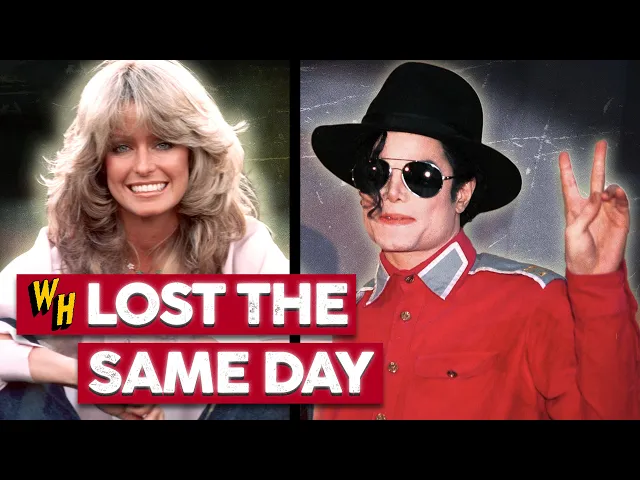
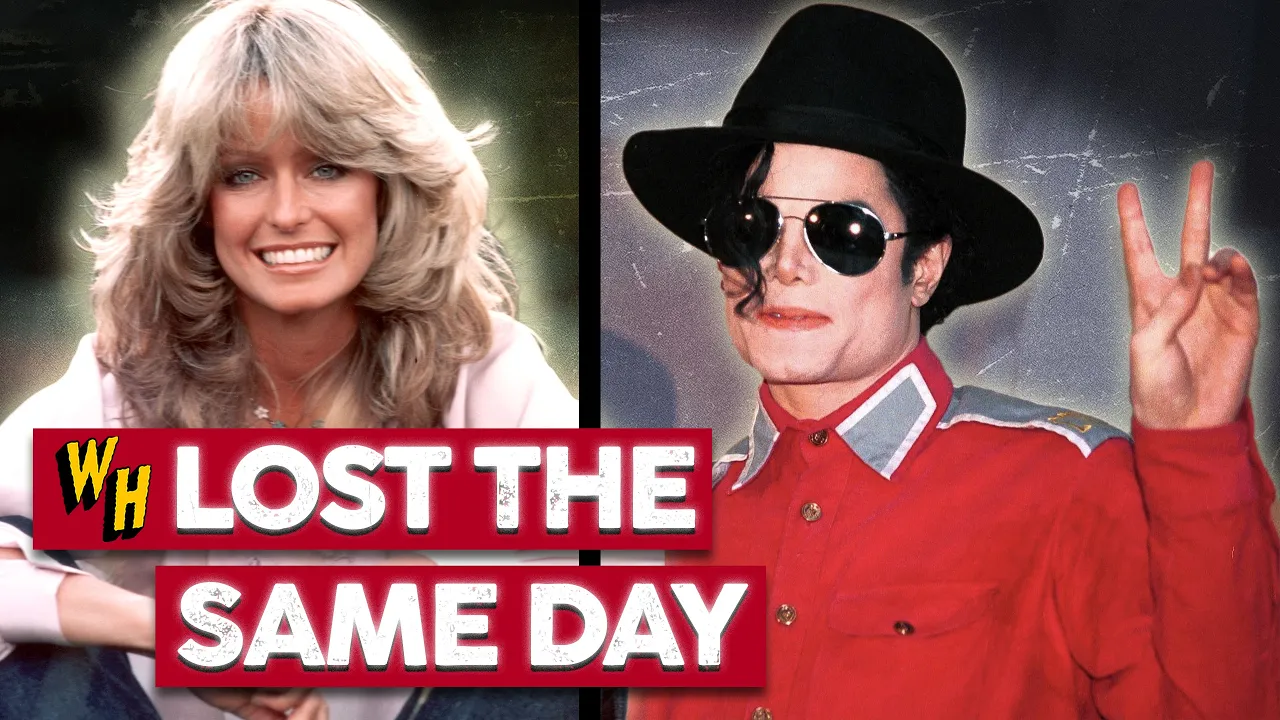
Historians estimate around 1800 people aboard the Sultana perished from injuries related to the explosion. The death of the King of Pop on June 25th, 2009 sent shock waves the world over. The 50 year old Michael Jackson passed from cardiac arrest, later discovered to be caused by medication prescribed by Doctor Conrad Murray.
The sudden death and media frenzy captivated the world so much that they essentially forgot that another icon from the 70s and 80s had passed that same day. Just hours before the media reported on Jackson's passing, reports were pouring in about the loss of Charlie's Angels alum and supermodel Farrah Fawcett from her battle with cancer. Fawcett's friend Alana Stewart shared her perspective on the actress's death falling out of the news cycle after Jackson's death, saying Fawcett would get a laugh that the paparazzi, news reporters and cameras were finally leaving her alone.
December 7th, 1941 was a date that lives in infamy, according to President Franklin D Roosevelt. We remember it as Pearl Harbor Day, the day the Japanese attacked Pearl Harbor in Hawaii, resulting in the United States's entrance into World War Two, and many years later, a not great Michael Bay movie. The bombs fell at about 7:30 a.
m. and lasted about two hours, resulting in 2400 slain, 11,000 wounded, and 19 ships damaged or destroyed. But the US weren't the only ones hit that day.
Only ten hours after the Pearl Harbor attacks, Japanese forces strategically hit additional military installations in the Philippines. 100 aircraft were able to fly unopposed, bombing airfields, hangars, and bomb supplies, wiping out everything in a coordinated attack. Japan's ground offensive butted heads with American forces in the Bataan Peninsula for four months, before U.
S. Major General Edward Peking surrendered on April 9th, 1942. American and Filipino troops were forced to make what was known as the Baton Death March, which was about as unpleasant as it sounds.
The Texas City disaster, which took place in Texas City, Texas, on April 16th, 1947, is one of the largest industrial disasters you've never heard of. Flames burned for days, and many people perished while the rest of the country was caught up in America's oldest pastime. The day before the disaster, first baseman Jackie Robinson played his first game as a member of the Brooklyn Dodgers, becoming the first African American to play in Major League Baseball.
Robinson's debut wasn't Sunshine and Roses, as he took the field in front of more than 25,000 fans at Ebbets Field in New York. He was subject to widespread discrimination on and off the field, but his perseverance through the worst of it made Robinson a hero. So when the French cargo ship, the SS Grand Camp, accidentally blew up a small Texas town with over 2000 tons of explosive material, the media and public's minds were laser focused on Jackie Robinson.
Additional blasts on the docks and nearby, a Monsanto chemical plant triggered a tidal wave that destroyed buildings and vehicles. When the dust settled, between 500 and 600 lives were claimed, with over 3000 injured. The death toll of that famous Dodgers game still zero.
From 1989 to 1998. Thursday nights on NBC were Seinfeld's time. The popular comedy brainchild of Jerry Seinfeld and Larry David, pulled in 76 million people for its series finale on May 14th, 1998, and many were disappointed with the results.
Perhaps none more than Nancy Sinatra, daughter of Frank Sinatra and fan of the massive sitcom hit who happened to be watching that very night? In fact, since NBC was running Seinfeld reruns all night to prep for the finale, Nancy watched those instead of visiting her old dad as she had initially planned for the day. Unfortunately for her Frank and the music loving world, the chairman of the board had a heart attack inside his Los Angeles home and was taken to Cedars-Sinai Medical Center.
Word on the street was the EMTs were able to get him quickly to the hospital due to everyone on the West Coast being glued to their TVs. Sinatra was pronounced dead at the age of 82, but news of the passing of one of the biggest stars of the 20th century was somewhat overshadowed by the sitcom. What's the deal with that?
sinking of the Titanic is a popular topic of discussion, even among people who don't consider themselves history buffs, thanks to public fascination with the doomed ship and films like James Cameron's Titanic. Odds are you can rattle off a few facts about the disaster, including the names of a few ancillary characters such as Molly Brown, William Murdoch and Edward Smith, the captain who went down with the ship. But if we were to ask you to recall the name of the woman who first successfully flew across the English Channel the very next day, you'd likely change the subject back to Titanic.
Harriet Quimby was a journalist from New York who began her flying career in 1911. On August 1st of that year, Quimby became the first American woman to obtain a pilot's license and became the first woman to fly at night just one month later. As she collected accolades, she set her sights on the English Channel, eventually completing the trip from Dover, England to Calais, France on April 16th, 1912, and a harrowing flight filled with technical issues and near-death experiences.
The fantastic tale was sidelined for the bigger Titanic related news, and her incredible feat was relegated to the footnotes of history. Quimby would continue to make flights for a few weeks after her achievement, but eventually perished in a flying accident on July 1st, 1912. Where's that movie?
One of the most defining moments of the 20th century happened in Dallas, Texas on November 22nd, 1963, when President John F Kennedy was struck by an assassin while riding in his motorcade. Anyone alive at that time can tell you exactly where they were when they heard that the commander in chief had been shot. The world was so caught up in the chaos of JFK's death that it barely noticed when two of the 20th century's greatest authors died the very same day.
Aldous Huxley and C. S. Lewis.
Across the pond C. S. Lewis was known for incorporating Christianity, logic, and philosophy into his stories, such as The Chronicles of Narnia and The Screwtape Letters.
He passed away from kidney failure in Oxford, England, at age 64. Aldous Huxley, author of Brave New World, as well as many other novels, screenplays and poetry, passed away from a long battle with cancer at the age of 69, in his Los Angeles home. November 22nd was a pretty bad day.
Argentinian British adventurer John Fairfax had a courageous spirit from the time he was a young boy. Always a talented rower, he set off from the Canary Islands on January 20th, 1969 and after 180 exhausting days, landed in Hollywood Beach, Florida, on July 19th, becoming the first person to row across the Atlantic Ocean using a specially made mahogany boat. He then asked where all the fanfare was before realizing his miscalculation.
Fairfax's unbelievable ocean adventure should have made him a household name. However, just one day after the conclusion of his six month long excursion in the Atlantic, astronauts Neil Armstrong and Buzz Aldrin landed a craft on the moon and took the first steps on a rock that wasn't Earth. Fairfax's accomplishments were eclipsed when compared to the awesome accomplishment of the Apollo 11 mission.
You shouldn't have brought a boat to a rocket fight, but Fairfax did receive a message of congratulations from the Apollo 11 crew. Fairfax would continue to make history here on Earth with his rowing skills, eventually crossing the Pacific Ocean with his partner, Sylvia Cook. It may not be the lunar surface, but it's good, honest work.
So what do you think? Which of these historic events was the biggest oversight? Let us know in the comments below.
And while you're at it, check out some of these other videos from our Weird History.