On November 20th, 1983, more than 100 million Americans sat down and watched a TV movie called The Day After. It showed a nuclear bomb landing on Kansas, people getting vaporized mid-sins, survivors stumbling through ash, hair falling out, no rescue helicopter at the end, no speech, no hero, just credits. ABC opened a 1-800 hotline that night, staffed by counselors, for a TV movie, and a large part of that 100 million audience, kids.
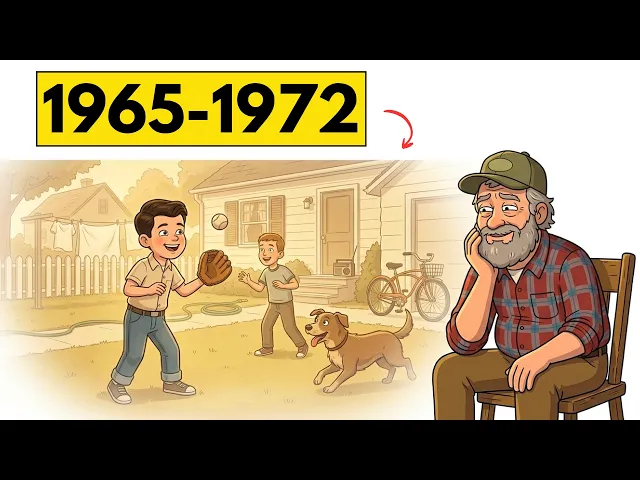
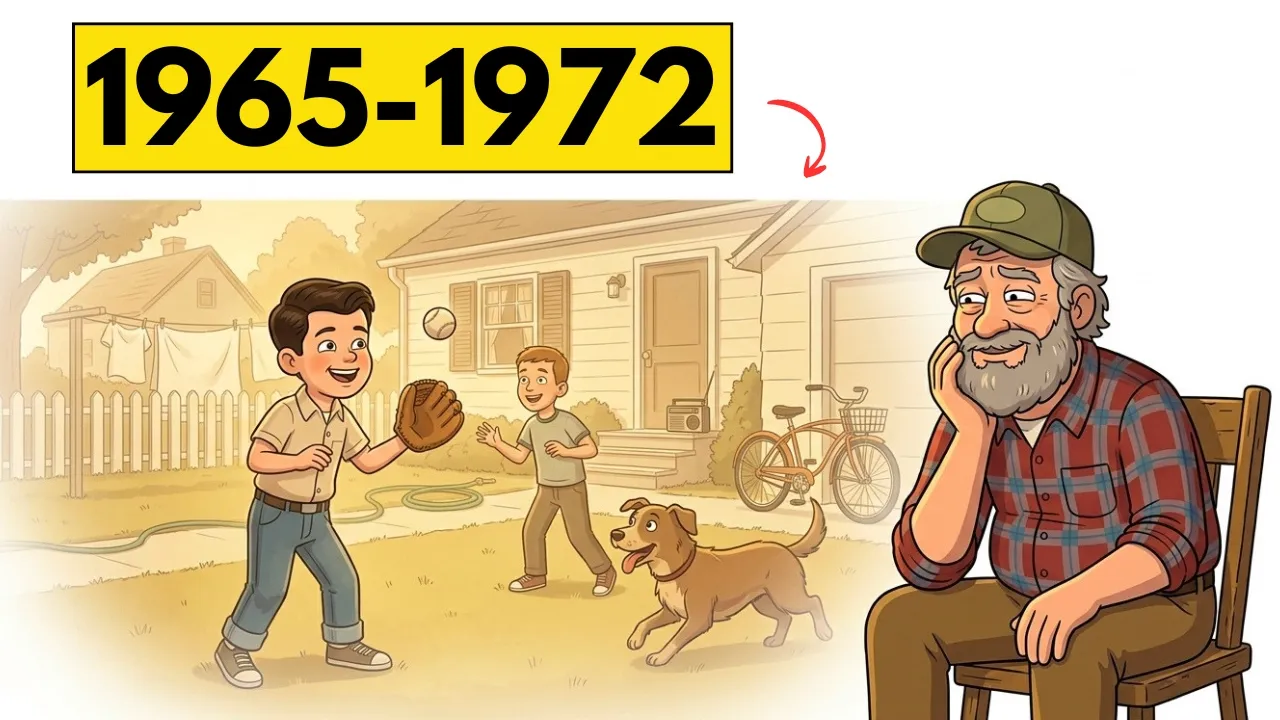
If you were born between 1965 and 1972, you were between 11 and 18 years old that night. Name's Frank. I observe things, and what I'm about to walk you through, most people never bothered to put together, not because it's complicated, because it requires actually paying attention to the generation that spent its whole life not asking anyone to pay attention to it.
That would be you. So, stay with me. You've held together bigger things than a 23-minute video.
Here's what surveys from the 1980s actually found when they asked children what scared them most. Second, nuclear war. Second only to losing a parent.
Not spiders, not the dark, not a bad grade. A mushroom cloud over an American city. You grew up in the 1970s and early 1980s, and the world ran on a very specific kind of background noise.
Not loud, not constant, but always on, like the hum of a refrigerator, except this refrigerator could end civilization. The Soviet Union had thousands of warheads aimed at American cities. Politicians were talking about weapons in space.
Your teachers had you doing drills, crouching under your desk or standing against the wall with a textbook over your head. A textbook over your head in case of nuclear war. As if that was going to do anything except give the cleanup crew something to read while they swept you up.
And then on a Sunday night in November 1983, your parents turned on the TV, and 100 million people watched Kansas get flattened with no ending that felt like an ending. Just people dying slowly in the dark. ABC, the TV network, thought nobody would watch.
They had trouble selling ad spots. Companies didn't want their products showing up next to scenes of people getting vaporized. Can't blame them.
They were wrong about the audience, not the vaporizing. The Wikipedia page for that film notes something that researchers have pointed to ever since, that it's been postulated, their word, that this single event was a major reason for what became the Gen X trademark of saying, "Whatever. " And that tracks.
Because here's the logic, and it is not dumb logic. If the world can actually end tomorrow, like on a Tuesday, why are you stressed about the math quiz? That word, the one that got your whole generation written off as apathetic slackers, it wasn't laziness.
It was a completely rational response to being a kid who genuinely didn't know whether civilization was going to make it to your graduation. You shrugged. But here's the thing people always skip past.
Where did that shrug come from? Because you didn't shrug at the TV and then go cry in your room. You shrugged and went back to your homework.
That's not giving up. That's something else entirely, and it came from somewhere very specific. By 1980, the divorce rate in the United States hit its highest point in recorded American history.
22. 6 divorces per thousand married women. That was almost double what it had been just 10 years before.
If you were born in 1965, you were 15 when that number peaked. If you were born in 1970, you were 10, right in the thick of it. Now, think about what that actually meant.
Your parents, the baby boomers, were the generation that decided personal happiness was not something you sacrificed for appearances. That's fair. But you were the experiment.
You were the kid watching that decision get made, and there were a lot of you. Researchers estimate that between 40 and 50% of children in that era watched their parents divorce. And whether your parents split or stayed together, they were both consumed with the economy, which was rough, with work, because now both of them had to work, with their own lives suddenly being renegotiated.
It wasn't malicious. They just didn't have much left over. And the message that came through the walls, not always spoken, but felt, was this, "Figure it out yourself.
Don't make noise. Be fine. " So, you did.
You became very, very good at looking fine. At sitting with anxiety that had no name and no outlet, and just carrying it. At not asking anyone to slow down on your behalf.
You probably didn't even realize you were doing it. It was just the air. But all that time you thought you were just surviving, you were actually training.
Training for what? That's where this gets interesting. There's a book.
It was written by a psychologist named Lindsay Gibson. It's called Adult Children of Emotionally Immature Parents. You want to know what Gen X on Reddit is calling it?
The Gen X guidebook to dealing with all of our trauma spilling out at midlife. This book comes up constantly in this subreddit. Personally, it helps me a lot.
That's not an attack on your parents. The book is not about villains. It's about a generation, yours, that was raised by people who didn't have the language for emotions, who were taught by their own parents that you push through.
You don't discuss. You manage. That silence got handed down, and you received it.
What you built out of that silence, without knowing you were building anything, was armor. Specifically, a very sharp sense of humor, a high tolerance for chaos, a radar for fake people, an ability to walk into any broken situation and say, "All right, what do we actually do here? " while everyone else is still panicking.
John Hughes made a career out of pointing a camera at teenagers who felt invisible to adults. The Breakfast Club, Ferris Bueller. Those films hit the way they did because they were, for a lot of you, the first time anyone had looked directly at you and said, "We see you.
" Nobody else was saying it. Not politicians, not the media, not marketers. A Pew Research survey found that 50% of Gen Xers believe their generation is unique, but couldn't agree on why or how.
You know why that is? Because the things that made you who you are weren't big public events. They were the space between events, the absence of comfort, the absence of someone sitting down and asking how you were doing.
Those things don't come with a name. They don't make the textbooks, but they make people. Data published by the research firm Solsten in 2025 found that Gen X makes up just 20% of the US adult population, but holds 31% of all leadership roles in the country.
20% of the people, 31% of the seats. The generation nobody wrote trend pieces about, the generation that said, "Whatever," and got written off, that generation is quietly running a very large portion of this country right now. And almost nobody made a big deal about it, which is, honestly, very on brand for you.
Okay. So, you survived the noise, built the armor, figured everything out, got into your 40s and 50s, things started to feel maybe like they were finally making sense, and then your parents got old, and your kids didn't leave. There's a name for this, the sandwich generation, and Gen X is right in the middle of it, which makes sense given the generation's entire life has been about being in the middle.
A Finance of America survey, published at the end of 2025, put some numbers on how this is going. 86% of people in this situation reported emotional exhaustion. That's up from 79% just 3 years earlier.
The average person here spends $10,000 a year on caregiving expenses and 1,350 hours. That is almost two full months of your year gone. And Gen X, the generation with the most members caught in this situation, also carries the most credit card debt of any generation right now.
$9,600 on average. That's the highest of any generation alive, according to Experian's 2025 Consumer Debt Study. So, you are working a job, managing your parents' appointments, answering your kids' calls, trying to figure out what you're going to do about retirement, which is coming faster than anyone planned, and doing most of this without telling anyone how heavy it actually is.
That is not weakness. That is what it looks like when the generation that learned to carry things keeps carrying things, even when the pile gets unreasonable. And the thing about a generation that was never taught to ask for help is they mostly don't ask, which means a lot of you are going through this completely alone in a way that doesn't look like struggle from the outside.
You look like you have it handled, and maybe you do, but handled and okay are not the same thing, and you learn that distinction better than anyone. Let's go back to those divorce numbers for a second. Your parents, the boomers, had the highest divorce rate in American history, you watched that up close.
You felt what that did to a house. You carried it. And when you grew up, what did you do?
You waited longer to get married. You took it more seriously. And once you made the commitment, you stayed.
About 70% of marriages that started in the 1990s made it to their 15th anniversary, compared to 65% for marriages in the 1970s and 1980s. That is a real documented improvement, and it didn't fall from the sky. You saw the pattern.
You decided you didn't want it, and you quietly did the work of doing something different. Nobody wrote a trend piece about that, by the way. It just happened.
And then there's what you did as parents. The generation that received the least hovering, the least emotional coaching, the least let's talk about our feelings energy, grew up and created homes where feelings were actually discussed. Gen X parents were the first generation to regularly put emotional language at the kitchen table, to co-parent in ways their own parents never attempted, to tell their kids out loud that they matter and they're seen.
Millennials get written up as the emotionally aware generation, the generation that invented gentle parenting, the generation that finally made it okay to talk about mental health. But that entire playbook, you wrote it first. You built the thing.
They got to grow up inside it. You built the runway. They got to fly on it.
No credit, no cultural moment dedicated to it. Just you doing what you've always done, figuring it out, not making noise about it. Let me put this together.
You grew up under a nuclear cloud and called it Tuesday. Your home got complicated, and you learned not to burden anyone with that. You turned all of it, the fear, the uncertainty, the years of being handed the message be fine and figure it out, into a very specific skill set, one that the world has now spent 30 years quietly relying on without properly naming.
Something is happening now, though, quietly in your 50s. People like you are starting to name what they've been carrying. There are books about it.
There are Reddit threads full of people saying things like, "I'm only now realizing I never processed any of it. " Or, "I thought being fine was the same thing as being okay. " Turns out they're different things.
A psychologist's book about emotionally unavailable parents is being passed around Gen X online spaces like a field guide, because a lot of you are arriving at midlife with the realization that the armor kept everything out, including sometimes your own feelings about your own life. That's not a crisis. That's just the timing of things.
You didn't get space to look at any of it when it was happening. You were too busy being fine. You were too busy carrying things.
And the world, your parents, your kids, your job, your country, needed you to keep going. So, you kept going. And now there's a little more room.
Not a lot, but some. And a lot of you are using it. Here's what I've observed from the outside, watching your generation move through the last five decades.
You took the most anxious childhood in modern American history, nuclear drills, household chaos, zero emotional support infrastructure, and turned it into adults who are calmer under pressure than anyone around them. You watched your parents' marriages fall apart at record rates, and quietly built more stable ones. You received no model for emotional parenting, and invented one for your kids.
You got handed less than any generation around you, and ran more of things than the numbers should have allowed. And you did it all without a press release. That word, whatever, people heard it and thought you'd given up.
What they missed was what came right after the whatever. You still showed up every time. That's not armor.
That's character. And there's a difference. Now, I want to hear from you.
Was there a moment growing up, something you saw, something you felt, something nobody around you seemed to notice that you now realize shaped everything about who you became? Drp it in the comments, because this generation has stories worth telling, and most of them never got told. If this video hits something real for you, hit the like button and subscribe.
There's a lot more where this came from. And if you want to keep going, there's a video on the screen right now that I think you'll find just as interesting. Go check it out.