It's almost 1 p. m. in Sydney and 11 a.
m. in Hong Kong. Welcome to Bloomberg Markets Asia.
I'm Paul Allen. Here are the top stories this hour. Asian stocks slipped to kick off an historically volatile month for markets.
Traders counting down to a likely Fed rate cut. Friday's payrolls report is going to be the next key macro milestone. China's economy remains a drag.
The official factory gauge contracting for a fourth straight month, leaving this year's growth target in jeopardy. Risks also mounting for India's outlook, with expansion slowing last quarter and pressure building for RBI easing. All right.
Let's take a look at how markets are looking this Monday around the Asia Pacific. Kind of a mixed picture overall. Hong in Singapore.
Yeah, up a little down, Paul. I mean, we got a positive handover from Wall Street last Friday thanks to their cool PC numbers pretty much telling us on inflation for nothing to see here. The focus is really going to be on the jobs numbers later in the week.
But then we also got over the weekend, those Chinese numbers really showing us how the economy is sputtering, whether you're looking at the housing slump deepening or some of these manufacturing indicators. So China off to a really bad start for the week. The Hang Seng dragged 1.
7% down. A bit of weakness coming through on the offshore yuan as well. The Japanese currency hovering around the one, four, six level.
The cost be is helped along by some of the gains. We're seeing the e v names, but also keeping a really close watch on Indian stocks because Nifty is on is record streak, longest winning streak since 2007. So when markets reopen in India later this hour, we'll see if it extends that or not.
Let's get the more take a closer look at those. China PMI is the official manufacturing one showing a fourth straight month of contraction. The contraction is only deepening.
This is problematic, of course, given how China has been leaning on exports and manufacturing to kind of keep that around 5% growth target still in its sights. We got a bit of an upside surprise on the non-manufacturing front. And today, Thyssen on the manufacturing front as well.
But I guess that is cold comfort if you look at the totality of the data. Asia PMI is also on tap this morning. We got some numbers out of Indonesia, Thailand as well.
We're still seeing some expansion in parts of the region, although I think that's slowing in Taiwan and Thailand Paul. All right, thanks, David. Let's dig into the latest Chinese data with Bloomberg's chief Asia economist, Chang Soo.
So Chang over there running us through some of those PMI numbers. What's your take on the state of the economy with this latest data? Indeed, I agree with your assessment today.
At the beginning of your introduction in the PMI, we focus on the official PMI. It's much more consistent with the alternative indicators. We have to show that the economy is going through yet another soft patch, a recovery.
The soft patch is reflected both on the supply side and on the demand side. The earlier one suggestion is perhaps the manufacturing sector can support the overall growth, but that doesn't appear to be to be the case at this point. This still a little bit of positive coming from the services side and principally supported by very hot summer travels.
But that is not good. It is not going to sustain the overall growth, especially summer is coming to the end. And the officials suggest perhaps the weakness in the PMI ratings are due to the the poor weather.
What less convinced are we think there are signs that local governments are not able to meet the fiscal spending plans pledged at the beginning of the year. Chang What else do you think we need to see in terms of policy? We do see the need for the government to step up and support.
We do see perhaps on the monetary side there will be more using our team fractures, seeing another rate cut of ten basis points in the fourth quarter and potentially the the Fed move, if it's greater than expected, there could be greater cuts by the people you see. But we see that monetary policy can only play a relatively small role. Fiscal side, too.
We'll have to step up to generate higher demand because the private sector is not forthcoming in its demands. On the fiscal side, as I mentioned in the first few months of the year, the spending has been behind the budget. So there really needs to be more forceful, more effective implementation of the expansionary policy.
But on the other and other aspects, the monetary policy needs to support and there should be more measures to support the housing market. In terms of the housing market. China, we did report on Friday that there was a plan to allow mortgage refinancing.
Do you think this is going to be enough? Unfortunately, it say we think this time the impact it again is going to be small. We know the government has been trying and clearly the government is determined to stabilize the market.
It's coming up with the different ideas. For example, last week, earlier last week, there was a report the local governments may be allowed to to issue bonds to support their home purchase plans. That could be an interesting idea because that can potentially scale up government's capacity to absorb housing inventory.
Now, could be an interesting idea, but we haven't seen anything concrete yet in terms of the refinancing plan. The likely increase in likely cuts in the mortgage rates coming out of this plan is it will be limited. It will be much smaller than the the a similar plan a year ago.
This merely means, oh, the adjustment in the mortgage rates will be moved forwards a few months compared to the normal typical period of just in rates at the beginning of the year. You only move such forwards a bit and the size of the cards is is more modest. We are looking at a potential 30 basis point cut in mortgage rates compared to last year on average, 80 basis points, cuts in the mortgage rates less of a cut and also perhaps less of an impact given how things are very different from last year.
CHANG Thank you so much for sharing your insights with us, Bloomberg Economics chief Asia economist Chang Shu and all, let's get more macro analysis with our next guest who expects the U. S. to rebound further against the dollar this year.
Jeff Yang is head of Asia macro strategy at Sumitomo Mitsui Banking Corporation, and he joins us from the Singapore studio today. So, Jeff, do you agree with our economist's assessment of the Chinese economy and what's needed to move things forward? Well, I think if you look at the current PMI numbers, I think I don't just look at China PMI numbers.
If you take it into the global context, the U. S. eurozone, many major economies also seeing a manufacturing downturn.
So this may also have caused China's manufacturing PMI to deteriorate as well. So I think, of course, the domestic outlook remains fairly subdued at this stage. And I think macro wise, you could still mean that the momentum in China may still face some headwinds, especially if global PMI is still in negative territory.
But still, I think with the Fed looking to its cutting policy rates, the good news is that finally the global cause of financing is coming off and I think that may still imply some gains, especially for some of the currencies to have lower use. So I'm thinking of the CNY as well. So there's a chance it could break seven below seven on the back of that.
When you talk about manufacturing PMI, I mean, for China, what sort of momentum do you see going into the end of the year, especially given how we have protectionist measures potentially going to accelerate from the US and Europe? How is that going to affect the factory activity potentially? Yeah, I think it's continuing to be challenging.
So I think the latest numbers we showed more deterioration do reflect this outlook for the next few months I think would still be relatively bearish. I think what I'm also looking out for, for example, in the medium term as we head into 2025, whether there's any more improvements in terms of tech demand. So that may help to improve a little in terms of the Chinese PMI outlook for manufacturing.
But still, I think for the rest of the year, it still looks like quite a lot of headwinds for even potentially some downsides for the sector. So headwinds. Jeff, I just want to turn to the question of the day.
At this point. Which assets do you see being most vulnerable to a slowdown in China? For me.
I look towards those economies who are very linked to the China economy. So, for example, Thailand, the export recovery for Thailand, as well as the tourism recovery, will still hinge on China's economic rebound and recovery. I think so far what we are seeing is that there's a continuing normalisation in terms of the Thailand tourists.
But without that, I think the economy continues to experience some very stable growth. But it's really needs a spark like, for example, the resumption of Chinese tourists. At the same time, I think the manufacturing sector could also be vulnerable to its China slowdown as well.
Given that there could be some downsides and I think commodity related kind of currencies and markets, of course, will face more headwinds in the light of continued headwinds to commodity prices, which continue to weigh on the profits. Well, we keep discussing how the policy support we've seen so far for the economy in China just clearly hasn't been enough. Do you anticipate this changing and what's the threshold for something bigger, like from what we are seeing at this moment?
I think policy continuity continues to be key. I think China continues to focus a lot on the domestic self-improvement policies. So it may mean that in the absence of any changes in terms of the fiscal impulse, there's still some continued reliance on monetary policy, although that may have a secondary impact on the momentum.
I think what we are anticipating is as the Fed cuts some of the other Asian central banks, including the PBOC, you could find more room to its more accommodative monetary policies. But we don't anticipate the huge size rate cuts from from China. So I think this will continue to provide some flow against further slippage of economic momentum from China.
What effect do you like and that would benefit the most from these Fed rate cuts if they are indeed more aggressive as some in markets are expecting? So I'm anticipating some of the currencies with some like medium muting central banks because some of those prefer very high use like the peso, the Indonesian rupiah and INR. I think the central banks may look towards cutting policy rates.
But what I'm anticipating is, for example, for the ringgit, the Thai baht, the Korean one and also the Taiwan dollar, the central banks are likely to be a bit more neutral compared to the Fed's lavishness and the Fed rate cut. So I think these have the scope to rally even more between the end of the year, both of the one in the dollar. It seems like they're also quite closely tied to the narrative, which as we've seen in events in the past, we give an invidious earnings scorecard that seems to have some risks surrounding it as well.
Yes, absolutely. So I think what we are also watching out for, for example, is so whether the U. S.
achieves a soft landing or hot lending. So if there's some slight weakness. I think the EIA story could continue to be better, especially heading into the last quarter, where we see more announcements from technology companies.
So that may help to propel a bit of the momentum going forward. But of course, if there's a harder landing from the U. S.
and the global economy sees a harder slowdown, then I think that may affect currencies like the one I know. One of the currencies you like, Jeff, is the Aussie dollar, but I'm wondering what you see happening with the Aussie US pair, considering both those central banks likely to ease before the end of the year for the RBA? I think we expect that the RBA could keep policy rates on hold for the rest of the year.
There's some chance that they could cut, but given that the July inflation numbers continue to be fairly elevated, so I think that could help to support the Australian dollar in the light of Fed rate cuts and with some new differential play. And that could support the Australian dollar. Still, I don't think we are expecting a lot more strength from the Australian dollar going forward.
I think we saw some degree for rallies at the 65 level and now is around 68, So we anticipate that it could be slightly higher but not by much. So the chances of us hitting 70, for instance, could be there, but not looking too strong at this stage. Just circling back to, you know, the big event this week is the US labor data in terms of whether we are looking out for a jobless rate or, you know, payrolls, the reduction in that slowing, what is more important to you?
I think what's looking more important is the overall package as well. So not just looking at one or two indices, but also at how the labor data is evolving. Like, for example, markets are not expecting that there's some rebound in terms of the overall nonfarm payrolls number as well as a slight reduction in the unemployment rate.
But I think if the unemployment rate, for example, surges to 4. 5% or higher, we've in a short period of time like this time round or the next month, I think that could trigger more concern about lending and then that could really cause markets to move further in terms of model of weakness, more expectations of a 50 basis point rate cut by the Fed. All right, Jeff, thank you for sharing your analysis with us.
Jeff Young of Sumitomo Mitsui Banking Corporation. Paul, thanks for that. All right.
Still to come, Ananda Ravi, Private wealth management shares their outlook on Indian markets after stocks notched their longest winning streak on record. Hear why they're not expecting a major correction any time soon. Before that, though, Israel's largest labor group calls a nationwide strike as pressure for a cease fire grows over the deaths of hostages in Gaza.
Details next. This is Bloomberg and. Israel's largest labor group is poised for a nationwide strike on Monday.
It's the strongest push yet to force the government into a ceasefire deal in Gaza and what looked to be the largest protests since October. Hundreds of thousands of Israelis demonstrated in cities around the nation on Sunday. This is after the bodies of six hostages were found in a tunnel in the Gaza Strip over the weekend.
Our news editor, Jill Jesus joins us now. So, Jill, what's the latest on the protests and the planned strike? And describe for us how this escalated.
Yes, Paul. Well, as you said, I mean, this is a pretty significant shift here. You not only had hundreds of thousands of Israelis protesting after these six hostages were found dead in this tunnel in Gaza over the weekend.
You know, I mean, but you also having this massive, massive strike action that's planned to take place on Monday. Now, this is being sort of organized by Israel's largest labor group at said to include not just the airport, but also some businesses sort of around the nation. Also may affect, you know, some government agencies, post offices you're looking at, you know, it affecting universities.
So really, I think you're seeing a pretty significant escalation. There's a lot of pain and frustration over the fact that it's now been 11 months since this crisis really, really kicked off. You've had, you know, all of these hostages that have you know, some of them haven't been freed, but obviously there still remain many, many more in captivity.
And it's really does seem like it's putting at least some pressure on Netanyahu to sort of move something forward, negotiate some type of a cease fire. Because, again, when you're seeing these types of these types of actions, you know, six found dead after 11 months. I mean, really, it does indicate that there is a mounting pressure campaign here and indeed public pressure on Netanyahu to negotiate a cease fire is mounting.
Here's what he had to say. Game officials. Even after the United States updated the outline of the deal on August 16th, we agreed and Hamas again refused.
These days, while Israel is conducting intensive negotiations with the mediators in the supreme effort to reach a deal, Hamas continues to firmly refuse any proposal. Jill, you talk about this simmering pain and frustration on the ground. Will these protests make a difference in terms of, you know, a cease fire?
Well, April, it's really difficult to tell here because, you know, obviously Netanyahu, you just heard him there, but he's been, you know, pretty adamant about some of his claims. So, you know, sort of as they go forward and, you know, sort of I'm that's seems to be preventing some of those actions toward actually making progress on a cease fire deal. It's difficult to see or say where Hamas necessarily stands on this, But obviously, you know, key allies, including the US to Israel, have, you know, really, really been pushing for a cease fire deal.
We heard Biden over the weekend actually say, you know, that they seem to be doing, you know, toward creating something there. The last meaningful talks that we really saw were, you know, about a week ago in Cairo, didn't really see a ton of action there because as it stands, I mean, you know, Netanyahu really has not budge on one of his key components of this, which is wanting to have troops stationed between Gaza and Egypt, and that he hasn't really moved sort of on that front. So it's not clear yet whether or not something like this massive strike action like, you know, the many, many protesters that we saw over the weekend would actually move something in that direction.
But it does kind of feel like we've reached at least something of an inflection point. You're having a lot of families of these hostages sort of speak out against Netanyahu in this push toward creating a cease fire deal. We'll have to see whether anything happens.
Obviously, the strike action is taking place today, Monday. We'll see whether or not that develops into something more significant as these, you know, days and ultimately really hours go on here. All right.
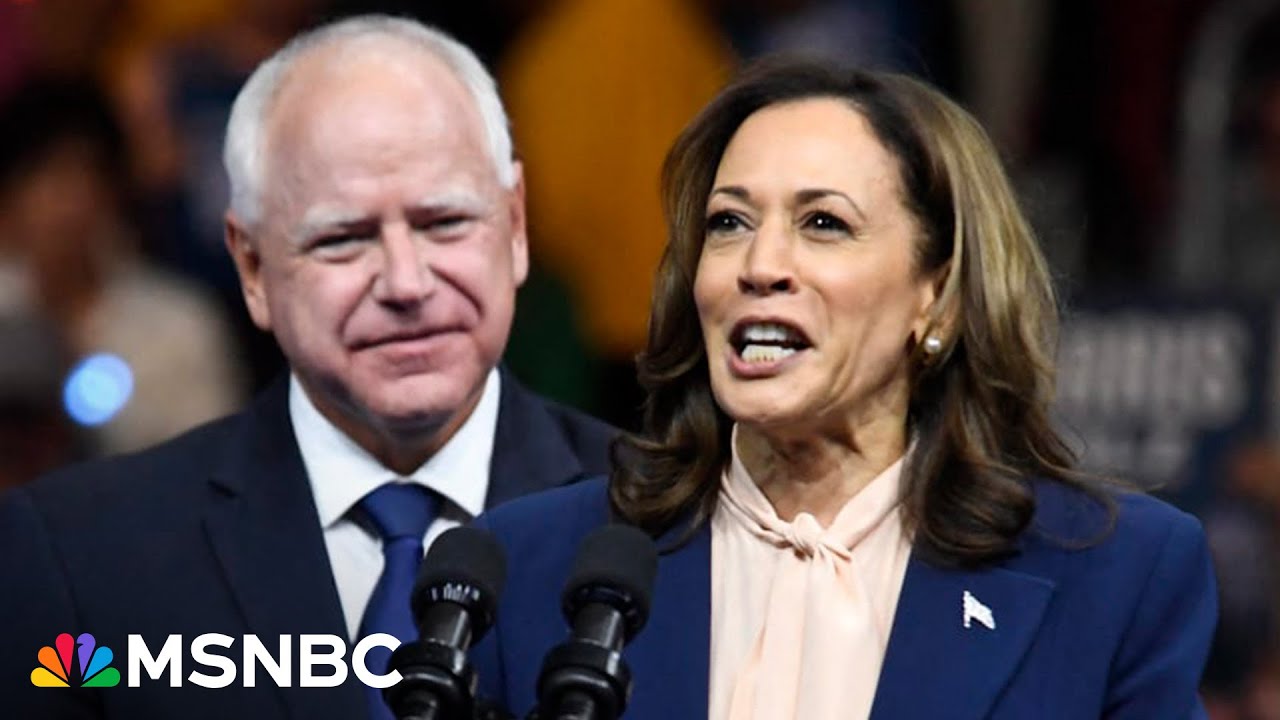
Bloomberg News desk editor Jill de CES there. Now more on the political front. New polls suggest that Democratic presidential nominee Kamala Harris has erased most of Donald Trump's lead among likely voters in the battleground state of Michigan.
The statewide epic MRA poll of likely voters had 46% of respondents supporting Trump, while 45% backed Harris. The same poll in mid-July gave Trump a seven percentage point lead over President Biden. German Chancellor Olaf Scholz is ruling coalition has suffered significant losses in regional elections.
Parties on the extreme right and left who took more than 60% of the vote in two states and Eastern Germany. Media projections put the alternative for Germany on course for the first win for a far right party and a German state ballot since World War Two. But it's highly unlikely to be able to form a government.
French President Emmanuel Macron is set to hold talks with senior political figures as he prepares to name a new prime minister. He'll meet on Monday with former socialist Bernard Cazeneuve and also plans discussions with conservative Javier Bertram. McCrum announced a decision in the next few days.
France has been under a caretaker government since indecisive parliamentary elections in July. Plenty more to come. This is Bloomberg.
All right. Let's take a look at how Hong Kong property developers are trekking. Not too well at the moment.
New world development. One of those suffering the most of 13 and a half percent. This is, well, no surprise here.
Thanks to Hong Kong's property downturn. The company said late on Friday it's anticipating a loss of up to 2. 6 billion for the financial year ended in June.
It's also struggling with higher debt levels than its peers and a plunging share price as well. But looks like the air is coming out of the tyres of the entire property sector more generally, and that's certainly the case across the border on the mainland as well. We did bring you the news on Friday, of course, that there will be additional support for Chinese home owners in terms of refinancing.
It's really not doing a lot to support the market though. Home sales slumping and data that we received over the weekend. And take a look at trying to Vancouver off about three and a half per cent right now.
This is after reporting it's a half year loss for the first time in more than two decades. Let's take a look at iron ore as well. Sticking with the theme of things that are going down.
That commodity down more than three and a half percent. That's the most of this year at least, of course, all connected to China's struggling property sector. Aussie miners feeling the pain today as well.
Plenty more to come. This is Bloomberg. We're not seeing any inflationary pressure.
I mean, if you look at the PMI index, you know, in the sub index, if you look at the output price hike, you know, it's actually in a firmly in a deflationary tide. So that is telling us that, you know, something drastic needs to be done for the economy. I would even argue that, you know, you don't have to see the number to starting to improve for the economy to do better or for the confidence to come back.
You know, all you have to do is to it means do you know some of the confidence back into the economy? You know, let people see hope. You know how we resolve the housing problem and how we resolve the unemployment situation as grow investment group partner in chief economist how long.
Speaking earlier on the China show and you can also catch Hong's appearance on the latest episode of the Tiger Money podcast on Apple Podcasts, Spotify, YouTube and Bloomberg. com. New additions drop every second Tuesday.
Welcome back. We do have China markets just heading out to lunch and a lot to ponder here, but of weakness going on. We've got the CSI 300 softer to the tune of about 1.
2%. Now we're seeing weakness in the Shanghai Composite as well. Also, stocks in Hong Kong performing a somewhat weekly lock going on here.
We had some pretty nasty PMI numbers out of China for the month of August. Tai Shan PMI numbers were in positive territory. We got those a short time ago coming in at 50.
4. But the other story was around the ongoing softness in China home sales, and that's really starting to drag on some of those big property names. China's residential slump deepening in August.
We're seeing a new world development. One stock in Hong Kong in particular suffering. It was off as much as 14% at one stage as we mentioned.
New world Development anticipating a loss of as much as 2. 6 billion. It's struggling with impairments, higher debt levels than its peers as well.
All right, April, you know, Paul, you talk about the data out of China. We also had data out of Japan and it was a pretty good start to the month for Japanese equities, just based on what some of these numbers are telling us. Right.
Corporate profit growth beating consensus in Japan, we had capital expenditure on goods, excluding software also rising. So we're pointing to signs of this recovery in the Japanese economy and indeed cementing perhaps those that think we're going to see another BOJ, a rate hike. So maybe that double edged sword is something that is playing out in Japanese equities today because you're not seeing a lot of green actually the Nikkei paring the gains of upwards of 1% from earlier in the session, a bit of firming on the yen versus the greenback.
And of course, this week we're also keeping an eye on the ten year and 30 year auctions. That's going to be a tricky one, right, Mark? But let's dig a bit deeper into what we're seeing in the equity space.
Mark Cranfield, our strategies joins us. What do you think Japanese equities are going to do from here? I mean, it's seems like they almost cannot win.
Well, they've got to learn to live with very slightly higher interest rates and particularly coming off the back of that Tokyo CPI number last week. It really looks as though the ground is being laid for the Bank of Japan to be able to raise interest rates again and probably buy a bigger increment this time. So instead of going by 0.
100. 15, it's going to be a quarter percent. Bring them in line with other G10 central banks around the world.
October It now looks like quite a likely time for that to happen. So can Japanese equities live with even higher interest rates? But if you look at the company profitability, which came out today is very strong, five quarters in a row, double digit growth.
So the numbers are good. I mean, Japanese companies clearly so far these increases in interest rates are not really hurting them and that's what investors need to deal with. Can they project forward and see where a Japanese interest rates going?
Hi, ho, ho, ho, ho, ho, ho. Where they go? And what does that mean in terms of crimping the margins for Japanese companies and probably is not going to be that terrible.
We saw it through the cycle in the United States. As interest rates are going up, the companies are still able to make plenty of money. And, you know, can Japanese companies do the same?
If they can, this will probably be a blip and equities will start to do better after a while so we could see further hikes. Why do you think the yen is trading the way it is against the greenback, though? We're back to you know, it seems like they're mispricing or they're bit completion for a further strengthening.
Do we need to see further deterioration in the US economy is probably a bit of a combination. There'll be some month in effect. There always is.
Some of the dislocations we saw last week, partly attributed to the long weekend in the United States and a month end as well. So dollar flipping up slightly is probably not a huge surprise from here. It's going to be about the US Fed, about the data, about the path between the Fed and the Bank of Japan.
And we've got a big story on Bloomberg today saying that if you contrast where the central banks are going, somewhere below 140 looks like a more likely target for dollar yen. And certainly when you've got. Central banks pulling in different directions, you would expect the currency to go with the path that is where the central banks are leading, and that would suggest the yen certainly has room to gain against the US dollar, even if it's not going to be so dramatic against some other major currencies.
But clearly the dollar is the one that people are taking out the most from the US jobs data. The focus is on the jobless rate. Is that going to be more important than the payrolls, you think?
Yeah, payrolls is very volatile from month to month. It changes by big numbers or most of these huge revisions as well. Like something like a million jobs seem to have been lost somewhere, 100000 to 1000000 jobs over the past year.
So it's very much that. And that was the number that affected the markets the most. At the last moment, it jumped to 4.
3. Now, Bloomberg Economics think it is only going to change to 4. 34.
If that is the case, it probably means the Fed will be comfortable lowering by 25 basis points. And they could disappoint some people in the market because if you look at the pricing in the derivatives, traders are looking for up to 200 basis points worth of interest rate cuts going into the middle of next year. Well, these numbers don't really justify such an aggressive path.
Could be some pushback from the Federal Reserve this month. And maybe both equities and bonds will probably have to adjust to that and could be a bit disappointed. It would need a big jump in the unemployment rate for the Fed to put 50 basis points back on the table.
At the moment it doesn't look likely and that could be a bit disappointing to equities. Some unrealistic expectations over what about the world's second largest economy. We keep getting these data points.
It just, you know, so many those concerns. And it seems also like the way the markets are reacting, you only react to the bad numbers. But what do you think is needed in terms of policy support to fix things and why are they so hesitant to roll that out?
I think investors are still looking for this big bazooka. They're looking for the Chinese government to really throw a much larger amount of money at the economy than they've been doing so far. So far, it seems there've been more modest steps, not enough to overwhelm people into thinking that this is really going to be the game changer.
But they might be reluctant because some of the money they've been putting into the market just finds its way into the bond market. It's pushed yields down a long way and they've already said they're uncomfortable. They don't like long term yields being this low.
They're trying to skew the yield curve back towards a more positive stance. So they may fear that they put more liquidity into the economy. It would just go into long term bonds, which is why they don't want it.
They want it to go into the end user. They want companies and people to be able to want to spend. But also you need to encourage them because they need to feel that there's an upside to things.
And if you look at the property market, for example, the numbers coming out suggest that people are quite bearish on their own property market. They don't see much upside for the time being. So even if you give them incentives, even if they do tweak the mortgage rules to allow refinancing to be easier, will people take it up when they don't see a lot of upside in the secondary market?
This is a problem and somehow they've got to change the psychology. They've got to make people feel better about the whole thing. Not going to be easy at all, but it needs to be something very large that make people.
Yes, well, this is the one this is the thing that's going to change everything. It's really a lack of confidence. Mark, I wanted to get your thoughts as well on US bonds.
I mean, overall, we see how in global markets, September is typically a really tricky month based on the ten year average. Do you think the anticipation of Fed cuts is going to change things for this month? Should we be expecting any different?
It could be difficult. If you look at the way the curve is, you got the whole curve pretty much below 4%. Now when the rate at the short term rates is up five and a half.
Now the Fed's going to lower it probably by 25 basis points, but still nowhere near where the market is pricing when you have such high expectation and a lot of money built up, clearly, because the if you look at the data from the futures markets, there's a lot of positioning here. So some of that is curve positioning people short range against long. But there is so much money concentrated in that market.
It's been a great win this year. Most people have enjoyed a really good run in that market. But if the Fed is, it's a damper enthusiasm a little bit at this month's meeting with their outlook, the bond market certainly could react to that and it wouldn't be surprising if you would expect up 25, 30 basis points, which in the terms of the bond market is quite a big move.
It's going to be pretty hard to justify having numbers below 4%, especially on the long end of the curve. If the Fed is not going to sell you rate cuts every time we meet for the next six seven meetings, given how far we've come, maybe not so much room to go any further. Mark, thank you, as always, for sharing your time and your analysis with us.
Always great to chat with you, Bloomberg and now strategist Mark Cranfield. Paul All right. Still to come here, why and I'm Dorothy Private Wealth is not expecting a major correction in Indian stocks any time soon.
We'll have more on their market outlook next. This is Bloomberg. Welcome back to Bloomberg Markets Asia.
You are watching the India focus. And let's take a look at Indian markets just ahead of the open. We do, of course, have the Nifty on a 12 day winning streak right now.
If we have it post 13 days in a row by the close today, that will be the longest streak on record. But local funds and retail investors piling in earnings, a good, strong domestic inflow. Inflation's coming down.
Rate cuts on the horizon. Looks like the stars are lining up for India. We'll talk a bit more about that with our next guest.
But let's talk about India's economy. It did grow at a slower than expected pace last quarter. GDP expanding 6.
7%, that's well below the central bank's 7. 1% forecast. Bloomberg Economics says the slowdown could prompt the RBI to begin easing in October.
Senior Indian economist Abhishek Gupta joins us now from Mumbai. So Abhishek, what led to that sharp slowdown in GDP growth? Hi.
Thanks for having me on the show. So if you look at the headline number, as you stated, GDP growth declined sharply to 6. 7% and took Q from 7.
8% in one Q. The GDP growth is largely it can be broken down into two components the gross value added growth, which essentially reflects the true economic activity and growth in net indirect taxes, which is just transparent payments from the households to the government sector. And it was the latter which collapsed.
The growth in net indirect taxes fell to 4. 1% into Q from 22. 2% in one Q.
So in large part this was technical. And if you look at the gross value added growth, that actually increased to 6. 8% into Q from 6.
3% in one. Q But the RBI has been focusing on GDP growth. And so the key takeaway still remains that GDP growth declined sharply from 7.
8% and is what you looked at GVA or GDP growth, it is down to 6. 7 6. 8%.
And if you further look at the interest sensitive components such as the financial sector, the real estate sector, that continue to show a lot of weakness. So overall, a big negative on the economy. So to your point, given how the RBI is looking at the GDP print very closely.
Do you think that's going to be enough to kind of prompt a cut? So in our view, and we've been highlighting this a lot, the RBI has been focusing on higher GDP growth over the last year or so, and they've been saying that India's GDP growth remains robust and resilient in the face of high interest rates. What this GDP print does is, number one, it was a big undershoot to our own forecast of 7.
1% GDP growth at 6. 7%. So it's a 40 basis points undershoot to RBI.
The expectation this is likely to get them to revise their overall GDP growth for the full financial year. And if we also combine this with the inflation outlook, inflation in the current quarter is also expected to undershoot RBI forecasts. RBI projected inflation in the current quarter by 4.
4%. Our expectation is that it's likely to come in at least 40 to 50 basis points lower than that. So the two things together combined suggest that it is time for RBI to cut rates.
The economy remains weak. The economy's likely to be constrained in this under 7% handle in the next few quarters and even for the full year. So my sense is that the RBI should cut rates at the October review.
But if it doesn't, then then the risks would only intensify for the economy going forward, Right? Bloomberg senior India economist Abhishek Gupta there in Mumbai talking about that slowing GDP growth is still pretty healthy, though, just below the RBI's forecast. But I guess if anything, as you mentioned, that might bring forward the easing and narrative for the Reserve Bank.
We're just keeping an eye on the India Open here because we have had the Nifty up 12 days in a row now. If we get 13 days today, that'll be the longest streak on record. And there we have it already.
Off to a bright start, as you might expect, better by a third of 1% right now the Sensex up by about a quarter of 1%. Now our next guest says she's confident of holding on to her India GDP growth prediction of 7% for the full fiscal year. Let's bring in Shweta Ranjan, who oversees more than $1,000,000,000 as senior vice president and head of mutual funds at Ananda Rathee Private wealth Management.
Shweta, thank you so much for joining us. So I just wonder how closely connected your view on India's GDP growth outlook is connected to the potential for RBI easing coming up in the next few months? Gordie Howe So yes, I do hold on to my view of oh 7% GDP growth this year.
I'm not so worried about the first quarter's explain seven because it also came on the back of Ohio based plus the first few months where, you know, there were also ten constraints given that we were entering into the election. So in the second half of the year, we do expect our consumption to see a little boost, capital spending to go up. We anyway, seeing, you know, the industrial production going on, going on, the war sectors performing.
So all that would put the growth number on track to be closer to that 7% range. Now, in terms of an RBI rate cut, you know, I do expect that in the second half of the year or so, somewhere around December, Jan, we could see RBI cutting rates. That's very much a possibility they would look for on the inflation column, for inflation to stabilize somewhere around a 4% number, because right now it's going at a number below what RBI had projected and it's been very volatile.
So once it stabilize around a 4% number, given that in order to balance the inflation growth, we could expect a rate cut, shall we say. Just wondering and I guess this is to be sure on your point about, you know, the tax contribution, potentially you continue dwindling. How is that potentially a risk here?
So in fact, if you look at the tax collection, then the GST growth, which is my indirect taxes have grown by 10%, my direct taxes have actually drawn by 33%, which is way beyond the Government's projection, which is also indicating that at the ground level things are improving, your economic activity is picking up place. Your consumption at a personal level is also inching up. Okay.
So now, obviously, as Paul was just outlining, Indian stocks are not really long winning streak. We could see a record one. We'll see how markets close later today.
But, you know, it's also really expensive market. Do you see this as perhaps dimming the attractiveness for overseas investors? Actually, inflation right now is the only cautious point, I would say, you know, because if I look at the froth in the market, maybe the larger companies are sitting at a 5 to 7% froth, though midcaps are somewhere around the ten, 15%, you know, flawed from a forward valuations perspective.
So given that it is, oh, I would say a 5 to 8% correction looks like a stability, nothing beyond that. What are the macro fundamentals or even corporate earnings of U. S.
, you know, have been growing at a steady pace. The first quarter earnings, the larger companies have seen an 8% growth. Smaller companies have seen a 17, 18% growth in their profitability numbers.
So, yes, in the interim, there could be some correction, but I don't think that would be a cause of concern for, you know, if I start to see an outflow, in fact, in the month of August, why we suffered all week naught would have I you know, pulling out towards the end of the year. We ended up with a positive number. And if I'm looking at, you know, a Jan to August, number five lows continue to be a positive sign.
Should it? Should investors be taking a sector specific approach towards India or in this kind of environment, is it enough just to buy the index or an ETF? So while you don't have you have a diversified performance at this point of time, it's not concentrated to specific sectors.
So even having a diversified portfolio would definitely add to the $4. But I would say if you're one still has to go for all the sectors, that's a big overweight position. Then some of the key sectors yield, I'd say definitely looks like an infrastructure, consumer goods actually, or auto.
Indeed, these could be, you know, three, four sectors where they could look at the slight or weak position to be built on. But yes, you have the broader market actually performing. Uh, you mentioned a minute ago that inflation is a potential risk to markets.
Do you see any other risks to markets in India? From an India specific perspective, I'd say it's the valuations that we need to be cautious of. One should note from a macro perspective, I would say it's more to do with the geopolitical factors that could have a slight implication or I India but higher inflation stabilizing.
While it's right now below the target but we need to see how consistent it can be maintained at the 4% rate. Valuations definitely and geopolitical factors. What about the risks to growth going forward?
I mean, what are you expecting for the rest of the year and how much of it is going to be perhaps seasonal? Now I'll see. You know, from October onwards, the festive season starts where the consumption also picks up.
Plus, like I said, between April to May and June, there were also certain constraints with regards to, you know, uncertainty of what would happen in the election and what would happen in the budget. Well, the key events now have gone by and therefore from your own, you know, between October to March, we would see things improve in films of economic activity in terms of getting government spending, private CapEx picking up and consumption going up, which is where I'd stick to that number of, you know, somewhere close to 7%. Still looking like a achievable target, though.
So from a GDP perspective. All right, Shweta Rajani of Ananda, Kathy, Private Wealth Management, thank you so much for joining us. And as we take a look at Indian stocks rallying again for 13 days in a row, we have plenty more to come.
This is Bloomberg. I just want to update you on news from the Philippines after the collision between a Philippines vessel and a Chinese vessel in the South China Sea. These images of what happened, a group of seven countries expressing strong support for the Philippines after that incident near the Skoda or Sabina Shoal, describing that as destabilizing action against Manila's vessels in the South China Sea there.
Now, we have some remarks earlier from the US State Department spokesperson Matthew Miller, saying that this was an interference with lawful Philippine aerial and maritime operations in regional waters and the Philippines, saying that it is contemplating legal action after that collision and expressing displeasure to China over that clash. These are according to remarks from the Philippines Foreign Secretary Manila speaking to reporters earlier. So the Philippines contemplating legal action over that collision there.
Let us take a look at the markets. Before we leave you, we are looking at LG Energy and other EV battery stocks at the moment. LG and LG Solution stocks climbing.
This is after Morgan Stanley upgraded its rating on the firm. We've got LG Chem up there by almost 8% now. Morgan Stanley's been turning more constructive on Korean EV battery shares.
This is as the EU's 2025 CO2 emission target looks to be a catalyst for improving EU volume growth in the coming year. So LG Energy Solution, the top pick in the sector there we got Li Auto shares also gaining as well. We've got the I beg your pardon LG Energy solution improving as much as 7.
4%. Tesla also planning to reveal a robotaxi on October the 10th. So we'll see if that deadline gets cement.
Tesla, of course, famous for posting aggressive deadlines and then announcing delays. Not long after that, we got Chinese EV makers a little bit softer. That's it for Bloomberg Markets Asia Horizon, the Middle East and Africa up next.
This is Bloomberg.