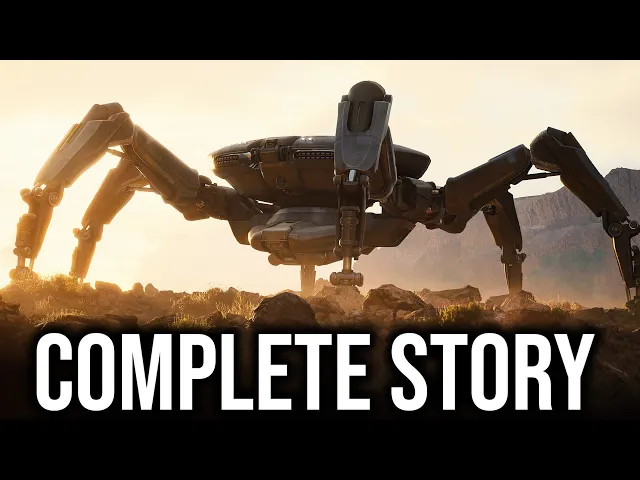
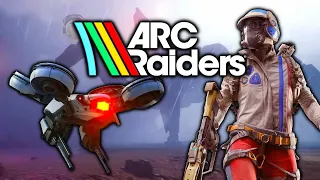
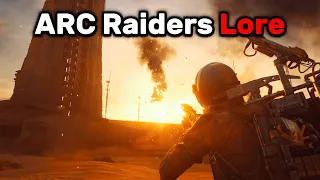
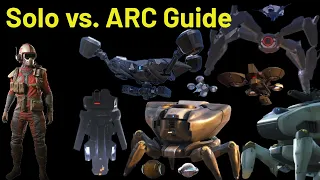
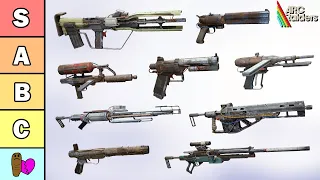
What's up, Meta Nerds? This video will be a complete breakdown of basically all of the lore on Ark Raiders so far. A lot of this is pulling from the official wiki, as well as stuff in game, part of the world building that can just be deduced from the environment.
And it'll be clear when some things are speculation, theories from characters in game and or from the community of players. Before we jump in, I just want to stress how beautiful it is when any piece of media can make your engaging with it add to and enhance or reinforce the main message of that media. Of course, first and foremost, it has to be a fun video game, but there are some deeper themes to appreciate, and it's a story that is best told in the form of a video game.
The PvP in the game reinforces the story. One of the simplest ways to explain the mystery of what's going on in Ark is a worldview of the elites [music] that left the world, some breakaway civilization. And they send these Ark bots back to callously scavenge through the planet, destroying things and basically looting, the robots seem like soulless devouring monsters.
But after being killed and robbed of your loot one too many times, will you two not give up on the romantic idea that every player can get along and we can all take on our shared threats and build together? Don't you just end up operating mostly on your own or with a very small group of tight-knit allies, utterly unconcerned with the wishes of any of the other raiders you come across. We find ourselves in this self-perpetuating cycle of retributive violence.
And those humans who fled into space [music] during the Exodus were not the first in human history to look out for their own needs. They didn't start the cycle. And you and all the ark raiders are victims in a way, but you also victimize.
Just as only a very small group left Earth and they're doing everything they can to survive in the hostile, unforgiving setting in space or on some planet, it makes it so that us, the player, are doing the same thing. And this is a bit of speculation, but I do think they're setting everything up for some sort of selection process that the humans of the Exodus are using this chaos to find great warriors. Topside is a battleground and those who thrive in this chaos will be selected by these heavenly forces.
It's a concept as old as recorded history seen in all the religions all over the world. But with this futuristic technology, it's literally true. Only a chosen few will be raptured up into the heavens.
Because for as many ways as these arc machines seem like an obvious enemy, there are also confusing details where they seem to aid people in very subtle ways. These new rulers, the lords or archons who literally live up in the heavens [music] and where, like some king of old would redirect a river or chop down an entire forest, these space age lords have mechanized slaves, stripping the whole of earth in order to serve their needs. and have crafted this sort of crucible to test the metal of the raiders.
To see who has the right combo of all the traits, being ruthless enough to survive, but still able to work together and coordinate on larger goals. All things that will make you valuable in the eyes of those lords up in heaven, those humans who left during the Exodus and who may be behind the ark themselves. But with that, let's jump into the complete lore of Ark Raiders.
Generations ago, a global environmental collapse devastated old Earth, leaving only a few scattered pockets of habitable land in its wake. What remained of humanity clustered into makeshift enclaves amid ruined cities and small tribal camps, fighting to rebuild some semblance of society. In time, these survivors managed to claw back a fragile civilization, a period later known as the hopeful era of Sunrise.
In the sunrise years, places like the Alcantara Dam provided rare lifelines. Its hydroelect electric power and water gave settlers a chance to thrive again in an otherwise blighted world. And for a moment, it seemed humanity might overcome the collapse.
But that dawn was soon again swallowed by darkness. For as long as anyone can remember now, machines have rained down from the skies onto Calabrada's surface. Machines known collectively as Ark.
And though no one is certain what this stands for, given their role, it may be something like automated resource collectors. But they would also literally arc across the sky. Some accounts say that survivors gave them this name because on radar, their drop pods trace arked trajectories as [music] they descend from orbit.
They first came to Earth without warning at the beginning of what we now call the first wave, shattering the Sunrise era's short-lived optimism. Unfeilling and relentless, these robotic invaders fell from the stars and began to harvest the world's resources by force, ravaging the land and killing or scattering any humans in their path. Calabrada's hearty survivors mounted a desperate resistance.
For a decade, bitter fighting raged across the so-called Rust Belt region as improved militias and raider bands battled the Ark onslaught. The invaders came in many forms, from small, unassuming scout units like surveyors to the feisty ticks to towering multi-legged behemoths that dominated the battlefields. Each variant was a new horror, but through grit and sacrifice, the humans learned how to hunt these machines and even repurpose their parts.
And at great cost, the first wave was eventually held back after 10 arduous years of war in the Rust Belt. Legendary battles from this period have since passed into folklore. The shellscarred battle of Alcantara Dam, where the power plant, once a beacon of hope and sunrise, became the site of some of the conflict's most harrowing last stands.
The dam's reinforced concrete and hydroponic domes, still bear the scars of those final firefights, reminders of a victory that was hard one and bittersweet. By 2170, humanity had seemingly halted the Ark advance. But the respit was short-lived.
This false dawn before an even darker storm. Barely a few years after the first wave's end, the machines returned with a vengeance. What survivors thought was a defeat of Ark turned out to be only a brief pause.
Ark forces reemerged in greater numbers and strength, initiating the so-called second wave of invasion. This time, humanity could not hold the surface. One by one, the hard one outposts and strongholds fell as Ark rained down again from orbit.
And facing extinction, the people of Calabrada made the only choice they could. They retreated beneath the Earth. In the early days of the second wave, around the mid 2170s, a massive effort was launched to carve out refuge below ground.
Beneath the ruins of southern Calabrada lay an extensive network of natural caves, ancient infrastructure, and derelictked subway tunnels. Desperate settlers flooded into these depths, and subway stations became shelters. One resourceful young survivor named Celeste led the founding of a subterranean haven called Spironza.
Built into the buried remnants of an ancient city swallowed by sinkholes, Sporansza began as an independent settlement for those fleeing the [music] surface assault. Its name, Italian for hope, became a beacon for humanity's last stand. Over the years, more survivors trickled in from across the rust belt and beyond, expanding the settlement through collapsed basements and train tunnels.
Eventually, these linked neighborhoods grew into the underground city of Toledo. A patchwork of secluded districts known locally as Contradas. Each Contrada occupies a different portion of the buried metropolis, separated by distance [music] and rubble.
And together, they form this uneasy quilt of human habitation, hidden beneath Ark's gaze. Life in Toledo was harsh, but it offered a mostly safe refuge from topside's many dangers. Up above, Ark forces roamed largely unopposed across a desolate surface.
Below, the survivors fortified their new home as best they could. Sprawza's security teams, led by veterans like Shaunie, sealed off entrances and established defenses to ensure no Ark unit could easily burrow or track humans underground. Each tunnel entrance was barricaded or booby trapped, and all access points were carefully monitored.
For a time, the underground city held firm, but resources in this subterranean sanctuary were woefully limited. Food, medicine, tools, [music] and fuel all were in short supply. If humanity was to survive long-term, hiding would not be enough.
They would have to venture topside in search of supplies. And thus, it's out of this necessity that the raiders were born. Even with lethal arc machines ruling the surface, a handful of brave souls still dared to venture topside.
These scrappy scavengers, the raiders, became the lifeline of Toledo. Raiders risked the Ark patrolled wasteland to retrieve the scarce supplies and technologies keeping the underground city alive. They learned to move in small groups or alone, striking quickly and fading away before Ark reinforcements could swarm them.
Every foray above was a deadly gamble, but true survival demanded this risk. Raiders hauled back food caches from collapsed buildings, siphoned fuel from derelict vehicles, and salvaged vintage electronics and medical supplies from the husks of their once glorious old world. Most crucially, they harvested components from destroyed arc units, exotic alloys, power cells, and circuitry, using the enemy itself as their bloodline, feeding off the enemy.
And the community could study and repurpose them. And it wasn't long before raiders achieved a sort of hero status. For their efforts, they would earn extra rations, equipment, and the deep admiration and respect from those they help sustain.
But we also see the infectious nature of evil. Topside is a deadly free-for-all. While there is order enforced in Tigos's tunnels, above there is no law but natures.
No morality beyond survival of the fittest. Raiders from different contradas often view each other as rivals rather than allies. As Toledo's neighborhoods grew more and more isolated over time, raiders became possessive of their turf and the resources within them, often turning on fellow humans in competition for loot.
And once it's begun, the cycle of retributive violence runs on its own. Many bitter rivalries had been settled by force in the ruins above. Ambushes over supply drops, skirmishes over choice scavenging grounds, and the underground security forces rarely intervene in these topside feuds, so long as they don't threaten Toledo directly.
After all, the raiders knew what they signed up for. Like a gladiator in this arena, there was unmatched glory and riches to be gained from venturing topside. But death was also inevitable.
And this has bred a cutthroat edge in raider culture. Of all the things in limited supply, trust is the most scarce. Clever raiders are on the lookout for machine and their fellow man, even their own supposed comrades.
But that isn't to say that there isn't a sense of rough camaraderie amongst the raiders. Among those who repeatedly face [music] death on the surface, there is a deep bond that can form. Raiders share tips on ark patrol patterns, trade rumors of new machine types, and collectively celebrate each small victory.
like downing a particularly fearsome Arc Sentinel or discovering an unlooted cash. Resourcefulness is the Raiders trademark, and over time they have developed ingenious methods to survive topside, like taking advantages of phenomena like the storm, an especially violent sandstorm that once battered the rust belt for days. During the Great Storm, the savviest raiders hunkered down safely, knowing Ark units would be as disoriented by the blinding sands as humans were.
And indeed, many of Ark's most menacing machines temporarily retreated while the storm raged. In the storm's aftermath, raiders guided new refugees to Toledo and scavenged freely in areas Ark had momentarily abandoned. It's opportunism like this that has kept humanity one step ahead of total extinction.
But now, let's look deeper at the hidden city of Toledo itself. Nestled deep in the rust belt, Toledo is not one cavern or bunker, but rather a network of neighborhoods stitched together underground. What the locals call contradas.
Each contrada occupies a distinct zone, like a collapsed municipal block or a section of an old metro line. Some are very small and insular, little more than a few families sheltering in a half- flooded basement. Others like Spiranza, the oldest and most well-known Contrada, are bustling hubs of activity with markets, workshops, and cantinas built into former transit stations and maintenance tunnels.
But most neighborhoods do function as isolated communities. Security and governance in Toledo are decentralized. Each Contrada has its own security detail and local elders or captains who manage day-to-day affairs from ration distribution to resolving the inevitable conflicts.
There is no unified city government in the traditional sense. The pressures of survival have forced a more communal ad hoc style of rule. In Spironza, we see security chief Shaunie overseeing defenses [music] and coordinating with other neighborhoods when threats arise, while Celeste provides overall guidance and mediation.
Respected as a kind of informal mayor by many of the underground dwellers. But importantly, of course, not everyone sees her that way. Other contradas have their own figures of authority.
Relations between districts can be tense as isolation breeds mistrust and resources are always on a knife's edge, leading to friction at least and firefights at worst. But still, in crisis moments like a cave-in endangering one sector or an arc breakthrough attempt, Toledo bands together quickly. The mantra enlist resist can be seen on many a tunnel wall, reminding all of this human unity which is necessary for survival.
Travel and communication between contradas and between Toledo and the surface depend on a few ingenious systems engineered during the early days underground. The primary lifeline are the tubes, a network of tunnels and old transit lines spanning the rust belt and beyond. Raiders have moved through these tubes using transport capsules launched from stations called slingshots.
And each neighborhood maintains its own slingshot station managed by local security and operations teams. When a Raider crew is set to depart topside, they board a metal pod which is pneumatically propelled through the tubes, shooting upward like a bullet and delivering them to a surface exit point far from Toledo's actual location. These hidden egress points, sometimes disguised in derelic barns, hollowedout trees, or in the middle of remote wastelands, ensure that even if Ark observes a raider emerging, it cannot easily trace the path back to the underground city.
and returning home safely is just as critical. Raiders cannot simply clamber down the same tunnels they exited. Doing so might lead an arc unit straight to Toledo's gates.
Instead, they rely on remote operated cargo elevators hidden around the surface. At the sound of a distinct beeping, a raider knows an elevator is incoming. It's their ticket to extraction.
When called via secure radio, these freight- sized elevators rise from concealed shafts, allowing raiders to load themselves and their hall. For security, the elevators are controlled by operators back in Toledo using patchboard consoles, and they only deploy if the coast is clear. Once aboard, a quick descent carries the raiders into safe underground corridors, while the elevator shaft seals behind them.
This system lets humans disappear from Ark's view without ever revealing Toledo's precise location. And to sustain the underground population, Toledo has developed a naent economy centered on salvage and ark tech. Raiders deposit much of their surface loot at field deposits scattered around topside, which are special pneumatic delivery points.
By placing recovered ark field crates into a depot's mechanism, a raider can instantly send the package back to Toledo for analysis, and in return, they receive a stipend of valuable supplies or script credits as payment. And these field crates actually are a mystery of their own. Sturdy Arkmade containers said to be accidentally dropped off by malfunctioning Ark probes and couriers.
And they are eagerly snapped up by human scavengers. To me, this points to it all being a game orchestrated by some off-world forces turning topside into one massive arena. It's all sort of one big test or selection process to identify the most capable survivors.
Those with the perfect mix of luck, resolve, planning, cooperation, and ruthlessness, all in the proper amounts. But once a crate arrives in Toledo's small research labs, technicians carefully study the contents, be it Ark power cells, weapon components, or data cores, and it all moves to improve the settlement's technology. Nothing is wasted.
A burnt-out arc circuit might be repurposed to fix a radio. An alloy plating could reinforce tunnel walls. And a cannibalized arc sensor might become an alarm for approaching enemies.
In this way, the very machines sent to eradicate humanity, they become humanity's salvation. If humans are crafty enough, they could become the very means of our liberation. Now, let's take a look at some key figures and factions.
Celeste is widely regarded as a symbol of hope for humanity in Toledo. the charismatic leader who keeps the flame of resistance alive in the darkness. A survivor of the first wave and the visionary founder of Spironza.
Those who meet her describe an energetic, compassionate woman with an iron resolve beneath her warmth. As the informal leader of all raiders, she shoulders the burden of maintaining morale, even as arc attacks intensify and losses mount. Few see the toll this responsibility takes.
At night, Celeste is often awake into the wee hours of the morning, furiously strategizing over maps by lamplight or throwing darts at a battered board by the bar to clear her head. Her resolve was forged in personal tragedy. She has lost what she called home multiple times to Ark raids during childhood.
Ark destroyed her childhood home, and every time she tried to make a new home, those two were destroyed by these invaders. And in the first wave, her father was killed before her eyes. These painful memories left deep scars, but also hardened her will to survive.
Resourcefulness became second nature, and by her teenage years, she was adept at building shelters, finding provisions, and uniting people under a common cause. This instinct all culminated in Celeste leading the creation of Sparansza at the start of the second wave when all the surface settlements were collapsing. To Celeste, Spironza is more than a refuge.
It's a living being, her baby that she's nurtured, and she works tirelessly to keep it safe and thriving. Under her guidance, Baron has grown to the nerve center of the Raiders operations and the broader Toledo community. But she is also not blind to looming threats.
With Ark's power growing, she fears even the underground may not remain safe forever. But she's always developing contingency plans and even plotting a full evacuation deeper into the tunnels if Toledo ever needs to be abandoned one day. No matter how attached she is to any one person or place, she never loses focus of the main goal, which is humanity's survival at all costs.
And then there is Shaunie, the security chief and arc expert. She's described as the sharpeyed sentinel in the shadows, the head of security for Spironza, and arguably the most paranoid person in Toledo, a title she is very proud of. She's a former surface scout who has turned her obsession with detail and danger into an invaluable asset for the community.
She brags that she has contingency plans for her contingency plans. She's considered every threat imaginable. And the wall scribbles in her office detail evacuation routes, booby trap placements, and rotations for centuries.
And as Piranza's resident ark expert, Shaunie studies every piece of intel on the machine's behaviors and weaknesses. She has dissected disabled drones and compiled field reports from raiders to discern patterns of Ark patrols, and this makes her Celeste's right-hand resource for planning successful topside skirmishes. Many raiders credit Shaunie's meticulous briefings for their safe return.
She can tell you which valley tends to spawn wasp drones at dusk or which old sewer tunnel has a hulking bomber. All based on her scouting networks. To most, she comes off as abrasive, suspicious, and intensely vigilant.
But most believe that's what Toledo needs. And she couldn't care less about her grim reputation as long as it keeps the city safe. and she has prevented numerous disasters, catching saboturs sent by rival factions, reinforcing a tunnel wall that later withstood an arc burrowing device, and devised the remote cargo elevator controls that hide raider movements.
Those who do earn her trust find she is fiercely protective, almost maternal, toward the people of Spironza. She fights an uphill battle to defend the underground haven and could surely use more helping hands as long as they don't question her methods. And while Shaunie walks the public perimeter, Tion Wen prefers the quiet solitude of her workshop.
She is Ponza's resident gunsmith and tech genius. A recluse who seemingly loves machines and tools more than people. She makes no secret of her low tolerance for most raiders, whom she finds rash and careless with the equipment that she painstakingly crafts.
Tanwen interacts with others only as needed to further her own interests. Usually meaning when she needs some exotic part a raider might bring or when a weapon she forged performs exceptionally well in the field. It's the only time you might see a glint of pride in her eyes.
But despite her prickly exterior, those who have worked with Tianwen whisper that she has a soft spot for things in need of repair. Whether it's a broken antique action figure, a jammed rifle, or even a person, one who's been damaged by trauma. On more than one occasion, she has quietly fixed a child's music box salvaged from the buried city, or rigged a prosthetic arm for a raider who lost his limb due to a tick explosion.
And by those that don't understand the tech with which she works, it's almost like a form of magic, technical wizardry, as she can coax function out of decades old derelict electronics and concoct homemade explosives from scavenged chemicals like an alchemist. In Toledo's workshop, a section of an old maintenance bay that serves as her armory. Tianwin has restored pre-wave guns to working order and even manufactured new hybrid weapons using Ark components.
The arsenal she provides to raiders, from reliable makeshift pistols to juryrigged energy rifles, has dramatically improved their survival odds. If Celeste is the heart of the resistance and Shaunie the eyes, Tion Wen is its hands, forging the literal tools of survival. And then there's Apollo, the seasoned mechanic and munitions dealer, whose genial presence brings a ray of light to the dark corridors.
Spironza isn't Apollo's first rodeo. He's lived in other survivor enclaves over the years, but for now, he has made it his home, and he throws himself into fixing up whatever broken equipment or wounded ego a raider brings to him. He's somewhat cryptic about his past, deflecting questions of humor.
And some suspect he may have lost a family or an entire community in the past, explaining why he's always wandering. Wherever he goes, Apollo can't help but try to make the place better. In Spiranza, he quickly became the self-appointed youth coach and librarian.
On days off, you might find him organizing a scrappy football match among the children in an open cavern or curating a small library corner with books he has collected from the surface. By trade, he's also the quartermaster of explosives and trap gear for raiders. And ironically, when he's not dealing in high yield explosives, he is an avid flute player, serenating the tunnels with surprisingly gentle melodies.
all hope he doesn't blow off his fingers one day because with that there's no more flute playing. He's often the first to welcome new refugees, offering them a warm meal and repaired tools in order to start their new life underground. Though he keeps his personal history guarded, Apollo has clearly seen the worst humanity has to offer and still retained his kindness.
Well, one of the most unusual residents of Toledo is Lance, an eccentric and bubbly medic android who has become indispensable in tending to the wounded. Lance's very existence is a reminder of the old world's technological marvels. He is a fully synthetic being with an advanced medical programming, presumably a relic from before the collapse.
He is one of the most talented medics Toledo has. Capably running the infirmary and patching up raiders with a combination of human techniques and programmed medical protocols. While he's not human, it's not like he has an affinity with the machine's topside, he knows those arcs would scrap him in a human heartbeat.
And he strives to fit in with his human companions. And as much as it hurts him, he might understand the unease some have around him with some insidious rumors that he could be a spy. When you've lost everything to machines, seeing this machine with no clear backstory can make it hard to trust him.
But he has adopted all sorts of human quirks picked up from those around him. He might be singing off pitch at midnight karaoke sessions or browsing the latest underground fashion trends. He even joins in the boxing matches in Sponza's fight ring, pulling his punches, of course.
Who [snorts] knows how strong he could be, but it is quite the sight for onlookers. And like I said, his past is a mystery. The friendly android arrived in Spironza some years ago with no memory of who he was or what he did before.
Some wonder if he was an oldworld medical unit, a one of those Exodus shuttles that never launched, or maybe a companion android whose owner perished in the first wave, leaving him to wander the waste like everyone else. Lance himself occasionally experiences what he calls echoes, brief flashes of imagery or emotion that he can't place, likely fragments of his former life. Those trapped memories won't stay gone forever, he jokes.
And you can sense that he has this longing to discover his own origins. But despite all this, he is unfailingly upbeat with excellent bedside manner. And he could evoke a more balanced approach to technology in these surviving humans.
Maybe the machines were like humans themselves. Some evil, but many were good. Within Toledo and on the surface, there are a few other groups we should mention.
The Toledo security forces form a faction of their own with each Contrada security team answering to their local leaders. But in times of crisis, they coordinate to protect the entire city. These men and women are the closest thing to a standing militia underground.
Armed largely with Tonwen's crafted weapons and makeshift shields, security guards the slingshot stations and defends the entrances between contradas. They also manage the cargo elevator control stations distributed across neighborhoods, ensuring raiders can extract safely. There is an understanding, if not an official treaty among Contrada security chiefs to assist one another when Ark breaches occur or when interraider disputes threaten overall stability.
Shaunie's Spironza unit is currently the most well equipped and trained of all of these. Above ground, the raiders themselves sometimes informally coalesce into gangs or crews. Like a group of raiders from the buried city contrada might stick together and develop a reputation as excellent sandstorm navigators.
Another cadre might be known for ambushing Ark harvest convoys near the spaceport. And one of the most unifying forces are the Ark Queen machines. When these are reported, several crews put aside their feuds and jointly hunt the behemoth.
There are also whispers of a shadowy click of raiders who believe coexisting with Ark might be possible and advocate for studying the machines more deeply instead of just destroying them on site. They are few and not publicly known as such views are extremely unpopular in Toledo, but it does reflect the range of ideologies brewing amongst the survivors. And we can't forget the factions that aren't here, the ghosts of government and military.
In the early first wave, some national armies attempted to fight ARK, but coordination collapsed with the environmental crash, exacerbated by the loss of global communications. By the second wave, no organized nation states remained to mount a defense. Only these local survivor groups.
[music] Any remnants of older militaries either perished or eventually merged into the communities we see in Toledo. So now the conflict is not between Ark or any nation or global force but against scattered humanity and often just individuals. But now one of the most fascinating aspects is the technology that we see and the story it tells.
The Exodus age in the late 21st century saw humanity reach for the stars. Most famously through the Aseros spaceport where massive Exodus shuttles once soared towards the heavens fing away the few souls that could leave the dying earth. The rusting launch towers and cold steel spires of that spaceport still rise above the horizon.
Majestic monuments to the past ambitions now overgrown with vegetation and slowly being destroyed by decay. In different degrees, all survivors wonder what happened to these people. Maybe wherever they were going to ended up being worse, that those on Earth may be the lucky ones.
No one really knows. No signal or help ever returned back to Earth. In other areas, we see still functioning tech left over from the previous age.
Like mentioned before, the Alcantara Dam is the prime example. Though it is damaged, the dam's turbines and research buildings have been rigged into makeshift hydroponic farms, and power generators in order to feed Toledo. Ramshackled hydroponic domes set up by Sunrise a settlers at the dam do still produce edible algae and vegetables augmented by fungi cultivated in the cool, damp tunnels below.
Power from the dam and a handful of juryrigged solar panels above ground provide minimal but vital energy in Toledo. Enough to keep lights on in the main corridors, recharge handheld radios and flashlights, and power ventilation fans [music] and pull fresh air from the surface. Water is collected from underground springs and purified in sistns using chemicals traded from other regions or extracted from arc coolant fluids.
Communications are limited. Longrange radio has been unreliable since orbital satellites went down decades ago. Toledo's people use wired field phones [music] strung through the tube network to talk between contradas and short-range walkie-talkies for raider teams on the surface.
There is a rumor of an old communications bunker somewhere in the mountains that could reach other survivor enclaves if it was repaired. And the trade between contradas is very basic. Most operate on a barter and ration system, though there is the rudimentary currency system called script with painted chits or plastic tokens, though it's all backed by things like [music] food, medicine, and ammunition.
And for people living in such desperation, they actually do a good job of not hoarding or price gouging, knowing that that could lead to mutual destruction across all contradas, as each group tends to specialize in something. People's sense of nationality or ethnicity has basically been boiled down to their contrada. And within each their own subculture tends to develop everything from fashion to food.
And there is a general sense that everyone's working together, whether it's out raiding or raising crops. And let's end here on trying to understand all the speculation the ideas and theories have across Calabrada. As this war seems to have no clear end in sight, new variants of machines have been noted, including larger and more aggressive models like the colossal ark known as the queen, the multi-legged war machine bristling with weaponry.
And although one was destroyed, its emergence has fueled theories that the ark are organizing under some central command intelligence. The scouts whisper of an even greater entity, the so-called matriarch class Ark, and this may be what is directing the invasion. There seems to be a sort of hive mind with spotters that tag human positions and bomaders that shell them.
Survivors debate endlessly about who or what is behind Ark. Are they autonomous drones from the longlost human military project gone rogue? Are they alien mining machines dispatched to strip Earth of its resources?
Or perhaps the very AI overseers meant to stabilize Earth's climate are now corrupted into viewing humans as a threat to the planet. or what I personally lean towards. This is some sort of twisted game from those humans that escaped off-world.
They're running some sort of experiment or test, wanting to find the most capable amongst us, killing off most of the species, destroying governments all over the world, reducing us to a more primitive state, [music] and seeing what emerges with maybe hopes of one day coming to reap this harvest, removing the cream of the crop, as it were, adding the best raiders and strategists to their forces in some kind of off-world human-driven rapture. Or it could be the Exodus colonists, but just without any concern for those on Earth. Maybe it's not part of some big test.
It is just cold collecting of resources, not for some alien or robotic force, but for the humans that left Earth who couldn't care less about whether we survived or not. Then there's the idea that the Exodus itself triggered some extraterrestrial civilization. The aliens likely killed or captured whoever left Earth and tracked their source back to Earth and sent these collectors to do their thing.
There might be clues in Lance's lost memories. Speaking in his pre-colapsed dialect, maybe he was sent by those Exodus humans, hoping that this android could help us, but was somehow damaged and has since lost his memory, and so he can't deliver whatever aid or message is trapped in there. Then there is the confusing and deeply disturbing act of Ark courier units that have been reported dragging away human remains or hurting survivors.
If it is just routine battlefield cleanup, that doesn't really make sense as it shouldn't bother these machines. Humans only do this to stop things like disease or just the sheer smell. It's more likely they're harvesting or stripping something from humans the same way they're stripping the environment.
And why do some seem to be captured alive? Are they now suffering a fate far worse than death? In truth, much about Ark remains a mystery.
Decades into this conflict, humanity does not understand its enemy or who may be behind them. All they know is that they can be destroyed. And for the time being, that is more than enough.
At this point in humanity's survival, it isn't about what you know. It is just about doing two things. Enlist.
Resist. If you made it this far, please hit that like button. It really does help me out.
But most important of all, remember trust is our most valuable resource. Do not let the machine strip that from us. And stay safe topside.